A business planning desk can turn scattered ideas, priorities, and daily tasks into a clear system for managing your business. Whether you are launching a new company, running a small business, working as a freelancer, or managing an established team, having one organized planning space makes it easier to decide what needs attention and why.
Instead of keeping goals in one notebook, budgets in a spreadsheet, and project notes in several apps, a structured business planning desk brings the most important information together. It can include business goals, strategic priorities, project planning, financial tracking, schedules, and performance notes in one practical workspace.
This guide explains how to create and use a business planning desk effectively, what sections to include, and how a printable business planning template can help you stay focused without making planning unnecessarily complicated.
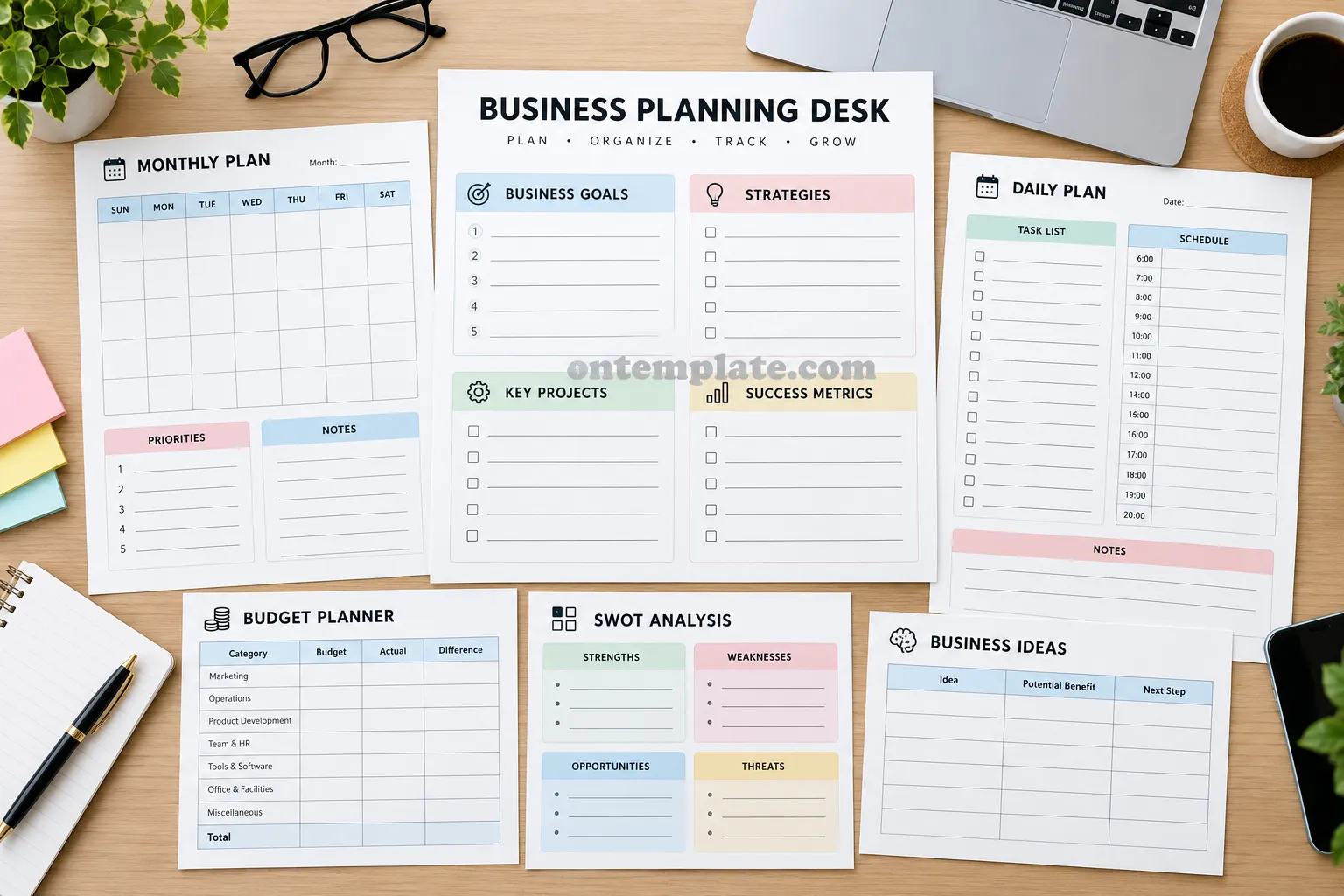
Image Title:
Alt:
Image Caption:
What Is a Business Planning Desk?
A business planning desk is a dedicated planning system or workspace used to organize the information that guides business decisions and daily activities. It does not have to be a physical desk. The term can describe a printable planning setup, digital workspace, or combination of documents designed to keep business planning in one place.
A useful business planning desk typically connects long-term objectives with practical daily actions. For example, a goal to increase sales becomes a measurable target, then a marketing project, then specific tasks that can be scheduled and tracked.
The main purpose is simple: make business priorities visible and actionable.
Why Use a Business Planning Template?
Business owners often have plenty of ideas but limited time. Without a consistent planning process, important tasks can compete with urgent but less meaningful activities.
A business planning template provides a repeatable structure. Instead of starting from a blank page every time you plan, you can work through familiar sections and quickly identify what matters most.
Benefits of a Structured Planning System
- Clearer priorities: Identify the activities that deserve attention first.
- Better organization: Keep goals, projects, schedules, and notes together.
- Improved accountability: Assign deadlines and measurable outcomes to important tasks.
- More focused decision-making: Compare current activities with broader business objectives.
- Easier progress tracking: Review what has been completed and what still needs work.
- Less planning friction: Use an established structure instead of recreating your planning process.
Essential Sections for a Business Planning Desk
The best planning system is one that matches the way you actually work. However, several sections are especially useful for most businesses.
1. Business Goals
Start by defining the outcomes you want to achieve. Goals should be specific enough to guide action rather than simply describing a general ambition.
For example, instead of writing “grow the business,” you might define a target for monthly revenue, customer acquisition, product launches, or qualified leads.
Keep the number of major goals manageable. Too many priorities can make it difficult to determine what deserves your attention.
2. Strategy and Priorities
Once goals are defined, identify the strategies that can help you reach them. This section answers the question: What approach will we use?
Your strategy may involve improving an existing product, expanding a marketing channel, reducing operating costs, improving customer retention, or developing a new service.
3. Project Planning
Turn strategic priorities into projects with clear outcomes. Each project can include an owner, deadline, key tasks, required resources, and success criteria.
- Project name
- Objective
- Key milestones
- Deadline
- Responsible person
- Required resources
- Success measurement
This approach prevents broad goals from remaining as ideas without a practical execution plan.
4. Budget and Financial Planning
Financial planning is another important part of a business planning desk. A simple budget worksheet can help you compare expected spending with actual expenses.
Useful categories may include marketing, software, operations, payroll, product development, office expenses, and professional services. Reviewing these categories regularly can reveal where resources are being used and where adjustments may be necessary.
5. Daily and Monthly Planning
Long-term business objectives need to connect with the calendar. A monthly planning page can help you identify major deadlines, campaigns, launches, meetings, and milestones.
A daily planner then breaks those priorities into manageable tasks. This creates a simple planning hierarchy:
- Annual or long-term objectives
- Quarterly priorities
- Monthly milestones
- Weekly projects
- Daily tasks
When these levels are connected, daily work becomes easier to evaluate because each task has a relationship to a larger business objective.
How to Create Your Own Business Planning Desk
Step 1: Define Your Main Business Objectives
Begin with the outcomes that matter most. Consider revenue, customers, products, marketing, operations, team development, or other areas relevant to your business.
Write down the objectives and identify how you will know whether each one has been achieved.
Step 2: Choose Your Key Planning Categories
A small business may only need a few categories, while a larger operation may require a more detailed planning system. Avoid adding sections simply because they look useful. Every section should support a real decision or recurring activity.
Step 3: Convert Goals Into Actions
For each major goal, list the projects and tasks required to make progress. Give important actions a deadline and define the expected result.
Step 4: Add Simple Metrics
Choose a small set of performance indicators that help you understand progress. Depending on the business, these might include revenue, conversion rate, customer count, average order value, leads, project completion, or operating expenses.
Step 5: Review the Planning Desk Regularly
A planning template only becomes useful when it is reviewed consistently. Set aside time each week to update tasks and progress, then conduct a deeper monthly review of goals, finances, projects, and priorities.
Practical Tips for Better Business Planning
- Keep it visible: Put important priorities somewhere you can easily review them.
- Use measurable outcomes: Whenever possible, connect goals to numbers or clearly defined results.
- Limit active priorities: Concentrate on the work that has the greatest connection to your objectives.
- Separate planning from execution: Schedule dedicated time for reviewing the business rather than planning only when problems appear.
- Update regularly: A planning document becomes less useful when information is outdated.
- Record decisions: Brief notes about why a decision was made can be valuable during future reviews.
- Keep the design simple: A clean printable business planner should be easy to scan and complete.
Printable Business Planning Desk vs. Digital Planning
Both printable and digital planning systems can work well. The better choice depends on your workflow.
A printable business planning template can be useful when you prefer handwriting, visual organization, or a physical planning board. It can also provide a distraction-free way to review priorities away from notifications and multiple software applications.
Digital planning tools are useful when information needs to be shared, updated frequently, or connected with other business systems. Some businesses use both approaches: a digital system for detailed records and a printable planning desk for high-level priorities.
Who Can Benefit From a Business Planning Desk?
This type of planning system can be adapted to many situations. Entrepreneurs can use it to organize startup objectives and launch activities. Small business owners can use it for monthly operations and financial reviews. Freelancers can organize client projects, income targets, and weekly priorities.
It can also be useful for managers who need a straightforward way to connect team projects with broader business goals.
Common Business Planning Mistakes to Avoid
Planning Too Much and Doing Too Little
A detailed plan is not automatically a better plan. If maintaining the planning system takes more time than executing the work, simplify it.
Using Vague Goals
Statements such as “get more customers” are difficult to track. Define what improvement means and establish a reasonable measurement period.
Ignoring Financial Information
Business growth should be considered alongside expenses, cash requirements, and available resources. Include financial planning as part of the regular review process.
Never Revisiting the Plan
Business conditions change. Customers, competitors, costs, projects, and opportunities can all shift. Treat your business plan as a working document rather than something that is created once and forgotten.
How to Make Your Business Planning Desk More Effective
Start with a simple structure and improve it over time. Your planning desk should answer a few essential questions at a glance:
- What are we trying to achieve?
- What matters most right now?
- Which projects support those priorities?
- What resources do we need?
- How will we measure progress?
- What should happen next?
If your template answers these questions clearly, it is already doing valuable work. You can then add specialized sections as your business becomes more complex.
Conclusion
A business planning desk provides a practical framework for turning business goals into organized action. By combining objectives, strategies, projects, financial planning, metrics, and daily priorities, you can create a clearer view of what needs to happen next.
The most effective planning system does not need to be complicated. A clean printable template with the right sections can provide enough structure to support better organization while leaving room for your own ideas and working style.
Whether you use a printable worksheet, digital dashboard, or combination of both, the key is to review your plan regularly and keep your daily activities connected to meaningful business objectives.
