A contractor payment schedule template is a structured record that connects a construction contract’s price with the timing, trigger, amount, and status of each payment. The most useful version is not simply a list of dates. It explains what work must be completed or accepted before a payment becomes due, how much is payable, whether retainage applies, and how previous payments affect the remaining balance. For owners, this creates a predictable cash-flow plan. For contractors, it makes billing expectations visible before work begins. For project managers, it provides a practical control document that can be reconciled with the construction schedule, invoices, approvals, and closeout records.
People searching for a contractor payment schedule template are usually trying to solve one of several practical problems: they need to divide a contract into milestones, document progress payments, compare spreadsheet and document formats, prepare an agreement exhibit, or keep a reliable record of what has been billed and paid. A strong schedule should serve these needs without becoming unnecessarily complicated. The core principle is simple: every payment line should be traceable to a contract obligation, a measurable stage of work, an approved change, or another clearly stated trigger.
The exact structure should always follow the signed contract and applicable local rules. There is no universal percentage split that is appropriate for every project. Residential remodeling, commercial construction, infrastructure work, and specialist subcontract packages can use very different billing arrangements. A useful schedule therefore provides a framework rather than pretending that one set of percentages is mandatory everywhere. The examples in this article are illustrative only and should be adjusted to the project scope, contract terms, inspection process, and jurisdiction.
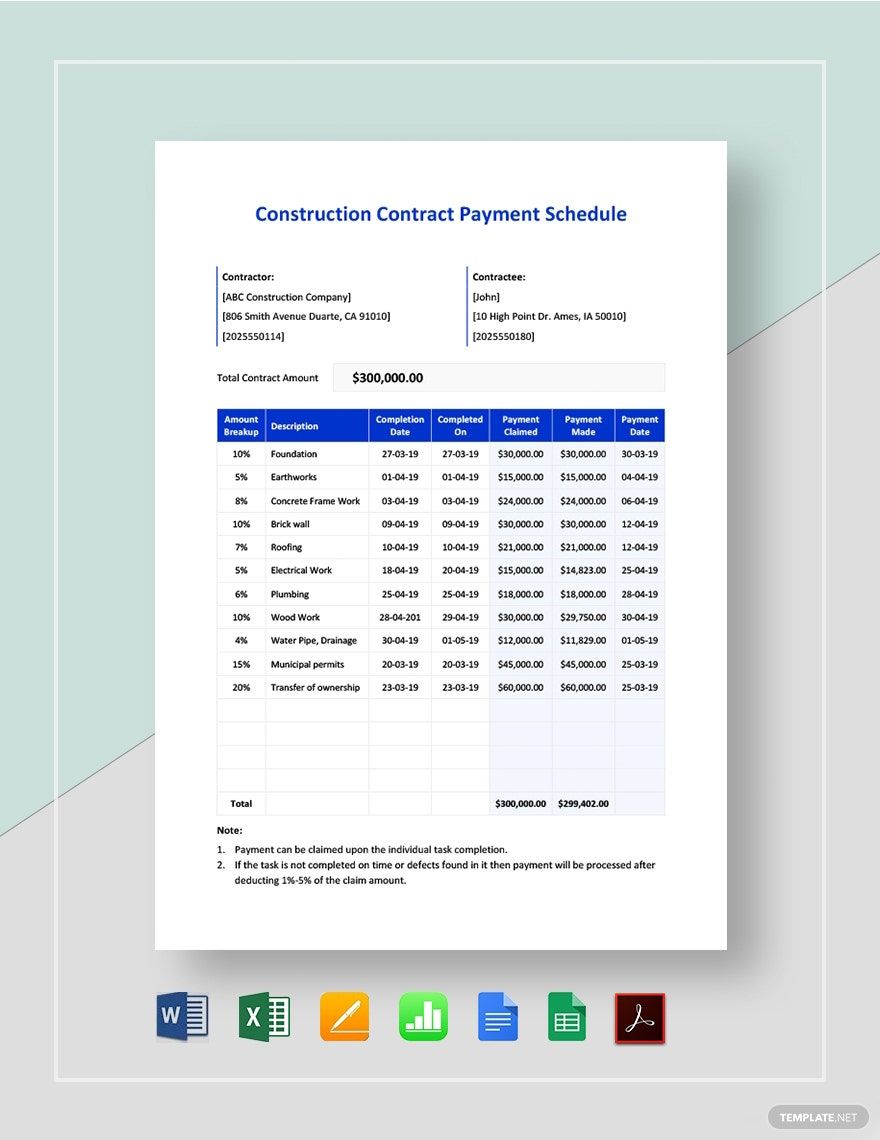
What a contractor payment schedule template should accomplish
A well-designed schedule answers four questions for every payment: what is being paid for, how much is due, when it becomes due, and what evidence supports the claim. Those questions are more useful than a calendar alone because construction work is often measured by completion rather than by elapsed time. A foundation payment, for example, may depend on completion and inspection of the foundation rather than simply reaching the thirtieth day of a project.
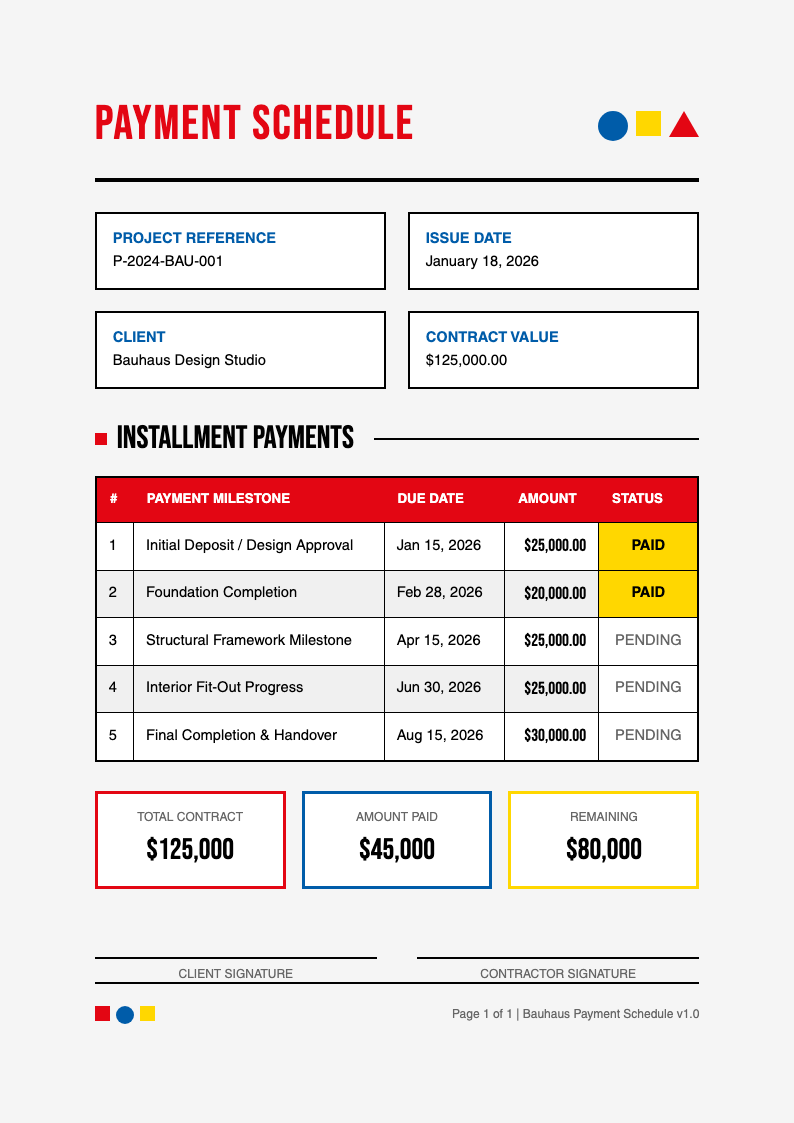
The schedule also creates a shared reference point between the client and contractor. If the contract value is 100,000 and the parties agree on five staged payments, the schedule should make the relationship between those stages and the total unmistakable. The rows should add back to the contract amount, while any retainage, approved change order, credit, or other adjustment should be separately visible rather than hidden inside an unexplained balance.
Another important function is reconciliation. A payment can be scheduled, invoiced, approved, paid, partially paid, or overdue, and those are different states. A good template lets the reader distinguish the planned amount from the amount actually received. It should also show previous payments so that a current request does not accidentally duplicate an earlier bill.
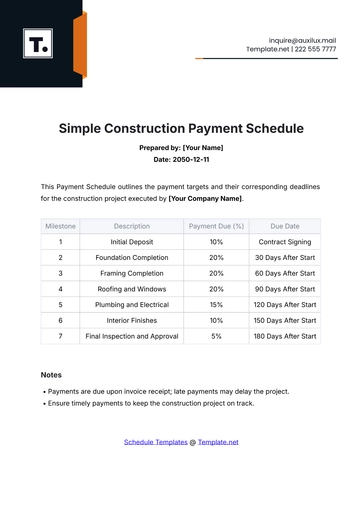
Essential fields to include
The header should identify the project and the parties using the same names and references that appear in the contract. Useful fields include project name, project address, contract number, client or owner, contractor, schedule issue date, contract start date, planned completion date, and the currency used for amounts. If the schedule is attached to a larger agreement, an exhibit or revision reference can also help document which version controls.
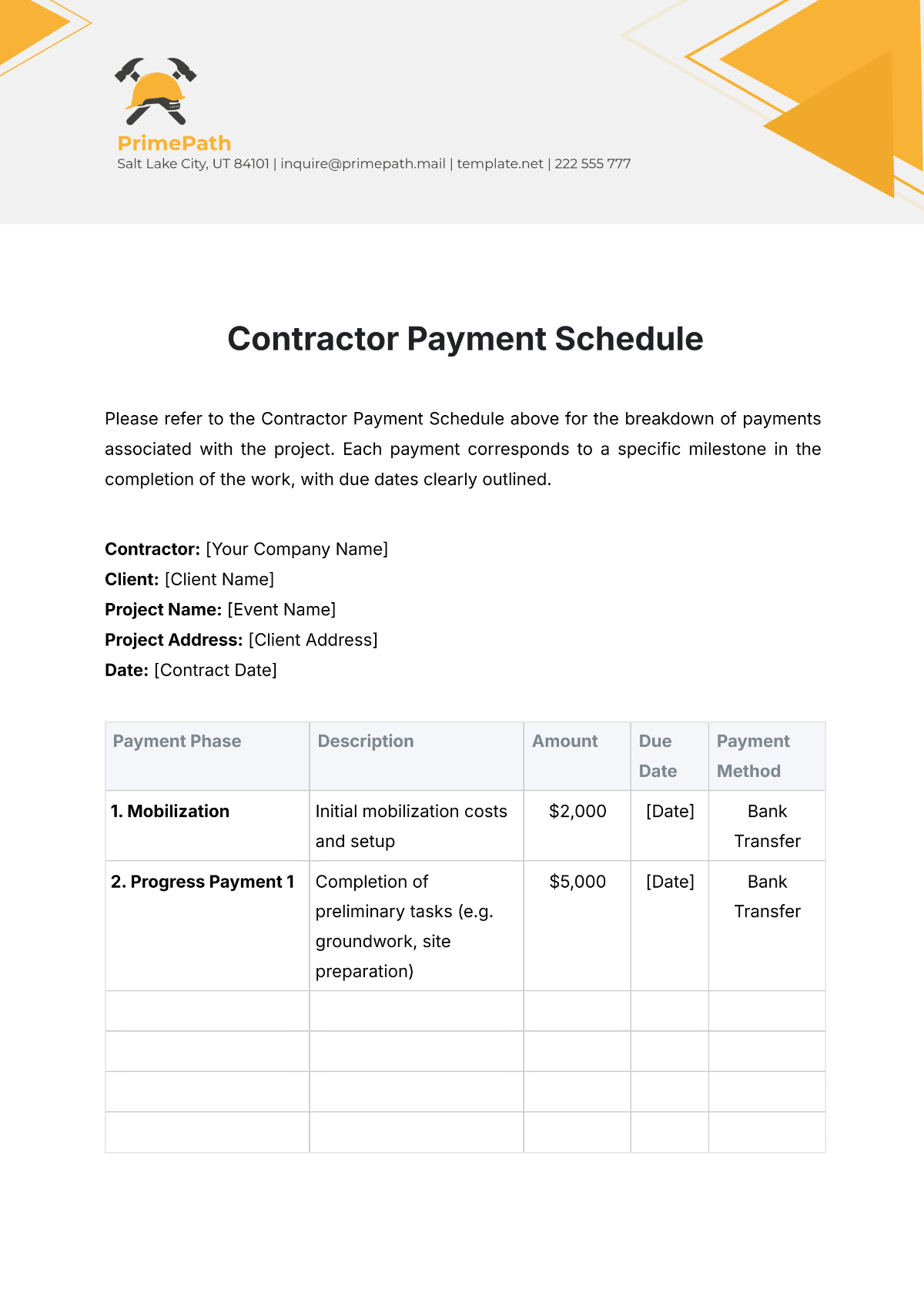
The main payment register should contain a milestone or line-item identifier, a description of the work, the payment trigger, the scheduled amount, the percentage of the contract if percentages are used, the target or due date, the invoice reference, the amount paid, the remaining balance, and the status. A payment method field can be useful when the parties have agreed on several methods. Notes can capture inspection requirements, approval conditions, or references to change orders without overcrowding the main columns.
For larger projects, the schedule should be able to connect to a schedule of values. A schedule of values divides the contract into identifiable work categories and assigns a value to each. That structure supports progress billing because the amount claimed can be compared with the percentage of work completed. Construction payment records commonly distinguish completed work, previously billed amounts, retainage, current amounts due, and the balance remaining, so these fields should be visible when the project requires detailed progress billing.
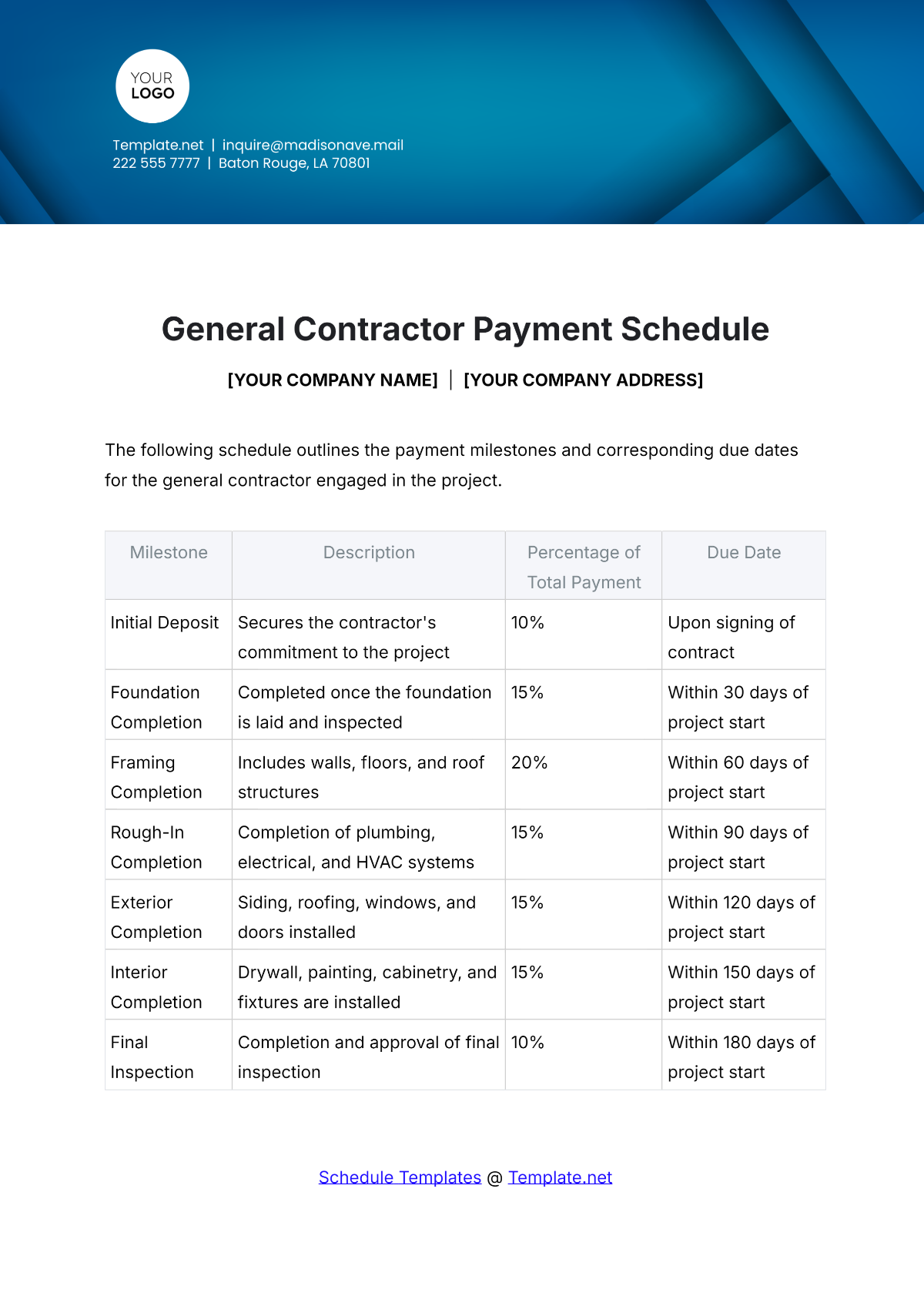
Choosing between spreadsheet and document formats
A spreadsheet is usually the better choice when the schedule must calculate totals, track changing balances, sort payment status, or be updated throughout a project. A contractor payment schedule template excel can be structured with formulas that sum scheduled amounts, subtract payments already recorded, and flag an imbalance between the contract total and scheduled payments. A spreadsheet is especially useful when there are many subcontractors, repeated progress claims, or frequent change orders.
A shared sheet can be useful when several authorized project participants need to review the same current information. A contractor payment schedule template google sheets can support collaborative review, provided the project team uses sensible permissions, a consistent naming convention, and a clear process for approving changes. Collaboration does not replace contract control; the signed agreement should remain the source for the obligations, while the working sheet acts as an operational record.
A document-oriented version is often preferable when the schedule will be signed, attached to an agreement, or presented as a fixed record. A contractor payment schedule template word can be formatted as an exhibit with signature blocks, definitions, and payment conditions. A contractor payment schedule template pdf is useful when the parties need a stable visual record for circulation or filing, but the underlying editable source should be retained if revisions are expected. The choice should follow the purpose of the schedule, not simply the preferred software.

How to structure milestone payments
Milestones work best when they are objective enough that two reasonable reviewers can reach the same conclusion about whether the trigger has occurred. “Foundation complete and accepted” is generally clearer than “foundation nearly finished.” A milestone can refer to physical completion, inspection approval, delivery of a defined package, certification, or another event expressly stated in the agreement. The schedule should identify any required approval so that a payment does not become ambiguous at the moment it is due.
A common residential pattern might include an initial amount at contract signing, a mobilization or site-preparation payment, several progress payments tied to visible phases, and a final balance after completion and acceptance. That is an example rather than a universal rule. A commercial project may instead use monthly progress billing supported by a schedule of values, while a small specialist job may use two or three larger stages.
When readers search for a typical payment schedule for contractors, they often expect a percentage formula. Percentages can be useful, but the trigger matters just as much as the percentage. A 20 percent payment should not be described merely as “payment two”; it should identify the work or approval that earns that amount. This reduces disagreements over whether a payment is due because a date arrived or because the contracted stage was actually achieved.

Building a schedule of values into the payment plan
A schedule of values is useful when the project is large enough that a single milestone description cannot show meaningful progress. It can divide the contract into site preparation, foundation, structure, mechanical work, electrical work, finishes, testing, and closeout, or into another set of work packages that matches the actual scope. Each line receives a scheduled value, allowing the payment request to show what portion has been earned.
A payment schedule template for construction should be built around the actual contract structure, with milestone or progress-payment triggers that can be verified.
The important discipline is consistency. If the schedule of values uses one set of categories while the project schedule uses another, reconciliation becomes harder. Ideally, payment lines correspond to recognizable activities or work packages that can be verified in the field and connected to invoices or supporting records. The categories should be detailed enough for review but not so granular that the schedule becomes an accounting burden.
Progress billing also requires attention to previous payments. If a line is valued at 20,000 and 12,000 has already been billed or paid, the current claim should make the remaining 8,000 visible. Retainage should be displayed separately where the contract uses it. This makes it easier to understand the gross earned amount, withheld amount, current amount payable, and remaining contract balance without mixing different concepts.

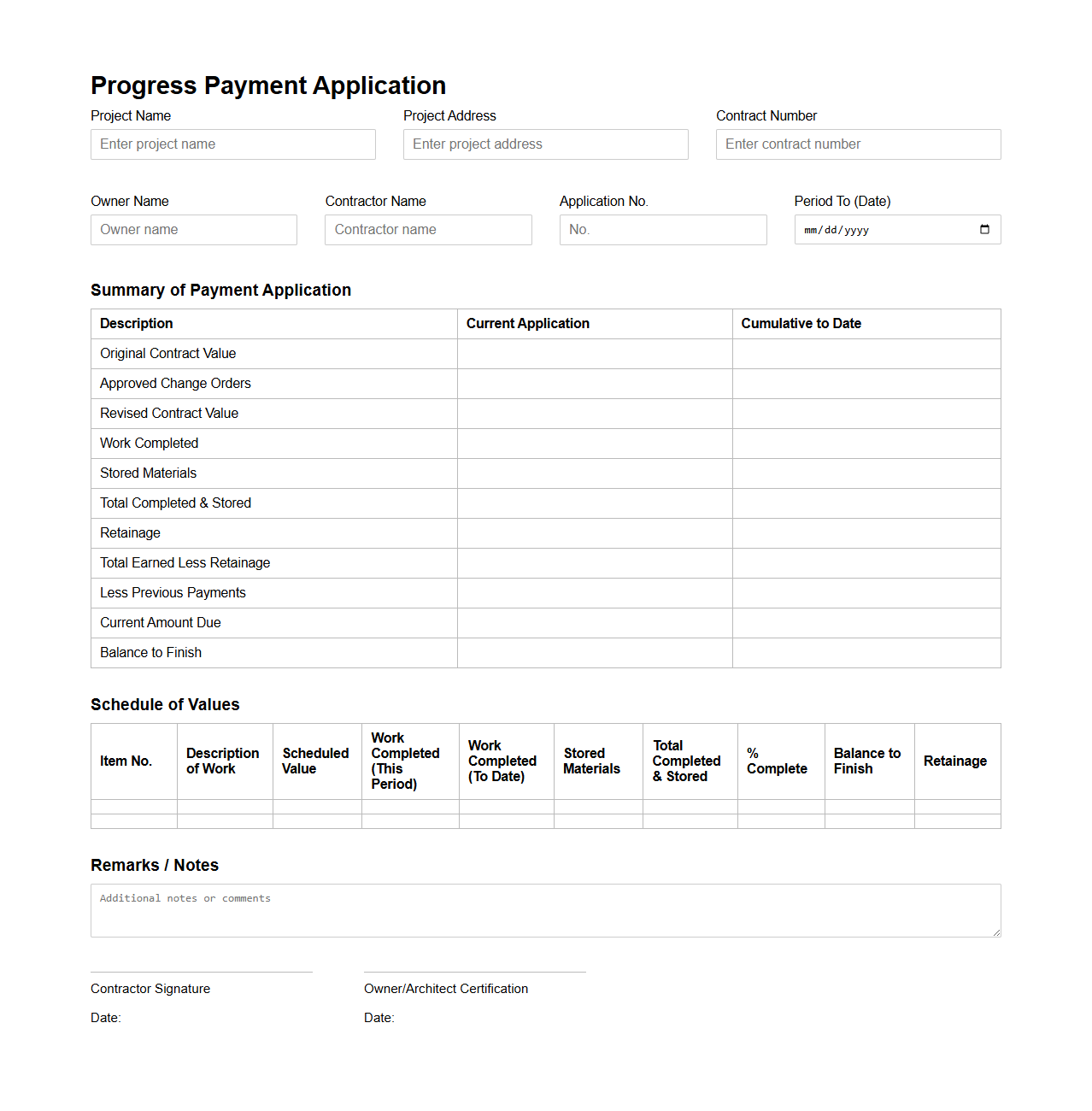
Retainage, previous payments, and final balance
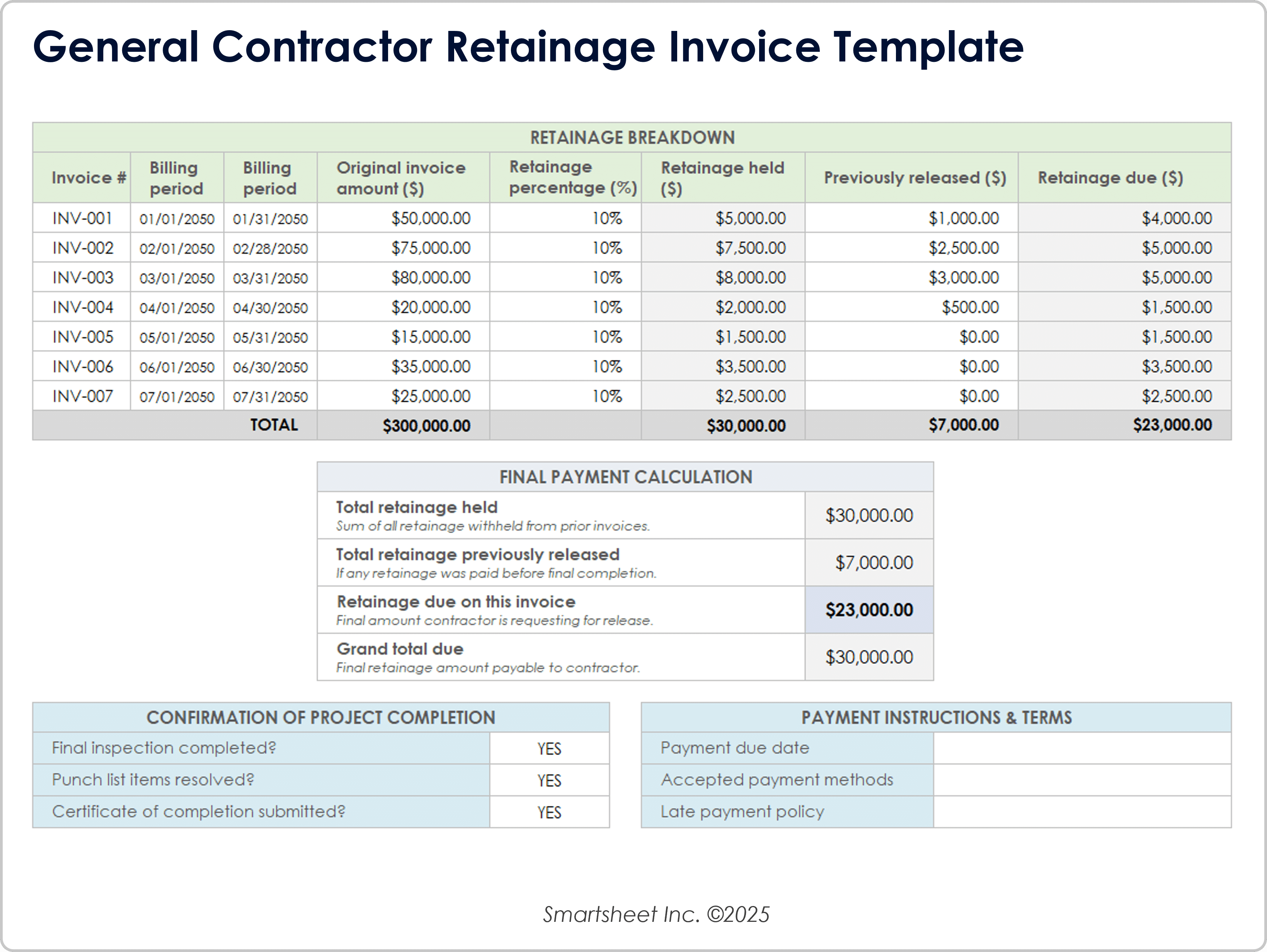
Retainage is an amount withheld from otherwise earned progress payments when the contract provides for it. Its purpose, rate, release condition, and treatment vary by contract and jurisdiction, so a generic template should never imply that one rate applies everywhere. The schedule should instead identify the agreed retainage rule and show the amount withheld so that the contractor and owner can see how it affects the net payment.
For example, if a hypothetical progress claim is 20,000 and the contract calls for 5 percent retainage, the gross claim is 20,000 and the retained amount would be 1,000, leaving 19,000 before any other adjustment. This is an illustrative calculation, not a recommended contractual rate. The schedule should state whether retainage is calculated on the current claim, cumulative earned value, or another basis defined by the agreement.
Final payment should also be treated as a distinct event. A final row can identify completion, inspection, punch-list resolution, turnover documents, release conditions, or other requirements stated in the contract. Where retained amounts are released separately, the schedule should show that release as its own line rather than silently adding it to the final progress payment.
What to put in the contractor payment agreement
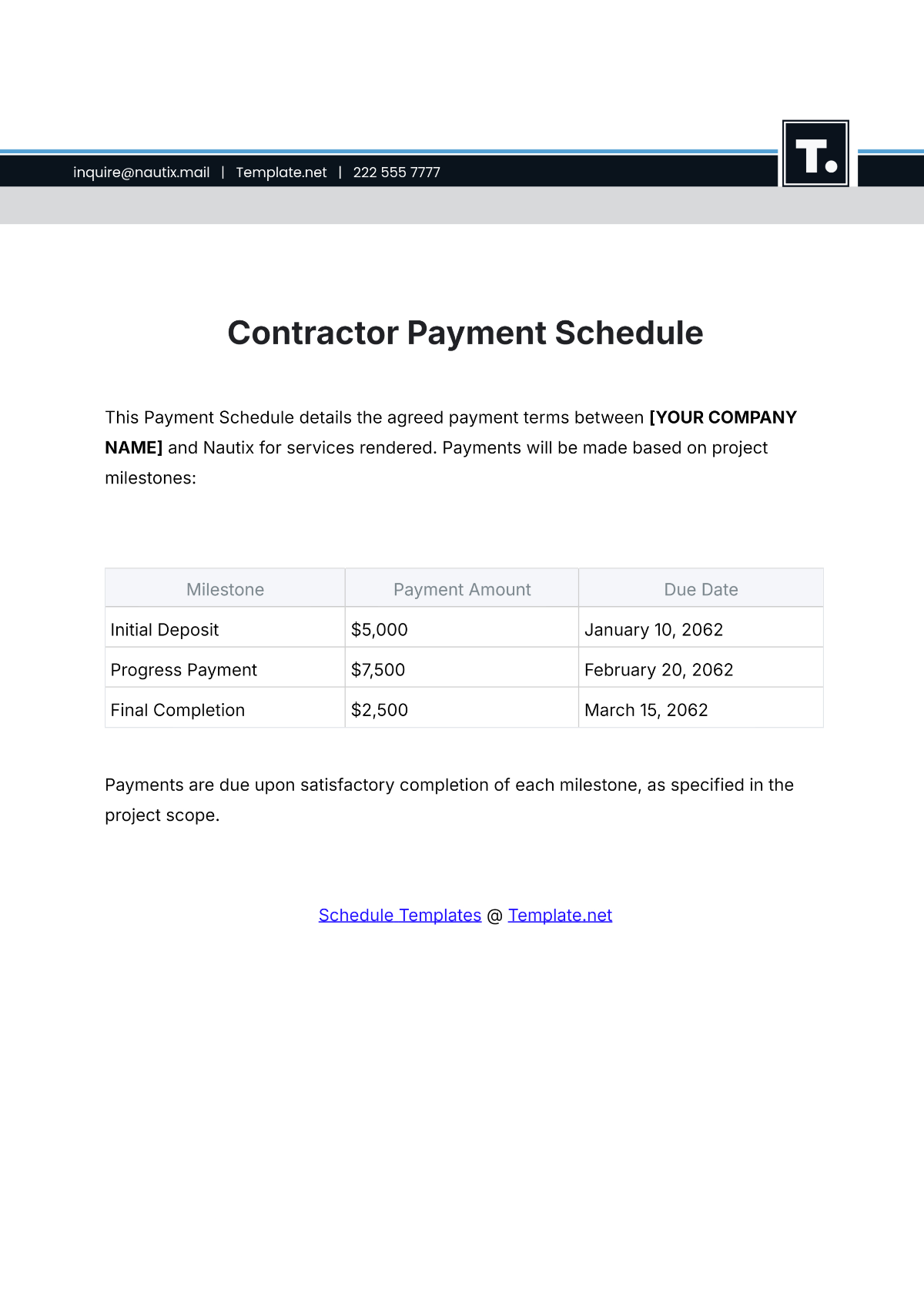
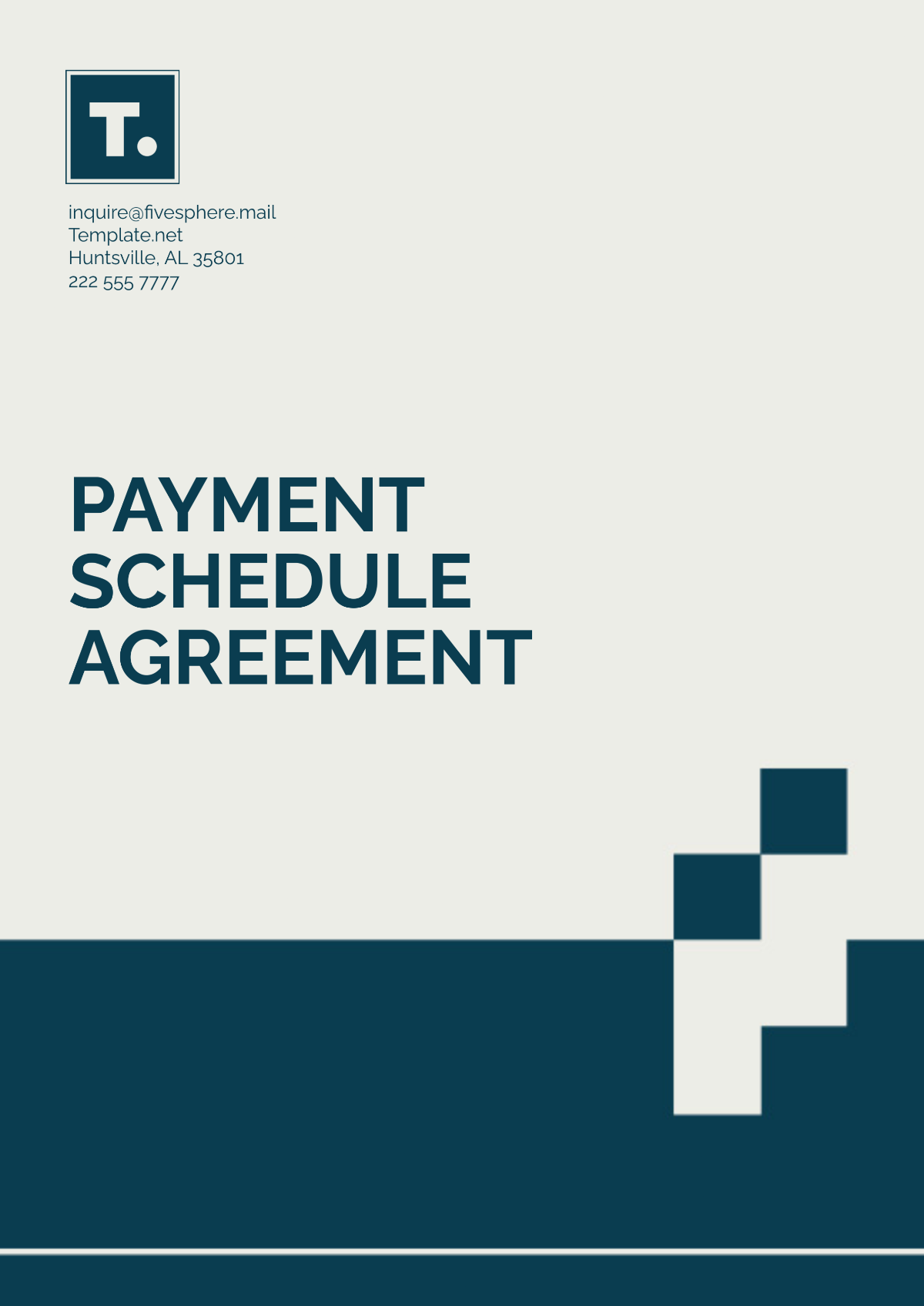
A contractor payment schedule should be connected to the agreement that creates the payment obligation. The document should identify the parties, project, contract value, payment triggers, timing, invoicing procedure, approval requirements, payment method, and treatment of changes. A contractor payment schedule agreement can be a standalone exhibit or a schedule incorporated into a broader construction contract, depending on how the parties structure their documents.
The payment clause should make clear whether the due date runs from milestone completion, invoice receipt, approval, certification, or another event. It should also explain how disputed amounts are handled and whether undisputed amounts remain payable. If late charges, suspension rights, notice requirements, or other remedies apply, those provisions should be stated consistently with the governing contract and local law rather than copied from a generic form.
For public construction, contractual rules can be more specific than ordinary private arrangements. U.S. federal construction clauses, for example, contain detailed provisions concerning progress payments, substantiation, retainage, final payment, and payment timing. Those rules are specific to the applicable federal contracts and should not be presented as universal private-sector requirements. A private project should follow its own contract and governing law.
Example of a practical payment schedule
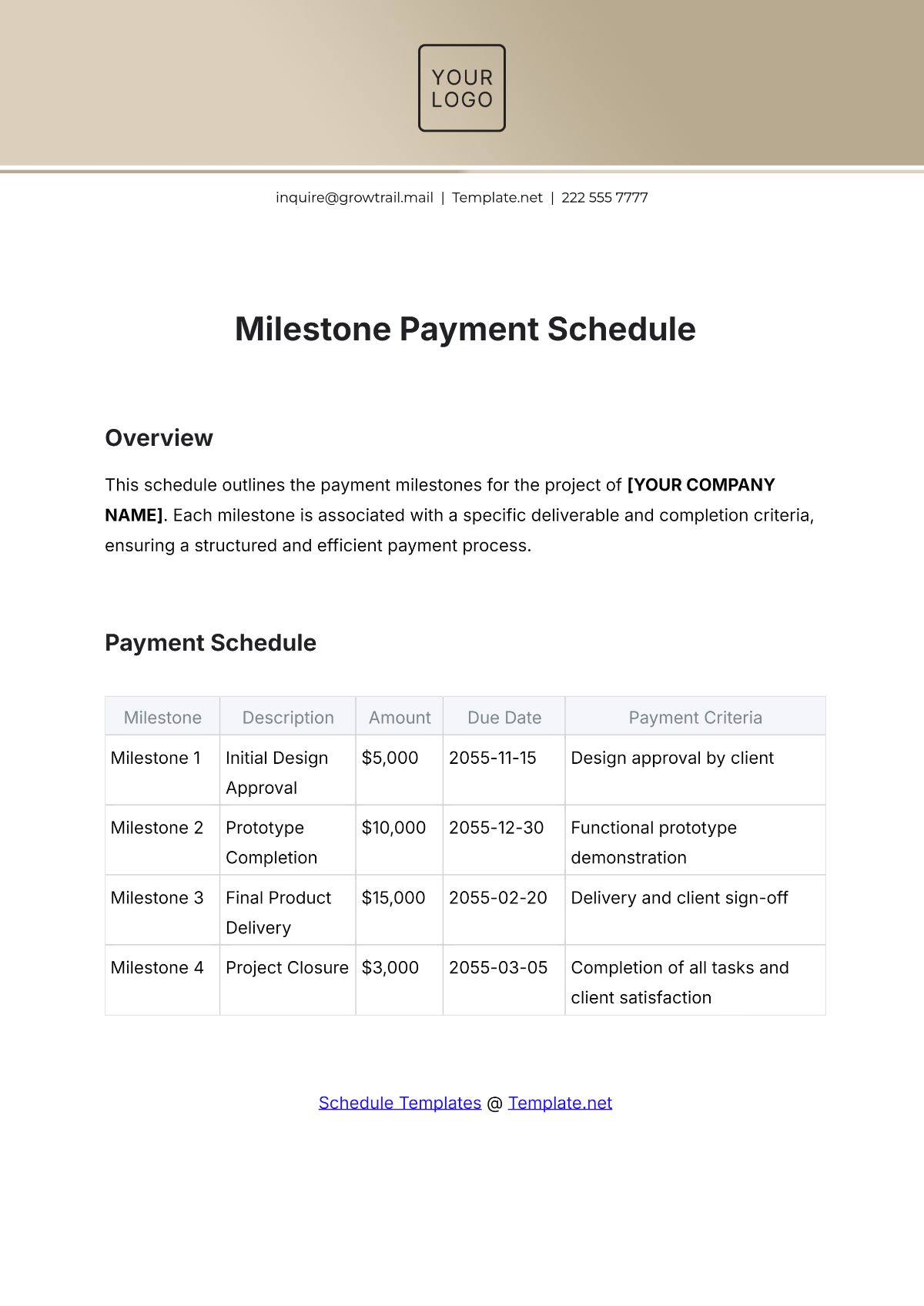
Consider a hypothetical 120,000 residential renovation. The parties might divide the price into a 10 percent initial payment, a 20 percent site and foundation stage, a 25 percent structural and rough-in stage, a 20 percent enclosure and interior preparation stage, a 15 percent finish stage, and a 10 percent final completion stage. The percentages total 100 percent, but the example is not a recommendation. The actual contract should establish amounts based on the project’s economics, risk, materials, and local requirements.
Each row should define the event that earns the payment. The first row could be due upon contract execution if the agreement calls for an initial payment. The next could be due after the foundation is completed and any required inspection is passed. The structural and rough-in payment could require specified systems or work packages to be complete. The final payment could depend on substantial completion, agreed punch-list work, final inspection, and the closeout documents required by the contract.
This is where a sample payment schedule for construction becomes more useful than a generic list of percentages. A reader can see how the money follows the work. The schedule should also include a running balance so that every payment can be checked against the original contract amount. If a change order increases the contract, the schedule should be revised through the agreed change-control process instead of simply editing the total without explanation.

Using a construction payment schedule example correctly
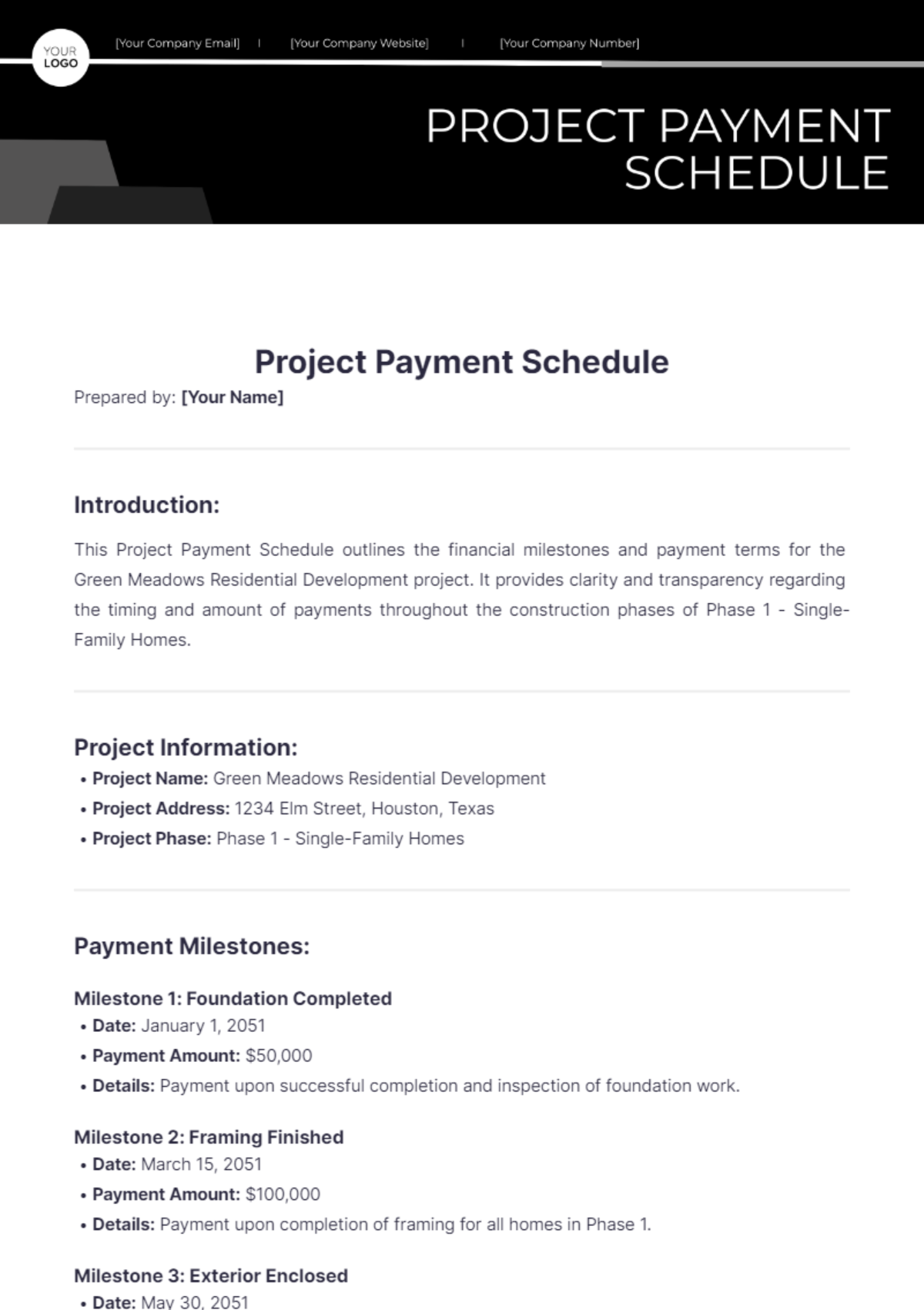
A construction payment schedule example is most useful when it demonstrates structure rather than pretending to predict the exact terms of a real project. Start with the contract amount, list the milestones, assign an amount or percentage, define the trigger, and show the expected timing. Then add fields for invoice number, approval date, payment date, and balance when the project requires detailed tracking.
One useful test is to remove the milestone description and ask whether the remaining date and amount would still tell the parties why the money is due. If the answer is no, the description is doing important contractual work and should be retained. Another test is to total all scheduled payments and compare that figure with the contract value after approved changes. The two numbers should reconcile according to the rules of the agreement.
The schedule should also be readable by someone who was not present when the contract was negotiated. Clear labels, consistent date formats, and explicit status terms reduce interpretation. A form contractors payment schedule may be used by field personnel, accounting staff, project managers, or clients, so the layout should favor quick verification over decorative complexity.
How to use spreadsheet formulas without losing contract control
Automation can reduce arithmetic errors, but formulas should support the contract rather than redefine it. A basic schedule can calculate each payment amount as contract value multiplied by an agreed percentage. A progress schedule can calculate the current amount as earned value less previous billings and applicable retainage. A balance column can subtract paid amounts from the scheduled total. These calculations should be checked against the contract whenever a change order is approved.
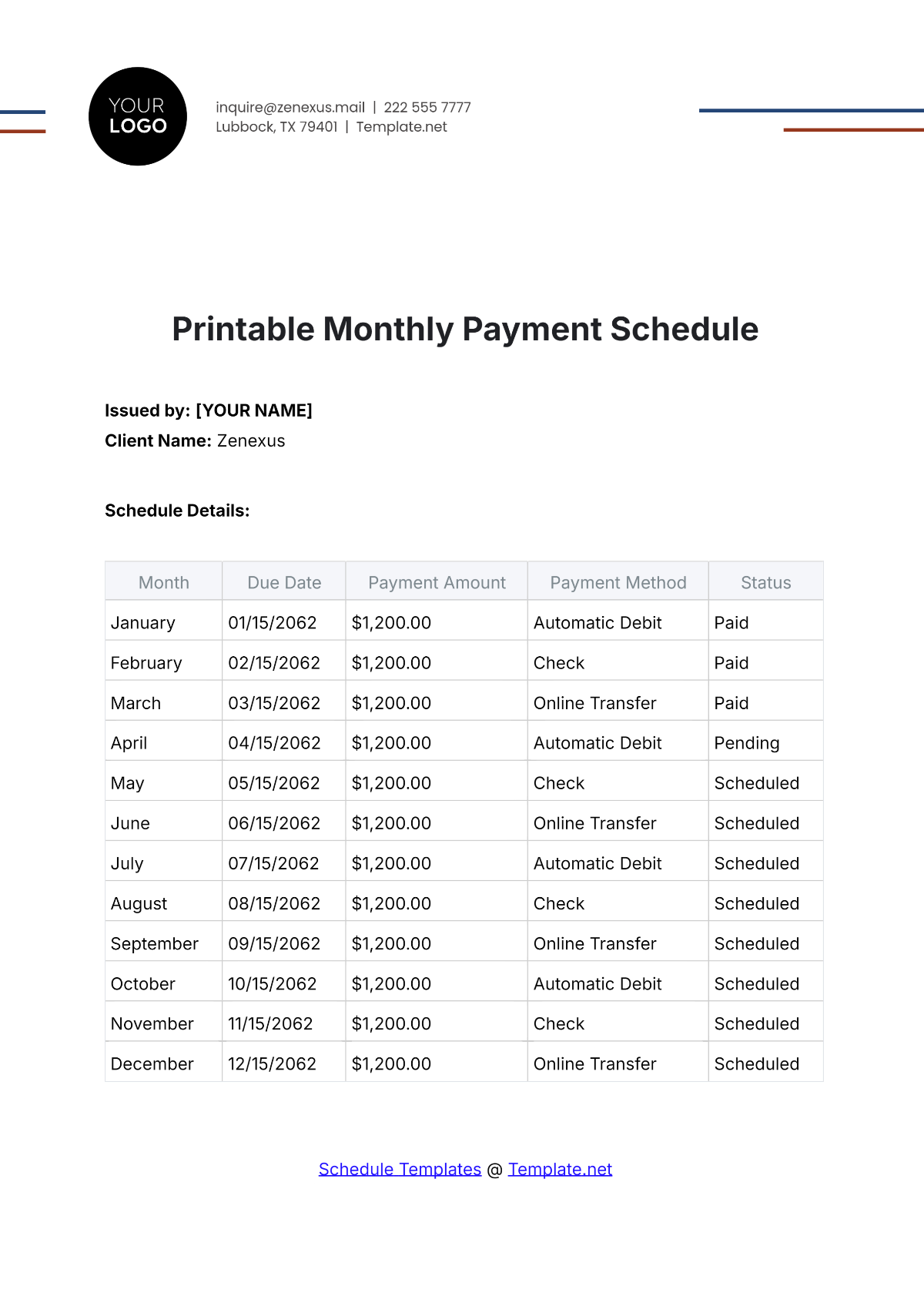
A useful reconciliation check is to compare the sum of all scheduled payments with the current contract value. If the values differ, the sheet should make the discrepancy obvious. Another useful check compares the sum of paid amounts with the amount invoiced or approved. A partial payment should not be marked as fully paid simply because a date has been entered. Status categories such as planned, submitted, approved, partially paid, paid, disputed, and overdue can make the register more informative.
For recurring work, a spreadsheet can also separate the planned schedule from the actual payment ledger. The plan answers what should happen; the ledger records what did happen. Keeping those concepts separate prevents a late or partial payment from silently changing the original contractual schedule and makes later reconciliation much easier.
When a printable or fixed document is preferable
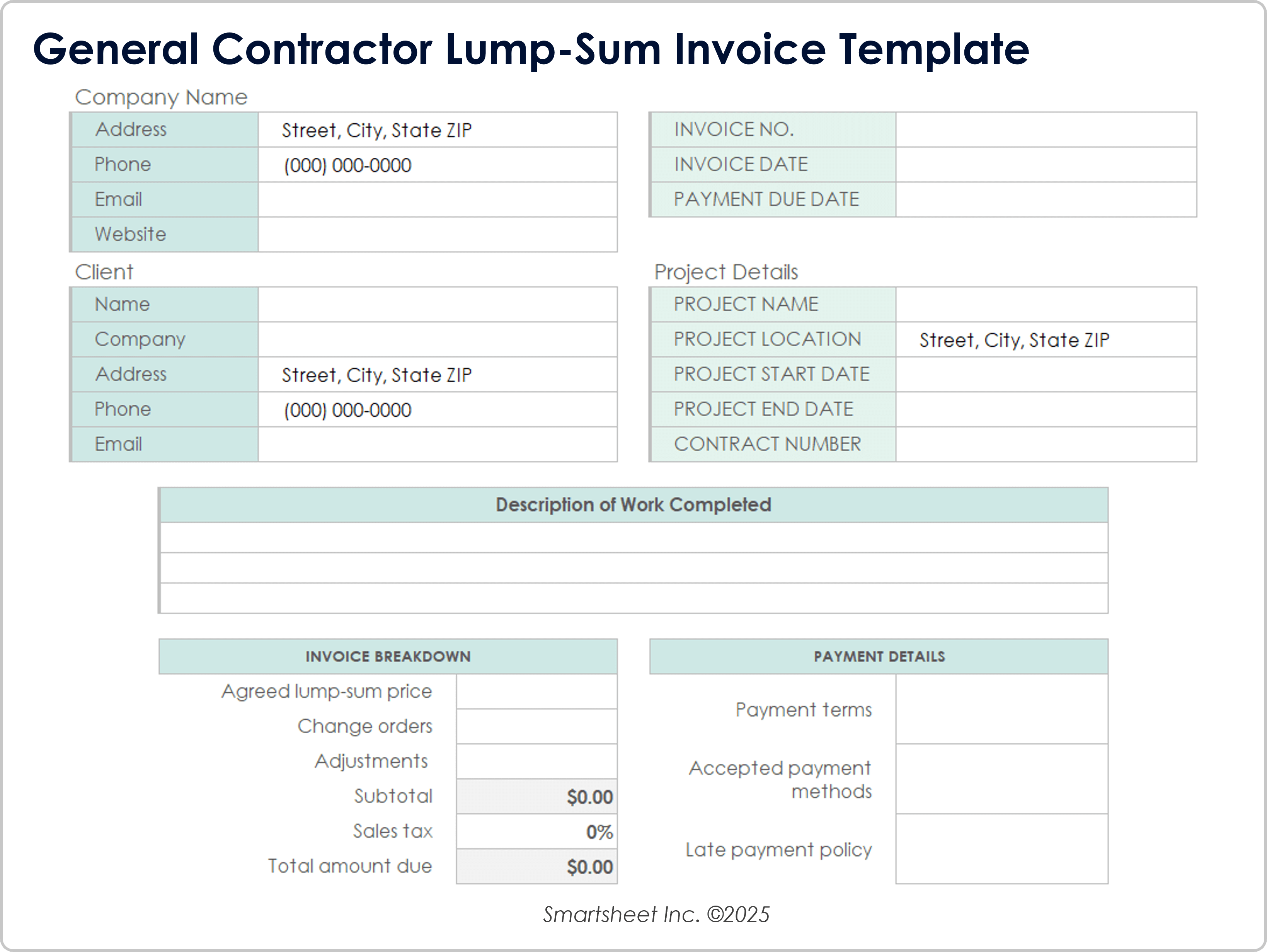
A fixed document is valuable when the schedule is being signed or attached to an agreement. The visible layout can include a short introductory statement, project identifiers, a payment table, definitions, special conditions, and signature blocks. This format works particularly well when the parties need to show exactly what version was agreed at contract signing.
A contractor payment schedule template free download may be a phrase people use when looking for a ready-made document, but the more important question is whether the resource actually fits the project. Before adopting any template, check whether its fields cover payment triggers, change orders, retainage, previous payments, approvals, and final closeout. A visually attractive page can still be inadequate if it omits the information needed to administer the contract.
Likewise, a contractor payment schedule template pdf can be useful for a fixed record, while an editable source is generally better for maintaining the working schedule. If a PDF is created from an editable document, verify the final figures, dates, signatures, and revision identifier before circulation. The published copy should match the version that the parties actually approved.
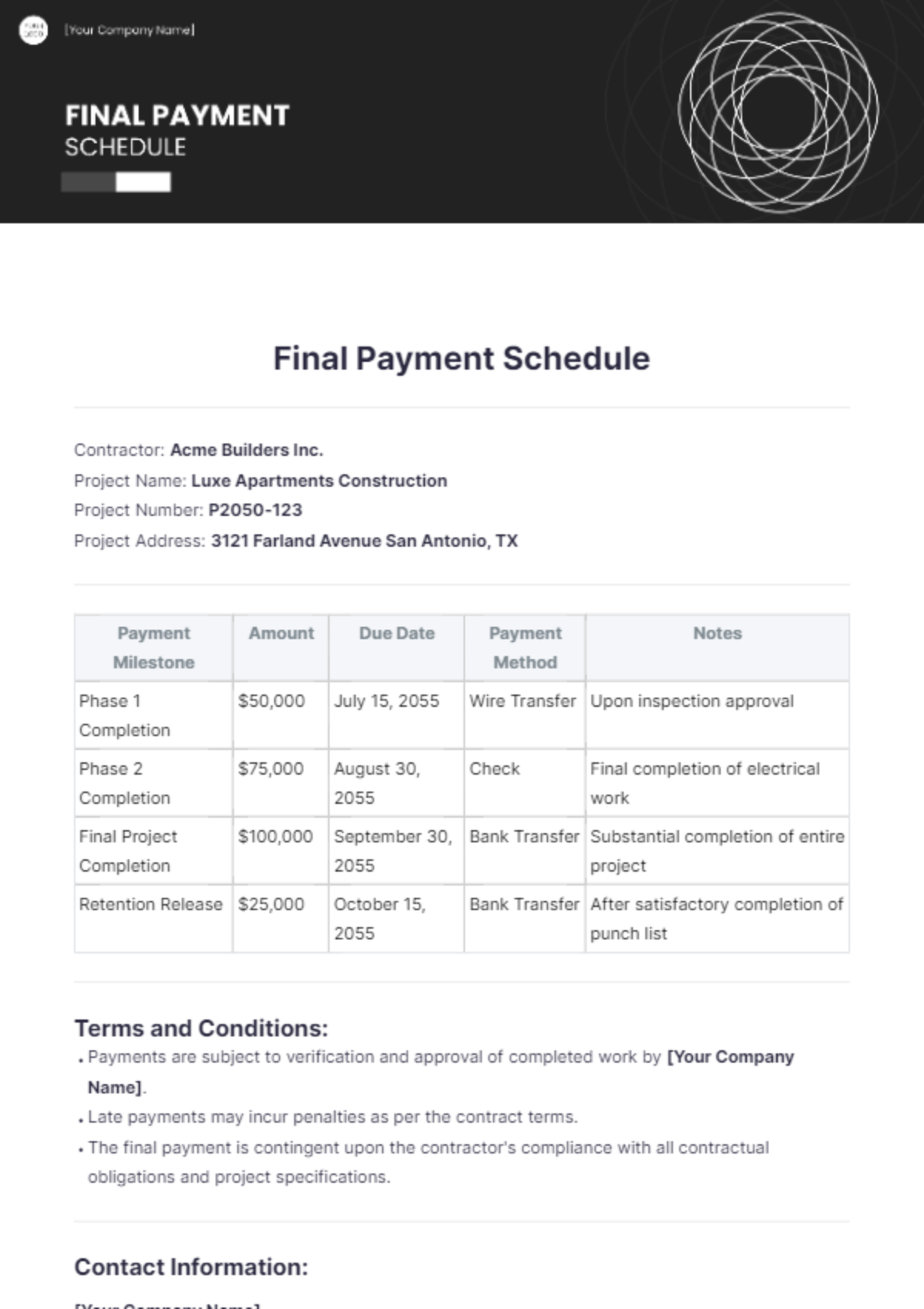
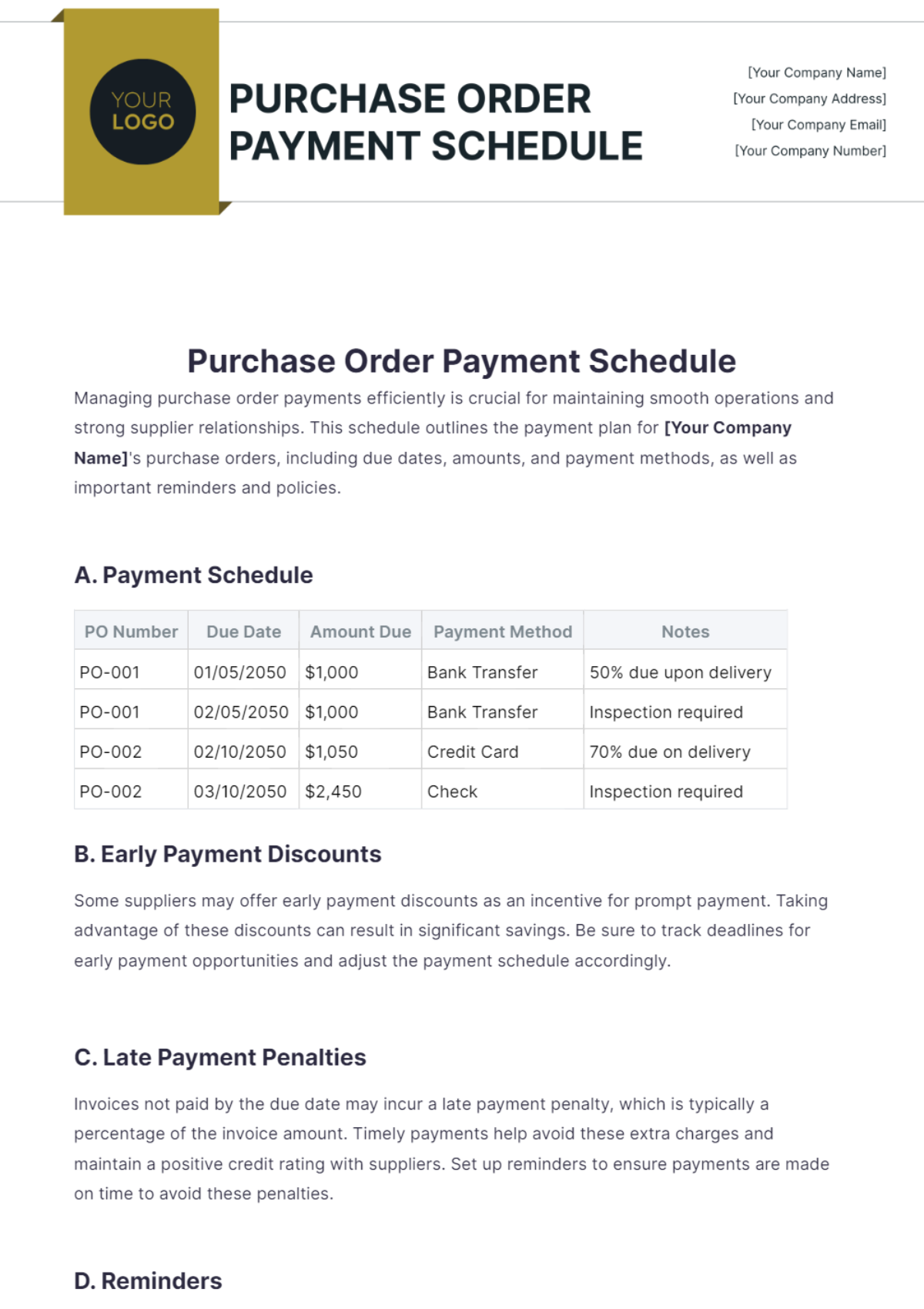
How to compare template layouts
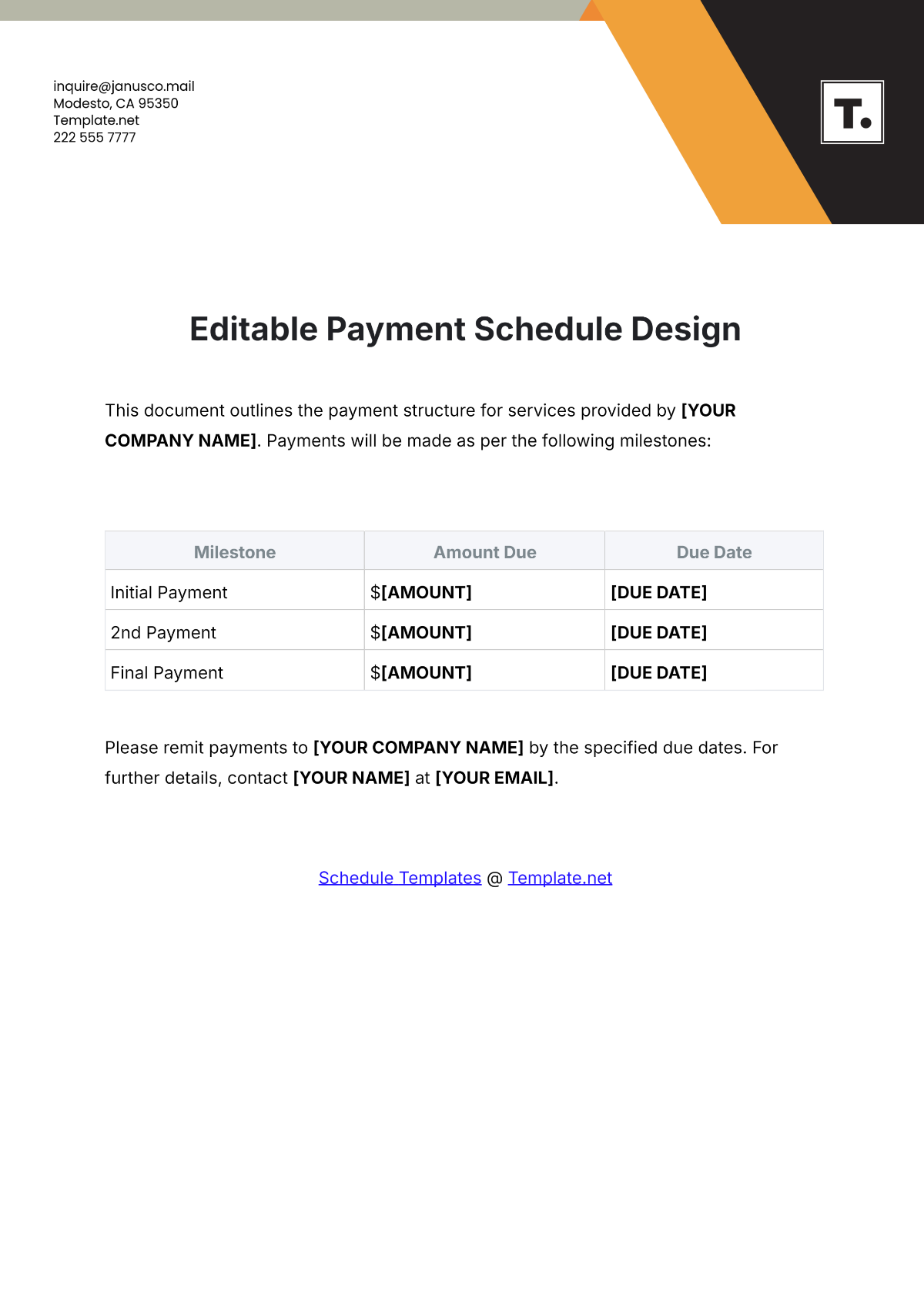
When comparing layouts, first look at whether the schedule distinguishes milestone, amount, due condition, due date, payment status, and balance. A compact schedule can be ideal for a small renovation, while a larger project may need a schedule of values and a separate payment request. The best format is the simplest one that still gives every reviewer enough information to verify the claim.
Next, examine how exceptions are handled. Construction projects change. Approved change orders can increase or decrease the contract value, material deliveries can affect timing, inspections can move a milestone, and partial payments can leave an outstanding balance. A robust template gives these events a place to be recorded without rewriting the entire history.
Finally, review the relationship between the schedule and the contract. If the template contains generic language about late payment, retainage, approval, or dispute handling, treat that wording as a drafting starting point rather than an automatic legal rule. Contract language should be reviewed for consistency with the actual agreement and applicable law.
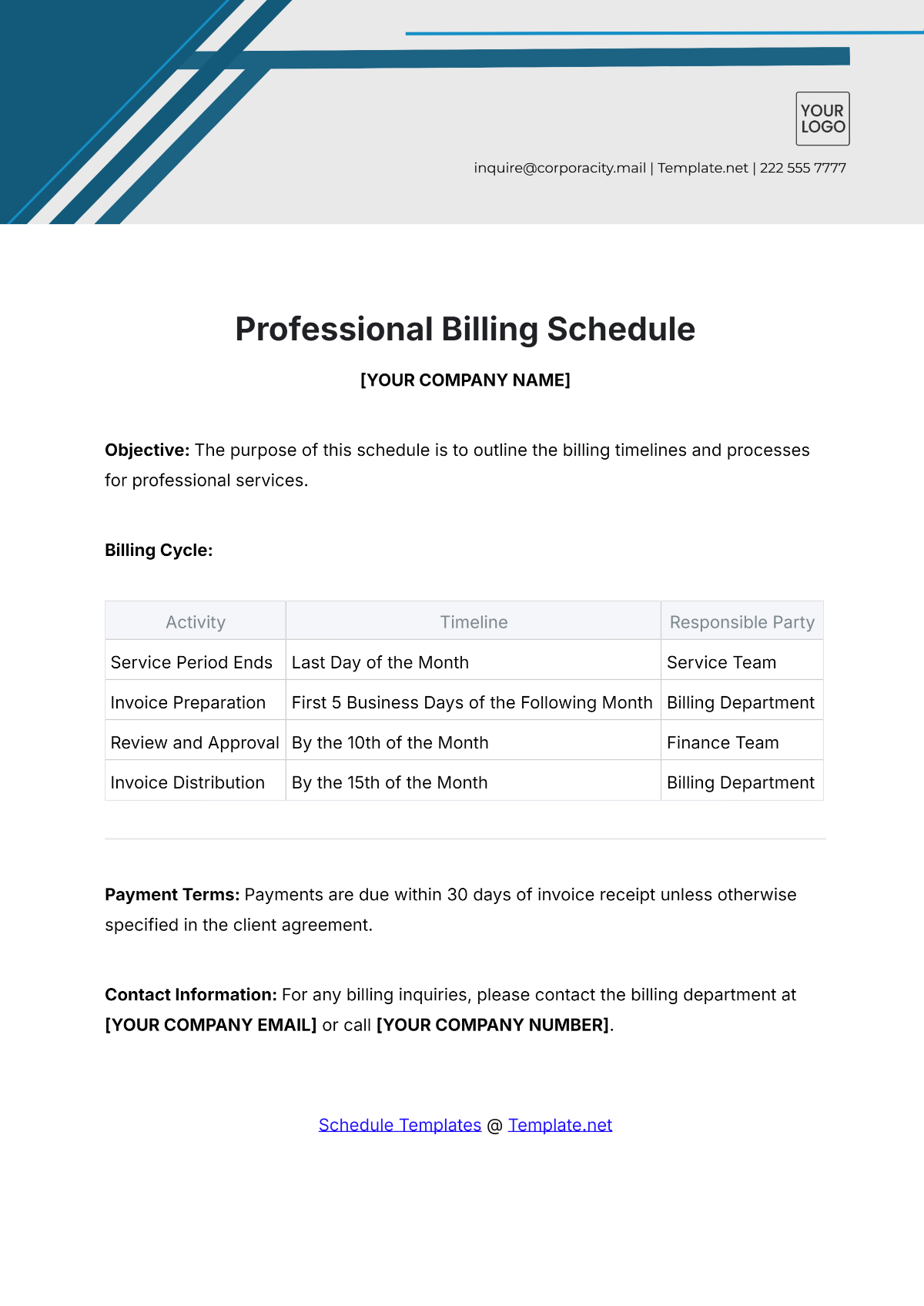
Common mistakes to avoid
The first common mistake is using dates as the only trigger. A calendar date can pass even when the underlying work is incomplete, disputed, or awaiting inspection. If the contract is milestone-based, the schedule should identify the completion or approval event that makes the payment due.
The second mistake is failing to reconcile the schedule with the contract total. Small arithmetic differences can become significant when multiple change orders and partial payments accumulate. Every revision should preserve an audit trail showing what changed, why it changed, and who approved the change under the contract’s procedures.
The third mistake is combining gross earned value, retainage, paid amounts, and remaining balance in a single figure. These are different concepts. Keeping separate columns makes the schedule easier to review and reduces the risk of double billing or premature release of retained amounts.
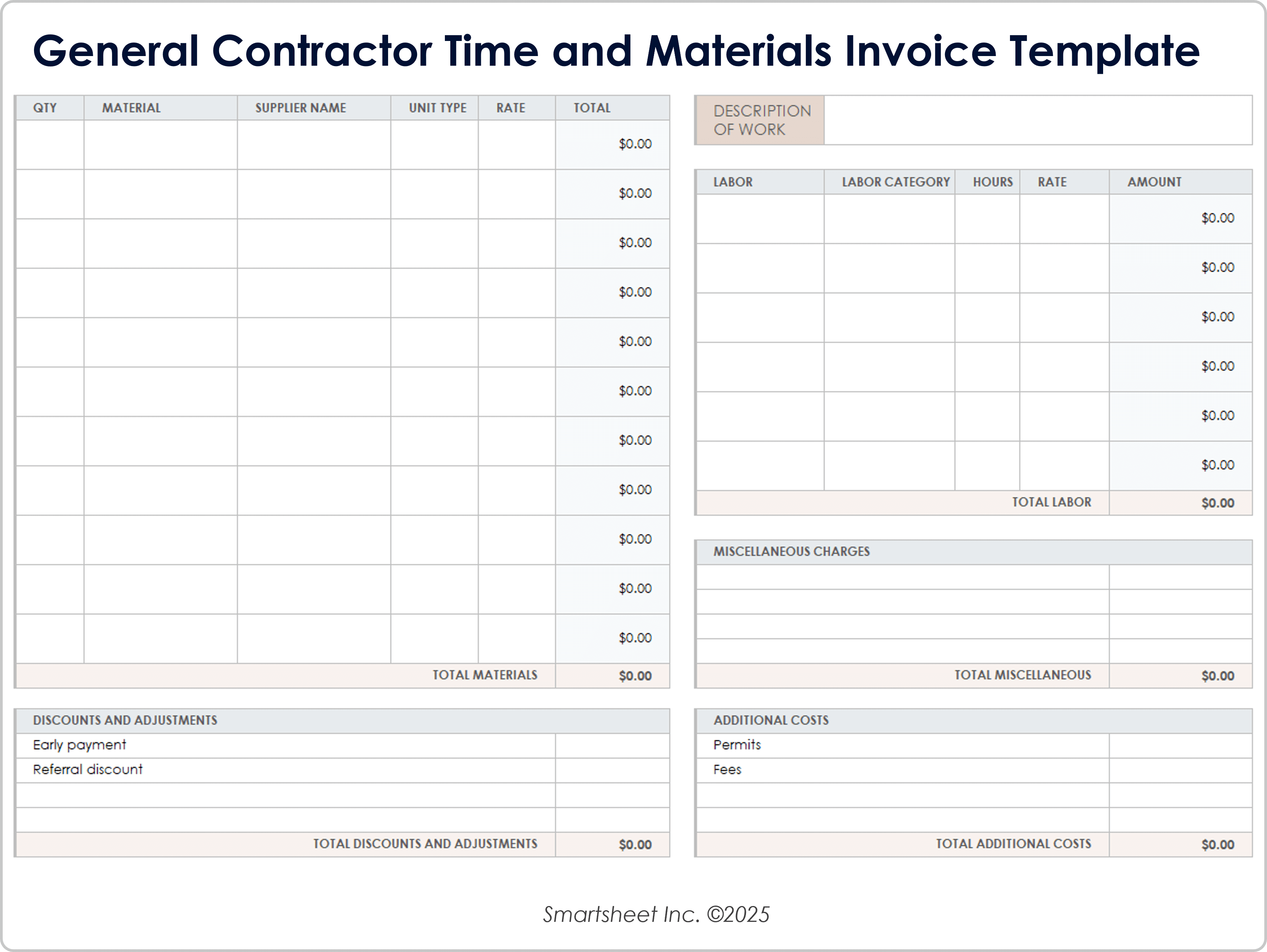
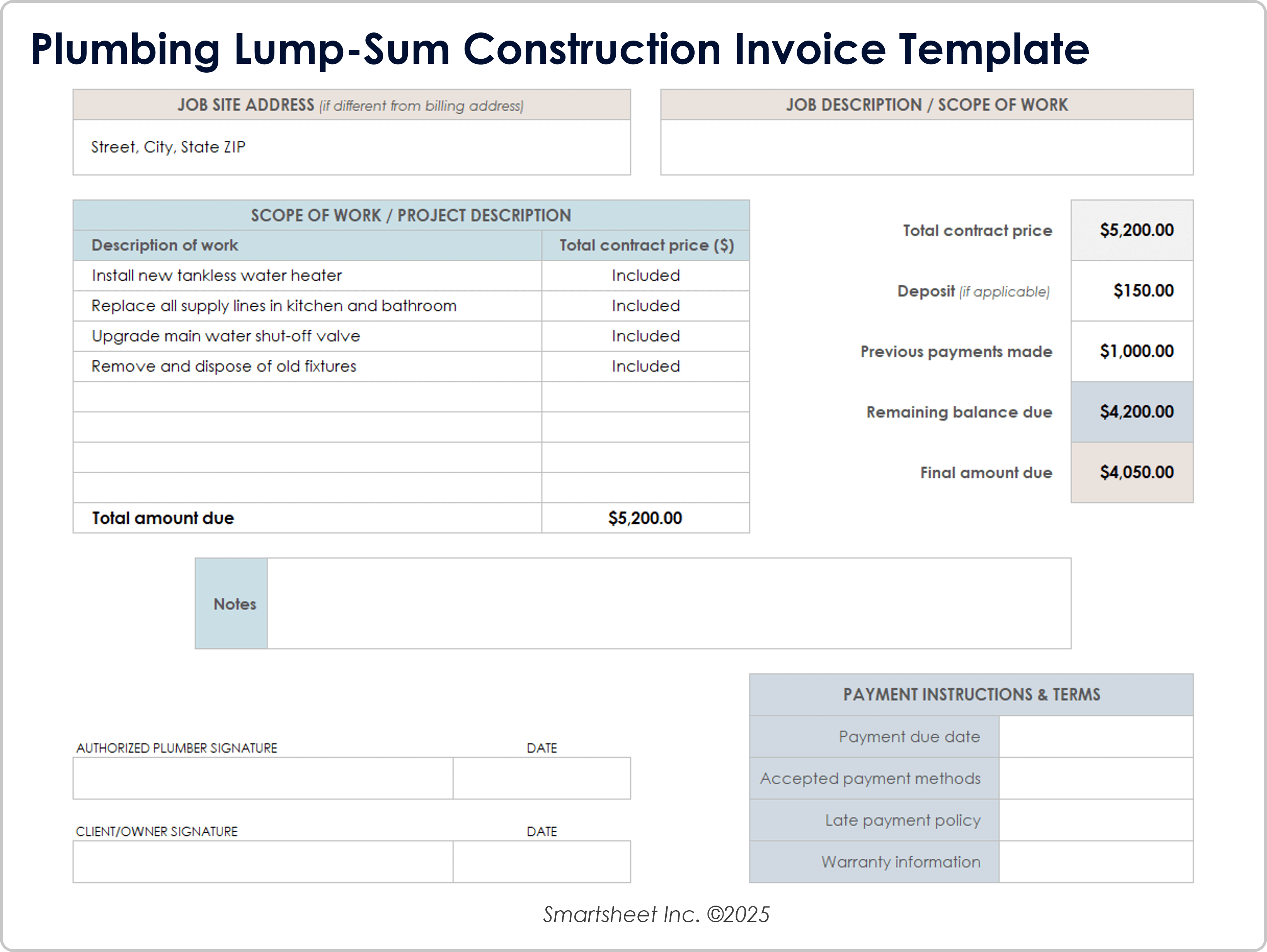
Practical Solution
Start by copying the payment obligations from the signed contract into a clean working register. Do not begin with percentages unless the contract actually uses them. For each obligation, write the milestone or work package, the objective trigger, the amount, the expected timing, and any approval required. Then add the contract total and make sure the scheduled amounts reconcile with it.
Next, decide how the schedule will be maintained. For a small project, a concise document may be sufficient. For a project with frequent billing, use a spreadsheet structure that records scheduled amount, invoice reference, approved amount, paid amount, retainage, and remaining balance. If several people review the record, establish one person responsible for updating the master schedule and require supporting evidence for changes rather than allowing informal edits.
Finally, connect each payment to a verification step. Before a payment is marked approved, confirm that the stated milestone occurred, required inspection or certification was completed, approved change orders are included, previous payments are reconciled, and any retainage calculation follows the contract. Before final payment, verify the closeout requirements stated in the agreement. This workflow turns a simple template into a practical control system for the project.
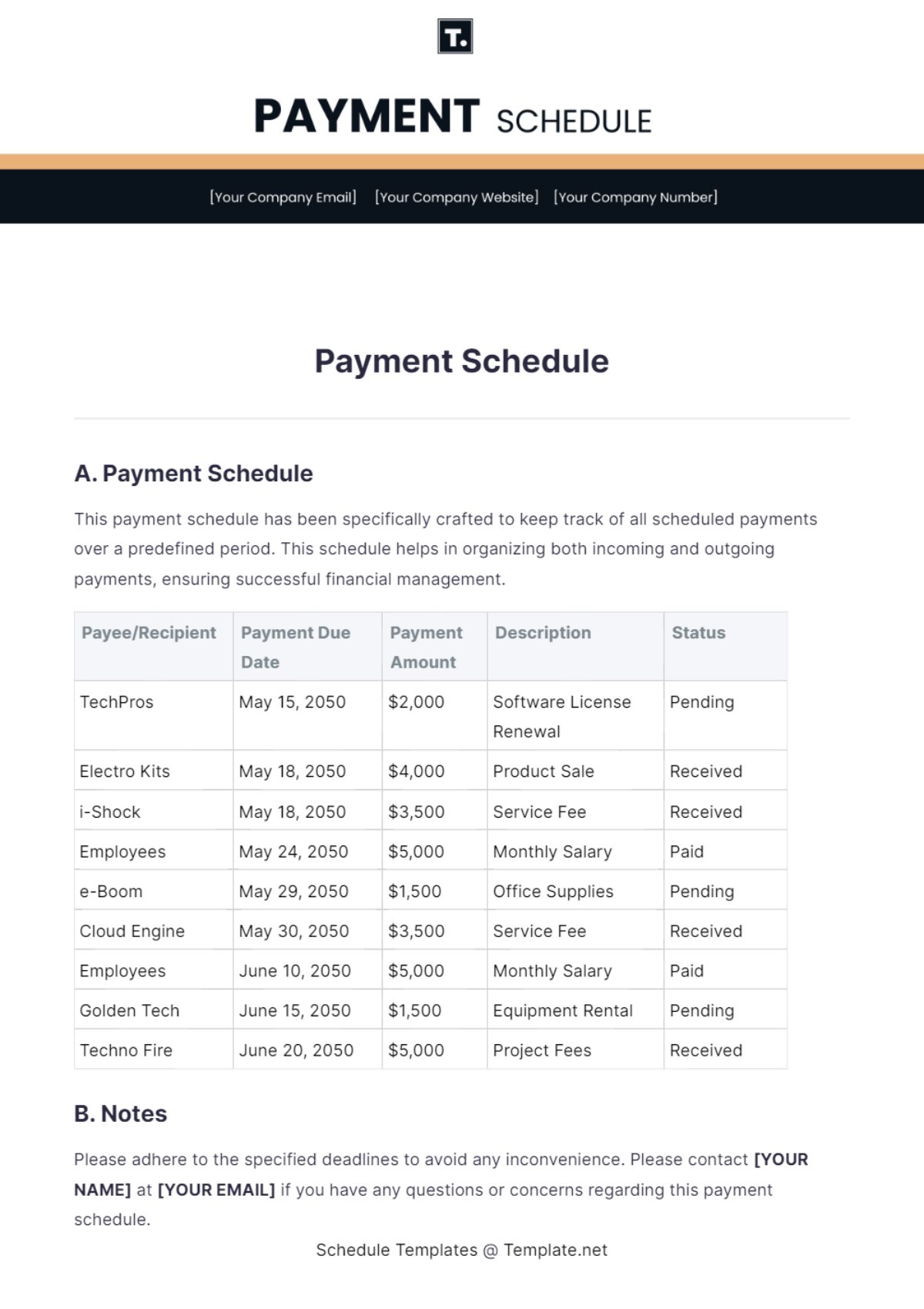
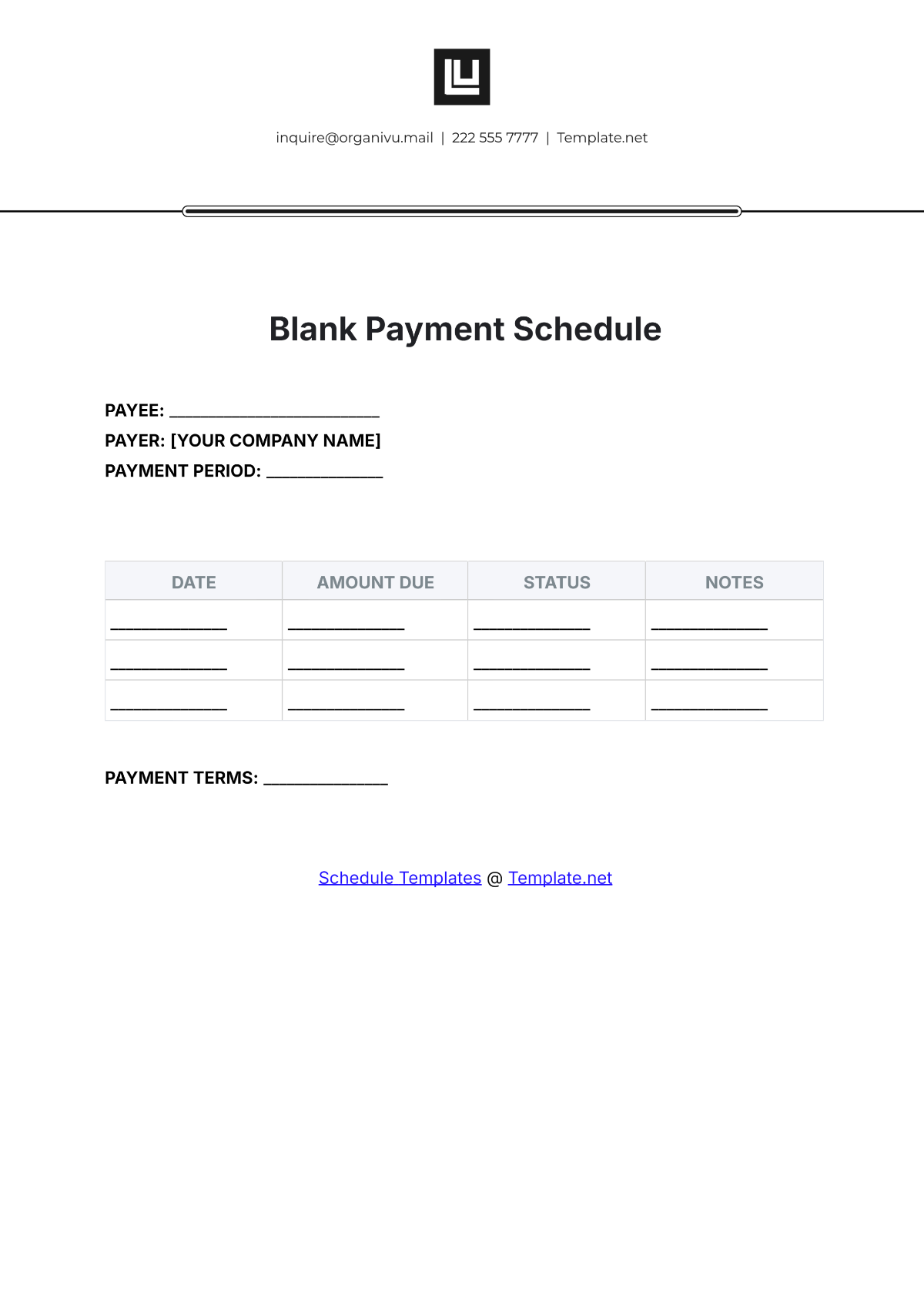
Final review checklist for a payment schedule
Before issuing the schedule, confirm that the contractor and client names match the contract, the project reference is correct, and the contract amount is current. Check that each payment has a clear trigger and that the payment amounts reconcile to the agreed total. Review all dates for consistency and confirm whether they are target dates, invoice dates, approval dates, or actual payment due dates.
Then review the financial logic. Confirm previous payments, retainage, credits, approved change orders, and remaining balance. If the schedule is based on a schedule of values, make sure the line items reflect the actual scope and that the percentages or values are not duplicated. A reviewer should be able to follow the path from contract value to current payment without needing a separate explanation.
Lastly, preserve version control. Record the revision date or identifier, keep the approved copy with the project records, and document later changes through the contract’s change process. A payment schedule is most valuable when it remains understandable months after the original agreement was signed.
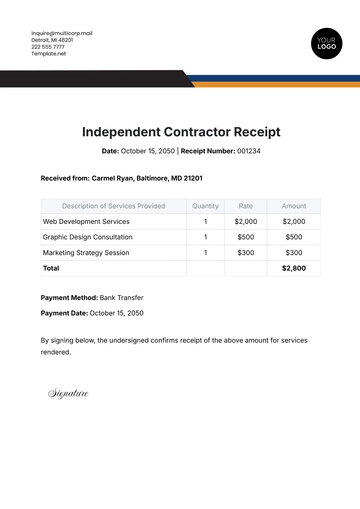
Reference Examples
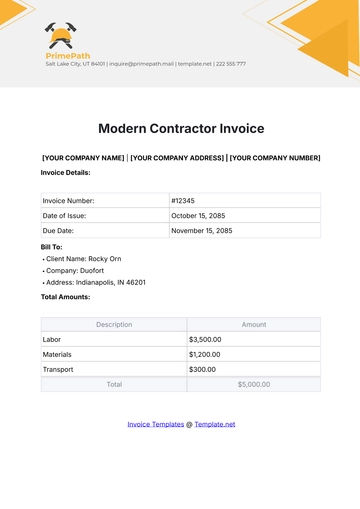
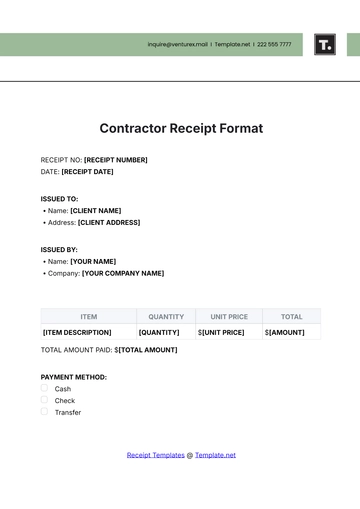
The following reference examples show several visual approaches to a contractor payment schedule template: milestone-based schedules, progress billing forms, schedule-of-values layouts, retainage records, and agreement-style documents. They are useful for evaluating how payment triggers, amounts, dates, status fields, approvals, and balances can be arranged on a page. The visuals should be treated as structural references rather than universal contract language. A practical schedule should reflect the actual project scope and the terms agreed by the parties.
When comparing these references, focus on the information architecture rather than the decorative design. A strong contractor payment schedule template makes the payment trigger easy to identify, keeps the contract value and cumulative payments visible, and separates planned amounts from actual payments. For larger projects, look for schedule-of-values fields and retainage calculations. For smaller projects, a simple milestone register may be clearer. These examples can help readers recognize the difference between a planning schedule, a progress-payment record, and a formal agreement exhibit.
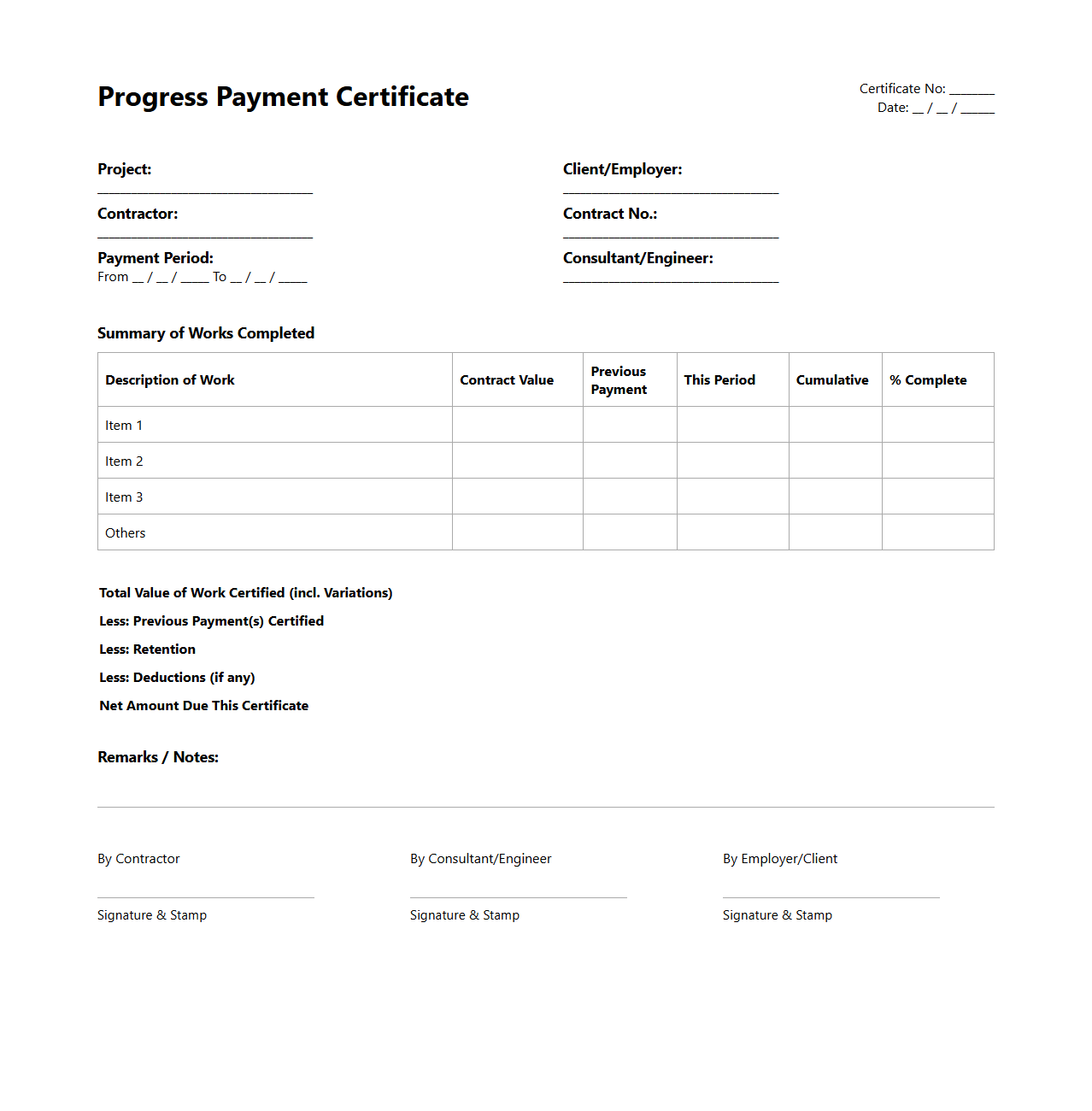
Progress Payment Certificate
Source: Documentof.com
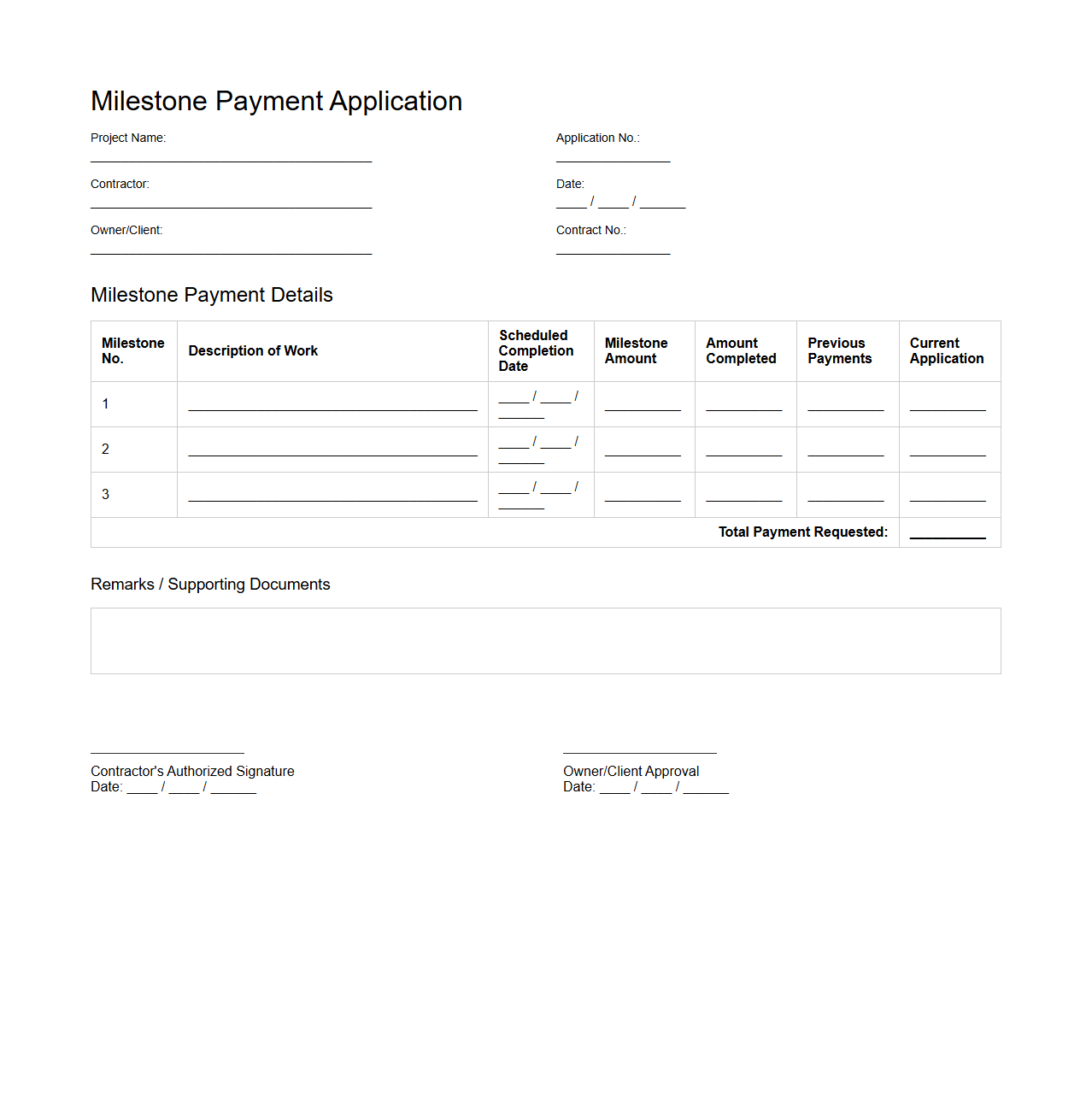
Milestone Payment Application
Source: Documentof.com
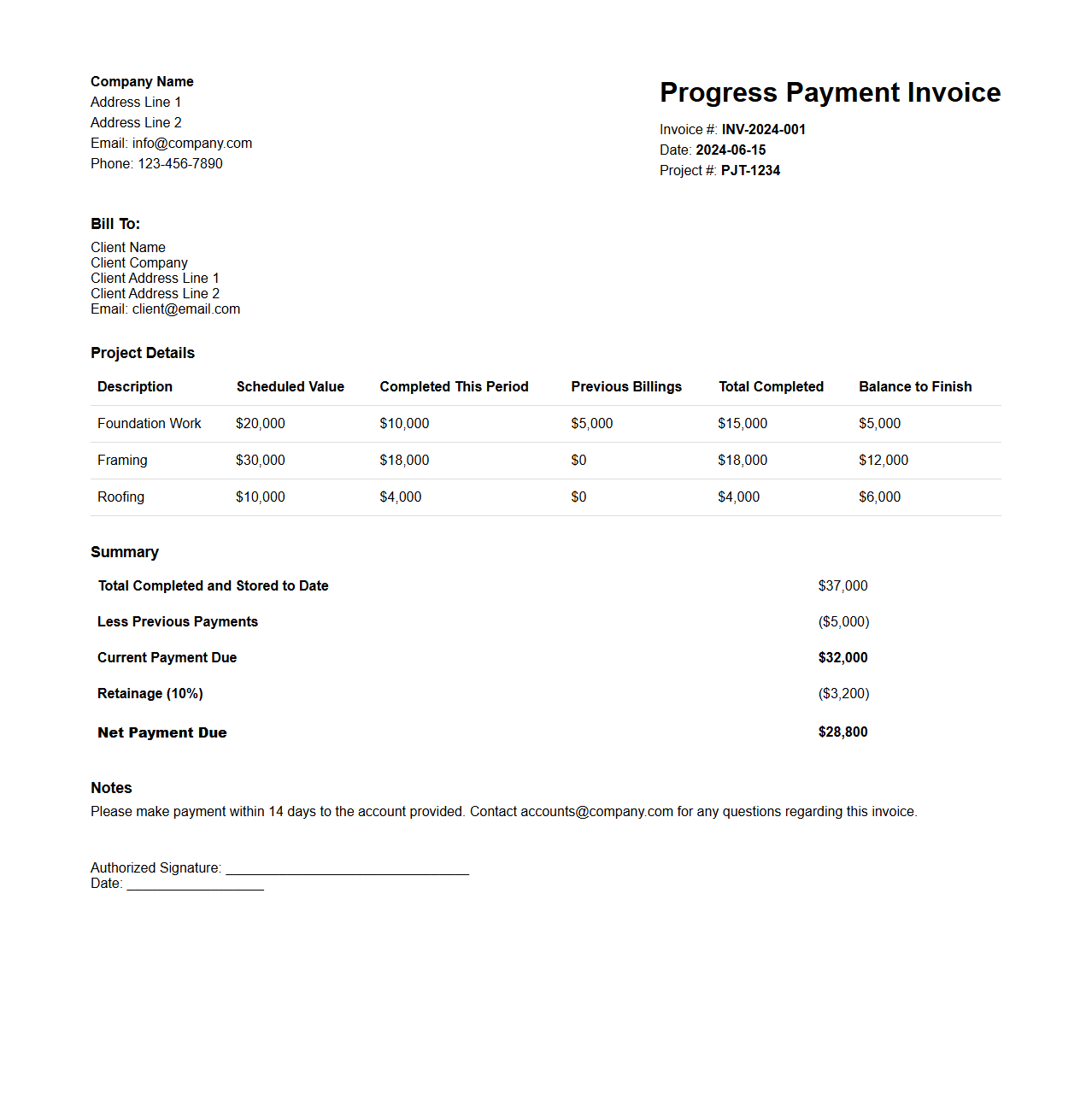
Progress Payment Invoice
Source: Documentof.com
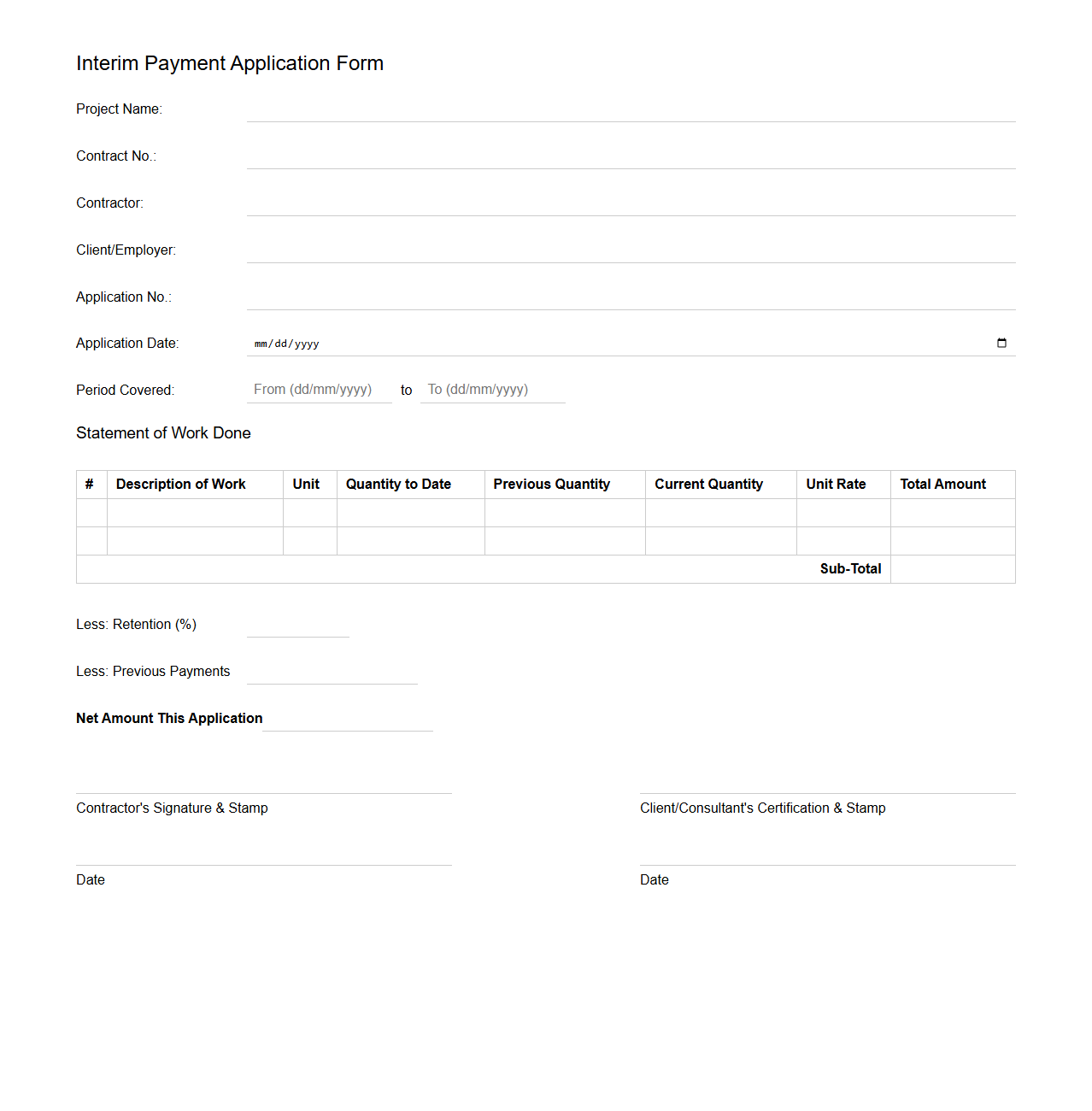
Interim Payment Application Form
Source: Documentof.com
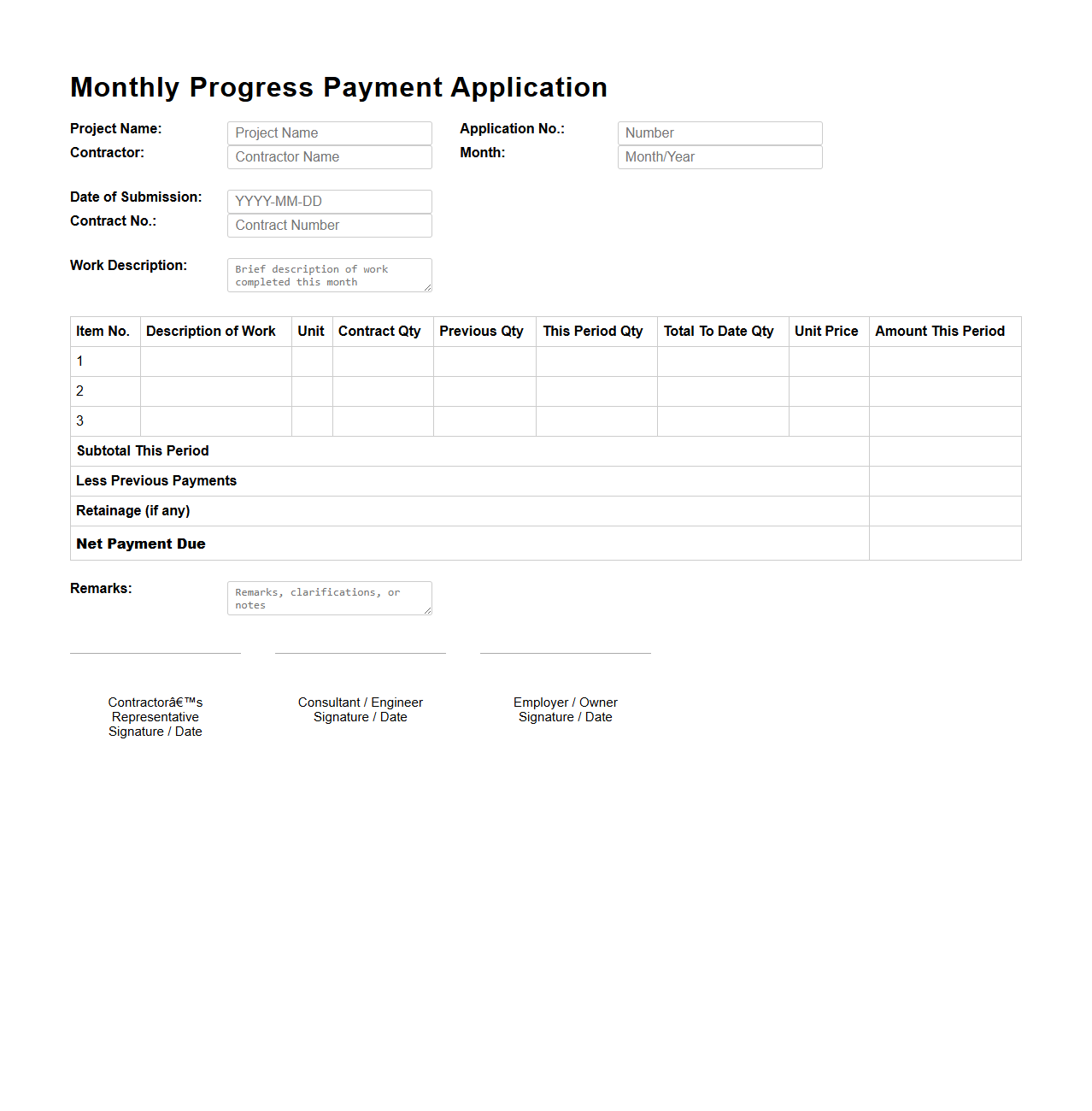
Monthly Progress Payment Application
Source: Documentof.com
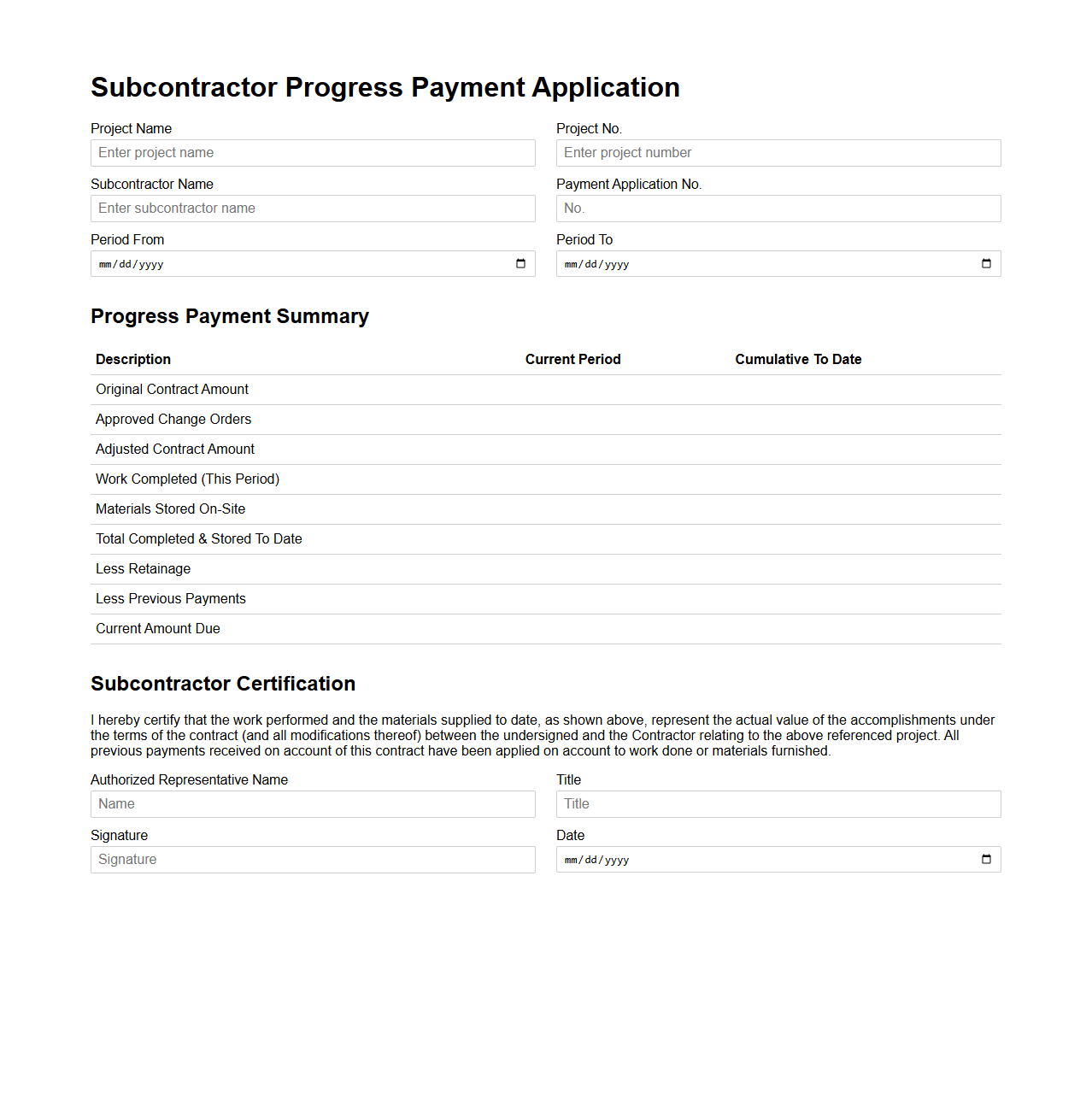
Subcontractor Progress Payment Application
Source: Documentof.com
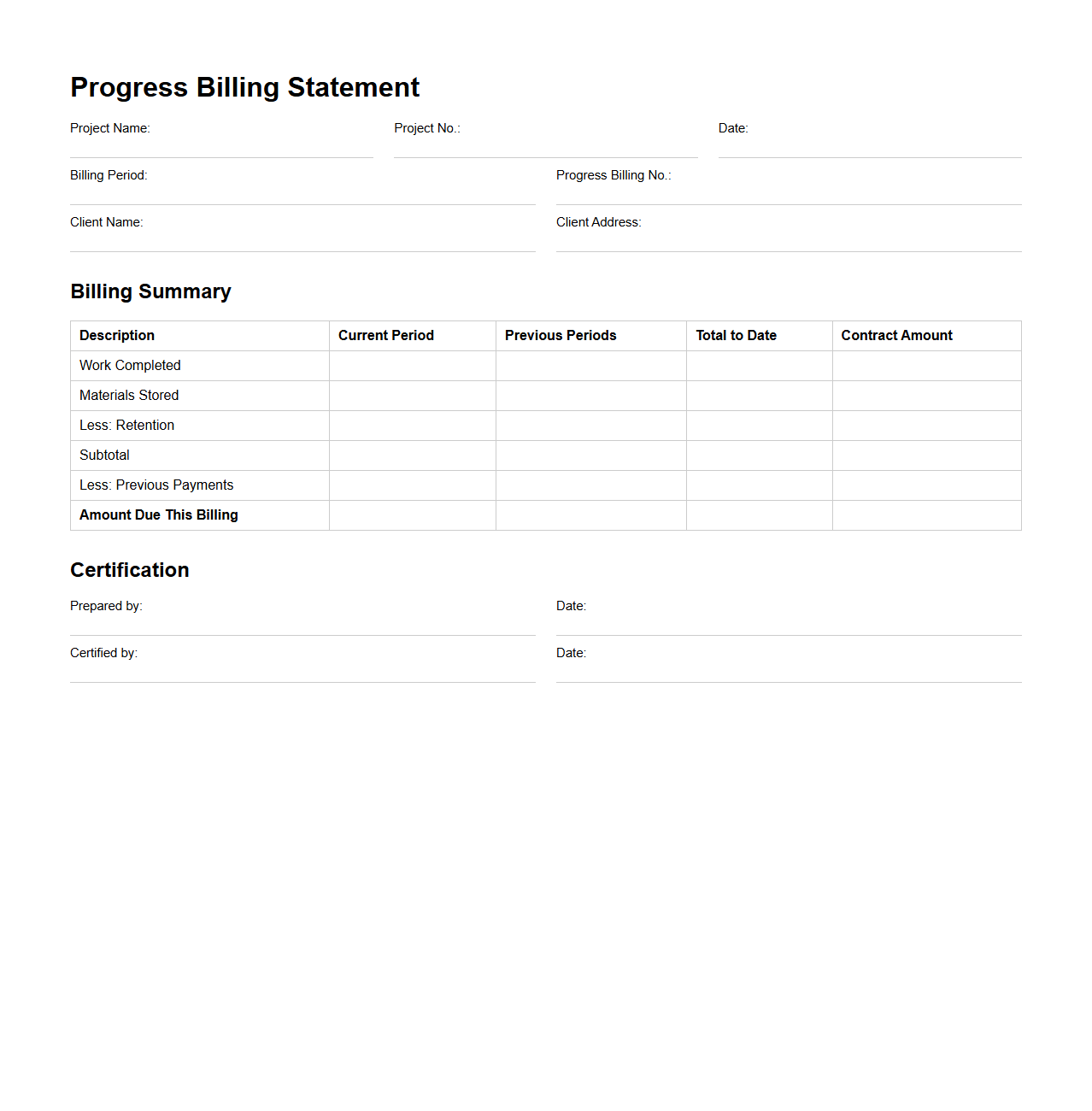
Progress Billing Statement
Source: Documentof.com
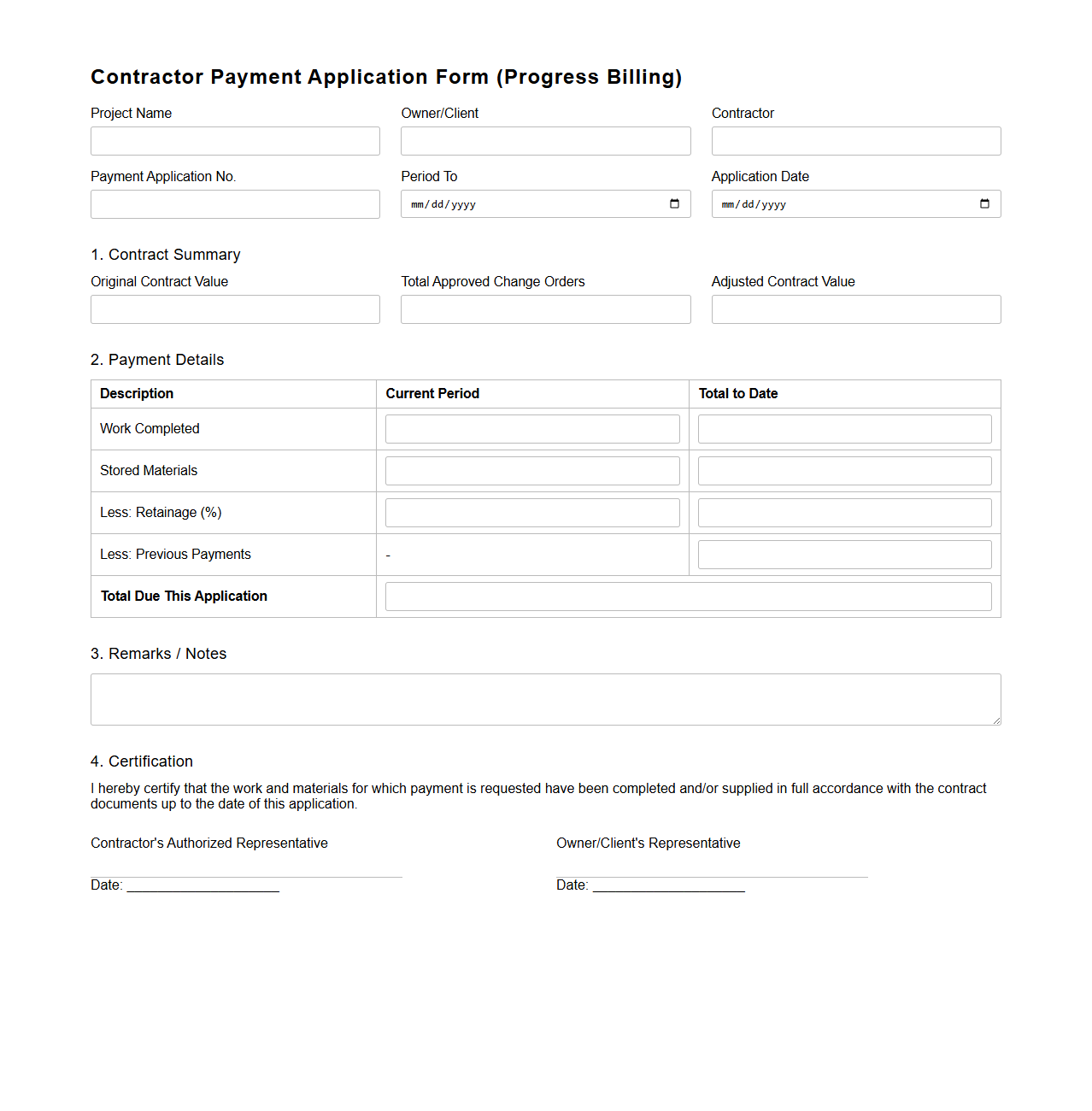
Contractor Payment Application Form (Progress Billing)
Source: Documentof.com
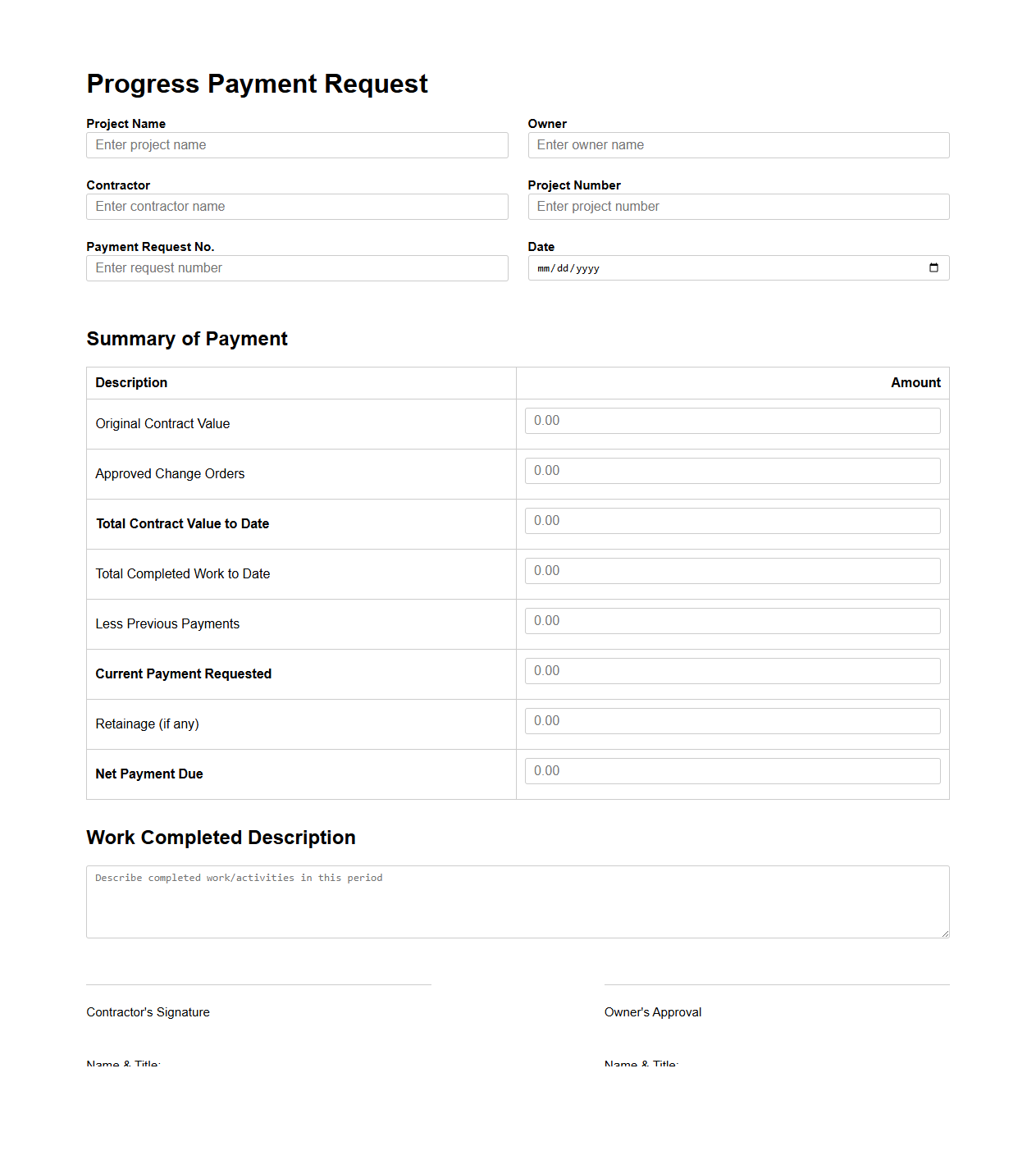
Progress Payment Request
Source: Documentof.com
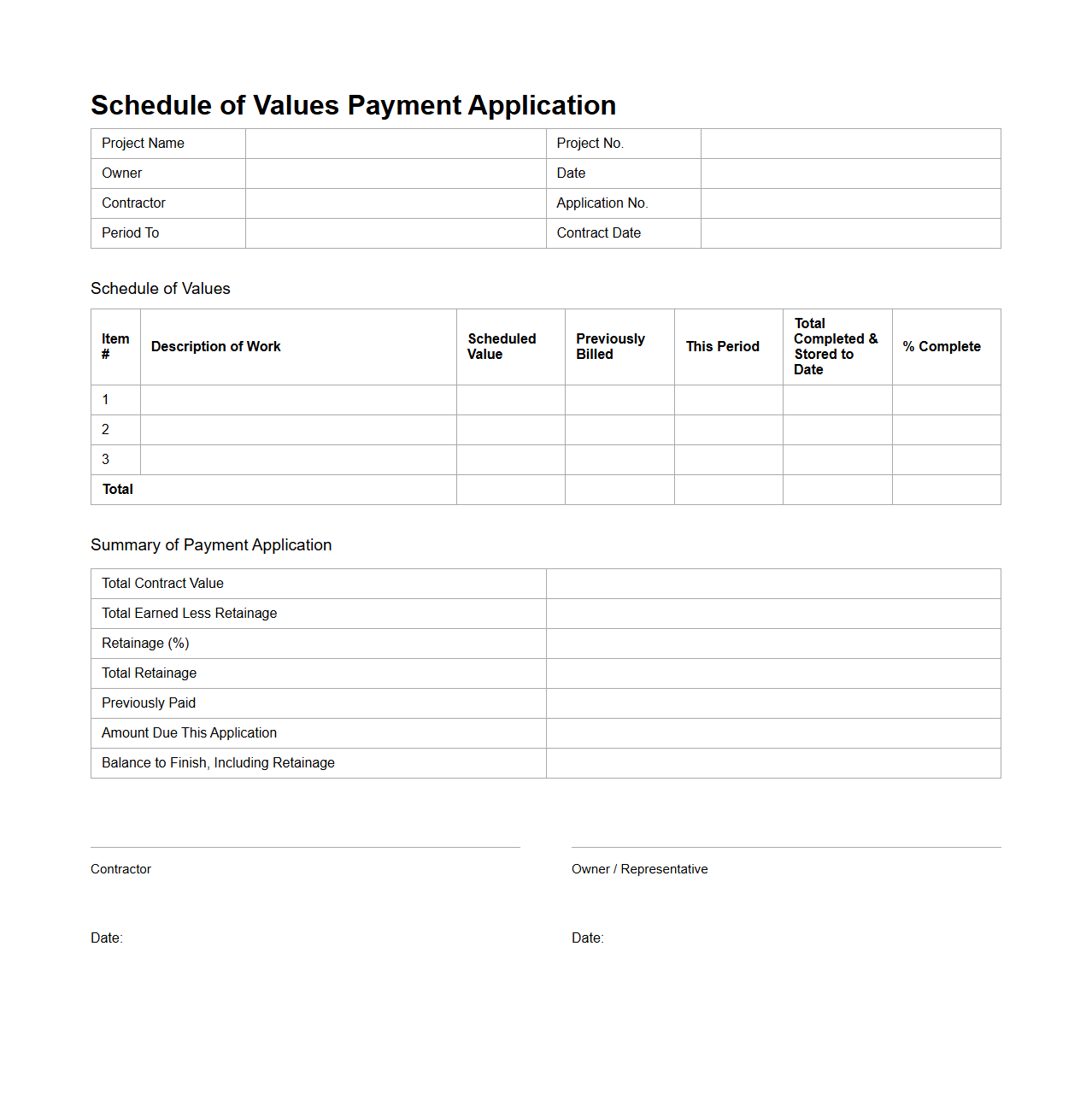
Schedule of Values Payment Application
Source: Documentof.com
