A strong consulting proposal layout Template gives a consultant more than a polished document. It creates a logical path from the client’s problem to the proposed solution, deliverables, timeline, investment, and decision. The most useful layouts make important information easy to locate without making the document feel crowded or generic. Current consulting proposal examples commonly organize the material around the client’s situation, proposed method, scope, outcomes, schedule, team, pricing, terms, and acceptance.
The best structure is also selective. A strategy engagement may need diagnostic findings, strategic priorities, and decision criteria, while an IT engagement may need technical assessment, implementation phases, testing, and transition planning. A proposal should therefore be treated as a reusable framework rather than a document that is sent unchanged to every prospect. Research into current consulting proposal formats shows that adaptable layouts are widely used across management, marketing, IT, HR, financial, and general advisory work.
This guide explains how to build a professional consulting proposal from the first page through acceptance. It also examines page hierarchy, section order, typography, pricing presentation, document formats, collaboration considerations, common mistakes, and a practical workflow for turning client discovery notes into a proposal that is specific enough to support a buying decision.

What a consulting proposal layout should accomplish
A consulting proposal should answer the questions a prospective client must resolve before approving an engagement. The reader needs to understand what problem is being addressed, why the problem matters, what the consultant intends to do, what the client will receive, how long the work should take, what it will cost, and what happens after approval. When those answers appear in a predictable order, the proposal becomes easier to scan and easier to discuss internally.
Layout supports that decision process by separating different kinds of information. Narrative sections explain context and reasoning, structured lists clarify deliverables, timelines show sequencing, and pricing blocks make commercial details visible. A good layout does not make every section visually identical. Instead, it establishes a consistent hierarchy so the reader can distinguish major sections, supporting details, decisions, and action items at a glance.
Another important function is expectation management. A proposal is often the bridge between an exploratory conversation and a formal engagement. If the document states assumptions, exclusions, client responsibilities, review points, and acceptance requirements clearly, both sides have a stronger reference point for later conversations. Current proposal guidance similarly emphasizes explicit scope, deliverables, assumptions, pricing, milestones, and next steps rather than vague descriptions of consulting capabilities.

The ideal page hierarchy
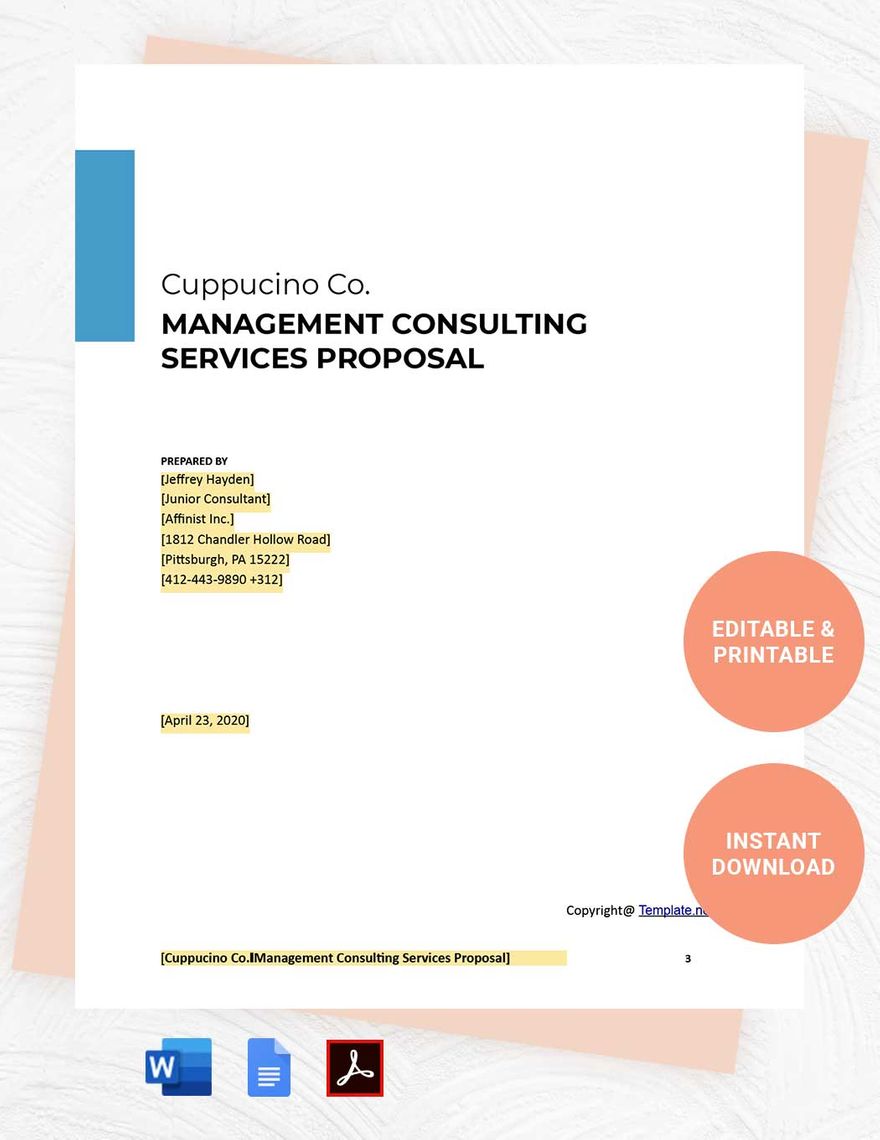
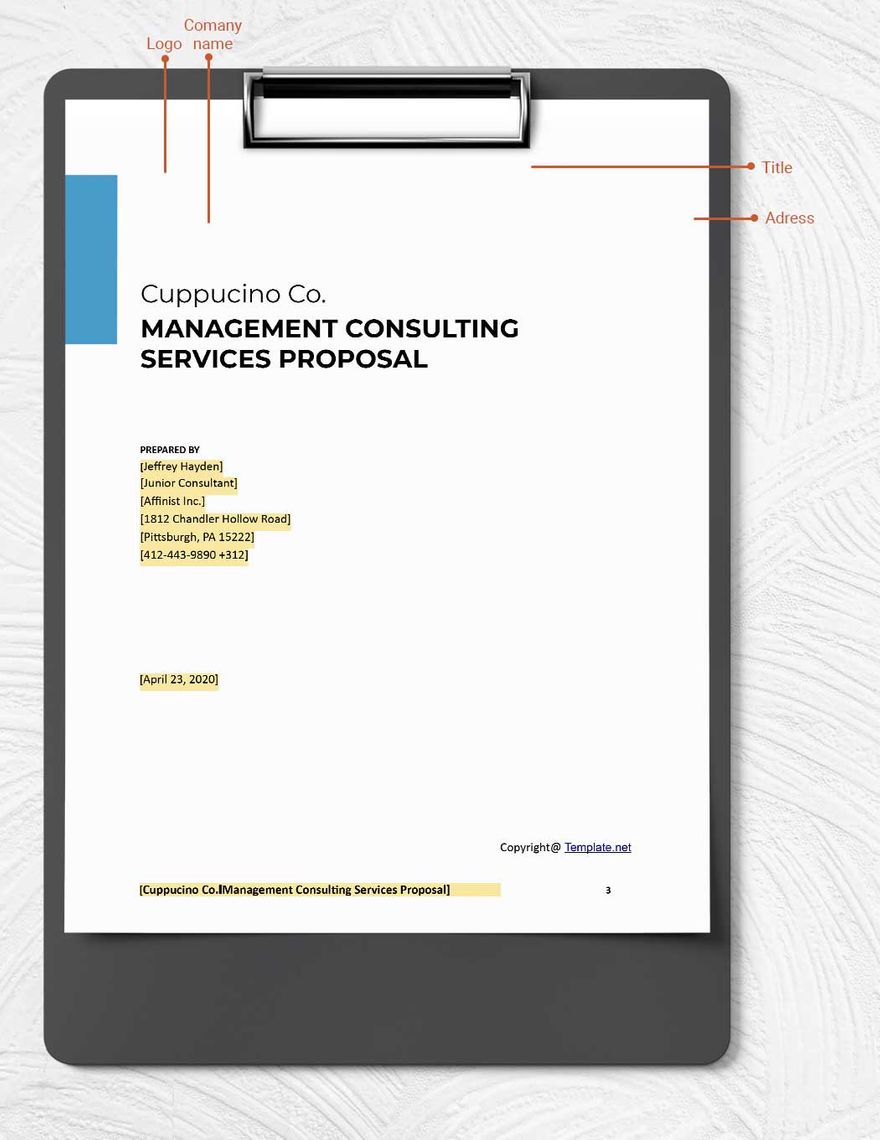
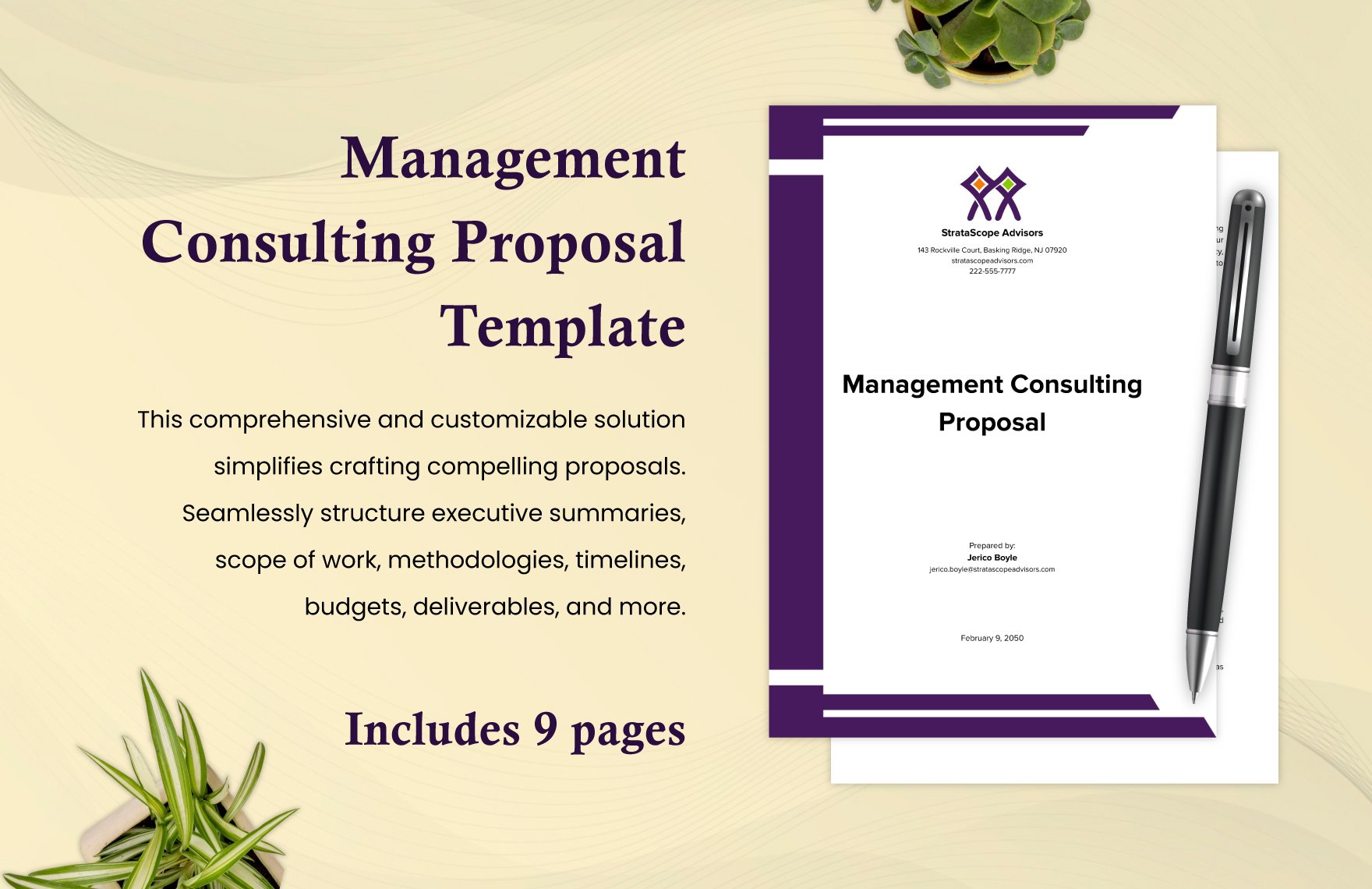
The first page should orient the reader immediately. A typical cover identifies the proposal, client, consultant, date, and sometimes a validity period or project identifier. Keep the cover visually restrained. The goal is recognition and context, not a dense sales pitch. A strong title such as “Operational Efficiency Advisory Proposal” communicates more than a generic heading such as “Consulting Proposal” because it identifies the subject of the engagement.
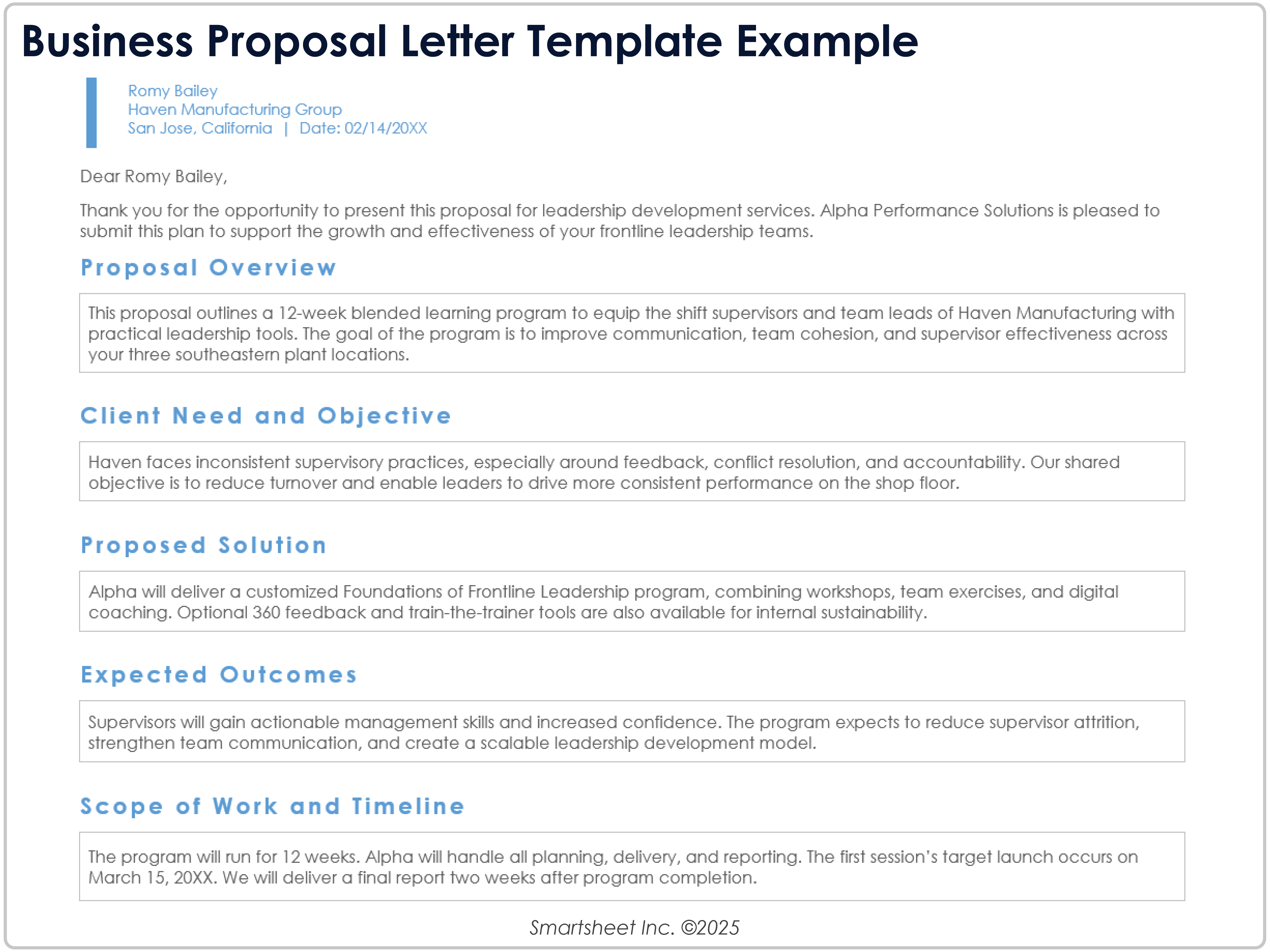
The executive summary should follow quickly. It can usually work as a compact decision brief: state the client’s objective, summarize the recommended engagement, identify the principal outcome, and provide the headline timeline or investment when appropriate. It should be understandable even if the reader never studies the rest of the document. Proposal examples from current sources repeatedly position the executive summary near the beginning and connect it to the client’s needs and expected outcomes.
After the summary, the document should move from understanding to solution. A useful sequence is problem statement, objectives, proposed method, scope, deliverables, timeline, team, client responsibilities, value or expected outcomes, pricing, terms, next steps, acceptance, and supporting material. The exact order can change, but the reader should experience a coherent progression rather than a collection of unrelated company-profile pages.

Core sections to include
Cover page and client context
The cover page should establish ownership and relevance. Include the client organization, consultant or consulting firm, proposal title, submission date, and contact details when useful. If the proposal is part of a competitive process, a reference number or project name can help the document remain identifiable as it moves through procurement or internal review.
Client context belongs either on the next page or within the executive summary. Explain the situation in the client’s language rather than beginning with a long history of your own firm. A buyer generally needs evidence that you understand the situation before being asked to care about your credentials. This principle is reflected in modern consulting proposal guidance that recommends opening with the client’s problem and connecting each proposed deliverable to the outcome being purchased.
A practical proposal template for consulting services should therefore make client context prominent rather than treating it as an afterthought. The reader should be able to recognize the business issue, desired outcome, and decision context within the opening pages.

Problem statement and objectives
The problem statement is where the proposal demonstrates listening. Describe the current condition, the challenge it creates, and the business consequence. Avoid turning this section into a dramatic sales argument. Specificity is more persuasive than exaggeration. For example, “The current reporting process requires several manual consolidations before leadership receives a weekly view” is more useful than “The company has a serious reporting problem.”
Objectives should then translate the problem into a manageable set of outcomes. Strong objectives are specific enough to guide the work and evaluate completion. Depending on the engagement, they might involve creating a market-entry strategy, redesigning an operating process, evaluating technology options, establishing a performance framework, or preparing a transformation roadmap.
Keep the distinction between objectives and activities clear. “Improve management visibility” is an objective; “conduct stakeholder interviews” is an activity. The proposal becomes much stronger when activities are later connected to concrete deliverables and outcomes rather than presented as achievements in themselves.

Recommended method and scope
The methodology section should explain how the consultant will move from the current state to the desired outcome. A simple phased structure often works well: discovery and diagnosis, analysis, design or recommendation, validation, and final handoff. Not every project needs all five phases, and some engagements may require implementation support instead of a separate validation stage.
Scope should define boundaries. State what the engagement includes and, where necessary, what it does not include. This is particularly important for consulting work because broad language such as “support implementation” can mean very different things to different parties. Specify the workstreams, locations, business units, systems, workshops, analyses, reviews, or advisory activities covered by the proposed fee.
A good scope section also identifies assumptions. If the schedule depends on timely access to data, stakeholder availability, or client approval, state that dependency. Clear assumptions protect both parties from treating an estimate as an unconditional promise and make later scope discussions easier to manage.

Deliverables and outcomes
Deliverables should be tangible enough for a client to recognize when the work has been completed. Examples include an assessment report, strategic roadmap, operating model, workshop series, prioritized initiative list, financial model, research synthesis, implementation plan, dashboard specification, or executive presentation. If a deliverable has a defined format, mention it.
Outcomes are different from deliverables. A report is an output; better decision visibility may be an intended outcome. A roadmap is an output; clearer sequencing of initiatives may be an intended outcome. Keeping these concepts separate helps prevent the proposal from measuring success solely by the number of documents produced.
A proposal template for business consulting can be particularly effective when every major deliverable is connected to a business objective. That connection lets decision-makers understand why the work matters and gives project teams a useful reference when priorities change during delivery.

Timeline, milestones, and responsibilities
The timeline should show how the work progresses rather than simply stating a start and end date. Divide the engagement into meaningful phases and identify important review or decision points. A timeline can be simple for a short advisory assignment or more detailed for a multi-stage transformation.
Milestones should correspond to real decisions or outputs. For example, a diagnostic completion milestone might trigger an executive review, while an approved future-state design might authorize the next phase. This is more useful than filling the schedule with minor administrative tasks that do not affect the client’s decisions.
Client responsibilities deserve their own treatment when they materially affect delivery. Identify the data, access, approvals, stakeholder participation, or feedback required from the client. A schedule that ignores client dependencies can appear attractive during sales but become unrealistic once the engagement begins.

Team and credibility
Introduce only the people who are relevant to delivery. For each key contributor, provide the role, relevant expertise, and responsibility for the engagement. A short role-based profile is usually more useful than a long biography because the reader is evaluating whether the proposed team can perform the work described.
Credentials should support the specific engagement. A transformation project might emphasize operating-model experience, while a financial advisory project may need experience with forecasting, valuation, or performance analysis. If case studies are included, select examples that resemble the client’s situation rather than listing every past project.
For a small consultancy, the team section can also clarify who is accountable for the relationship and who performs the substantive work. This distinction reduces uncertainty when a proposal is submitted by a senior consultant but much of the delivery will be handled by another team member.

Choosing the right document format
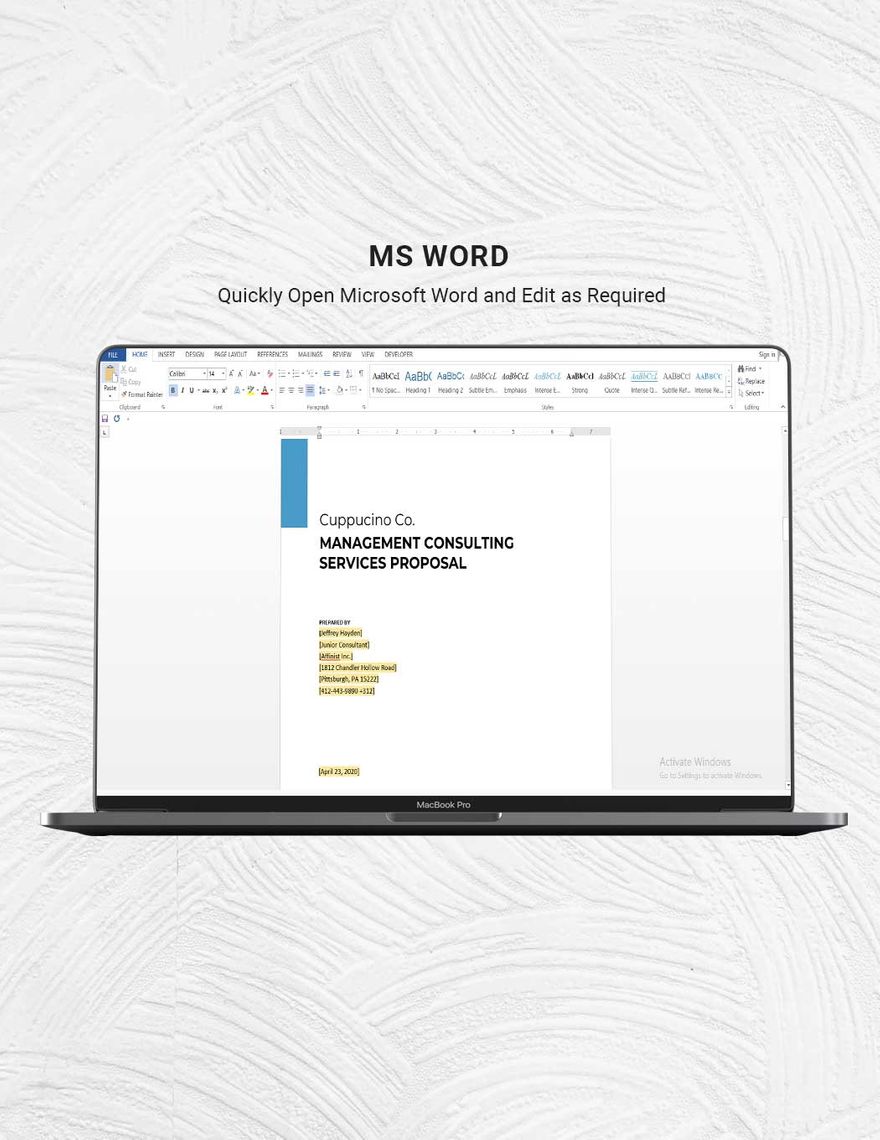
Different file formats serve different stages of proposal work. A consulting proposal layout template word format is useful when the document will undergo detailed text editing, formal review, tracked revisions, or local formatting. It is especially practical when a proposal team already has established document standards and needs control over page breaks, headers, and typography.
A consulting proposal layout template pdf format is better suited to a stable presentation copy. PDF preserves page composition across devices and is useful when the final proposal must be reviewed as a fixed document. The important distinction is between a working source document and the finalized presentation version; the two should not be treated as interchangeable.
A consulting proposal layout template google docs workflow is useful when several contributors need to review text together or when comments and shared editing are central to the process. A cloud-based workflow can reduce version confusion, but teams should still establish a final owner who controls the approved wording, commercial terms, and final pagination.
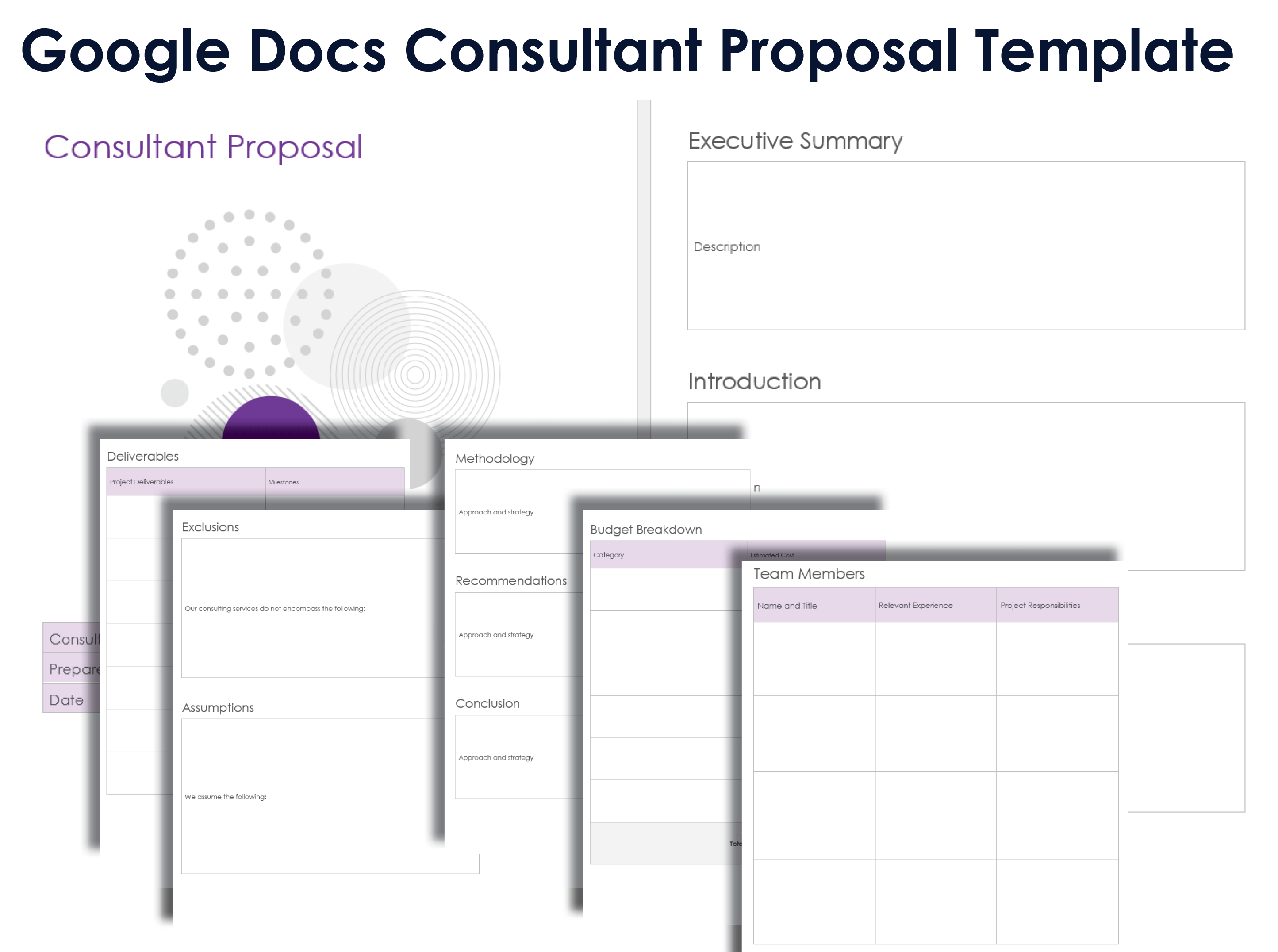
A consulting proposal layout template ppt can make sense when the proposal is intended to accompany a live executive presentation. Slides should emphasize decisions, diagrams, key findings, scope, timeline, and investment rather than reproduce every paragraph from a written proposal. A presentation is a different reading experience, so compressing a document into slides without redesigning the information hierarchy usually produces poor results.
A consulting proposal layout template excel approach can be useful for engagements where commercial calculations, resource assumptions, work estimates, or financial scenarios are central to the proposal. However, a spreadsheet is rarely the best standalone narrative document. It works better as a structured commercial or analytical component that supports a concise written proposal.
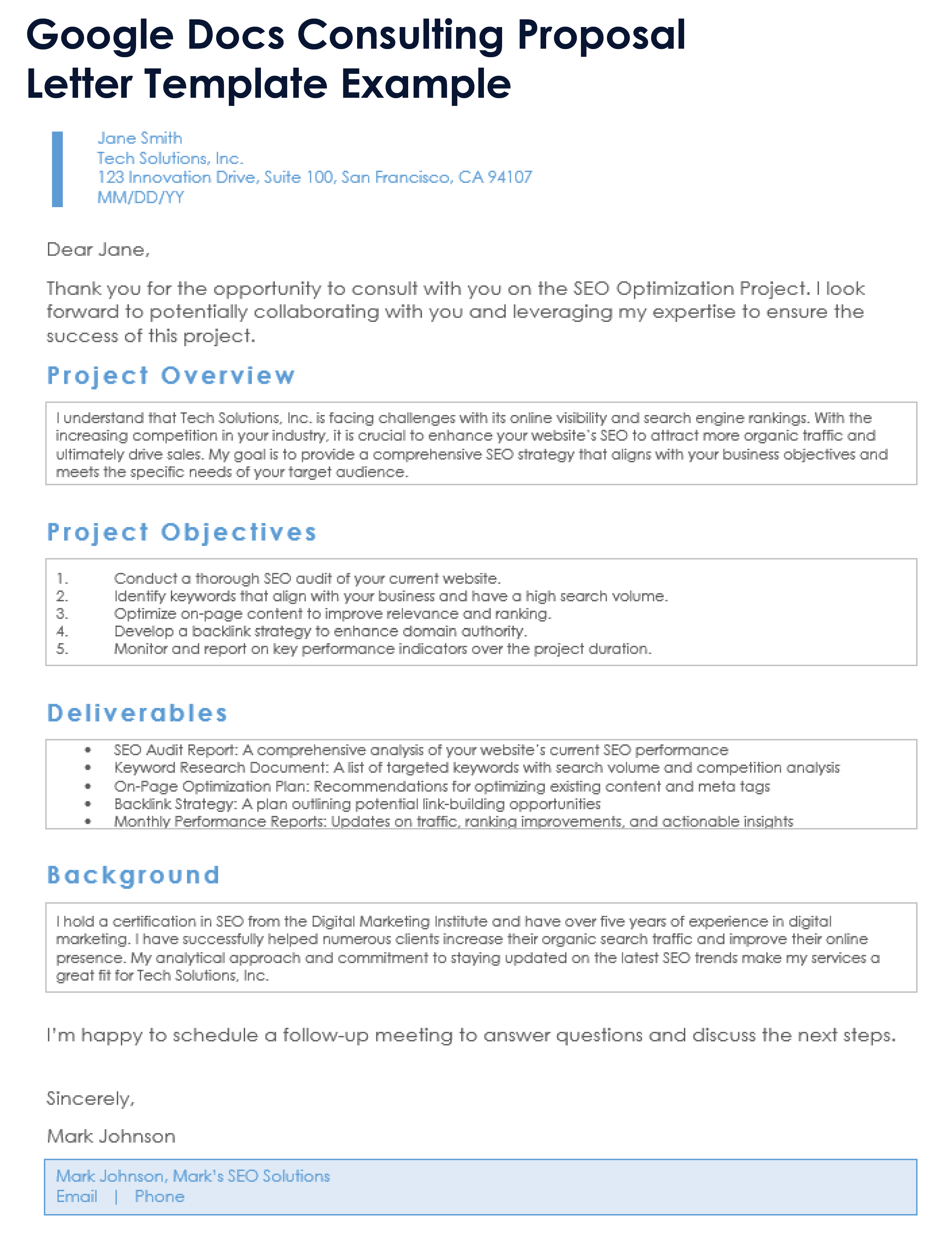
A consulting proposal writing template is valuable when it standardizes the reasoning process rather than merely standardizing visual design. The strongest reusable framework prompts the writer to identify the client problem, desired outcome, proposed method, deliverables, dependencies, timeline, investment, and acceptance path. That makes the template useful even when the final document has a completely different visual style.
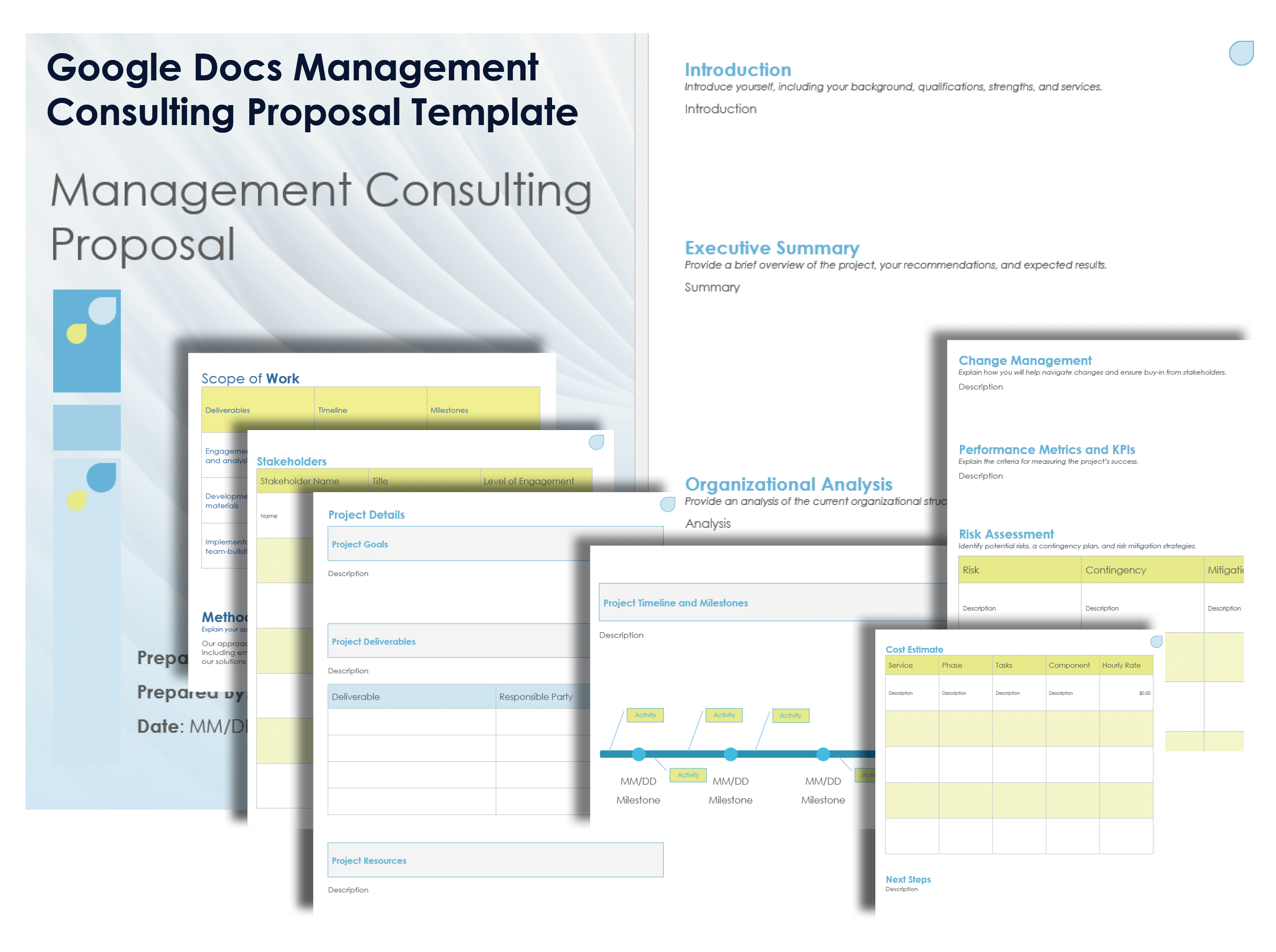
Design principles for a professional proposal
Typography should establish hierarchy without competing for attention. Use a clear distinction between the main title, section headings, subheadings, body copy, captions, and commercial highlights. Consistent spacing often improves readability more than decorative elements do. A proposal can look sophisticated with restrained typography, generous margins, and strong alignment.
Color should support navigation and brand recognition. One primary brand color plus a neutral palette is often enough. Use accent colors for meaningful elements such as phase labels, decision points, or highlighted commercial information rather than decorating every heading. If the proposal will be printed, check that the hierarchy still works when color reproduction is less vivid.
Tables and structured blocks should be used when they reduce cognitive load. Deliverable lists, milestone schedules, responsibilities, fee breakdowns, and assumptions are often easier to compare in structured formats than in paragraphs. The goal is not to make every page look like a spreadsheet; it is to choose the visual form that best represents the information.
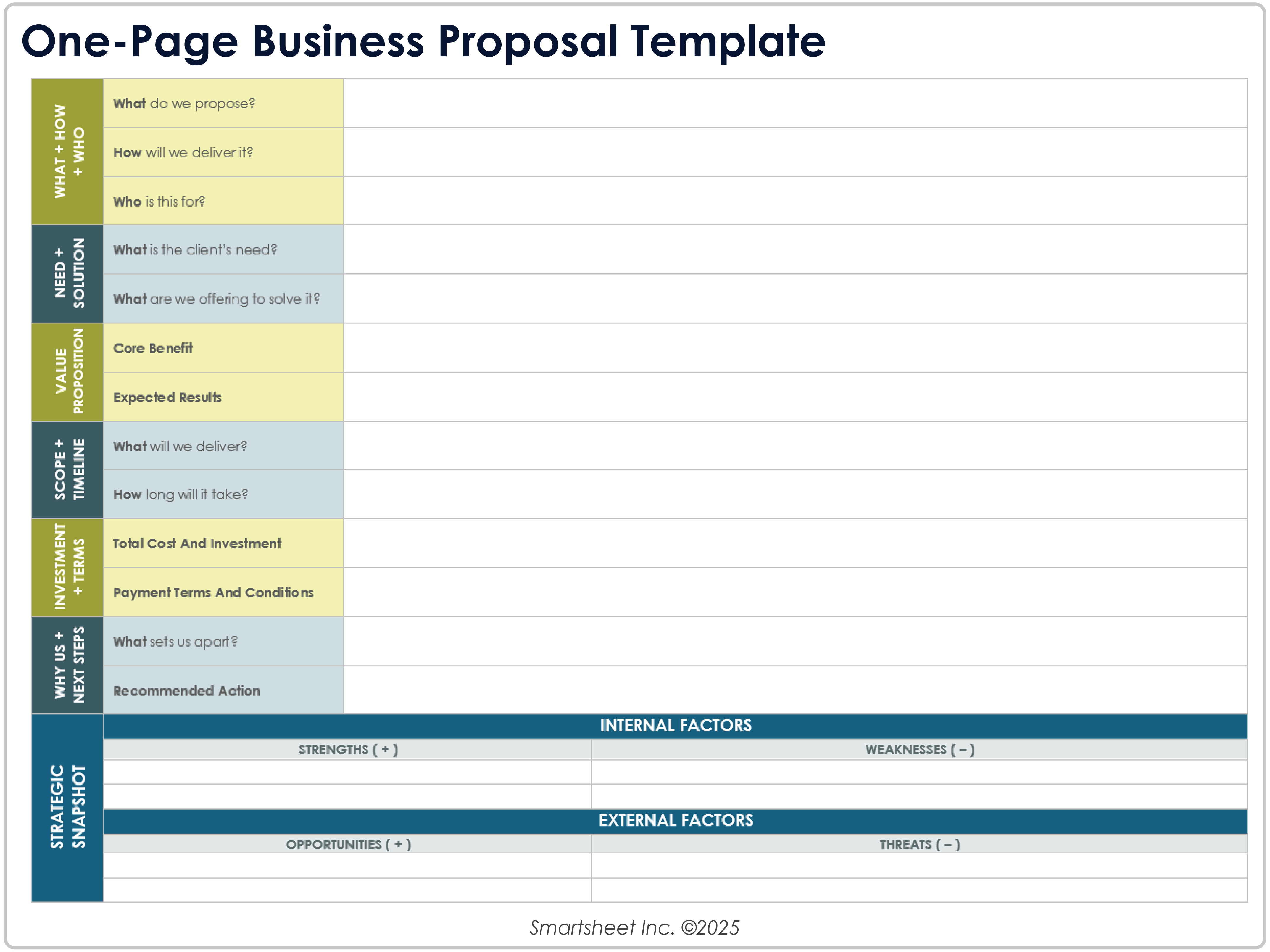
How to make the layout persuasive without making it sales-heavy
Persuasion in consulting proposals comes primarily from relevance and clarity. The document should demonstrate that the consultant understands the client’s situation and has a credible path to the desired result. Long descriptions of company history, generic lists of capabilities, and unsupported claims tend to weaken that effect because they move attention away from the client’s decision.
Use evidence selectively. If the proposal references research, client-provided data, prior analysis, or a verified case study, explain how that evidence informs the proposed work. Do not insert invented performance percentages simply because a numerical claim looks persuasive. When a benefit cannot be quantified reliably before discovery, describe the intended direction and the method that will be used to evaluate progress.
The commercial section should also connect price to scope. A fee without context can appear arbitrary, while a detailed price connected to phases and deliverables allows the buyer to understand what the investment covers. Current consulting proposal guidance commonly recommends making the investment structure explicit and linking it to the proposed outcome rather than presenting a bare number.
Using specialized layouts for different consulting engagements
A strategy consulting proposal may emphasize the strategic question, diagnostic framework, market or competitive analysis, strategic choices, and roadmap. An operations proposal may need current-state process analysis, improvement opportunities, implementation priorities, and operational measures. The shared proposal architecture remains similar, but the evidence and deliverables change according to the engagement.
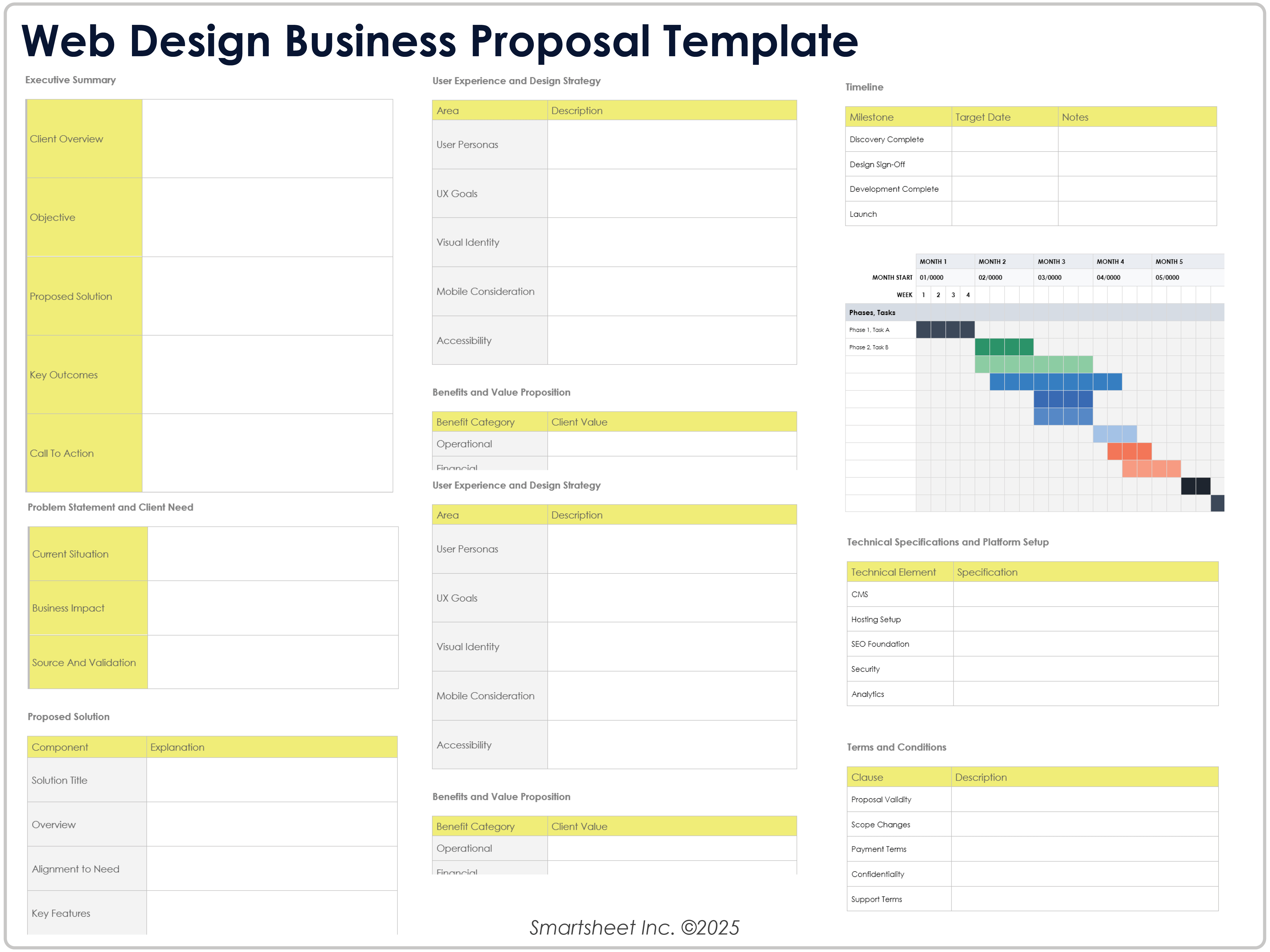
Technology consulting often requires greater technical specificity. The proposal may need an assessment, target-state architecture, technology recommendations, implementation phases, testing responsibilities, dependencies, and transition activities. The structure should still be readable by business decision-makers, so technical depth should be layered rather than allowing specialist terminology to dominate every page.
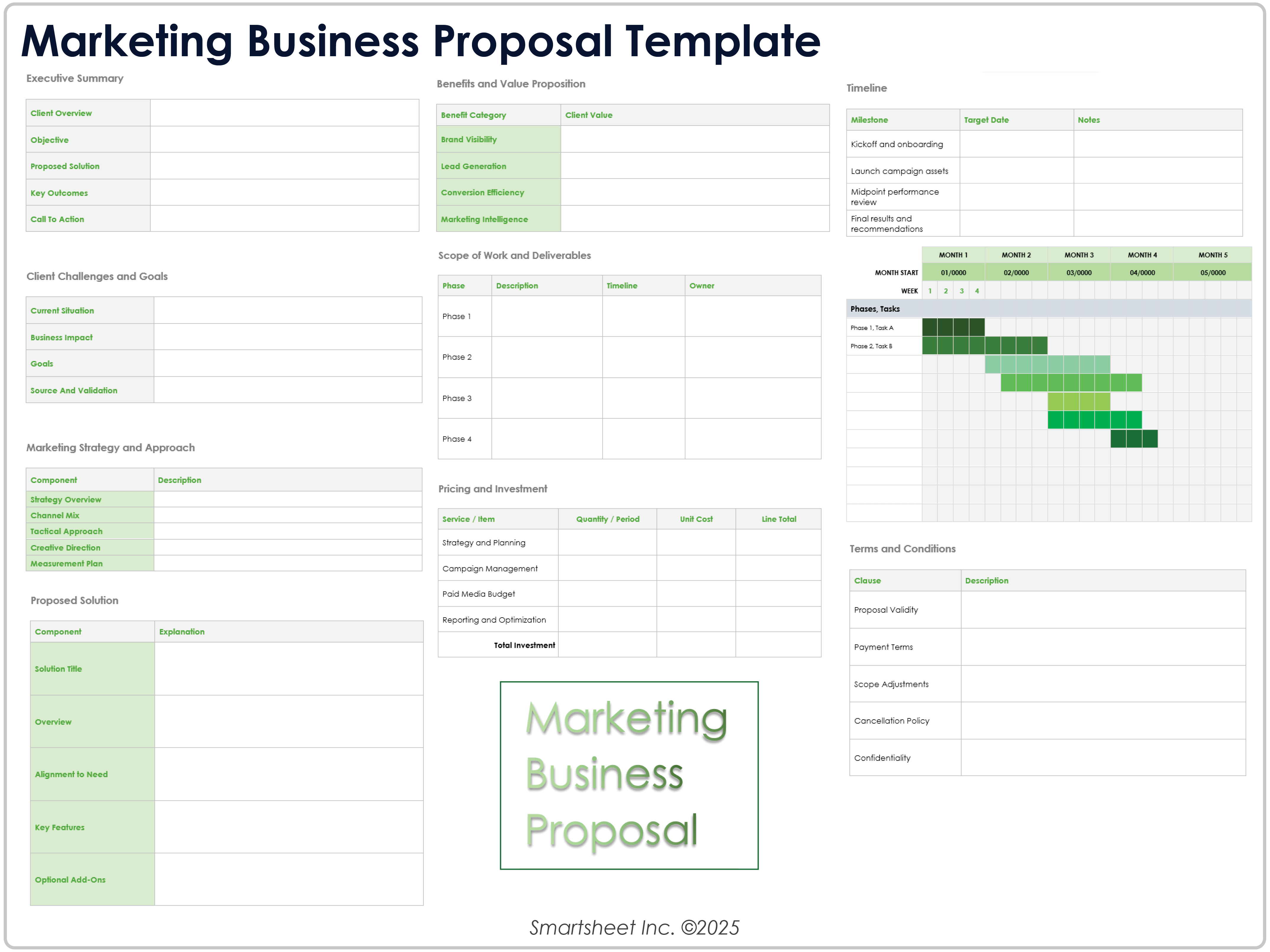
Financial, HR, marketing, and other specialist engagements benefit from the same principle. A financial proposal can emphasize financial objectives, analysis, scenarios, and commercial assumptions. A marketing proposal can emphasize market context, audience, strategy, channels, measurement, and campaign phases. A specialist proposal should feel specialized because of its reasoning and deliverables, not merely because the cover page contains an industry label.

When an online proposal template for consulting makes sense
An online proposal template for consulting is useful when the sales process involves several reviewers, frequent revisions, or a distributed team. A shared workspace can make it easier to collect comments from subject-matter specialists while maintaining one current version. It can also make reusable section libraries easier to maintain as the consultancy develops its proposal process.
The risk is over-standardization. If every prospect receives the same wording, the document may feel generic even if the visual design is excellent. Reusable elements should therefore cover structure, formatting, prompts, and proven language patterns, while the client problem, objectives, methodology, deliverables, assumptions, and outcomes should be rewritten for each engagement.
For teams that frequently prepare proposals, create a master framework with controlled sections and a smaller set of optional modules. For example, technical assessment, stakeholder workshops, market research, implementation support, and training can each have their own reusable block. The writer can then assemble the relevant modules while still tailoring the narrative around the client’s specific situation.
Practical Solution
Start by converting the client’s discovery conversation into a one-page working brief before touching the final visual design. Write down the client’s stated problem, business objective, desired outcome, known constraints, stakeholders, likely deliverables, decision date, and information gaps. This creates the factual foundation for the proposal and prevents the writer from filling empty sections with generic consulting language.
Next, select the shortest structure that can support the decision. For a straightforward advisory engagement, the sequence can be cover, executive summary, situation and objectives, approach, scope and deliverables, timeline, team, investment, terms, and acceptance. For a complex engagement, add supporting analysis, assumptions, risks, dependencies, or appendices only where those materials help the client evaluate the decision.
Finally, perform a decision-readiness review. Ask whether a busy executive can understand the proposed outcome quickly, whether every major activity has a corresponding deliverable, whether the timeline reflects client dependencies, whether pricing matches the defined scope, and whether the acceptance process is obvious. Then perform a separate factual review for names, dates, amounts, project assumptions, terminology, and references. This two-stage review is more useful than proofreading grammar alone.
For a repeatable internal workflow, maintain a proposal checklist alongside the master layout. Include checks for client personalization, scope boundaries, deliverable definitions, commercial assumptions, review responsibilities, approval status, and final file control. A checklist is especially helpful when multiple consultants contribute to the same proposal because it reduces the chance that a commercial or operational detail is overlooked.
A practical print proposal template for consulting should receive an additional visual review after pagination is finalized. Check page breaks, heading continuity, table widths, footer placement, signature areas, and the readability of charts or diagrams. A layout that works well during editing may become awkward after the document is converted into its final presentation form.
Common layout mistakes to avoid
The first mistake is putting the consultant ahead of the client. A proposal that begins with several pages about company history, service categories, and credentials can delay the answer to the question the buyer cares about most: “What do you understand about our situation, and what are you proposing?” Move relevant credentials closer to the point where they establish credibility.
The second mistake is vague scope. Phrases such as “strategic support,” “ongoing consultation,” or “implementation assistance” may sound professional but can be interpreted broadly. Replace them with specific activities, outputs, boundaries, review points, and assumptions. A precise scope is not merely contractual protection; it also makes the proposal easier for a buyer to approve internally.
The third mistake is over-designed pages. Heavy graphics, oversized headings, excessive color, and decorative elements can reduce the amount of useful information that fits on a page. A consulting proposal should look professional, but its design should make reasoning easier to follow rather than compete with it.
Another mistake is separating price from value. The commercial section should be understandable on its own, but the reader should already know what the investment buys. When scope, deliverables, schedule, and outcomes are clear earlier in the document, the pricing page becomes a logical commercial summary instead of a sudden request for money.
Finally, avoid ending with no clear action. A proposal should tell the reader what acceptance means, who signs, whether a meeting is required, what happens after approval, and whether any initial information or payment is needed. The final step should feel operationally simple rather than leaving the client to determine what to do next.
How to tailor the layout to your brand
Start with brand elements that are already consistent across your client-facing materials: logo treatment, primary typeface or an approved substitute, color palette, terminology, and tone. Then decide which elements belong to the proposal itself. The cover can carry more visual identity, while interior pages should usually prioritize reading comfort and information hierarchy.
Create a reusable page system rather than designing every page independently. Define how major headings look, how subheadings are spaced, how callouts are presented, how tables are styled, and how page numbers appear. This makes future proposals faster to assemble while keeping the finished documents visually coherent.
Do not confuse brand consistency with visual sameness. A strategy engagement, technical assessment, and financial advisory proposal can share the same design system while using different diagrams, section modules, and evidence. The brand should provide continuity; the content should determine the structure within that system.
How to build a reusable consulting proposal system
A mature proposal system usually has three layers. The first is the master layout, which defines page hierarchy and formatting. The second is the content library, which contains reusable descriptions of services, methodologies, deliverable types, assumptions, and commercial language. The third is the engagement-specific brief that determines which pieces are relevant to the client.
This structure makes it easier to maintain quality without sacrificing customization. When a methodology changes, update the shared content library. When the brand changes, update the master layout. When a client has a different problem, rewrite the engagement-specific sections. Separating these layers reduces the temptation to edit an old proposal blindly and send it to a new prospect.
Version control should be equally deliberate. Keep one clearly identified working version, record substantive commercial changes, and make sure the final client-facing version is generated from the approved source. If multiple people review the document, assign responsibility for final wording, pricing, legal terms, and factual accuracy rather than assuming everyone is checking everything.
Evaluating a consulting proposal before sending it
Read the proposal once as a decision-maker who knows nothing about the internal drafting process. Can you identify the problem, outcome, proposed method, deliverables, timing, investment, and next step without searching? If not, change the information hierarchy before polishing individual sentences.
Then read it as the delivery team. Could the team determine what is included, what is excluded, which dependencies belong to the client, what must be produced, and when reviews occur? If different members would interpret the scope differently, the proposal needs more precision.
Finally, read it as the commercial owner. Does the fee correspond to the defined work? Are payment triggers clear? Are assumptions visible? Is the proposal valid for an appropriate period? Are changes and additional work addressed at a useful level? This final review can identify inconsistencies that a purely editorial review would miss.
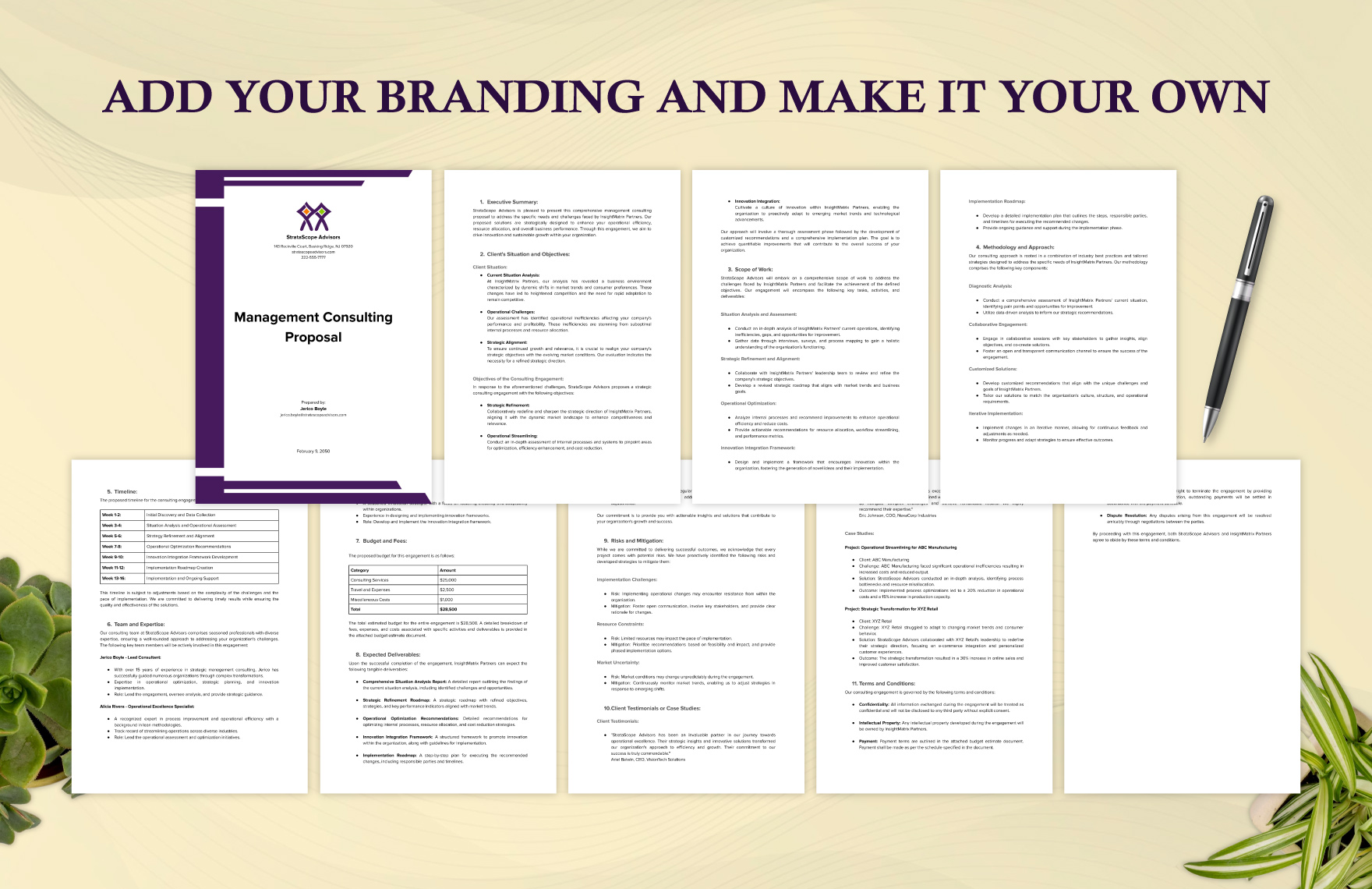
Reference Examples
A consulting proposal layout Template is easiest to evaluate when you can see how information is arranged across real proposal pages. Useful references reveal differences in hierarchy, density, typography, cover treatment, scope presentation, timeline design, pricing structure, and supporting material. Some examples favor a minimalist document style, while others use stronger branding, modular panels, or presentation-oriented layouts. The important question is not which design looks most impressive, but which structure makes the client’s decision easiest to understand.
The following visual references show different ways a consulting proposal layout Template can organize professional information. Compare the opening hierarchy, amount of white space, placement of client information, treatment of deliverables, commercial sections, and use of supporting pages. These examples are best treated as layout references rather than documents to reproduce verbatim; the strongest final proposal should reflect the actual engagement, client context, scope, and commercial arrangement.
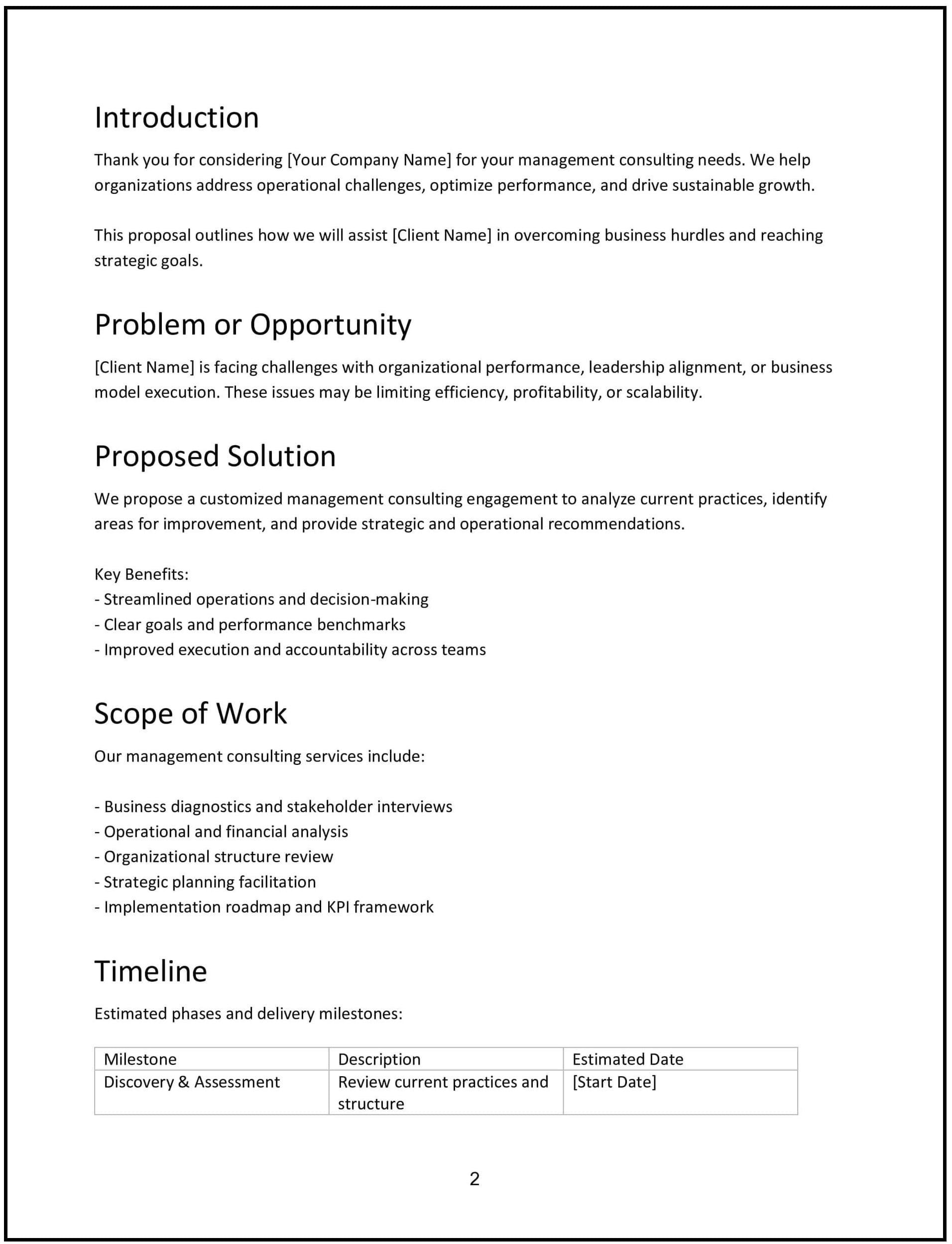
Management Consulting Proposal Structure
Source: Cobrief
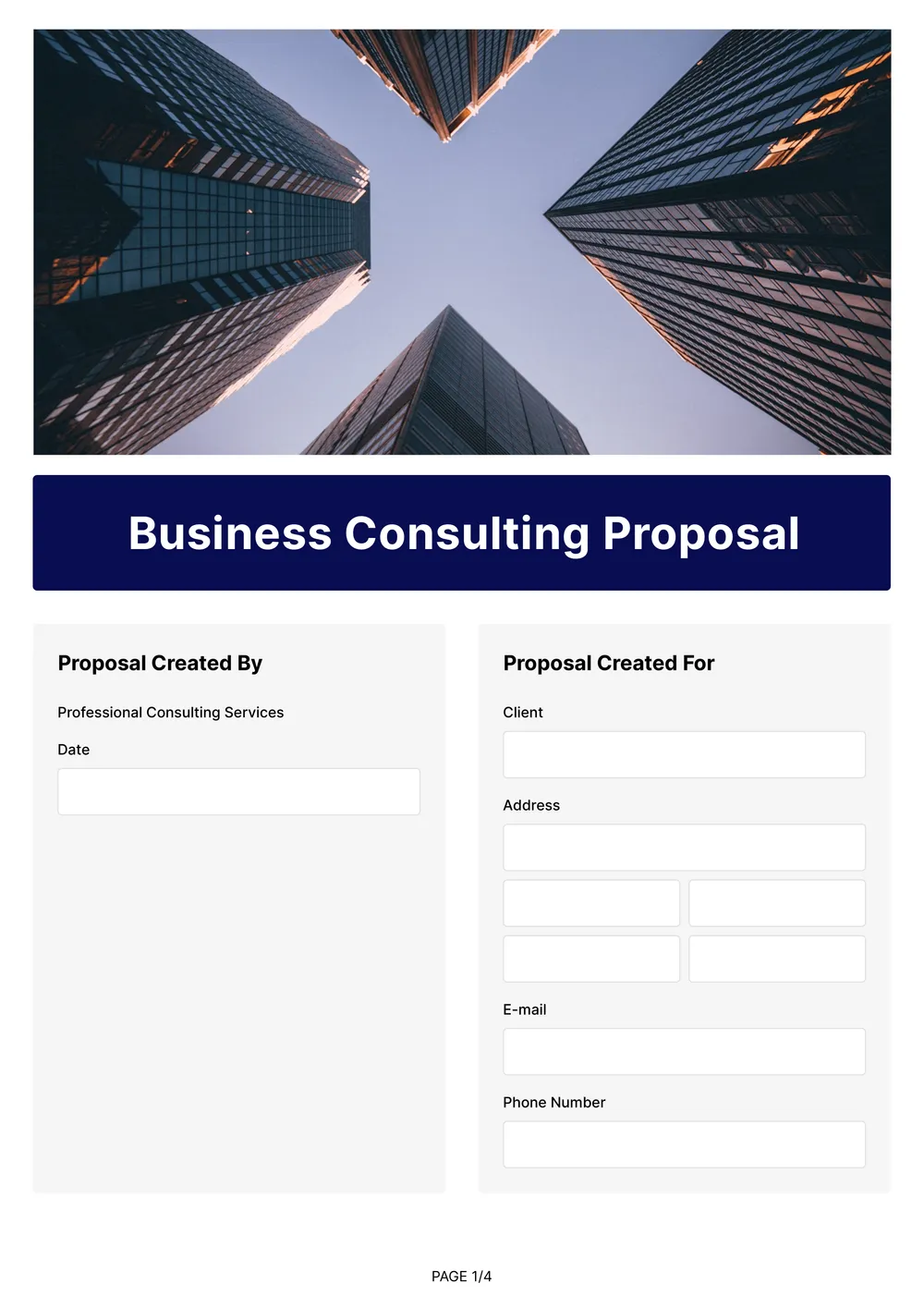
Business Consulting Proposal Cover Layout
Source: PDF Guru

Financial Consulting Proposal Cover
Source: Venngage

Consulting Agency Proposal Cover
Source: Visme
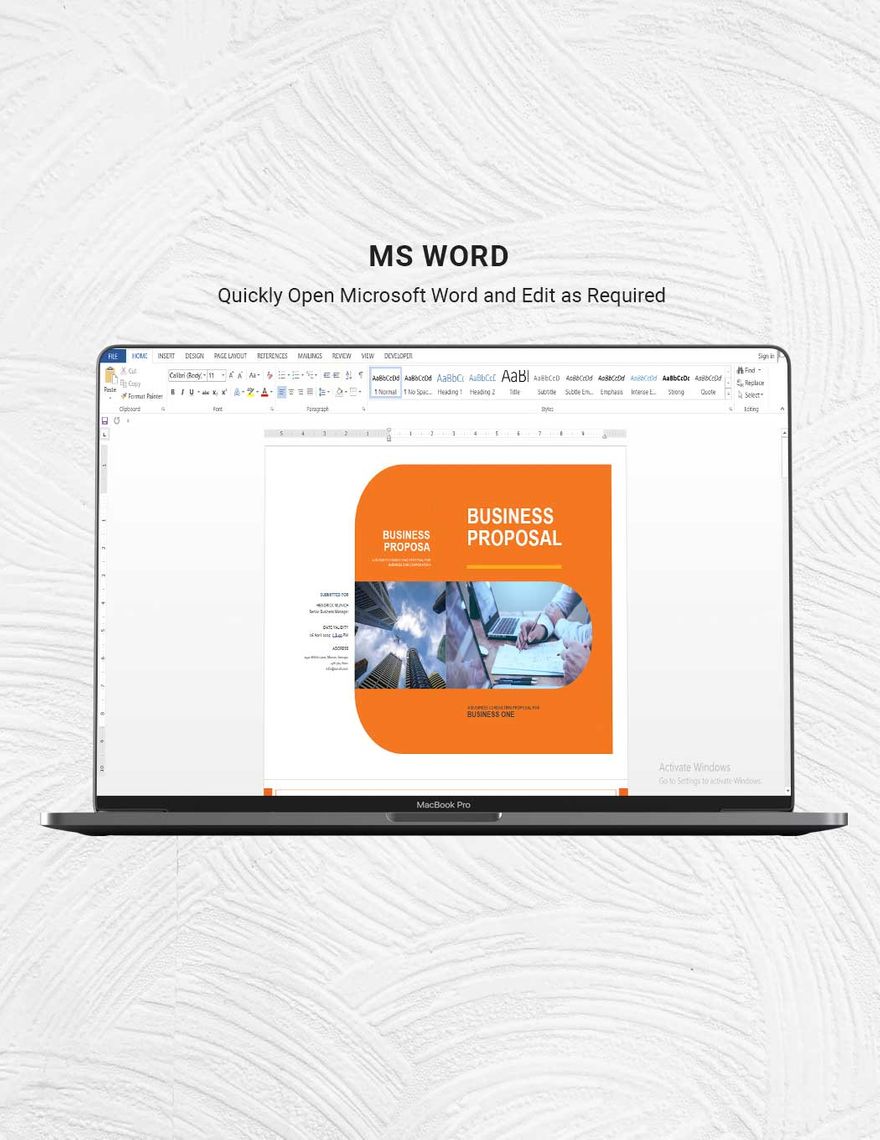
Business Consulting Proposal in a Word-Processing View
Source: Template.net
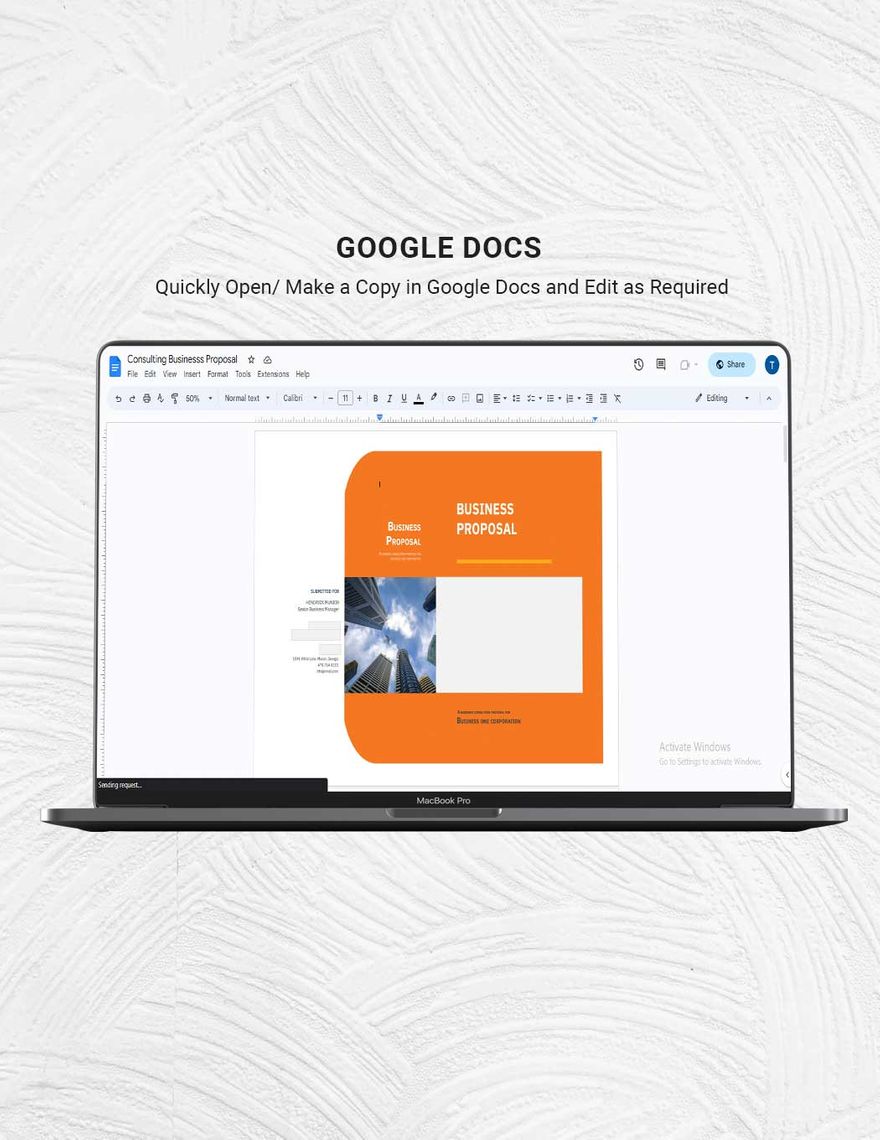
Business Consulting Proposal in a Collaborative Document View
Source: Template.net
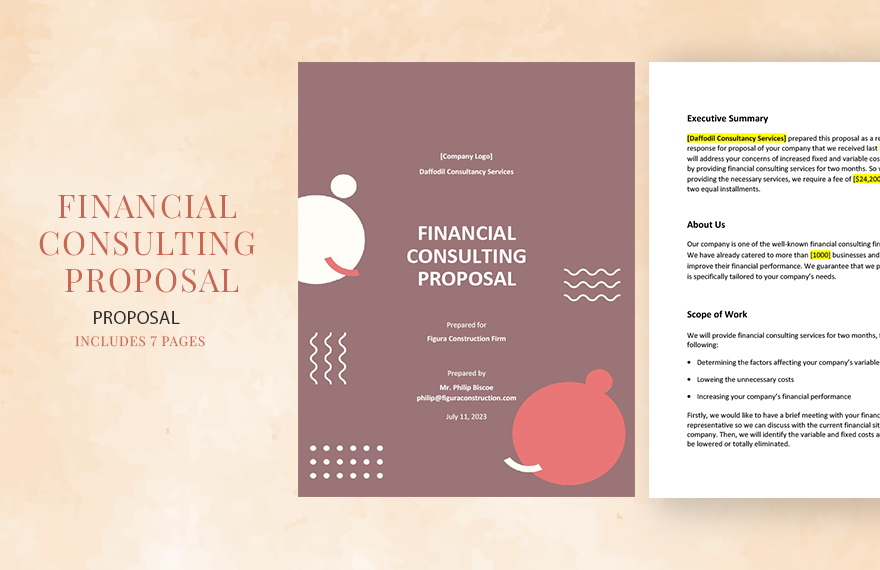
Financial Consulting Proposal Page Composition
Source: Template.net
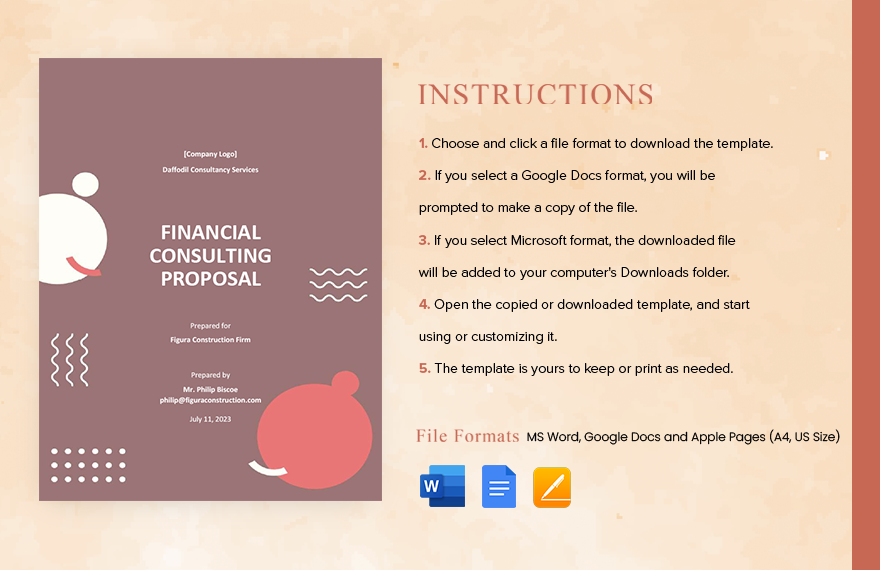
Financial Consulting Proposal Supporting Layout
Source: Template.net
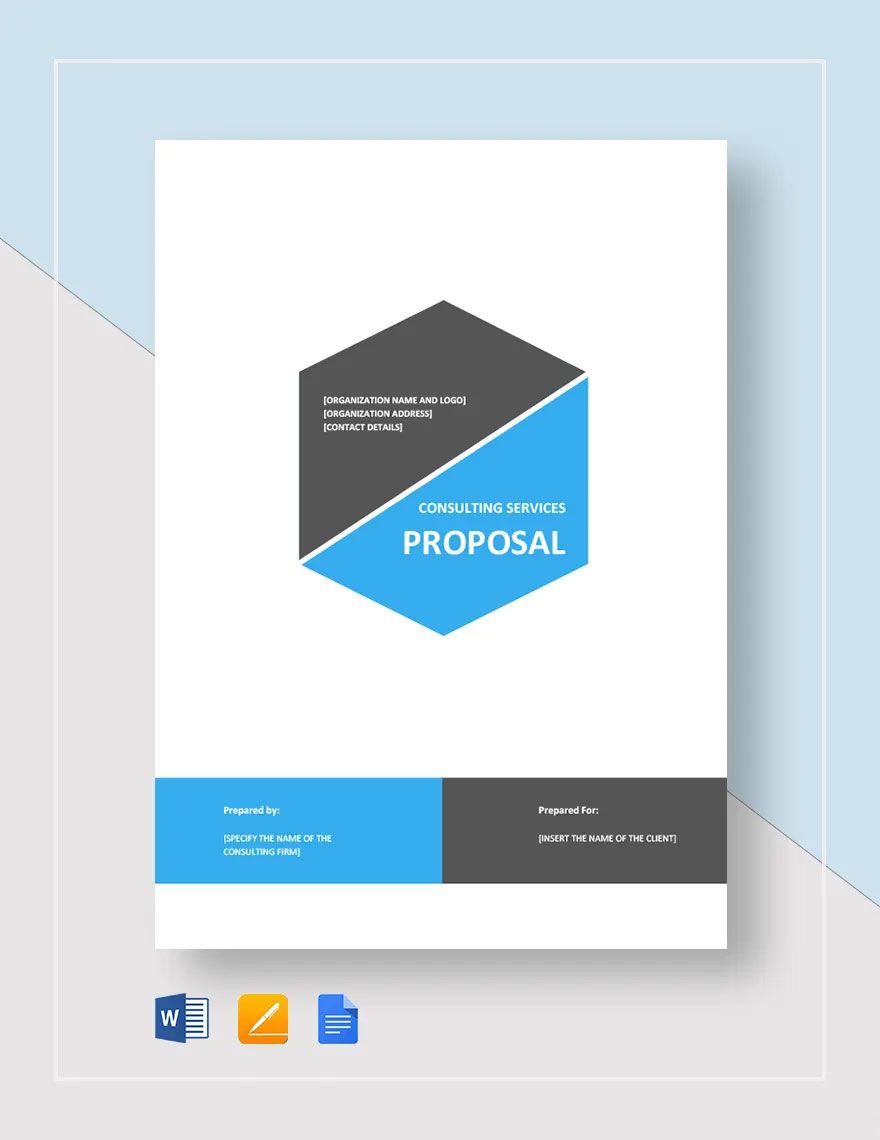
Consulting Services Proposal Cover
Source: Template.net
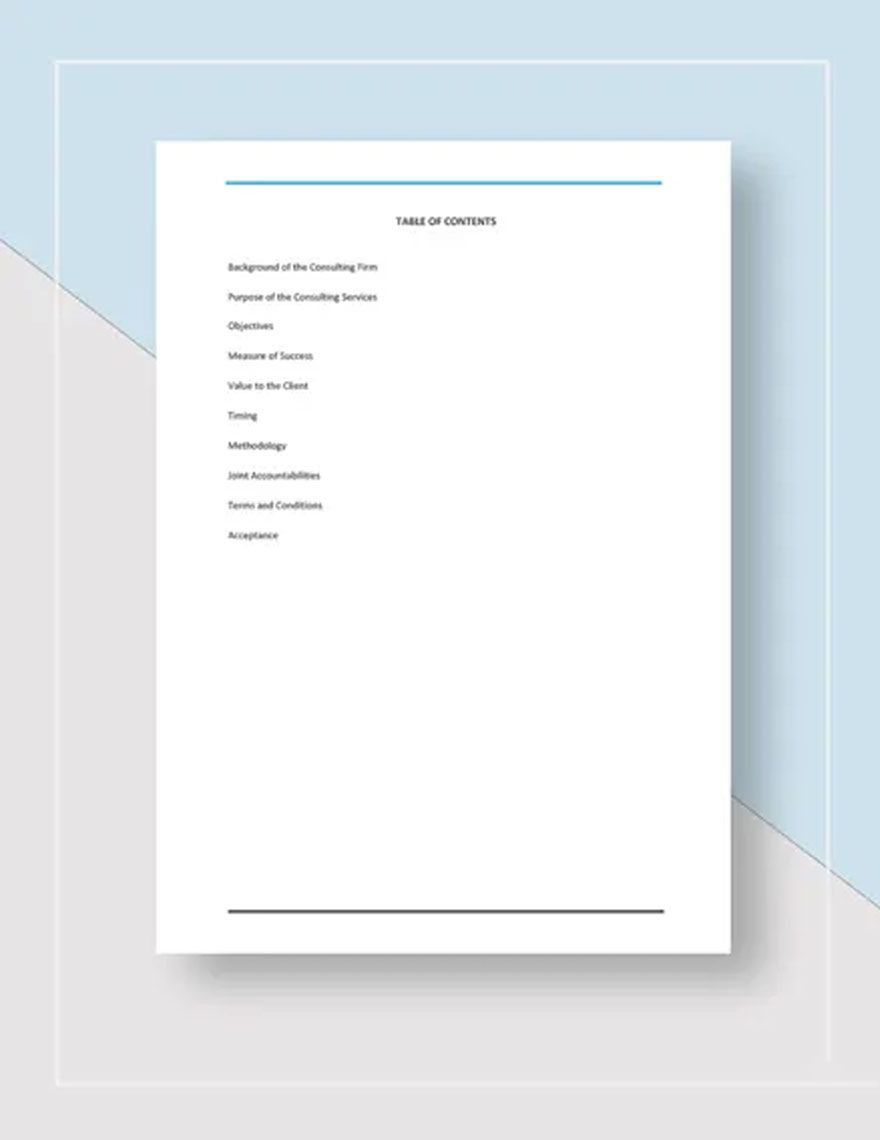
Consulting Services Proposal Table of Contents
Source: Template.net
