In a small organization, vendor information may live in a spreadsheet, accounting system, email threads, contracts, invoices, and shared folders. As the number of suppliers grows, those separate records become harder to reconcile. A well-designed template creates a common structure so procurement, finance, operations, legal, and business owners can work from comparable information.
Vendor management is broader than maintaining a list of suppliers. A practical program normally covers selection, due diligence, onboarding, contracting, performance monitoring, risk review, renewal, and offboarding. Modern vendor management guidance similarly emphasizes lifecycle management, performance tracking, risk assessment, communication, and contract oversight rather than treating vendor data as a static directory. :contentReference[oaicite:0]{index=0}
This article explains how to design a useful statement for vendor management template, what fields belong in it, when Excel or document formats make sense, how vendor statements can be reconciled, and how a template can become part of a broader vendor management framework. The examples are practical models, not claims that every organization must use one identical format.
The goal is not to create the longest possible form. The goal is to create a document or workbook that makes the right information easy to collect, verify, compare, update, and report. A strong template should reduce ambiguity while remaining flexible enough to accommodate different vendor categories and risk levels.
What Is a statement for vendor management template?
A statement for vendor management template is best understood as a structured document used to organize information associated with a vendor relationship. Depending on the business context, it may contain vendor identification, contract details, transaction history, performance observations, financial balances, compliance status, review dates, and responsible owners.
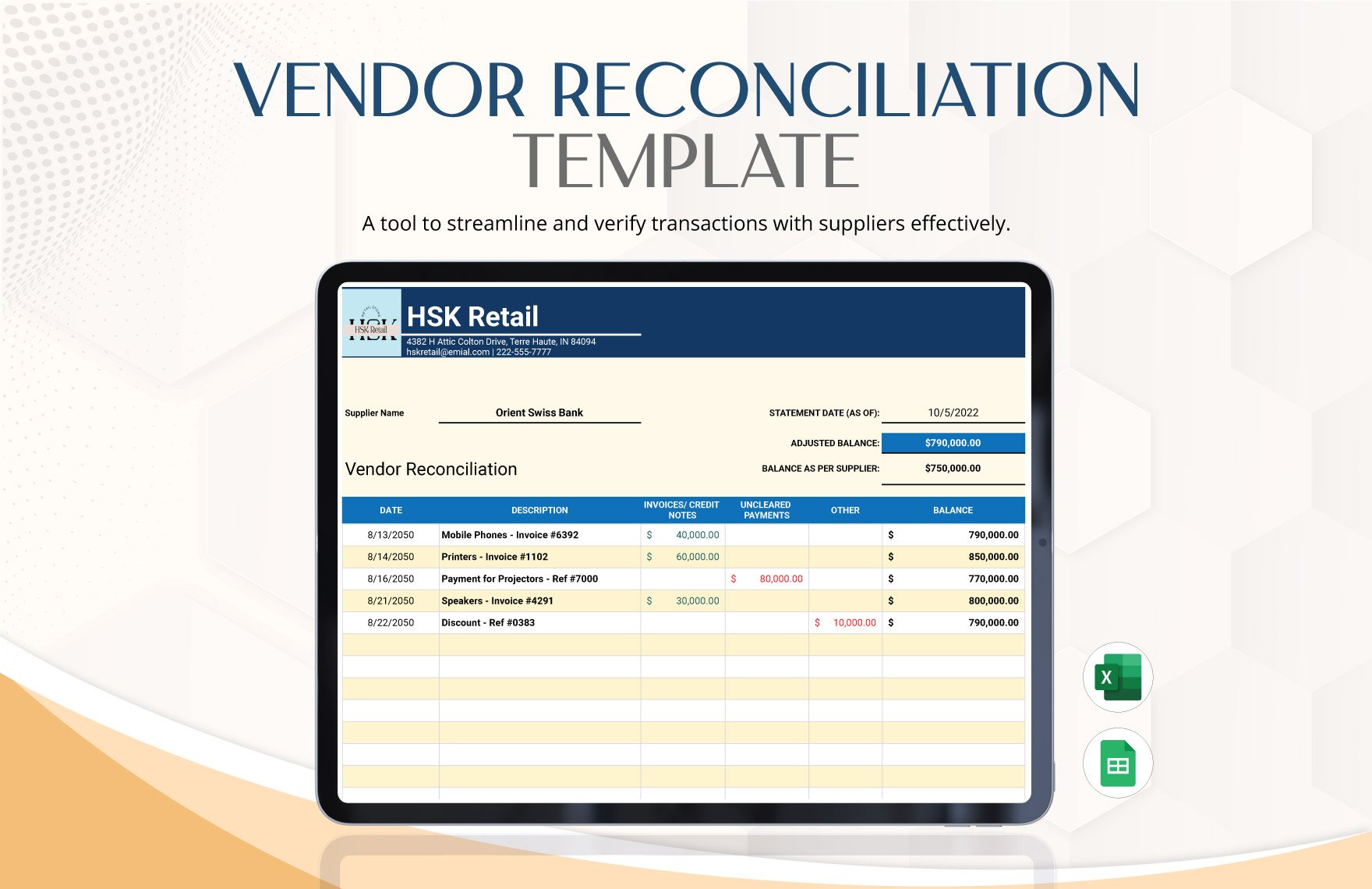
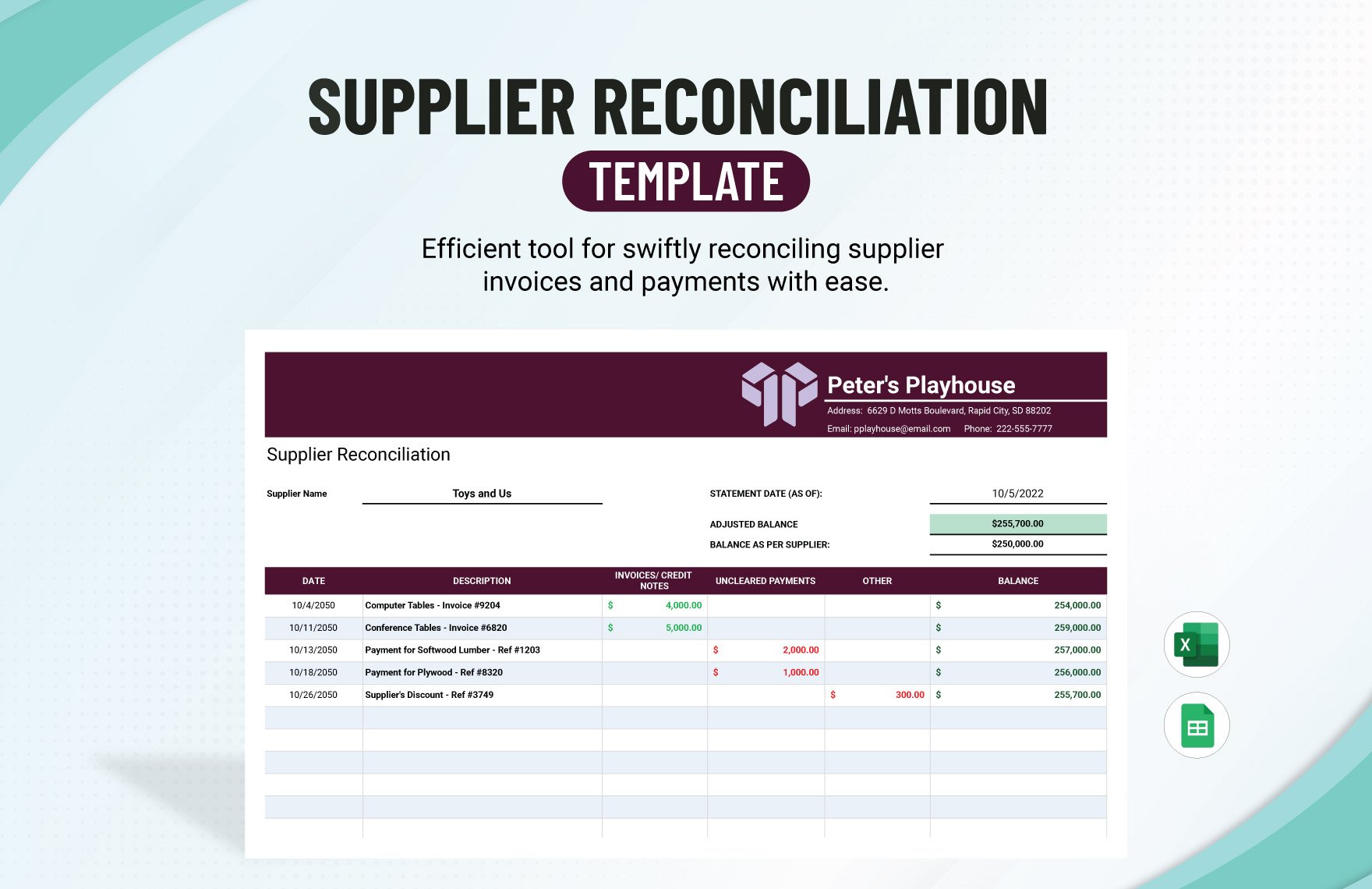
The word “statement” can also describe a financial record supplied by a vendor. In accounts payable, a vendor statement commonly summarizes invoices, credits, payments, and an outstanding balance for a particular supplier account. Reconciling that statement against internal records can reveal missing invoices, duplicated entries, unapplied payments, or other differences. :contentReference[oaicite:1]{index=1}
That distinction matters because a management template and a financial vendor statement are related but not identical. A management template is primarily a control and information structure. A vendor statement is generally a supplier-side transaction record. A mature process may use both: the statement supports financial reconciliation, while the management record provides broader relationship context.
For example, a finance team may receive a supplier statement showing five invoices and two payments. The accounts payable specialist can reconcile those transactions to the ledger, while the vendor manager separately tracks the supplier’s contract, service-level performance, risk classification, upcoming renewal, and corrective actions.
The most useful design therefore starts with the question the document needs to answer. If the question is “What does this supplier say we owe?”, a reconciliation-oriented statement is appropriate. If the question is “How are we managing this supplier relationship?”, a broader vendor management record is more suitable.
Why a structured vendor template matters
Vendor management becomes difficult when important information is technically available but practically inaccessible. A contract may exist in a legal folder, payment data may sit in an accounting system, supplier contacts may be stored in email, and performance information may be kept by an operations manager. A structured template creates a common reference point.
Consistency is one of the most important advantages. If every vendor is documented differently, comparisons become subjective and reviews take longer. Standard fields allow teams to compare contract dates, ownership, payment terms, performance results, risk levels, and open issues using the same basic structure.
A template also clarifies accountability. A vendor record should identify who owns the relationship, who approves changes, who monitors performance, and who is responsible for the next review. Without an owner and a review date, even an excellent spreadsheet can become a passive archive.
Another advantage is auditability. A good record shows not only what decision was made but also the information that supported it. That might include evaluation criteria, approval dates, supporting documents, performance evidence, exceptions, corrective actions, and renewal decisions.
Finally, structured information creates better management reporting. Once vendor records use consistent fields, teams can summarize spend, contract expirations, risk categories, performance trends, and unresolved issues without rebuilding the analysis from scratch every reporting cycle.
Core sections to include
1. Vendor identity
The first section should establish exactly which legal or commercial entity the record represents. Include the vendor’s legal name, trading name when relevant, vendor ID, primary category, service or product description, address, country, and primary contact.
Do not assume that the sales contact is the only person worth recording. A robust record can distinguish commercial, operational, accounts receivable, technical, and escalation contacts when those roles are materially different.
Vendor identification should also support duplicate prevention. Similar company names can represent different legal entities, branches, or subsidiaries. A consistent vendor ID and verified legal name can help finance and procurement avoid creating duplicate master records.
Where the business operates across jurisdictions, consider including registration details, tax identifiers, currency, payment method, and relevant regional information. The exact fields should depend on internal requirements rather than copying a universal form.
The objective is simple: someone unfamiliar with the relationship should be able to open the record and understand who the supplier is, what it provides, and who inside the organization manages the relationship.
2. Commercial information
Commercial information explains the financial structure of the relationship. Useful fields can include contract value, pricing model, payment terms, currency, purchase category, agreed discounts, renewal terms, and relevant pricing references.
For recurring suppliers, it can be useful to distinguish contracted value from actual spend. A supplier may have a contract ceiling of a particular amount while actual purchases remain significantly lower. Keeping both values prevents the record from overstating realized expenditure.
Pricing information should also be date-aware. A price that was valid when a contract was signed may no longer represent the current commercial position. Record effective dates and review dates when pricing changes materially over time.
Where several suppliers provide comparable products, structured commercial fields make benchmarking easier. Procurement can compare unit pricing, minimum order quantities, delivery terms, payment conditions, and other factors without relying entirely on informal notes.
A template should not attempt to replace the accounting system. Instead, it should capture the commercial information needed for relationship management and point users toward the authoritative transaction or contract records when deeper detail is required.
3. Contract and obligation tracking
Contract management should identify the agreement type, effective date, expiration date, renewal mechanism, contract owner, and key obligations. Depending on the relationship, it may also capture service-level agreements, milestones, acceptance criteria, warranties, confidentiality provisions, or termination conditions.
Contract visibility matters because vendor relationships often continue for years while the original negotiation becomes distant institutional knowledge. A structured record preserves important context and makes renewal preparation more deliberate.
Contract dates should be maintained with sufficient lead time for review. A renewal date that appears harmless in a spreadsheet can become urgent if legal review, competitive sourcing, budgeting, security review, or transition planning requires several weeks.
Contract management guidance commonly recommends centralizing agreements, assigning ownership, monitoring obligations, and using reminders for renewal and compliance deadlines. :contentReference[oaicite:2]{index=2} A template can support those practices even when the organization does not use dedicated contract management software.
The contract section should also distinguish between the existence of a signed agreement and the completion of operational requirements. A signed contract does not automatically mean the vendor is fully onboarded, approved for payment, integrated into systems, or ready to provide services.
Using a spreadsheet as the working layer
Spreadsheets remain useful for vendor management because they are familiar, flexible, and easy to adapt. They can support filters, sorting, formulas, conditional formatting, pivot tables, dashboards, and controlled data-entry structures without requiring a specialized platform.
A well-designed workbook should separate raw data from presentation. One worksheet can hold the vendor master, another can track contracts, another can store performance reviews, and another can provide a management dashboard. This separation reduces the temptation to create one giant sheet that becomes difficult to maintain.
Data validation can improve consistency. Instead of allowing users to type any value into a status field, provide controlled options such as Active, Pending, Suspended, Under Review, and Offboarded. The exact statuses should reflect the organization’s actual workflow.
Conditional formatting can highlight practical exceptions, such as contracts approaching expiration, missing required documents, overdue reviews, or performance scores below a defined threshold. The formatting should draw attention to decisions rather than simply make the workbook colorful.
Spreadsheets also need governance. Define who may edit master records, who reviews changes, how versions are controlled, and where supporting documents are stored. A shared workbook without ownership can quickly become unreliable even if its original design was excellent.
Example: vendor intake worksheet
A vendor intake worksheet can begin with Vendor ID, Legal Name, Trading Name, Category, Product or Service, Relationship Owner, Primary Contact, Country, Currency, Risk Tier, and Status. These fields form the basic identity layer of the vendor record.
The second group can capture commercial information such as estimated annual spend, contract value, payment terms, pricing method, and purchase frequency. These fields help determine how strategically important the vendor is and how much oversight may be appropriate.
The third group can track documentation. Useful examples include contract status, insurance status, compliance documentation status, security review status, tax information status, and the date each item was last verified.
The fourth group can record review information: last performance review, next review date, current score, open issues, corrective-action owner, and planned action. This turns the vendor list into an operational management tool.
Finally, include a notes or evidence field only where it adds value. Long narrative notes can make spreadsheets difficult to analyze, so important facts should generally have their own structured fields while detailed explanations remain in linked supporting documents.
Visual example: change control and vendor records
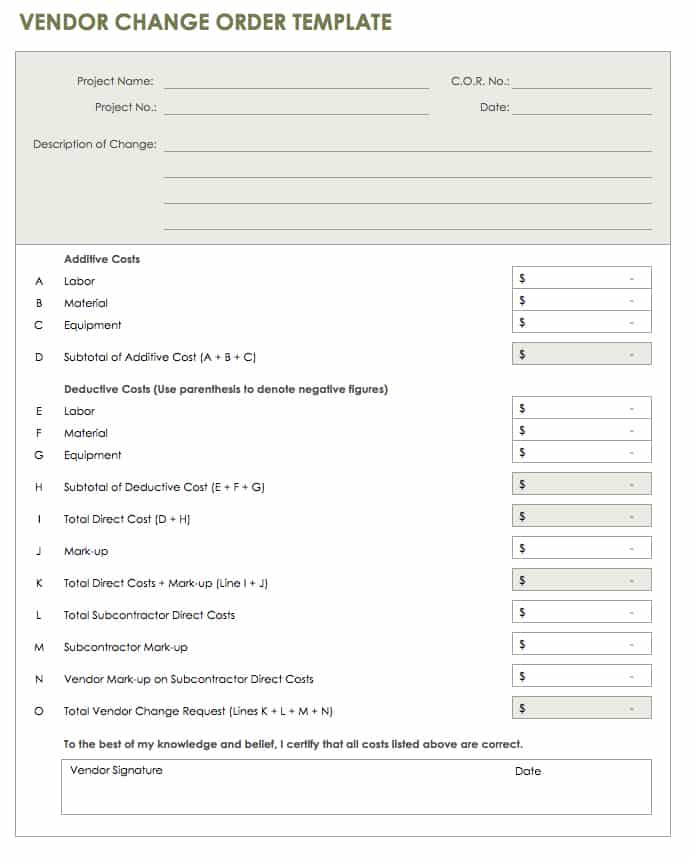
Vendor relationships frequently change after the initial agreement. A project may expand, quantities may change, delivery dates may move, or additional services may be requested. Recording those changes separately helps prevent the original agreement from becoming an incomplete representation of the current relationship.
A change-control record should identify what changed, why it changed, who requested it, who approved it, the financial effect, and the effective date. The record should also connect the change to the underlying vendor or contract.
This approach is especially useful for project-based suppliers. A change request can affect labor, materials, equipment, milestones, payment schedules, or deliverables, so a simple narrative email may not provide sufficient structure for later review.
A standardized change-order form also creates a consistent audit trail. Stakeholders can see the original requirement, proposed modification, financial adjustment, and approval rather than reconstructing the sequence from scattered messages.
The following example illustrates how a formalized change-order layout can make vendor modifications easier to document. It is a visual reference rather than a claim that the displayed format is required for every organization.
Vendor applications and intake forms
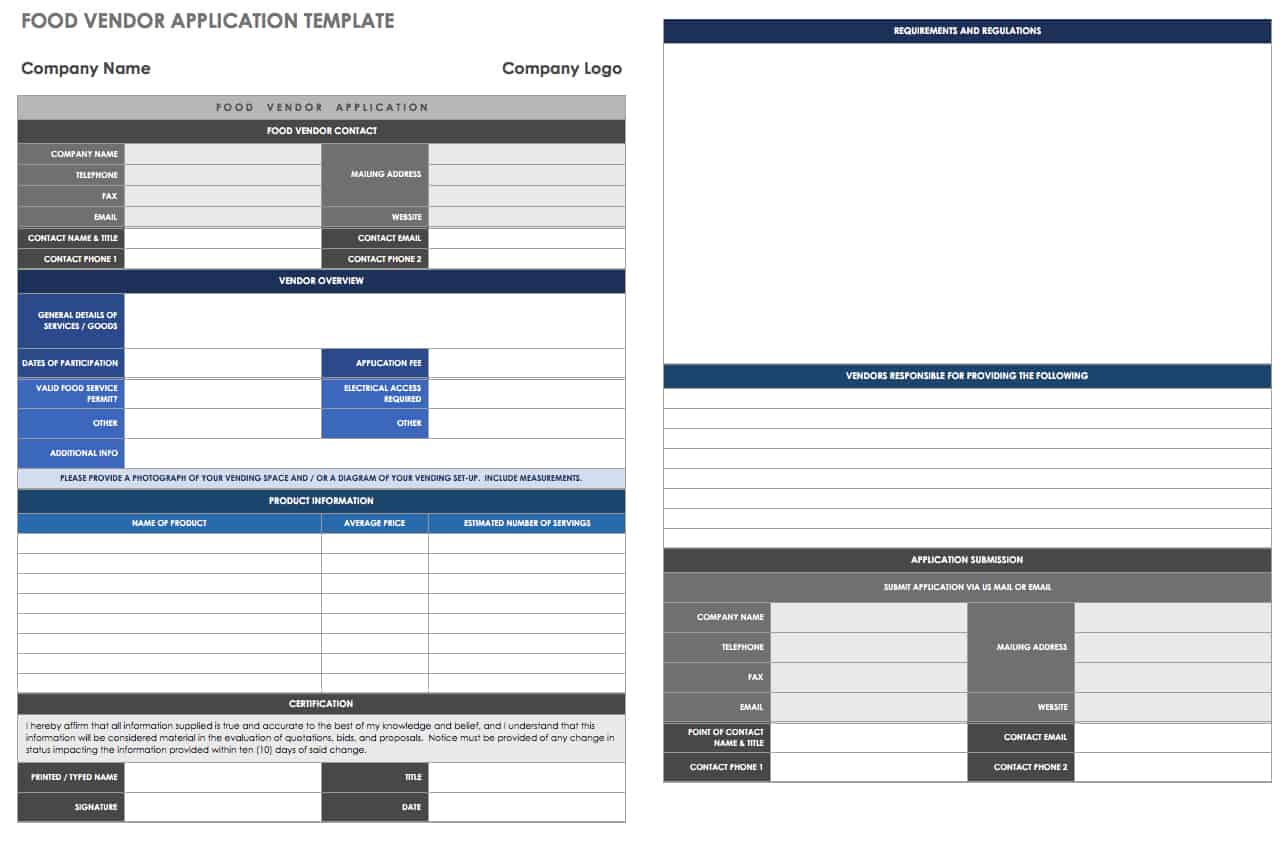
Vendor intake forms are particularly useful at the beginning of a relationship because they create a standardized request for information. Instead of asking different suppliers for different details through informal emails, procurement can establish a consistent minimum data set.
An intake form should collect only information that has a defined business purpose. Excessive data requests increase administrative work and can delay onboarding. A risk-based process can require more detailed information from critical or higher-risk suppliers than from low-risk vendors.
Typical intake categories include company identity, contact information, products or services, legal documentation, banking information, insurance, certifications, references, and relevant compliance information. Sensitive information should be handled through appropriate secure systems rather than casually stored in a shared spreadsheet.
For event-related or specialized vendors, the form may also need information about dates, service locations, equipment, staffing, permits, or operational requirements. The structure can be adapted without changing the broader principles of consistency and accountability.
The following visual shows how a vendor application can combine registration details, product information, requirements, and certification fields in a single structured document.
Vendor comparison and selection
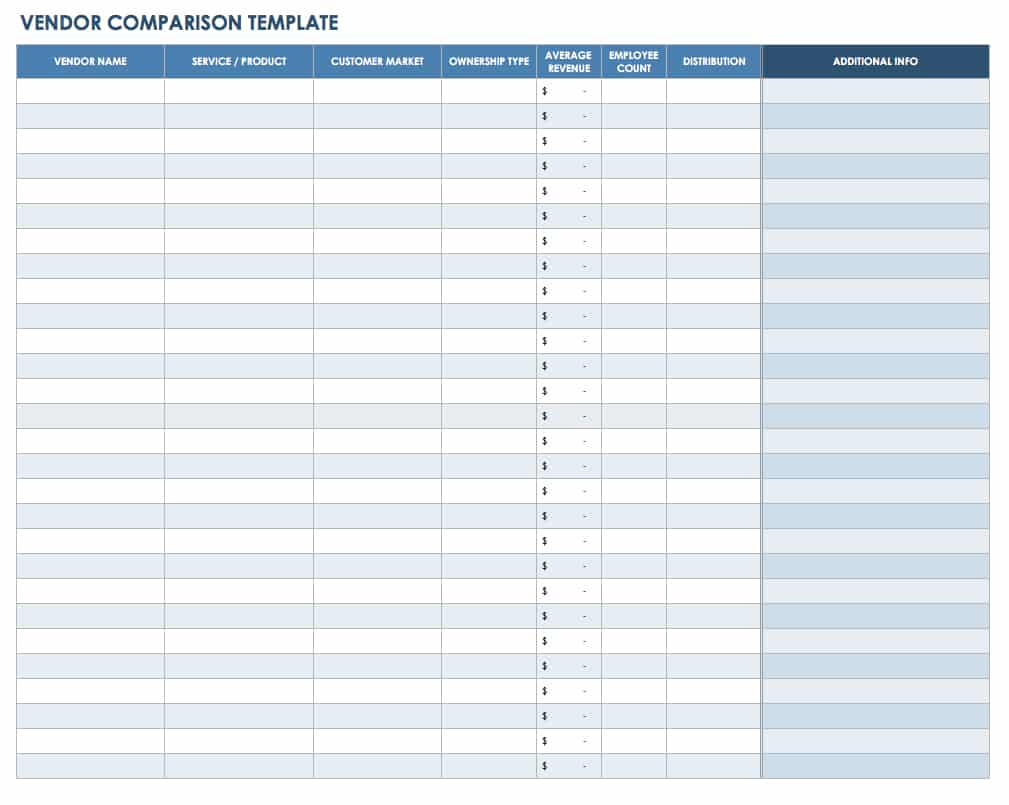
Vendor comparison is more reliable when every candidate is evaluated against the same decision criteria. A comparison sheet can include price, quality, capacity, experience, service coverage, delivery capability, implementation approach, risk, and contractual flexibility.
Not every criterion should receive equal weight. For a critical manufacturing component, quality and continuity may be more important than a small price difference. For a routine service, price and responsiveness may have greater practical significance.
Weighted scoring can make those priorities explicit. For example, an organization might assign higher weights to quality and delivery and lower weights to presentation or non-critical features. The numbers in such a model are decision assumptions, not objective truths.
Comparison results should also preserve the evidence behind the score. A score of “4” is more useful when reviewers can explain why it received that score and where the supporting evidence came from.
A structured comparison template therefore supports both decision-making and later explanation. It helps procurement show how a supplier was evaluated rather than simply documenting which supplier was selected.
Vendor risk assessment
Risk should be treated as an ongoing part of vendor management rather than a one-time onboarding checkbox. A supplier can become more important, more dependent upon, or more exposed to risk as the business relationship changes.
Useful risk categories may include financial, operational, cybersecurity, privacy, regulatory, reputational, geographic, concentration, and continuity risk. The exact categories should be adapted to the organization’s industry and operating model.
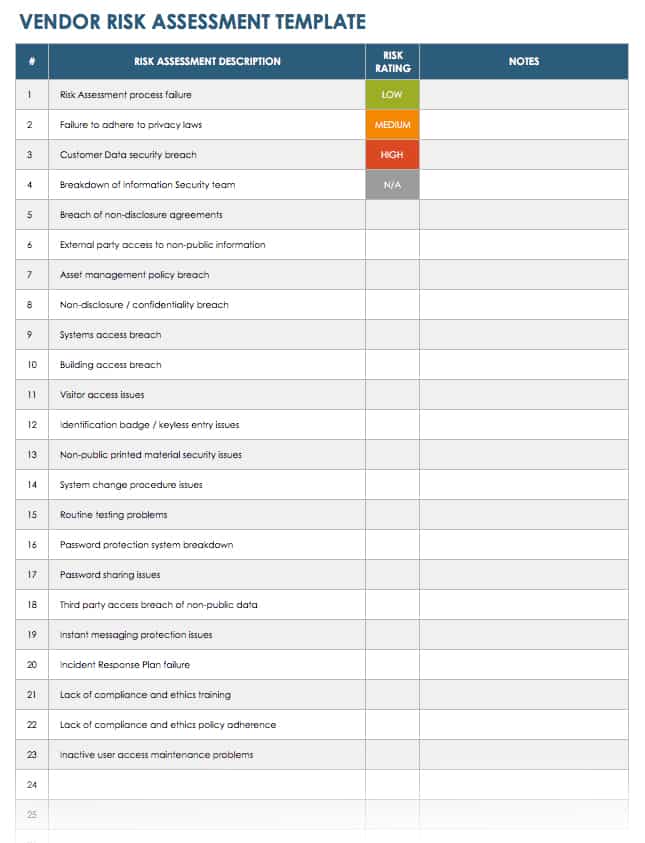
Risk scoring should have defined meanings. If a template uses Low, Medium, and High, document what those categories mean and what action each category triggers. Otherwise, different reviewers may assign the same rating for different reasons.
Risk tiering can also determine review frequency. Higher-risk vendors may need more frequent performance reviews or deeper due diligence, while low-risk vendors may be handled through a lighter process. This reduces the burden of applying identical controls to every supplier.
The visual below demonstrates a simple risk-assessment structure. It should be treated as an example layout, not as a universal risk methodology or an official regulatory requirement.
Approved vendor lists
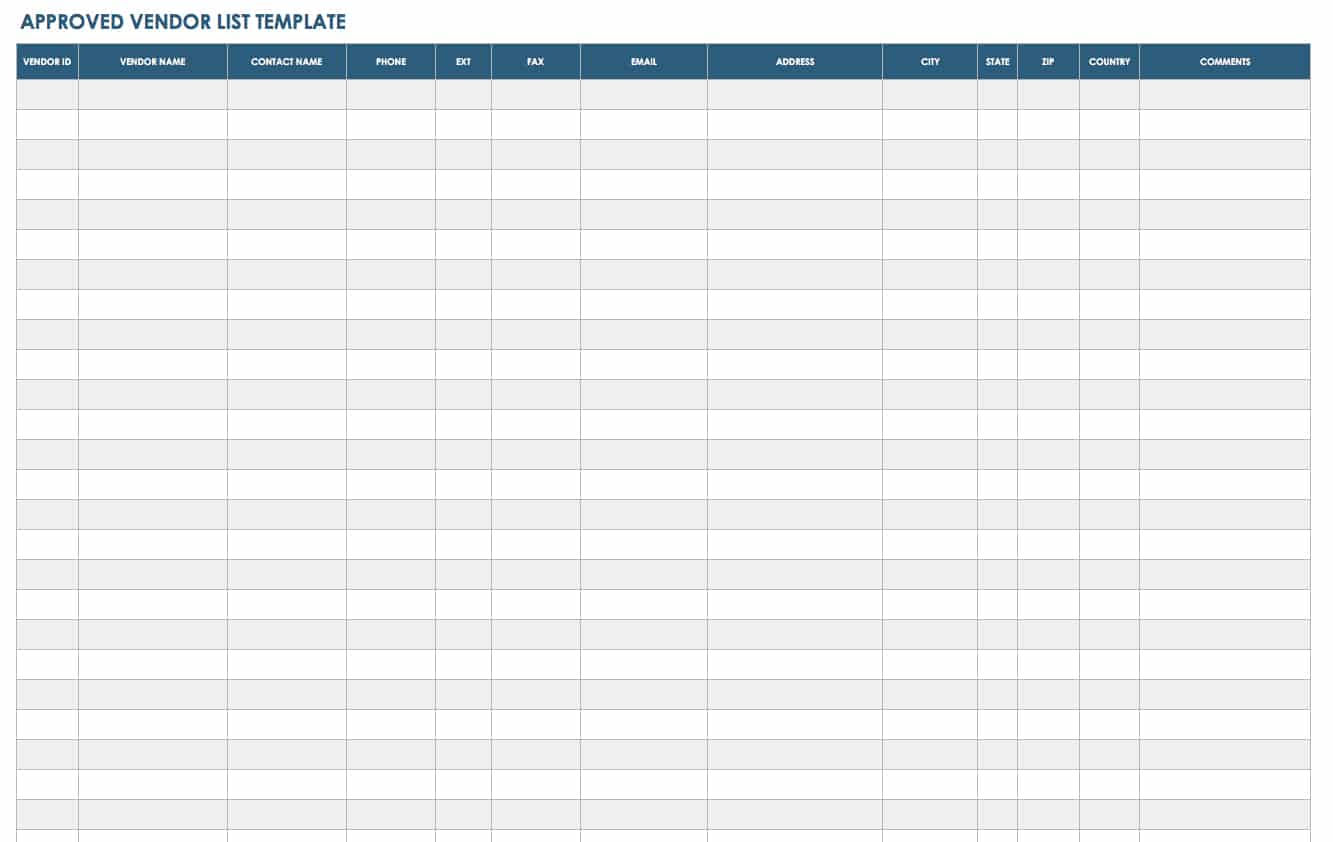
An approved vendor list can function as a controlled reference for procurement teams. It may show which suppliers are currently approved, what they provide, who owns the relationship, and when the approval was last reviewed.
Approval should not be confused with permanent preference. A supplier may be approved but still require periodic performance review, contract renewal, compliance verification, or requalification.
The list can also reduce accidental purchases from suppliers that have not completed required onboarding. If purchasing staff have a reliable approved list, they have a clear starting point when selecting suppliers for routine transactions.
For larger organizations, the approved list can be connected to procurement or enterprise resource planning systems. For smaller organizations, a controlled spreadsheet can provide a practical interim solution if it has clear ownership and update procedures.
A useful approved list should therefore be concise. It should help users answer “Can we buy from this supplier, for what purpose, and who owns the relationship?” without forcing them to search through multiple unrelated documents.
Vendor performance evaluation
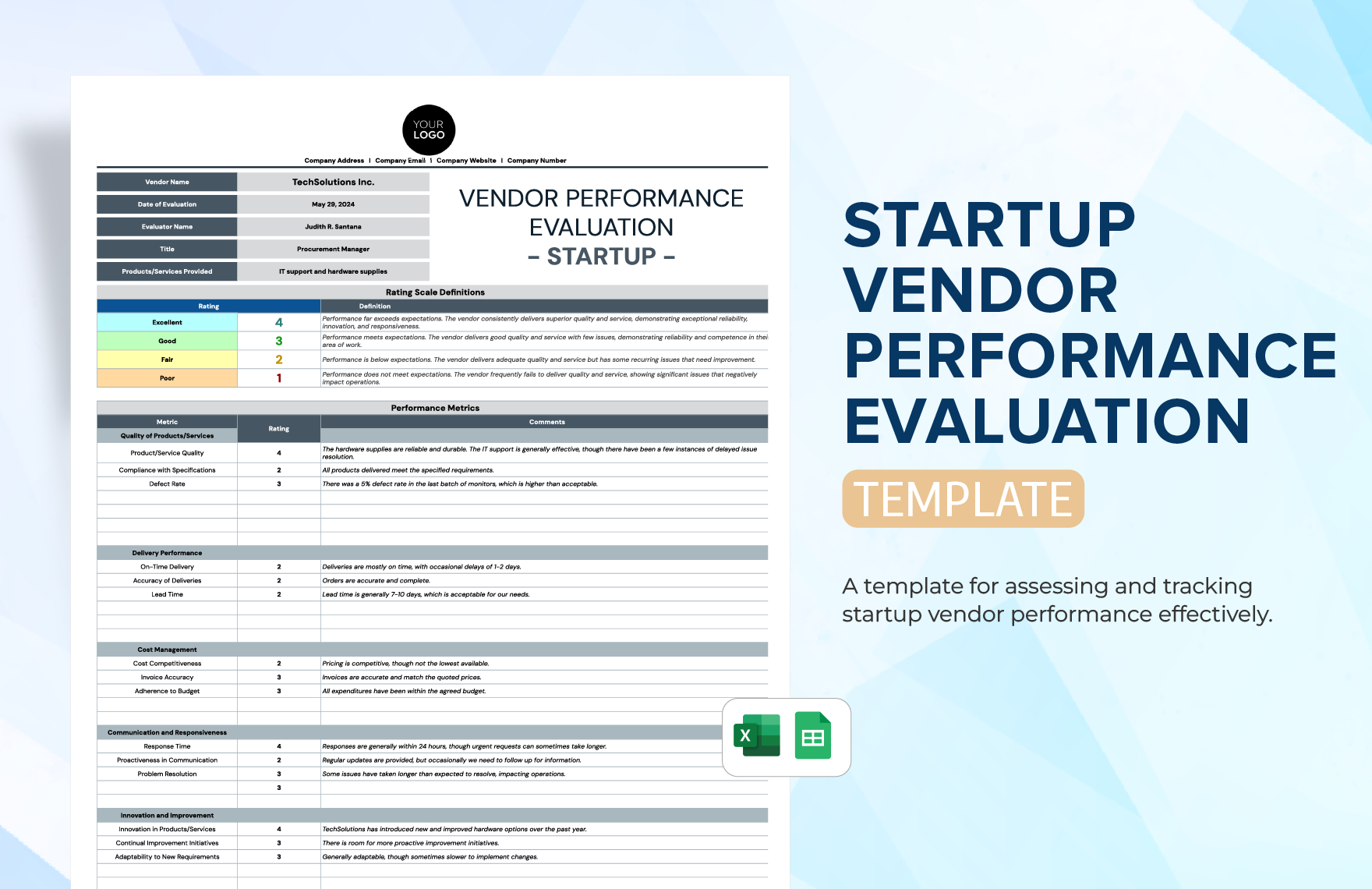
Performance management turns vendor management from record keeping into active oversight. A performance template should define the measures that matter for the relationship and provide enough evidence to support the resulting assessment.
Common measures include on-time delivery, quality, service responsiveness, contract compliance, issue resolution, cost performance, and milestone completion. The correct measures depend on what the supplier actually provides.
Performance should be reviewed against agreed expectations rather than personal impressions. If a contract requires delivery within a particular timeframe, the performance record should measure actual delivery against that requirement.
Scores are most useful when they lead to action. A declining score might trigger a vendor meeting, corrective action plan, additional monitoring, renegotiation, or sourcing activity depending on the seriousness of the issue.
A template should preserve the review date, evaluator, evidence, score, comments, corrective actions, and next review date. This creates a history that can support renewal decisions and continuous improvement.
How the vendor lifecycle fits together
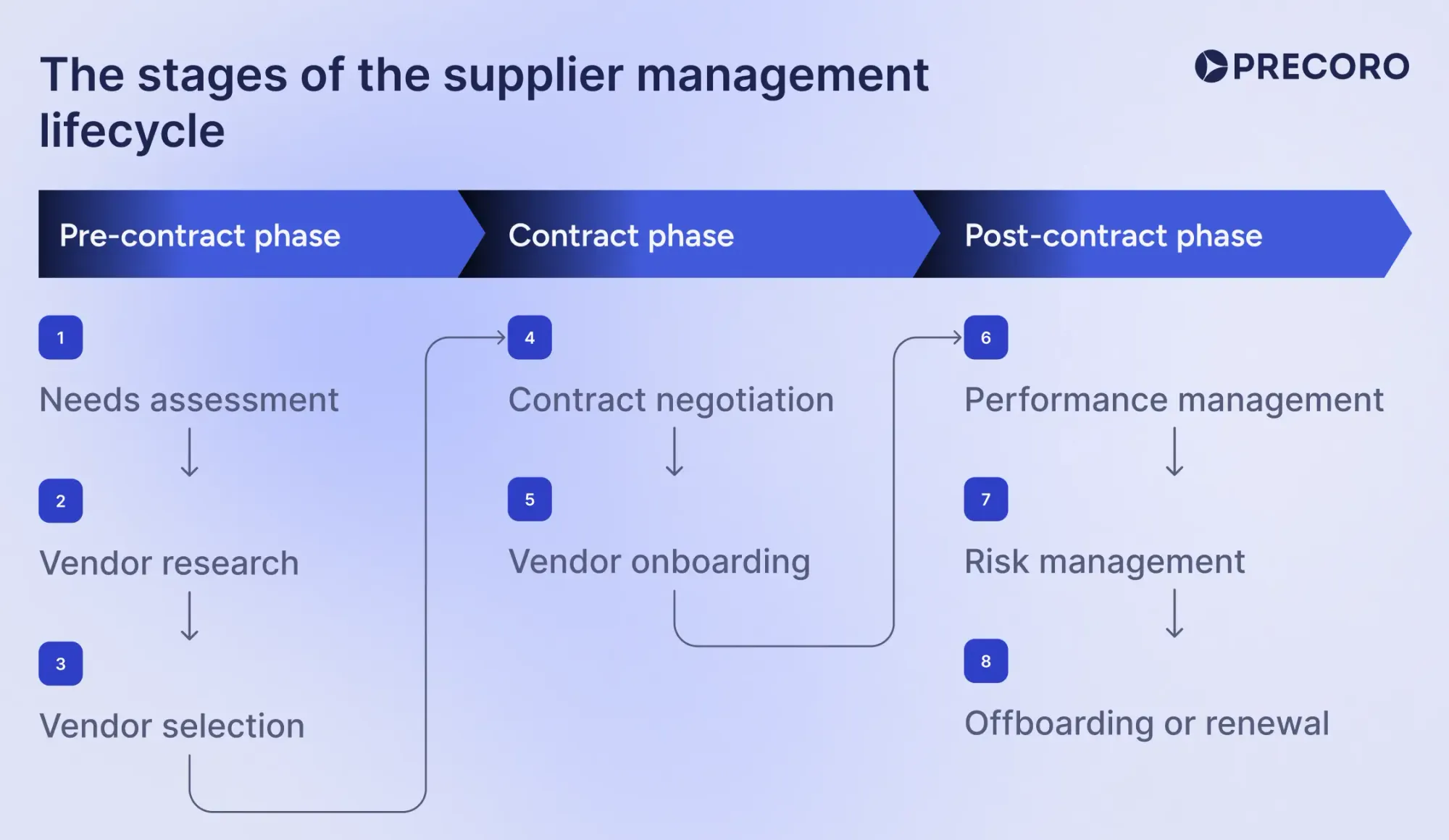
A useful statement for vendor management template should not exist in isolation. It should fit into a lifecycle that begins with business need and supplier research, continues through selection and onboarding, and then moves into performance, risk management, renewal, or offboarding.
The lifecycle approach is useful because different information matters at different stages. Before selection, the organization needs requirements and evaluation criteria. During onboarding, it needs documentation and setup information. During operation, it needs performance and financial information.
At renewal, the historical record becomes especially valuable. Procurement can review service quality, commercial changes, incidents, risk exposure, stakeholder feedback, and contract utilization before deciding whether to continue the relationship.
Offboarding also deserves structure. Access should be removed where appropriate, outstanding financial obligations should be resolved, company property should be returned, records should be retained according to policy, and responsibilities should be transferred.
The lifecycle diagram below provides a useful visual model of these stages. It illustrates the sequence from needs assessment and vendor research through selection, contracting, onboarding, performance management, risk management, and renewal or offboarding. :contentReference[oaicite:3]{index=3}
Common vendor management problems
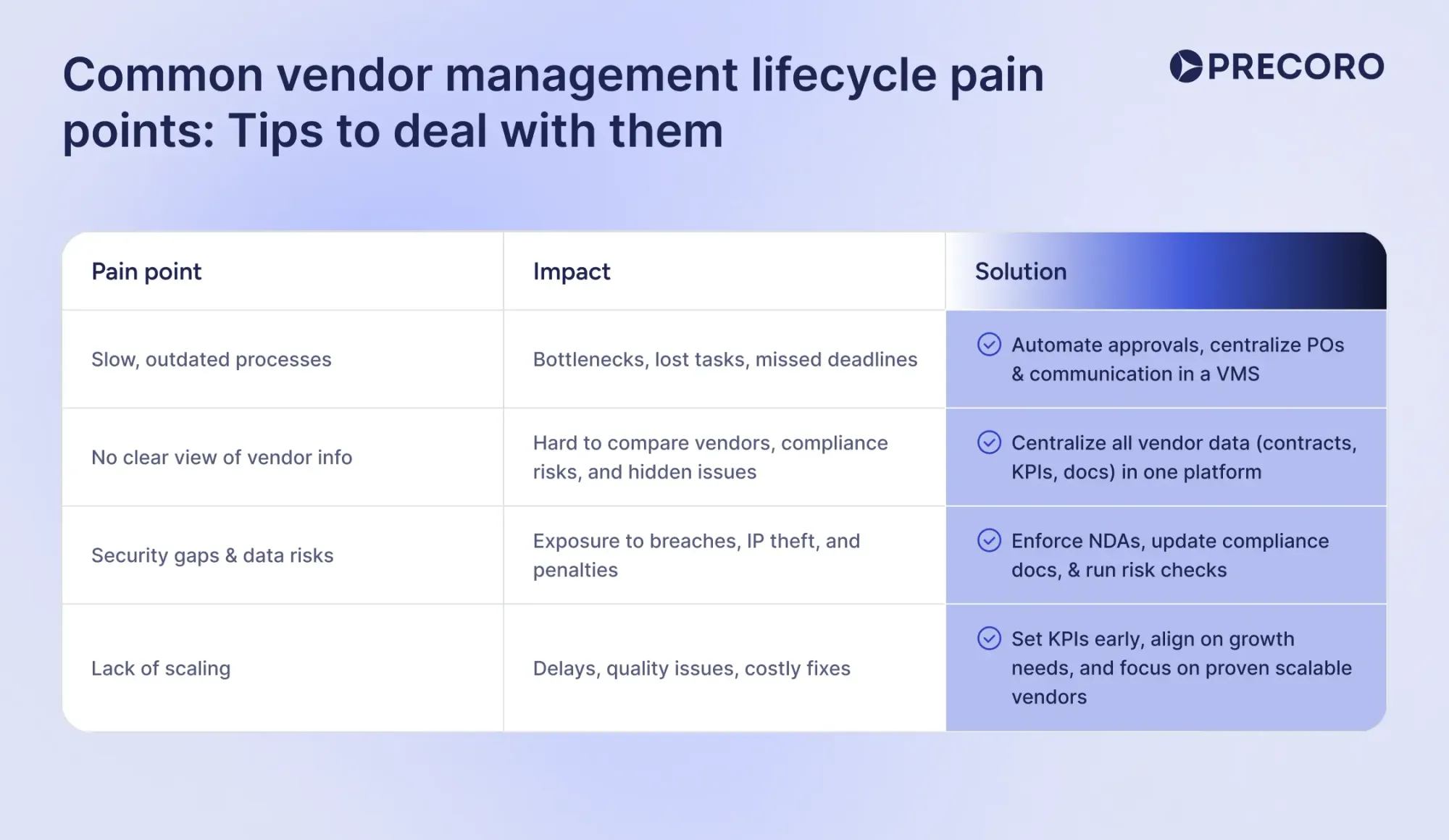
One of the most common problems is fragmented information. Vendor details may be duplicated across procurement files, accounting records, contracts, and operational documents. This makes it difficult to establish which record is current.
Another problem is unclear ownership. If no person is accountable for the relationship, renewal dates can be missed, performance issues may remain unresolved, and internal stakeholders may not know whom to contact.
Manual approvals can also create bottlenecks. A supplier may have completed the required documentation, but the relationship can remain inactive because an approval or system setup step is waiting in someone’s inbox.
Security and compliance gaps are another concern, particularly for suppliers with access to systems, confidential information, regulated data, or critical operations. The level of review should be proportionate to the actual risk rather than automatically identical for every vendor.
Lifecycle guidance highlights similar pain points, including slow processes, poor visibility, security gaps, and difficulty scaling vendor oversight. The practical response is usually to centralize information, clarify ownership, automate appropriate steps, and use risk-based controls. :contentReference[oaicite:4]{index=4}
Contract management and renewal control
A contract is more useful when its obligations can be translated into operational tasks. The management record should therefore connect the agreement to performance expectations, milestones, deadlines, responsible owners, and review dates.
Contract creation and negotiation establish the relationship, but the work does not stop when signatures are collected. The organization must monitor whether the vendor is delivering what was agreed and whether internal stakeholders are meeting their own responsibilities.
Renewal preparation should begin before the expiration date. Procurement can review actual spend, service quality, contract utilization, incidents, price movements, stakeholder feedback, and market alternatives before entering negotiations.
Termination should also be planned. The record can identify notice periods, transition obligations, data-return requirements, access removal, property return, final invoices, and responsible owners where applicable.
A lifecycle model makes these activities easier to visualize. Contract management guidance similarly describes creation, negotiation, approval, execution, monitoring, compliance, evaluation, and renewal or termination as connected parts of vendor contract management. :contentReference[oaicite:5]{index=5}

Collaboration between procurement and business owners
Vendor management is rarely the responsibility of one department. Procurement may manage sourcing and commercial terms, finance may manage payment and reconciliation, legal may review contracts, information security may assess technology vendors, and operational teams may evaluate day-to-day performance.
A practical template should therefore identify the relationship owner and the major stakeholder groups. This does not require a complicated governance chart. A few clearly defined roles can prevent confusion about who makes decisions and who supplies evidence.
Regular vendor meetings can also be structured around the data captured in the template. Instead of discussing general impressions, participants can review service results, open issues, upcoming milestones, contract obligations, risks, and improvement opportunities.
The meeting record should focus on decisions and actions rather than attempting to transcribe every conversation. Each action should have an owner and a due date so that the next review can assess progress.
The following image illustrates a business discussion around vendor-related information. It is useful as a visual reminder that templates support human decision-making; they do not replace communication, judgment, or relationship management.

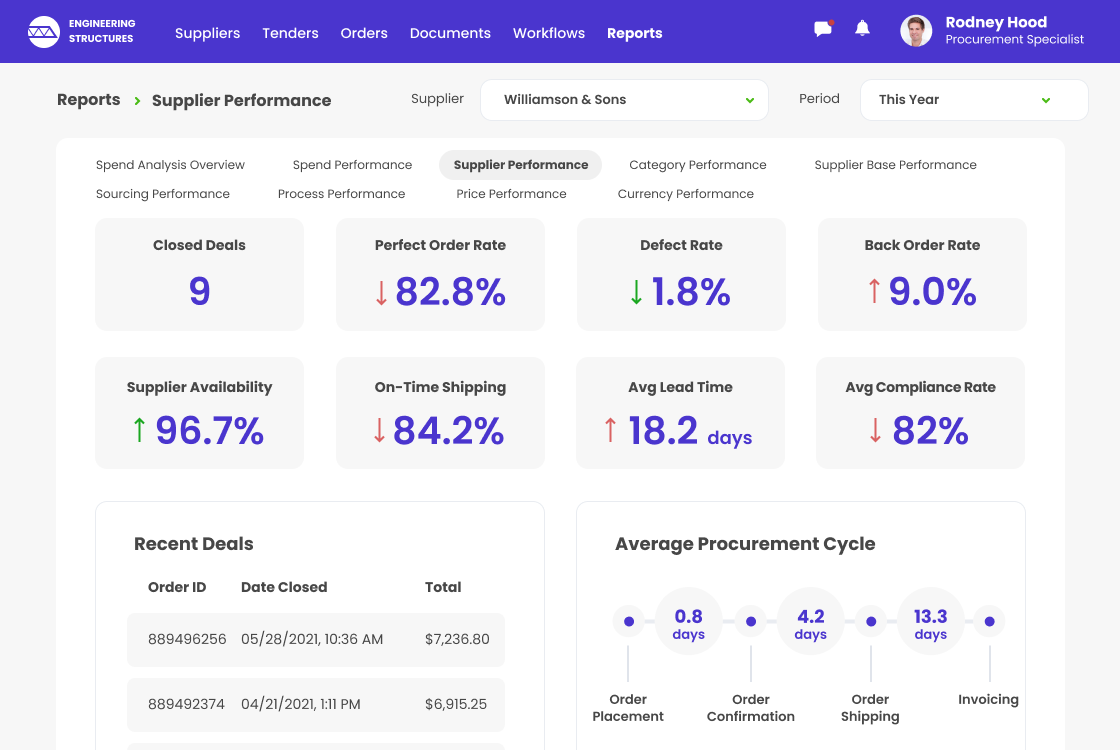
Vendor performance dashboards
A dashboard should answer management questions quickly. Useful questions include which vendors are underperforming, where spend is concentrated, which contracts are approaching renewal, which suppliers have unresolved issues, and which risks require attention.
Dashboard metrics should be derived from consistent source data. If delivery dates are entered differently by different teams, an on-time delivery metric will not be reliable regardless of how attractive the chart looks.
It is usually better to begin with a small set of meaningful metrics than to build a screen containing dozens of indicators. The right number depends on the audience and the decision being supported.
For example, an operational vendor dashboard might emphasize delivery, quality, responsiveness, and open issues, while a finance-oriented view might emphasize spend, invoice exceptions, payment terms, and contract value.
A structured vendor management workbook can eventually feed such a dashboard. The important principle is to treat the dashboard as a presentation layer over controlled data rather than as a separate manually maintained report.
Integrating vendor data with other systems
Vendor management becomes more effective when the template reflects the systems already used by the organization. A spreadsheet should not become a second accounting system, a second contract repository, and a second procurement database.
Instead, define which system is authoritative for each category of information. For example, the accounting platform may remain authoritative for invoice balances, while the contract repository remains authoritative for signed agreements.
The vendor management layer can then summarize the information needed for decisions while retaining references to the detailed source records. This approach reduces duplication and makes reconciliation easier.
Integration can also reduce manual re-entry. Supplier master data, purchase orders, receipts, invoices, and performance information may be connected through procurement or enterprise systems where appropriate.
ScienceSoft’s SRM overview illustrates this concept by describing integrations among supplier relationship management, ERP, inventory management, warehouse management, and procurement activities. It also identifies centralized supplier data, document storage, performance analytics, and automated matching as useful capabilities. :contentReference[oaicite:6]{index=6}

Vendor operations and real-world workflows
A template becomes more valuable when it reflects how work actually happens. For example, a supplier may deliver physical products that must be received, inspected, accepted, recorded, invoiced, and paid.
In such an environment, procurement data connects to warehouse activity and accounts payable. A problem in one stage can affect the others. A late delivery may delay production, while a receiving discrepancy may delay invoice approval.
Vendor management records should therefore capture operational information when it materially affects the relationship. This might include delivery performance, quality incidents, service tickets, capacity issues, or recurring fulfillment problems.
Visual examples of warehouse and supplier operations can help stakeholders understand why vendor data needs to connect commercial decisions with operational evidence. A template should make those connections visible without attempting to store every operational transaction.
The following warehouse-oriented visual provides context for how supplier management can intersect with inventory and operational workflows.

Procurement events and supplier selection evidence
Competitive sourcing often produces a substantial amount of information: requests for proposals, supplier responses, evaluation criteria, pricing comparisons, clarification questions, approvals, and award decisions.
A vendor management template should not attempt to reproduce every document from the sourcing event. Instead, it can preserve the key outcome and link it to the evidence: sourcing event identifier, evaluation date, selected supplier, decision owner, and any important conditions.
For complex or high-value sourcing, keeping the evaluation methodology is especially important. Future reviewers may need to understand why a supplier was selected and whether the original assumptions remain valid.
Electronic sourcing and auction processes also introduce additional controls around bid timing, authorization, and documentation. The exact requirements depend on the organization’s procurement policy and the nature of the transaction.
The following image provides visual context for an electronic auction environment and illustrates why sourcing evidence can involve both commercial and governance considerations.

Contract and tender management
Contract and tender processes can become particularly complex when multiple stakeholders are involved. Procurement may own the sourcing process while legal reviews terms and business users confirm technical requirements.
The template should identify decision gates rather than trying to capture every conversation. Examples include technical approval, commercial approval, legal approval, budget approval, final award, contract signature, and onboarding completion.
For international or regulated environments, additional documentation may be necessary. The organization should define those requirements based on its own policies, applicable law, and risk profile rather than assuming a generic template satisfies every requirement.
Keeping a clear record of approval status can also prevent a common problem: assuming that because a supplier has been selected, the contract is fully executed. Selection, contract signature, and operational activation are separate milestones.
A structured process makes those milestones visible and creates a clearer transition from sourcing to vendor management.

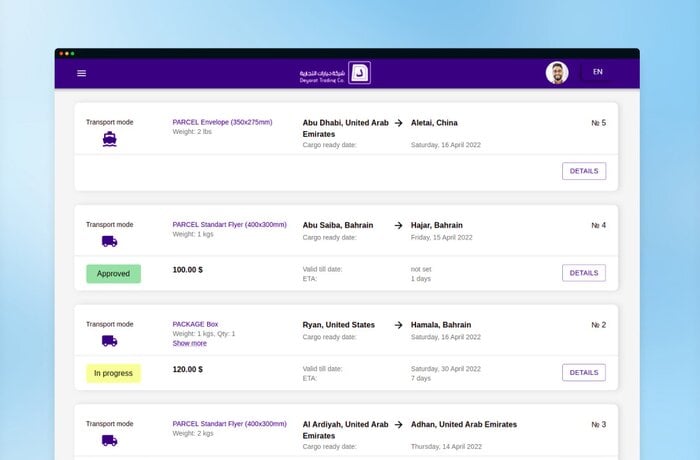
Supplier logistics and service continuity
Some vendor relationships directly affect transportation, logistics, customer fulfillment, or physical supply chains. In these cases, vendor management should include continuity considerations alongside ordinary commercial information.
Useful continuity fields can include alternative suppliers, geographic dependencies, critical locations, lead times, escalation contacts, contingency arrangements, and the business impact of service interruption.
These fields do not replace a formal business continuity plan. They provide a vendor-specific summary that helps procurement and operations understand where supplier disruption could affect critical activities.
For technology vendors, the equivalent information might involve service availability, support response, data access, recovery commitments, and exit planning. The template should adapt to the type of vendor rather than applying a single identical set of operational fields.
Visual examples from logistics environments reinforce the importance of connecting vendor management with the operational consequences of supplier decisions.
Using procurement analytics
Spend analysis can reveal patterns that are difficult to see from individual vendor records. For example, an organization may discover that several departments purchase similar goods from different suppliers without coordinated sourcing.
A spend dashboard can show supplier concentration, category spending, transaction volumes, and changes over time. Those insights can support sourcing strategy, negotiation planning, budget reviews, and supplier rationalization.
However, spend concentration is not automatically a problem. A high share of spend with one supplier may reflect deliberate strategic sourcing, specialized capabilities, or favorable commercial terms. The number becomes meaningful only when interpreted in context.
Likewise, a low-spend supplier may still be critical if it provides a unique service or supports a sensitive operational process. Vendor importance should therefore combine financial data with business criticality and risk.
The following spend-analytics visual demonstrates how supplier counts, spend, categories, and supplier concentration can be presented together for management analysis.

Practical Solution
The most practical way to implement a statement for vendor management template is to start with a minimum viable vendor record and then expand it according to actual business needs. Avoid designing a hundred-field form before understanding which information users can realistically maintain.
Step one is to define the vendor lifecycle. Write down how a supplier enters the organization, who evaluates it, what approvals are required, how it becomes active, how performance is reviewed, and how renewal or offboarding is handled.
Step two is to define ownership. Assign a relationship owner, procurement owner where appropriate, finance contact, and other specialist reviewers only when their involvement is actually necessary. Clear ownership is more valuable than a complicated responsibility matrix that nobody follows.
Step three is to build the core data structure. At minimum, consider vendor identity, category, owner, status, contract dates, commercial terms, risk tier, review dates, performance status, and document references. Add fields only when they support a real decision or control.
Step four is to separate transactional data from management information. Invoice lines and payment postings belong in the accounting system, while a vendor management workbook can summarize balances, exceptions, and reconciliation status. This keeps the template useful without turning it into an unofficial ledger.
Step five is to establish review rules. Define how often vendors are reviewed, which events trigger an additional review, who approves changes, and how exceptions are documented. High-risk relationships may require more frequent attention than routine suppliers.
Step six is to build simple reporting. Create views for upcoming renewals, missing documents, open corrective actions, high-risk vendors, performance concerns, and significant spend. These are usually more actionable than a dashboard filled with decorative metrics.
Step seven is to test the template with real examples before rolling it out broadly. Use a few vendors with different characteristics: a routine low-risk supplier, a high-spend supplier, a project vendor, and a critical service provider. Testing exposes missing fields and unnecessary complexity.
Step eight is to document the rules. Explain what each status means, who updates each field, what evidence is required, and where supporting documents belong. A template without operating instructions eventually becomes inconsistent.
Step nine is to establish a maintenance cycle. Review the template periodically to remove obsolete fields, improve definitions, and incorporate lessons from vendor reviews. Templates should evolve with the organization instead of becoming permanent paperwork.
Step ten is to measure whether the process is working. Useful measures may include overdue reviews, missing documentation, renewal readiness, unresolved supplier issues, time to onboard, and the percentage of vendors with current owners and review dates.
These implementation steps turn the template into a working management mechanism rather than a static file. They also create a foundation for later automation if the organization outgrows spreadsheets.
Reference Examples
The following reference examples illustrate different ways vendor statements, management records, reconciliation sheets, framework diagrams, and vendor forms can be represented visually. They are examples for comparison and adaptation, not universal requirements.
statement for vendor management template free
Source: Template.net.
statement for vendor management template excel
Source: Template.net.
statement for vendor management template free download
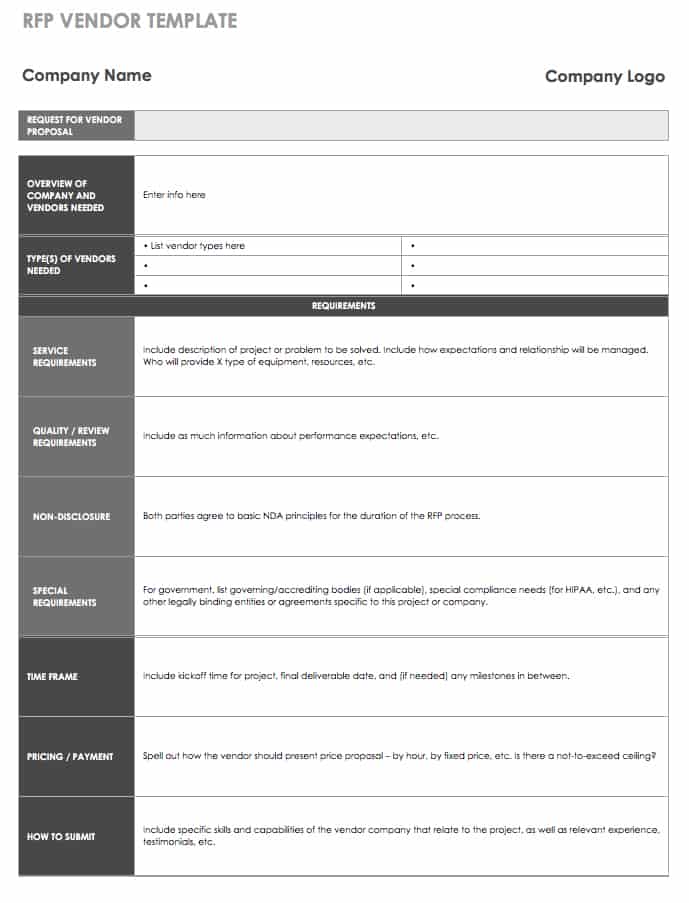
Source: Smartsheet.
statement for vendor management template word
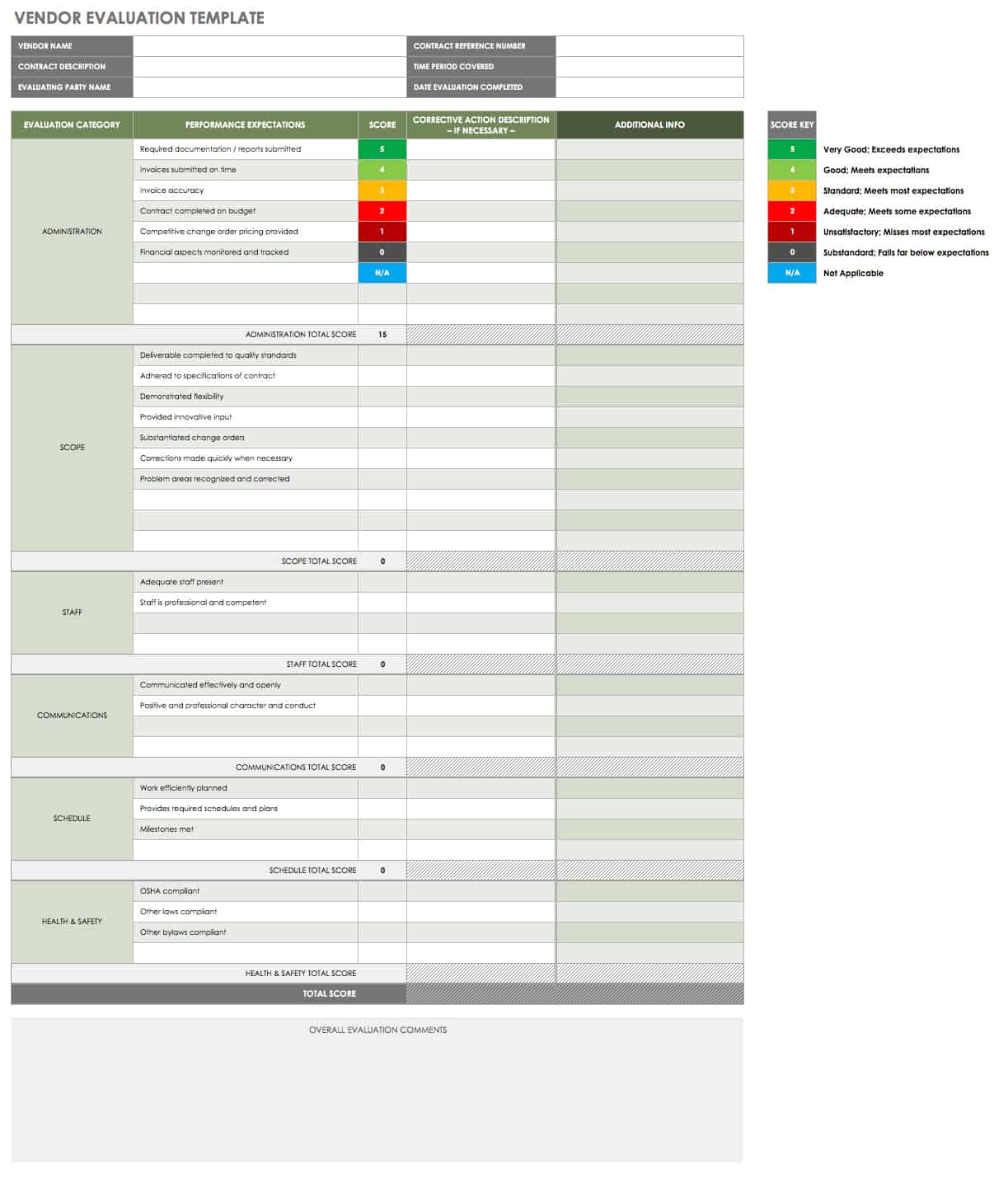
Source: Smartsheet.
statement for vendor management template pdf
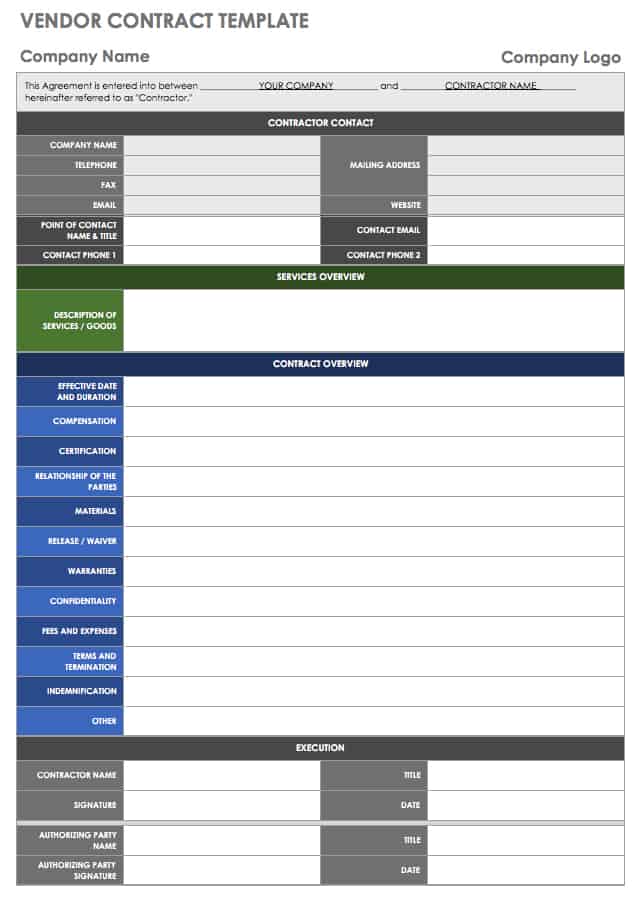
Source: Smartsheet.
statement for vendor management template google docs
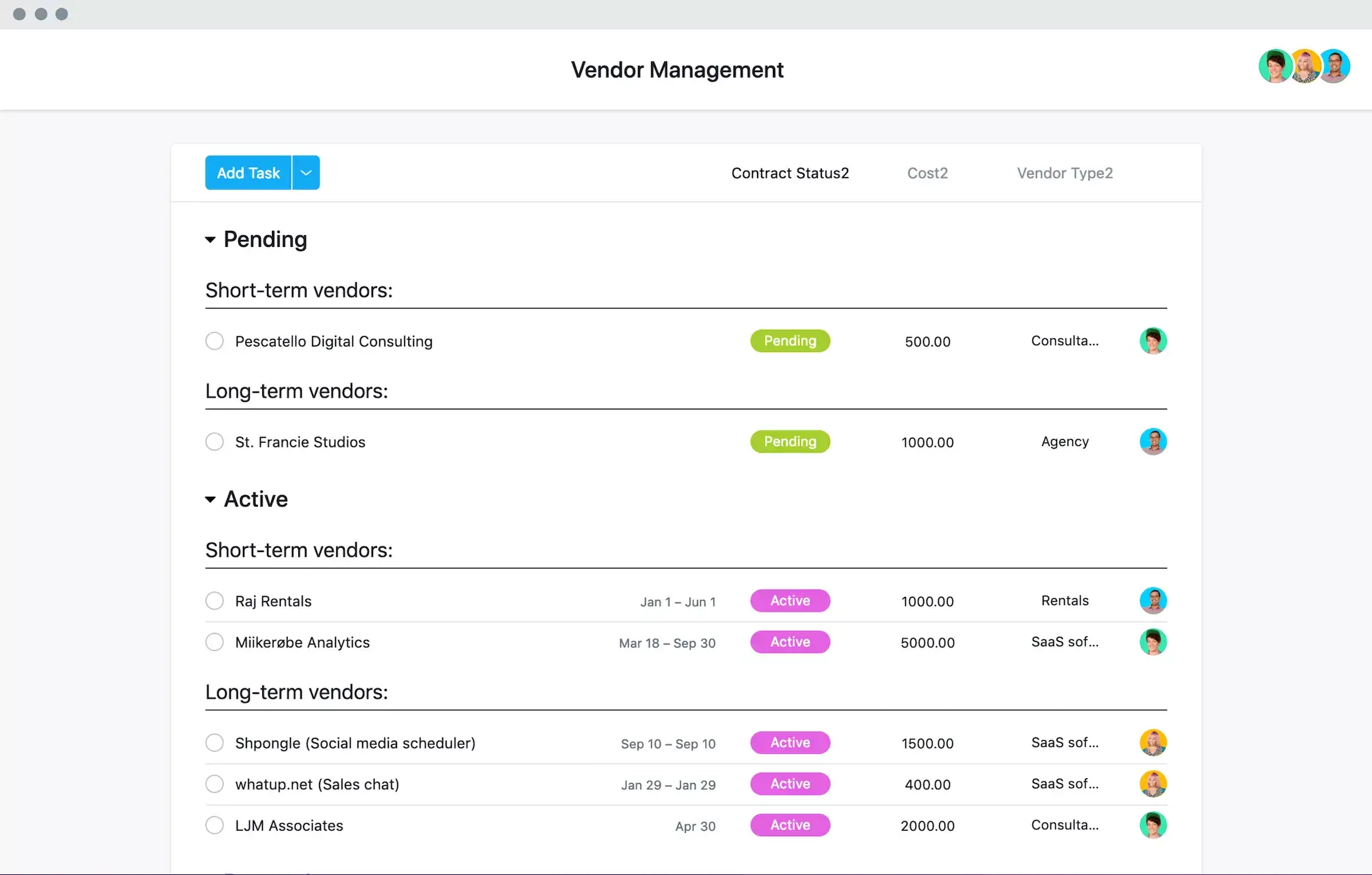
Source: Asana.
statement for vendor management template excel free
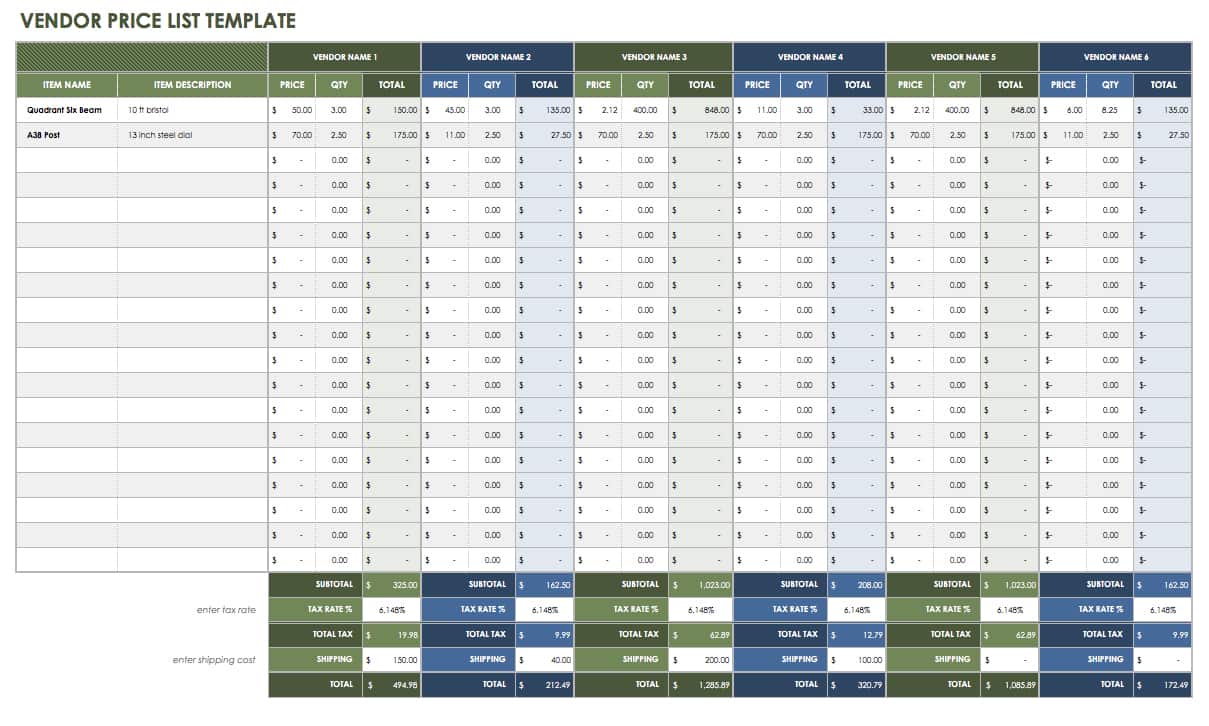
Source: Smartsheet.
statement for vendor management template google sheets
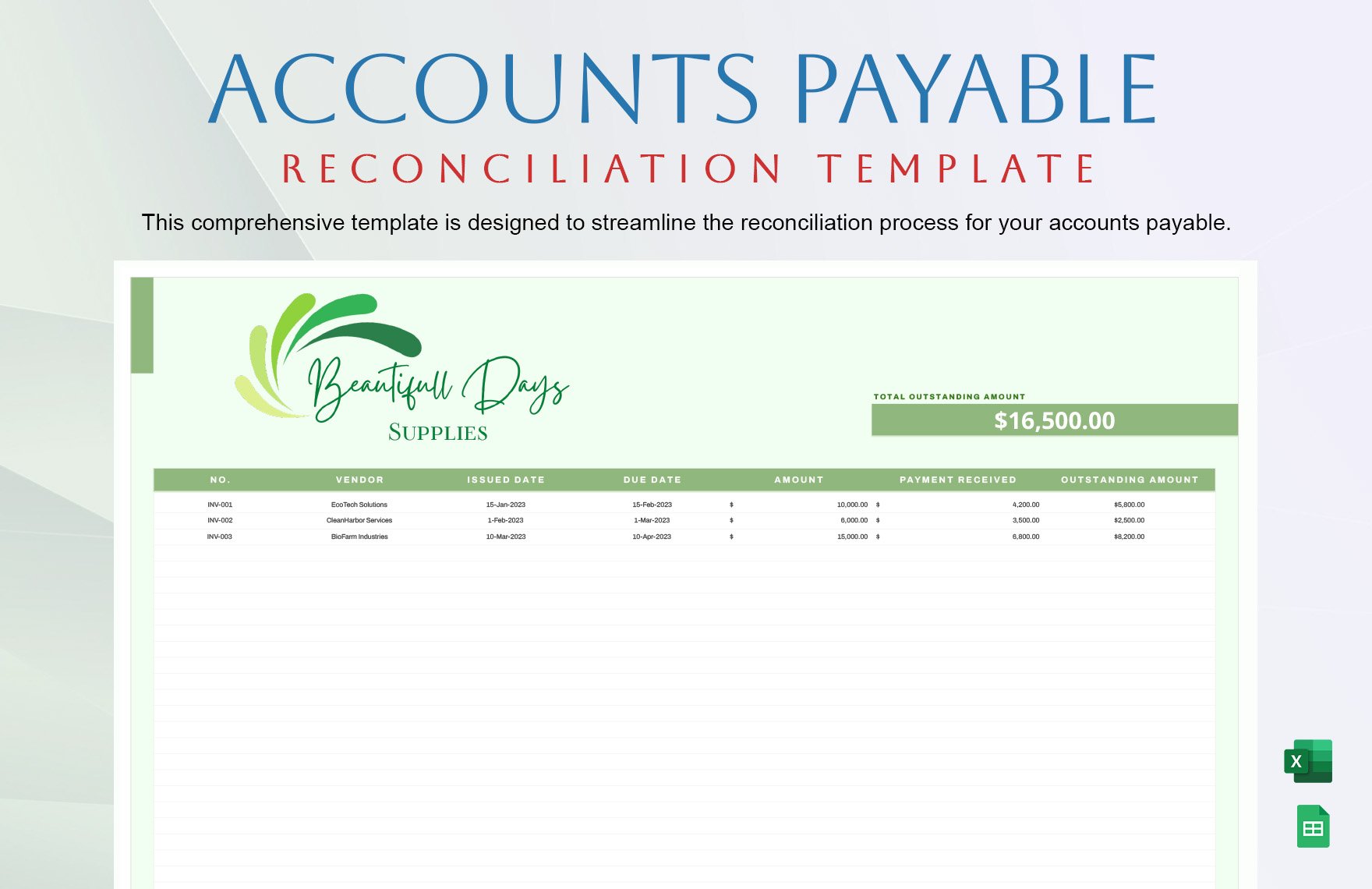
Source: Template.net.
vendor statement template excel
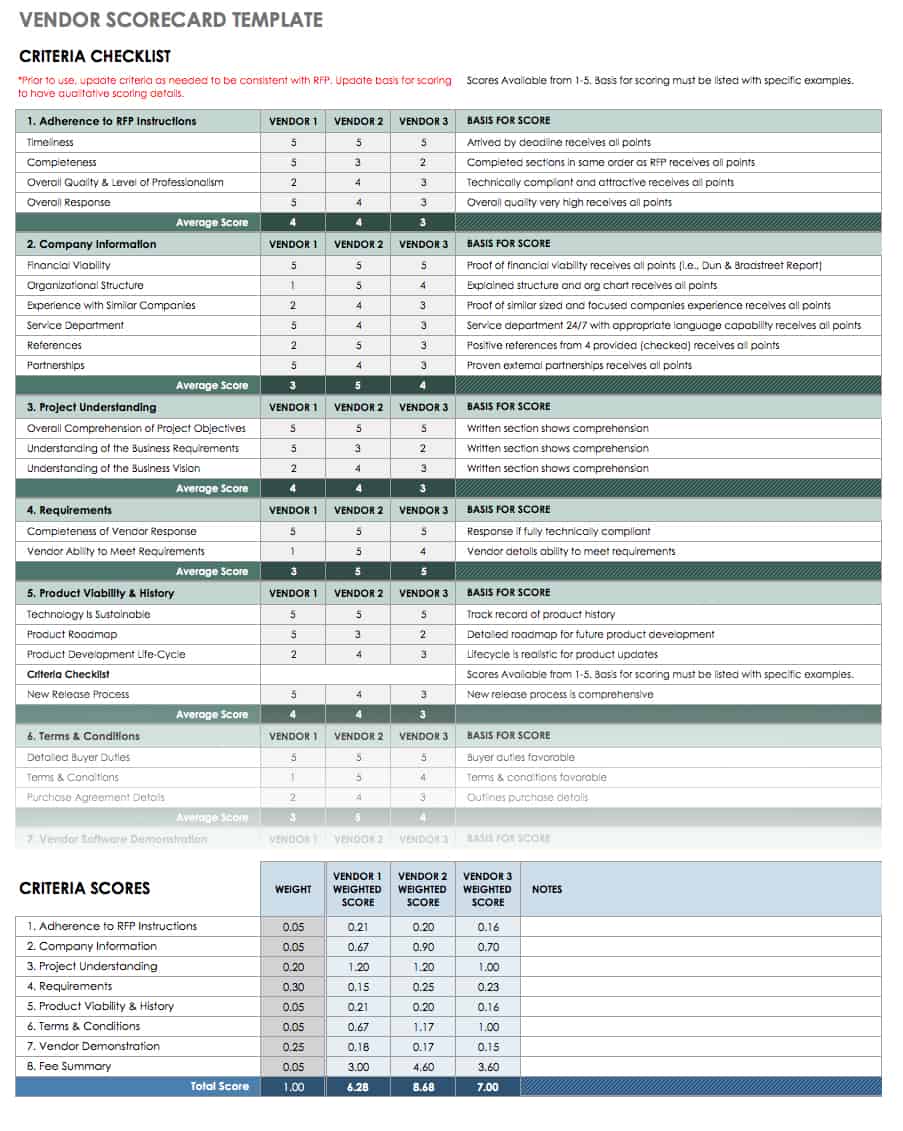
Source: Smartsheet.
vendor management framework template
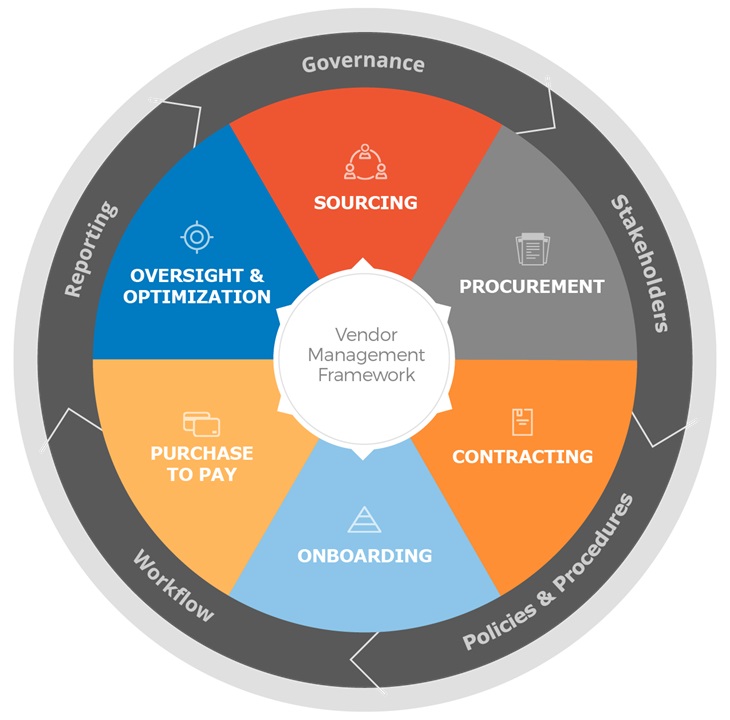
Source: Adan Corporate.
vendor management template excel
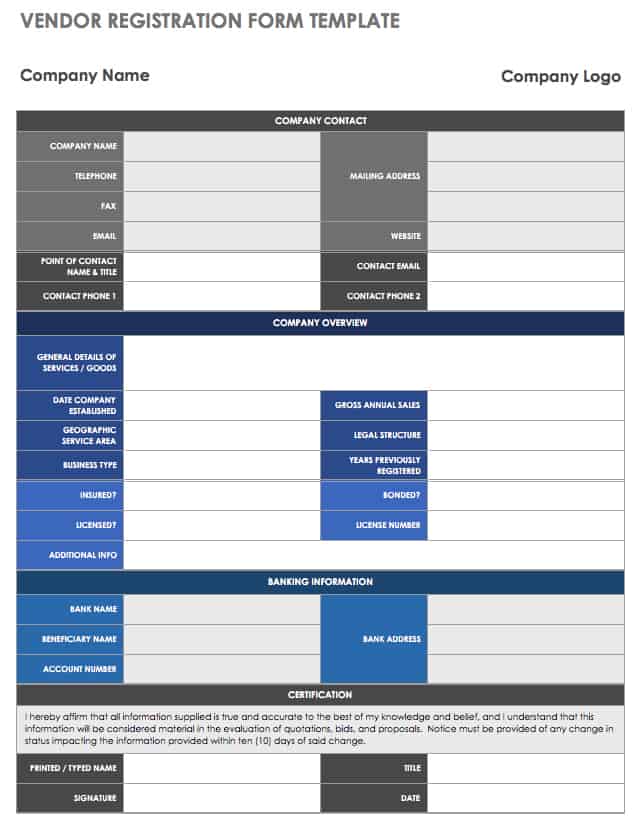
Source: Smartsheet.
vendor form template pdf
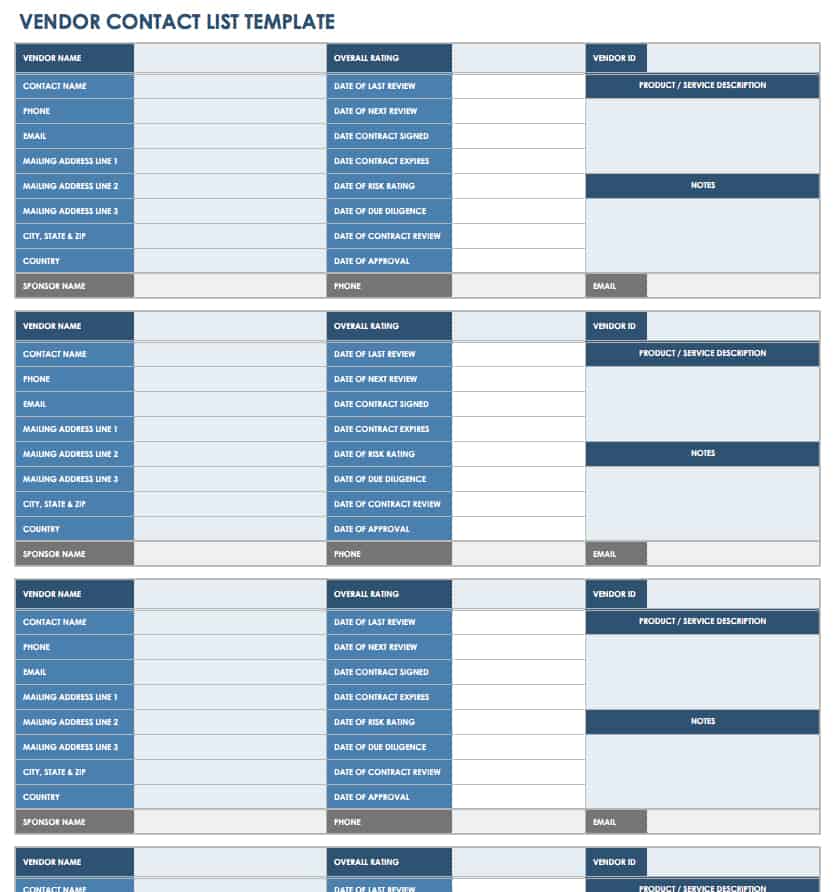
Source: Smartsheet.
Frequently Asked Questions
What should a statement for vendor management template contain?
It should contain the information necessary for the intended decision or control. A broad management record may include vendor identity, ownership, category, contract details, risk, performance, review dates, commercial information, and document references. A financial statement template should focus more narrowly on transactions, balances, invoices, credits, and payments.
Is a vendor management template the same as a vendor statement?
No. A vendor statement is commonly a financial record showing activity and balances on a supplier account, while a vendor management template is a broader management structure. Organizations can use both together: the statement supports reconciliation, while the management record supports lifecycle oversight.
Can Excel be used for vendor management?
Yes. Excel can be effective for small and medium-sized vendor portfolios when data volume and workflow complexity remain manageable. Use structured tables, controlled status values, clear ownership, formulas, filters, and version governance. When workflows become highly automated or involve many stakeholders, dedicated software may become more appropriate.
What is the best way to organize vendor information in Excel?
Keep the vendor master in a structured table and separate it from supporting worksheets for contracts, performance, risks, reviews, and reporting. Use a unique vendor ID and consistent field definitions. Avoid storing long narrative histories in the master sheet when structured fields or linked documents can provide better control.
How often should vendors be reviewed?
There is no universal review frequency. A practical approach is risk-based: critical or high-risk suppliers may receive more frequent reviews, while low-risk routine suppliers can often use a lighter cadence. Trigger additional reviews when there is a major incident, material scope change, significant performance deterioration, or upcoming renewal.
What KPIs are useful for vendor management?
Common measures include on-time delivery, quality, contract compliance, cost performance, responsiveness, issue resolution time, and milestone completion. The best KPIs are those that reflect the vendor’s actual obligations and can be supported by reliable evidence.
Should every vendor have the same level of documentation?
No. Applying exactly the same documentation burden to every supplier can create unnecessary administrative work. A risk-based approach can require deeper due diligence for critical, high-value, sensitive, or high-risk suppliers while using a simpler process for routine low-risk relationships.
How does vendor statement reconciliation work?
Start by obtaining the supplier statement and matching its opening balance to the internal accounts payable balance. Then compare invoices, credit notes, payments, discounts, and other adjustments. Investigate unmatched items, document the reason for each difference, and confirm that the final unexplained difference is resolved or formally accepted.
Can a vendor management template support audits?
Yes, if it is maintained properly. A useful record can show who approved the vendor, what due diligence was completed, how performance was measured, which issues occurred, what corrective actions were taken, and when the relationship was reviewed. The template itself is not evidence unless the underlying data is accurate and traceable.
When should a business move beyond spreadsheets?
Consider another system when the vendor portfolio becomes difficult to control manually, approvals frequently stall, renewal deadlines are missed, multiple teams need simultaneous access, audit requirements become more demanding, or data must be synchronized with procurement, finance, contract, security, or ERP systems.
Conclusion
A strong statement for vendor management template is not simply a document with vendor names and contact details. It is a structured way to organize the information needed to manage supplier relationships responsibly, reconcile financial activity, monitor performance, control risk, prepare for renewals, and make decisions using consistent evidence. Start with the minimum information that matters, assign clear ownership, connect the record to authoritative systems, and expand the template only when real business needs justify it. When designed this way, a statement for vendor management template can become a practical foundation for more consistent procurement, finance, operations, and vendor management.
