Search results for membership templates show several distinct approaches, including printable application forms, digital forms, membership cards, spreadsheets, and editable Word or Google Docs documents. Existing examples commonly separate applicant information, membership details, payment or account selections, declarations, and internal processing fields. These patterns are useful starting points, but the final document should always be adapted to the organization’s actual process and applicable requirements. :contentReference[oaicite:0]{index=0}
Bank-related membership documents require particular care because they may involve financial information, identity verification, eligibility decisions, account preferences, or organizational records. A general template should not be presented as a substitute for a bank’s official application or regulatory documentation. For example, an actual bank-membership application can contain organization information, regulatory questions, prior membership history, and internal approval sections that would not be appropriate in a simple club membership form. :contentReference[oaicite:1]{index=1}
The most useful approach is to treat the template as a modular document. Start with the information that every applicant needs to provide, then add sections for membership category, eligibility, financial or account-related selections, declarations, approvals, and recordkeeping. This makes the document easier to maintain because individual sections can be changed without rebuilding the entire form.
This guide explains how to design, select, customize, organize, and maintain a membership template for banking-related and other membership environments. It also compares common file formats, explains how to build a reliable member register, discusses membership cards, and provides a practical workflow for moving from a blank document to a usable administrative system.
What Is a for bank membership Template?
A for bank membership Template is a structured starting document used to organize information connected with membership in a bank-related organization, cooperative, financial association, or other member-based institution. Depending on the context, it may function as an application, registration form, membership record, card design, approval sheet, or combination of these components.
The word “membership” can mean different things in financial settings. A cooperative may require a person to become a member before accessing particular services. A banking association may offer institutional membership to eligible banks or financial organizations. A credit union may combine membership enrollment with account-opening documentation. Because these models differ, the template should be built around the actual relationship between the member and the institution.
A strong template normally separates external applicant information from internal processing information. Applicant-facing fields might include name, address, contact details, membership type, eligibility information, and acknowledgements. Internal fields might include application date, reviewer, approval status, member number, notes, and completion checks.
The distinction is important because a form that asks for too much internal information can confuse applicants, while a form that asks for too little can force administrators to create separate records later. The best design makes the handoff from application to approved membership clear and predictable.
Existing membership-form systems demonstrate why standardization matters. Digital membership templates commonly collect contact details, membership type, payment information, consent, and signatures, while allowing administrators to customize the questions for their organization. :contentReference[oaicite:2]{index=2}
A template is therefore not simply a decorative page. It is a data-collection structure. Every field should have a reason for existing, every required field should support a real process, and every optional field should be evaluated against privacy, administrative value, and user effort.
The visual hierarchy should make the document understandable at a glance. A clear title, short instructions, logical sections, consistent labels, and sufficient writing space make a form easier to complete accurately. A professional design also helps distinguish the official document from informal notes or unofficial copies.
For banking-related use, the safest principle is to separate general template guidance from official institutional requirements. A generic template can demonstrate structure, but the bank, credit union, cooperative, or association should determine the exact fields, notices, identity checks, approvals, retention procedures, and legal language required for its own process.
The same principle applies to downloadable resources. A page describing Word, PDF, Excel, Canva, or Google Docs compatibility does not automatically mean that every organization accepts those formats. The editable format is a production choice; the official submission format is an organizational requirement.
A good template should also be maintainable. If the membership categories change, the form should allow those options to be edited without rebuilding the entire document. If the member register gains a new field, the corresponding spreadsheet or database structure should be updated consistently.
Finally, a useful template should support the complete membership lifecycle. Enrollment is only the first stage. The same record may later support renewals, changes of address, status updates, card issuance, payment tracking, communication preferences, suspension, cancellation, or archival.
One-page forms are attractive because they look simple, but simplicity should not come at the expense of clarity. A two-page form with clearly grouped sections can be more efficient than a crowded single page. The goal is not the fewest fields; it is the fewest unnecessary fields.
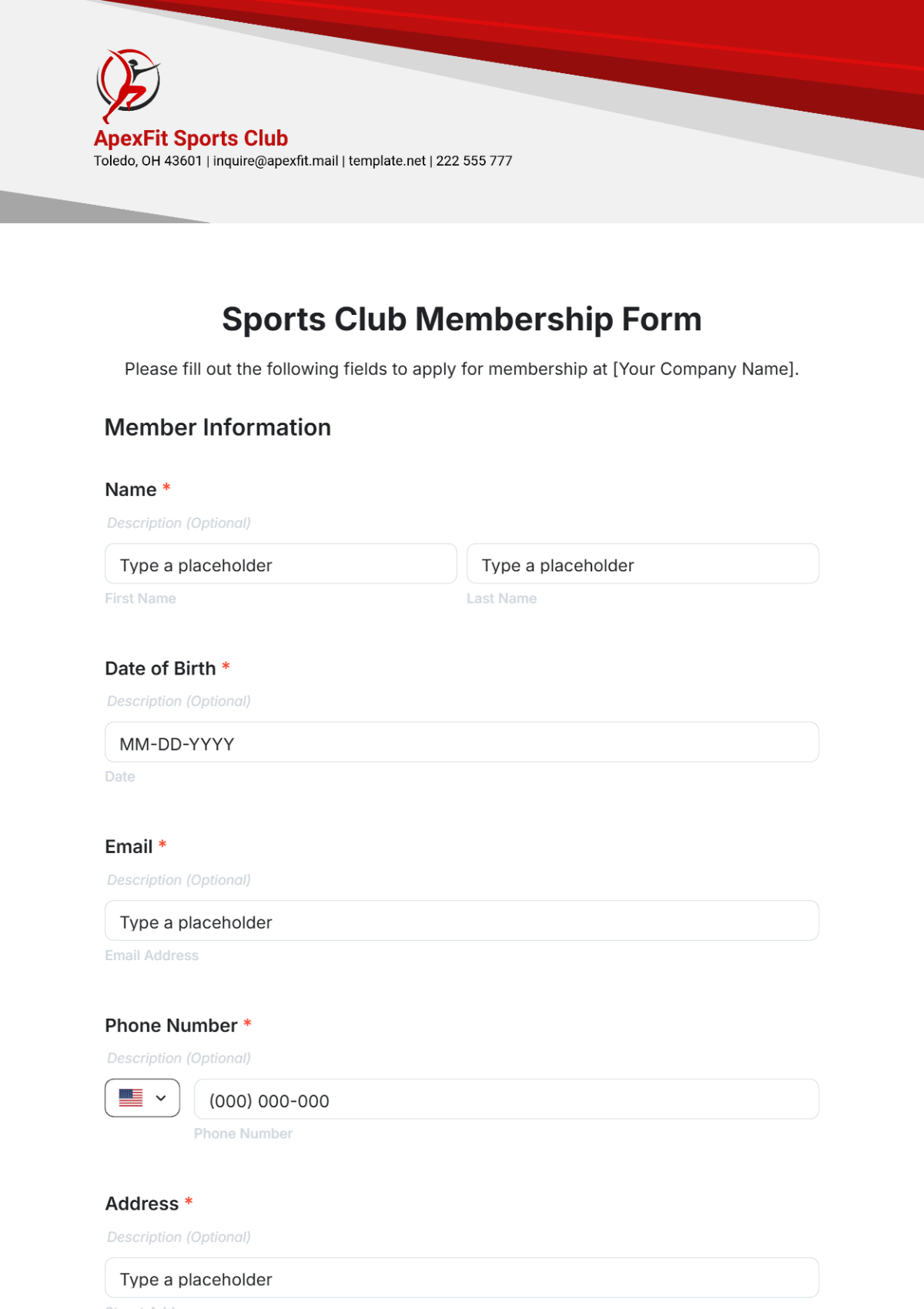
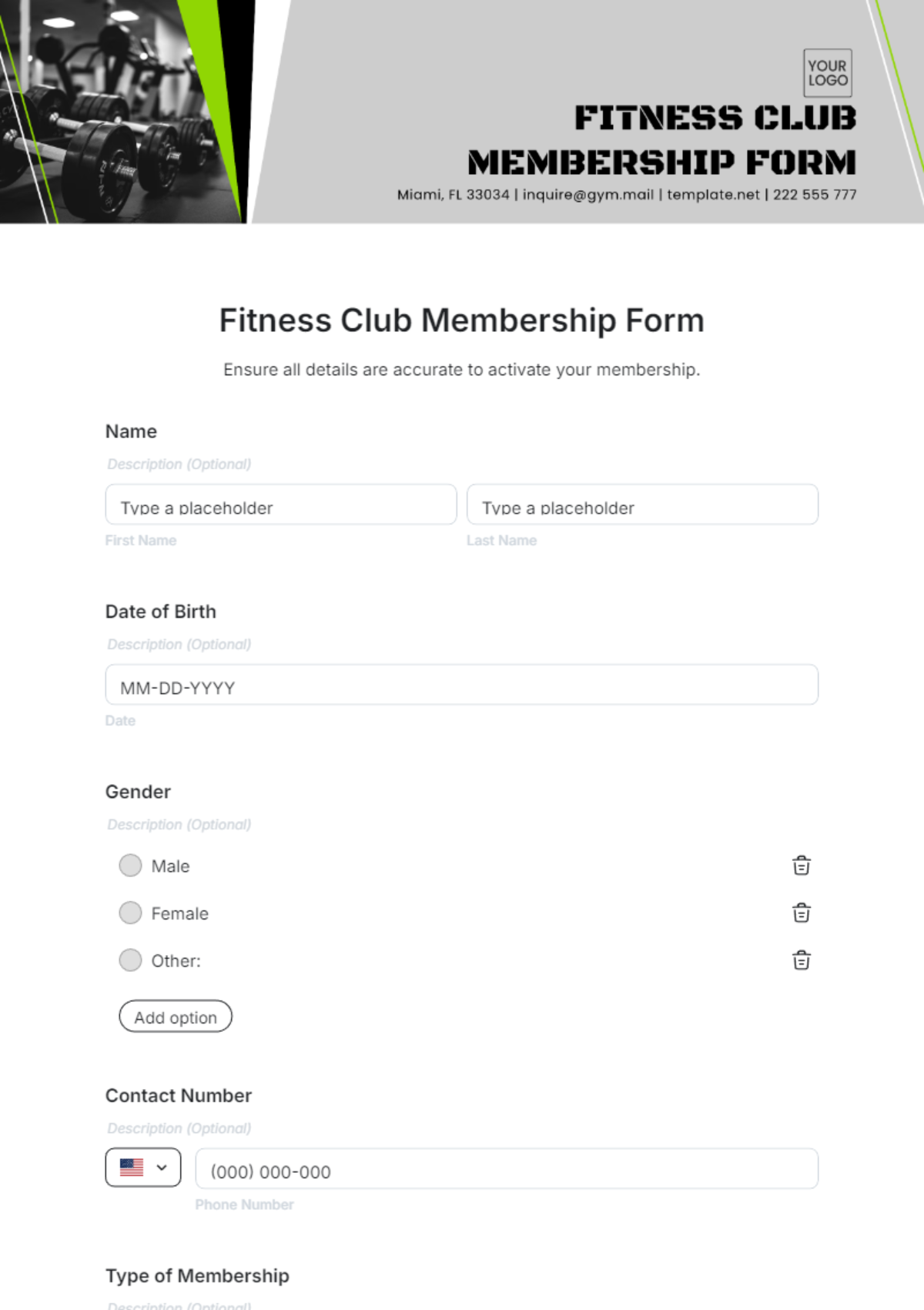
The visual examples below illustrate different approaches to membership information architecture, from simple application layouts to detailed registration forms. They should be treated as design references rather than universal banking requirements.
A form can be divided into personal information, membership information, administrative information, and declarations. This separation helps readers understand why each question is being asked and helps staff process completed forms in a predictable order.
Fields that are likely to be repeated across many records should use consistent labels. For example, if one document says “Membership Number” while another says “Member ID,” the organization should decide whether those terms mean the same thing and standardize them.
Dates should also follow one format throughout the system. A template may use a written month format, an international numeric format, or another organizational convention, but mixing several formats creates avoidable ambiguity.
Instructions should be short and placed close to the relevant field. If a section requires supporting documentation, the form should say what type of documentation is expected without turning the application into an unnecessarily complicated checklist.
A clear declaration at the end can establish that the applicant has reviewed the information and understands the terms of membership. The exact wording should be reviewed by the organization rather than copied blindly from another template.

Why a Structured Membership Template Matters
The first major benefit of a structured template is consistency. When every applicant sees the same categories and administrators record information using the same labels, applications become easier to review and compare. Consistency also makes it easier to transfer information into spreadsheets or membership-management systems.
A second benefit is completeness. A thoughtfully designed form prompts the applicant to provide information that might otherwise be forgotten. Required fields can help reduce incomplete submissions, while optional fields can capture useful details without making every applicant answer questions that do not apply to them.
Third, structured forms make administration more auditable. If the organization needs to determine when an application was received, who reviewed it, which membership type was selected, or when a member became active, those events can be represented as explicit fields rather than reconstructed from emails or handwritten notes.
Fourth, a reusable template saves time. Once the structure has been approved, administrators can create new versions for different membership categories without starting from a blank page. A professional association, for example, might adapt the same base document for individual, corporate, student, or institutional membership.
Finally, templates support better communication. When membership options, fees, dates, declarations, and contact instructions appear in a predictable order, applicants have a clearer understanding of what is expected from them before they submit the form.
The design should also reduce ambiguity. Instead of a broad field labeled “Details,” use a specific label such as “Membership Type,” “Organization Name,” “Application Date,” or “Preferred Contact Method.” Specific labels produce more consistent data.
Where choices are limited, checkboxes or radio-style selections can be preferable to open text. A controlled list such as Individual, Corporate, or Institutional membership is easier to analyze than dozens of differently worded responses.
However, controlled choices should not be used when the answer genuinely requires explanation. An applicant’s reason for joining, unusual eligibility circumstances, or additional information may need a short text field.
Form length should be proportional to the decision being made. A basic community membership may require only a handful of fields, while a regulated or institution-level application may legitimately require more extensive documentation and review.
Digital forms introduce additional advantages because responses can be searched, filtered, exported, and routed. Modern form platforms also commonly support customization, payment integrations, automated notifications, and conditional logic. :contentReference[oaicite:3]{index=3}
Paper forms still have legitimate uses. They can be useful at branches, meetings, events, or situations where applicants need a physical document. The important point is that paper records should eventually be transferred into the organization’s authoritative record system where appropriate.
Another consideration is version control. A template should have a version number or revision date when changes matter operationally. Without version control, staff may unknowingly continue using an obsolete form after fields or membership rules have changed.
The organization should keep the master template separate from completed applications. The master is a reusable design asset; completed forms contain member information and should be handled according to the organization’s privacy and records-management practices.
Good naming conventions help as well. A name such as “Membership Application – Individual – v3” is more informative than “New Form Final Final2.” Consistent file naming becomes increasingly important as the number of applications grows.
A well-designed membership template can also support reporting. If membership type, status, start date, renewal date, and acquisition source are captured consistently, administrators can create useful summaries without manually interpreting every form.
These advantages become especially important when a small membership program grows. A process that works with ten members may become unreliable at one hundred or one thousand unless the underlying data structure is standardized.
The template should therefore be designed with the future in mind without becoming unnecessarily complex today. Add fields that support a foreseeable process, but avoid collecting information simply because there is empty space available.
Key Components of a Bank or Financial Membership Form
A strong financial membership form usually begins with organization identification. This section can include the institution name, branch or department where appropriate, document title, revision date, and a space for an internal reference number.
The applicant section should then identify the person or organization seeking membership. For an individual, this might include legal name and contact details. For institutional membership, fields may instead focus on organization name, registration details, authorized representative, business address, and official contact information.
Membership classification is another central component. If multiple categories exist, the form should explain them clearly and provide a controlled selection method. The applicant should not have to guess which category applies.
Eligibility information should be collected only when it is relevant to the membership decision. A professional association may require occupation or professional affiliation, while an institutional banking association may require organization type or regulatory status.
Payment information should be handled carefully. A general template can include a membership fee section or payment method field, but it should not encourage applicants to place sensitive payment credentials in an insecure document. Where possible, payment processing should occur through the organization’s approved payment system.
Declarations and signatures provide a formal endpoint to the application. A declaration can confirm that the applicant has reviewed the information and agrees to the applicable membership terms. The organization should use legally appropriate language for its jurisdiction and purpose.
An internal-use section can contain approval status, reviewer name, date reviewed, member number, and administrative notes. Keeping these fields separate from the applicant-facing portion makes the document easier to use.
Banking or credit-union documents may also involve identity-verification procedures. Real financial institutions can have specific requirements concerning identification and account-opening information, so a generic template should never imply that its fields are sufficient for every financial institution.
For example, a publicly visible bank membership application may include organization details, prior membership questions, regulatory questions, and management information that would not belong in a simple personal membership form. :contentReference[oaicite:4]{index=4}
Another useful component is an application-status field. Simple choices such as Pending, Approved, Declined, or Withdrawn can make administrative tracking easier, although the exact status vocabulary should match the organization’s workflow.
Start and effective dates are valuable for membership management. They establish when the membership becomes active and help administrators calculate renewal cycles or determine eligibility for benefits.
A renewal date may also be necessary. If membership lasts for a defined period, the template should provide a clear place to record the expiration or next-review date rather than relying on an administrator to calculate it later.
Contact preferences can improve communication. Email, telephone, postal mail, or another approved method can be represented as choices, provided the organization has a legitimate reason to collect the preference.
Emergency-contact fields should not automatically be included in every membership form. They are appropriate for certain clubs, activities, or programs but may be irrelevant to a banking or professional membership relationship.
The same applies to demographic information. A field should have a clear operational, legal, analytical, or service-related purpose before being added to the form.
Data minimization is a useful design principle: collect what is necessary for the stated purpose, explain important uses of the information, and avoid turning a simple membership application into a general-purpose personal-information survey.
When the form is digital, consider conditional sections. If a member selects Corporate Membership, for example, additional organization fields can appear. If an applicant selects Individual Membership, those fields can remain hidden.
Conditional logic can make a detailed form feel shorter because applicants see only the questions relevant to their situation. Many modern membership-form systems use this approach to streamline onboarding. :contentReference[oaicite:5]{index=5}
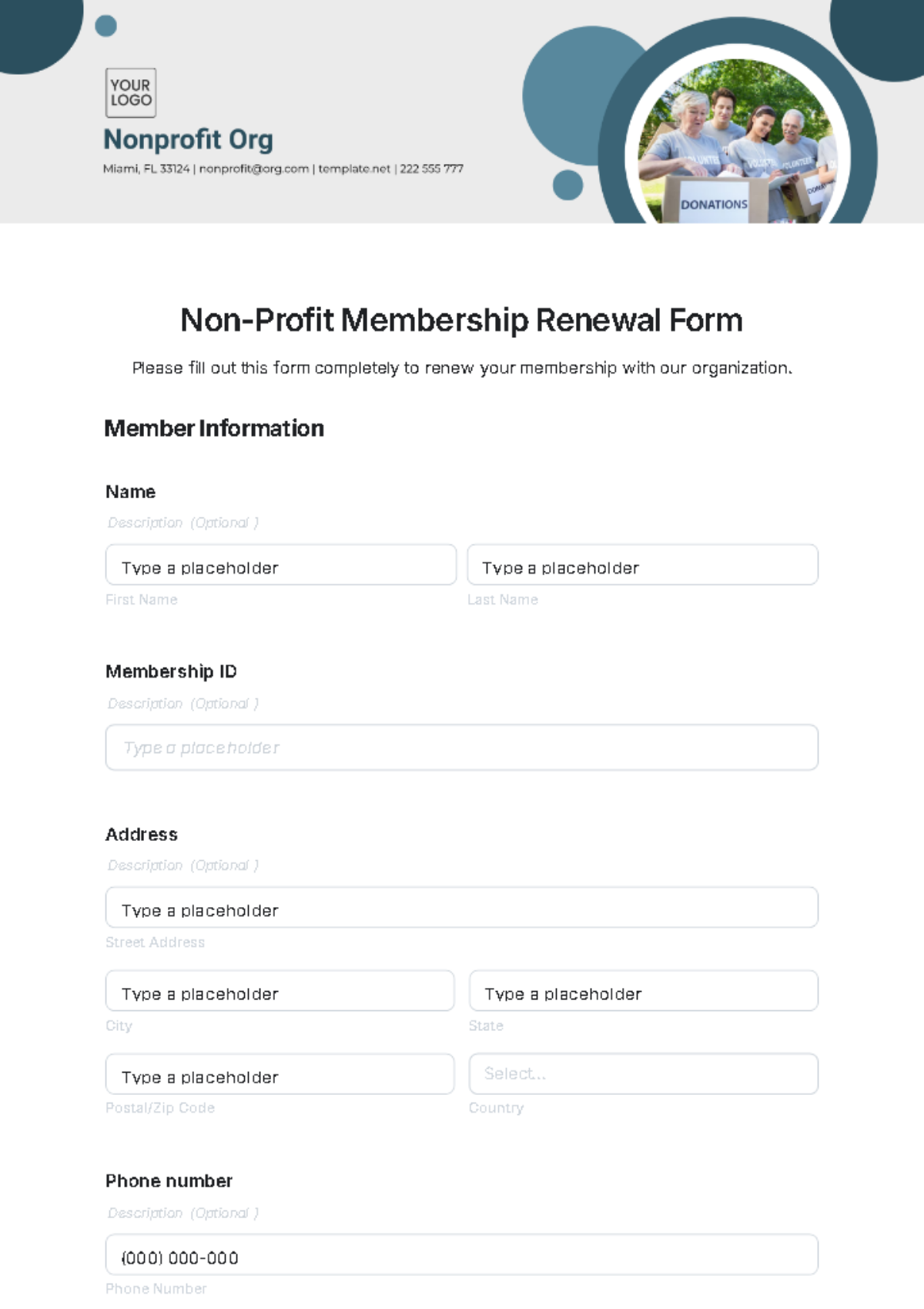
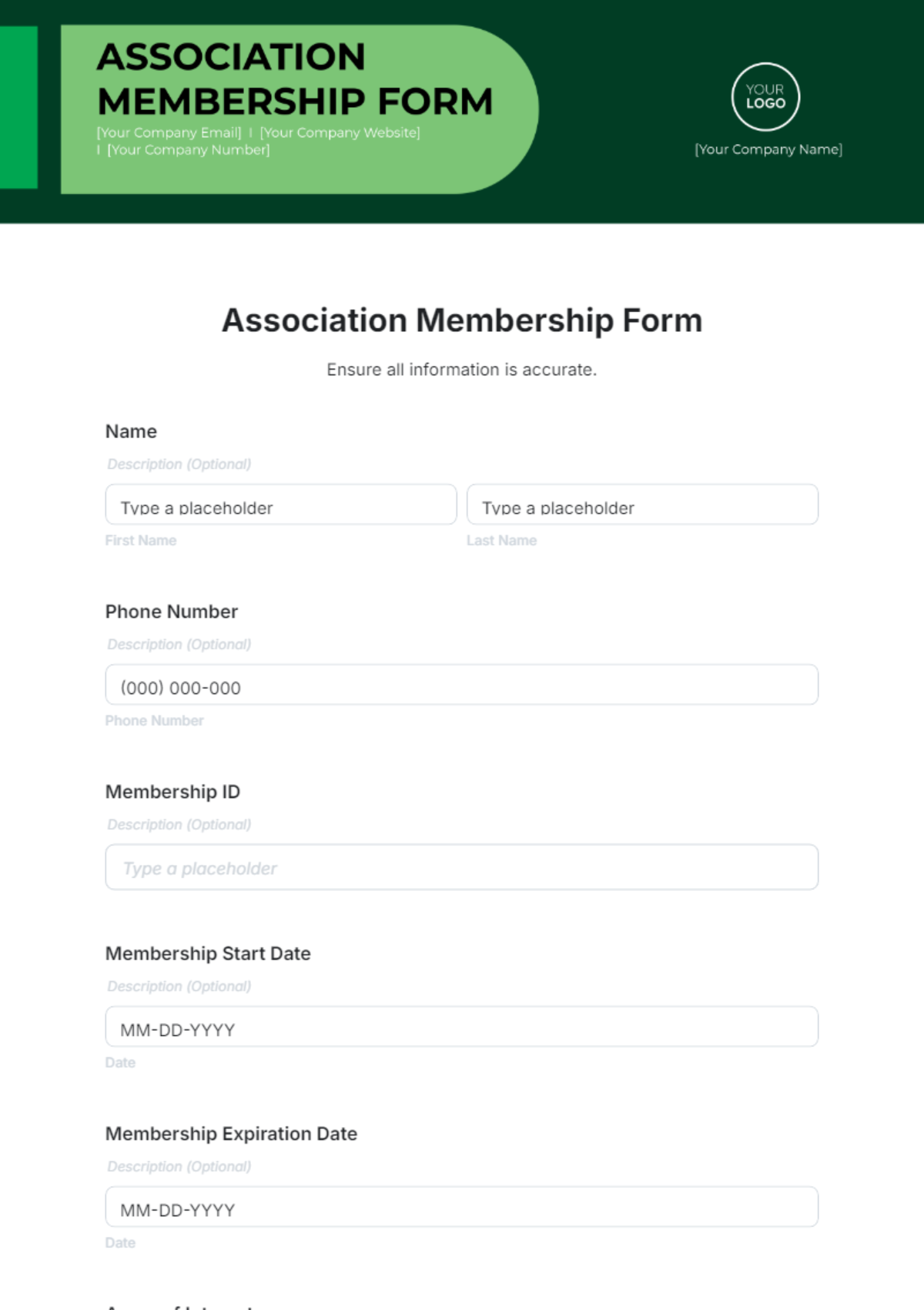
The following example demonstrates a renewal-oriented structure. Its value is not the specific wording but the separation between identity, membership status, dates, and renewal choices.
How to Create a for bank membership Template
Start by defining the exact purpose of the document. Decide whether it is for new membership, renewal, transfer, institutional enrollment, card issuance, or internal recordkeeping. One document can support several stages, but combining unrelated purposes often makes the form harder to understand.
Next, identify the users. The applicant may complete one portion, a staff member may review another, and an administrator may enter the final membership number. Knowing who interacts with each section helps determine which fields should be visible, editable, required, or internal.
Create a field inventory before designing the page. List every piece of information the process actually needs, then group related fields. This prevents layout decisions from driving data collection.
Choose the document format based on the workflow. Word and Google Docs are useful for editable narrative forms. Excel is useful for structured records and calculations. PDF is useful for controlled distribution and printing. Canva can be useful when visual presentation is important, while an online form builder can be better for automated collection.
Finally, create the first draft with a simple visual hierarchy. Do not begin with decorative elements. Make the information architecture correct first, then refine typography, spacing, color, branding, and other design details.
The first section might contain applicant or organization identification. Use clear labels and provide enough space for names and addresses without consuming the entire page.
The next section should explain membership choices. If there are three categories, show all three in a compact selection area. If categories have different prices or benefits, provide enough context for applicants to choose correctly.
Then add eligibility questions if they are necessary. Avoid questions that do not influence approval, service delivery, reporting, or another defined business purpose.
Add payment information only at the appropriate stage. If a separate secure payment page is used, the form can simply record payment status or reference information rather than collecting sensitive payment credentials.
Add declarations near the end. Keep the language readable and distinguish factual certification from consent or contractual acceptance where those concepts have different purposes.
Reserve a clearly labeled internal-use area for administrative processing. This prevents applicants from accidentally completing fields intended for staff.
After the first draft, test it with a hypothetical application. Pretend that the applicant is an individual, then a company, then a renewal applicant. This quickly exposes missing fields and confusing instructions.
Test incomplete submissions as well. A good process should make it obvious which required fields remain unfinished rather than forcing staff to inspect every line manually.
Review the form on the actual device or paper size where it will be used. A document that looks balanced on a large desktop screen may become awkward on a phone or when printed on A4 paper.
Pay attention to line breaks and page transitions. A signature block should not be separated from the declaration it confirms, and an internal approval section should not accidentally appear as though the applicant must complete it.
Once the structure is stable, create the master file and record its version. Only then should you distribute copies or create specialized versions for different membership categories.
Keep a short change log for major revisions. This is especially useful when staff need to understand why a field was added, removed, or renamed.
Digital forms should also be tested from submission through storage. Confirm that responses reach the correct location, notifications are sent to the intended recipients, and exported records retain the necessary information.
A good creation workflow is therefore: purpose, users, fields, grouping, format, layout, testing, review, versioning, distribution, and maintenance. That sequence reduces the risk of building an attractive form that fails operationally.
Choosing Between Word, Google Docs, Excel, Canva, PDF, and Online Forms
The best format depends on what the document must accomplish. There is no universally superior membership template format. Word, Google Docs, Excel, Canva, PDF, and online form systems solve different parts of the workflow.
Microsoft Word is strong when the form contains substantial text, formal declarations, signatures, or a traditional printable layout. It is also convenient when staff are already familiar with Word’s tables, form controls, and document tools.
Google Docs is useful for collaborative editing. Several authorized staff members can work on a master template without repeatedly emailing different versions of the file. It can also be convenient for organizations that operate primarily through cloud-based workflows.
Excel is best understood as a data-management tool rather than merely a form designer. It becomes particularly useful after applications have been collected because each row can represent a member and each column can represent a standardized attribute.
Canva is valuable when visual presentation is a major consideration. Membership cards, certificates, branded registration sheets, and promotional materials can benefit from its design-oriented approach. It should not, however, replace a secure data-management system simply because the document looks polished.
PDF is useful for stable distribution and printing. A PDF can preserve a carefully designed layout across devices, although the organization should distinguish between a static PDF and a genuinely fillable PDF.
Online form systems are useful when the objective is structured digital collection. Modern systems can support mobile access, conditional questions, integrations, automated notifications, and centralized response management. :contentReference[oaicite:6]{index=6}
A practical workflow can combine these formats. For example, Word or Google Docs can hold the master narrative form, an online form can handle digital intake, Excel can maintain a working member register, and PDF can serve as a controlled printable version.
The mistake is treating the file format as the system itself. A beautifully designed PDF does not automatically provide a searchable member database. Likewise, an Excel sheet does not automatically create a professional applicant experience.
Consider the primary user. Applicants often need a simple form with clear instructions. Administrators need structured data. Managers need reports. Each audience may require a different representation of the same underlying information.
Google Docs is especially useful for collaborative template maintenance, but access permissions should be carefully controlled. The editable master should not be publicly editable if it contains organizational branding, instructions, or internal processing fields.
Excel is powerful for filters and summaries, but sensitive member data should not be stored casually or distributed through uncontrolled copies. A spreadsheet should have appropriate access restrictions and a clear owner.
PDF is excellent for final presentation but can become cumbersome when fields change frequently. If a membership process changes every few months, maintaining the master in an editable format and generating the PDF from that master may be more efficient.
Canva is strongest for design-heavy outputs such as cards. If a card needs variable member names, IDs, expiration dates, or QR codes for many members, the organization should consider how those values will be populated consistently.
For a small organization, a combination of Google Docs and a spreadsheet may be enough. A larger operation may need a dedicated membership database or CRM connected to the application process.
The correct decision should therefore begin with the data flow rather than the visual format. Ask where information starts, who reviews it, where the authoritative record lives, how changes are made, and how the final membership status is communicated.
That perspective makes it easier to choose the appropriate format for each stage instead of forcing one file to perform every job.
Building the Membership Record and Data Collection Workflow
The membership application is only the beginning of the data lifecycle. Once a completed form arrives, the organization needs a repeatable process for validation, approval, entry, communication, and ongoing maintenance.
A useful workflow starts with intake. Every submission should receive a unique reference or be connected to a reliable timestamp. This makes it easier to identify the correct record when applicants ask about status.
Next comes completeness checking. Staff should verify that required fields have been completed and that any necessary supporting documentation is present. This stage should be separate from the final approval decision.
Validation should focus on consistency and plausibility rather than simply checking whether a box is filled. An incomplete address, inconsistent date, or missing membership category can create problems later even if the form technically contains an answer.
After validation, the organization can make its membership decision according to its established process. The template can support this with fields for reviewer, decision, date, and notes.
Once approved, the member should receive a membership identifier if the organization uses one. The same identifier should appear consistently across the membership record, card, correspondence, and renewal records.
A member register can contain columns such as Member ID, Member Name, Membership Type, Application Date, Start Date, Expiration Date, Status, Contact Email, and Notes. The exact fields should reflect the organization’s process rather than a generic template.
Consistent status values make reporting easier. Instead of free-text entries such as “active now,” “currently active,” and “approved,” use a controlled vocabulary such as Active, Pending, Expired, Suspended, or Cancelled where those statuses accurately represent the organization’s process.
Dates should be stored as actual date values in a spreadsheet or database whenever possible. This allows sorting, filtering, renewal reminders, and reporting without manual interpretation.
Membership type should also be controlled. If one row says “Corporate” and another says “Business Member,” reports may incorrectly treat them as different categories unless a mapping exists.
Contact information should be updated through a defined process. If members can change their address or email, the organization should decide whether the original application is preserved while the current record is updated separately.
This distinction matters for auditability. A historical application represents what was submitted at a particular point in time, while the current member profile represents the latest known information.
Renewal processing should follow the same principle. Instead of overwriting the entire membership history, retain the relevant renewal event or status change so that the organization can understand the membership timeline.
For digital forms, exported data should be reviewed periodically. Automated collection is useful, but automation can also propagate a badly designed field or incorrect option across every submission.
Data quality checks can be simple. Look for duplicate member IDs, blank required fields, invalid dates, unexpected membership types, and records whose status conflicts with their expiration date.
Reports can then be generated from the cleaned data. A basic monthly report might summarize new members, renewals, active members, expired memberships, and applications awaiting review.
The same register can support operational tasks such as card issuance, renewal reminders, member directories, or internal communications, provided the organization has an appropriate basis and process for each use.
A strong workflow therefore separates collection, validation, approval, record creation, ongoing maintenance, and reporting. The template is most valuable when it makes those stages easier to execute consistently.
Membership Cards: What to Include and What to Avoid
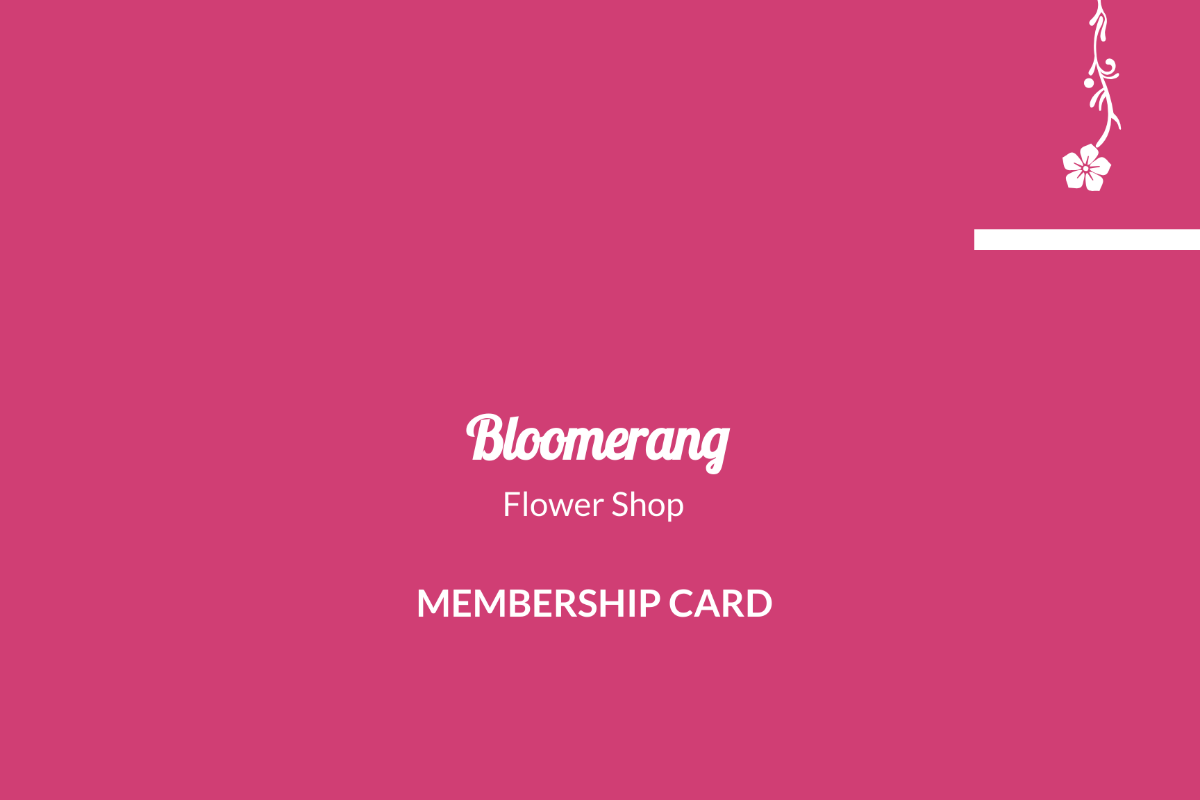
A membership card is different from a membership application. The application collects information; the card communicates membership status or identifies the member. Trying to place the entire application on a card produces an overcrowded and impractical result.
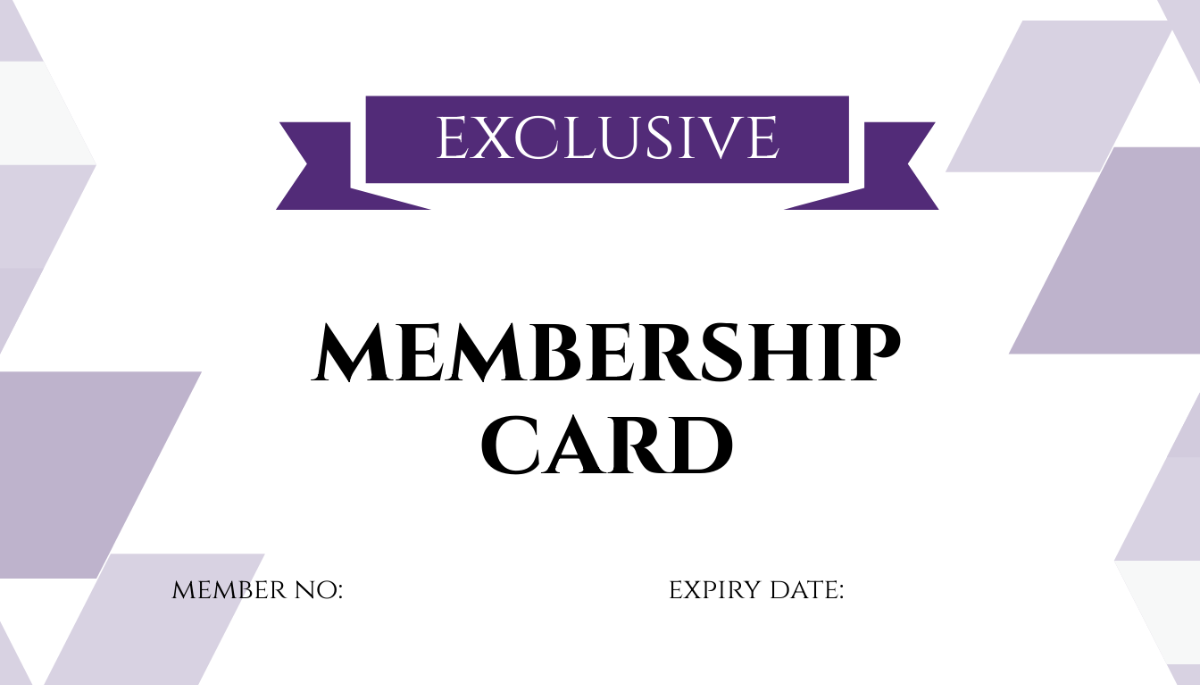
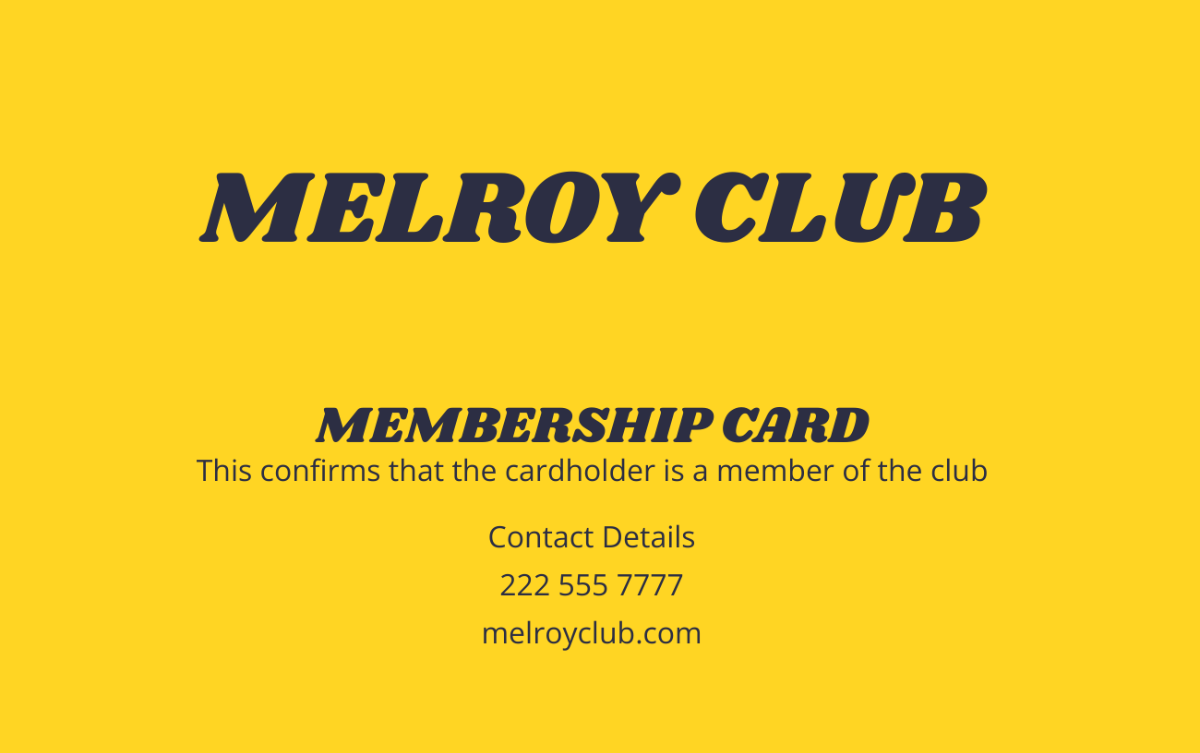
A simple card normally needs the organization name or logo, member name, membership number, membership type if useful, and validity information when applicable. Contact information may also be included if it helps someone return a lost card or verify the organization.
Card dimensions should be selected according to the intended printing method. Many membership-card designs use a wallet-sized layout, while others are intended for digital display or a larger printed sheet.
A card should not display more personal information than necessary. Avoid exposing sensitive information merely because there is room for it. A membership number can often serve as an identifier without revealing unrelated personal data.
Visual hierarchy is especially important on a card. The member should be able to identify the organization and their own membership status quickly. Decorative elements should support that objective rather than compete with the essential information.
Expiration dates should be clearly labeled. If membership does not expire, do not create a field that implies it does. The card should accurately reflect the membership model.
QR codes or barcodes can be useful when the organization has a system capable of reading them. A code should point to an appropriate verification mechanism rather than exposing private information directly inside the encoded value.
Digital cards require the same information discipline as printed cards. A screenshot of a membership card can be copied, so organizations that need stronger verification should consider a system that checks current membership status.
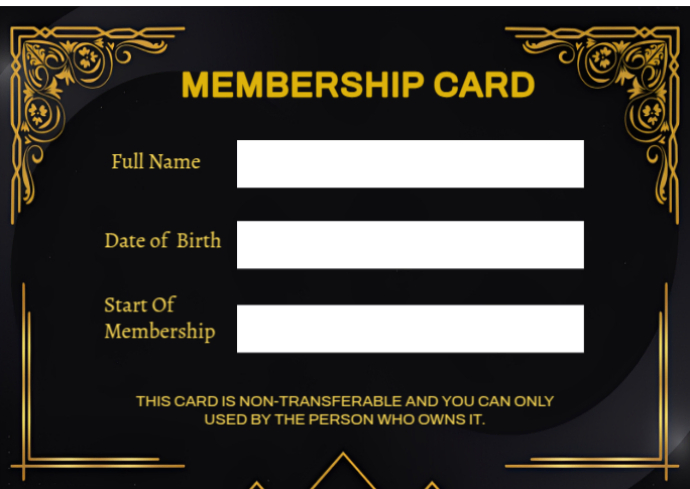
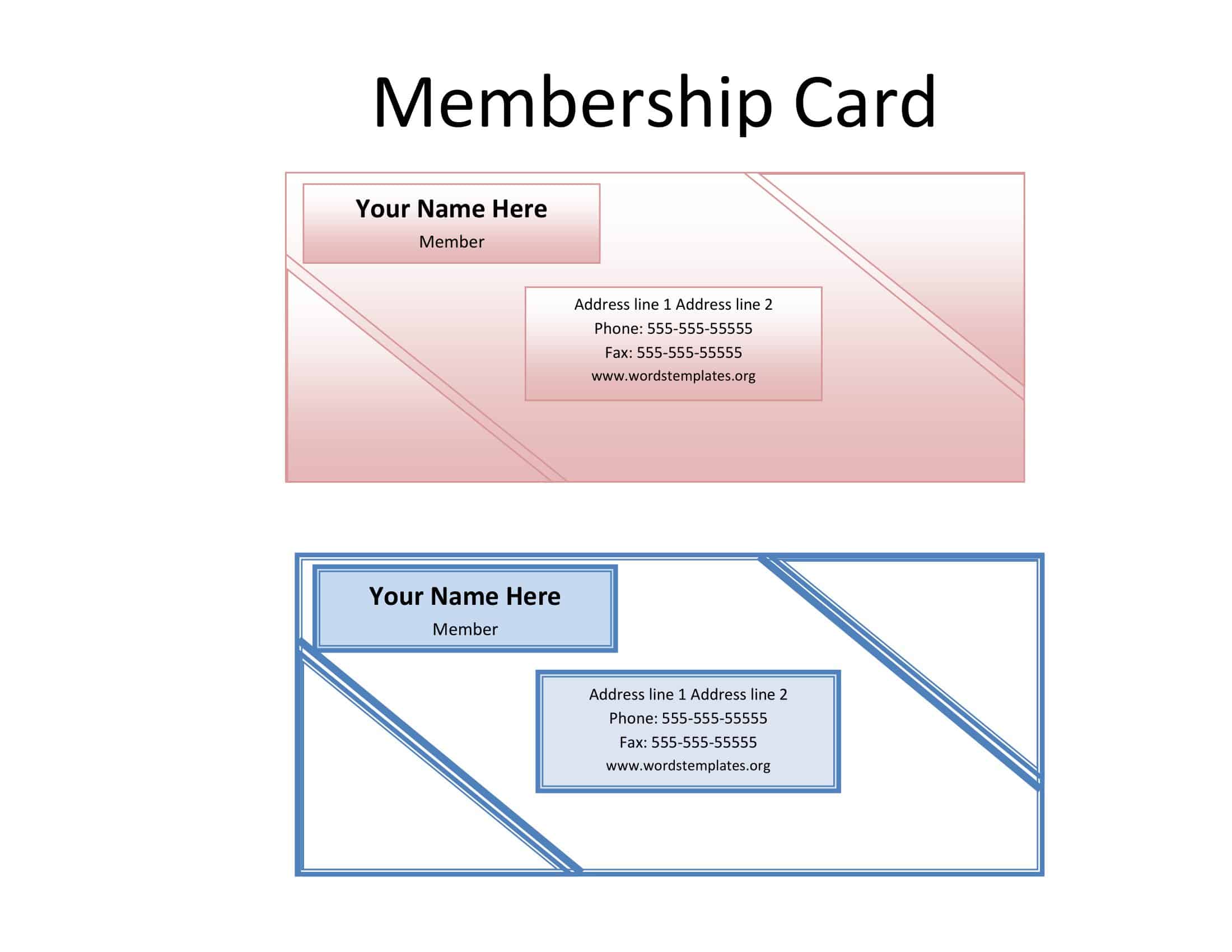
Card templates are available in many visual styles, from minimalist black-and-white layouts to colorful club designs. The most useful choice is usually the design that provides strong readability and sufficient room for variable member information.
Some membership-card templates are intended specifically for Word, PDF, or other editable formats, while design platforms may provide more flexibility for branding. :contentReference[oaicite:7]{index=7}
A blank card should have clearly defined fields for the information that will change from member to member. If cards are generated in batches, the field structure should match the member spreadsheet exactly.
For example, a spreadsheet column called Member ID should map directly to the Member ID field on the card. This reduces the risk of manual transcription errors.
Card numbers should also be unique when the organization uses them as identifiers. Avoid reusing a number for a different person simply because an old membership ended.
If a card is lost, the organization should have a process for marking the old card invalid and issuing a replacement. A template alone cannot provide that control; it must be supported by the underlying membership record.
Printed cards should be tested before bulk production. Check text size, margins, alignment, cutting guides, and whether the chosen material works with the printer.
Digital cards should be tested on the devices members are likely to use. A design that is readable on a desktop monitor may be difficult to view on a small phone screen.
The card should ultimately be treated as an output of the membership system rather than the authoritative record itself. The membership database or register should remain the source of truth for status and current information.
Blank Forms, Registration Forms, and Renewal Forms
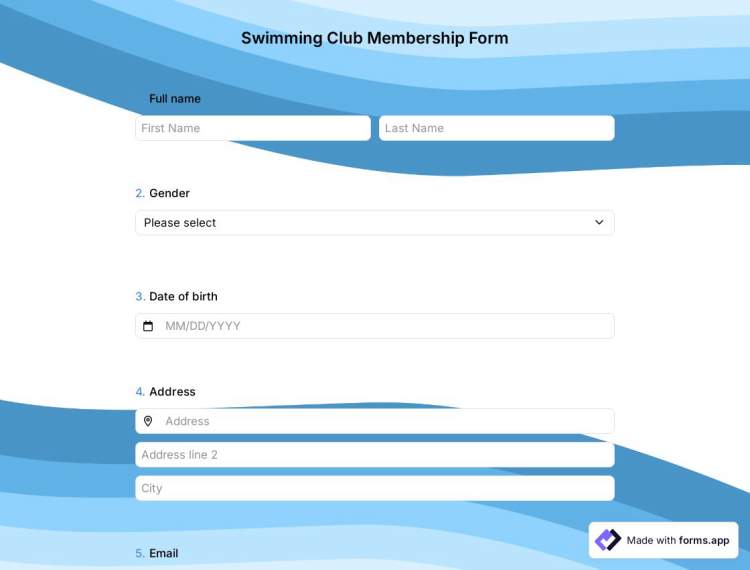
A blank membership form is useful when an organization needs a flexible starting point. It should contain enough structure to guide completion while leaving room for the organization to add its branding, categories, instructions, and specific requirements.
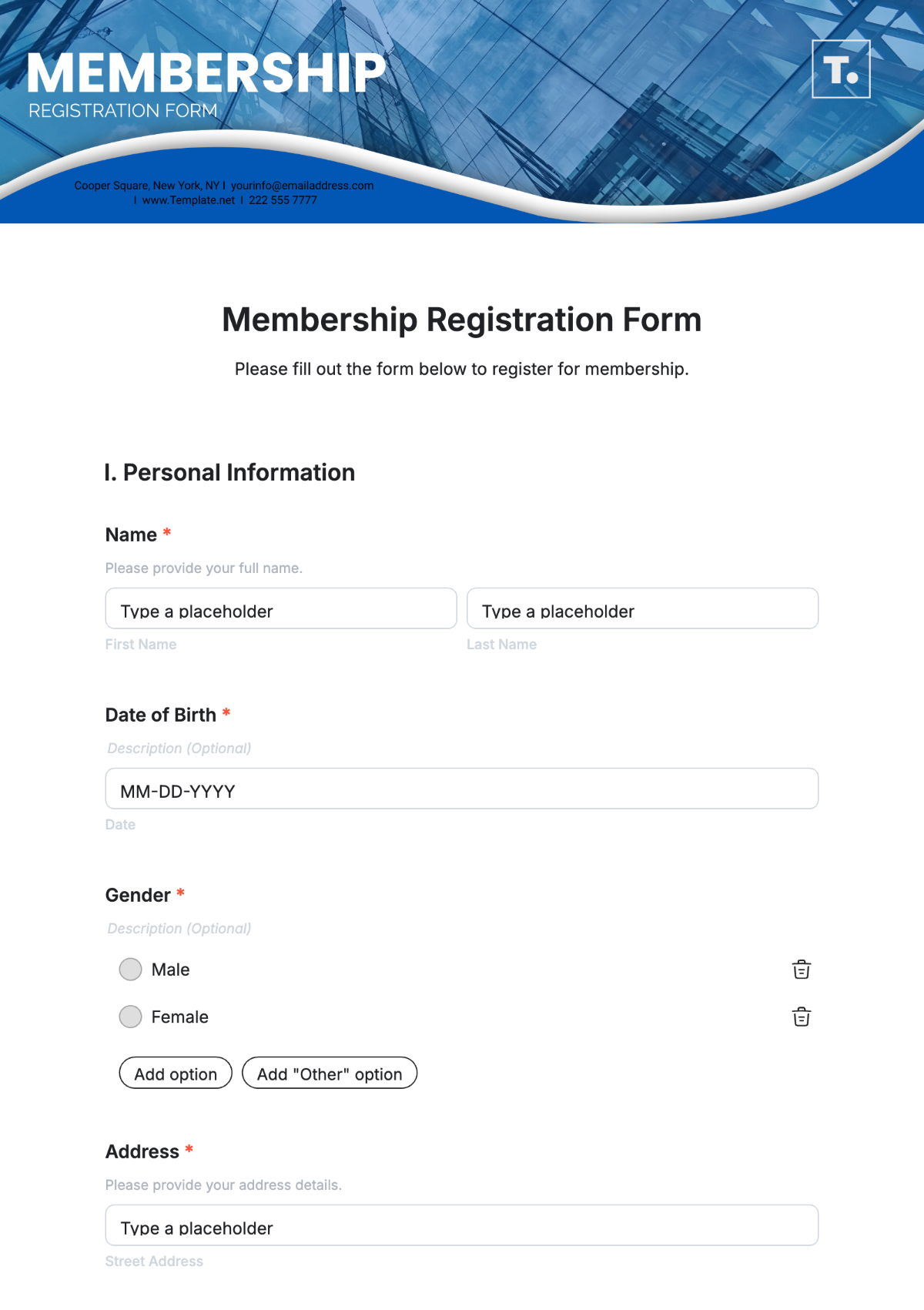
Registration forms are usually focused on creating a new member record. They commonly ask for contact details, membership selection, start date, and agreement information. The exact fields should depend on the organization.
Renewal forms have a different purpose. Existing member information may already be known, so the form can focus on confirming current details, selecting a renewal option, updating contact information, and acknowledging current terms.
Using a new-member application as a renewal form can create unnecessary friction. A member who already has an established record should not necessarily be asked to repeat every historical detail.
A blank form should also distinguish required information from optional information. Visual markers can make this distinction obvious, but the organization should ensure that the final digital implementation enforces the same rules.
Instructions should explain what happens after submission. Applicants should know whether the organization will review the form, contact them, issue a membership number, or request additional documentation.
Registration forms can be paper-based or online. Digital forms reduce manual transcription, while paper forms can remain useful in environments where applicants prefer or require physical documents.
A well-designed blank form should also accommodate exceptions. A small “Additional Information” area can prevent staff from creating informal handwritten notes in arbitrary places on the document.
However, open-ended fields should not replace structured fields when consistent reporting is important. If every member must choose one of four membership categories, use four controlled options rather than a blank line.
Renewal forms should clearly identify the member. A membership number can help staff retrieve the correct record, while a secondary identifier can reduce the risk of updating the wrong account.
When a renewal changes the membership type, the form should capture both the requested new type and the effective date where relevant.
Changes of address or contact details can be handled as part of renewal if the organization wants to keep information current. A clear update section is better than relying on applicants to write changes in the margins.
A cancellation form is another distinct document. It should not be confused with a renewal or general membership application because its workflow and approval requirements may differ.
The more distinct the business process, the stronger the case for separate templates. A family of related documents can share branding and field conventions without forcing every use case into one oversized form.
Organizations can therefore maintain a template set consisting of a new-member application, renewal form, change-information form, cancellation form, membership card, and internal member register.
This modular approach makes updates easier. A change to the organization address can be applied across the template set, while changes to renewal questions remain confined to the renewal form.
It also improves user experience because each form asks only for information relevant to the immediate task.

Using Excel or a Spreadsheet as a Member Register
An Excel membership register should be designed as a structured table rather than a decorative worksheet. Each row should represent one membership record, and each column should represent one defined field.
A practical register might include Member ID, Member Name, Organization, Membership Type, Application Date, Start Date, Renewal Date, Status, Email, Phone, and Notes. The actual columns should reflect the organization’s operational needs.
Use one consistent format per column. Dates should remain dates, membership statuses should use controlled values, and identifiers should not be accidentally converted into scientific notation or unwanted numeric formats.
Filters are valuable because administrators can quickly view active members, upcoming renewals, or applications awaiting review. Sorting should be used carefully when formulas or related sheets depend on row order.
Separate raw data from reports where possible. A clean member table can feed summary tables or charts without requiring administrators to manually rewrite the underlying records.
Conditional formatting can highlight upcoming renewals or missing information, but it should supplement good data structure rather than replace it.
Dropdown validation can reduce inconsistent entries. For example, a Membership Type column can allow only the organization’s approved categories.
Member IDs should be stable. Avoid using row numbers as permanent identifiers because sorting, deleting, or inserting rows can change them.
If multiple staff members edit the register, establish a clear process for resolving conflicts. Cloud collaboration can help, but shared editing does not eliminate the need for ownership and access controls.
Backups should be managed according to the organization’s records policy. A spreadsheet containing membership information should not be copied casually to personal devices or unsecured locations.
Privacy is particularly important when the register contains personal contact information or financial-adjacent information. Only authorized users should have access to the data required for their responsibilities.
Do not place passwords, full payment-card information, authentication secrets, or unrelated sensitive information into a general membership register.
For larger membership programs, a spreadsheet may eventually become a temporary solution rather than the long-term database. At that point, the spreadsheet structure can still be useful because it defines the fields that the future system needs.
Export routines should also be tested. A register is useful only if its information can be reliably transferred into reports, mail merges, card-generation workflows, or another approved system.
Regular data-quality checks can identify duplicate records, missing dates, inconsistent statuses, and unexpected membership categories.
A spreadsheet can be extremely effective when its scope is clearly defined. It becomes risky when it quietly evolves into an uncontrolled database containing every piece of information the organization has ever collected.
Keep the register focused on membership administration and use separate controlled systems for information that requires stronger security or specialized processing.

Data Collection, Analysis, and Reporting
Membership templates are most valuable when the information collected can support a later decision. Before adding a field, ask whether someone will use the answer for approval, communication, reporting, service delivery, renewal, or another defined purpose.
For example, membership type can support a report showing the distribution of membership categories. Start date can support renewal planning. Status can support operational follow-up. Contact preference can support communications.
Data that has no defined use should be questioned. Collecting information simply because it might be interesting later increases administrative work and may create unnecessary privacy obligations.
Reports should use standardized fields. If membership types are recorded consistently, the organization can summarize them without manually interpreting free-text responses.
Simple reporting can begin with counts by status and membership type. More advanced reporting can examine renewal rates, application sources, or changes over time when the organization has a legitimate reason to collect those data points.
Charts can make trends easier to understand, but the underlying data should always be checked before conclusions are drawn. A visually impressive chart cannot correct inconsistent source data.
A useful monthly membership report might include the number of new applications received, applications approved, applications awaiting review, memberships renewed, and memberships approaching expiration.
If the organization tracks membership fees, it can also compare expected and received amounts, provided the financial data is managed in an appropriate system.
Do not confuse correlation with causation. If one membership category grows faster than another, the form alone does not explain why. Additional research may be needed.
Survey questions can be added when the organization genuinely wants feedback, but a membership application should not become a long satisfaction survey unless that is its explicit purpose.
Data collection should be reviewed periodically. If a field has never been used in reports or decisions, it may be a candidate for removal.
Likewise, if administrators repeatedly maintain an external note because the template lacks an important field, that may indicate an opportunity to improve the template.
Version changes should be documented so that historical records can be interpreted correctly. If a membership category is renamed, the organization should decide whether old records retain the historical name or are mapped to the new category.
Reports should distinguish current status from historical events. An expired membership is not the same thing as a person who was never a member.
Good analysis also considers data completeness. If many applications are missing a field, a low count may reflect incomplete collection rather than a genuinely low level of activity.
Administrators should avoid drawing sensitive conclusions from information that was not collected for that purpose. The fact that a template contains a field does not automatically make every possible analysis appropriate.
A disciplined reporting workflow is therefore: define the question, identify the necessary fields, standardize the data, validate completeness, analyze the records, and document the interpretation.

Common Mistakes When Designing Membership Templates
One common mistake is copying a template without understanding its purpose. A form designed for a gym, club, nonprofit, or professional association may contain fields that are irrelevant to a bank-related membership process.
Another mistake is using overly broad labels. “Information” is less useful than “Organization Name,” “Membership Type,” or “Application Reference.” Clear labels produce clearer answers.
Overcrowding is another problem. When every possible field is squeezed onto one page, applicants may skip questions or enter information in the wrong place.
At the opposite extreme, an excessively minimal form can force staff to request missing information repeatedly. The right balance comes from understanding the complete workflow before designing the page.
Inconsistent terminology can create hidden data-quality problems. Decide whether the organization uses “Member ID,” “Membership Number,” or another term, then use it consistently.
Another error is treating a card as the membership database. A card is a representation of membership, not necessarily the authoritative source of current status.
Uncontrolled spreadsheets are another risk. A file that begins as a simple register can become a sensitive database copied among many people without clear access rules.
Templates should also be reviewed for outdated instructions, old addresses, obsolete membership categories, and incorrect contact information.
Do not assume that a free template is automatically suitable for official use. Free resources are often useful for structure and design, but the organization must adapt them to its own requirements.
Do not assume that a template advertised as “Word,” “PDF,” “Excel,” or “Google Docs” satisfies an institution’s submission rules. File compatibility and official acceptance are separate questions.
Another mistake is failing to test the completed document. Empty fields, awkward page breaks, truncated labels, and unclear signature areas can be discovered before release through a simple test application.
Organizations should also avoid embedding unnecessary personal information into visible membership cards. The card should expose only what is useful for identification or verification.
Finally, avoid designing the document around decoration. Branding is valuable, but readability, structure, data quality, privacy, and workflow should remain the primary priorities.
A good template should look professional because it is well organized, not merely because it contains attractive colors or graphics.

Professional Design and Accessibility Best Practices
Professional design begins with readable typography. Use a clear typeface, consistent heading hierarchy, and enough contrast between labels and backgrounds.
Form fields should be visually distinct from instructions. Applicants should immediately understand where they are expected to type, select, sign, or check an option.
Spacing is just as important as typography. Adequate white space reduces visual fatigue and makes long forms feel more manageable.
Color should reinforce structure rather than become the structure. A monochrome form with strong spacing can be more usable than a colorful form with poor hierarchy.
Accessibility should be considered from the beginning. Avoid communicating essential information only through color, and make sure text remains readable when printed in grayscale.
Digital forms should use logical field order. Keyboard users should be able to move through the form without jumping unpredictably between sections.
Labels should remain understandable when read independently. A screen reader or mobile interface may not present surrounding visual context in the same way as a printed page.
Tables should be used when information is genuinely tabular. Avoid using complex table structures merely to force visual alignment in a form.
PDFs should be checked for readability and, where appropriate, accessible structure. A visually correct PDF is not automatically an accessible PDF.
Printed forms should use sufficient writing space. Tiny boxes may look neat on screen but can be frustrating when completed by hand.
Signatures should have enough room and should be positioned close to the statement being accepted. This reduces ambiguity about what the signature represents.
Instructions should use plain language whenever possible. Technical or legal language should be included when required, but explanatory text should remain understandable.
A good form also anticipates mistakes. If an applicant enters an incorrect date or chooses an incompatible membership type, the digital workflow should provide a clear way to correct the information before submission.
Visual consistency should extend across the template family. Application forms, renewal forms, cards, certificates, and letters should look like they belong to the same organization.
This consistency strengthens recognition and makes staff workflows easier because familiar labels and layouts recur across documents.
Before publication, print a test copy and complete it manually. Many layout problems become obvious only when someone actually writes in the fields.
For digital versions, complete the form using a phone, tablet, and desktop when those devices are part of the expected workflow.
Professional design is ultimately about reducing uncertainty. Applicants should know what to enter, staff should know what to review, and managers should know what each record means.

Practical Examples of Membership Template Workflows
Consider a hypothetical financial association that offers institutional membership to eligible banks. Its application could begin with organization information, followed by primary contact details, membership category, eligibility questions, declarations, and an internal approval section.
The association could then create an approved member record containing a unique membership ID, organization name, status, start date, renewal date, and contact details.
A second hypothetical example is a cooperative that combines membership with access to financial services. The application might collect personal information, membership selection, beneficiary information where appropriate, and required declarations.
The cooperative could then transfer approved information into a member register and issue a membership card or digital membership credential.
A third example is a professional banking network. Its form could focus more heavily on employer, job title, professional affiliation, and membership category than on consumer-style account information.
These examples demonstrate why there is no single universal membership form. The same word—membership—can describe very different relationships and processes.
For a small organization, the workflow might be as simple as application, review, approval, spreadsheet entry, and card issuance.
For a larger organization, the workflow might involve online submission, automated acknowledgement, eligibility screening, document review, approval, database creation, payment confirmation, card generation, and renewal scheduling.
The template should be proportional to the workflow. Do not build a complex approval system when the organization genuinely needs only a basic registration record.
Conversely, do not rely on a single blank page when multiple teams must review different parts of the application.
A useful hypothetical approval table might contain Application ID, Applicant, Membership Type, Received Date, Reviewer, Status, Decision Date, and Notes.
A hypothetical member register could then contain Member ID, Name, Type, Start Date, Expiration Date, Status, Email, Phone, and Last Updated.
The application and register should share common identifiers. This creates a clear connection between the original submission and the ongoing membership record.
For a card workflow, the register might feed Member ID, Name, Membership Type, and Expiration Date into a card template.
For renewals, the system could identify records approaching expiration and generate a renewal list for staff review.
These examples are illustrative rather than official procedures. Each organization should adapt the fields, approvals, privacy practices, and recordkeeping rules to its actual environment.
The key idea is to design the document around the workflow rather than designing a document first and attempting to invent a workflow afterward.
When the template and workflow are aligned, staff spend less time interpreting forms and more time processing complete, consistent information.
Practical Solution
The most practical solution is to build a small, connected template system rather than relying on one oversized document. Start with a master membership application, then create related versions for renewal, information updates, card issuance, and the member register.
Step one is to define the authoritative member record. Decide which system ultimately determines whether someone is an active member and which fields are considered current. The application should feed this record rather than compete with it.
Step two is to create the master application. Include only the information required for intake and review, grouped into logical sections. Keep internal approval fields separate from applicant-facing questions.
Step three is to create a standardized member register. Use one row per member, stable identifiers, controlled membership categories, consistent dates, and a clearly defined status vocabulary.
Step four is to create the membership card or digital credential from the same field structure. Member ID, name, membership type, and validity dates should match the register exactly.
Step five is to establish a review checklist. Confirm completeness, verify the appropriate supporting information, record the decision, and update the member record only after the application reaches the required stage.
Step six is to test the complete workflow with hypothetical records. Test a new member, a renewal, a rejected or incomplete application, a changed address, and a replacement card scenario.
Step seven is to document the template version. Record when it was created, what changed, and who is responsible for maintaining it. This prevents old copies from quietly becoming the default.
Step eight is to review the template periodically. A practical annual review can check fields, instructions, membership categories, contact information, privacy language, file formats, and workflow ownership.
For organizations using digital forms, configure automated acknowledgements only after the basic form has been tested. Automation should reinforce a correct process, not conceal errors in the process.
For organizations using spreadsheets, protect the master file and restrict editing rights. Use separate reports or filtered views when staff need access to only part of the information.
For organizations using Word or Google Docs, maintain one controlled master and generate working copies when necessary. Do not let multiple unofficial versions become competing masters.
For organizations using PDF, create the PDF from the approved master rather than manually editing multiple copies whenever possible.
For organizations using Canva, treat the design as the presentation layer. Keep authoritative member information in the approved register or system rather than relying on a design file as the database.
If the organization is unsure which format to choose, begin with the simplest system that can support the actual workflow. A clean Word form plus a protected spreadsheet can be more reliable than a complicated system that staff do not understand.
As the membership base grows, review whether manual processes are creating duplicate work. Repeated copying of names, IDs, dates, or status values is a sign that automation or integration may be worthwhile.
The practical objective is not to find one perfect downloadable document. It is to establish a consistent flow from application to approved membership record to ongoing administration.
Reference Examples
The following examples are visual references for different membership-document approaches. They illustrate layouts and document structures; they should not be treated as universal banking requirements or official forms for every institution.
for bank membership template free download

Source: SlideShare :contentReference[oaicite:8]{index=8}
for bank membership template free

Source: Scribd :contentReference[oaicite:9]{index=9}
for bank membership template google docs
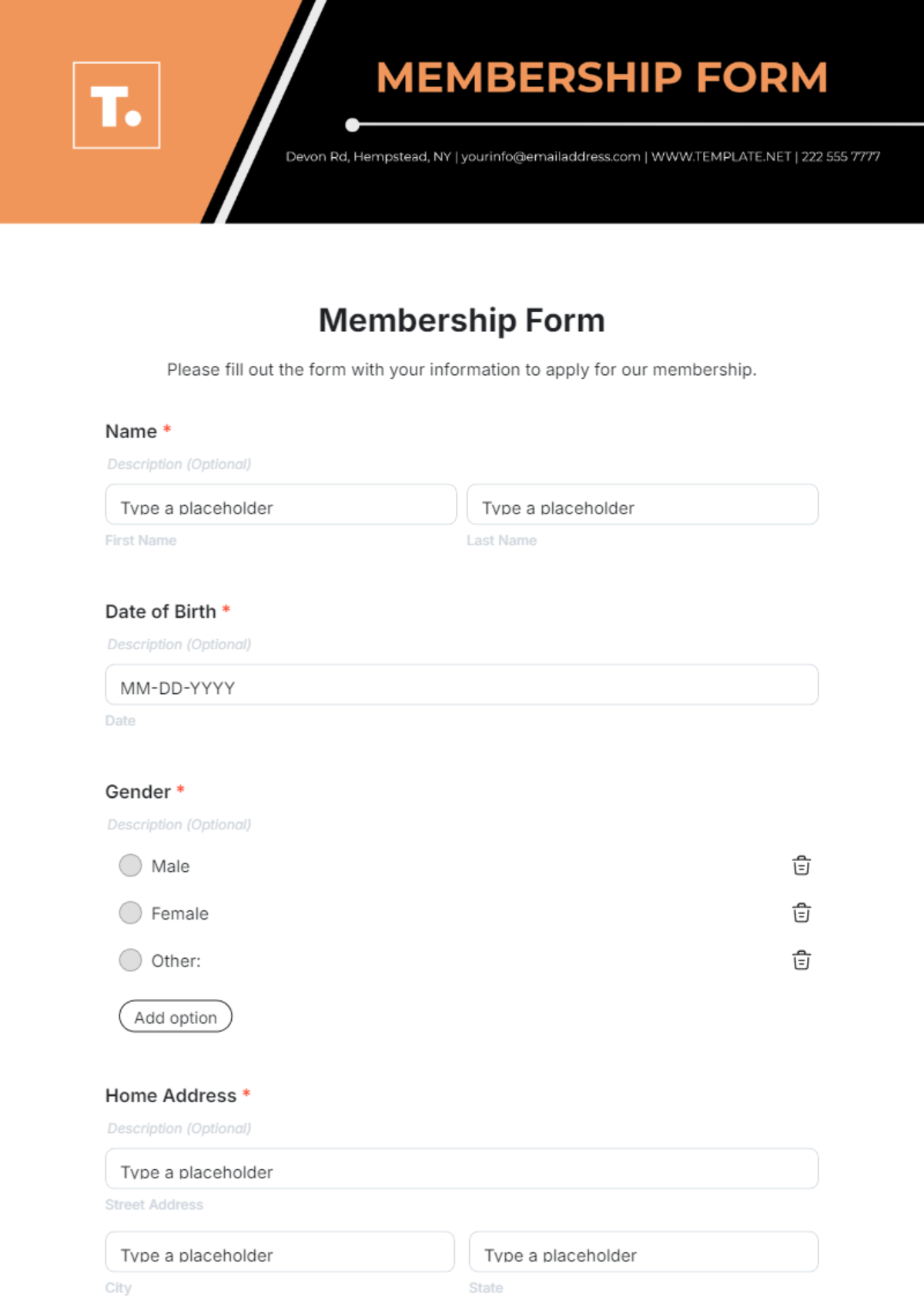
Source: Template.net :contentReference[oaicite:10]{index=10}
for bank membership template excel
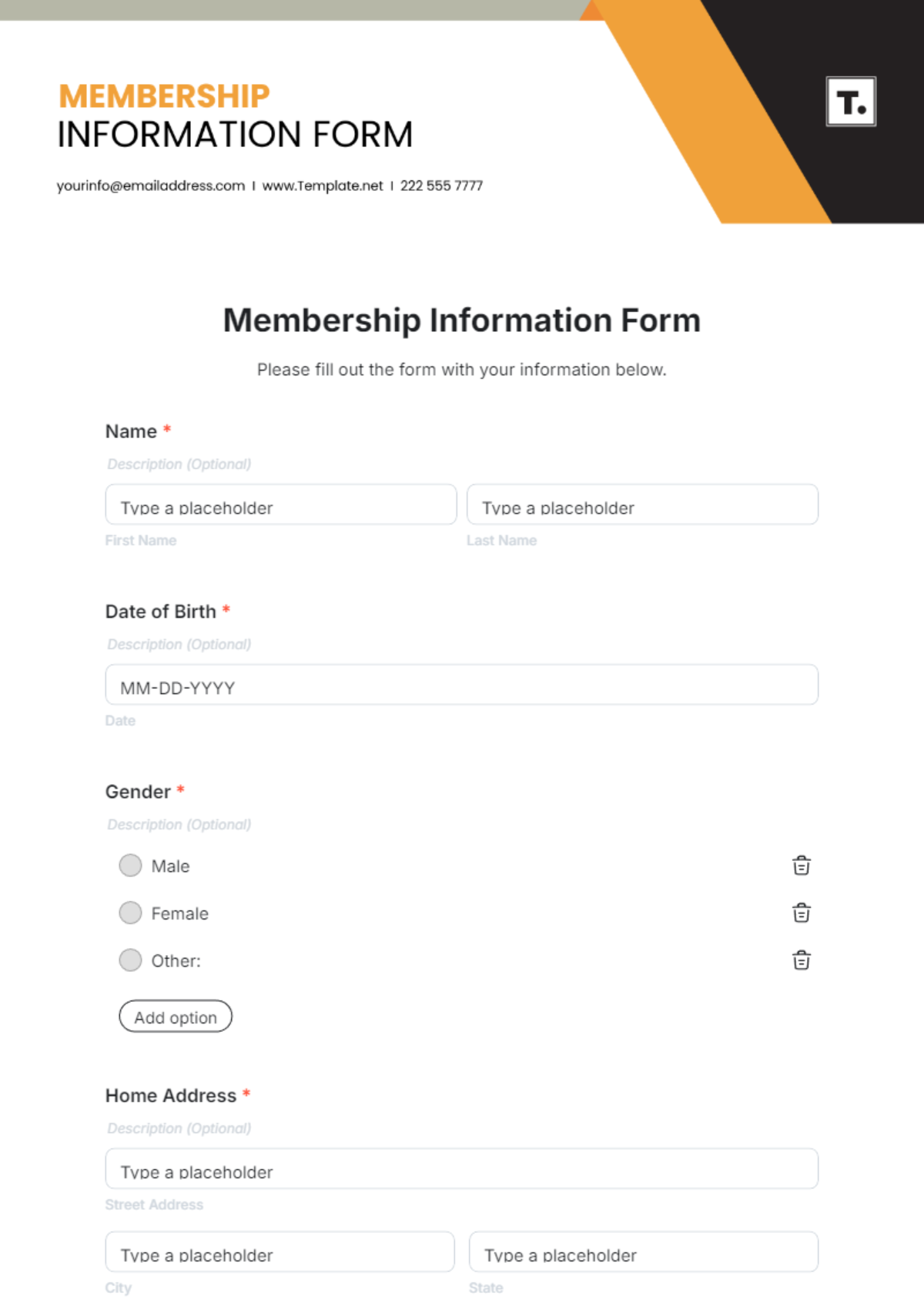
Source: Template.net :contentReference[oaicite:11]{index=11}
for bank membership template word
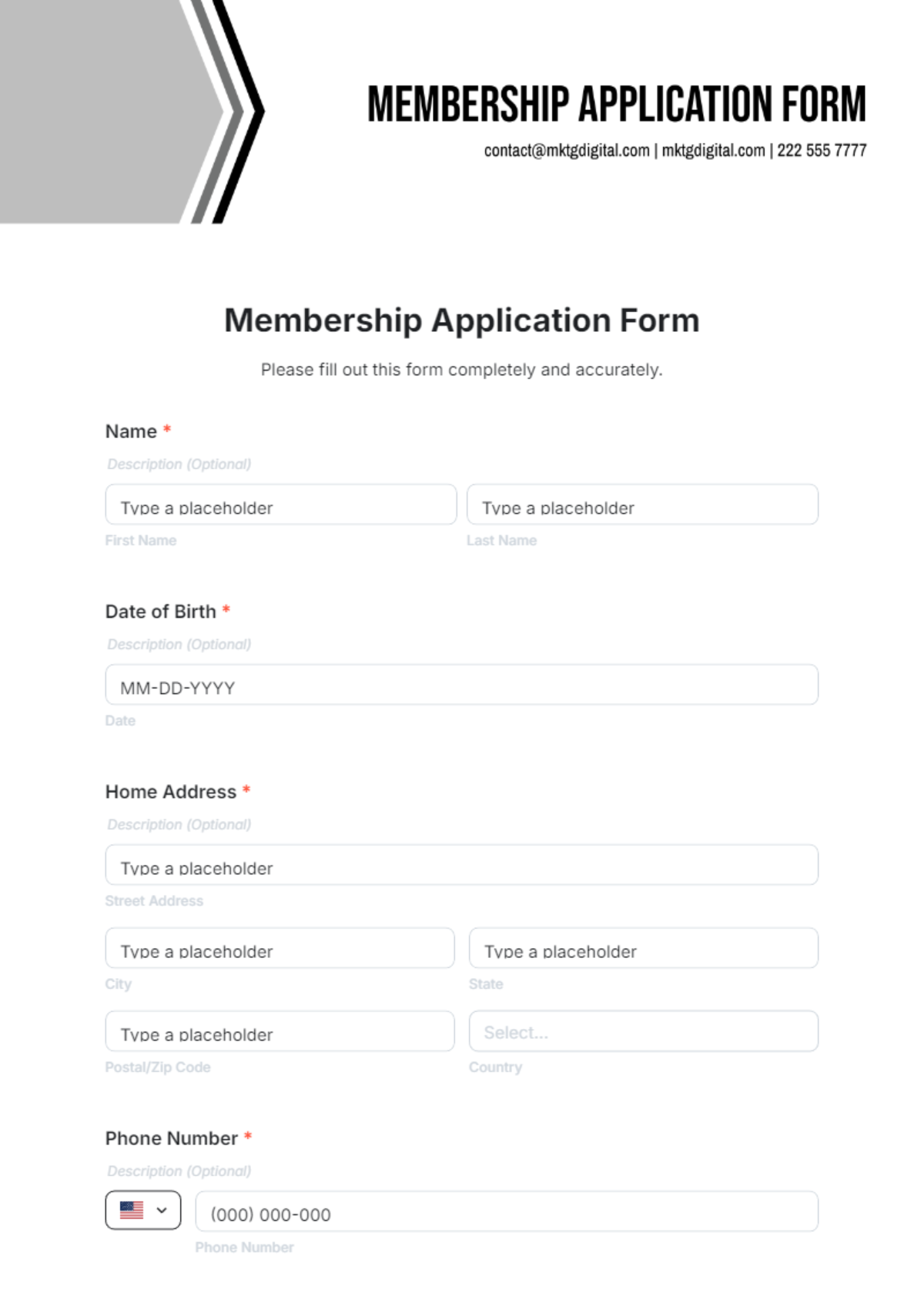
Source: Template.net :contentReference[oaicite:12]{index=12}
for bank membership template canva
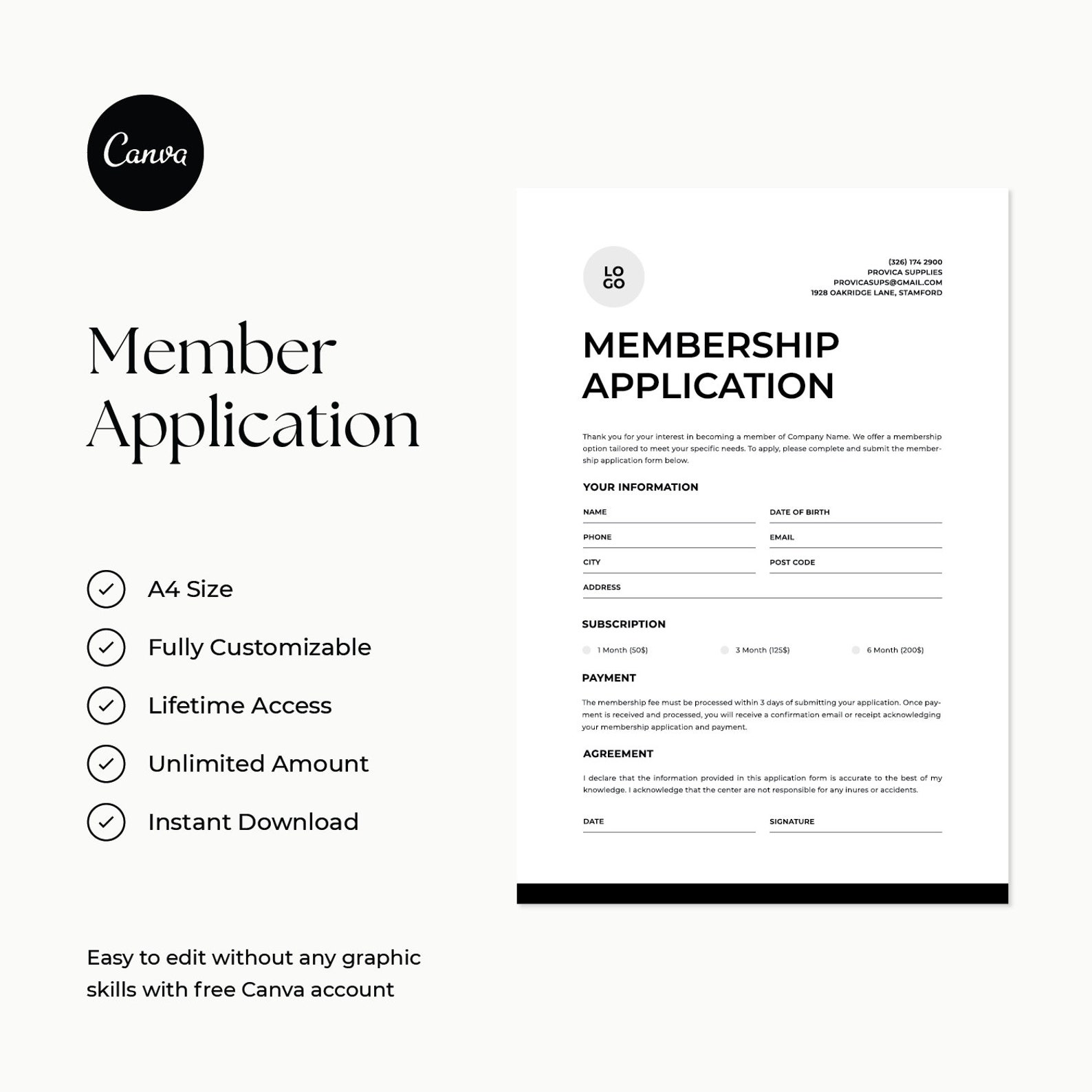
Source: Etsy :contentReference[oaicite:13]{index=13}
for bank membership template pdf

Source: TemplateDIY :contentReference[oaicite:14]{index=14}
template for membership form

Source: Venngage :contentReference[oaicite:15]{index=15}
blank membership card template
Source: PosterMyWall :contentReference[oaicite:16]{index=16}
free membership list template
Source: Template.net :contentReference[oaicite:17]{index=17}
membership card free template
Source: TypeCalendar :contentReference[oaicite:18]{index=18}
blank membership forms template
Source: forms.app :contentReference[oaicite:19]{index=19}
Frequently Asked Questions
What is the best format for a for bank membership Template?
There is no single best format. Word or Google Docs works well for editable documents, Excel works well for structured member records, PDF works well for stable distribution, Canva works well for visual designs, and online forms work well for digital data collection.
Can I use a generic membership template for a bank?
You can use a generic template as a structural starting point, but it should not be assumed to satisfy a bank’s official requirements. Financial institutions may have specific identity, regulatory, eligibility, recordkeeping, or approval requirements.
What should a membership application contain?
Common sections include applicant or organization details, contact information, membership type, eligibility information where relevant, declarations, signatures, and internal processing fields. The exact fields should be based on the organization’s actual workflow.
Should a membership card include a member’s address?
Usually, only information needed for identification or verification should appear on the card. An address should be included only when there is a clear operational reason to display it.
Is Excel suitable for a membership database?
Excel can be suitable for small or moderately sized membership registers when the data structure, access controls, backup process, and ownership are clearly defined. Larger programs may benefit from a dedicated membership-management system.
What is the difference between a membership form and a membership card?
A membership form collects information and usually supports enrollment or renewal. A membership card represents the resulting membership and typically contains a smaller set of identification or validity details.
Can a membership template be converted into a PDF?
Yes. Editable documents can generally be exported or printed to PDF, but the resulting PDF should be tested to ensure that fields, signatures, spacing, and page breaks remain usable.
Can I make a membership form in Google Docs?
Yes. Google Docs can be useful for collaborative editing of a membership document. The organization should keep the master document controlled and make sure completed member records are stored in an appropriate system.
How often should a membership template be reviewed?
A periodic review is useful, often at least annually or whenever the membership process changes. Review the fields, instructions, membership categories, contact information, workflow, privacy considerations, and document version.
What makes a membership template professional?
Professionalism comes from clarity, consistency, accurate information, appropriate field selection, readable typography, logical sections, controlled versions, and a workflow that explains what happens after submission.
Conclusion
A useful for bank membership Template should be treated as the foundation of a membership workflow rather than simply a printable page. The strongest templates connect clear data collection with review, approval, recordkeeping, membership identification, renewal, and reporting.
Choose the format according to the job it needs to perform. Use editable documents for drafting, spreadsheets for structured registers, PDFs for stable distribution, design tools for branded cards, and digital form systems when automated collection and centralized responses are valuable.
Most importantly, keep the template aligned with the organization’s real requirements. A generic example can provide structure and inspiration, but official financial or institutional requirements should always come from the responsible organization and applicable professionals.
When the application, member register, card, and renewal process use consistent identifiers and field definitions, administration becomes easier and the resulting records become more useful. That is the real value of a well-built template: it turns scattered membership information into a clear, repeatable, and maintainable process.

The best for bank membership Template is ultimately the one that is accurate, purposeful, easy to complete, easy to review, and connected to a reliable membership record. Start with the real workflow, collect only useful information, select the appropriate format, test the complete process, and maintain the template as the organization evolves.
