A clear marketing agency employee rights responsibilities manual helps employees understand what they can expect from their workplace and what is expected from them in return. Marketing agencies often operate in fast-moving environments where deadlines, client demands, creative collaboration, and changing priorities are part of everyday work. A well-organized employee manual provides a reliable framework for managing these challenges fairly and professionally.
Whether you are creating an employee handbook for a new marketing agency or updating an existing workplace policy manual, the goal is to establish clear expectations. Employees should understand their workplace rights, responsibilities, communication standards, professional conduct, and available support. Employers, meanwhile, benefit from consistent procedures that promote accountability and a positive company culture.
This guide explains the essential elements of a marketing agency employee rights and responsibilities manual and provides practical ideas for creating a useful document that employees can actually understand and use.
What Is a Marketing Agency Employee Rights Responsibilities Manual?
A marketing agency employee rights responsibilities manual is a workplace document that explains employee rights, duties, expectations, policies, and procedures. It can serve as a central reference for employees, managers, and human resources teams.
Because marketing agencies commonly involve creative teams, account managers, designers, developers, strategists, content specialists, and other professionals, responsibilities can vary significantly between roles. The manual should therefore establish company-wide standards while allowing individual job descriptions and team procedures to provide role-specific details.
A strong manual commonly covers:
- Employee rights and workplace protections
- Professional responsibilities and performance expectations
- Working hours, attendance, and leave policies
- Communication and collaboration standards
- Confidentiality and protection of client information
- Digital security and acceptable technology use
- Anti-discrimination and anti-harassment expectations
- Health, safety, and employee wellbeing
- Performance reviews and professional development
- Disciplinary and complaint procedures
Why Employee Rights and Responsibilities Matter in a Marketing Agency
Marketing work depends heavily on collaboration. A campaign may require several people to coordinate strategy, creative production, client communication, analytics, and delivery within a short timeframe. Without clear workplace expectations, misunderstandings can easily develop.
An employee rights and responsibilities manual creates a shared understanding between the agency and its employees. It can explain how decisions are made, how concerns should be reported, and how employees are expected to interact with colleagues and clients.
The manual can also support consistency. Instead of relying on informal instructions or individual management styles, employees have a written reference that explains important workplace policies.
However, an employee manual should complement applicable employment laws and individual employment agreements rather than replace them. Agencies should review their policies regularly and obtain appropriate professional advice when necessary.
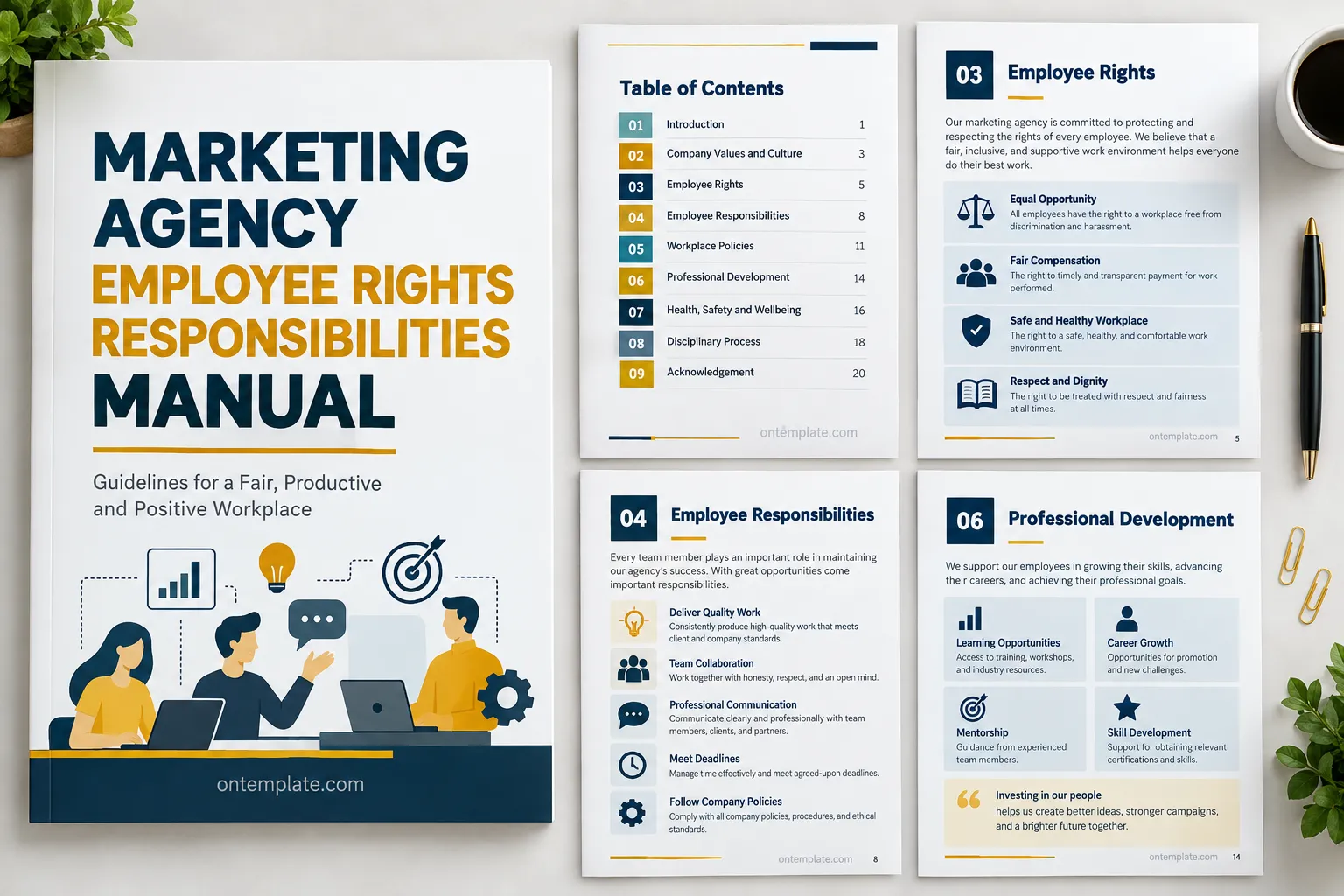
Key Employee Rights to Include in the Manual
Employee rights can differ depending on the country, state, employment arrangement, and applicable regulations. For this reason, an agency should adapt its manual to the laws that apply to its workforce.
Right to Fair and Respectful Treatment
Employees should be treated professionally and respectfully regardless of their role. The manual should establish expectations for respectful communication, teamwork, and workplace behavior.
This section can also explain how employees can raise concerns about inappropriate conduct and where they can seek assistance.
Right to a Safe Workplace
Employees should have access to a workplace that addresses relevant health and safety requirements. For agencies operating primarily in offices or remotely, this may include appropriate workspace practices, equipment guidance, emergency procedures, and wellbeing resources.
Right to Equal Opportunity
The manual should clearly communicate the agency’s commitment to applicable equal employment opportunity and anti-discrimination requirements. Policies should address prohibited discriminatory conduct and explain the process for reporting concerns.
Right to Understand Employment Conditions
Employees should be able to understand important employment terms, including working arrangements, compensation procedures, leave policies, working hours, and other conditions applicable to their role. These details should be consistent with the employee’s contract and applicable law.
Core Responsibilities of Marketing Agency Employees
Rights work alongside responsibilities. Employees contribute to a productive workplace by understanding their role, meeting reasonable expectations, and following company policies.
Deliver Quality Work
Marketing agency employees are generally expected to produce work that meets agreed standards and deadlines. This may involve reviewing creative materials, checking campaign data, proofreading content, testing digital assets, or confirming client deliverables before submission.
Communicate Clearly
Clear communication is essential when multiple teams are working on the same campaign. Employees should communicate project updates, identify potential delays, ask questions when requirements are unclear, and document important decisions appropriately.
Protect Confidential Information
Employees may have access to client strategies, campaign data, customer information, passwords, unpublished creative assets, pricing information, and internal business documents. The manual should explain confidentiality requirements and appropriate information-handling practices.
Meet Agreed Deadlines
Deadlines are particularly important in agency environments because one delayed task can affect an entire campaign. Employees should manage their workload responsibly and communicate early when a deadline may not be achievable.
Follow Ethical and Professional Standards
Marketing professionals should follow applicable laws, industry standards, client requirements, and company policies. The manual can provide guidance on ethical advertising, truthful communications, intellectual property, conflicts of interest, and responsible use of client information.
Workplace Conduct and Communication Policies
A useful employee handbook should explain how employees are expected to behave when communicating with colleagues, clients, vendors, and other stakeholders.
Important areas may include:
- Respectful workplace communication
- Professional email and messaging practices
- Appropriate use of company communication channels
- Meeting etiquette and collaboration standards
- Handling disagreements constructively
- Client communication responsibilities
- Remote and hybrid work expectations
- Social media and public communication guidelines
The objective should not be to control every aspect of employee communication. Instead, policies should establish reasonable professional standards while supporting open communication and constructive feedback.
Performance Expectations and Professional Development
Marketing agencies operate in an industry where tools, platforms, consumer behavior, and creative practices can change quickly. Professional development can therefore be an important part of employee responsibilities and employer support.
Performance Reviews
The manual can describe how performance reviews are conducted, how objectives are established, and how employees receive feedback. Clear processes help employees understand how their work will be evaluated.
Training and Skill Development
Agencies may provide training related to marketing platforms, analytics, creative software, communication skills, project management, or other job-specific competencies.
Employees can also be encouraged to identify relevant learning opportunities and discuss professional development goals with their managers.
Career Growth
A workplace manual can explain general approaches to career development, internal opportunities, mentoring, and additional responsibilities. Specific promotion decisions should remain subject to the agency’s established criteria and applicable employment practices.
Confidentiality, Data Protection, and Digital Security
Digital information is central to modern marketing agencies. Employees may use project management platforms, advertising accounts, customer databases, analytics systems, cloud storage, and communication applications every day.
A practical manual should establish expectations for protecting these resources.
- Use strong and appropriately managed passwords.
- Follow company requirements for authentication and account access.
- Do not share confidential credentials without authorization.
- Store client information only in approved systems.
- Handle personal and customer data according to applicable requirements.
- Report suspected security incidents promptly.
- Use company devices and software responsibly.
Agencies should tailor these requirements to their actual technology environment and applicable data protection obligations.
How to Handle Complaints, Conflicts, and Policy Violations
Employees need to know what to do when a workplace problem occurs. A manual should provide a clear and accessible process for raising concerns.
Reporting Workplace Concerns
Explain who employees can contact when they experience or witness inappropriate conduct, policy violations, discrimination, harassment, safety concerns, or other workplace issues.
Investigation and Review
The manual can describe the general process used to review complaints, while recognizing that procedures may vary according to the nature of the issue and applicable law.
Disciplinary Procedures
Employees should understand that policy violations may lead to corrective or disciplinary action where appropriate. The manual should avoid promising a particular outcome in every situation and should remain consistent with employment contracts and applicable law.
Practical Tips for Creating an Effective Employee Manual
A manual is most useful when employees can quickly find and understand the information they need.
- Use plain English: Avoid unnecessary legal jargon and complicated sentences.
- Organize information logically: Group related policies under clear headings.
- Use consistent terminology: Define important terms and use them consistently throughout the document.
- Make responsibilities specific: Explain what employees should do rather than relying on vague statements.
- Include reporting channels: Tell employees where to go when they have questions or concerns.
- Review the manual regularly: Update policies when laws, technology, workplace practices, or company operations change.
- Make it accessible: Provide the manual in a format employees can easily access and search.
- Obtain appropriate review: Have relevant HR, legal, or compliance professionals review policies where necessary.
Marketing Agency Employee Manual Checklist
Before publishing a marketing agency employee rights responsibilities manual, review whether it covers the following areas:
- Company values and workplace culture
- Employee rights and equal opportunity
- Employee responsibilities
- Working hours and attendance
- Leave and time-off procedures
- Remote or hybrid work expectations
- Professional conduct
- Anti-discrimination and anti-harassment policies
- Confidentiality and intellectual property
- Data protection and cybersecurity
- Client communication standards
- Performance management
- Professional development
- Complaint and grievance procedures
- Disciplinary procedures
- Health, safety, and wellbeing
- Employee acknowledgement
Conclusion
A well-designed marketing agency employee rights responsibilities manual provides employees with a practical reference for understanding workplace rights, professional responsibilities, company policies, and available support. It can also help agencies establish consistent expectations across creative, account management, strategy, technology, and administrative teams.
The most effective manual is clear, practical, regularly reviewed, and adapted to the agency’s workforce and applicable employment requirements. By combining employee rights with clear responsibilities, communication standards, confidentiality rules, professional development guidance, and fair workplace procedures, an agency can create a stronger foundation for productive and respectful working relationships.
Use the manual as a living workplace document rather than a one-time policy file. Review it periodically, communicate updates clearly, and make sure employees know where to find the latest version.
