A strong restoration business idea Template is more than a polished document. It is a working framework for turning a restoration concept into a service business with a defined market, clear operations, realistic financial assumptions, and a repeatable customer-acquisition process. Restoration companies may focus on water damage, fire and smoke damage, mold remediation, storm losses, contents restoration, reconstruction, or a combination of services. Because each specialty carries different equipment, staffing, response, documentation, and risk considerations, the plan should be tailored to the actual service mix rather than copied from a generic contractor plan.
Current restoration business planning guidance commonly emphasizes the executive summary, company description, services, market analysis, marketing and sales, operations, management, financial planning, and risk considerations. Industry-focused examples also show why restoration planning needs to account for emergency response, insurance-related work, equipment requirements, documentation, and customer communication.
The most useful template is therefore one that helps an owner make decisions before investing heavily. It should answer questions such as which losses the company will handle, who will buy those services, what geographic area can be served quickly, how leads will arrive, what equipment is required, how jobs will be documented, and how cash will move through the business. The sections below turn those questions into a practical planning structure that can be adapted for a small startup or an established contractor adding restoration services.

What a restoration business idea Template should accomplish
The first purpose of the template is clarity. A restoration owner should be able to explain the business in a few sentences: the service area, the primary loss types, the customer groups, the response promise, and the reason the company deserves consideration. This becomes the foundation for the rest of the plan. If the opening description says the company handles every possible restoration category across a very large territory, the later staffing and equipment sections may reveal that the concept is too broad for the available resources.
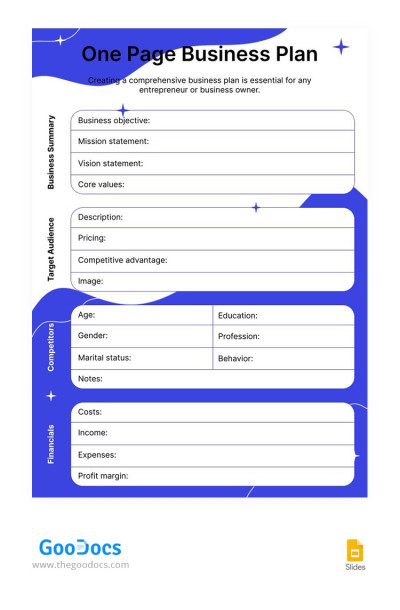
The second purpose is coordination. Restoration work connects sales, emergency dispatch, field assessment, mitigation, estimating, documentation, contents handling, reconstruction, invoicing, and customer communication. A business plan should show how those activities connect instead of treating them as isolated departments. A one-page template can be useful at the concept stage, while a longer plan can explain job flow, responsibilities, financial assumptions, and growth milestones in more detail.
The third purpose is decision testing. A template should force the owner to challenge assumptions before they become expenses. For example, a plan might state that the company will provide round-the-clock water mitigation. That statement has operational consequences: someone must answer calls, dispatch crews, maintain equipment, manage after-hours access, document jobs, and handle the additional administrative workload. A credible plan connects the promise to the resources required to deliver it.

Core sections to include in the template
A practical restoration plan should begin with an executive summary that explains what the company does, where it operates, which services it prioritizes, and what it wants to achieve. The summary should be written after the rest of the plan is developed, even though it appears at the beginning. Doing so allows the summary to reflect the actual service model, market findings, staffing plan, and financial assumptions rather than an early idea that may later change.
The company description should explain the ownership structure, service philosophy, geographic territory, operating model, and competitive position. It can also describe whether the company intends to concentrate on residential emergency losses, commercial properties, insurance-related work, specialty restoration, or a blended model. A useful description does not simply say that the company provides high-quality restoration. It explains what quality means operationally, such as timely communication, organized documentation, consistent drying procedures, careful contents handling, or reliable reconstruction coordination.
The services section should be specific enough to guide equipment purchasing and staff training. Water mitigation, fire and smoke restoration, mold remediation, storm response, contents restoration, reconstruction, and specialty restoration can each require different capabilities. A startup may decide to begin with a narrower service mix and expand after building capacity. That can be more realistic than launching with every possible service at once.
Market analysis for a restoration company
Market analysis should identify who is likely to purchase restoration services and how they make decisions. Residential customers may call during an emergency, while property managers, facility directors, insurance professionals, and commercial owners may evaluate contractors before a loss occurs. The plan should distinguish these audiences because their expectations, sales cycles, documentation needs, and communication preferences can differ substantially.
Geographic analysis is especially important. Restoration is often time-sensitive, so a company cannot evaluate a market only by population size. The useful questions include travel time, road access, property density, competing providers, commercial concentration, seasonal risks, building stock, and the company’s actual ability to dispatch crews. A territory that looks attractive on paper may become difficult to serve if response times become inconsistent during peak demand.
Competitive analysis should identify direct competitors, specialty contractors, larger restoration networks, independent operators, and adjacent businesses that may receive referrals. Instead of simply listing competitors, the plan should compare service coverage, response availability, communication, certifications, equipment capacity, online visibility, commercial relationships, and customer experience. This helps the owner define a position that is specific enough to matter.

Choosing the right business model
A restoration company can be structured around emergency mitigation, reconstruction, specialty restoration, commercial contracts, or several of these revenue streams. Emergency mitigation can create urgent demand, while reconstruction may extend the relationship after the initial stabilization work. Contents restoration can create another specialty line, while commercial preparedness agreements may create relationships before an incident occurs. The plan should identify the role each service plays instead of assuming every service will contribute equally.
The business model should also distinguish between revenue and cash collection. A job can have a strong quoted value but still create pressure if invoices, supplements, approvals, or customer balances take longer to convert into cash. Restoration businesses should therefore plan for working capital, equipment costs, payroll timing, vehicle expenses, materials, insurance, and administrative overhead. The financial section should reflect the timing of money movement, not merely projected sales.
Another useful distinction is between one-time emergency work and repeat relationships. A homeowner may need restoration only after a loss, while a property manager, facility operator, or insurance-related referral source may create multiple opportunities over time. This makes relationship management an important part of the business model. The plan should identify which customer relationships can produce recurring work and how those relationships will be maintained.
Building the financial section
The financial section should start with startup costs rather than revenue projections. List vehicles, extraction equipment, air movers, dehumidifiers, moisture meters, protective equipment, containment materials, storage needs, office costs, communications, insurance, licensing expenses, training, marketing, payroll, and working capital. Some businesses may lease or finance equipment while others purchase it outright. The plan should show which approach is being considered and how it affects monthly obligations.
Revenue assumptions should be built from operational capacity. Instead of choosing a large annual sales figure and working backward, estimate how many jobs the available crews can reasonably handle, the types of losses served, average job duration, utilization, and the proportion of work that continues into reconstruction or specialty services. These are planning assumptions, not guaranteed outcomes, and they should be revised when real operating data becomes available.
A useful financial model should include conservative, expected, and stronger scenarios. The conservative case can assume lower job volume, slower collection, higher equipment downtime, or higher marketing costs. The expected case can represent the owner’s current operating assumptions. The stronger case can show what happens if referral relationships, capacity, and demand develop faster than expected. Scenario planning is more useful than relying on one precise forecast that gives a false impression of certainty.

Operations and emergency response planning
Operations should describe what happens from the first customer call through job completion. A basic workflow can include intake, emergency triage, dispatch, site assessment, authorization, documentation, mitigation, monitoring, customer updates, estimating, invoicing, and follow-up. Writing the process down exposes gaps that are easy to overlook when the business is still an idea.
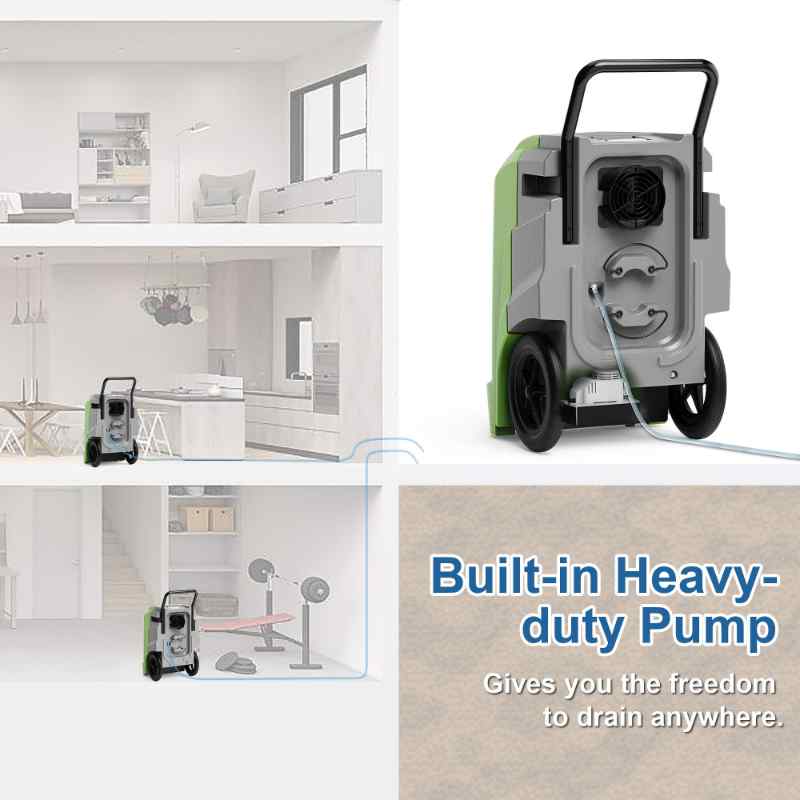
Equipment planning should be connected to the services offered. Water restoration may require extraction machines, air movers, dehumidifiers, moisture meters, thermal imaging, air filtration, hoses, containment materials, and related accessories. Fire and smoke projects may require specialized cleaning equipment, odor-control resources, protective equipment, and reconstruction capability. Mold-related work can introduce additional containment and safety considerations. The plan should identify what is owned, leased, rented, or obtained through suppliers.
Response capacity is another critical operating issue. If the company promises rapid service, the plan should specify who answers calls, how dispatch decisions are made, how crews are assigned, how vehicles are stocked, and what happens when multiple losses arrive at once. A written escalation process can prevent a small company from promising more coverage than it can consistently provide.
Using different document formats effectively
People searching for a restoration business idea template pdf are often looking for a layout that can be reviewed, printed, or shared without changing the visual structure. A PDF-style document is useful for presenting a finished plan to a lender, advisor, partner, or internal decision-maker. It is less useful as the only working copy because assumptions often change during planning.
A restoration business idea template word format can be useful when the owner expects substantial editing, especially when company descriptions, service lists, operating procedures, or financial assumptions need repeated revision. A restoration business idea template google docs format can be useful for collaborative editing when several stakeholders need to review the same plan. The important point is not the file format itself but whether the structure encourages accurate, specific information.
A printable layout can also help during planning meetings. The owner can review each section and mark assumptions that require evidence, such as local competition, equipment costs, insurance expenses, staffing availability, or service demand. The document should remain a working planning instrument rather than becoming a polished file that is rarely revisited.
Starting a restoration business with a focused service strategy
starting a restoration business becomes easier to evaluate when the initial service territory and service mix are deliberately narrow. A startup might begin with water mitigation and selected reconstruction services, then add other specialties after developing the required training, equipment, staffing, and operating procedures. Another company might specialize in contents restoration or commercial property response. The correct starting point depends on capabilities, market demand, and available capital.
The launch plan should identify the first operational milestones. These can include forming the business entity, confirming local licensing and insurance requirements, establishing supplier relationships, acquiring essential equipment, developing job documentation, preparing customer agreements, setting up accounting procedures, training staff, and creating a response process. Requirements vary by jurisdiction and service type, so the template should contain a verification checklist rather than claiming that one universal list applies everywhere.
California deserves special attention because a plan intended for that market should be checked against current state and local rules before launch. A restoration business idea template california can provide planning structure, but it should not be treated as proof of licensing, contractor, environmental, insurance, employment, or local permitting requirements. Those matters should be verified with the relevant authorities and qualified professionals before services are offered.
Marketing and referral strategy
marketing ideas for restoration company planning should begin with customer intent. Someone facing a burst pipe or fire does not usually begin with a long research process. Visibility, clear contact information, trustworthy messaging, service-area clarity, and the ability to communicate what happens next are therefore important. The plan should describe how the company will be found during urgent searches as well as how it will build recognition before an emergency occurs.
Referral relationships can be particularly important. Insurance agents, property managers, facility professionals, contractors, plumbers, roofers, real estate professionals, and other complementary businesses may encounter property problems before a restoration company does. Industry marketing guidance emphasizes consistent relationship building rather than treating a single introduction as a complete sales strategy.
Online visibility should be treated as a system rather than one tactic. A local business profile, service pages, educational articles, project documentation, customer reviews, and clear emergency contact information can work together. The plan should define which channels will be tested, how leads will be attributed, and which measures will determine whether a channel deserves additional investment.

Branding and customer trust
Branding should reinforce the qualities customers need during a property emergency: competence, clarity, reliability, and calm communication. restoration company logo ideas should therefore be evaluated according to legibility, vehicle visibility, uniforms, estimates, invoices, signage, and digital use rather than appearance alone. A complicated mark may look attractive on a large screen but become difficult to recognize on a service vehicle or small document header.
The brand should also remain consistent across customer-facing materials. The company name, phone number, service categories, service area, and emergency message should not change from one channel to another. Consistency reduces uncertainty and makes the company easier to recognize when customers encounter it through a referral, search result, vehicle, estimate, or printed material.
Trust is also built through documentation. Before-and-after photographs, clear scopes of work, progress notes, moisture readings where relevant, equipment records, customer updates, and organized invoices can show professionalism. These records also help the company review its own performance and identify recurring operational problems.
Contracts, estimates, and documentation
Contracts and customer authorizations should be reviewed carefully before launch. The plan should identify which documents are used for emergency work, mitigation authorization, reconstruction, contents handling, change orders, payment terms, and project completion. Exact legal language should be prepared or reviewed by a qualified professional for the jurisdiction and service being offered.
A restoration contract template for furniture restoration may be useful as a planning reference when contents or furniture work is part of the business, but the company should not assume that a generic form protects every type of project. Furniture restoration can involve transport, condition assessment, storage, cleaning methods, repair limits, material identification, customer expectations, valuation questions, and risk of pre-existing damage.
Documentation should also connect field work with financial administration. Each project should have a consistent record of customer information, loss details, authorization, photographs, work performed, materials, equipment, labor, monitoring, communications, estimates, invoices, and completion status. A well-designed template can make this workflow easier to standardize as the company grows.

How to turn the template into a working plan
Begin with the service definition. Write down exactly what the company will perform internally and what will be referred or subcontracted. Then identify the geographic territory that can realistically be served. This creates boundaries for the market analysis and helps determine the staffing and equipment requirements.
Next, document the customer journey. Describe what happens when a customer calls, how information is collected, how a crew is dispatched, what happens at the property, how the scope is recorded, how progress is communicated, and how the project is closed. This workflow becomes the foundation for standard operating procedures later.
Finally, connect the plan to measurable milestones. Instead of vague goals such as “grow quickly,” use milestones such as establishing a defined service territory, completing a target number of training requirements, securing supplier relationships, building a documented response process, reaching a chosen equipment capacity, developing referral relationships, and reviewing financial performance at regular intervals.
Common mistakes to avoid
One common mistake is creating a plan that is too broad. A company that lists water, fire, mold, storm, contents, reconstruction, commercial work, and specialty restoration without explaining staffing or equipment capacity may be describing an ambition rather than an operating business. Narrowing the initial scope can make the plan more credible and easier to execute.
Another mistake is relying on unsupported revenue assumptions. A projected sales number should have a clear connection to job volume, average project value, available crews, seasonality, capacity, and collection timing. If the numbers are hypothetical, label them as planning scenarios. Replace assumptions with actual company data as soon as the business begins operating.
A third mistake is treating marketing as a list of promotional activities. A stronger plan connects each channel to a customer group, message, expected action, tracking method, and review period. This makes it possible to stop ineffective activities and invest more in channels that consistently generate suitable opportunities.
Practical Solution
The most practical solution is to build the plan in three layers. Layer one is the one-page concept: service mix, territory, customer groups, value proposition, operating model, major costs, and first milestones. Layer two expands the concept into a detailed business plan covering market analysis, operations, staffing, equipment, sales channels, documentation, risk, and financial scenarios. Layer three turns the plan into working checklists and standard procedures that crews and office staff can actually follow.
Use the template as a decision gate before each major investment. Before purchasing another vehicle, confirm that projected demand and crew capacity justify it. Before adding a new restoration specialty, confirm the training, equipment, safety procedures, insurance considerations, and customer demand. Before expanding territory, confirm that response times, staffing, and travel costs remain practical. This keeps growth tied to operational evidence rather than enthusiasm alone.
Review the plan on a regular schedule. Compare actual lead sources with planned marketing channels, actual job types with the intended service mix, equipment utilization with capacity assumptions, and collected revenue with financial projections. Record what changed and why. A living plan becomes increasingly useful because it reflects the company’s actual experience instead of remaining a document created only at launch.
Reference Examples
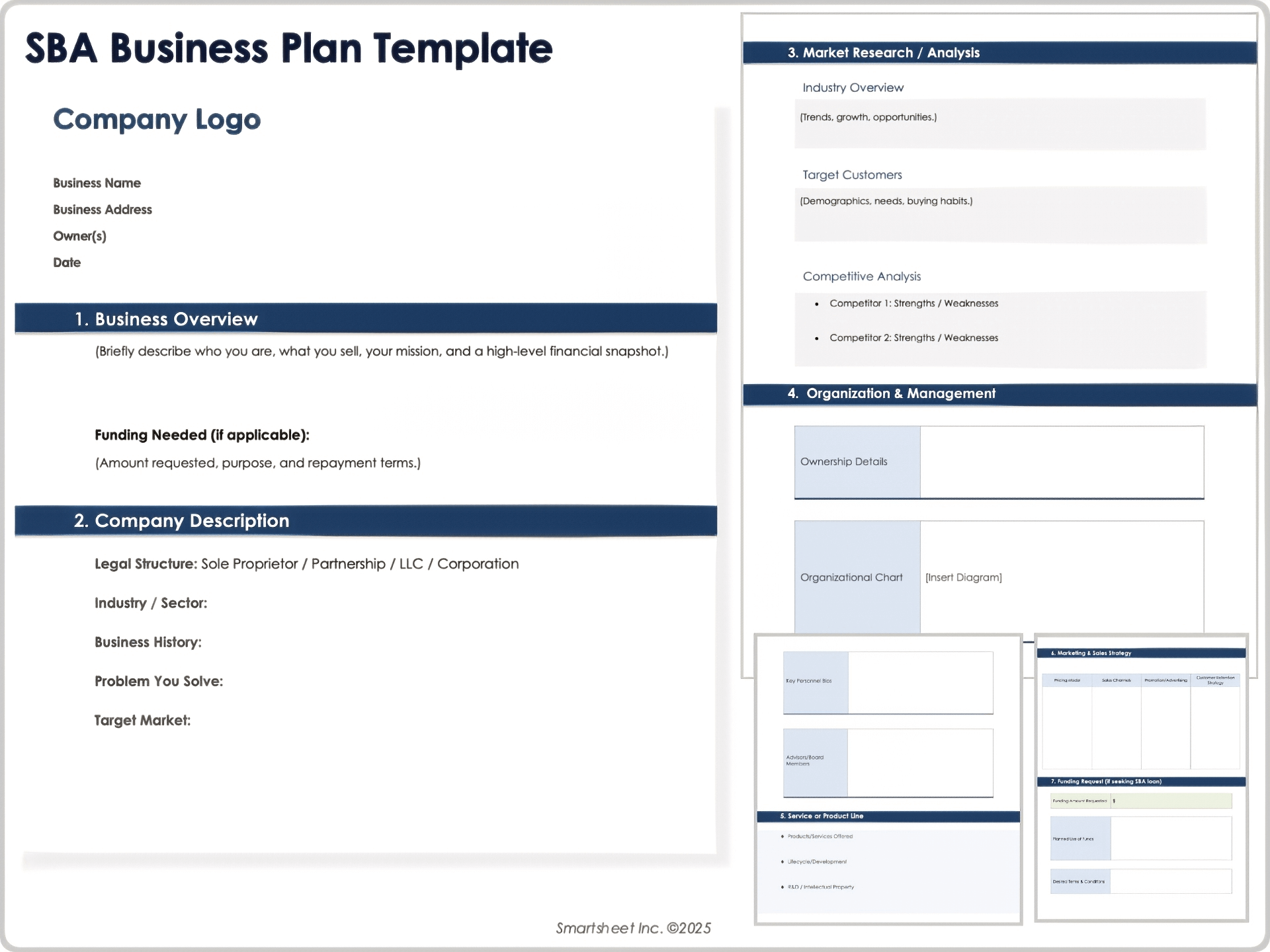
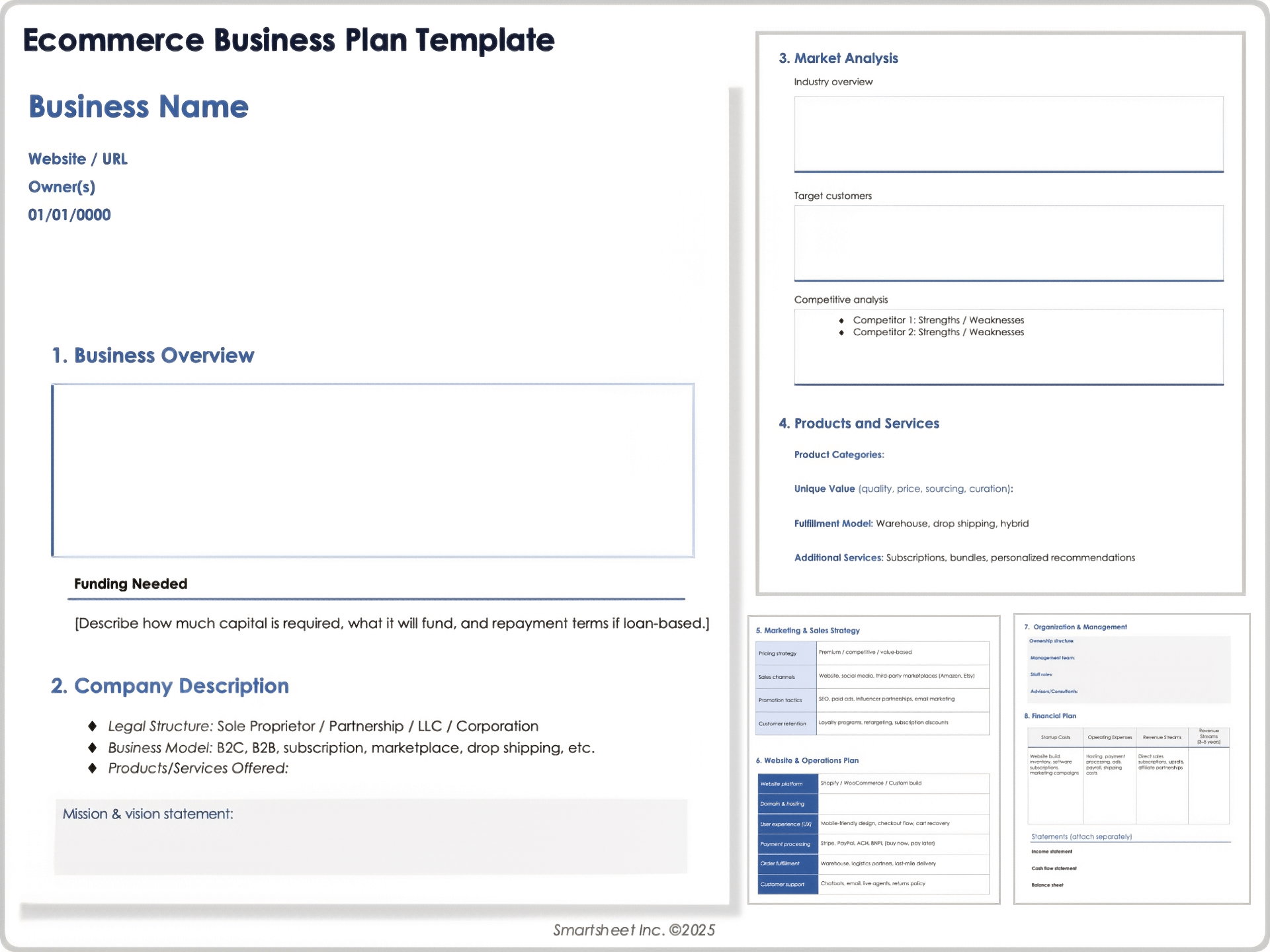
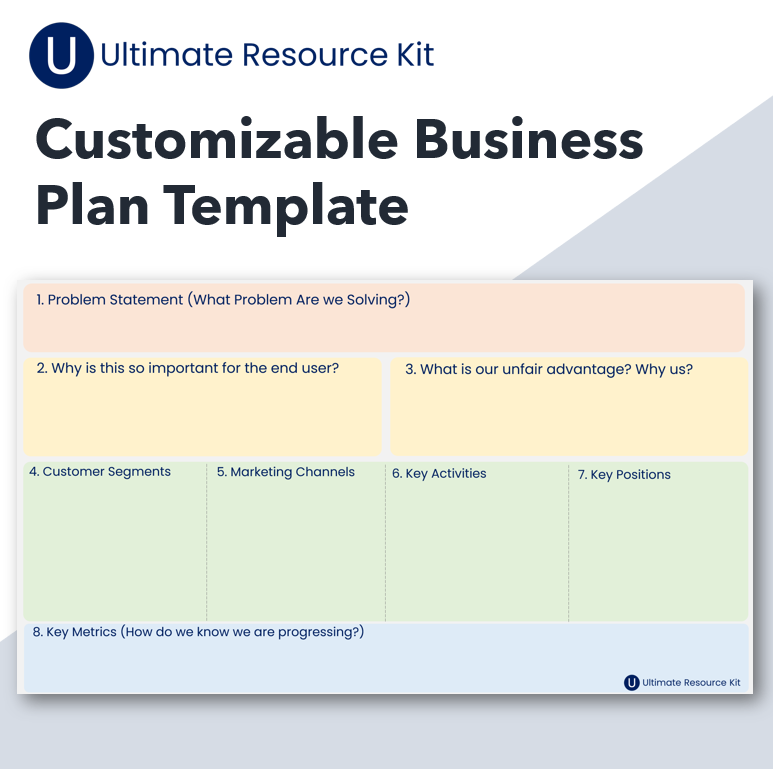
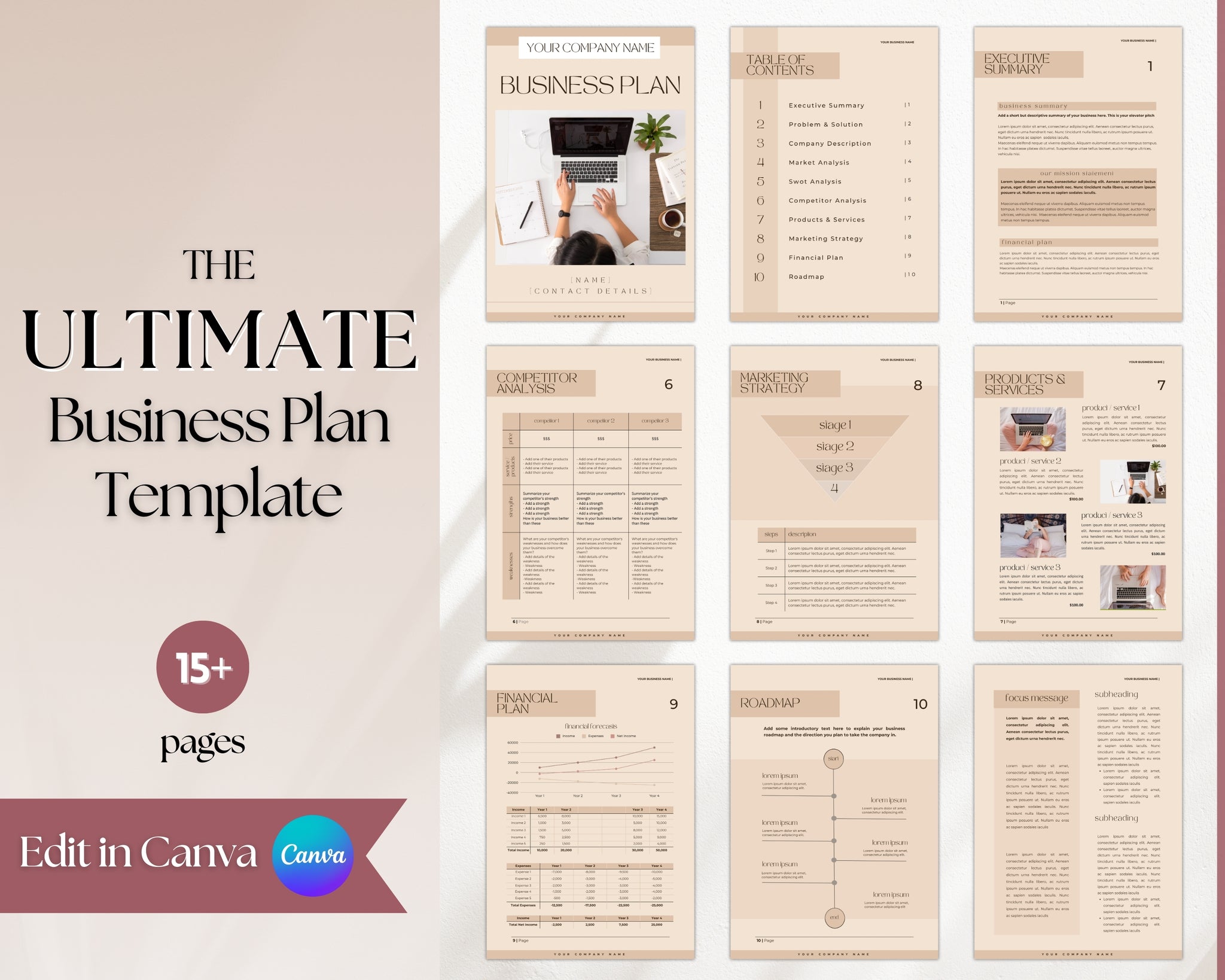
The visual references below show several ways a restoration business plan can be organized around structured business planning. The most useful layouts separate the executive summary, company description, market analysis, marketing strategy, operations, financial planning, and milestones so that the owner can review one decision area at a time. For a restoration company, those general business-plan sections should be customized with restoration-specific information such as emergency response capacity, loss categories, equipment requirements, service territory, documentation procedures, insurance-related workflows, and reconstruction capabilities. A visual template is best treated as a structural reference rather than as proof that its assumptions or figures fit a particular restoration market.
These examples also illustrate why format should follow purpose. A one-page layout can help test an early restoration concept, while a longer document can provide greater detail for financing discussions, partners, internal planning, or expansion. Equipment photographs add another useful perspective because restoration planning is closely tied to physical operating capacity. Together, the references can help an owner compare layouts, identify missing sections, and build a clearer restoration business plan without confusing a generic business structure with a jurisdiction-specific requirement or an industry guarantee.

Development Planning Graphic
Source: PayBee

Calendar Planning Template
Source: PayBee

Business Plan Calculation Worksheet
Source: Wikimedia Commons
Storm Ultra Heavy-Duty Pump Configuration
Source: Restoration Base
Storm Ultra Commercial LGR Dehumidifier
Source: Restoration Base
