An insurance specialist cover letter Template is most useful when it gives an employer a quick, credible reason to continue reading your resume. The strongest version is not simply a polished page with standard wording. It connects the candidate’s insurance knowledge, customer-service ability, policy experience, claims exposure, analytical skills, and attention to detail with the specific requirements of the vacancy.
Current career guidance and specialist examples consistently emphasize tailoring the letter to the position, explaining relevant experience, showing measurable contributions when available, and maintaining a clear professional structure. Insurance roles can differ substantially: one employer may prioritize claims handling, another policy administration, another risk analysis, underwriting, benefits coordination, or client service. Your letter should therefore reflect the actual work described in the vacancy rather than relying on generic insurance language.
This guide explains how to create a persuasive letter, what information belongs in each section, how to adapt the structure for different insurance specialties, and how to turn a basic template into a document that sounds specific and credible. The examples are illustrative, so replace hypothetical achievements with your own verified experience rather than copying numbers or claims that do not apply to you.
What an Insurance Specialist Cover Letter Should Accomplish
The primary purpose of the letter is to connect your background to the employer’s immediate hiring need. A resume is normally structured around employment history, education, skills, and achievements, while the letter gives you more room to explain why selected parts of that background matter for the particular position. For an insurance specialist, this could mean explaining experience with policy servicing, claims documentation, coverage questions, client communication, renewals, underwriting support, or regulatory procedures.
A good letter also demonstrates professional judgment. Insurance work frequently involves information that must be handled accurately, communicated clearly, and documented carefully. A candidate who can explain a complicated insurance responsibility in concise language can demonstrate a useful workplace skill before an interview even takes place. Instead of saying that you are “hardworking” or “detail-oriented,” show what you did that required those qualities.
The letter should also make the transition from your previous experience to the target role easy to understand. If you are moving from healthcare administration into health insurance, for example, emphasize insurance verification, benefits interpretation, claims coordination, documentation, and communication with providers or customers. If you are moving from customer service into insurance, emphasize your ability to explain complex information, resolve disputes, maintain accurate records, and identify customer needs.
The Core Structure of an Insurance Specialist Letter
A reliable structure begins with your contact information, the date, the employer’s information, a professional greeting, an opening paragraph, one or two body paragraphs, and a concise closing. The design should support readability rather than compete with the content. A clean single-page layout is usually appropriate for a cover letter unless the employer specifically requests something different.
The opening should identify the role and establish your strongest point of relevance. Instead of beginning with a vague statement such as “I am writing to express my interest,” consider a direct opening that identifies your experience and the value you bring. For example: “With four years of experience supporting policy administration and claims documentation, I am excited to apply for the Insurance Specialist position at [Company].” The wording should be truthful and based on your actual background.
The middle of the letter should provide evidence. Choose two or three qualifications that closely match the vacancy and explain them briefly. If the employer mentions claims processing, policy reviews, customer inquiries, data accuracy, and regulatory compliance, do not spend most of the letter discussing unrelated administrative duties. Prioritize the responsibilities that appear most important in the job description.
How to Write the Opening Paragraph
The first paragraph should answer three questions quickly: what position are you seeking, what relevant background do you have, and why are you interested in this particular opportunity? You do not need a dramatic story. A focused introduction can be more effective because it gives the hiring reader immediate context.
For an experienced candidate, the opening might emphasize a specialty: “I am an insurance operations professional with five years of experience supporting policy servicing, renewals, customer inquiries, and claims documentation.” For an entry-level candidate, the emphasis can shift toward education, internship experience, transferable skills, or relevant coursework. The important point is to make the connection between your current capabilities and the employer’s needs obvious.
If you know the hiring manager’s name, use it. If you genuinely cannot identify the appropriate person, a professional greeting such as “Dear Hiring Manager” is reasonable. Avoid exaggerated enthusiasm, unsupported claims, and statements about being the “perfect candidate.” Confidence is stronger when it is supported by evidence.
How to Present Insurance Experience
Insurance experience should be described in terms of responsibilities and outcomes. Relevant areas may include policy administration, claims intake, coverage review, underwriting support, risk assessment, customer service, renewals, billing coordination, benefits verification, documentation, account management, and compliance-related procedures. Select only the areas that genuinely match the position.
Strong descriptions are specific enough to show what you actually handled. “Managed insurance policies” is broad. “Maintained policy records, reviewed renewal documentation, followed up on missing information, and responded to client coverage questions” communicates much more. If you have measurable results, use them when they are accurate and can be defended during an interview.
Be careful with industry terminology. Terms such as policy administration, claims adjudication, underwriting, coverage analysis, endorsements, renewals, loss information, benefits verification, and risk assessment can be useful when they accurately describe your work. Do not insert technical terms merely because they appear in the vacancy. A recruiter should be able to understand how you used the knowledge rather than simply seeing a collection of industry keywords.
Skills Worth Highlighting
An insurance specialist may need a combination of technical, analytical, organizational, and communication skills. The right combination depends on the position. Claims-focused roles may value investigation, documentation, negotiation, policy interpretation, and customer communication. Administrative insurance roles may emphasize data accuracy, records management, processing workflows, and follow-up. Risk-oriented positions may place more emphasis on analysis, reporting, financial reasoning, and risk evaluation.
Communication deserves particular attention because insurance information can be difficult for customers to understand. A strong candidate can explain coverage, exclusions, procedures, or documentation requirements in language that a non-specialist can follow. Your letter can demonstrate this ability through its own clarity. If the document is full of complicated sentences and unnecessary jargon, it weakens the communication skill you are trying to demonstrate.
Attention to detail is another useful theme, but avoid presenting it as an empty personality trait. Explain how accuracy affected your work. Examples might include reviewing policy information, reconciling records, identifying missing documentation, checking claim details, maintaining accurate customer records, or ensuring correspondence matched established procedures.
Writing a Cover Letter for Insurance Without Sounding Generic
A common weakness in insurance letters is excessive generalization. Statements such as “I am passionate about helping people” or “I have excellent communication skills” are not necessarily wrong, but they do little to distinguish one applicant from another. Replace broad claims with a brief explanation of how the skill appeared in your work.
For example, rather than writing “I have strong customer-service skills,” you could write: “In my previous position, I handled policy and billing inquiries, clarified coverage questions, and coordinated follow-up when additional documentation was required.” This gives the employer something concrete to evaluate. If you have a genuine achievement, add it: “I also helped reorganize our follow-up process so outstanding requests were easier for the team to track.”
The same principle applies to technical expertise. Rather than listing every insurance system, software platform, or regulatory term you have encountered, identify the tools and knowledge that are most relevant to the vacancy. The goal is not to create the longest letter possible. It is to make the most relevant evidence easy to find.
Adapting the Letter for Different Insurance Jobs
A cover letter template for insurance company positions should be treated as a framework rather than a final document. Insurance companies employ specialists across claims, underwriting, sales, account management, policy administration, risk, compliance, customer service, and benefits. Each function calls for different evidence.
For a claims position, emphasize claim intake, investigation, documentation, coverage interpretation, negotiation, settlement support, communication, and case organization. For underwriting, emphasize risk analysis, policy evaluation, data interpretation, attention to detail, decision-making, and knowledge of relevant insurance products. For account management, focus on client relationships, renewals, policy servicing, carrier communication, and problem resolution.
A cover letter for benefits specialist should take a somewhat different approach. Benefits-oriented work can involve eligibility information, plan details, employee questions, records, documentation, and coordination with internal or external stakeholders. Your letter should therefore emphasize accuracy, confidentiality, service, communication, and the ability to explain benefits information clearly.
Entry-Level Insurance Specialist Cover Letters
If you have little direct insurance experience, do not try to make your background sound more specialized than it is. Instead, identify transferable experience that demonstrates the behaviors the employer needs. Customer service, financial administration, healthcare administration, sales, data entry, records management, research, and office coordination can all provide relevant evidence depending on the vacancy.
An entry-level letter can also use education and practical training strategically. A degree or course in insurance, finance, business, risk management, healthcare administration, or a related subject can establish foundational knowledge. Internships, projects, volunteer work, and part-time positions may also demonstrate communication, analysis, documentation, and organizational ability.
The strongest entry-level letter does not apologize for limited experience. It explains what the candidate already knows, what they have practiced, and why those capabilities transfer to the role. If the employer asks for experience you do not have, do not claim it. Instead, emphasize adjacent experience and your ability to learn the employer’s procedures.
Experienced Candidate Strategies
Experienced professionals should resist the temptation to turn the letter into a second resume. A long list of every responsibility from every previous position makes it harder to see what matters. Select the two or three areas that best demonstrate readiness for the target role.
Career progression can be especially useful. If you moved from claims support to claims specialist, or from customer service into policy administration, briefly explain the progression and the capabilities you gained. This helps the employer understand how your experience has developed rather than seeing isolated job titles.
Leadership can also be included when it is relevant. Training colleagues, improving workflows, coordinating escalations, supporting audits, reviewing complex cases, or helping establish procedures can demonstrate that you are ready for broader responsibility. Again, describe what you actually did rather than relying on labels such as “natural leader.”
How to Use Numbers Without Inventing Results
Specific numbers can make an achievement more concrete, but they should come from your real records or reliable memory. Useful figures might include the approximate number of policies serviced, cases handled, accounts supported, inquiries resolved, or process improvements completed. If you do not know an exact number, use a truthful qualitative description instead.
For example, “managed a high-volume claims queue while meeting internal service targets” may be stronger than an invented percentage. Similarly, “supported policy renewals across a large client portfolio” is preferable to manufacturing a retention rate simply because other cover letters contain one.
When you do have credible numbers, explain what they mean. “Processed 400 policy changes” is informative, but “processed approximately 400 policy changes while maintaining accurate records and meeting established turnaround expectations” provides more context. Numbers should strengthen your story rather than replace it.

Formatting and Document Presentation
The visual presentation should make the letter easy to scan. Use consistent spacing, readable typography, clear paragraph breaks, and a conventional business-letter hierarchy. Avoid excessive graphics, decorative borders, multiple fonts, or design elements that consume space without helping the reader understand your qualifications.
For an insurance specialist role, conservative presentation is often particularly appropriate because the work may involve accuracy, documentation, compliance, and professional client communication. A visually restrained letter can reinforce those qualities. The document should look intentional, but the content should remain the dominant feature.
Before submitting, check that your name, employer name, position title, dates, contact details, and company references are correct. A beautifully formatted letter with the wrong company name creates an avoidable credibility problem. Proofread the final version separately from your resume because errors can occur when copying information between documents.

Using Word and PDF Formats
People searching for an insurance specialist cover letter template word generally want an editable document they can personalize. The practical advantage of an editable format is that you can adjust spacing, replace placeholder text, revise paragraphs, and match the letter’s visual style to your resume. The important consideration is not the software itself but whether the finished document is accurate, readable, and professionally presented.
Those searching for an insurance specialist cover letter template pdf are often looking for a version that preserves its appearance across devices. A fixed-layout document can be useful after editing is complete, especially when the employer specifies a particular submission format. Always follow the employer’s stated instructions if they differ from general practice.
The phrase insurance specialist cover letter template free download appears frequently in searches, but candidates should evaluate any resource before using it. A template is only a starting structure. It should not encourage you to submit generic wording, unsupported achievements, placeholder text, or information intended for another occupation. The quality of the customization matters far more than the template’s visual design.

Common Mistakes to Avoid
One common mistake is sending the same letter to every employer. Even when the job title is identical, the responsibilities can differ substantially. Compare the vacancy with your letter and make sure the opening, core skills, and examples reflect the specific opportunity.
Another problem is repeating the resume word for word. The letter should complement the resume by interpreting selected experiences. If the resume says you processed claims, the letter can explain the type of claims, the skills involved, and the result of your work. This creates additional value instead of duplication.
A third mistake is overstating technical knowledge. Insurance terminology can sound impressive, but employers may ask detailed questions during interviews. Only include systems, procedures, certifications, regulatory knowledge, or insurance products that you genuinely understand or have used. Accuracy is more persuasive than an inflated keyword list.

Practical Solution
Start by copying the job description into a working document and marking the responsibilities that appear most important. Identify three areas where your background provides credible evidence. These might be policy administration, claims coordination, customer service, data accuracy, risk analysis, benefits support, account servicing, or another function specifically named by the employer.
Next, build the letter around those three areas. Use the first paragraph to identify the position and your strongest qualification. Use the body to provide two or three concise examples that connect your experience with the employer’s needs. Finish by explaining your interest in contributing to the organization and inviting further discussion. This process creates a customized letter without requiring unnecessary length.
Finally, conduct a claim-by-claim review. Ask whether every achievement, number, certification, software reference, and industry statement is accurate. Check that the employer name and job title are correct. Read the document aloud once to identify awkward wording. Then compare the final letter with the vacancy one last time and remove information that does not strengthen your case.
For someone searching for an insurance specialist cover letter template download, the best practical approach is to treat any external template as a structural reference rather than a finished submission. Your final letter should contain your own verified experience, terminology appropriate to the position, and examples that demonstrate how you can contribute. A template can organize your thinking, but the evidence must come from your career.

Practical Examples of Strong Wording
For a policy-focused role, a useful example could be: “In my previous insurance operations position, I maintained policy records, reviewed renewal documentation, and coordinated corrections when information was incomplete. This experience strengthened my attention to detail and my ability to manage time-sensitive servicing tasks while communicating clearly with clients and internal teams.” The wording is effective because it describes actual work rather than simply listing qualities.
For a claims-oriented position, an example could be: “My previous responsibilities included reviewing claim documentation, following up on missing information, communicating status updates, and escalating cases requiring additional review. I developed a disciplined approach to documentation and prioritization that helped me manage competing deadlines while maintaining clear communication with customers.” This can be adapted to real experience without inventing numerical results.
For a customer-focused insurance role, you might write: “I enjoy helping customers understand complicated insurance information without overwhelming them with unnecessary technical language. In my previous role, I regularly handled questions about policy details and next steps, documented conversations carefully, and coordinated follow-up when an issue required support from another department.” This example demonstrates service, communication, documentation, and teamwork together.
How to Handle Career Changes
A career change does not automatically make an insurance specialist letter weak. The key is to identify the overlap between your previous work and the new role. A banking professional may bring financial analysis and customer-service experience. A healthcare administrator may bring benefits verification and claims knowledge. A sales professional may bring relationship management and needs analysis. An office administrator may bring documentation, records, scheduling, and workflow coordination.
Use the letter to explain the transition in one or two sentences rather than apologizing for it. For example, “My experience supporting customers in financial services has given me a strong foundation in explaining complex products, maintaining accurate records, and handling sensitive information, and I am now eager to apply those skills in insurance operations.” This gives the employer a logical reason for the career move.
Training can strengthen the transition, but only mention education or certifications that you actually possess or are genuinely pursuing. If a position requires a particular license, verify the employer’s requirements and your eligibility separately rather than suggesting that a general insurance background automatically satisfies a licensing condition.
Cover Letter for Insurance Roles: Final Review Checklist
Before submitting a cover letter for insurance, review the opening and ask whether a recruiter can identify your target position and strongest qualification immediately. Then review the body and check whether each paragraph adds evidence rather than repeating your resume. Finally, examine the closing to make sure it is confident, courteous, and free from exaggerated promises.
For a cover letter for insurance job applications, also compare the language with the vacancy. If the employer emphasizes policy servicing, make sure policy servicing is visible. If the vacancy emphasizes claims, your claims-related evidence should be prominent. If the role centers on benefits, customer support, underwriting, or risk, make that specialty clear rather than relying on broad statements about the insurance industry.
Some candidates also search for cover letter examples for insurance or cover letter for insurance company positions. Examples can be useful for understanding structure and tone, but they should not be copied as personal experience. The strongest final document is the one that sounds like a credible description of your own professional background and explains why that background is relevant to this particular vacancy.
When a Business Insurance Role Requires a Different Emphasis
A candidate applying to a commercial insurance position may need to emphasize business risk, policy servicing, account relationships, coverage analysis, renewals, documentation, and communication with brokers or carriers. The language should reflect the level of responsibility shown in the vacancy. Someone supporting commercial accounts should not imply authority to make underwriting decisions if their actual role was administrative or coordination-based.
The phrase business insurance policy cover letter can refer to a letter associated with a commercial insurance position, but it should not be treated as a generic document type. The correct content depends on whether the candidate is applying for underwriting, account management, claims, risk management, brokerage, servicing, or another business-insurance function.
For commercial roles, demonstrate that you understand the importance of accuracy and client needs without making unsupported statements about coverage. A useful paragraph might explain how you reviewed account information, coordinated documentation, communicated with stakeholders, or supported renewal preparation. If you worked directly with policy terms, explain the scope of that responsibility honestly.
What to Do With Examples Found on Reddit
Searches for insurance specialist cover letter template reddit often reflect a desire to see authentic experiences from job seekers rather than polished career-site examples. Community discussions can sometimes reveal practical concerns about tailoring, recruiter expectations, document length, and wording that sounds overly generic.
However, an anonymous example should not be treated as an authoritative hiring requirement. Individual experiences vary by company, role, location, recruiter, and hiring process. Use community examples as inspiration for questions and perspectives, then verify important requirements against the actual vacancy and employer instructions.
The same principle applies to examples from career websites. A useful sample can demonstrate how an insurance specialist might organize a letter, but it cannot tell you what achievements you personally should claim. Your own responsibilities, results, qualifications, and career direction remain the foundation of the final document.
Reference Examples
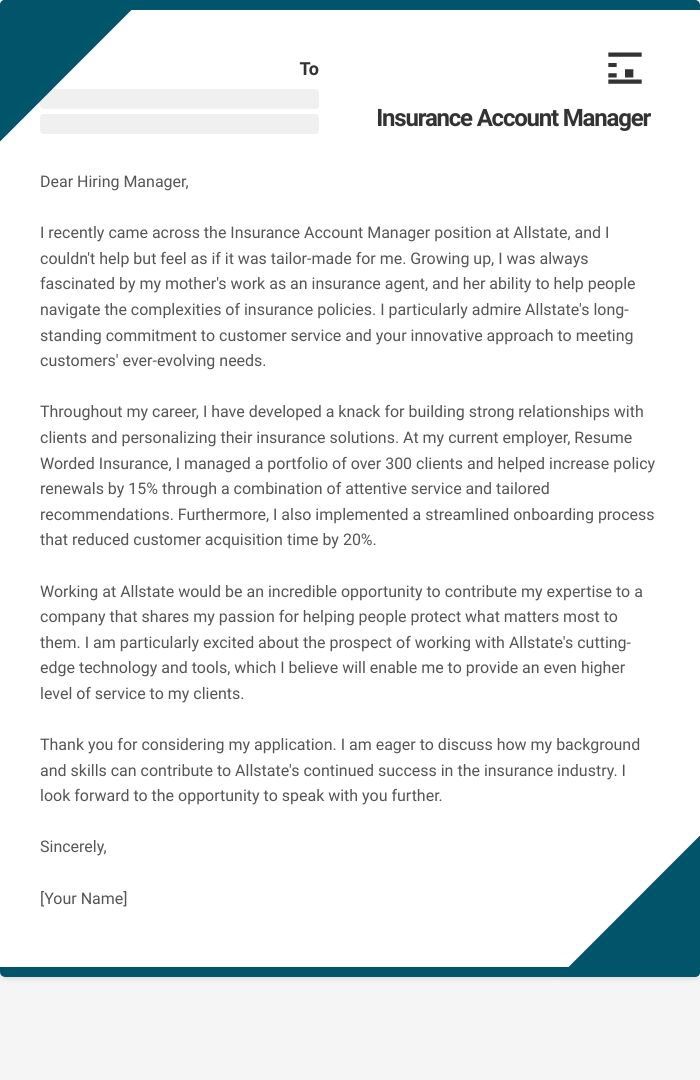
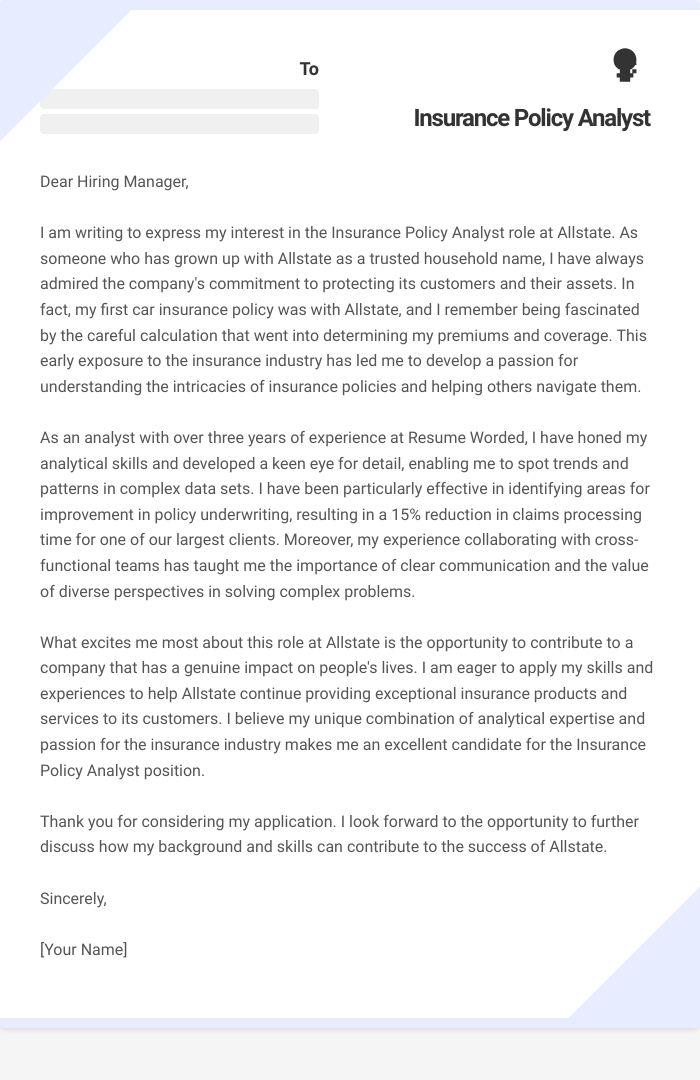
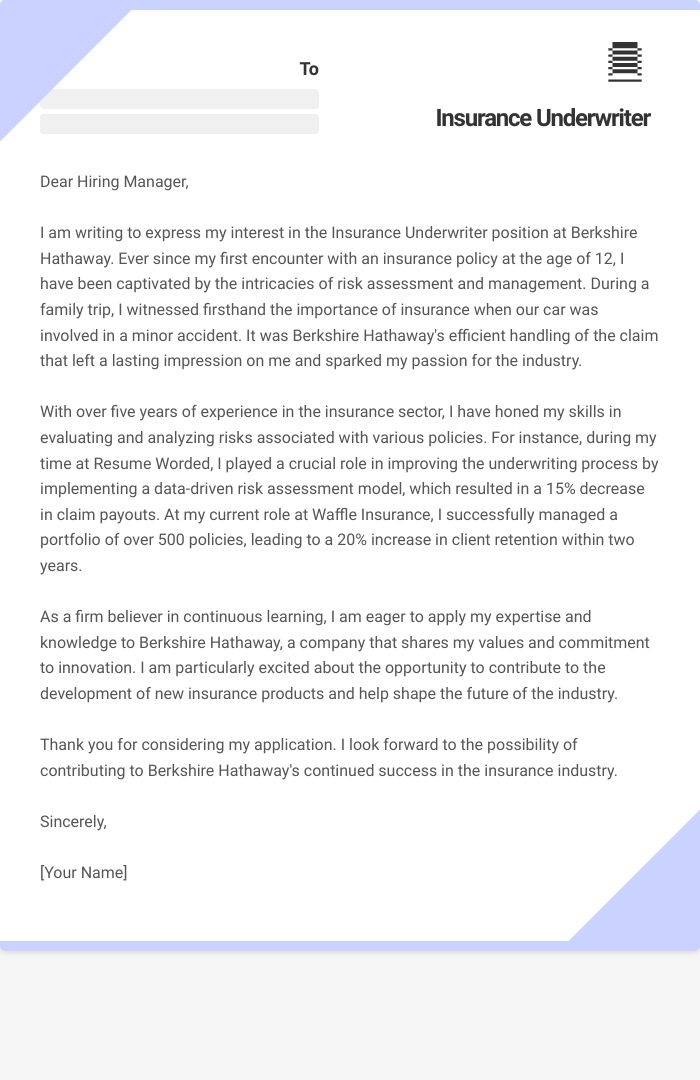
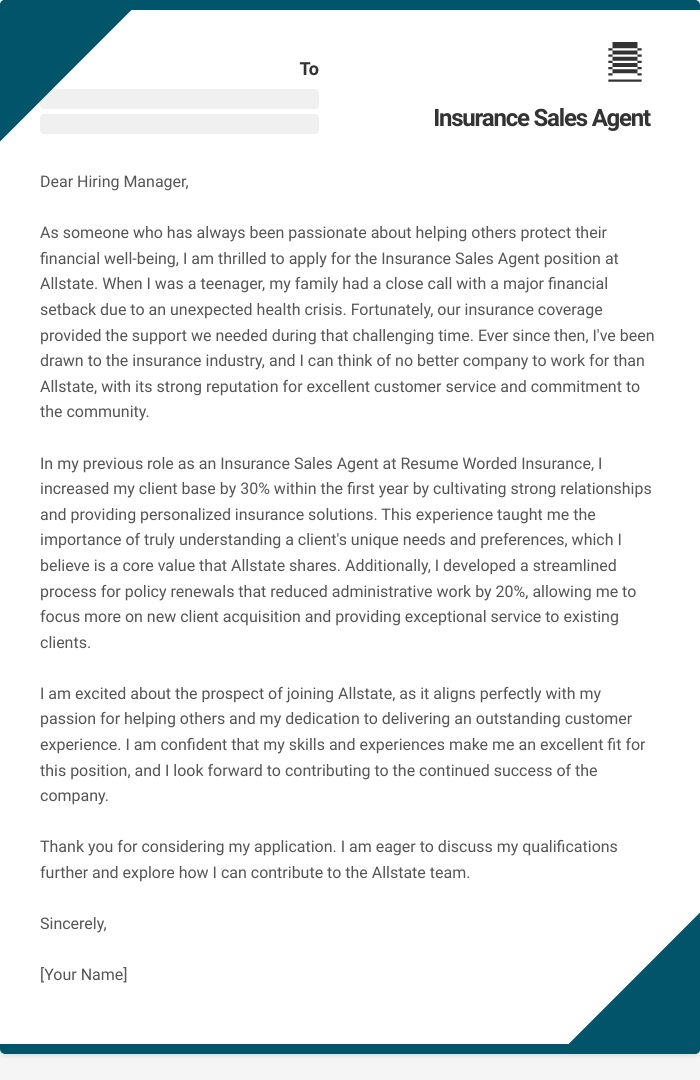
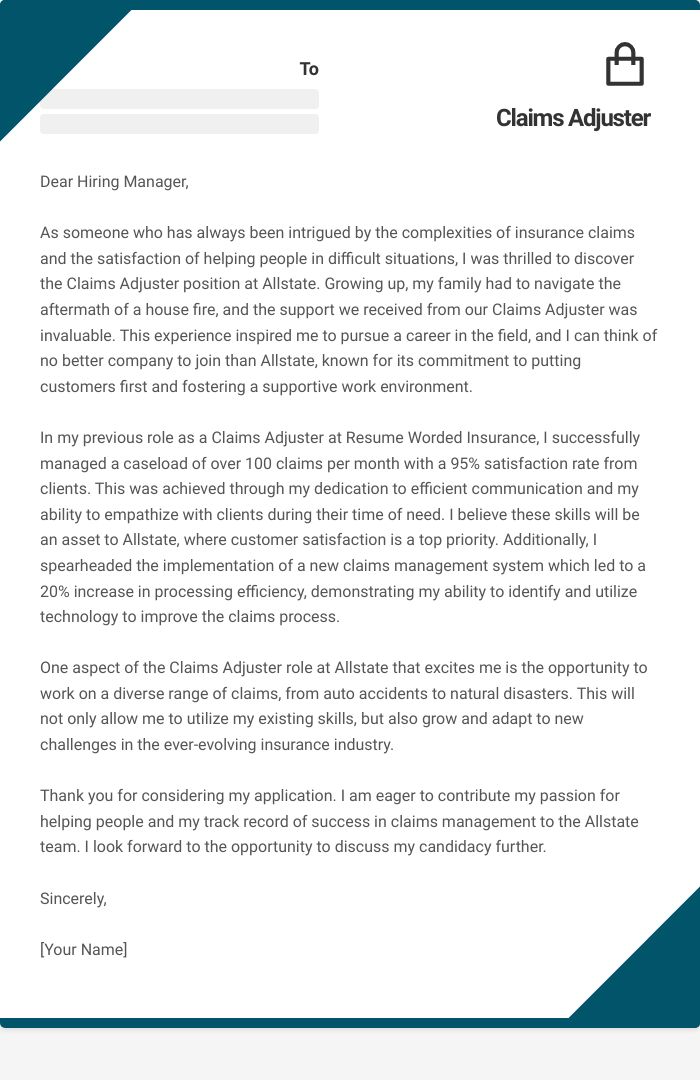
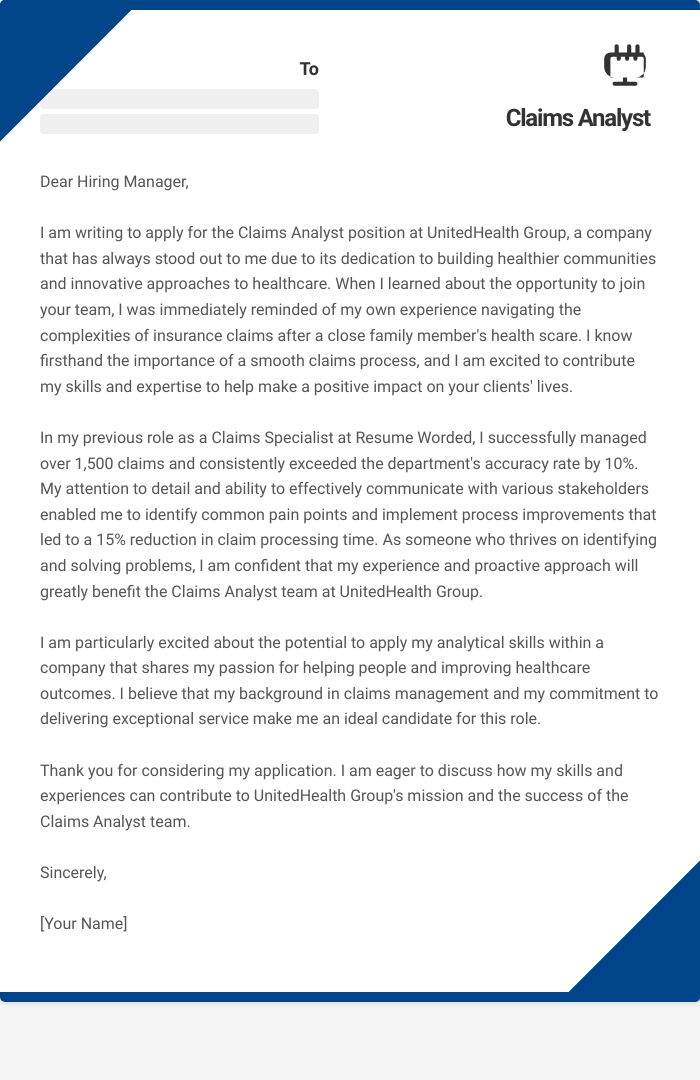
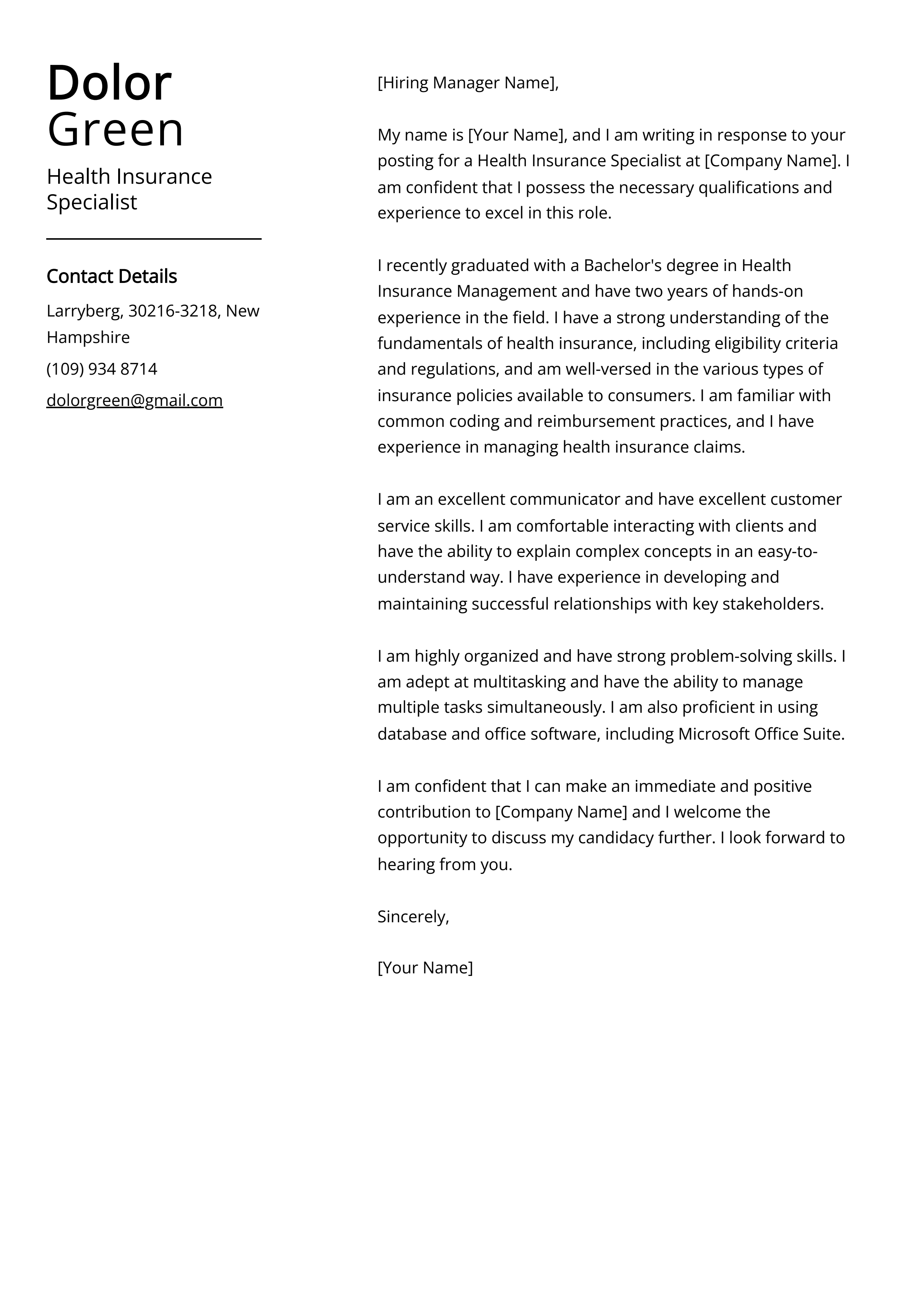
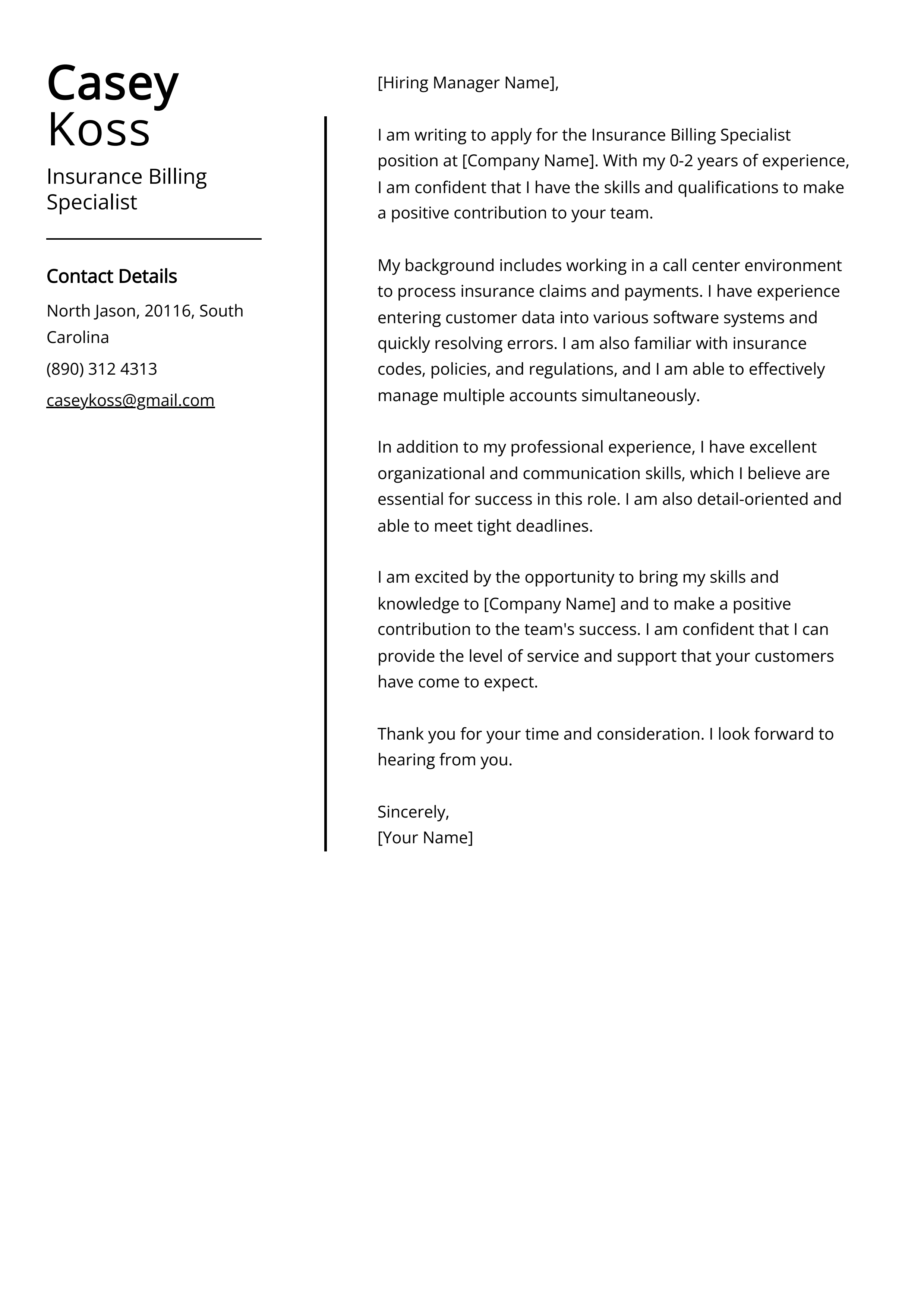
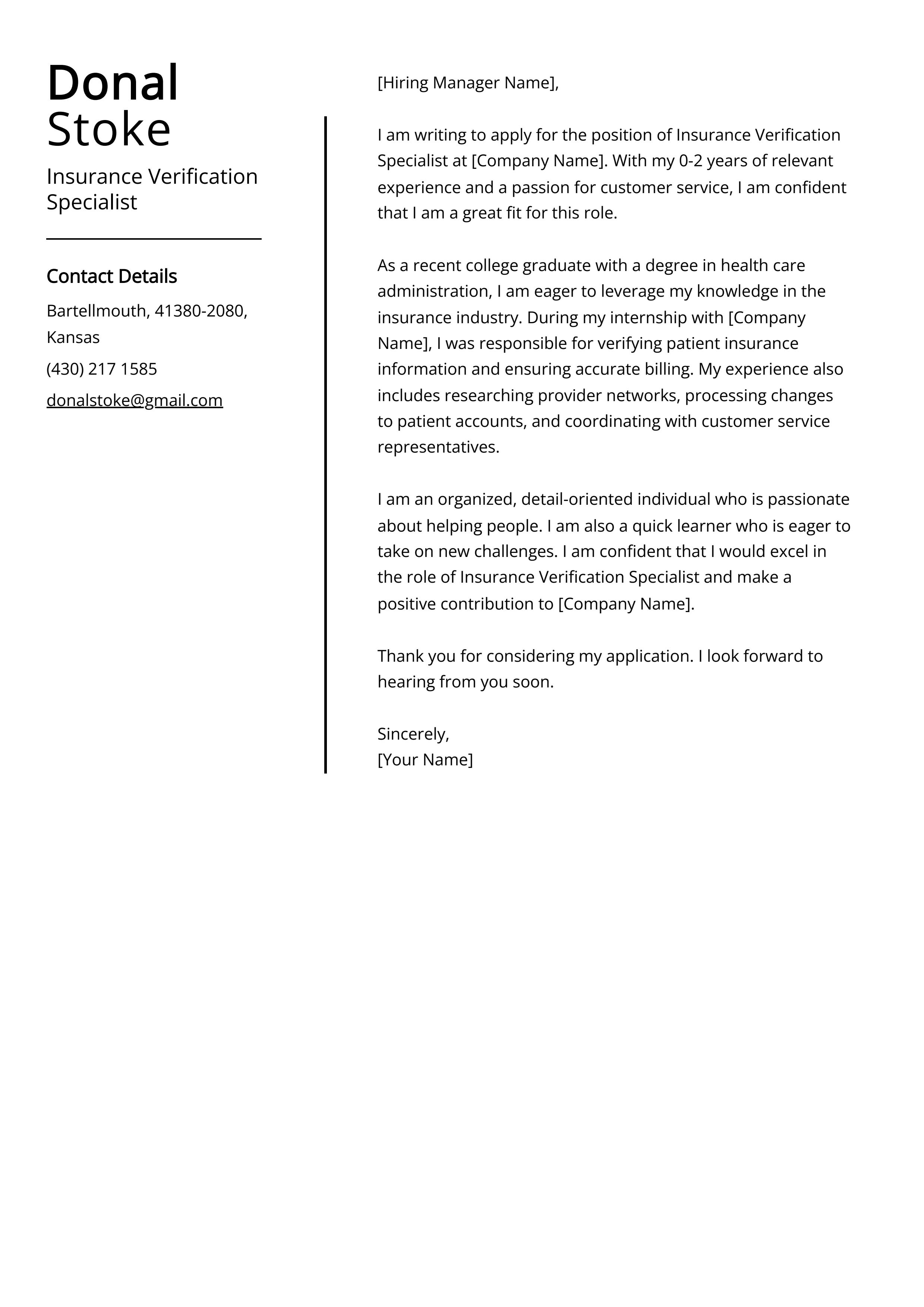
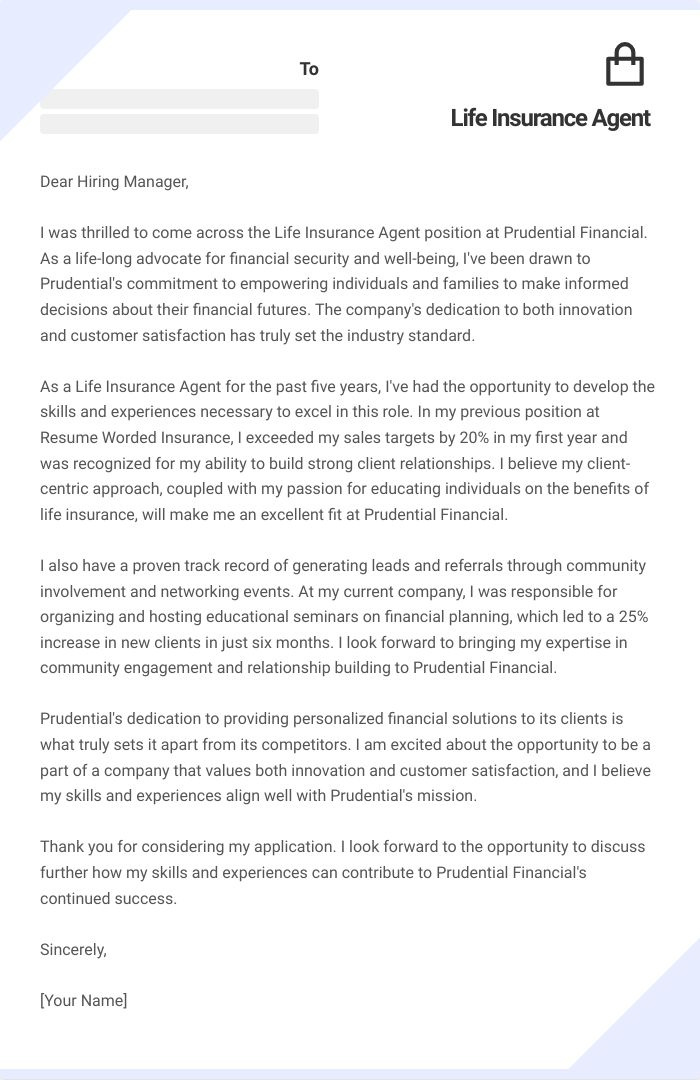
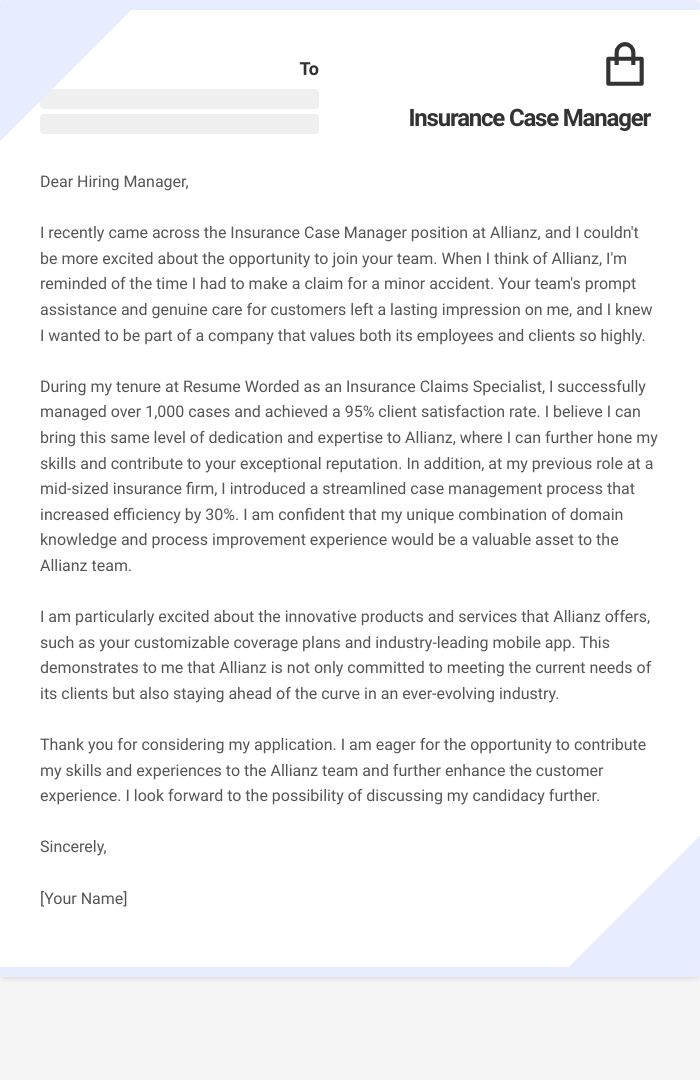
An insurance specialist cover letter is easiest to evaluate when its structure can be seen as well as described. Visual references can reveal how a heading, contact block, greeting, body paragraphs, and closing fit together on a page. They can also show how different insurance specialties communicate their priorities. The examples below include professional insurance-related letter layouts alongside historical cover-letter documents, allowing readers to compare formal document hierarchy, spacing, paragraph density, and the presentation of professional correspondence.
These visual references should be treated as design and structure references rather than text to reproduce. A strong insurance specialist cover letter should still be customized to the vacancy, the candidate’s actual background, and the employer’s expectations. Compare how the documents establish context, organize information, and maintain readability, then apply the useful structural principles to your own letter while replacing every example-specific detail with accurate information from your career.
Insurance Policy Analyst Cover Letter Example
Source: Resume Worded
Claims Analyst Cover Letter Example
Source: Resume Worded
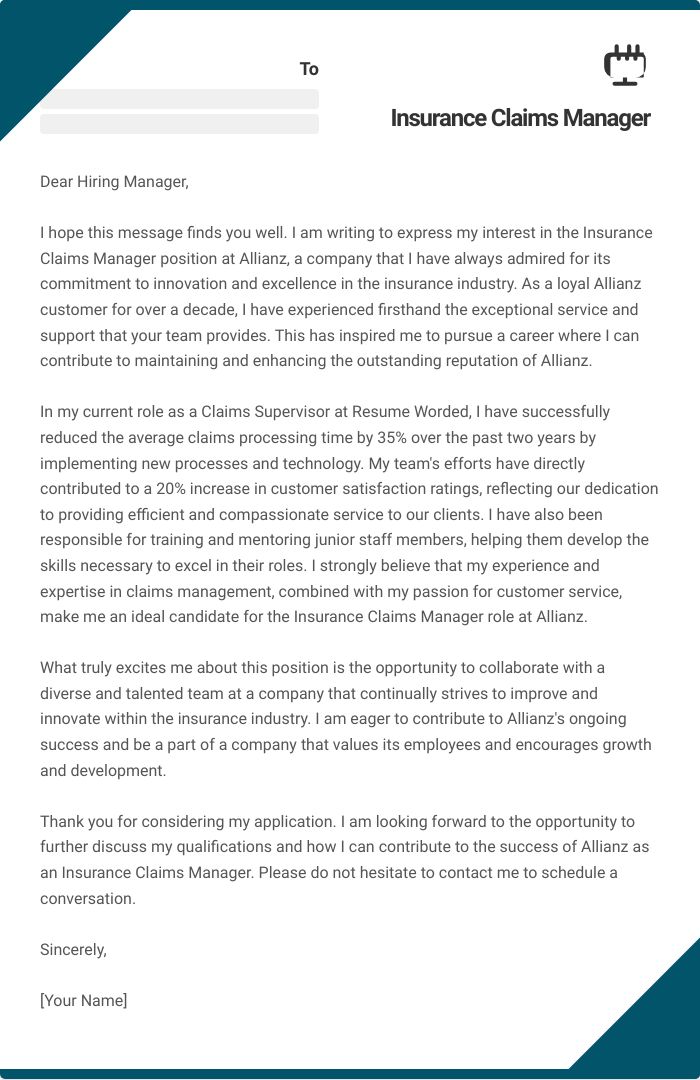
Insurance Claims Manager Cover Letter Example
Source: Resume Worded
Insurance Verification Specialist Cover Letter Example
Source: Resumaker.ai
Insurance Billing Specialist Cover Letter Example
Source: Resumaker.ai
1921 Application Cover Letter for Radio Station KQL
Source: Wikimedia Commons
Orders 31-3 Cover Letter
Source: Wikimedia Commons
Cover Letter for the Shop
Source: Wikimedia Commons
Contact 1965 Cover Letter 1
Source: Wikimedia Commons
