A marketing sponsor contribution Template is a structured document for presenting a sponsorship opportunity, defining what a sponsor is being asked to provide, and explaining what the sponsor receives in return. The contribution may involve money, products, services, media exposure, venue support, equipment, promotional inventory, or another agreed form of value. A strong template turns a vague sponsorship request into a clear business proposition by connecting the requested contribution with marketing objectives, audience reach, deliverables, timing, and measurable outcomes.
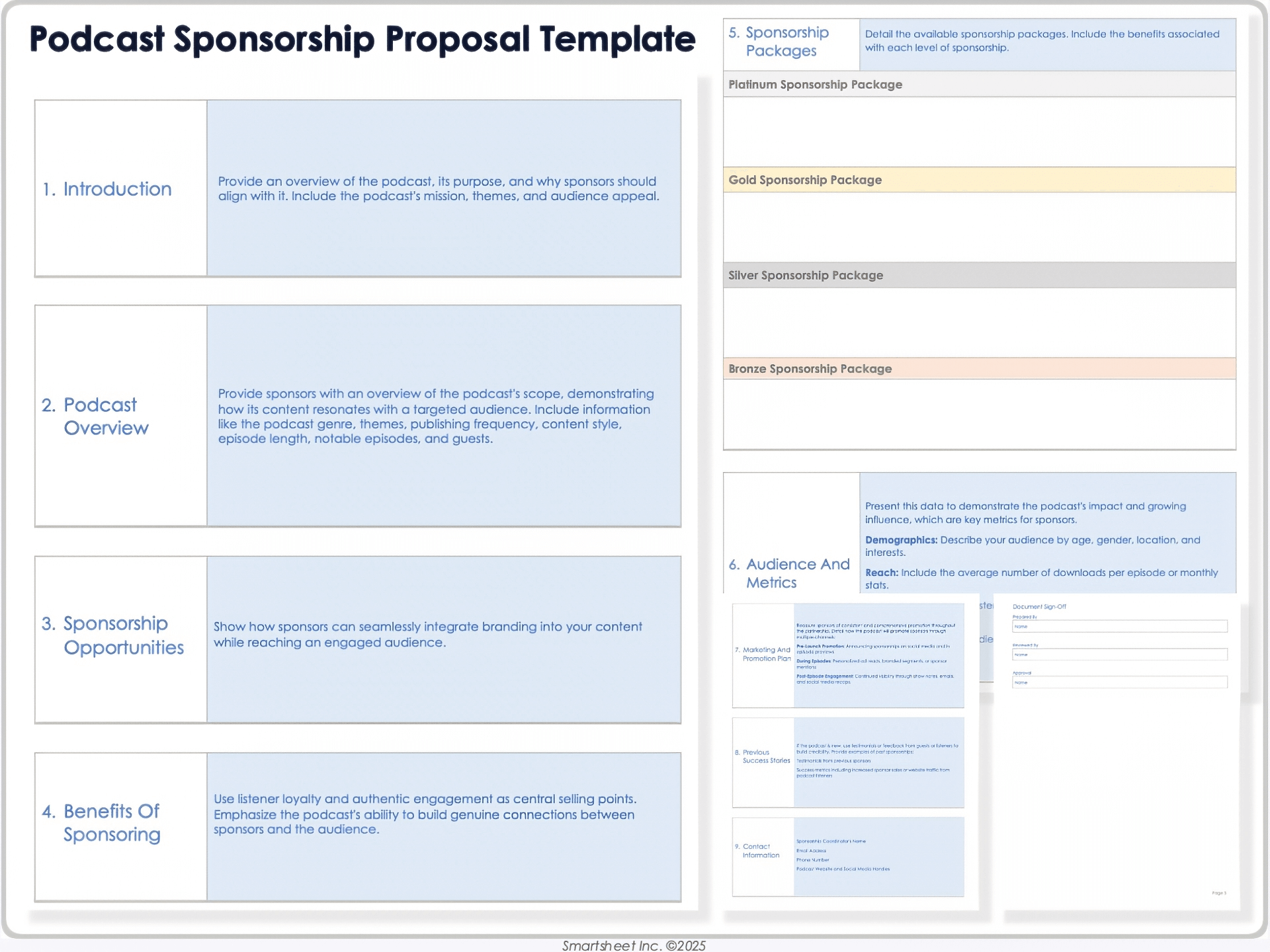
Searchers looking for a marketing sponsor contribution template are usually trying to solve a practical documentation problem. They may need a proposal for an event, media project, sports property, creator campaign, nonprofit initiative, product promotion, or business partnership. Current sponsorship resources commonly organize proposals around the opportunity, audience, sponsorship benefits, packages, marketing and promotion, previous results, and contact information. Smartsheet, for example, publishes sponsorship structures covering these areas across several document formats, while HubSpot and Jotform also show proposal structures built around event details, sponsor benefits, terms, and follow-up.
What a Marketing Sponsor Contribution Template Should Accomplish
The central purpose of the template is to make the exchange of value easy to understand. A sponsor should be able to see who is requesting support, what the project or event is, what contribution is needed, when the contribution is due, and what marketing exposure or partnership benefits are associated with it. The document should therefore work as both a persuasive proposal and an operational reference. It should reduce uncertainty rather than create another layer of questions.
The contribution section should distinguish between cash support and in-kind support. Cash support might fund media production, venue costs, promotion, equipment, prizes, logistics, or campaign activity. In-kind support could involve products, professional services, transportation, advertising inventory, accommodation, printing, technology, or other resources. Treating both categories clearly helps prevent misunderstandings about the actual value of a sponsorship.
A useful template also separates the sponsor’s promised contribution from the organizer’s promised deliverables. For example, a sponsor may provide a defined amount of funding and branded materials, while the organizer provides logo placement, social mentions, signage, media exposure, content integration, tickets, hospitality, or a sponsored activation. This distinction makes later tracking much easier because each party can verify whether its obligations were completed.
Core Sections to Include
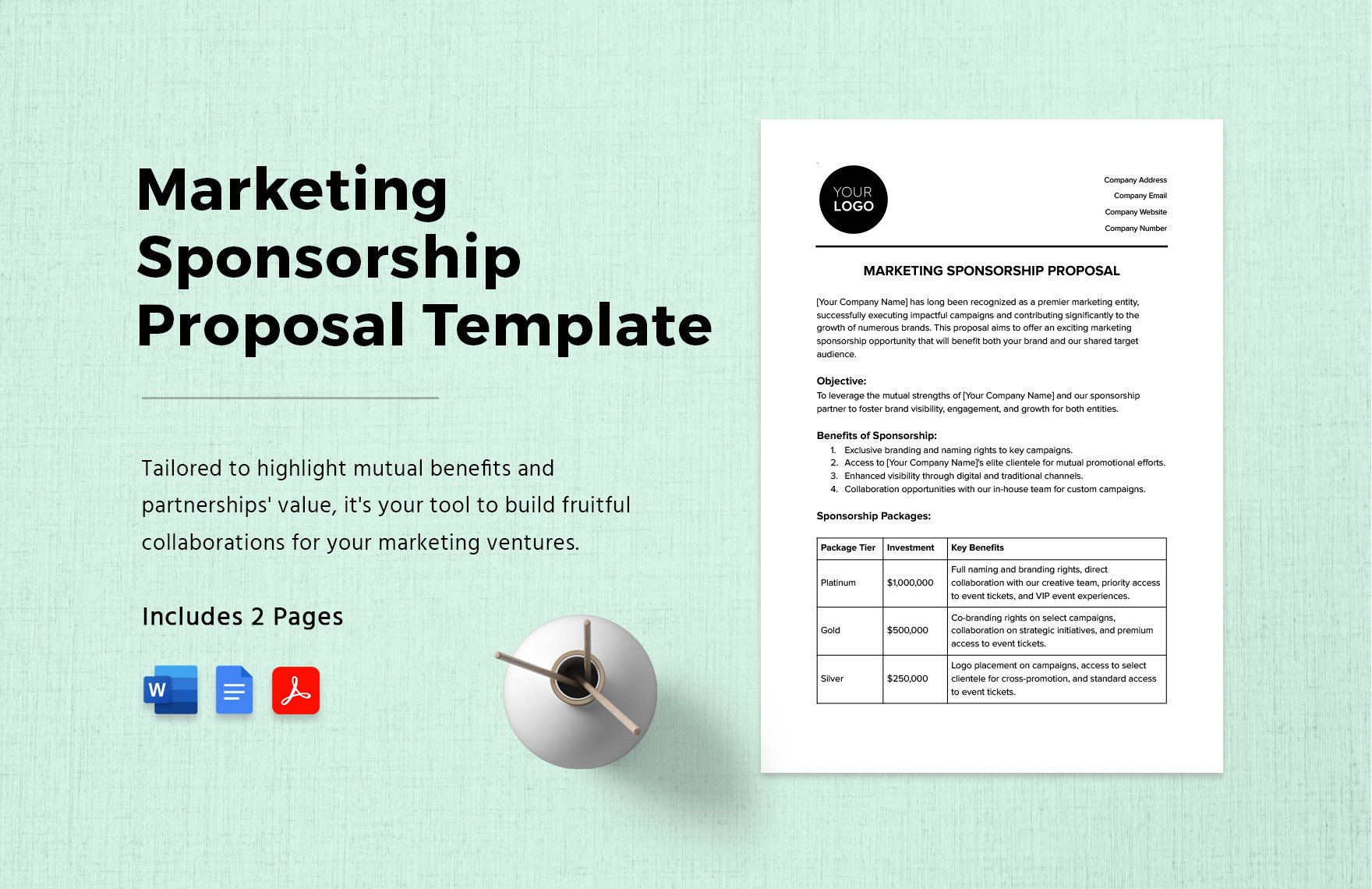
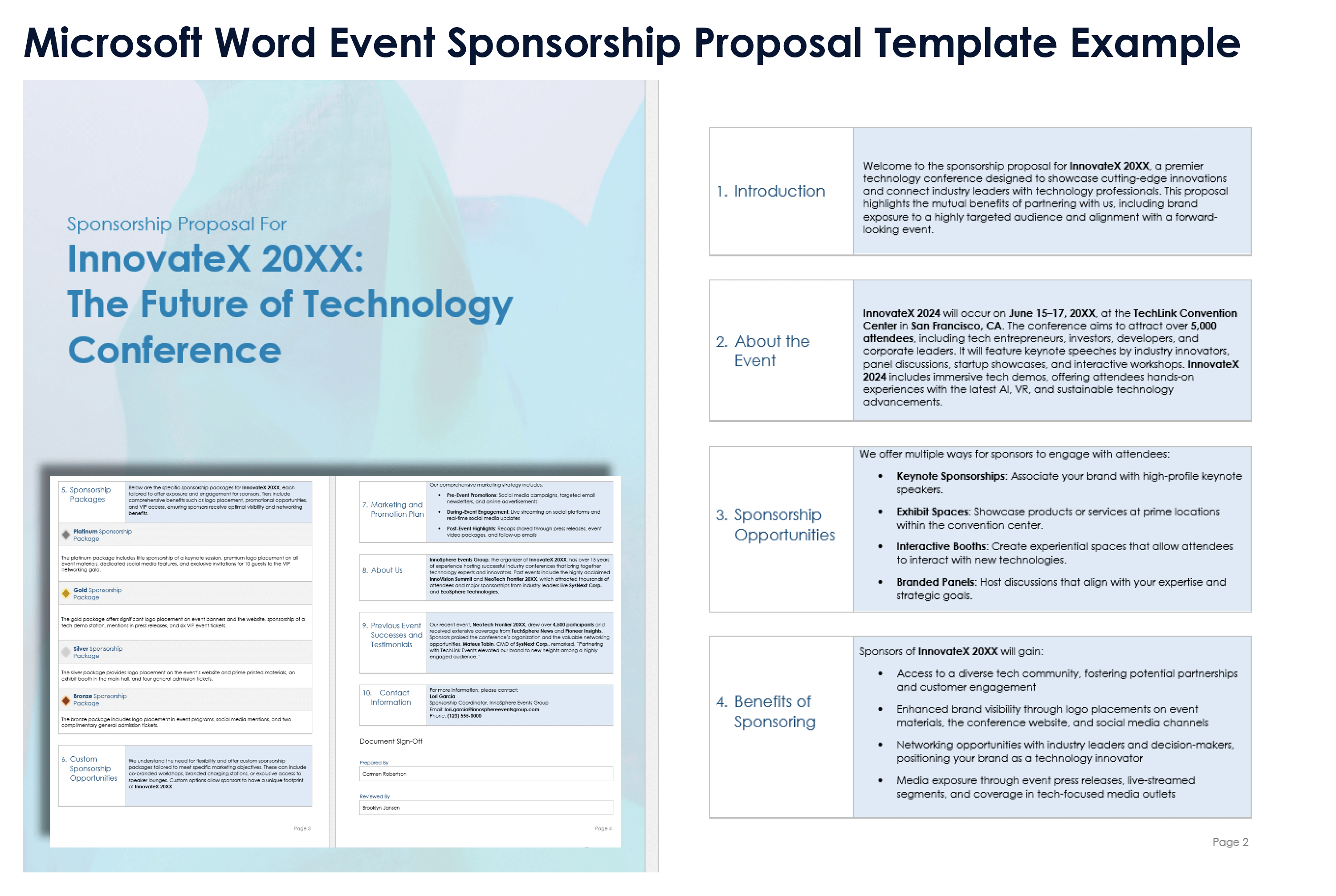
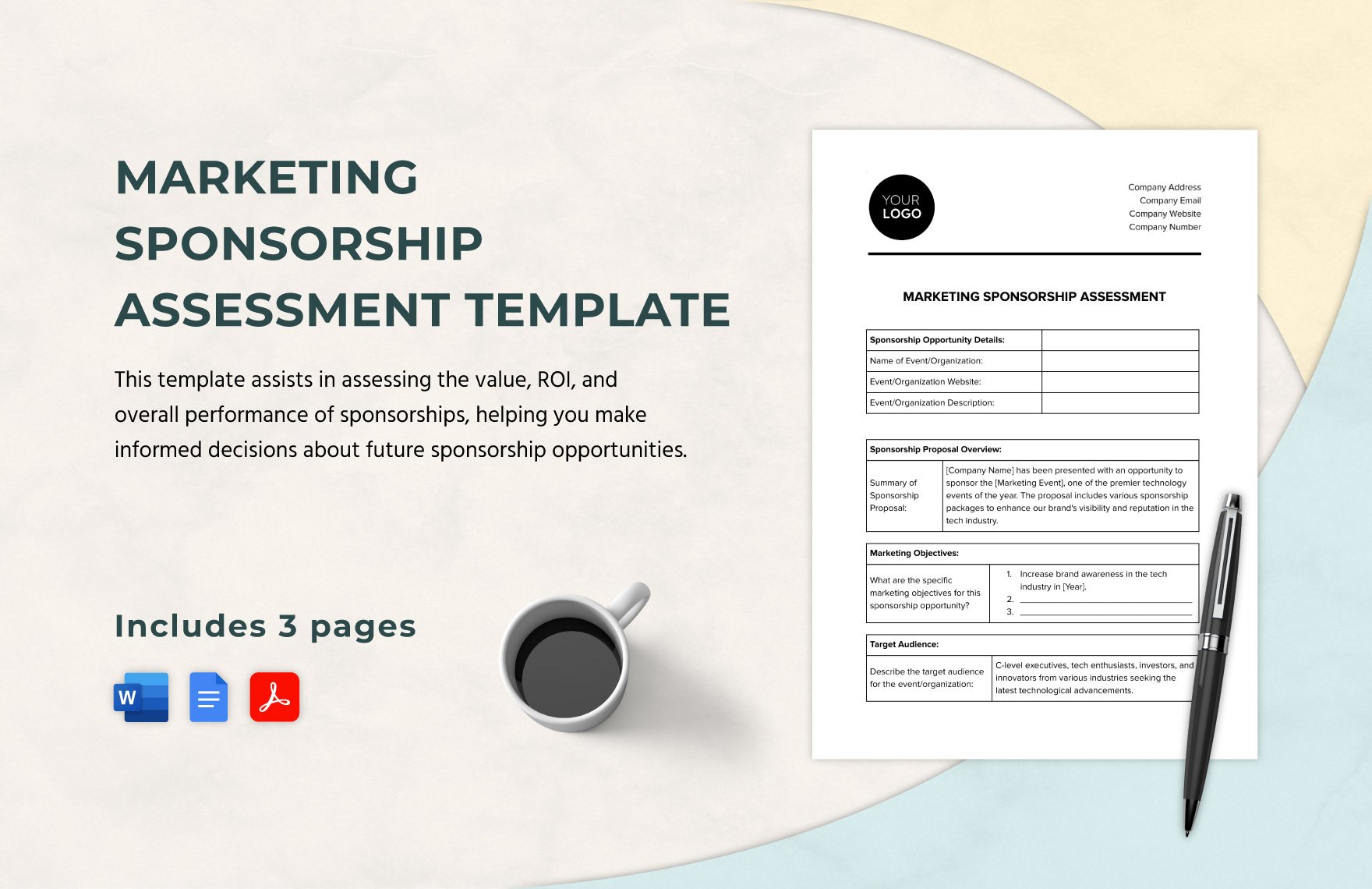
A practical template should begin with a concise overview. Include the name of the organization or project, the sponsorship opportunity, the relevant date or campaign period, the intended audience, and the reason the partnership is relevant. The opening should answer the sponsor’s first question: why does this opportunity deserve attention? Keep the explanation specific enough to establish commercial or strategic value without turning the first page into a long narrative.
The next section should describe the sponsorship opportunity in operational terms. State what is being supported, where the sponsor will appear, how long the partnership lasts, and what promotional channels are involved. If the opportunity covers an event, identify the event format and schedule. If it covers media, identify the content format, publishing period, distribution channels, and audience context.
The contribution section should then identify the requested value. A simple structure can include contribution type, amount or estimated value, delivery date, responsible contact, and any conditions attached to the contribution. If several tiers are offered, explain how each level changes the sponsor’s benefits. A tier system can be useful, but only when the differences are meaningful. Four packages with nearly identical benefits often create confusion rather than choice.

Organization and Project Profile
The organization profile should establish credibility without becoming a biography. Explain what the organization does, why the project exists, and why the audience is relevant to the sponsor. Include verified achievements when they genuinely support the pitch. Examples may include prior event participation, established distribution channels, recurring programming, recognized partnerships, or documented audience engagement.
For a new project, credibility can instead come from clarity. Explain the concept, planned schedule, target market, promotional strategy, and responsibilities. Do not invent previous results simply to make a new initiative appear established. A transparent statement that a project is new is more useful than unsupported performance claims.
The profile should also explain the relationship between the project and the sponsor’s likely marketing objectives. A sports property might be relevant to community visibility, a media partnership might support audience reach, and a business event might support industry positioning. The stronger the connection, the less the proposal feels like a generic request for money.
Defining the Sponsor Contribution
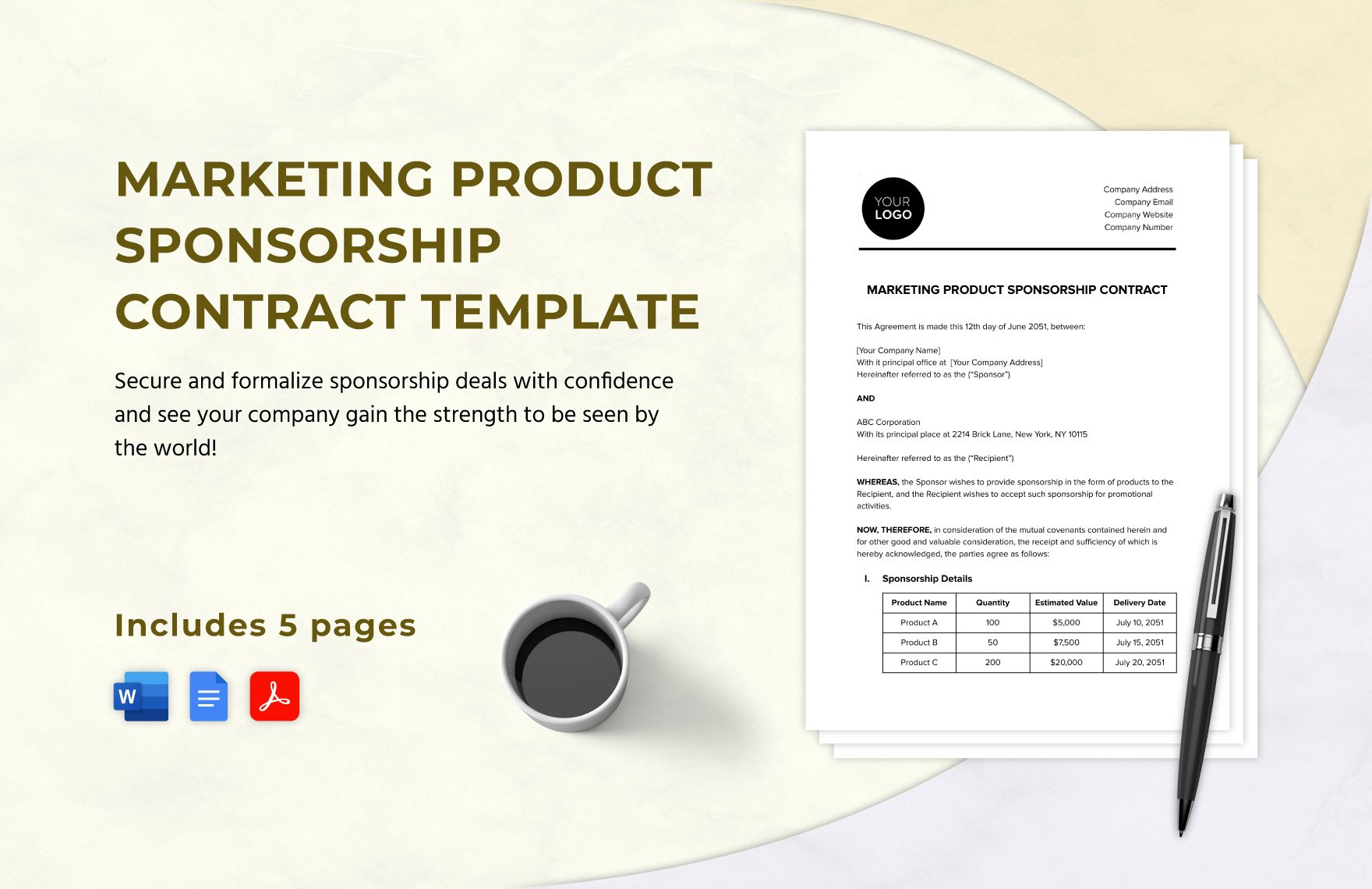
A contribution should be described with enough precision that another person could manage it without relying on an informal conversation. If the contribution is monetary, state the requested amount, payment schedule, currency, and relevant conditions. If the contribution is a product or service, identify the quantity, specifications, estimated value, delivery date, and delivery responsibility.
When the contribution has mixed components, divide them into separate lines. For example, a hypothetical partnership might involve a monetary contribution plus product support and promotional inventory. Each element should have its own description and estimated value. This makes the overall sponsorship easier to review internally and helps the organizer compare what has been promised with what has actually been received.
Do not confuse estimated value with guaranteed return. A sponsor contribution can be assigned a stated value, but exposure, engagement, or sales outcomes may depend on audience behavior and campaign conditions. The proposal should distinguish between deliverables, which the organizer controls, and performance outcomes, which may depend on external factors.
Marketing Benefits and Sponsor Deliverables
Sponsor benefits should be specific rather than vague. “Brand exposure” is broad; “logo placement on event signage, campaign landing pages, and selected promotional materials” is much clearer. Similarly, “social promotion” should ideally identify the type of content, channel, approximate schedule, and whether the sponsor receives approval rights or content guidelines.
A good contribution document can group benefits into categories such as branding, content, media, hospitality, audience engagement, digital promotion, physical presence, naming rights, product integration, and post-campaign recognition. The correct categories depend on the sponsorship property. A media partnership may emphasize content placement and audience exposure, while a motorsport partnership may emphasize vehicle branding, paddock visibility, hospitality, broadcast exposure, and promotional events.
Deliverables should also have ownership and timing. If the sponsor logo must be supplied by a certain date, say so. If promotional materials require approval, identify the approval window. If the organizer promises a report after the campaign, identify the expected reporting period and the metrics that will be included. These details transform the template from a sales document into a working partnership record.
Sponsorship Packages and Contribution Levels
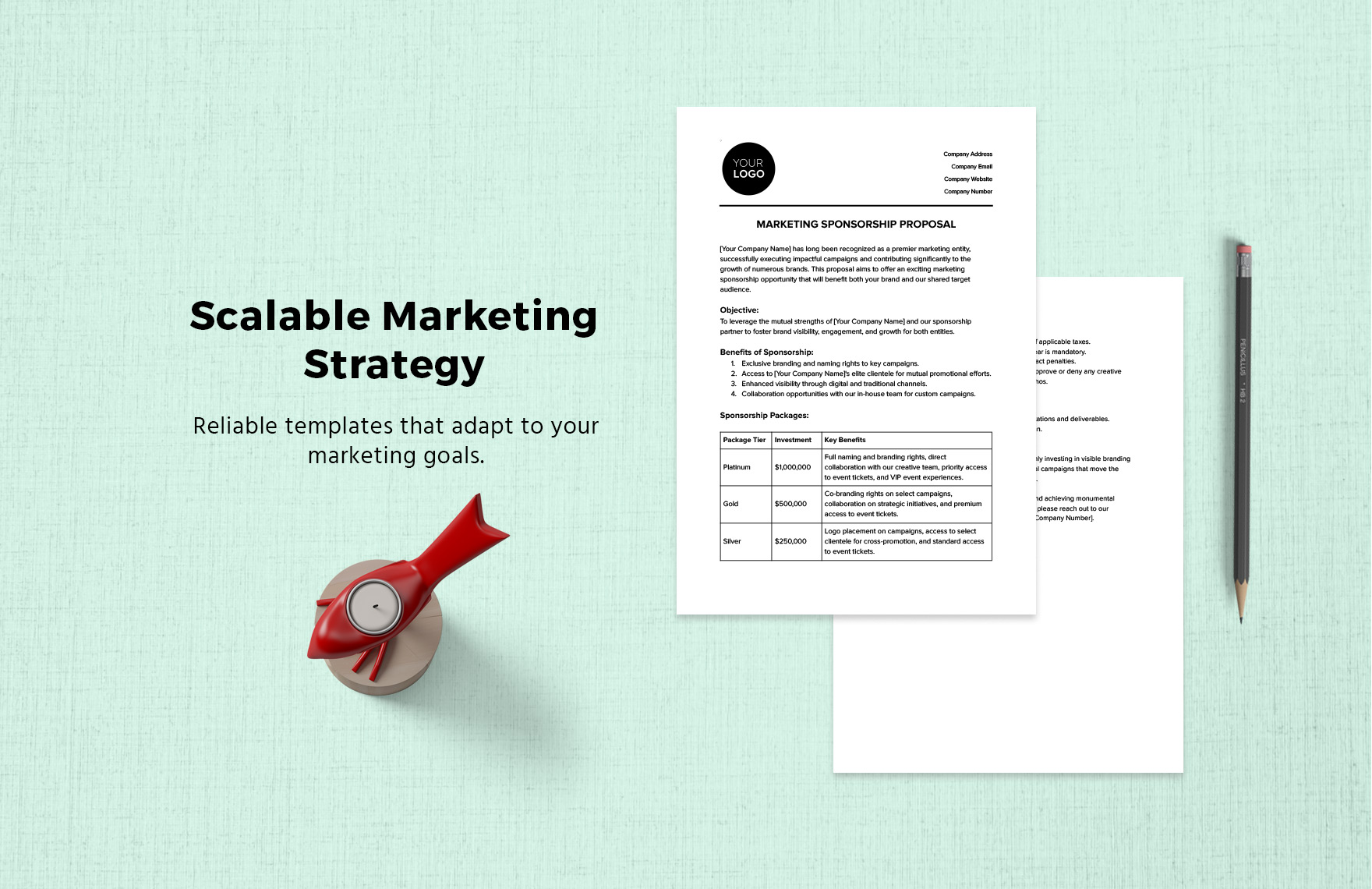
Package levels are useful when different sponsors have different budgets or objectives. A simple structure might contain entry, standard, premium, and headline levels, but the names are less important than the differences between them. Each level should have a clearly stated contribution and a corresponding set of benefits.
For instance, an entry-level package might focus on logo recognition and selected digital mentions. A middle package could add branded content and event signage. A higher package might include a dedicated activation, hospitality, speaking opportunity, or stronger media placement. A top package could include category exclusivity or naming rights when those rights are genuinely available.
The package design should avoid promising unlimited exposure. Instead, define the inventory being offered. If the sponsor receives five social mentions, one branded article, two event banners, and a specified number of tickets, write those deliverables explicitly. This protects both sides and makes post-campaign reporting much more objective.

Choosing the Right Document Format
The same sponsorship information can be structured in different formats depending on the workflow. A spreadsheet is useful when contribution amounts, package comparisons, inventory, payment stages, or deliverable tracking are central. A document format is often better for a narrative proposal that explains the opportunity and partnership value.
People searching for a marketing sponsor contribution template excel are often looking for a working financial or tracking structure rather than a polished pitch alone. In that case, useful fields include sponsor name, package level, contribution type, committed amount, received amount, balance, payment date, deliverables, responsible person, and reporting status.
For a document that will be reviewed by several stakeholders, marketing sponsor contribution template pdf can describe the desired output format while the editable source remains separate. A Word-based structure can be useful for detailed narrative proposals, and marketing sponsor contribution template word may suit teams that need formal editing, internal review, and tracked revisions.

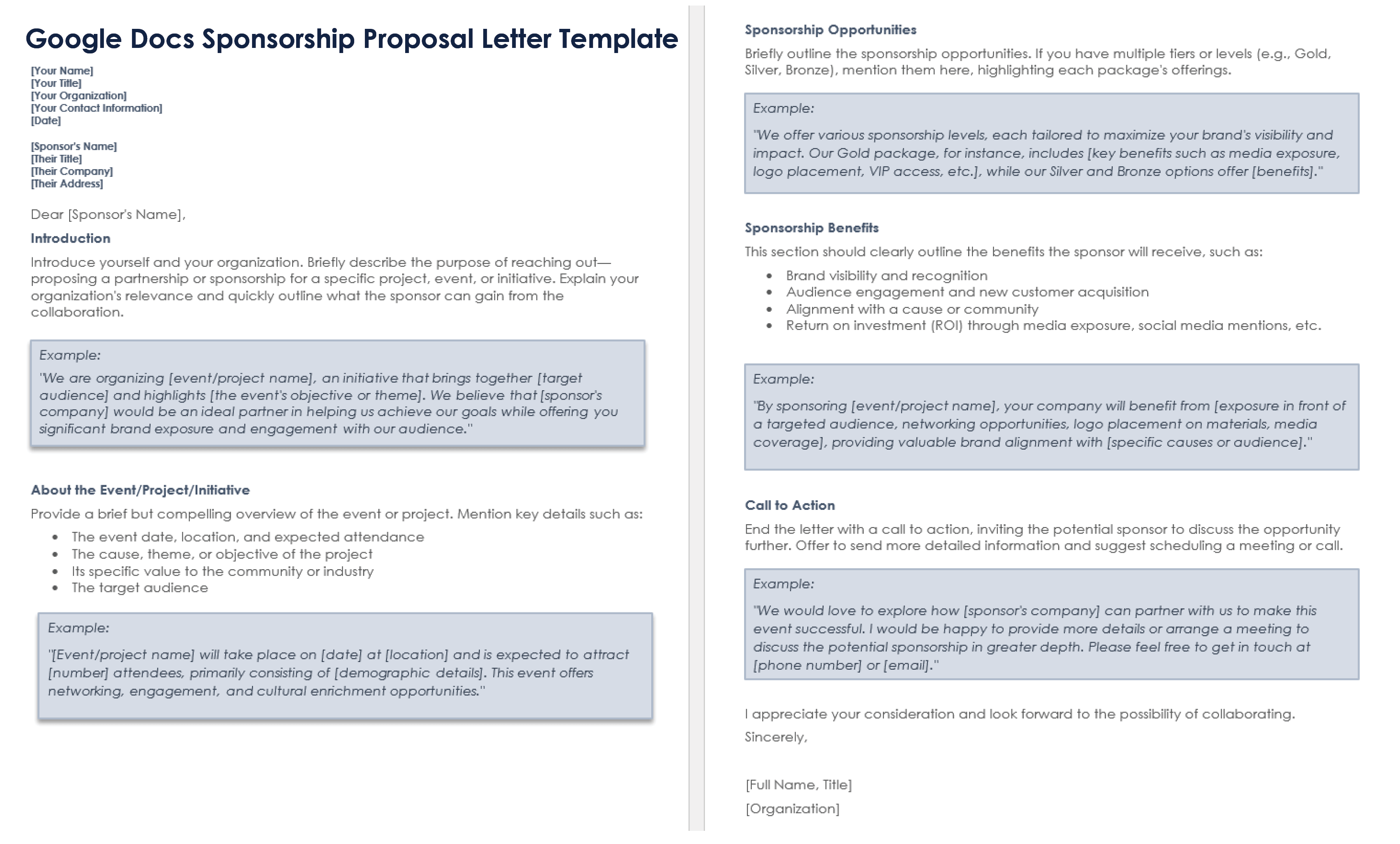
Collaborative teams may also prefer marketing sponsor contribution template google docs when several contributors need to review wording, update figures, or refine sponsor benefits. The format matters less than maintaining one controlled version of the proposal. Smartsheet’s Google Docs examples show how sections for introduction, event details, sponsorship opportunities, benefits, packages, and promotion can be organized into a shared proposal structure. :contentReference[oaicite:1]{index=1}
A blank sponsor form template is more useful when the sponsor is expected to provide information directly. In that case, fields may include company name, contact person, preferred sponsorship level, contribution type, contribution amount, branding requirements, invoice information, approval contact, and signature details. A proposal and a sponsor intake form serve different purposes and should not be treated as identical documents.
Forms, Requests, and Sponsorship Agreements
A sponsorship form template pdf can be useful when the final document needs a stable presentation format for review or recordkeeping. A form should capture the information necessary to evaluate and confirm the sponsorship, while a proposal should persuade the sponsor that the opportunity is worth considering. Combining the two can work for small partnerships, but larger programs usually benefit from separate proposal and confirmation documents.
A template for sponsorship request should focus on the reason for the request, the requested contribution, the project need, the sponsor benefit, and the proposed next step. The request should not make the sponsor calculate the value on its own. If the organizer wants financial support for a particular activity, explain how the contribution supports that activity and what promotional or partnership value is connected to it.
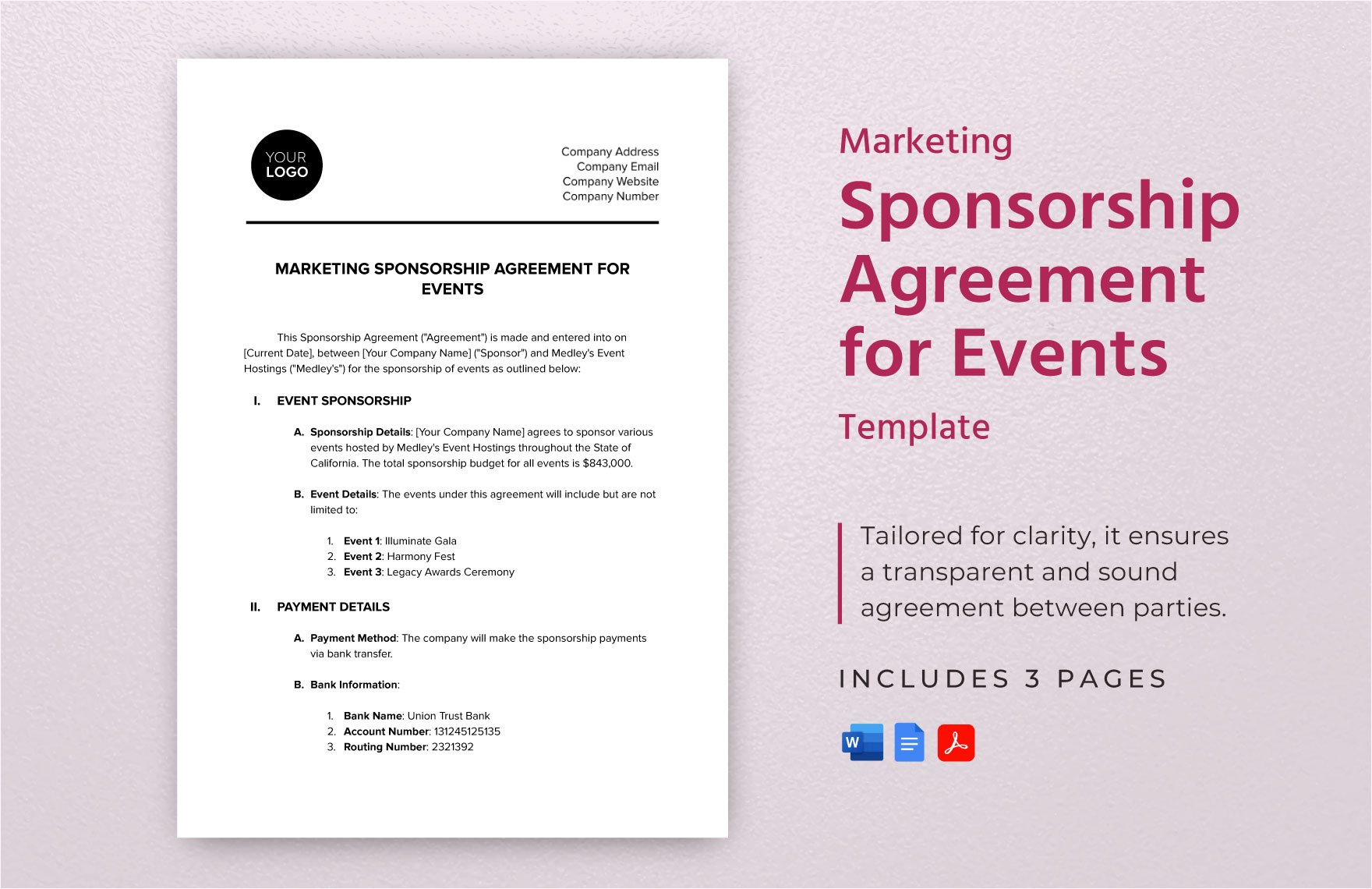
Once both parties agree, the commercial relationship may require a separate agreement. A sponsorship contract template for media can address media inventory, campaign duration, content rights, approval procedures, brand usage, payment terms, cancellation provisions, reporting, and responsibilities. Contract language should be reviewed for the actual jurisdiction and circumstances rather than treated as automatically valid simply because it appears in a template.
Media, Motorsport, and Specialized Sponsorships
Media sponsorship requires additional precision because the sponsor is often purchasing association with an audience, content series, channel, or distribution environment. The proposal should identify the media property, content format, publishing schedule, audience characteristics, sponsor placement, editorial boundaries, promotional inventory, and reporting method. A sponsor should understand exactly where the brand will appear and what control each party retains.
Motorsport proposals have a similar need for detailed inventory. A motorsport sponsorship proposal template may need sections for vehicle branding, team branding, driver or ambassador appearances, trackside signage, hospitality, digital content, race-weekend activation, merchandise, media relations, and season-long promotion. The contribution should also distinguish one-event support from a broader series or season partnership.
Specialized sponsorships work best when the contribution is connected to a specific marketing asset. Instead of presenting sponsorship as a general funding request, identify the property being supported and the marketing rights associated with it. This approach makes the proposal easier for a brand manager to compare with other partnership opportunities.

Using Presentation Formats for Sponsor Pitches
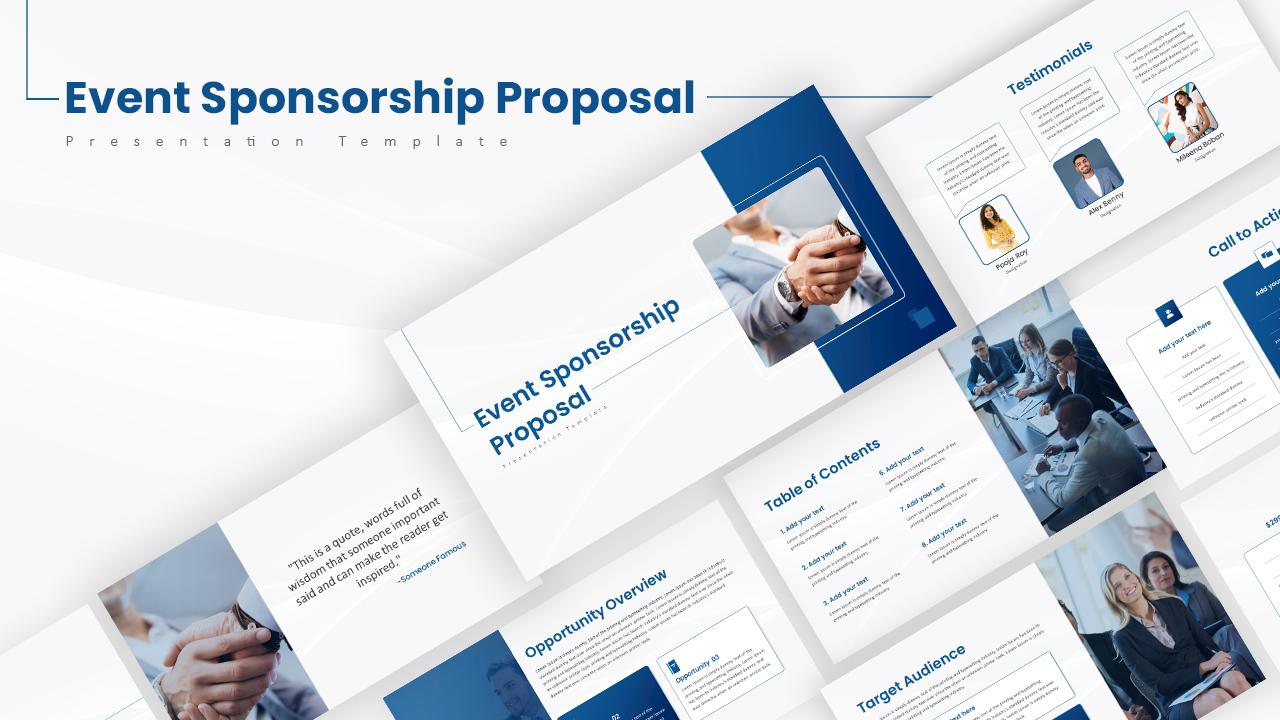
A presentation can be useful when the sponsorship needs to be explained verbally to a brand team, agency, event committee, or executive group. A sponsorship proposal ppt template can organize the story into a sequence such as opportunity, audience, marketing value, contribution request, sponsorship packages, activation, timeline, measurement, and next steps.
Presentation slides should not simply reproduce every paragraph from a proposal document. The slide format should emphasize the most important decisions and evidence. Use concise statements, clear contribution levels, visual package comparisons, audience metrics, campaign timelines, and examples of sponsor placement. Detailed terms can remain in the accompanying document.
For a presentation-based pitch, the sponsor should understand the financial request early enough to evaluate it, but the contribution should be presented alongside value. A price without context looks like a cost. A price connected to defined inventory, audience relevance, activation opportunities, and reporting becomes part of a partnership proposition.
How to Build the Contribution Worksheet
The working worksheet should begin with a sponsor record. Include sponsor name, contact person, email, phone, organization, sector, partnership owner, and status. Then add the commercial information: package, contribution type, committed value, payment schedule, invoice status, received value, and outstanding amount. These fields create a basic audit trail for the sponsorship.
The next group of fields should track deliverables. Examples include logo placement, social mentions, sponsored content, event signage, hospitality, product placement, speaking rights, digital exposure, media coverage, and post-campaign reporting. Each deliverable can have a status such as planned, submitted, approved, published, or reported. The exact status system should match the team’s workflow.
Finally, add a reporting area. Record the evidence that can verify completion, such as published URLs, campaign dates, photographs of signage, copies of promotional materials, media placements, attendance records, or platform metrics. The purpose is not to promise a particular result but to demonstrate what was delivered and what was observed during the partnership.
Practical Solution
Start by writing the sponsorship opportunity in one sentence. State what is being supported, who the audience is, and why the sponsor is relevant. Then define the contribution precisely. Separate money from products or services, assign an estimated value where useful, and specify when each contribution is expected. This first pass creates the commercial foundation of the document before promotional language is added.
Next, build the sponsor value around tangible deliverables. List every important placement, activation, content opportunity, hospitality benefit, and recognition item. Give each deliverable a quantity or defined scope whenever possible. If the sponsor receives a package, make the differences between package levels obvious. Then connect each benefit to a marketing objective such as awareness, audience engagement, community visibility, product trial, content association, or relationship building.
After the proposal is written, perform a consistency review. Confirm that the contribution amount matches the package, the package matches the promised deliverables, the dates are consistent, and the contact details are correct. Check that claims about audience reach or previous results are supported by actual records. Remove vague promises that cannot be verified. Finally, create a separate tracking sheet or working record so the signed proposal does not become the only place where sponsorship obligations are managed.
For recurring sponsorships, review the template after each campaign. Keep sections that helped sponsors make decisions and revise sections that generated repeated questions. Over time, the document can become a standardized internal framework while still being customized for each sponsor. The strongest version is not necessarily the longest one; it is the version that lets a sponsor understand the opportunity, contribution, benefits, responsibilities, and next steps without having to infer missing information.
Common Mistakes to Avoid
One common mistake is focusing on what the organizer needs while giving too little attention to what the sponsor wants to achieve. A sponsorship is a partnership proposition, not merely a request for funding. The document should explain why the sponsor’s audience, brand positioning, campaign objectives, or community priorities align with the opportunity.
Another mistake is presenting unsupported audience figures. If the proposal states reach, impressions, attendance, subscriber counts, engagement, or media coverage, the organizer should be able to explain where the figures came from and what period they cover. When a number is a projection rather than a verified historical result, label it as a projection.
A third mistake is leaving contribution terms vague. Phrases such as “support us,” “provide marketing assistance,” or “help with promotion” do not establish a clear obligation. Replace them with defined contribution types, values, quantities, dates, and responsibilities. Precision protects the relationship because both sides can see what was actually agreed.
How to Measure Sponsorship Performance
Measurement should begin with the deliverables promised in the proposal. If the agreement includes branded placements, document where and when they appeared. If it includes content, record publication dates and distribution channels. If it includes event signage, retain visual evidence. If it includes digital promotion, preserve the relevant campaign records.
Performance metrics can then be organized into categories such as exposure, engagement, participation, traffic, leads, content interaction, media coverage, or other outcomes relevant to the sponsor. Not every sponsorship should use the same metrics. A community initiative may prioritize participation and local visibility, while a media partnership may emphasize audience exposure and content engagement.
A post-campaign report should distinguish between delivery evidence and business outcomes. Delivery evidence shows what the organizer provided. Business outcomes describe what happened afterward. This distinction creates a more credible reporting process because it does not imply that every commercial result was solely caused by the sponsorship.
Reviewing and Customizing the Template
Before sending a proposal, customize the opening so the sponsor sees relevance immediately. Replace generic descriptions with the actual project name, audience, campaign dates, sponsor category, and proposed partnership. A reusable structure is valuable, but the persuasive content should reflect the specific sponsor rather than looking like a document sent unchanged to every company.
Review the visual hierarchy as well. Contribution figures, sponsorship levels, major benefits, dates, and next steps should be easy to locate. Supporting detail can remain deeper in the document. The goal is not to make the proposal visually complex; it is to make the important decisions easy to find.
Finally, confirm that the final version is internally consistent with the commercial agreement. The proposal, contribution worksheet, invoice details, sponsorship inventory, and reporting plan should use the same package names and contribution values. When those records disagree, even a well-designed sponsorship document can create unnecessary friction.
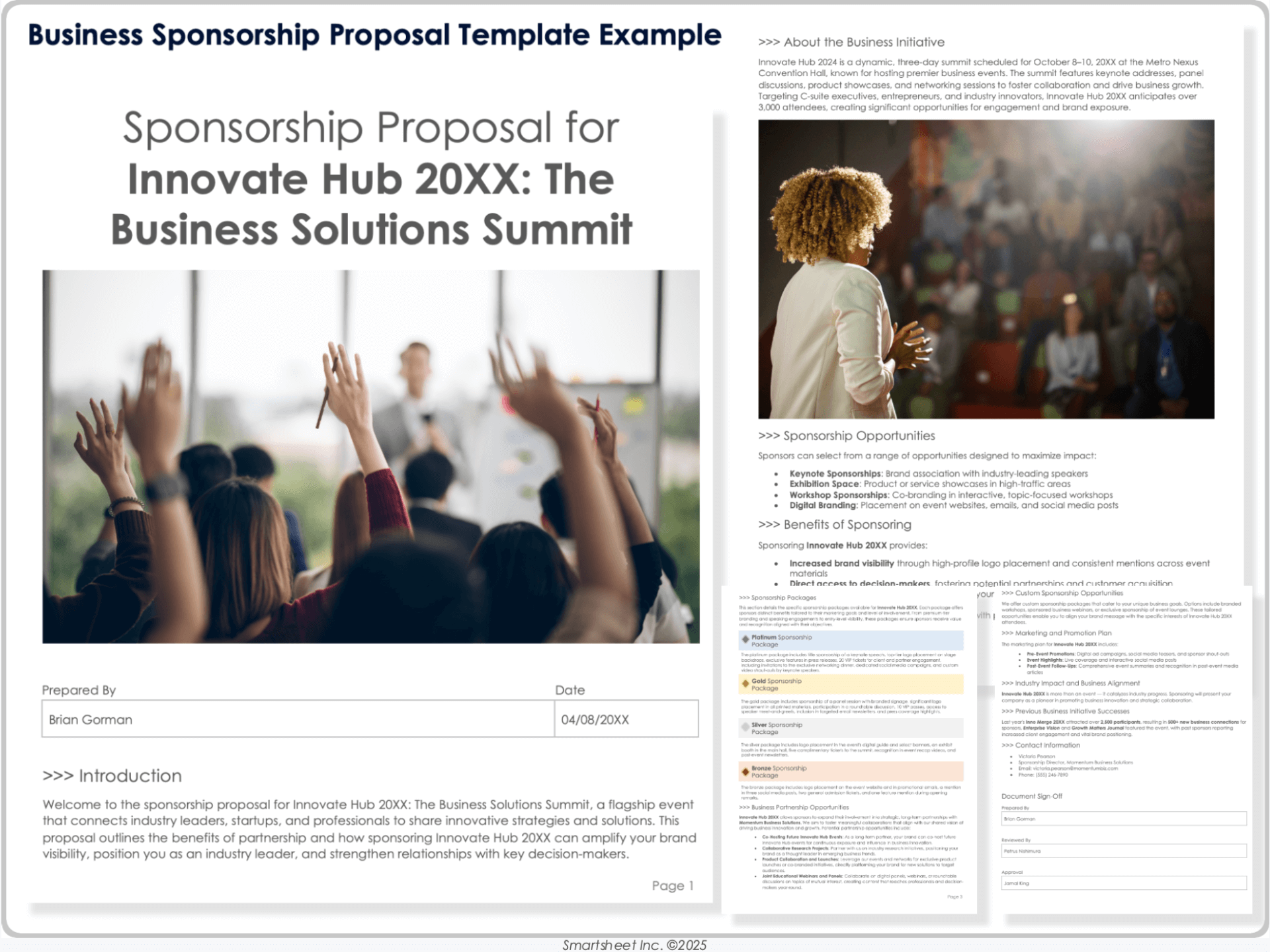
Reference Examples
A marketing sponsor contribution Template is easiest to evaluate when its structure can be compared with real sponsorship proposal layouts. Useful visual references typically show how an opportunity is introduced, how sponsor benefits are organized, how contribution levels are presented, and how marketing deliverables are connected to the partnership. Looking at several formats also helps reveal which elements belong in a narrative proposal, which belong in a contribution worksheet, and which belong in a formal agreement. The most useful references are not necessarily the most elaborate; they are the ones that make the sponsor’s decision, obligations, and expected value clear.
The following examples provide different visual approaches to the same central problem: presenting sponsorship value in a structured, professional form. Some emphasize package tiers, some focus on media or event opportunities, and others show how contribution terms and promotional benefits can be arranged on a single page or across a presentation. Use these references to compare information hierarchy, section order, contribution presentation, and sponsor-facing clarity. They should be treated as visual references rather than universal formats, because the correct structure depends on the project, sponsor relationship, contribution type, and governing agreement.
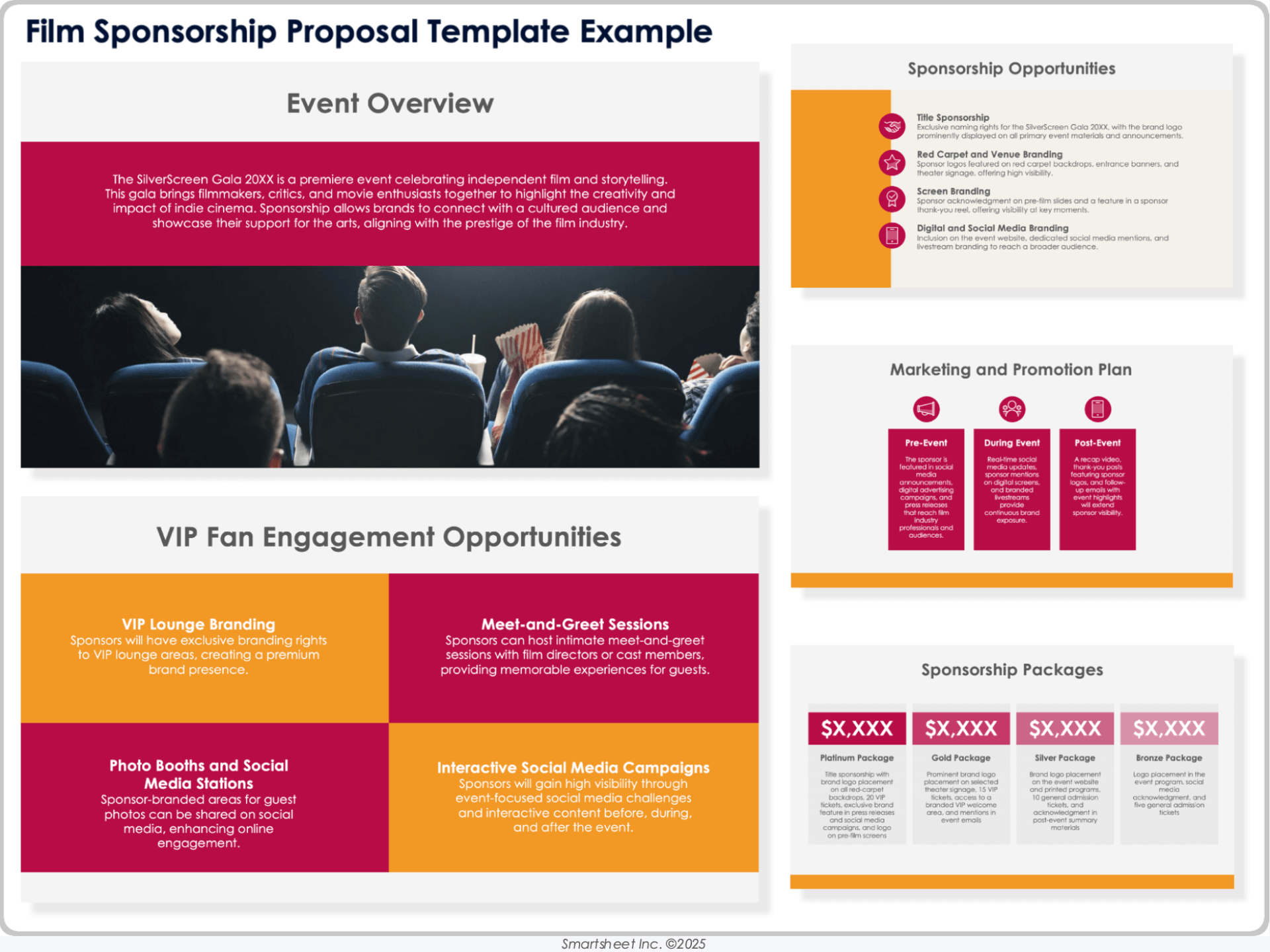
Film Sponsorship Proposal Template Example
Source: Smartsheet
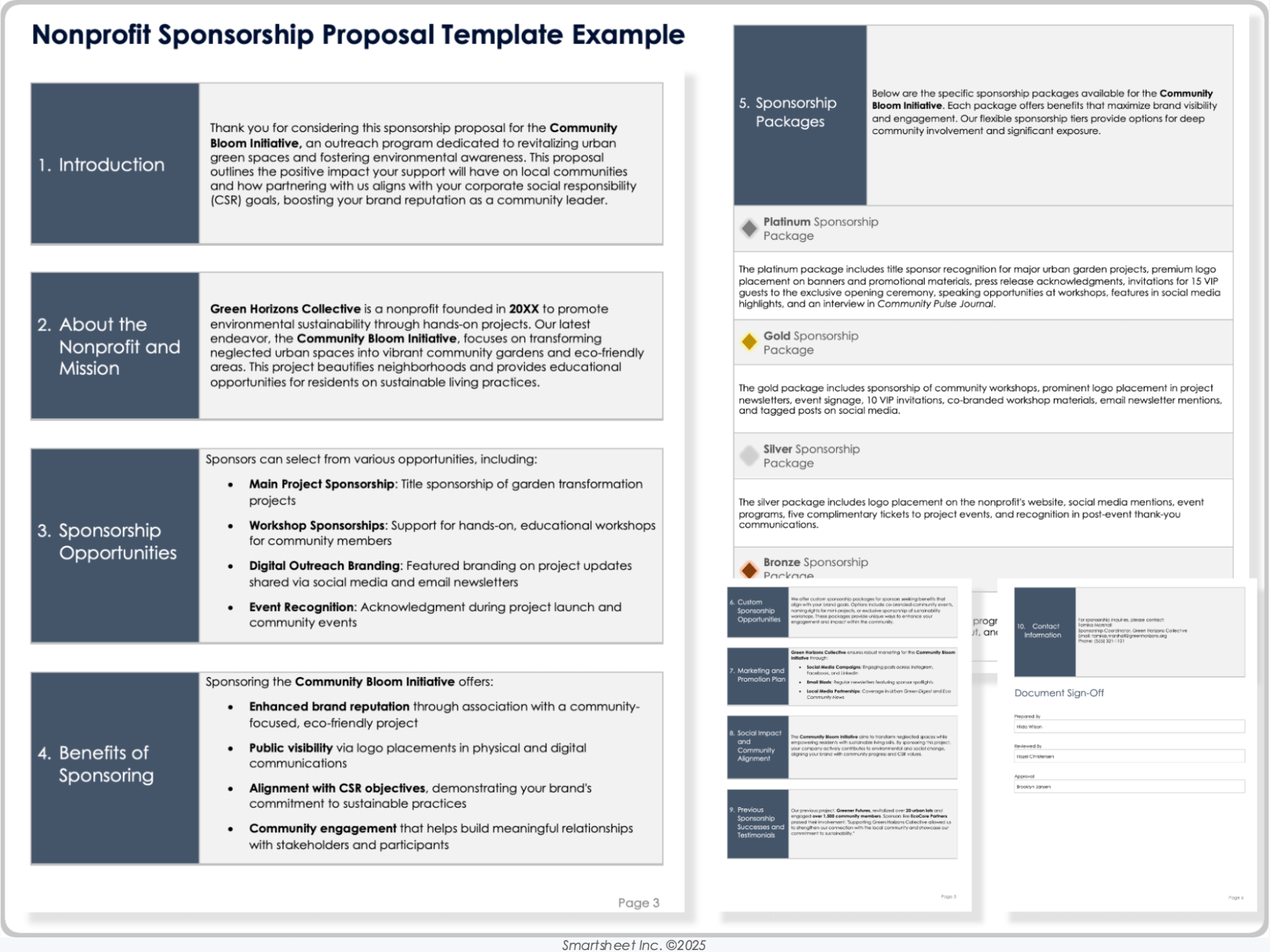
Nonprofit Sponsorship Proposal Template Example
Source: Smartsheet
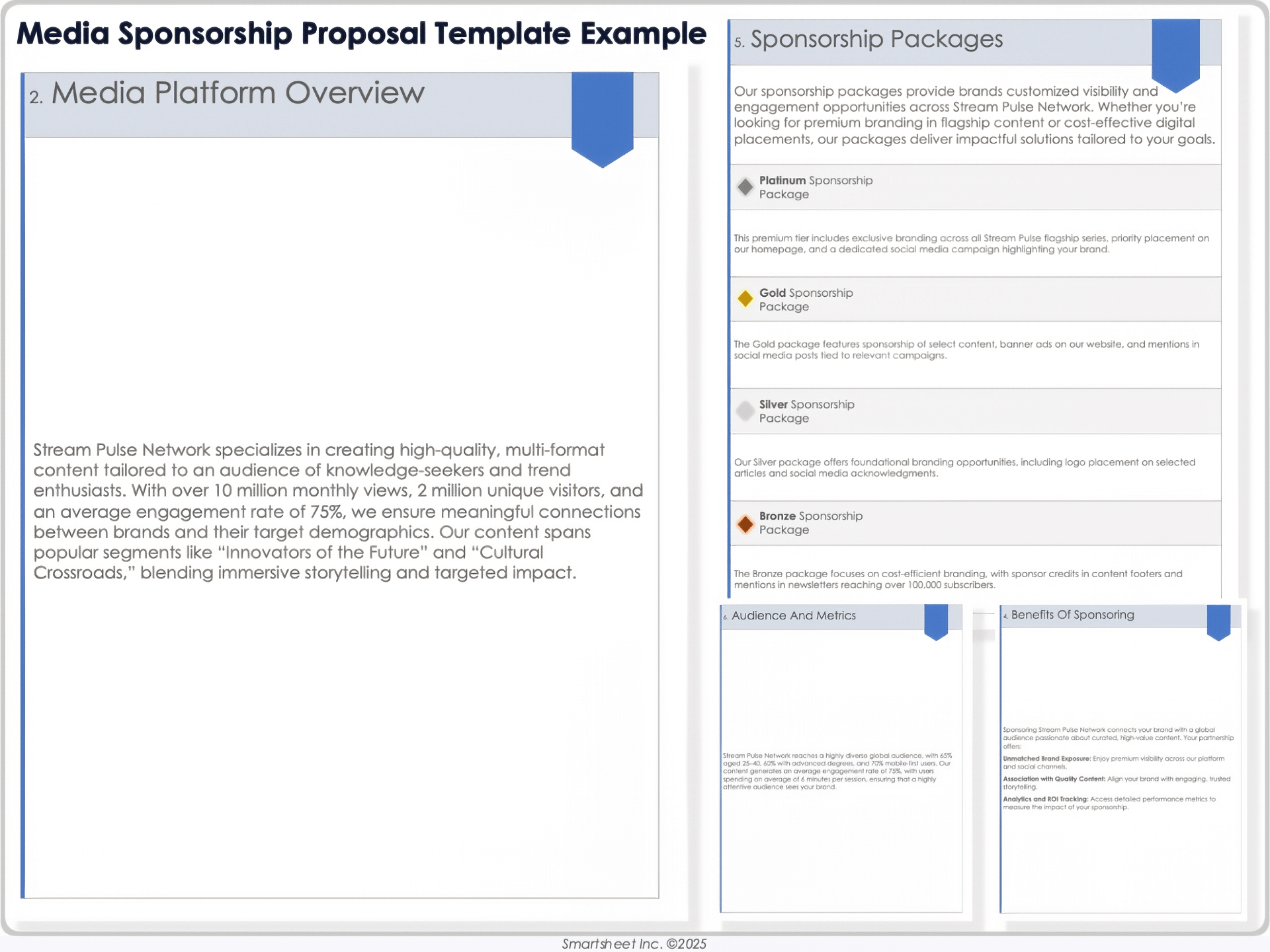
Media Sponsorship Proposal Template Example
Source: Smartsheet
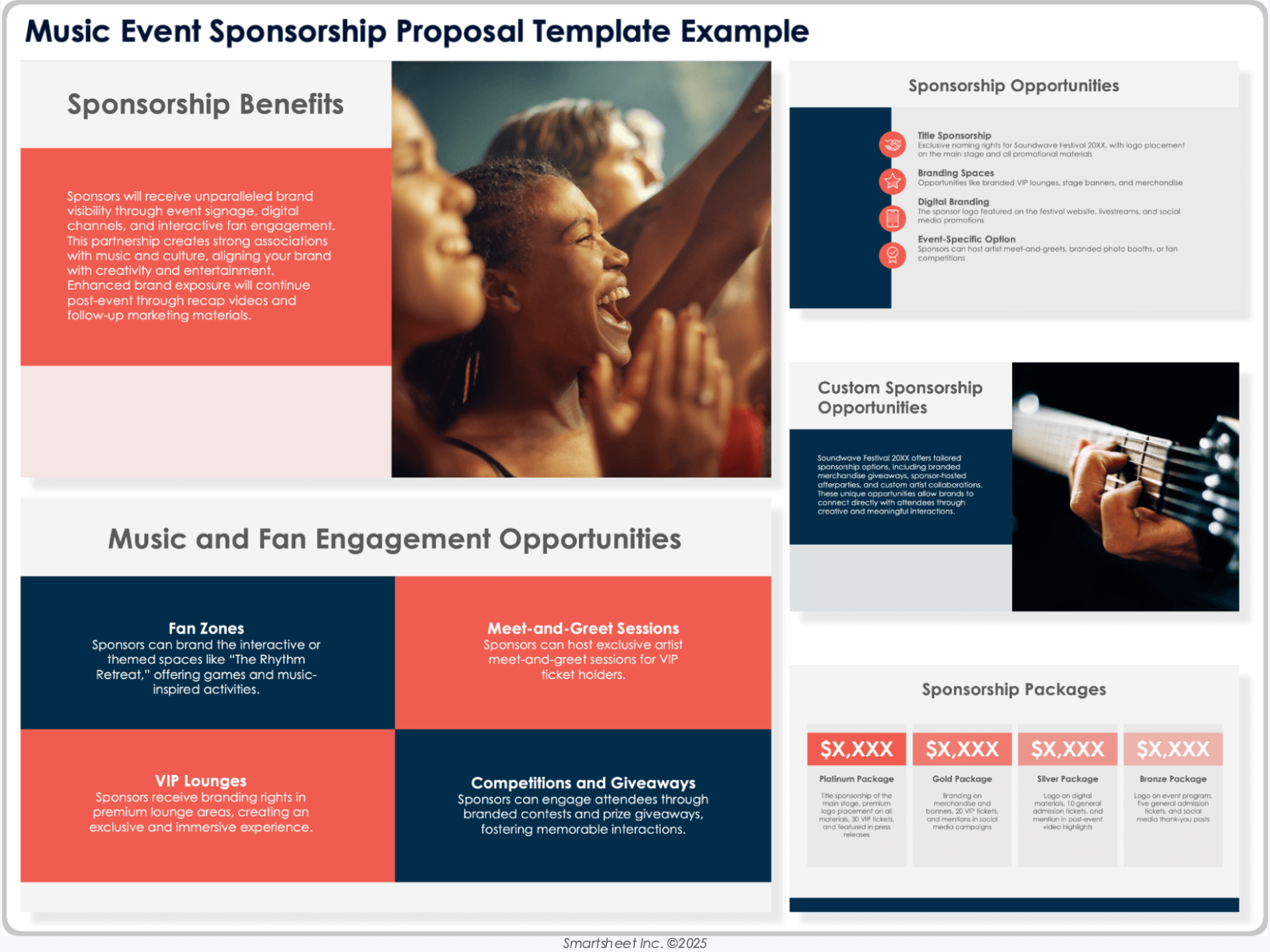
Music Event Sponsorship Proposal Template Example
Source: Smartsheet
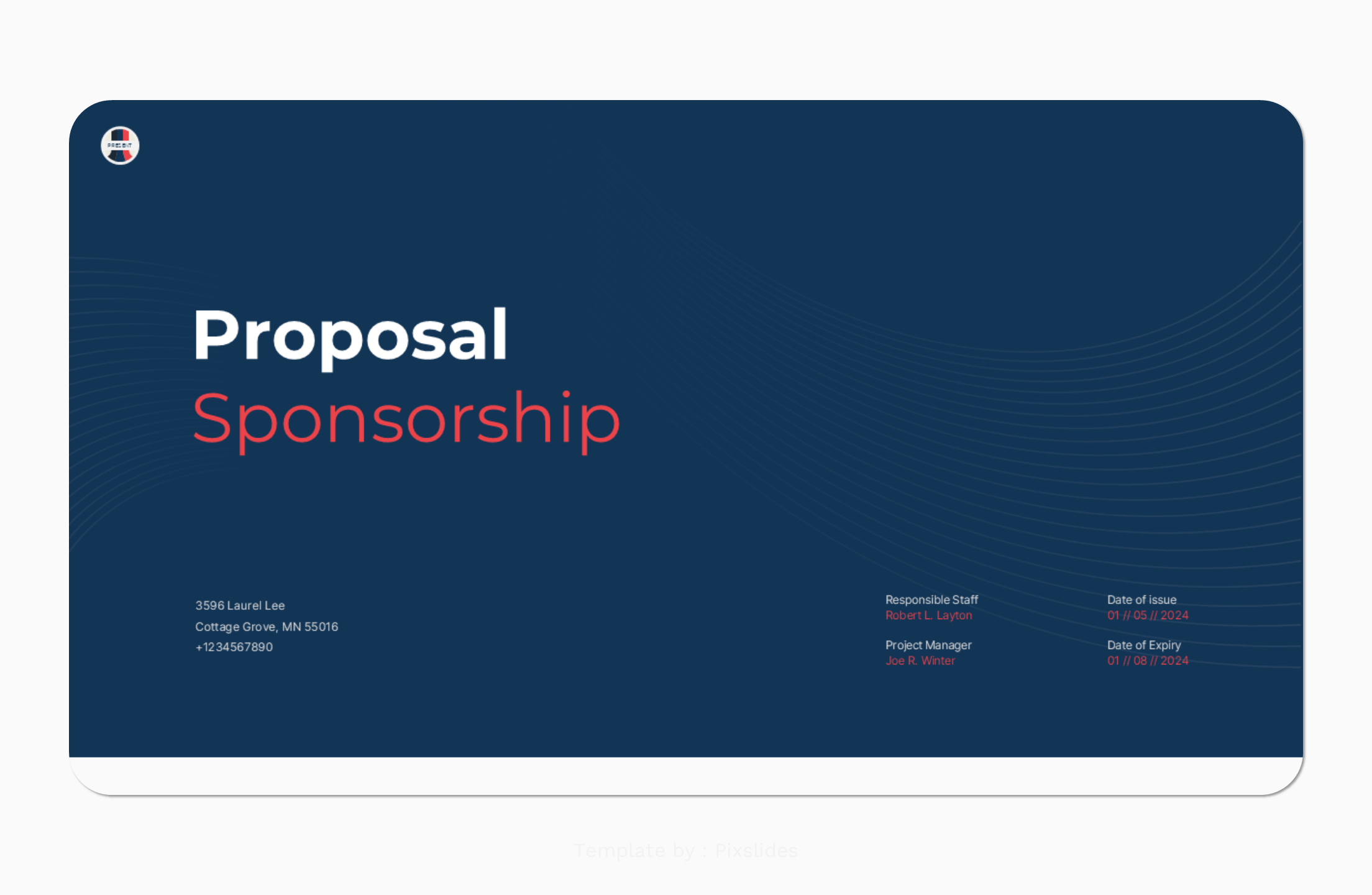
Present Sponsorship Proposal Presentation Cover
Source: Envato Market

Present Sponsorship Proposal Presentation Slides
Source: Envato Market

Present Sponsorship Proposal Event Research Slide
Source: Envato Market

Present Sponsorship Proposal Company and Package Slides
Source: Envato Market

Present Sponsorship Proposal Event Highlight Slide
Source: Envato Market
Event Sponsorship Proposal Presentation Template
Source: SlideKit
