A marketing yearly grants and sponsorship report Template is designed to bring funding activity, sponsorship relationships, marketing performance, financial stewardship, and annual outcomes into one coherent reporting structure. Instead of treating grants and sponsorships as isolated transactions, a strong yearly report connects the money received with the activities supported, the commitments made to partners, the results achieved, and the lessons that should influence the next planning cycle. This makes the report useful not only for funders and sponsors but also for marketing leaders, finance teams, executives, boards, and nonprofit stakeholders.
Research into current grant and annual-report practices shows that effective reporting generally combines narrative progress, measurable outcomes, financial information, and evidence of impact. Grant reporting resources emphasize documenting progress, spending, objectives, and outcomes, while nonprofit annual-report guidance highlights accomplishments, financial transparency, impact measures, supporter recognition, and future priorities.
The most useful template therefore should not simply be a list of sponsors or a financial ledger. It should act as a structured management record. A reader should be able to understand where funding came from, what was promised, what marketing activity was delivered, what results were observed, whether the budget aligned with actual spending, and what should happen next. This article explains how to design that structure, choose the right format, organize evidence, interpret results, and turn the finished report into a practical decision-making document.
What a yearly grants and sponsorship report should accomplish
The central purpose of a yearly grants and sponsorship report is accountability. A grantor or sponsor wants to understand whether the agreed purpose was pursued responsibly, while internal stakeholders need a reliable record of what the funding enabled. The report should therefore connect financial inputs with activities and outcomes rather than presenting figures without context. A useful structure begins with the reporting period, organization details, funding sources, major objectives, key activities, outcomes, financial results, partnership obligations, and forward-looking priorities.
Marketing adds another layer because sponsorships frequently involve visibility, communications, events, content, brand exposure, partner recognition, or audience engagement. A sponsorship section can therefore record the agreed benefits, the benefits delivered, supporting evidence, outstanding commitments, and partner feedback. This turns sponsorship reporting into a relationship-management tool rather than merely a finance document.
Grant reporting has a similar logic. Current guidance stresses that the grant agreement or award letter should be treated as the governing reference for the funded project, including its approved purpose, reporting schedule, budget, special conditions, and other obligations. A general template should support those requirements, but it should never override funder-specific instructions.
Core sections to include in the template
A strong report normally begins with an executive summary. This section should answer the most important questions quickly: what funding was received, what major activities were supported, what objectives were achieved, what significant issues occurred, and what the organization recommends for the coming year. The summary should be concise but specific enough that a senior reader can understand the overall position without reading every supporting detail.
The next section should establish the funding portfolio. Each grant or sponsorship can be identified by funder or partner name, funding type, award or agreement date, reporting period, approved amount, amount received, restricted purpose where relevant, and reporting status. Keeping these fields consistent makes year-to-year comparison easier and reduces the risk of missing important reporting obligations.
A third section should connect funding with activity. Rather than saying that sponsorship supported “marketing,” describe the actual work: campaign production, event visibility, content placement, community outreach, media activity, digital promotion, educational communications, or other agreed deliverables. This allows the reader to see how resources moved from financial support into concrete work.
Outcome reporting should follow activity reporting. An activity describes what happened; an outcome explains what changed or what was achieved. Depending on the project, useful measures can include completed deliverables, audience reach, participation, qualified leads, partner visibility, event attendance, campaign interactions, fundraising progress, or other metrics that were established before the work began. The exact measures should reflect the original objectives rather than being selected merely because they are easy to collect.
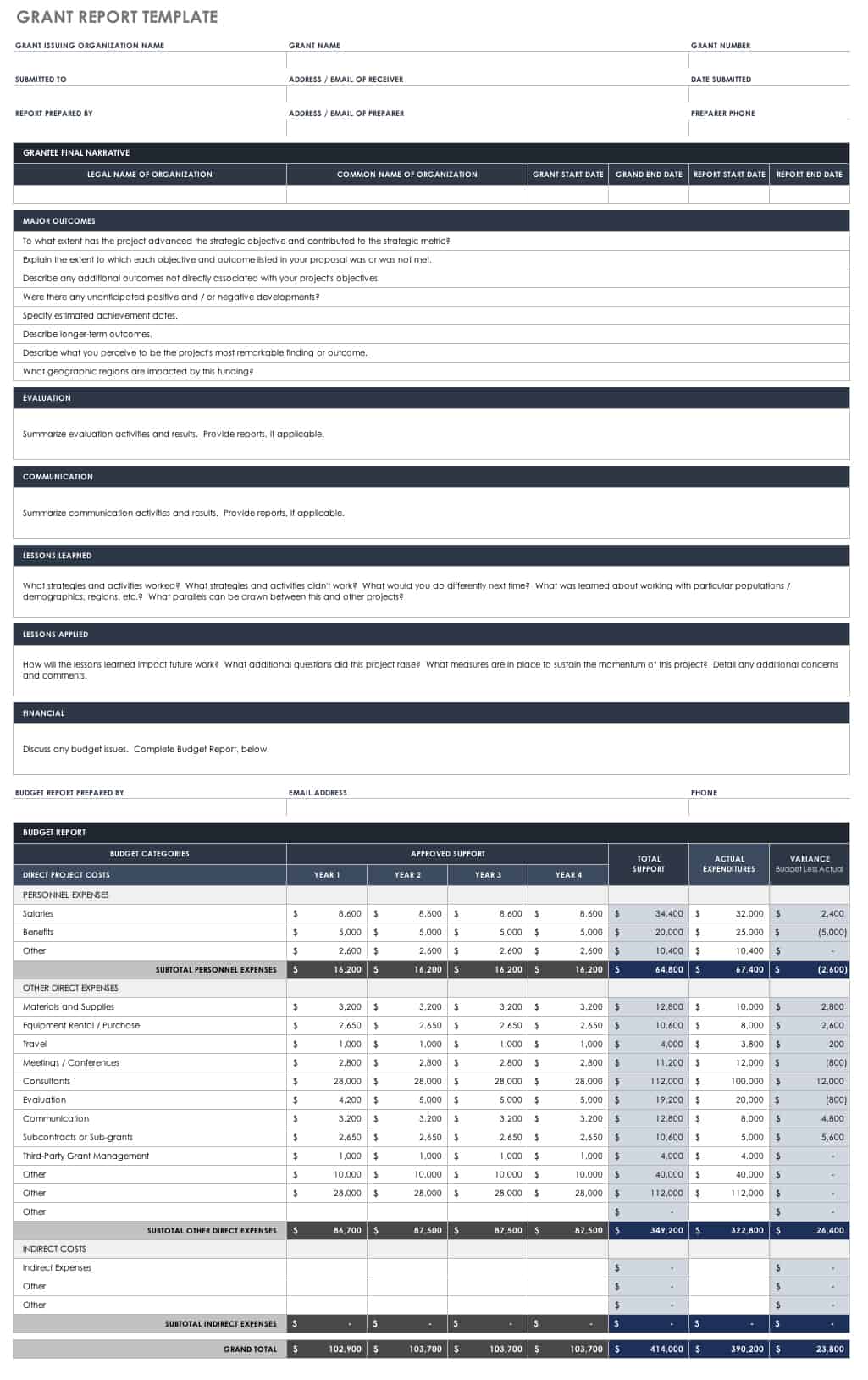
Financial reporting should then show approved budget, actual expenditure, remaining balance, and material variances. A narrative explanation is especially valuable when actual spending differs substantially from the original plan. A lower-than-expected expense is not automatically positive, just as higher expenditure is not automatically negative; the important question is whether the variance is understandable, authorized where necessary, and consistent with the intended purpose of the funding.
Finally, include lessons learned and future priorities. Annual reporting becomes more valuable when it records not only achievements but also barriers, changes in strategy, operational improvements, and decisions for the next cycle. A candid explanation of an unmet objective can be more useful than a report that presents only successful activity, particularly when the organization explains what caused the gap and how the process will change.
How to organize grant information
Grant information is easiest to manage when the report separates portfolio-level information from individual grant detail. The annual overview can show the total number of awards, total funding received, reporting status, broad program areas, and major accomplishments. Individual grant records can then provide the detailed budget, objectives, activities, outcomes, and reporting dates. This two-level structure keeps the annual report readable while preserving enough detail for internal review.
A useful grant record should include the funder, grant title, award amount, funding period, approved purpose, responsible internal owner, reporting frequency, next reporting date, financial status, and outcome status. Where several grants support related work, the annual report can also show how those funding streams complement each other. This is especially helpful for organizations where a single campaign or program is supported by multiple sources.
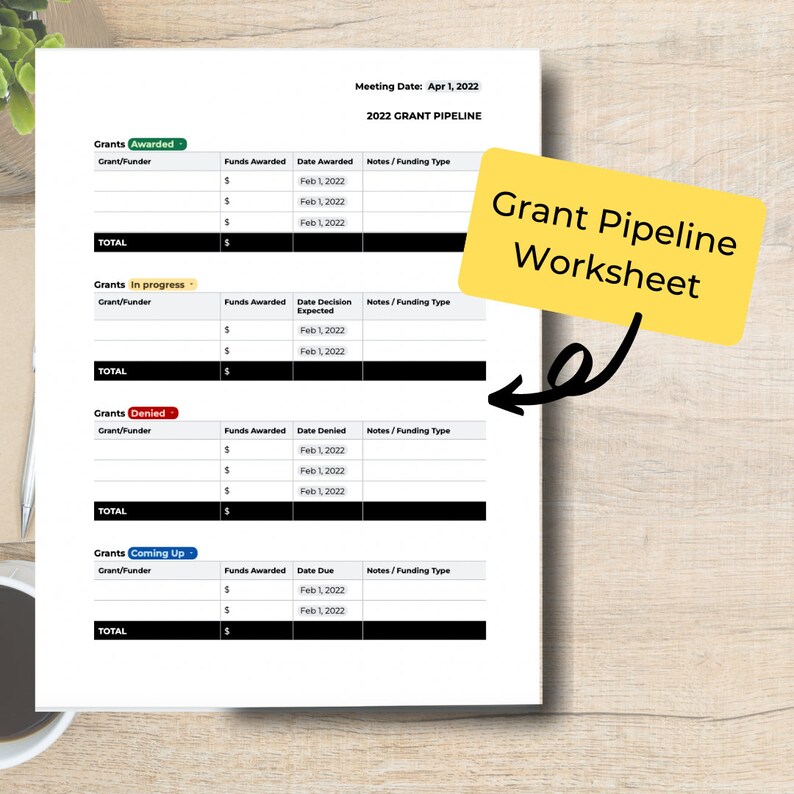
Grant tracking resources commonly recommend centralized tracking of funders, purposes, requested amounts, award status, disbursements, deadlines, and reporting requirements. A structured tracker can help prevent missed dates and make it easier to assemble the annual narrative from information collected throughout the year.
How to organize sponsorship information
Sponsorship reporting should focus on the relationship between the partner contribution and the benefits promised in return. The report can record cash or non-cash contributions, sponsorship level, agreement period, agreed visibility, event or campaign association, promotional placements, acknowledgements, and completion status. For non-cash contributions, describe the item or service and its agreed purpose rather than automatically treating it as cash income.
A sponsorship section is particularly useful when it includes a fulfillment record. For each commitment, record whether it was delivered, the date or campaign associated with the delivery, supporting evidence, and any follow-up action. Examples might include a logo placement, sponsor mention, newsletter feature, event signage, content inclusion, digital placement, or another agreed benefit. This creates a transparent trail that can be reviewed with the sponsor before renewal discussions.
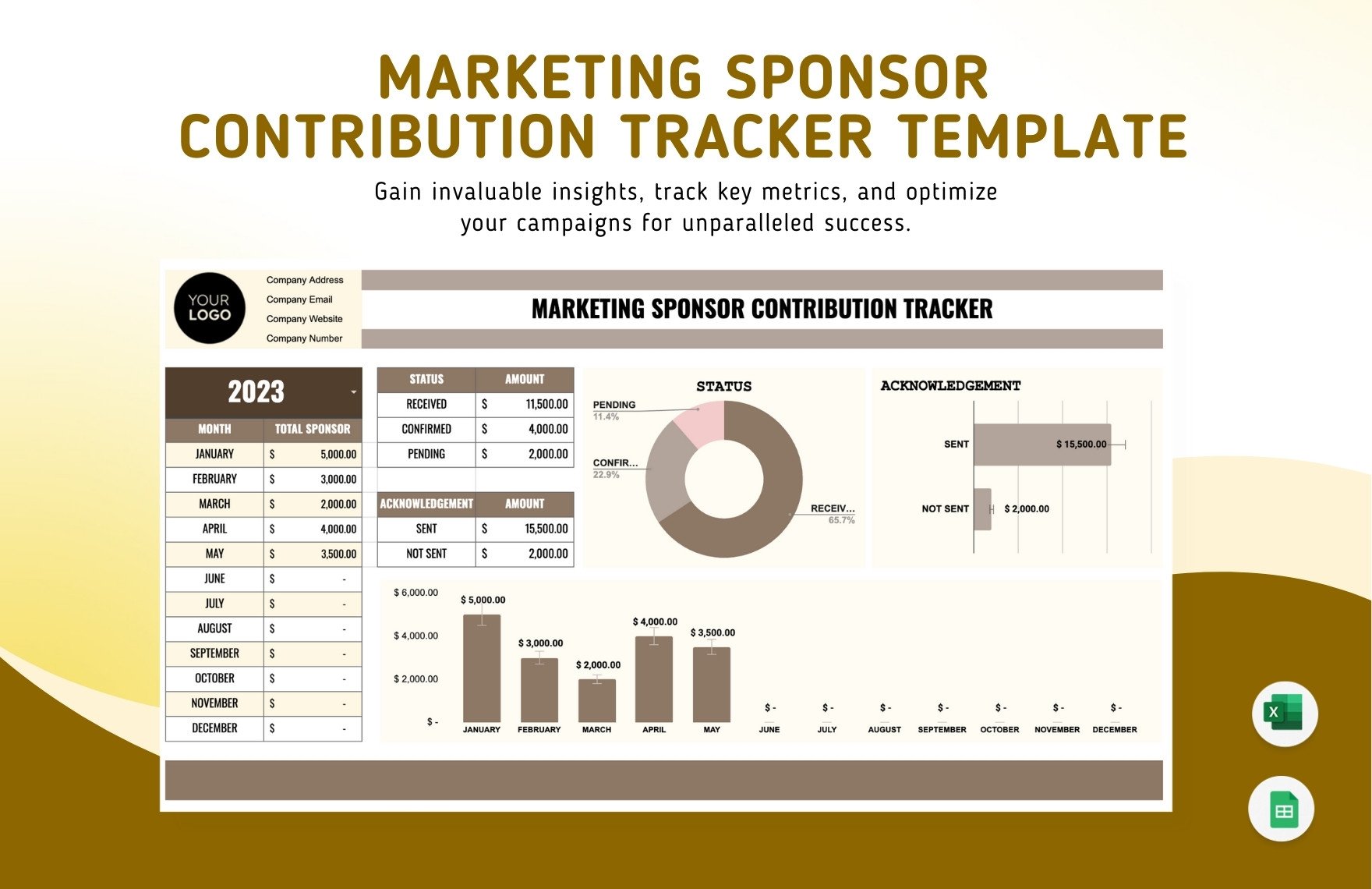
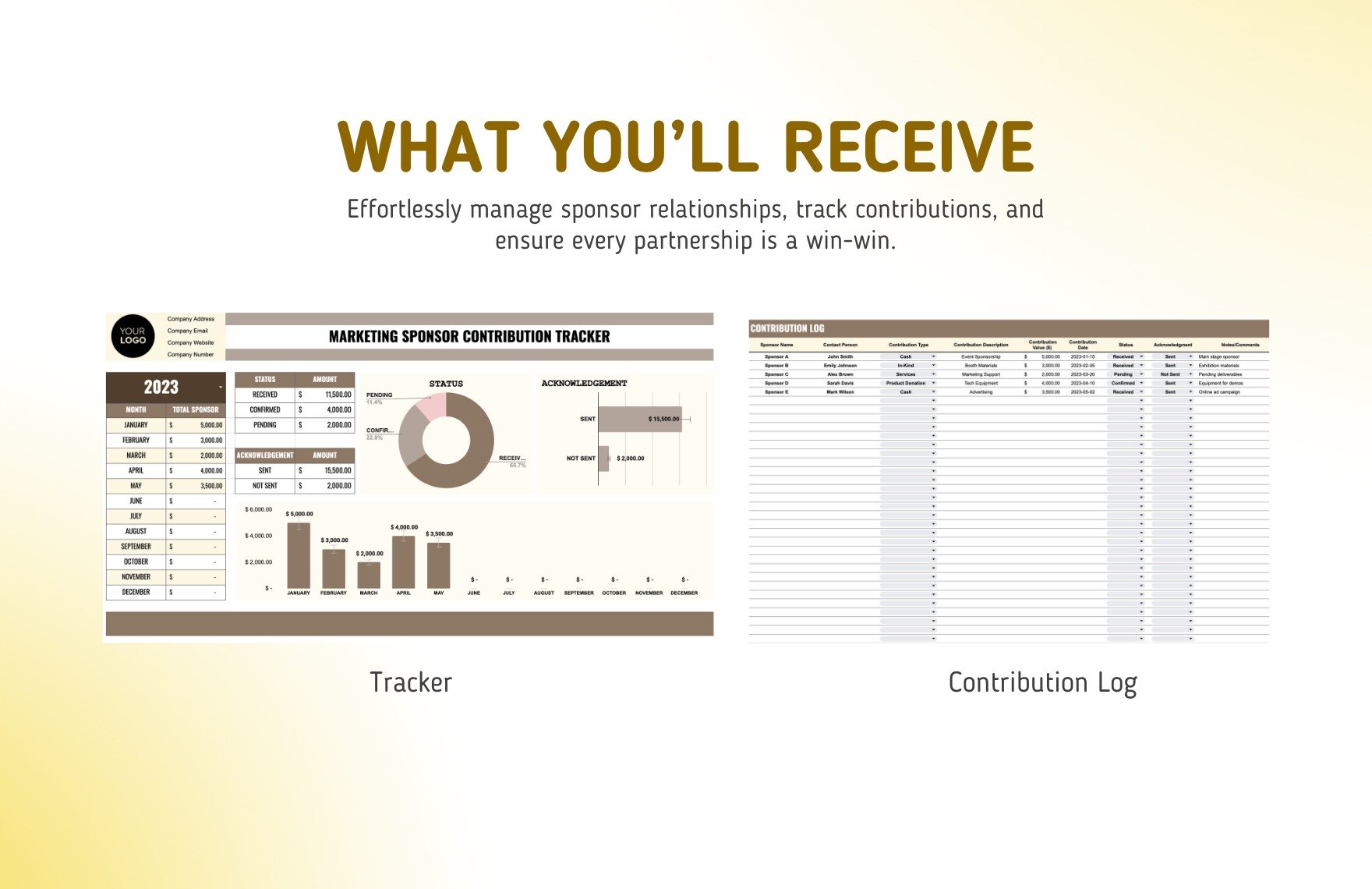
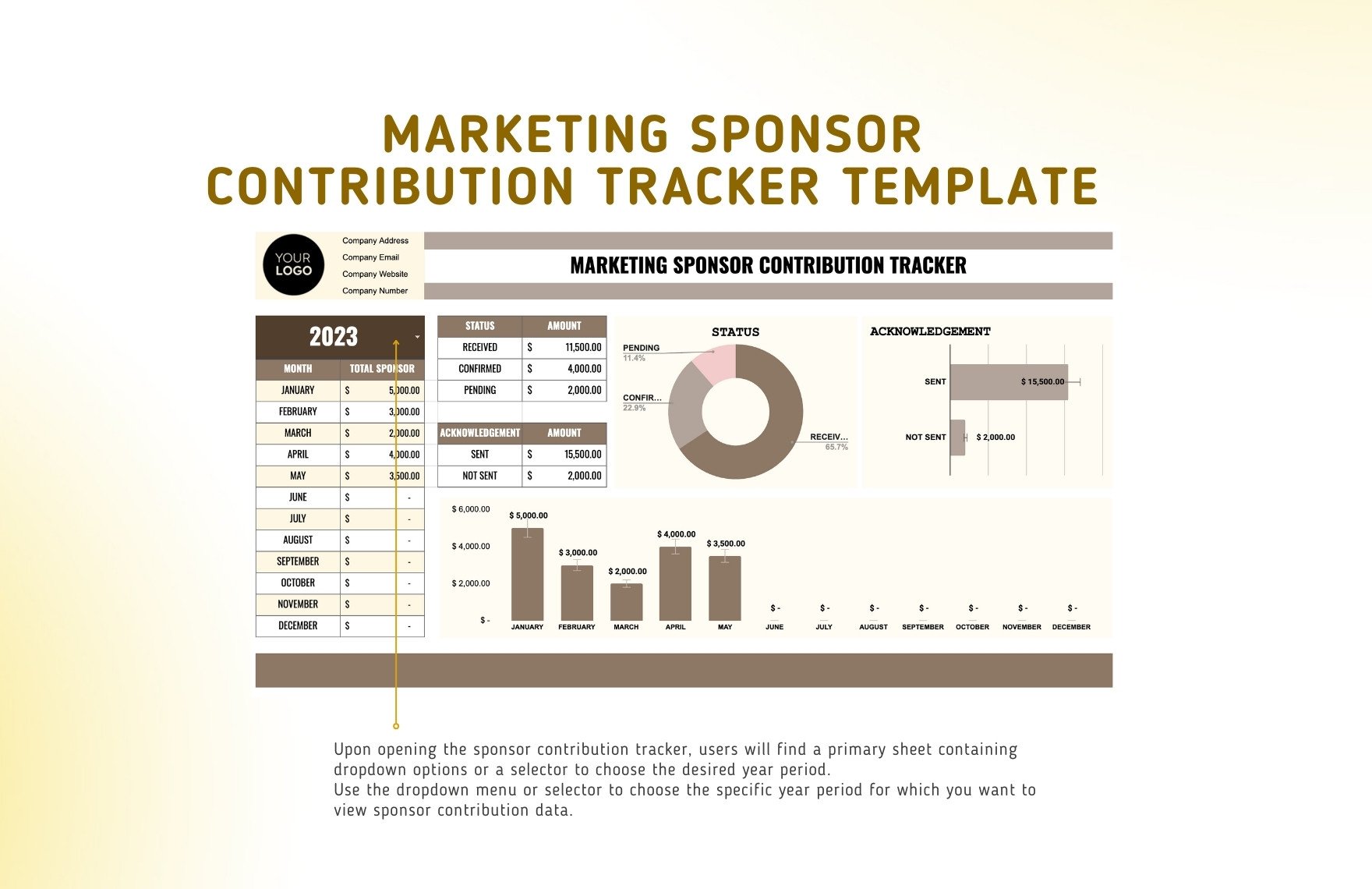
Marketing sponsorship trackers often combine monthly contribution figures with status indicators, acknowledgement records, and visual summaries. Those elements can be adapted into an annual report so that sponsors receive both a narrative explanation and an easy-to-read performance snapshot. The visual should support the report, not replace the underlying evidence.
Marketing metrics that belong in an annual funding report
Marketing metrics should be selected according to the objectives of the grant or sponsorship. A partner interested in event visibility may care about attendance, placements, impressions, content exposure, or audience engagement. A funder supporting community outreach may need participation, service delivery, geographic coverage, or other program outcomes. The report becomes stronger when every major metric has a clear connection to an objective or commitment.
It is also useful to separate activity metrics from outcome metrics. Activity metrics describe volume, such as the number of campaigns, events, communications, placements, or pieces of content produced. Outcome metrics describe results, such as qualified engagement, completed objectives, increased awareness, participation, conversions, or other agreed changes. Mixing these categories can make a report appear impressive while leaving the actual effectiveness unclear.
Annual marketing reporting resources commonly emphasize executive summaries, key performance indicators, financial overviews, channel performance, and comparisons across campaigns. Those concepts can be adapted to grants and sponsorships by placing funding context alongside the marketing results that the funding supported.
For example, suppose a hypothetical sponsor supported an annual community event. The report could show the agreed visibility objectives, the actual placements delivered, event participation, digital engagement associated with the campaign, content produced, and sponsor acknowledgement status. These figures should be accompanied by a short interpretation explaining which elements performed well and which should be changed next year.
Do not manufacture precision when the underlying data is weak. If a campaign produced qualitative feedback but no reliable conversion measurement, say so. If a metric changed because the measurement method changed, explain that difference. Honest limitations make the report more credible because the reader can distinguish measured results from interpretation.
Choosing between Word, PDF, Excel, Google Docs, and other formats
Format selection should depend on the report’s purpose. A Word-based structure is useful when the report requires substantial narrative, formal sections, editorial review, and controlled page layout. A PDF version is useful for distributing a finalized record because it preserves the presentation intended by the reporting team. An Excel workbook is better suited to detailed calculations, transaction-level tracking, budget reconciliation, and data analysis.
A Google Docs structure can be helpful when several contributors need to draft, review, and comment on the same narrative. A spreadsheet-based workflow can remain the underlying data source while a document becomes the polished annual report. This separation is often more practical than trying to force financial records and narrative storytelling into one file.
Searchers looking for a marketing yearly grants and sponsorship report template free should still evaluate whether the structure actually covers their reporting needs. A template with attractive formatting but no funding reconciliation, sponsorship fulfillment, objectives, or outcome fields may create more work later. Likewise, a marketing yearly grants and sponsorship report template pdf is useful for a final presentation but may be less convenient for ongoing calculations.
A marketing yearly grants and sponsorship report template word can work well for narrative-heavy reporting, especially when several reviewers need to edit the text before finalization. A marketing yearly grants and sponsorship report template excel is more appropriate when the central challenge is financial tracking, sponsor contributions, variance analysis, and year-to-date calculations.
For collaborative teams, a marketing yearly grants and sponsorship report template google docs approach can make sense when the report is reviewed by marketing, finance, leadership, and program staff. The key is to establish one source of truth for figures so that different editors do not accidentally introduce conflicting totals into the final narrative.
Adapting the structure for nonprofits
A marketing yearly grants and sponsorship report template for nonprofits should recognize that nonprofit reporting often serves several audiences simultaneously. Funders need accountability, sponsors need partnership visibility, boards need governance information, donors may want impact evidence, and program teams need a record of what was accomplished. A layered structure allows the annual report to remain accessible without losing operational detail.
Nonprofit annual-report guidance commonly recommends including the mission, major accomplishments, financial information, impact measures, supporter recognition, and future priorities. These elements complement grant and sponsorship reporting because they place individual funding relationships within the broader organizational story.
Financial stewardship deserves particular attention. Grant-related costs should be traceable to the relevant funding source and approved purpose, while shared or indirect costs should be handled consistently with the applicable agreement and accounting policy. Current nonprofit guidance highlights the importance of accurate expense allocation and distinguishing direct costs from shared or indirect costs. :contentReference[oaicite:5]{index=5}
Regional considerations for the UK and Australia
A marketing yearly grants and sponsorship report template uk should be treated as a flexible reporting structure rather than a claim about a universal UK reporting requirement. Organizations in the UK may operate under different legal structures, funding agreements, charitable arrangements, or sponsor contracts. The safest approach is to begin with the exact reporting obligations contained in the relevant agreement and then adapt the annual template around those requirements.
Similarly, a marketing yearly grants and sponsorship report template australia should not be presented as an official national format unless a particular regulator, funder, or institution has explicitly specified one. Australian organizations can have different obligations depending on their structure, funding arrangements, jurisdiction, and reporting relationship. A general annual marketing and funding report should therefore be considered an internal or stakeholder-reporting framework unless a specific authority says otherwise.
For either region, include fields that make the report auditable and easy to interpret: reporting period, funding source, agreement reference where appropriate, responsible owner, approved purpose, expenditure summary, outcomes, partner obligations, evidence, and review status. When an external funder provides its own form or reporting instructions, those should take precedence over a generic template.
Building the financial section
The financial section should be designed so that a reader can reconcile the headline funding figures with the underlying records. At minimum, distinguish approved funding, funding received, actual expenditure, remaining balance, and significant variances. If several sponsors or grants support the same marketing initiative, identify how the funding was allocated without implying that one source paid for costs assigned to another source.
Budget variance deserves narrative treatment. A simple variance percentage may show that spending differs from plan, but it does not explain why. The report should state whether the difference came from timing, supplier pricing, scope changes, delayed activity, underspending, reallocation, or another documented reason. If approval was required for a material change, record the relevant authorization rather than assuming that the annual report itself resolves the issue.
For ongoing internal management, the spreadsheet can contain more detail than the published annual report. A detailed worksheet may contain transaction categories and monthly figures, while the final report can summarize the information into annual totals and selected explanations. This keeps the external document readable without sacrificing internal control.
Creating an evidence system
A strong annual report is easier to prepare when evidence is collected during the year rather than reconstructed at year-end. Create a simple evidence register that identifies the reporting item, related grant or sponsor, responsible owner, date, evidence location, metric supported, and review status. Evidence might include approved campaign plans, invoices, event records, published content, sponsor acknowledgements, analytics exports, photographs of physical branding, or signed reports where appropriate.
Evidence should be proportional to the claim being made. A statement that a sponsor received a particular placement should have a record showing that placement. A statement about campaign performance should come from the relevant analytics source or a documented calculation. A statement about community impact should be supported by the program data or evaluation method used by the organization.
Privacy and consent also matter when reports include participant stories, photographs, testimonials, or other identifying information. Do not automatically publish material simply because it exists internally. Establish whether the organization has the appropriate permission and whether the information is necessary for the reporting purpose.
How to write the narrative without overstating results
The narrative should explain the relationship between intention, activity, result, and learning. A useful pattern is: objective, action taken, measured result, interpretation, and next step. This approach is stronger than a long activity list because it helps the reader understand why the work mattered.
When an objective was not achieved, report the gap directly. Explain the relevant barrier, what was learned, and what will change. Current grant-reporting guidance emphasizes honest treatment of both wins and setbacks, with results connected to the targets originally established.
For sponsorships, the same principle applies. If a promised benefit was delayed or partially delivered, record the status and explain the remedy. This is particularly important when the annual report is used to support renewal conversations because transparent reporting creates a clearer basis for deciding whether the partnership should continue and how the next agreement should be structured.
Common mistakes to avoid
One common mistake is creating a report that looks polished but cannot be reconciled to the underlying records. Attractive charts do not compensate for unclear funding sources, unexplained variances, inconsistent reporting periods, or unsupported outcomes. Every headline figure should have a clear origin and a defined calculation method.
Another mistake is combining grants and sponsorships without distinguishing their different purposes. A grant may be restricted to a particular program, while a sponsorship may involve negotiated marketing benefits. Treating both as identical revenue streams can obscure obligations and make it difficult to assess whether each relationship was managed correctly.
A third mistake is reporting metrics without context. A large number can sound impressive but may have little significance if it is unrelated to the agreed objective. The report should prioritize meaningful measures over impressive-looking numbers, and it should explain important limitations in the data.
Using the report for next-year planning
The annual report should become an input into the next planning cycle. Review which funding sources produced the most strategically useful support, which sponsorship benefits were easiest or hardest to fulfill, which marketing activities generated meaningful outcomes, and which reporting processes created unnecessary administrative effort. This converts reporting from a backward-looking exercise into a planning resource.
It is useful to create a short “continue, change, stop, explore” review after the annual report is completed. Continue the activities that clearly supported objectives, change processes that created avoidable friction, stop activities that consistently failed to justify their resources, and explore opportunities suggested by evidence from the year. The categories are simple, but they force the team to make explicit decisions.
A good annual template also makes year-over-year comparisons possible. Keep stable definitions for recurring metrics, record any methodology changes, and avoid changing categories merely to make the current year appear more favorable. Consistent measurement makes the report more valuable as an organizational record.
Practical Solution
The most practical approach is to build the reporting system in three connected layers. First, maintain a detailed funding tracker containing grants, sponsorships, dates, amounts, objectives, commitments, and reporting deadlines. Second, maintain a results and evidence register that connects each important objective with its metric, source, supporting evidence, and current status. Third, create the annual narrative report that summarizes the first two layers for the intended audience.
At the start of the year, enter every confirmed grant and sponsorship into the tracker and record the relevant agreement requirements. During each month or quarter, update funding received, expenditure, campaign activity, sponsor fulfillment, outcomes, and evidence. Before the annual reporting period closes, reconcile the financial information, review outstanding commitments, confirm metric definitions, and identify any unexplained gaps.
When preparing the final report, begin with the executive summary, then present the funding portfolio, grant performance, sponsorship fulfillment, marketing outcomes, financial summary, lessons learned, and next-year priorities. Use charts only where they clarify an important relationship. Keep detailed calculations in the working spreadsheet and use the polished document for interpretation, accountability, and strategic communication.
For teams seeking a marketing yearly grants and sponsorship report template free download, the most important test is not whether the resource costs anything but whether it can be adapted to the organization’s actual reporting workflow. A marketing yearly grants and sponsorship report template download should be checked for its source, format, fields, licensing terms, calculation logic, and compatibility with the organization’s data practices before it becomes part of a reporting process.
A marketing yearly grants and sponsorship report template doc can be useful for a narrative-led annual report, while a marketing yearly grants and sponsorship report template markdown structure can be useful for teams that maintain documentation as plain text and later convert it into a styled publishing format. The format is secondary to the reporting logic: the same definitions, evidence, financial controls, and outcome structure should remain consistent regardless of the document type.
For organizations comparing formats, a marketing yearly grants and sponsorship report template free resource may be useful for early drafting, a marketing yearly grants and sponsorship report template pdf may suit a finalized presentation, and a marketing yearly grants and sponsorship report template word structure may suit collaborative editing. A marketing yearly grants and sponsorship report template excel workbook can remain the calculation layer, while a marketing yearly grants and sponsorship report template google docs document can serve as the narrative layer.
The key is to avoid maintaining several disconnected versions of the same figures. If the annual report says one amount was received while the financial tracker says another, confidence in the entire report declines. Establish one controlled data source, assign responsibility for updates, and perform a final reconciliation before publishing or presenting the report.
Final review checklist for the reporting team
Before the report is finalized, check that every grant and sponsorship in the reporting period is represented, every major commitment has a status, and every material financial figure can be traced to a reliable record. Review whether the reporting period is clearly stated and whether totals use consistent dates and categories. Check that no grant restriction or sponsor obligation has been overlooked.
Next, review the outcome narrative. Every major objective should have a result or an honest status explanation. Important variances should have context. Marketing metrics should have definitions and sources. Sponsorship fulfillment should distinguish completed commitments from pending or partially completed commitments. Where evidence is unavailable, the report should say so rather than implying certainty.
Finally, review the report from the perspective of each intended audience. A funder should be able to see responsible use and meaningful outcomes. A sponsor should be able to see partnership value and fulfillment. Finance should be able to reconcile the figures. Leadership should be able to identify strategic lessons. A template succeeds when the same underlying record can answer all of these questions without becoming confusing or repetitive.
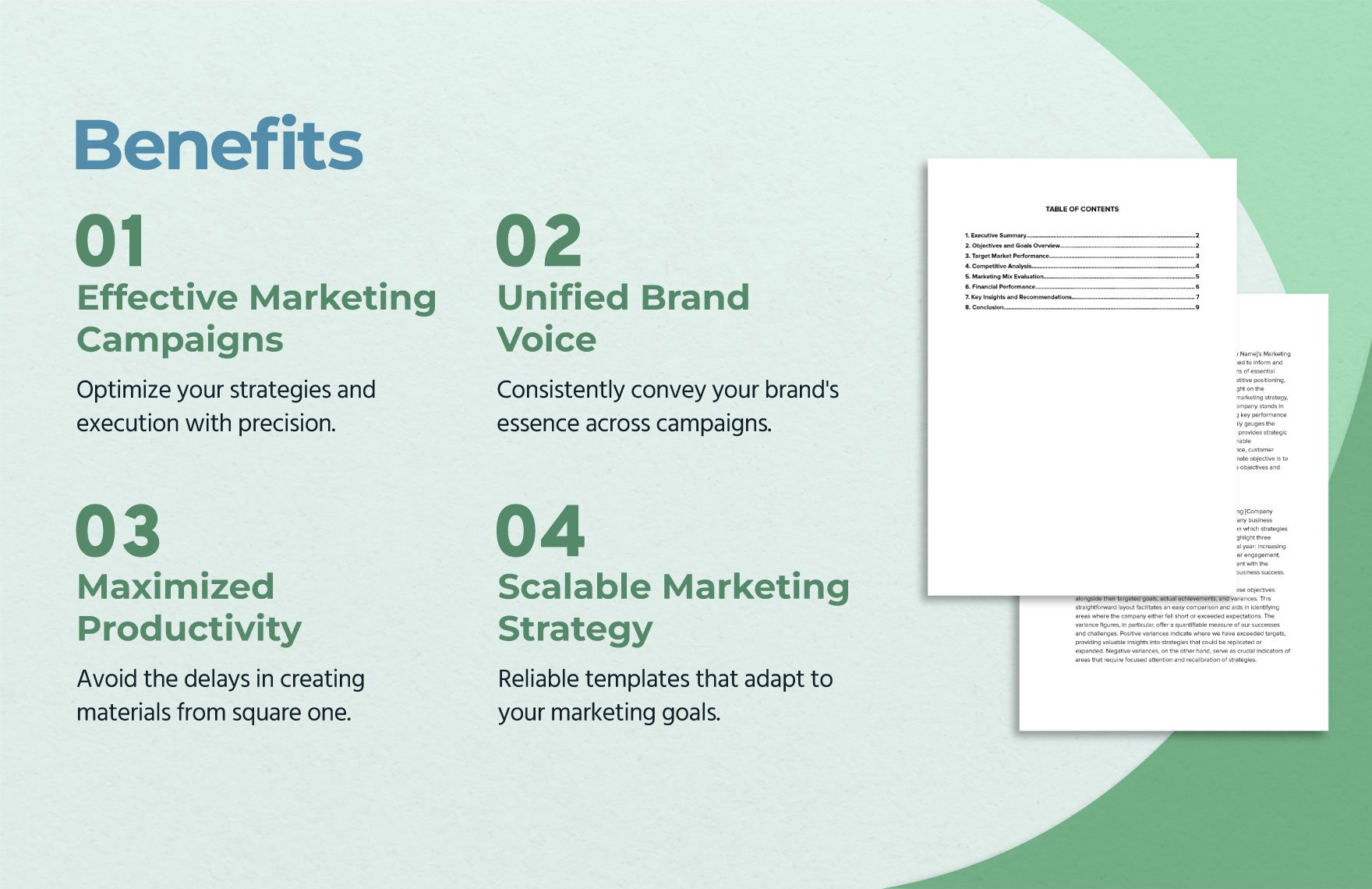
Reference Examples
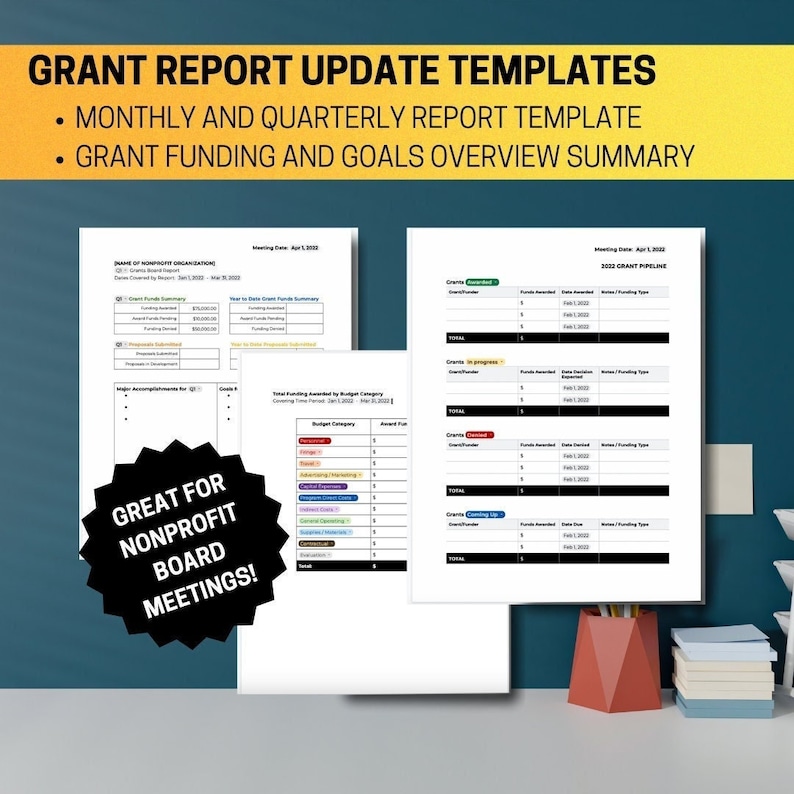
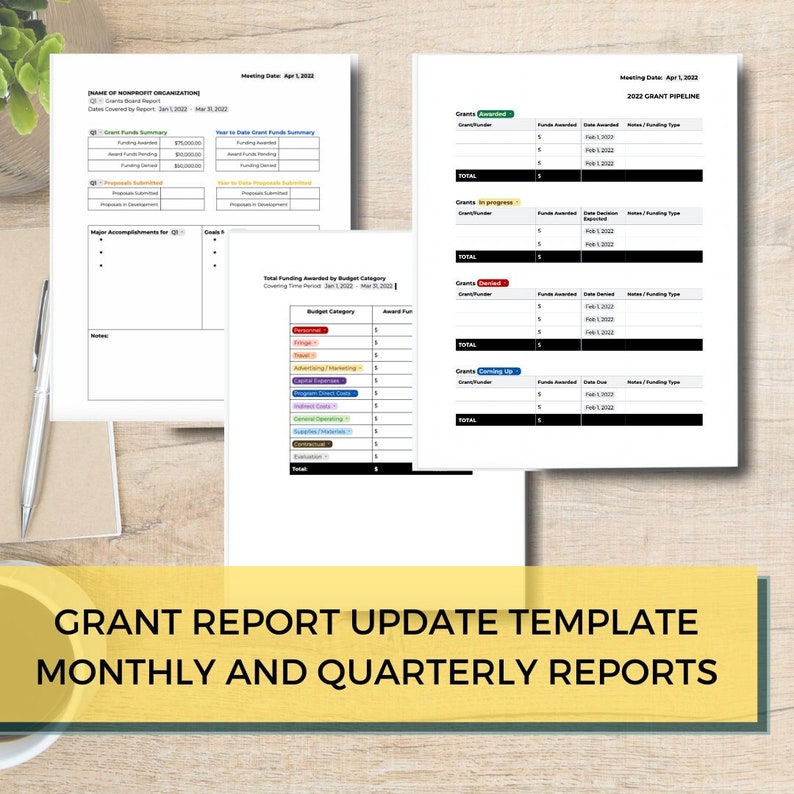
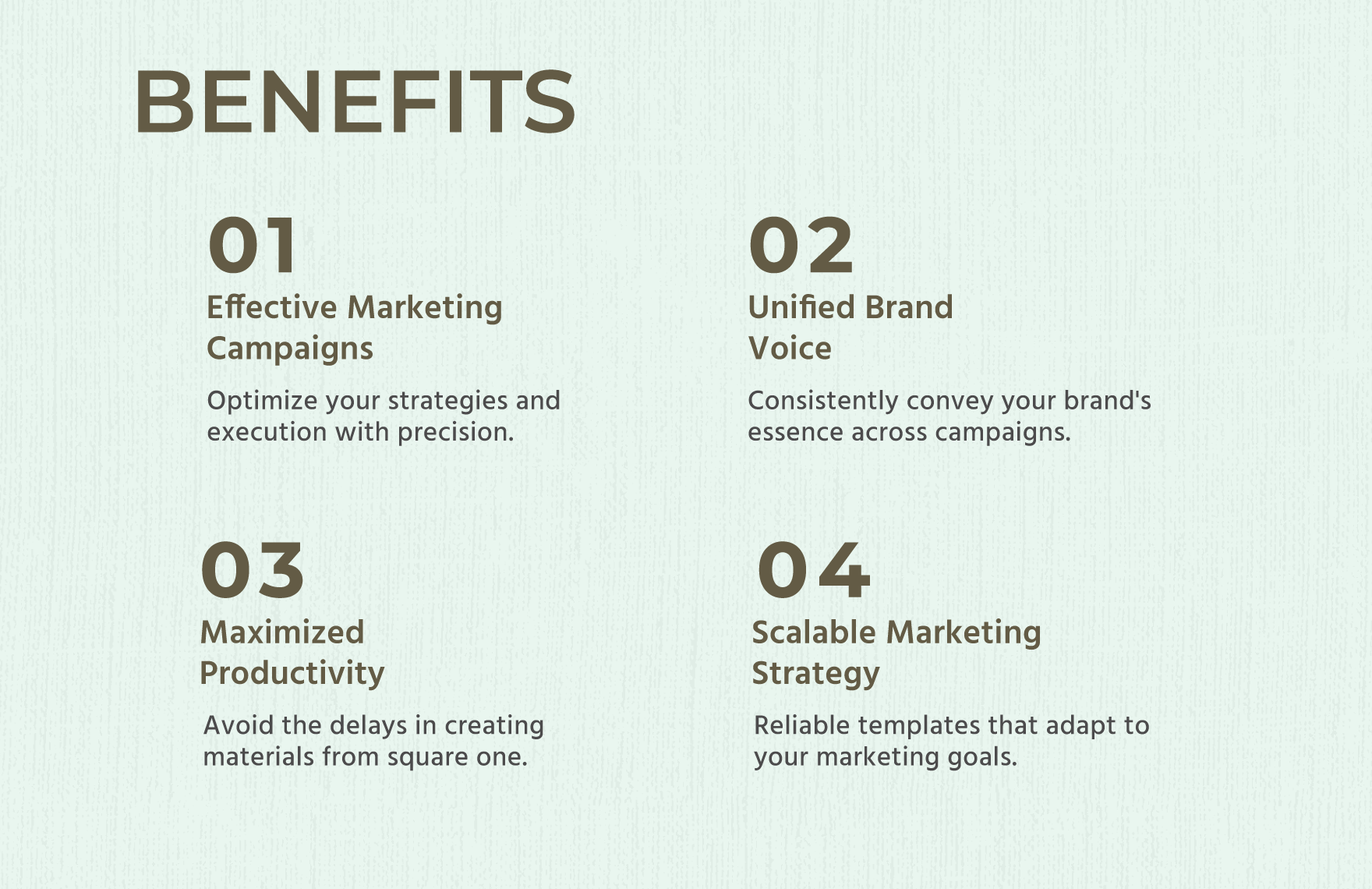
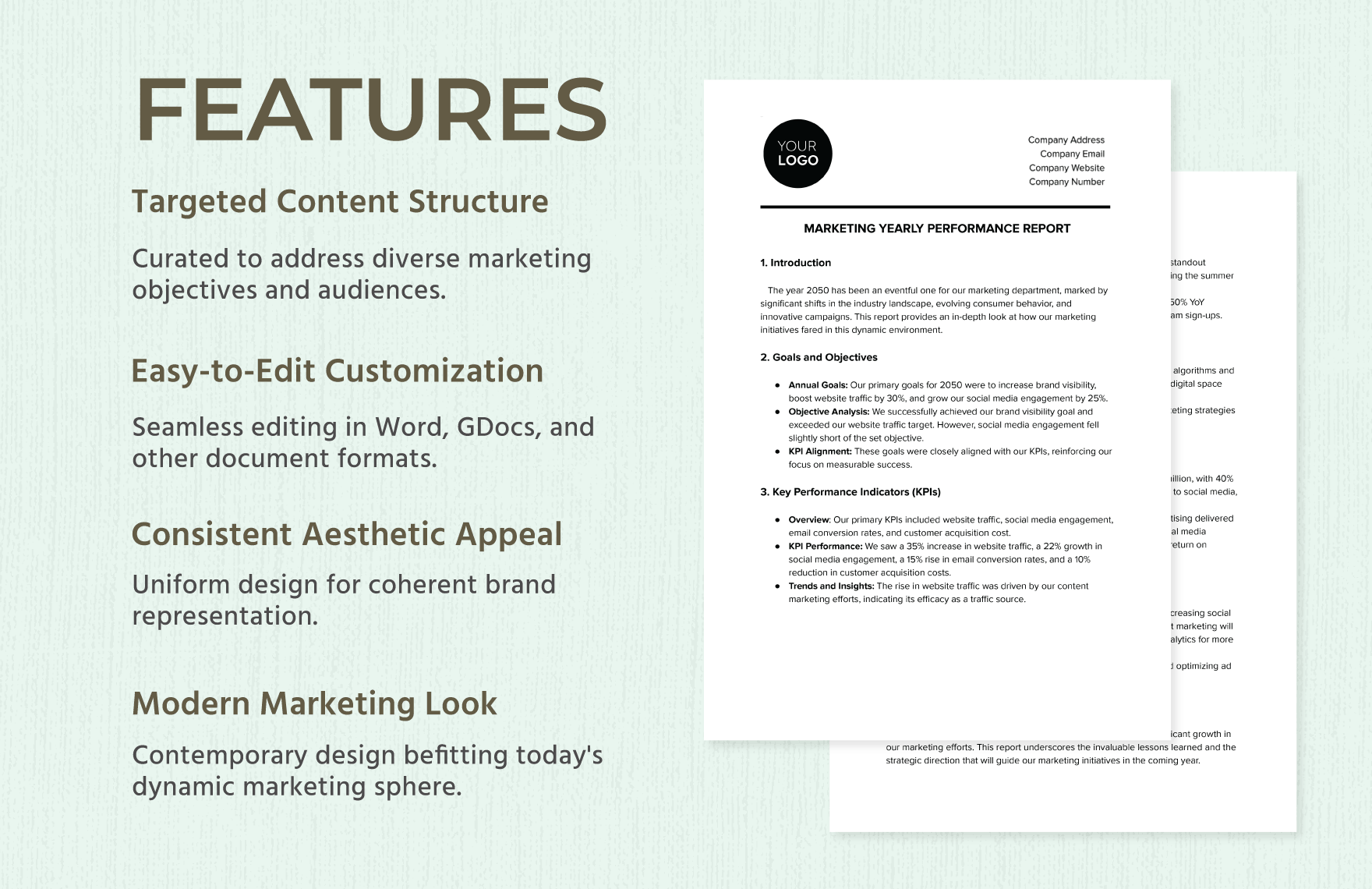
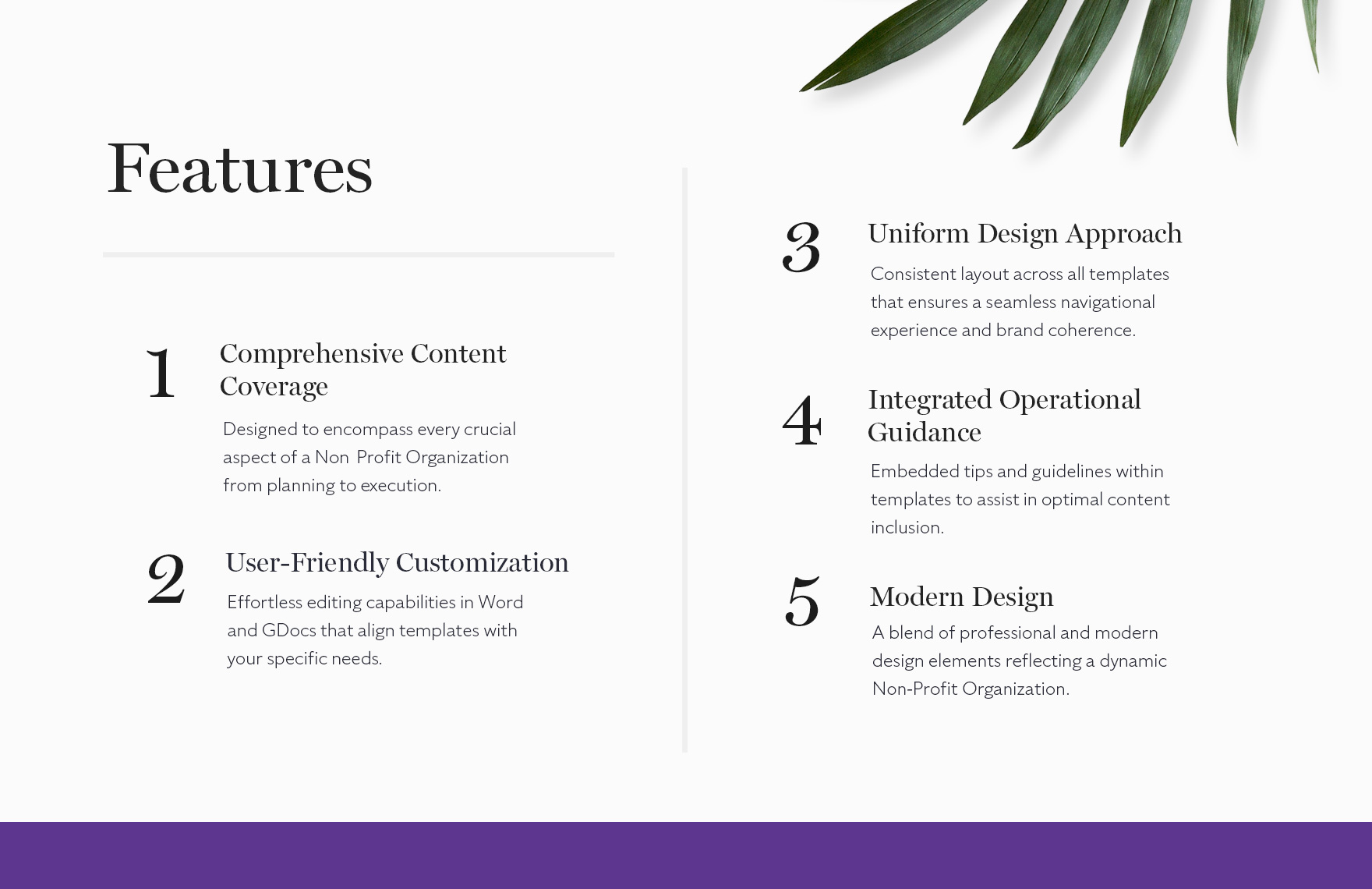
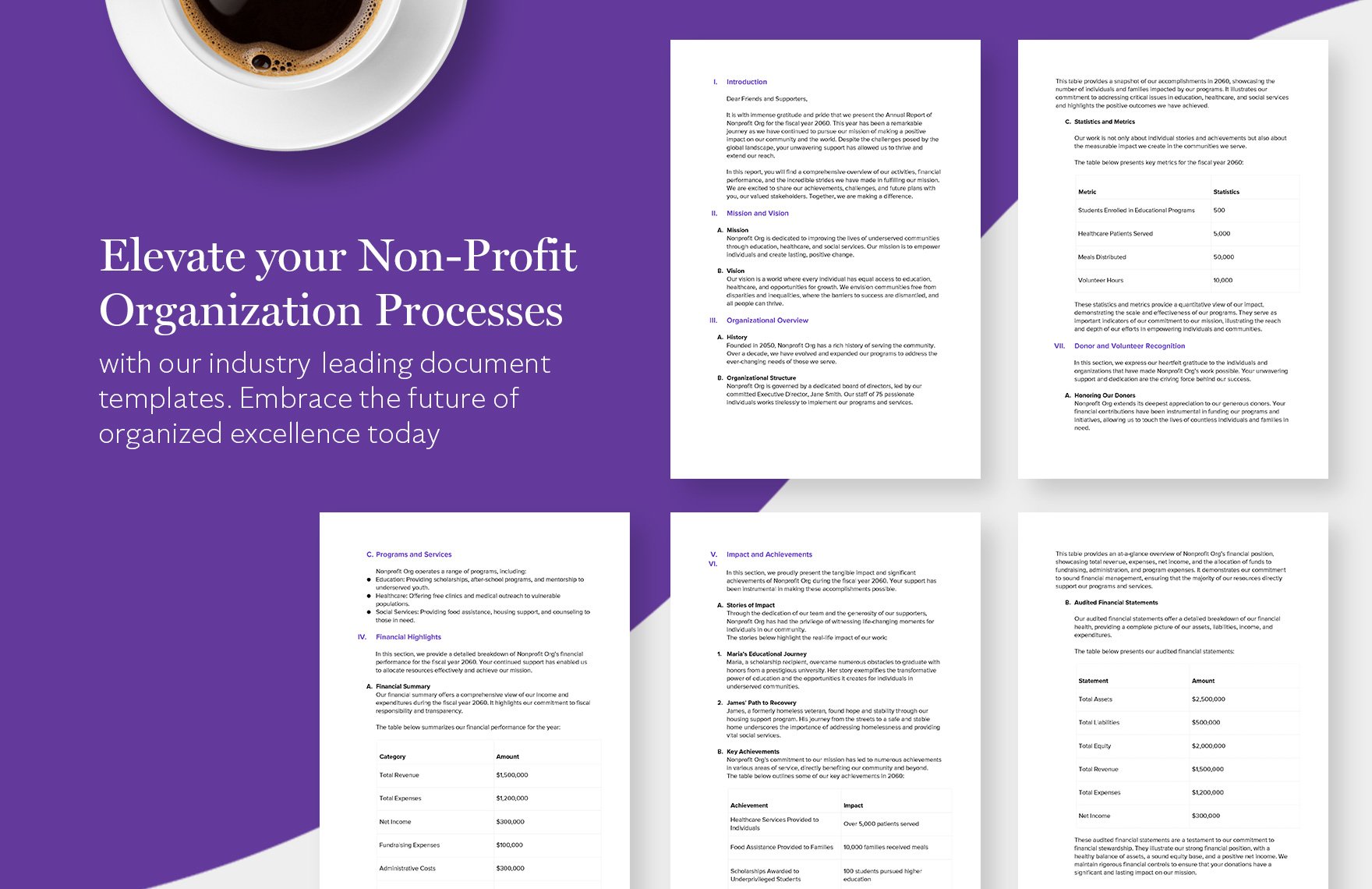
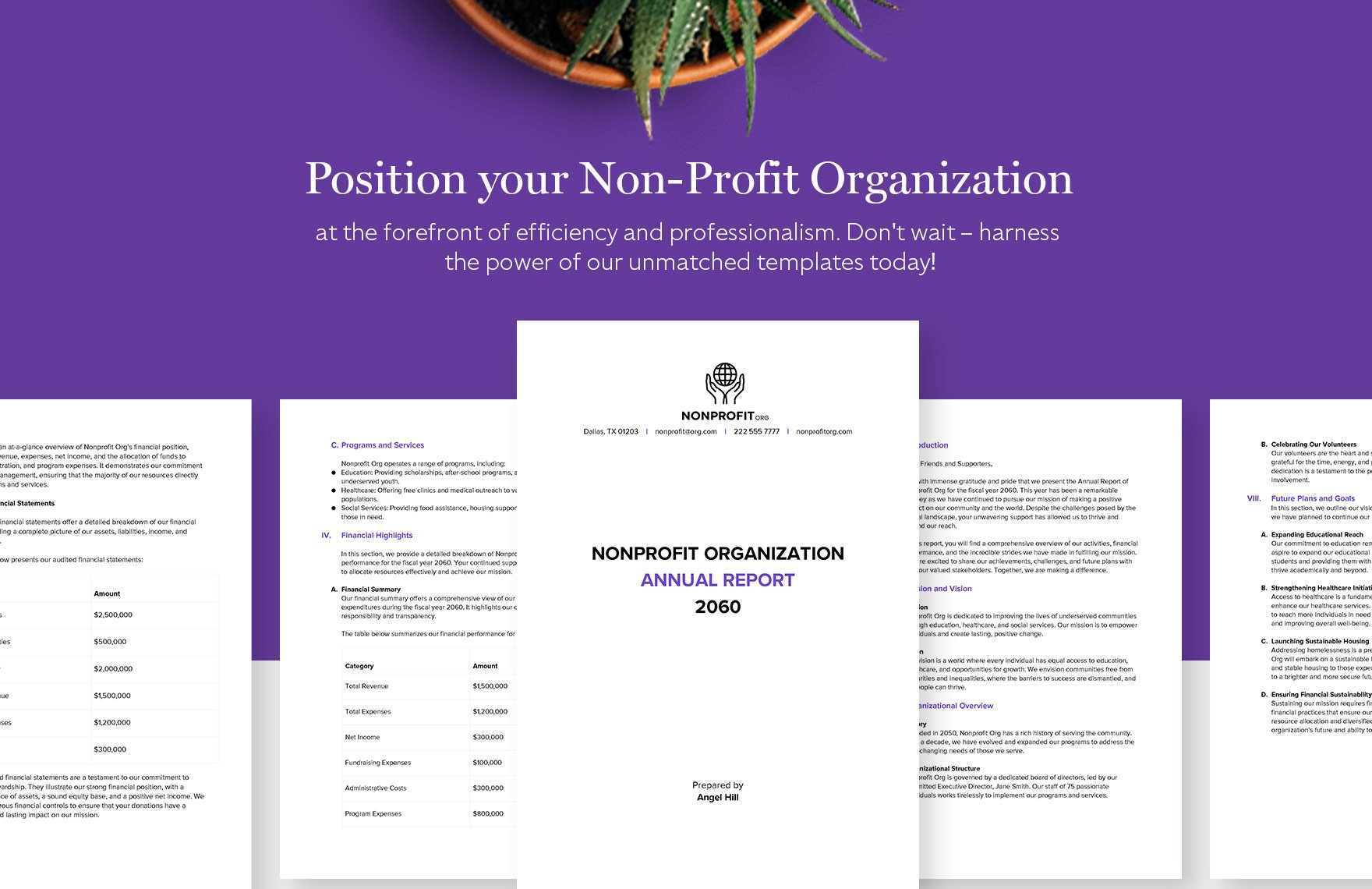
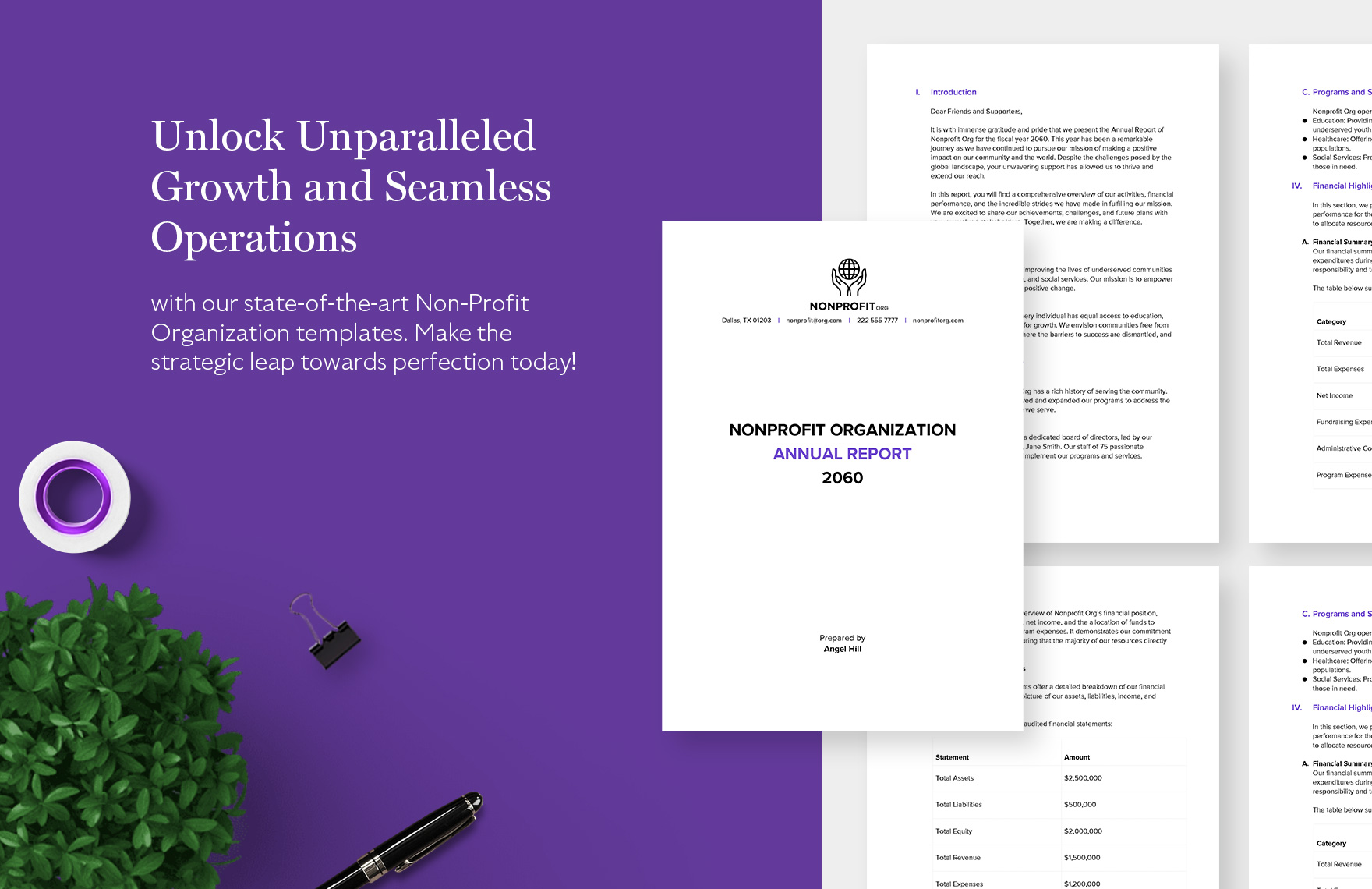
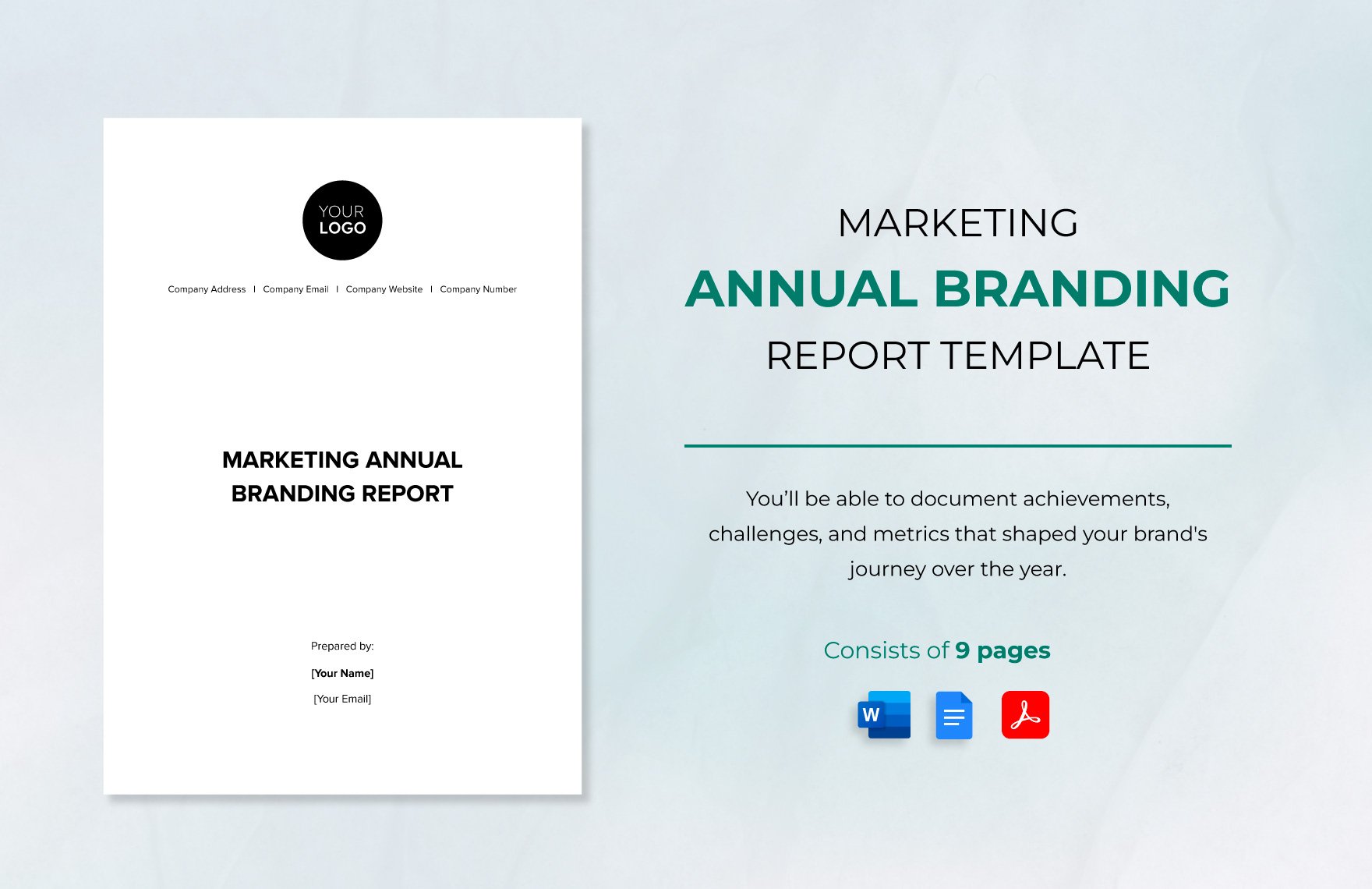
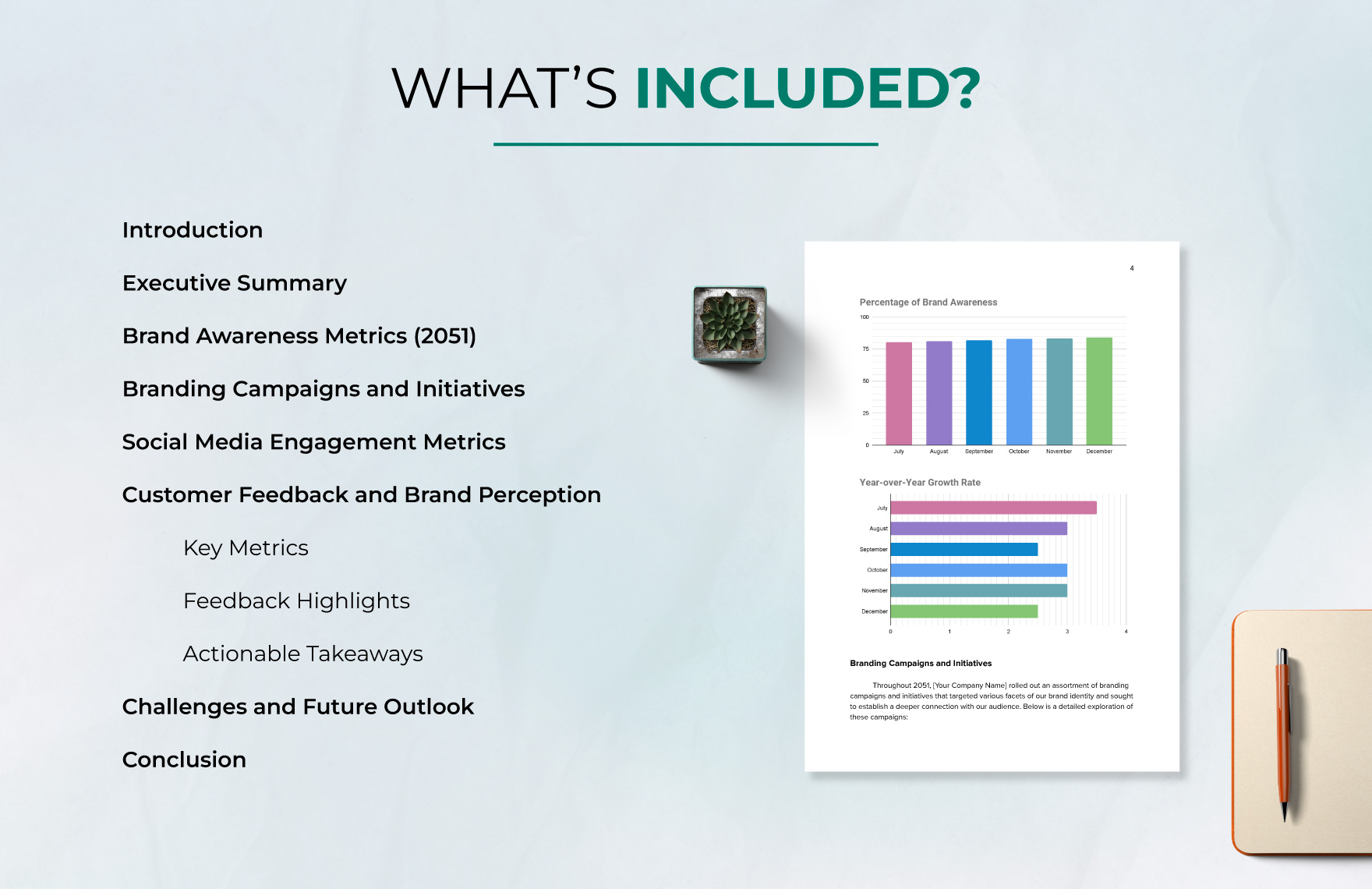
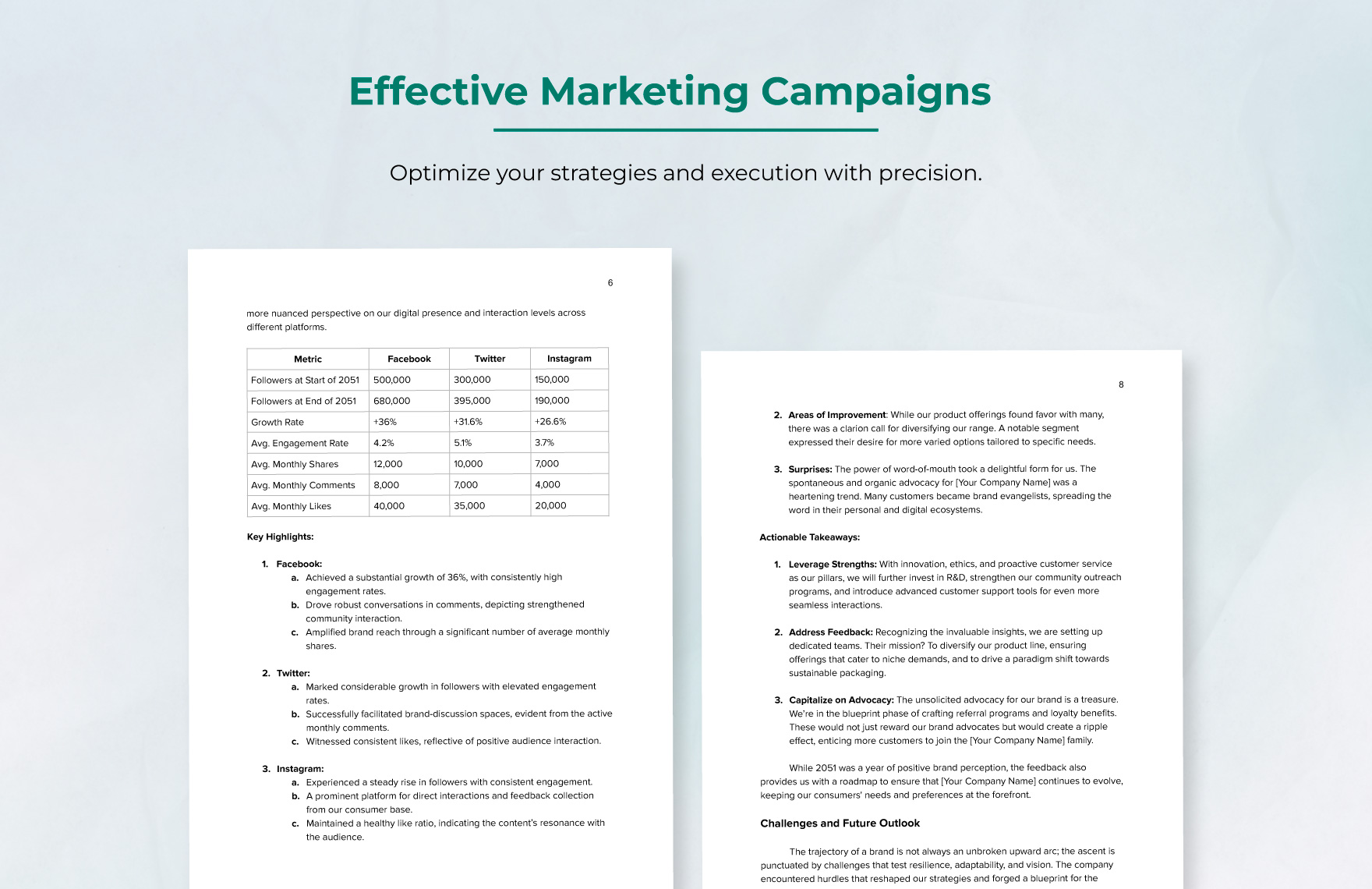
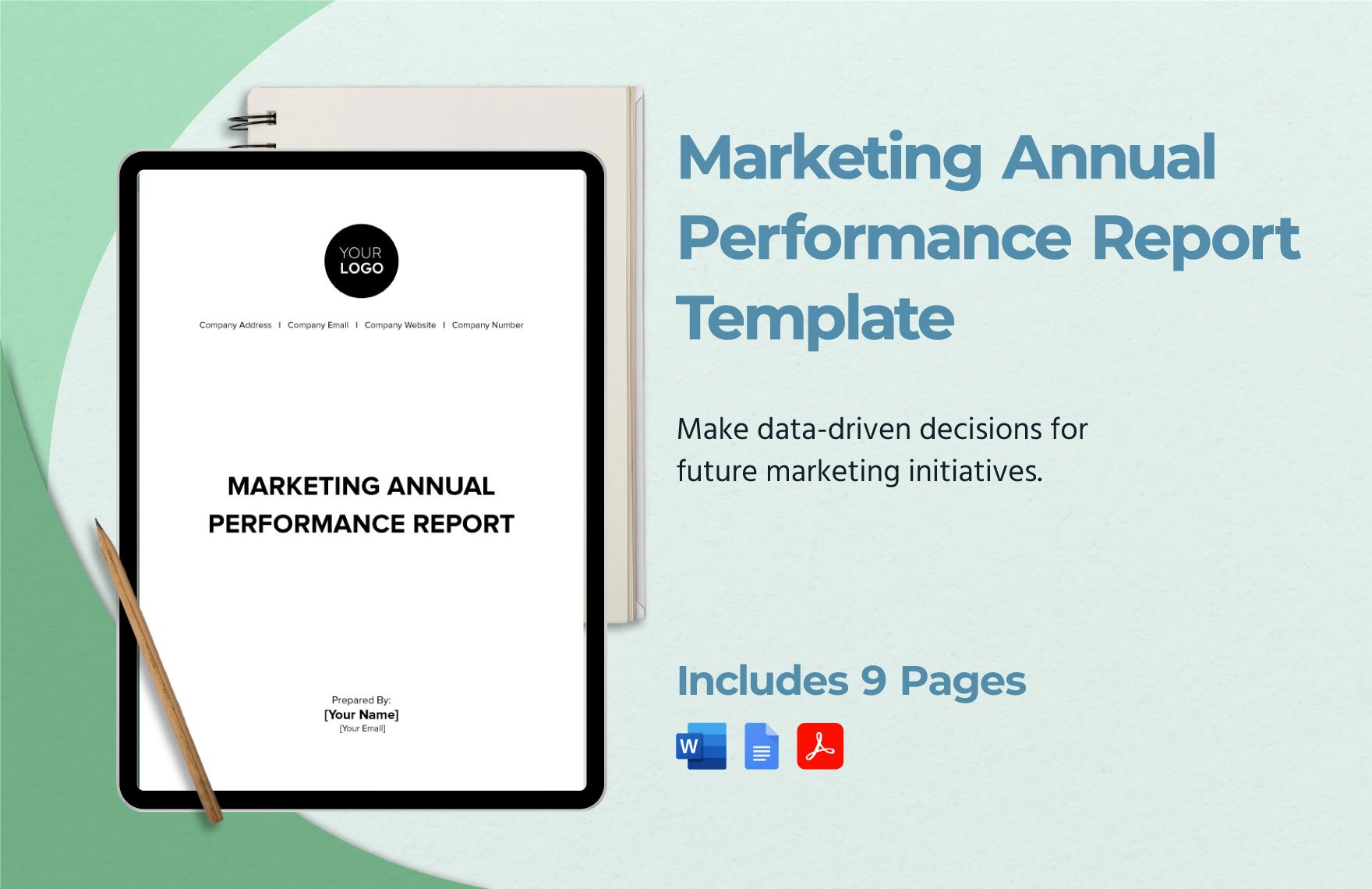
A marketing yearly grants and sponsorship report Template is best understood as a structured visual and written record of funding, partnership obligations, marketing activity, financial stewardship, outcomes, and lessons learned. The strongest examples use clear headings, consistent data fields, recognizable reporting periods, and visual summaries that help readers move from funding inputs to activities and then to results. Grant-report examples commonly separate narrative progress from financial information, while annual marketing reports often organize objectives, key performance indicators, channel performance, financial results, and recommendations. These reference visuals illustrate the kinds of layouts that can inform a tailored annual reporting structure without implying that any one design is an official standard.
The following examples help readers evaluate how a marketing yearly grants and sponsorship report Template can communicate information visually. Some emphasize grant pipelines and budget categories, others focus on sponsor contributions, while others demonstrate annual marketing report structures, nonprofit impact sections, and performance summaries. They should be treated as visual references rather than universal reporting requirements. The best final structure should reflect the relevant grant agreements, sponsorship contracts, internal financial controls, organizational objectives, and intended audience.
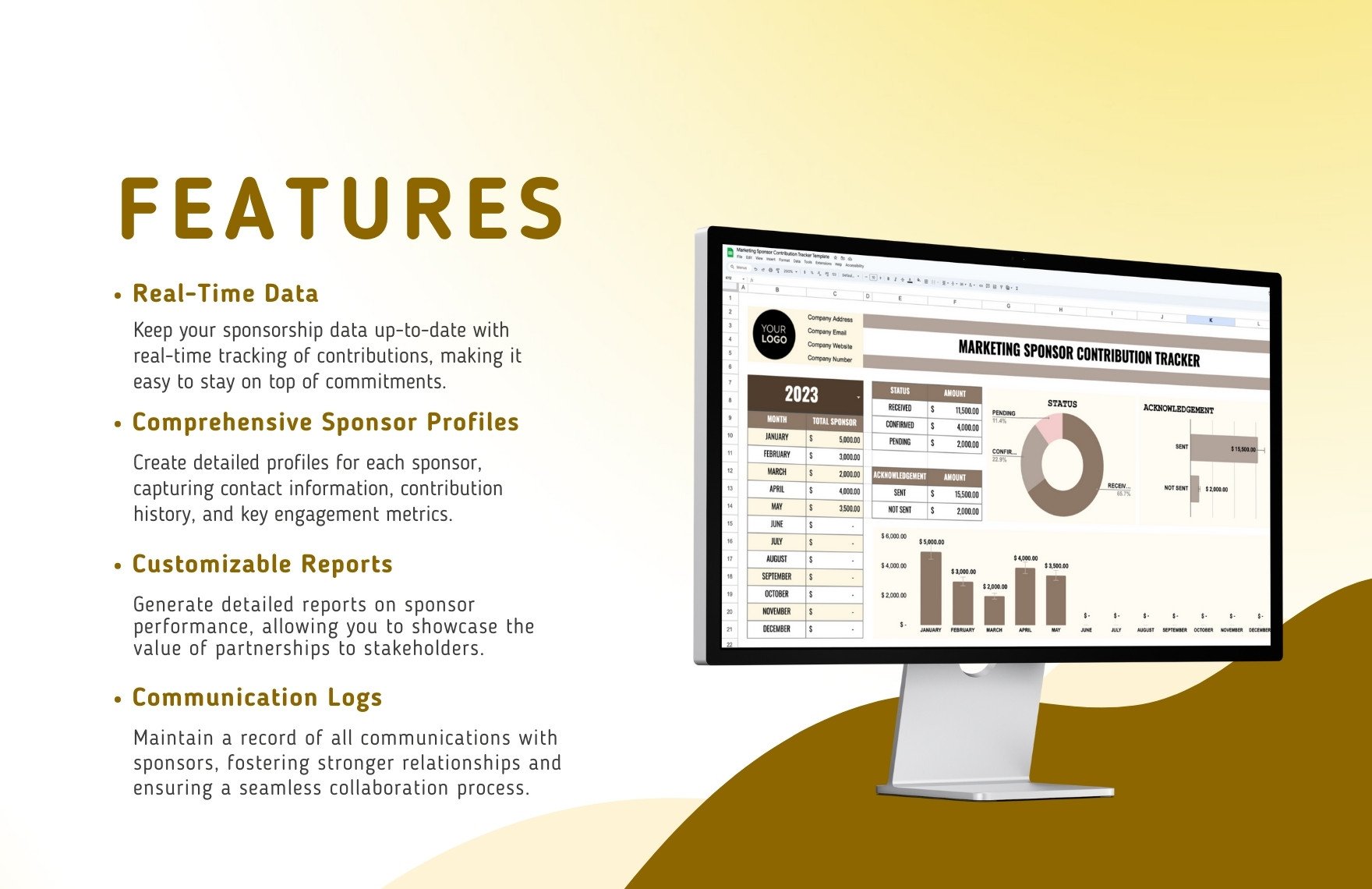
Marketing Sponsor Contribution Tracker Template — Features
Source: Template.net
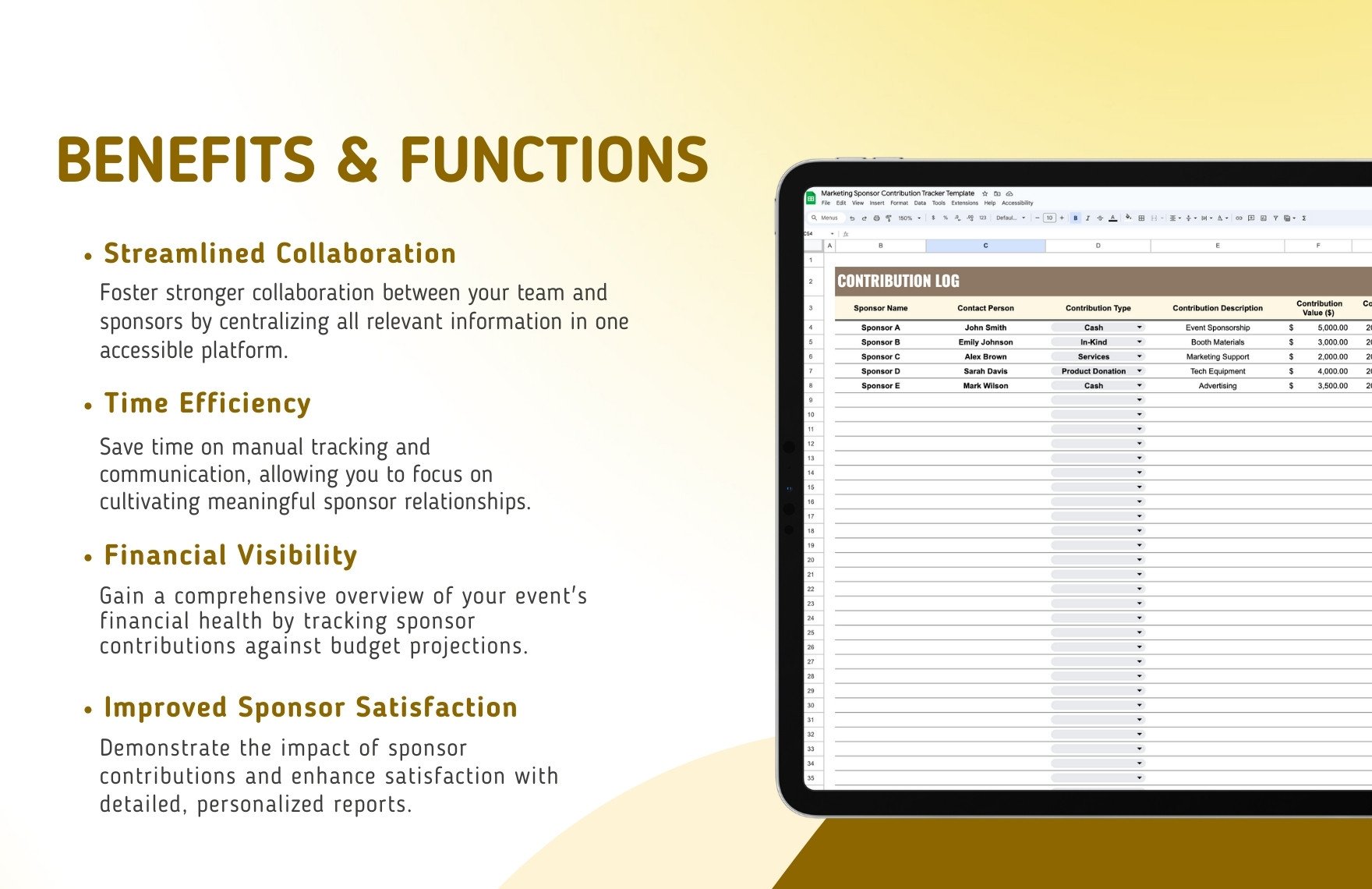
Marketing Sponsor Contribution Tracker Template — Benefits and Functions
Source: Template.net
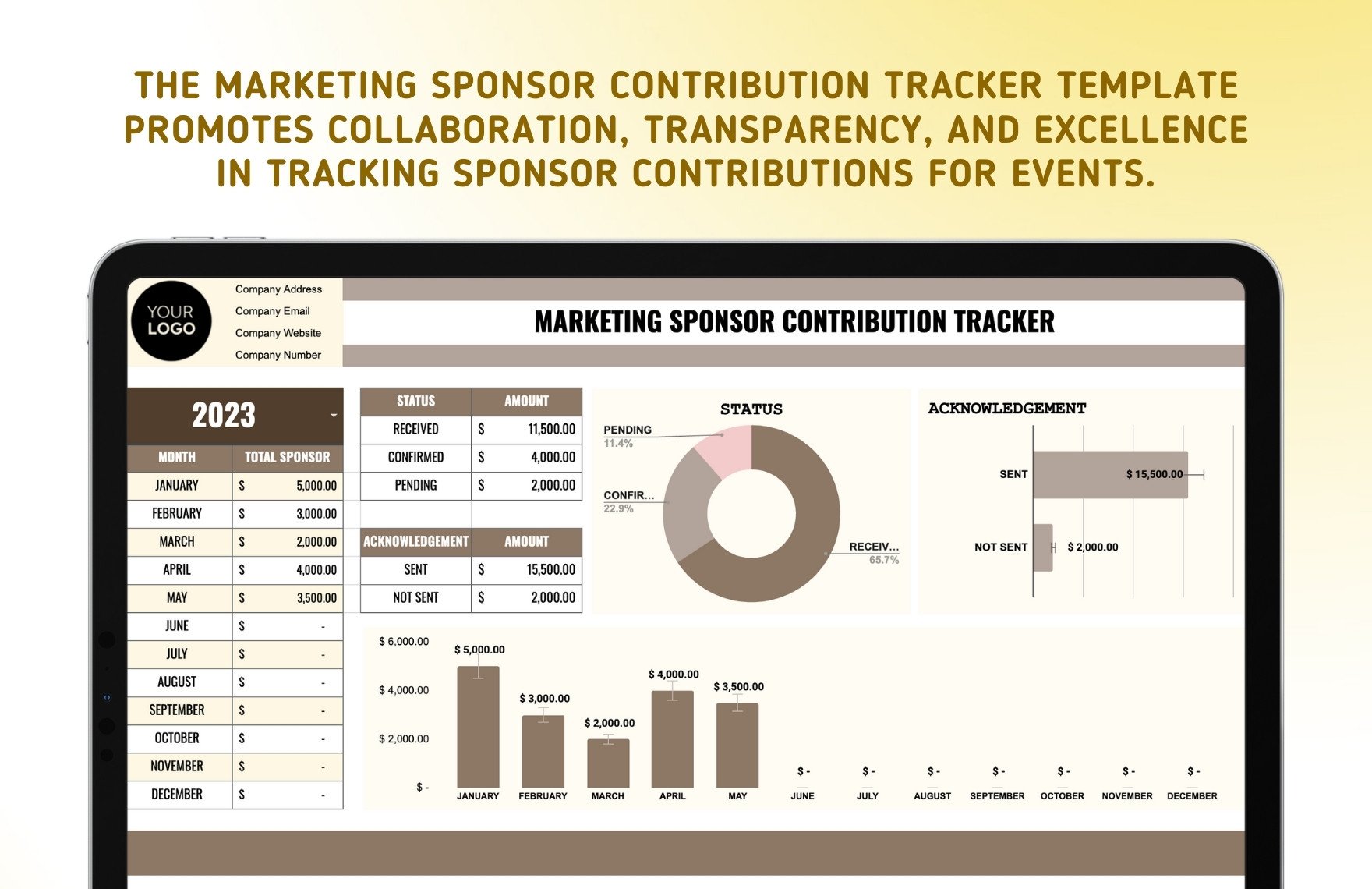
Marketing Sponsor Contribution Tracker Template
Source: Template.net
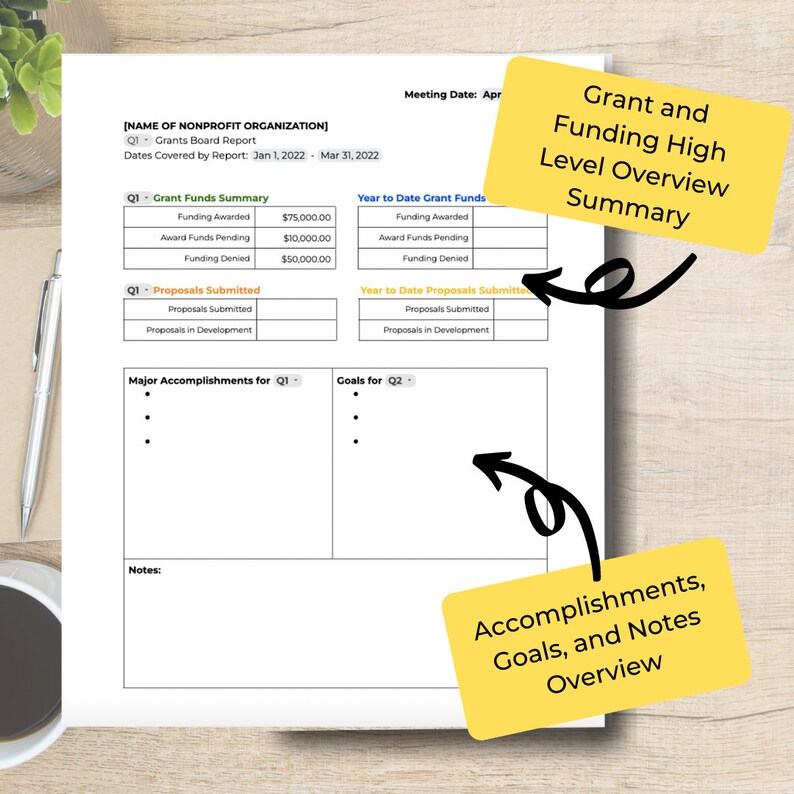
Grant and Funding High Level Overview Summary
Source: GroundRootGrants on Etsy
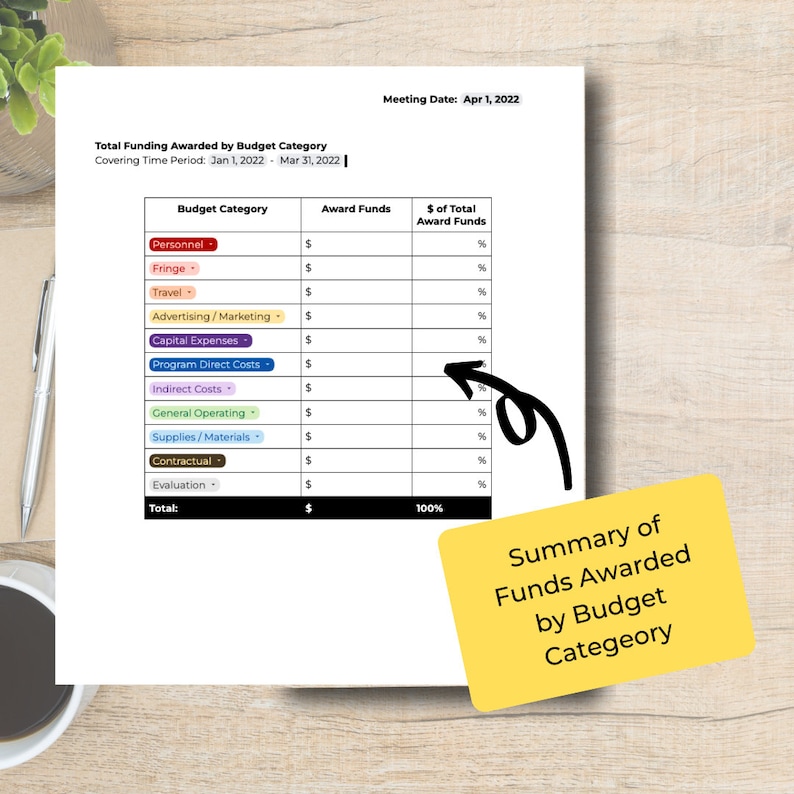
Summary of Funds Awarded by Budget Category
Source: GroundRootGrants on Etsy
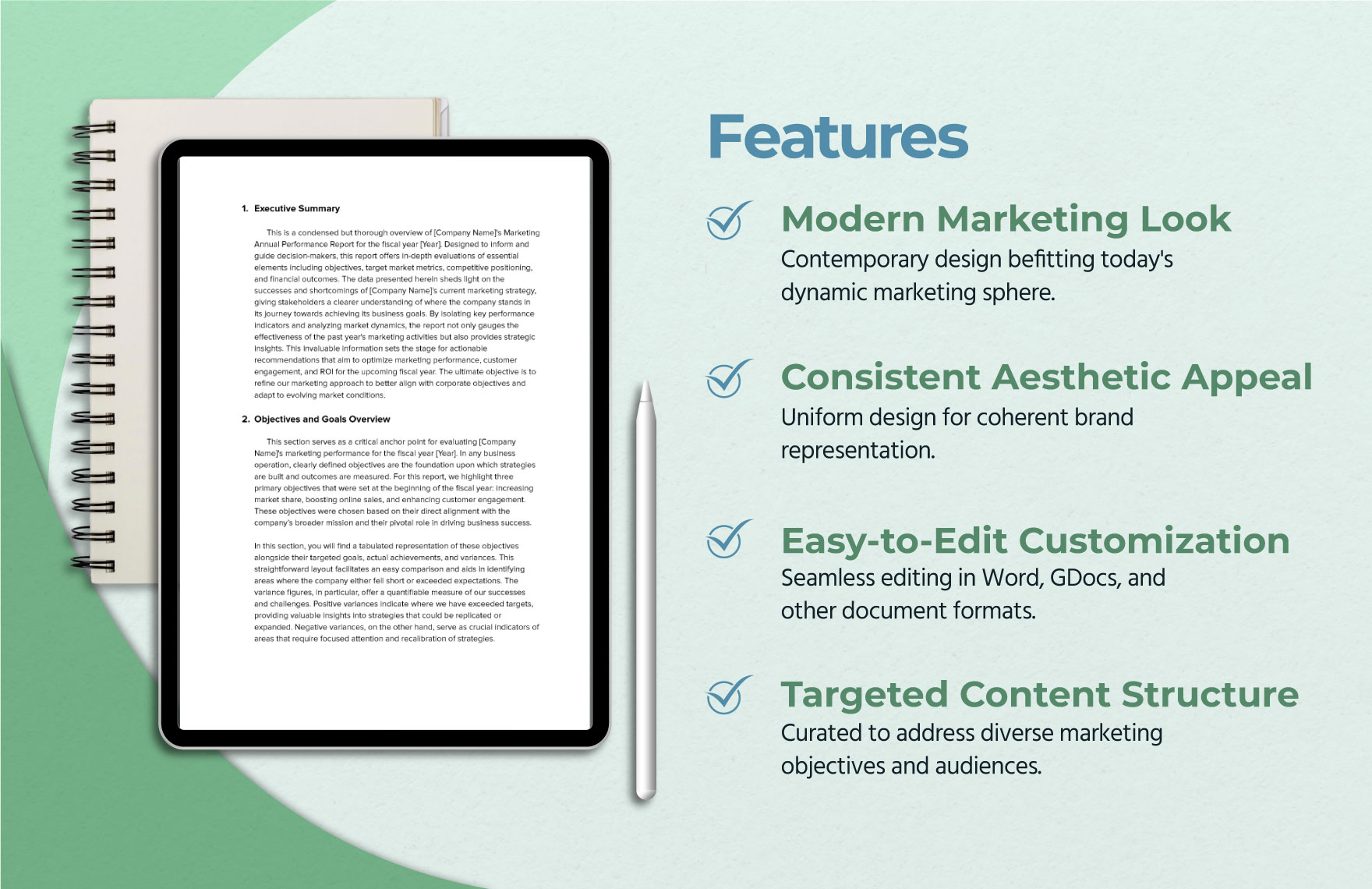
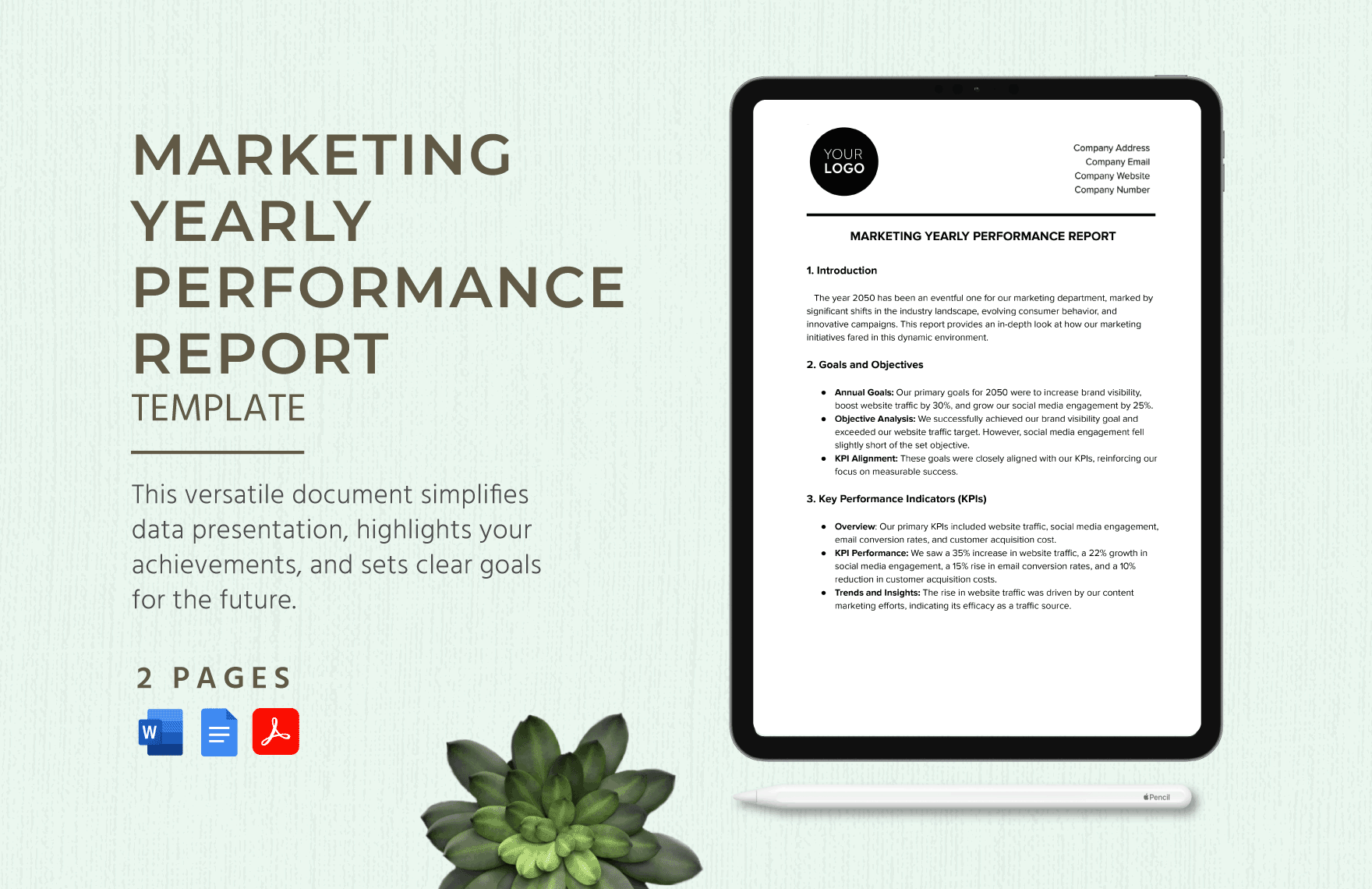
Marketing Annual Performance Report Template — Features
Source: Template.net
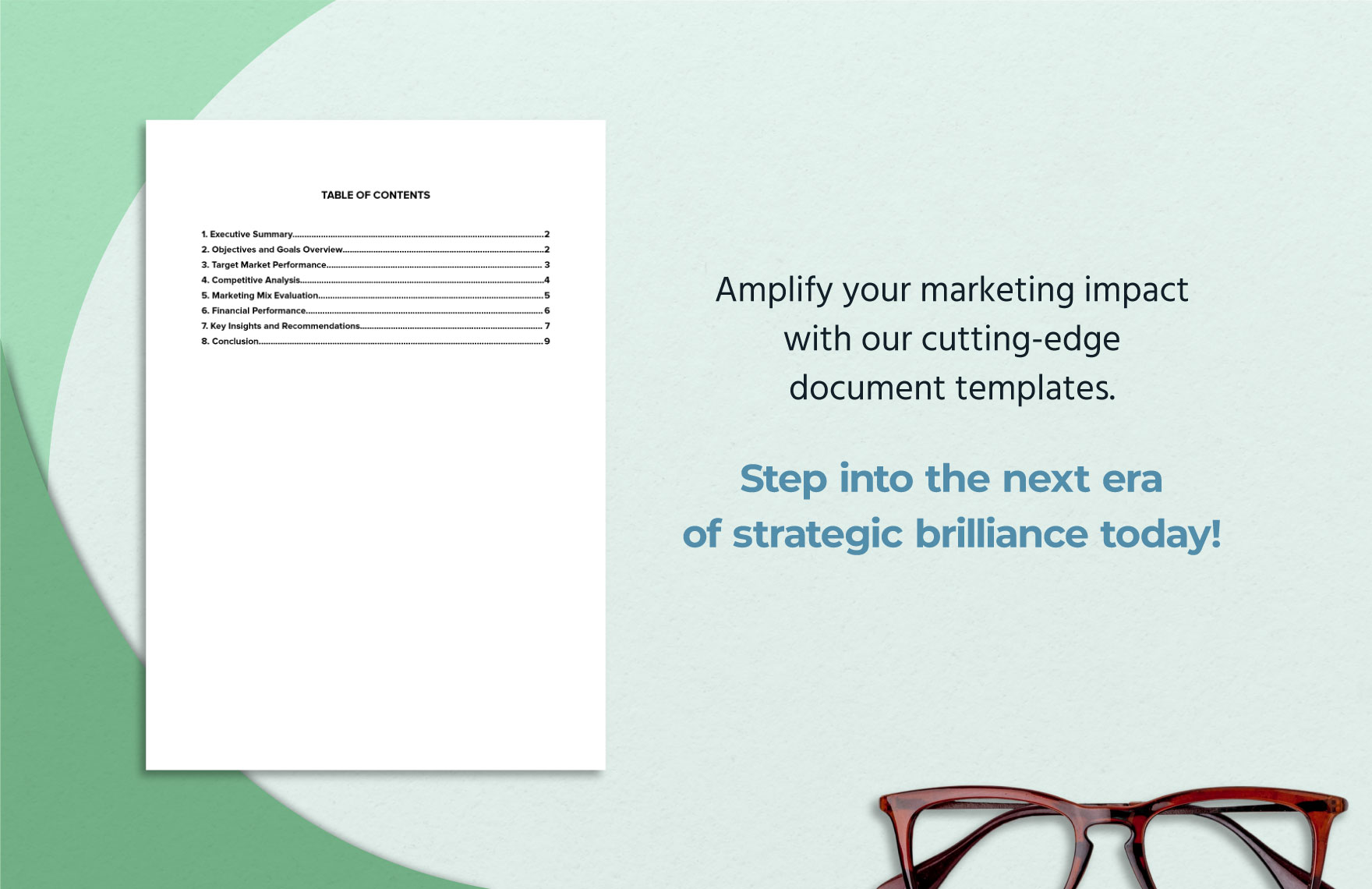
Marketing Annual Performance Report Template — Table of Contents
Source: Template.net

Marketing Annual Content Summary Report Template — Structured Layout
Source: Template.net

Marketing Annual Content Summary Report Template — Document View
Source: Template.net
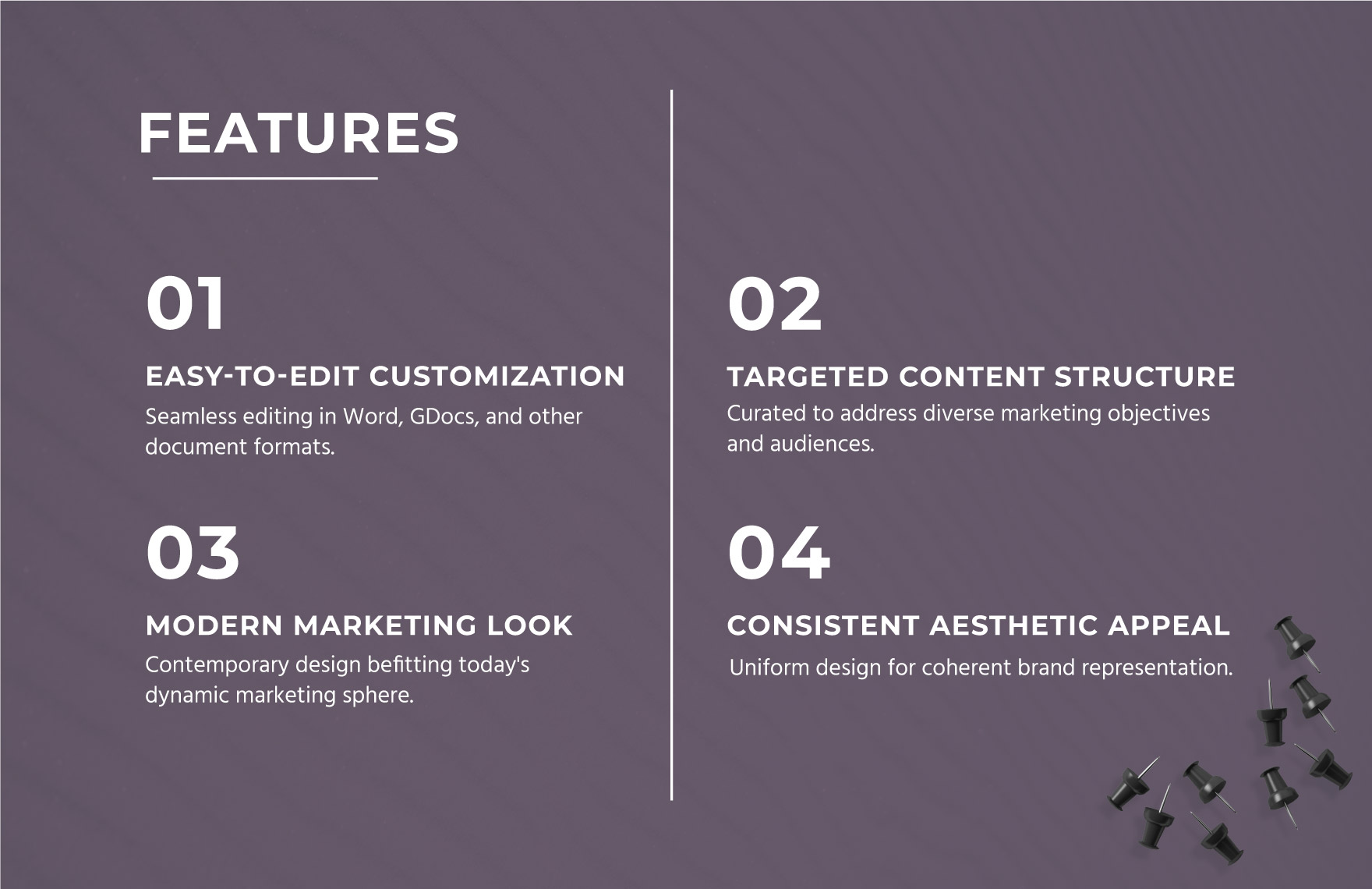
Marketing Annual PR Report Template — Features
Source: Template.net
