A well-structured security specialist job Template gives employers a practical framework for describing the role, defining responsibilities, identifying qualifications, and setting clear expectations for candidates. The title “Security Specialist” can refer to physical security, personnel security, corporate security, information security, or a hybrid position, so the strongest template begins by defining the actual scope rather than relying on the title alone. Current job-description examples commonly emphasize security policies, risk assessment, incident response, monitoring, reporting, access control, compliance, and communication.
For job seekers, the same structure is useful in reverse. A clear description reveals which skills should appear prominently in a resume, which achievements deserve attention, and which qualifications are genuinely relevant. A personnel-security position may emphasize background investigations, clearance processing, records, suitability reviews, and sensitive documentation, while a technical security position may emphasize vulnerability management, security monitoring, incident response, and security controls.
This guide explains how to build and evaluate a professional security specialist job description, how to distinguish physical, personnel, corporate, and cybersecurity responsibilities, and how to connect the description with recruiting and resume needs. It also provides practical wording patterns, screening considerations, examples of responsibilities, and a workflow for adapting the structure to a particular organization without presenting a generic template as an official requirement.

What a Security Specialist Job Description Should Accomplish
A security specialist job description should answer five basic questions: why the role exists, what the specialist is expected to protect, which activities the specialist performs, what qualifications are necessary, and how the role fits into the organization. A vague description such as “responsible for company security” does not provide enough information for either candidates or hiring managers. A useful description translates the broad security objective into observable duties and defined areas of ownership.
The scope is particularly important because “security specialist” is not a universal job definition. One employer may use the title for a professional responsible for access control, CCTV, patrol coordination, and incident reporting. Another may use it for a cybersecurity professional responsible for networks, vulnerability assessments, security monitoring, and incident response. Personnel-security roles can instead focus on background investigations, clearance documentation, suitability reviews, records, and sensitive personnel information.
A strong description therefore starts with the operating environment. State whether the role primarily covers physical facilities, personnel security, information systems, cybersecurity, industrial security, or a combination. Then identify the assets, people, facilities, systems, or information under the role’s responsibility. This makes later sections easier to write because every duty and qualification can be connected to a clearly defined security objective.
Core Components of a Professional Security Specialist Template
The first section should identify the position itself. Include the job title, department, reporting relationship, location or work setting, employment arrangement, and a short role summary. If the position has shift work, on-call expectations, travel, restricted-site access, or unusual working conditions, those details should be identified clearly rather than buried in a later paragraph.
The job summary should be concise but specific. It can explain that the specialist protects organizational assets, supports security operations, assesses risks, maintains controls, investigates incidents, and prepares reports. If the position is technical, the summary can mention systems, networks, monitoring, vulnerability management, or incident response. If it is physical security oriented, the summary can emphasize facilities, access control, surveillance, emergency response, and security personnel coordination.
The responsibilities section should then turn the summary into actionable duties. Good responsibilities begin with verbs such as “monitor,” “assess,” “maintain,” “investigate,” “coordinate,” “review,” “document,” “implement,” “report,” and “evaluate.” The qualifications section should mirror the responsibilities instead of becoming a generic list of desirable traits. This alignment makes the description more useful to hiring teams and gives candidates a clearer basis for judging their fit.
Position Summary
A useful position summary normally explains the security objective, the environment being protected, and the broad contribution expected from the specialist. For example, a hypothetical corporate role might state that the specialist supports the organization’s security program by monitoring security controls, assessing operational risks, coordinating incident response, maintaining documentation, and advising management on identified vulnerabilities.
The summary should avoid promising responsibilities the position does not actually own. If the specialist only supports incident response rather than leading it, say so. If another department owns cybersecurity infrastructure, do not imply that the specialist administers every technical security control. Accurate scope improves recruiting because candidates understand what they are actually being hired to do.
The summary also provides an opportunity to distinguish a specialist from a manager. A specialist may analyze, monitor, document, investigate, and recommend. A manager may additionally supervise personnel, manage budgets, establish departmental objectives, coordinate vendors, and evaluate program performance. Senior security positions can combine specialist-level technical work with strategic oversight, but that should be explicitly stated.
Security Specialist Responsibilities to Consider
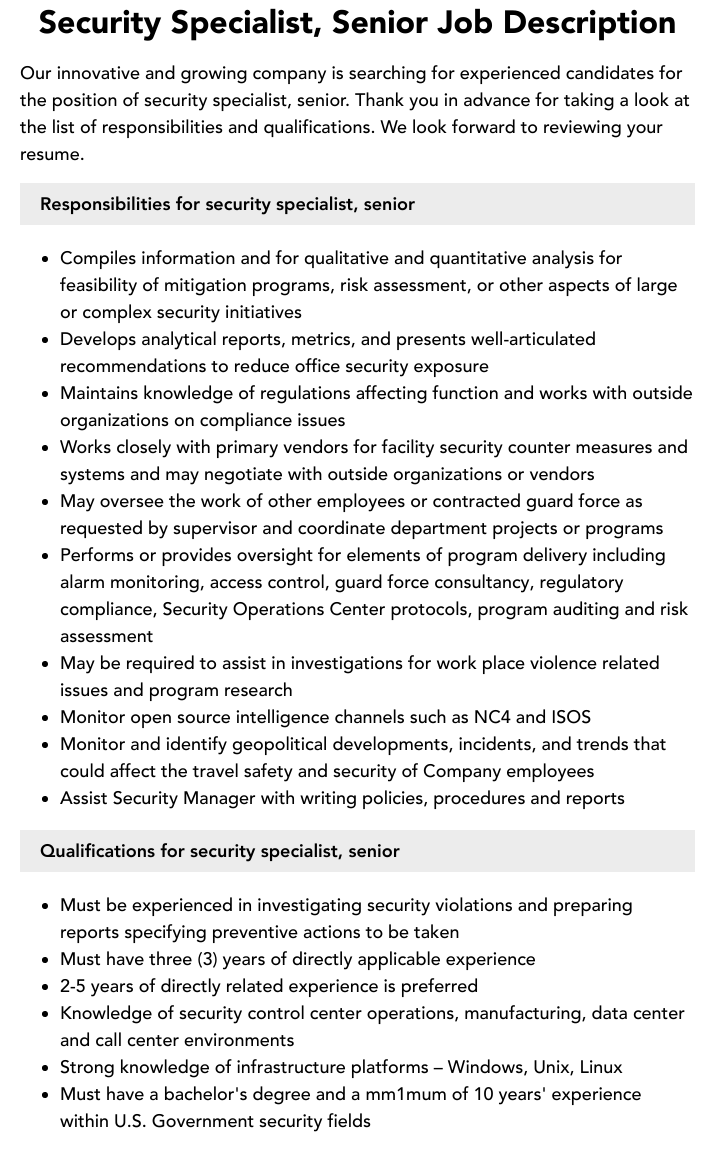
Security responsibilities should be selected according to the role rather than copied as a universal checklist. A general corporate specialist may monitor security systems, review incidents, maintain procedures, perform assessments, and prepare management reports. A facility-focused specialist may inspect access points, review visitor records, coordinate patrols, monitor CCTV, and document incidents. A technical specialist may analyze alerts, investigate suspicious activity, manage vulnerabilities, and support security controls.
Risk assessment is another common responsibility. The specialist may identify threats, examine vulnerabilities, evaluate potential impacts, and recommend mitigation measures. The actual authority should be made clear: some specialists only prepare assessments for management, while others have authority to implement controls or coordinate remediation. Current security job descriptions frequently combine risk assessment with audits, policy development, incident handling, monitoring, and reporting.
Documentation is equally important. Security work often requires records that allow another professional to understand what happened, what was assessed, which controls were considered, and what action was taken. Responsibilities may therefore include maintaining security records, preparing incident reports, updating procedures, recording corrective actions, and producing periodic summaries for management. A template becomes much stronger when these documentation duties are explicit rather than assumed.

Monitoring and Security Operations
Monitoring duties should identify what is being monitored and why. Physical security specialists may monitor access points, alarms, cameras, restricted areas, or visitor activity. Cybersecurity specialists may monitor security alerts, logs, networks, endpoints, or other technical controls. The description should avoid listing tools simply for appearance; tools belong in the requirements when they are genuinely necessary for the job.
Incident response responsibilities should also be proportional to the position. A specialist may receive alerts, perform initial triage, document events, escalate serious incidents, support containment, and contribute to post-incident analysis. A senior specialist may coordinate investigations and remediation. A manager may own the broader response process. Defining these distinctions helps prevent overlapping responsibilities between security, IT, facilities, human resources, and management.
Reporting completes the operational cycle. A useful description can require accurate incident documentation, risk summaries, audit findings, trend reports, or management briefings. Reports should be written for their intended audience, because a technical analyst may prepare detailed findings while an executive-facing report may need concise risk statements, business impact, priorities, and recommended decisions.
Personnel Security and Clearance-Focused Roles
Personnel security is a distinct specialization that deserves its own wording. A personnel security specialist may review security documentation, support background investigations, manage clearance-related records, conduct suitability-related reviews, coordinate required submissions, and maintain accurate case information. Current personnel-security examples also describe work involving security questionnaires, investigation documentation, records management, clearance processing, briefings, and communication with relevant agencies or internal stakeholders.
For this type of position, confidentiality and accuracy should be prominent. The job description should explain that sensitive personnel information must be handled according to applicable organizational rules and legal requirements. It should also specify whether the role performs administrative processing, analytical review, investigative support, adjudicative support, or a combination of these activities. Those distinctions can materially affect the candidate profile.
A resume for personnel security specialist candidates should consequently emphasize relevant experience rather than generic security language. Useful areas may include clearance processing, personnel investigations, records management, compliance review, case tracking, security databases, written analysis, and communication involving sensitive matters. Employers should similarly ensure that the description asks only for credentials and experience that genuinely relate to the position.

Security Clearance Requirements
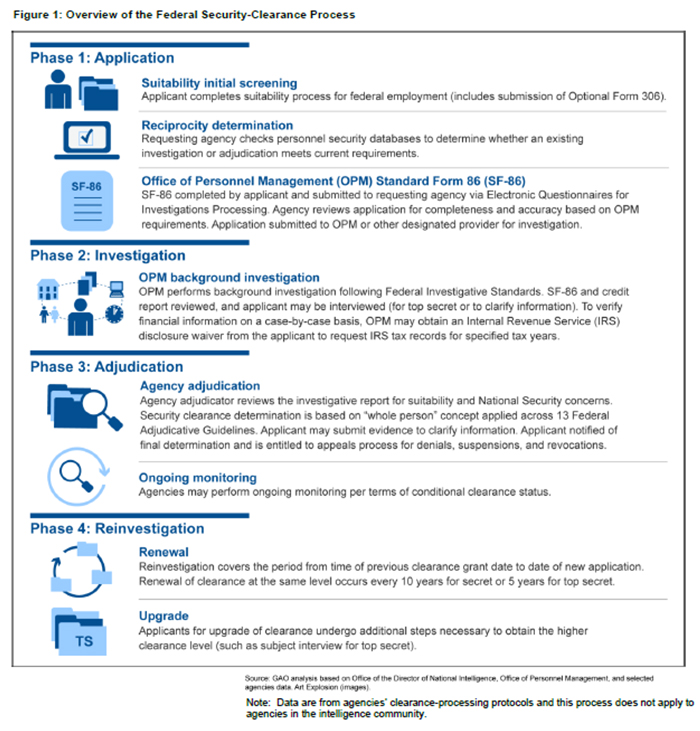
Clearance requirements need special care because they vary by employer, position, contract, jurisdiction, and access needs. A job description should not imply that every security specialist position requires a particular clearance. When a clearance is genuinely required, the employer should identify the applicable level and explain whether it must already be held or whether eligibility to obtain it is sufficient, subject to the employer’s actual process.
Personnel-security professionals may work with forms, investigation records, identity verification, suitability information, access documentation, and other sensitive records. Federal examples show that personnel-security work can involve reviewing forms and derogatory information, evaluating suitability or eligibility issues, preparing cases, and maintaining security systems. :contentReference[oaicite:5]{index=5}
Applicants should never claim a clearance, certification, investigation, or technical competency they do not actually possess. A well-written resume should distinguish active credentials from past credentials, pending eligibility, and ordinary experience. This is especially important for security positions because credibility, confidentiality, and accuracy are themselves part of the professional profile.
Physical and Corporate Security Specialist Roles
Physical security positions often focus on protecting facilities, equipment, personnel, and controlled areas. Responsibilities may include access control, surveillance, patrol coordination, alarm response, visitor management, incident reporting, security inspections, and liaison with emergency or law-enforcement organizations when appropriate. The exact combination depends on the site and should be stated directly.
Corporate security specialists may operate at a broader program level. They can support policies, risk assessments, investigations, security awareness, business continuity, executive protection coordination, or vendor oversight. A manager-level role may additionally supervise security officers and evaluate the effectiveness of security operations. Public-sector classifications for chief security roles similarly describe planning, directing, managing, implementing, and evaluating security programs.
For leadership positions, the description should distinguish authority from participation. A specialist who prepares a risk assessment is different from a security manager who approves the mitigation strategy. A supervisor who schedules officers is different from an officer who performs patrols. Clear reporting lines and decision rights reduce confusion and make performance expectations easier to evaluate.
Cybersecurity Specialist Roles
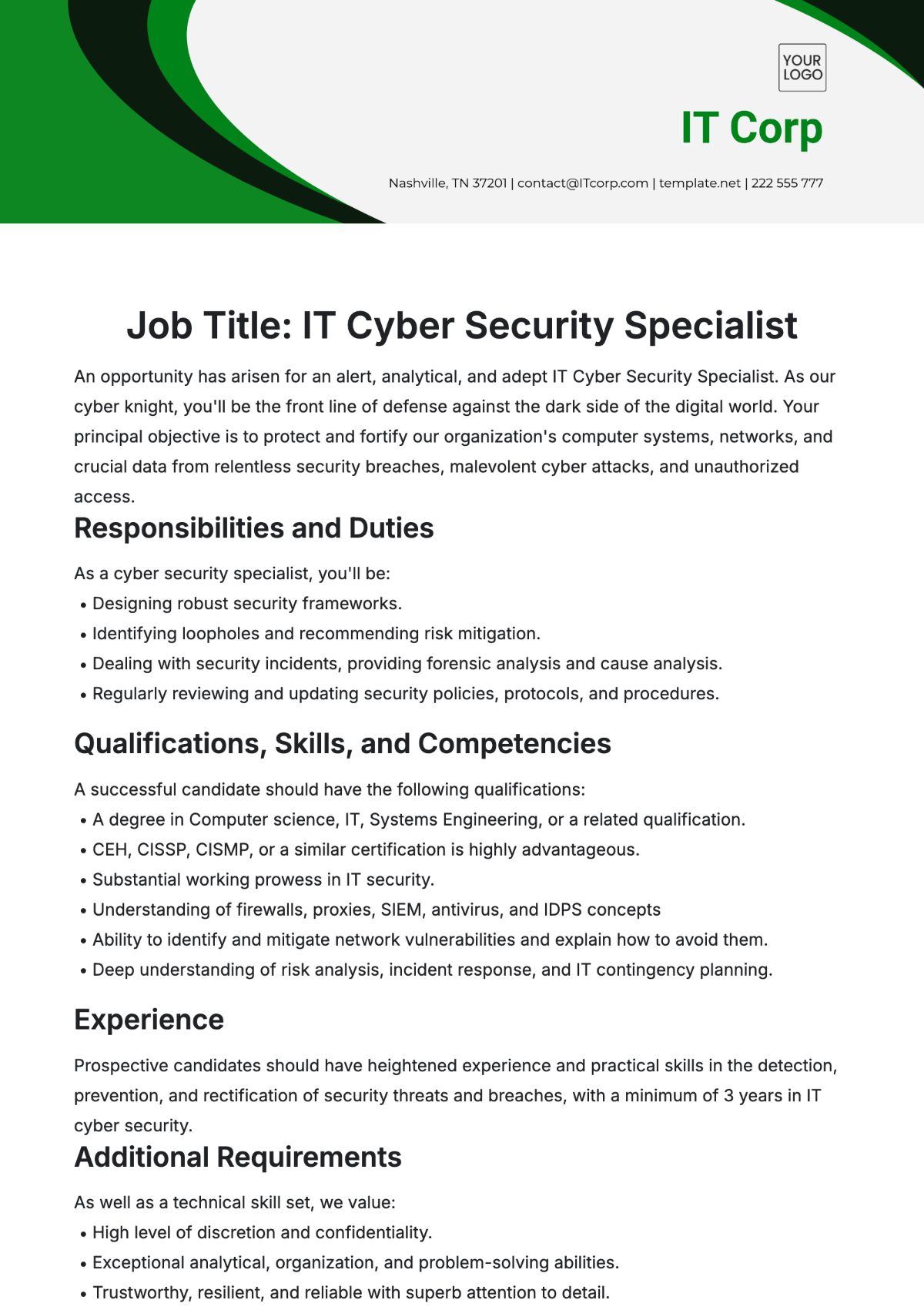
Cybersecurity specialist descriptions often cover digital assets rather than physical premises. Common areas include security monitoring, vulnerability assessment, incident response, security controls, policy maintenance, network protection, access management, and security awareness. Workable, for example, describes computer-security responsibilities around implementing security measures, monitoring network activity, and responding to security breaches.
Technical requirements should be tied to the actual environment. If the role requires SIEM experience, identify the platform or explain the capability expected. If vulnerability management is important, specify whether the specialist is expected to conduct assessments, interpret results, coordinate remediation, or all three. Similar care should be applied to cloud security, identity management, endpoint security, encryption, and security testing.
Do not turn a cybersecurity job description into a catalogue of every security technology in existence. Excessive requirements can obscure the most important qualifications and make the position look unrealistic. A focused description identifies the few capabilities that are genuinely necessary, then separates preferred qualifications from essential requirements.
Qualifications, Skills, and Experience
The qualifications section should reflect the work. Education can be described as required, preferred, or equivalent experience depending on the employer’s genuine needs. Relevant fields may include security management, criminal justice, information technology, cybersecurity, computer science, risk management, or another discipline appropriate to the position. There is no universal educational requirement for every security specialist role.
Experience requirements should be equally specific. Instead of saying “security experience preferred,” identify the type of experience that matters. Examples include security operations, incident investigation, access control, personnel security processing, security auditing, risk assessment, vulnerability management, compliance, or security systems administration. This gives candidates a meaningful way to assess whether their background fits.
Soft skills also matter, but they should be expressed in job-related terms. Security specialists commonly need sound judgment, discretion, analytical thinking, communication, organization, attention to detail, and the ability to remain composed when handling incidents. These characteristics become more useful when connected to actual duties, such as preparing accurate reports, escalating issues, coordinating stakeholders, or handling sensitive information.
How to Connect the Job Description With a Resume
A strong job description naturally informs resume writing. Candidates should identify the employer’s highest-priority responsibilities and then present evidence from their own experience that matches those areas. Indeed’s guidance for security specialist resumes similarly recommends selecting a clear format, emphasizing relevant experience, and tailoring the document to the position.
A resume template for security officer roles may prioritize patrols, access control, incident reporting, surveillance, emergency response, and site safety. A technical security resume should instead emphasize monitoring, risk analysis, security controls, incident response, vulnerability management, and technical systems. This difference is why there is no single resume structure that is ideal for every security career.
People searching for resume templates for security jobs should treat examples as structural references rather than as scripts to copy. The strongest resume uses truthful achievements and responsibilities from the candidate’s own background. A generic phrase such as “responsible for security” is weaker than a specific description of what was monitored, what process was improved, what type of investigation was supported, or what security documentation was maintained.
Building a Security Job Application Template
A security job application template should collect only information that is relevant to the hiring process and lawful for the organization to request. Depending on jurisdiction and role, this can include contact information, employment history, relevant qualifications, certifications, licenses, availability, and job-specific experience. Sensitive screening information should be handled according to applicable privacy and employment rules.
For security roles, it can be useful to ask candidates to identify relevant certifications or licenses and describe experience with security procedures. Employers should avoid making the form unnecessarily long simply because security work involves extensive vetting. A well-designed process separates ordinary recruiting information from any specialized screening that must be completed later under the organization’s established procedures.
The application process should also be consistent. If one candidate is asked for a certain credential, experience category, or supporting information, comparable candidates should generally be evaluated using the same job-related criteria. Consistency improves the quality of comparisons and helps hiring teams focus on evidence rather than subjective impressions.
How to Handle Word, PDF, and Printable Formats
People searching for security specialist job template pdf or security specialist job template word are usually looking for a format that can be edited, reviewed, printed, or shared internally. The format itself is secondary to the quality of the content. A poorly written document remains poor regardless of whether it is stored as a Word document or PDF.
For internal drafting, an editable document is generally convenient because hiring teams may need to adjust responsibilities, reporting lines, qualifications, work schedules, and organization-specific language. A PDF can be useful when a finalized version needs to be circulated without accidental formatting changes. The important practice is to maintain a controlled master version so that different recruiters or departments do not work from conflicting copies.
Employers should also review the finished document for contradictions. If the summary says the specialist reports to the Security Manager but the responsibilities imply direct executive authority, revise the wording. If the position requires a certification that is not actually necessary, remove it. If a responsibility belongs to IT rather than security, clarify the relationship. Good templates are starting structures, not substitutes for careful role definition.

Risk Assessment and Security Documentation
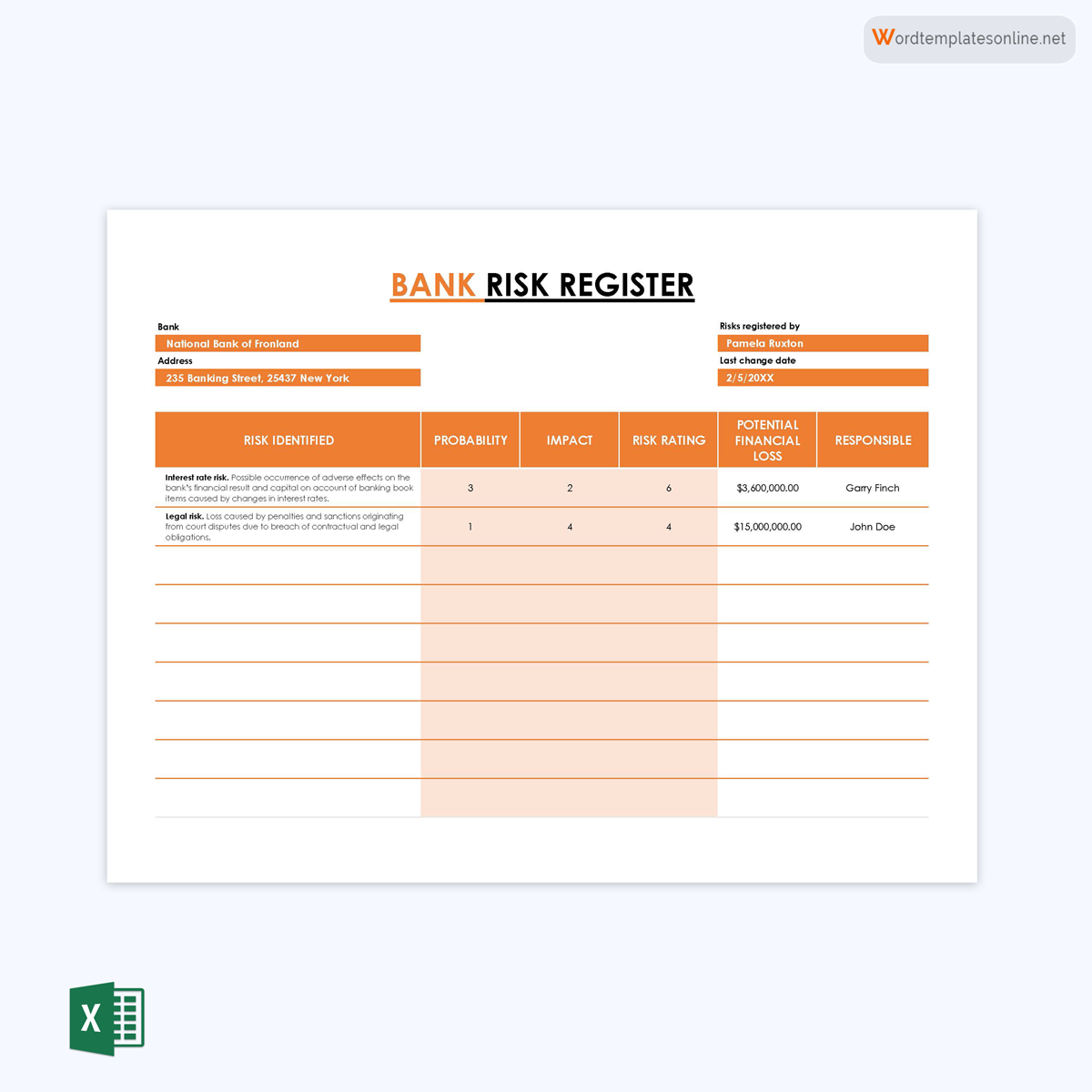
Risk assessment is often where a security specialist moves beyond routine observation into analytical work. A practical risk record can identify the asset or process, describe the threat, explain the vulnerability, estimate impact and likelihood, identify existing controls, assign ownership, and record the proposed mitigation. The exact scoring methodology should follow the organization’s established risk framework rather than being invented inside a job description.
A security specialist job Template can mention risk assessment without pretending that one scoring system applies everywhere. For example, the responsibility may state that the specialist “conducts or supports security risk assessments and prepares documented recommendations for management review.” This wording preserves flexibility while still describing the expected capability.
Risk documentation also provides a useful bridge between security operations and management decisions. A specialist can document a weakness, explain its potential consequence, identify possible controls, and provide enough evidence for a manager to determine priorities. This makes written communication a core professional skill rather than an administrative afterthought.
Risk Registers and Prioritization
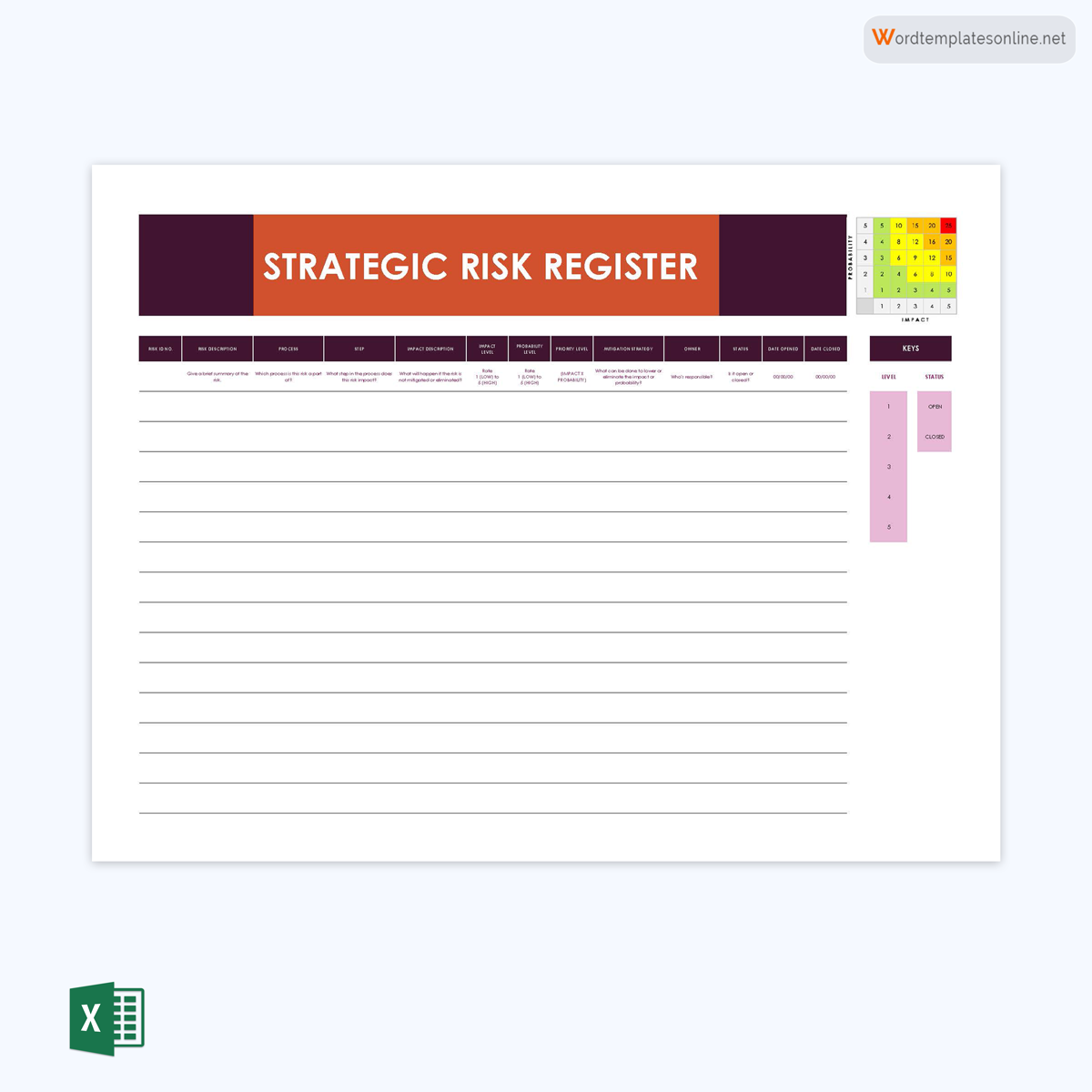
A risk register can be used to keep identified issues visible over time. Typical fields may include a risk identifier, description, likelihood, impact, priority, owner, mitigation strategy, status, review date, and closure date. The exact fields should be adjusted to the organization’s process, but the basic principle is to connect identified risks with accountable action.
Security specialists may contribute by identifying risks, gathering evidence, updating records, monitoring mitigation progress, or preparing summaries. A manager may use the register to prioritize resources. The job description should state which of these activities belongs to the position so candidates understand whether they are expected to perform analysis, administration, coordination, or decision-making.
When evaluating a candidate, recruiters can look for evidence that the person has worked with structured risk information. Relevant examples might include security assessments, audit findings, vulnerability reports, incident trends, physical-security inspections, or personnel-security case reviews. The evidence should come from genuine experience rather than copied terminology.
Incident Response and Reporting
Incident response is another area where role clarity matters. The specialist may be responsible for receiving reports, validating information, escalating events, documenting actions, coordinating with other teams, or conducting post-incident analysis. The description should identify the level of responsibility rather than simply saying “handle security incidents.”
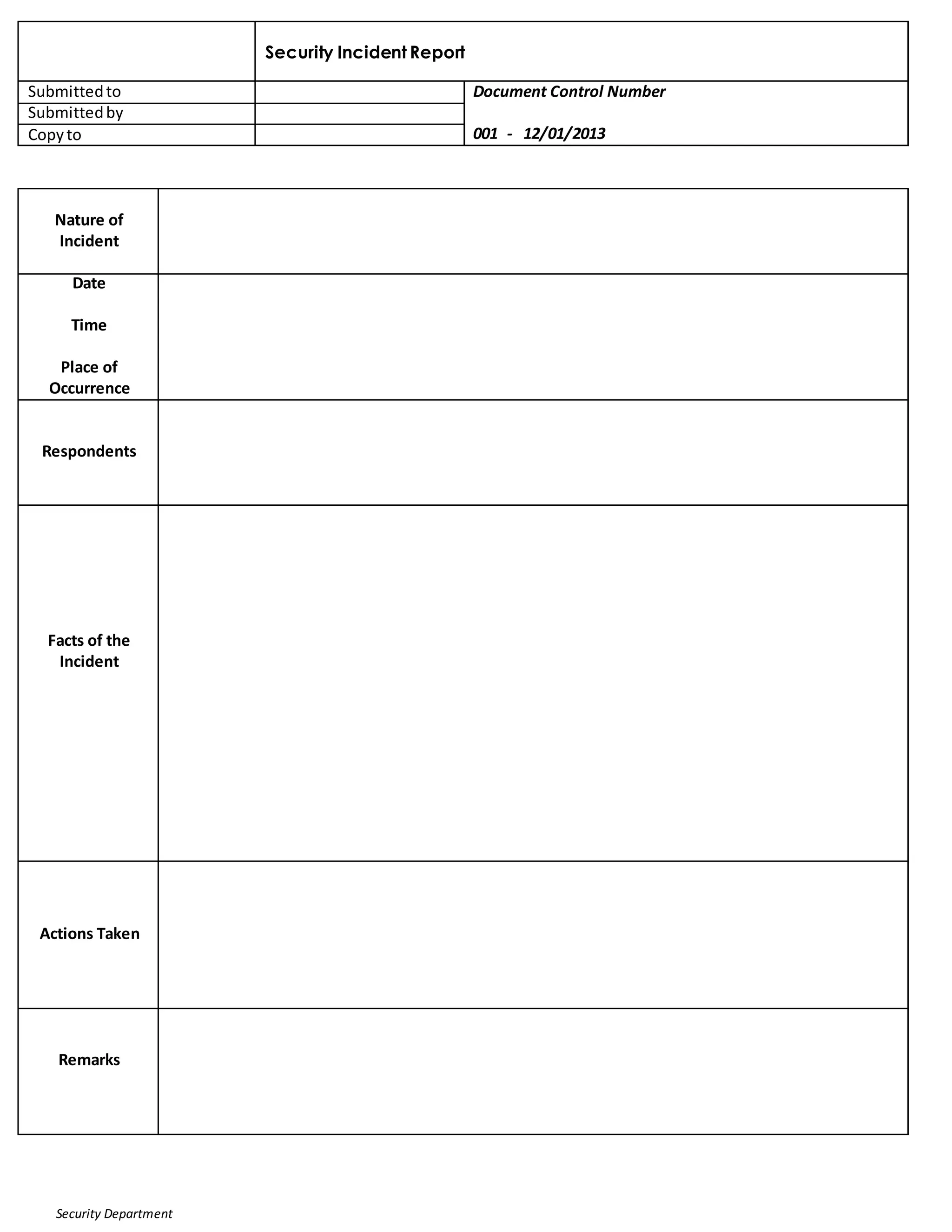
Incident reporting should capture facts rather than speculation. A useful report structure may include the date and time, location or affected system, nature of the incident, known facts, actions taken, notifications made, evidence retained, current status, and follow-up requirements. The exact structure should follow the organization’s established procedures and any applicable legal or regulatory requirements.
Post-incident review can also be part of the specialist’s responsibilities. This may involve identifying contributing factors, documenting lessons learned, recommending corrective actions, and tracking whether improvements were implemented. Such duties demonstrate why a security specialist is often both an operational and analytical role.
Policy, Procedure, and Compliance Responsibilities
Security policies define organizational expectations, while procedures explain how specific activities are performed. A specialist may help draft, review, maintain, communicate, or test these documents. The job description should state the level of involvement. “Supports policy maintenance” is different from “owns the enterprise security policy program.”
Compliance responsibilities should also be tied to real obligations. Rather than listing every possible regulation, identify the frameworks, contractual requirements, or internal standards that genuinely apply to the role. Current security job descriptions frequently mention compliance, audits, security policies, and risk management, but the specific requirements differ substantially by organization. :contentReference[oaicite:9]{index=9}
Review cycles are useful for maintaining accurate security documentation. Policies and procedures can become outdated after changes to systems, facilities, staffing, vendors, or organizational responsibilities. A specialist responsible for documentation should therefore understand version control, review dates, ownership, approvals, and change history where those practices are part of the organization’s security program.
Practical Solution
The most practical way to create a security specialist job description is to begin with the position’s real operating scope. Write down what the specialist protects, which security function they own, which tasks they perform personally, which tasks they support, who receives escalations, and which decisions remain with management. This five-part scope exercise prevents a generic description from becoming an unrealistic list of every security responsibility.
Next, build the document in this order: position details, role summary, core responsibilities, qualifications, preferred experience, working conditions, reporting relationship, and performance expectations. Keep essential qualifications separate from preferred qualifications. If the role involves personnel security, identify the relevant records and clearance responsibilities. If it involves physical security, specify access control, surveillance, patrol, incident response, and site responsibilities. If it involves cybersecurity, identify monitoring, vulnerability, incident, identity, network, or compliance duties that genuinely apply.
Finally, test the description against three hypothetical candidates: an entry-level candidate, a qualified mid-career candidate, and an overqualified senior candidate. Ask whether each would understand what the position actually requires. Then compare the description with the resume criteria and interview questions. If the job description says risk assessment is essential but the interview never tests it, revise the hiring process. If a qualification is never used after hiring, question whether it belongs in the requirements.
A Simple Review Checklist
- Confirm that the job title accurately describes the actual security function.
- State who the position reports to and which responsibilities it owns.
- Separate physical, personnel, corporate, and cybersecurity duties when they are materially different.
- Use action-oriented responsibility statements that describe observable work.
- Match required qualifications to genuine job needs.
- Separate essential qualifications from preferred qualifications.
- State clearance, licensing, travel, shift, or access conditions only when they actually apply.
- Define incident reporting and escalation responsibilities clearly.
- Identify important documentation, audit, compliance, and risk responsibilities.
- Review the finished description for contradictions, unnecessary requirements, and vague wording.
Common Mistakes to Avoid
One common mistake is combining unrelated security disciplines without explaining the relationship between them. A description that asks one person to manage physical patrols, personnel investigations, network engineering, executive protection, and enterprise compliance may describe several jobs rather than one realistic specialist position. If the organization truly needs a hybrid role, the description should identify the approximate scope and the boundaries between responsibilities.
Another mistake is using impressive-sounding requirements without verifying their relevance. Requiring numerous certifications can discourage capable candidates when those certifications are not actually necessary for the work. Similarly, listing every security technology used somewhere in the organization can make a specialist role appear much broader than it is.
A third mistake is failing to distinguish responsibilities from outcomes. “Maintain security” is too broad to guide a candidate. “Review access-control records, investigate anomalies, document findings, and escalate confirmed violations according to established procedures” is much more useful because it identifies observable work. Strong descriptions consistently favor this level of clarity.
Choosing the Right Template for the Role
A general security specialist template works well when the position combines several operational responsibilities without belonging to a narrow specialty. A personnel-security version is better when the role centers on background investigations, clearance processing, suitability documentation, and sensitive personnel records. A cybersecurity version is appropriate when systems, networks, data, security monitoring, and technical controls are central to the position.
A security officer or site-security structure is more appropriate when the work centers on patrols, access control, surveillance, visitor management, alarms, incident reporting, and physical protection. A security manager structure should add team supervision, scheduling, vendor coordination, program oversight, budget or resource responsibilities, and management reporting when those duties are genuinely part of the role.
The key principle is customization. Templates are useful because they provide a logical starting structure, but they should be edited until every statement accurately describes the actual position. Current sources show substantial variation among security specialist roles, which reinforces the need to define scope before finalizing responsibilities and qualifications. :contentReference[oaicite:10]{index=10}

Reference Examples
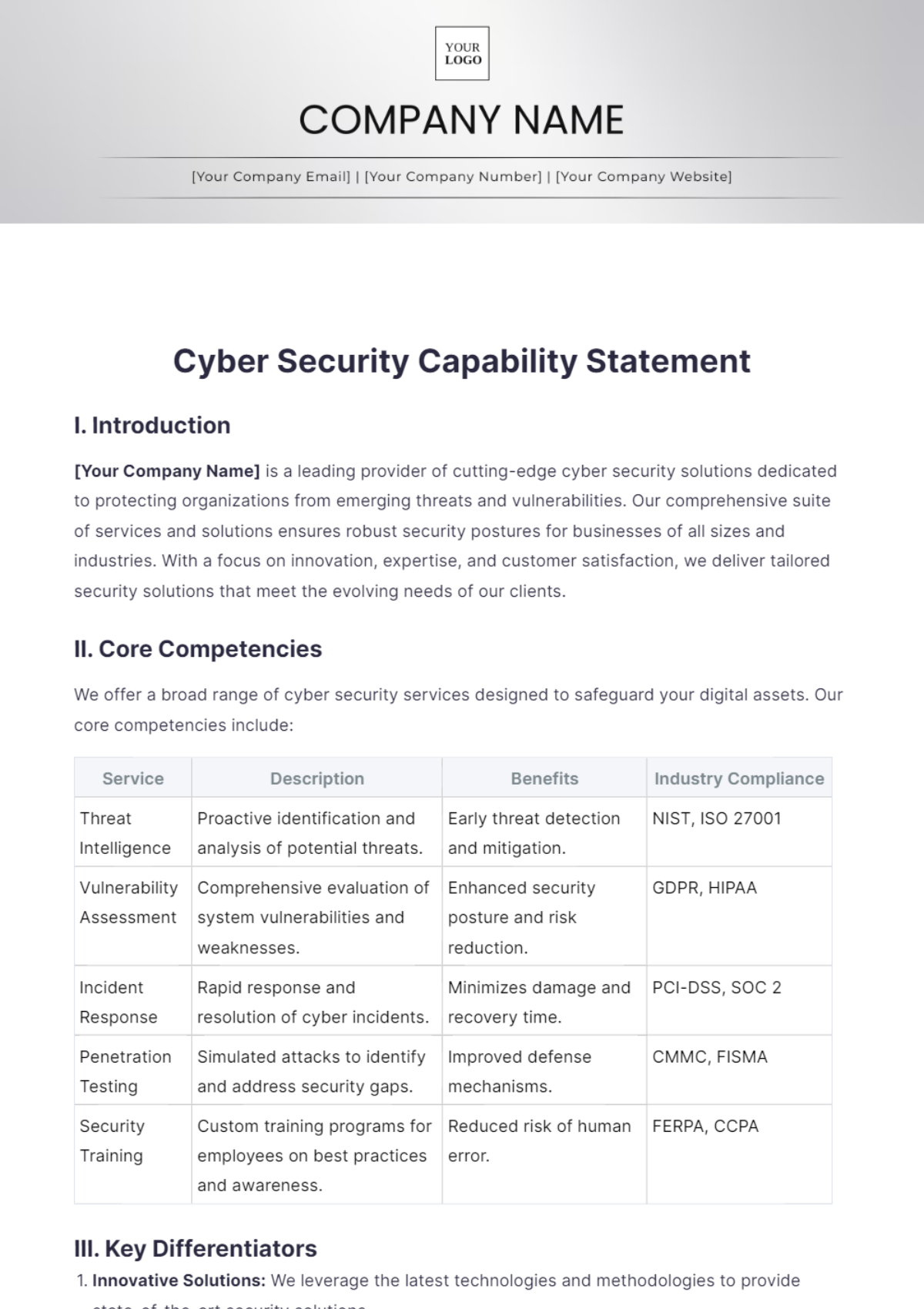
A security specialist job Template is easiest to understand when readers can compare real document structures rather than relying only on abstract descriptions. The strongest examples typically organize information into recognizable blocks such as position summary, responsibilities, qualifications, reporting relationships, security controls, risk considerations, incident handling, and documentation. These visual structures help reveal whether a template is concise enough for recruiting while still providing enough information for a candidate to understand the role. They also show how different security disciplines can use different document architectures without losing the central purpose of clearly defining security work.
The following references illustrate several useful approaches to the security specialist job Template concept, including job descriptions, security policies, incident records, risk registers, and candidate forms. They are presented as visual references rather than universal standards. A reader can compare the layouts, identify useful sections, and then adapt the structure to the actual position being recruited. Because security requirements vary between organizations, these examples should be evaluated for relevance, accuracy, jurisdiction, and operational fit before being adopted for a real hiring process.
Personnel Security Specialist Job Description
Source: VelvetJobs
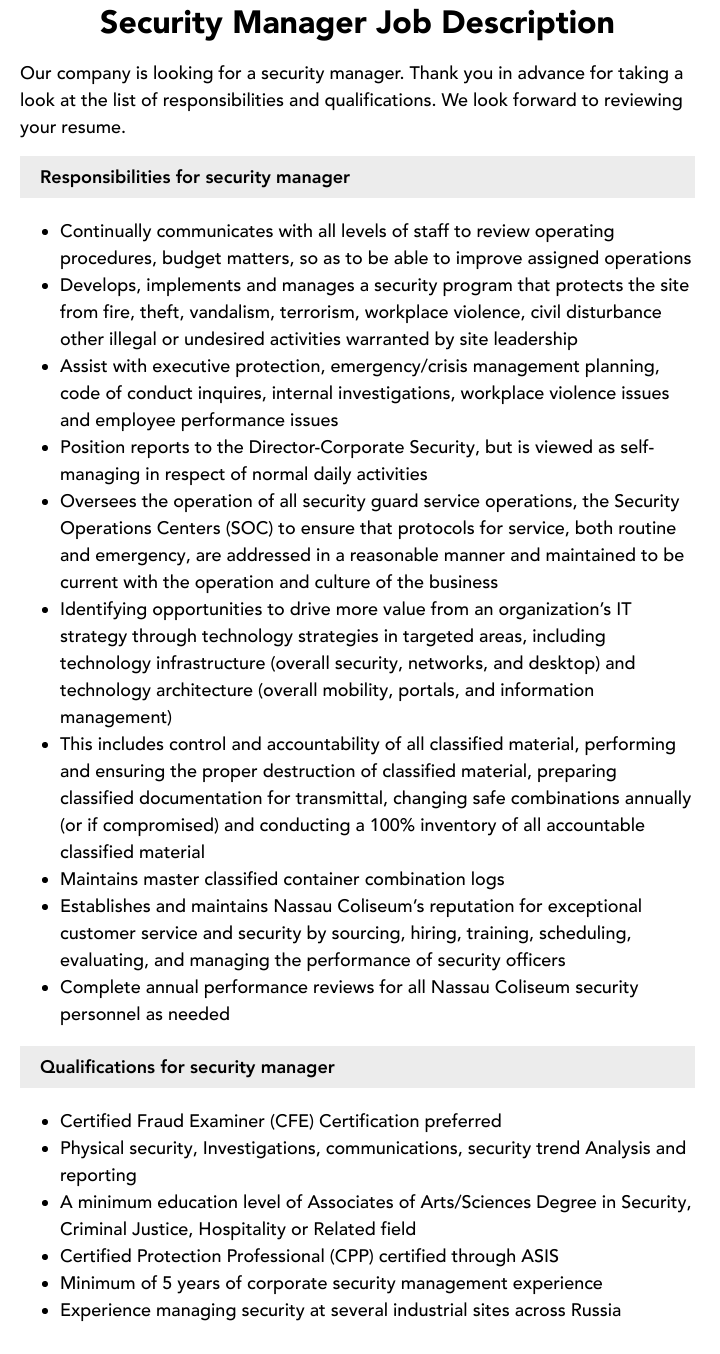
Security Manager Job Description
Source: VelvetJobs
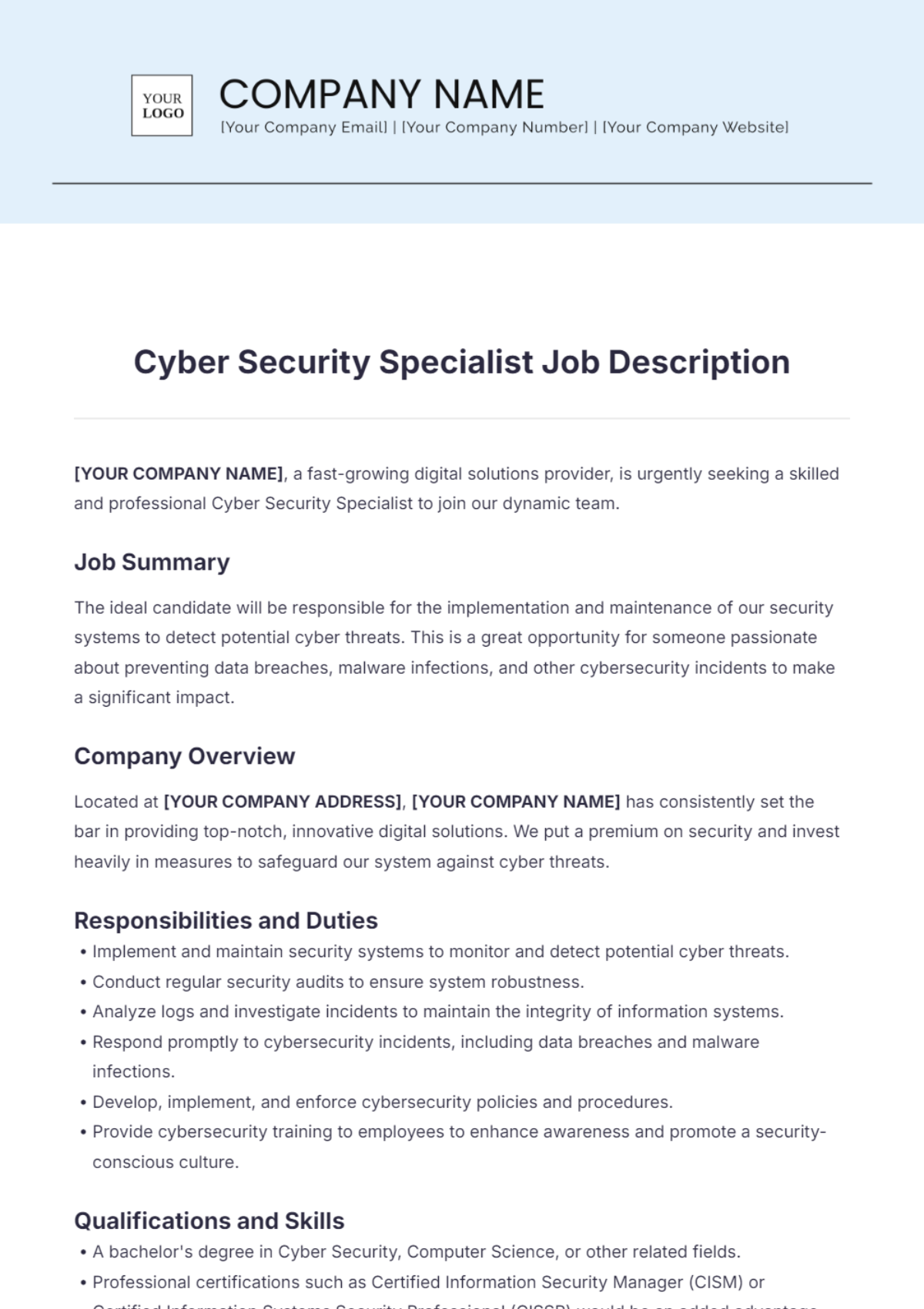
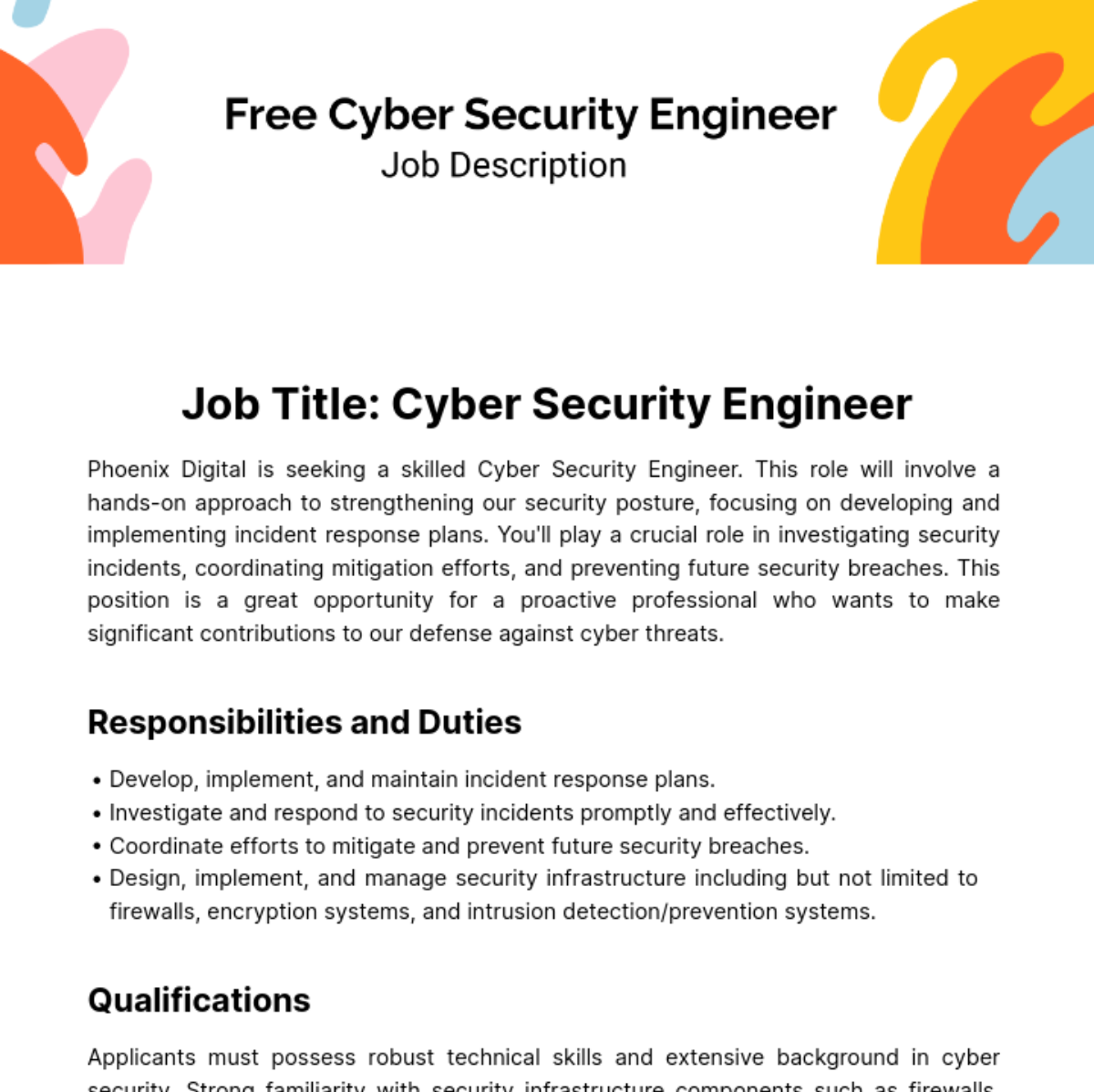
Cyber Security Specialist Job Description Format Template
Source: Template.net
Strategic Risk Register
Source: WordTemplatesOnline
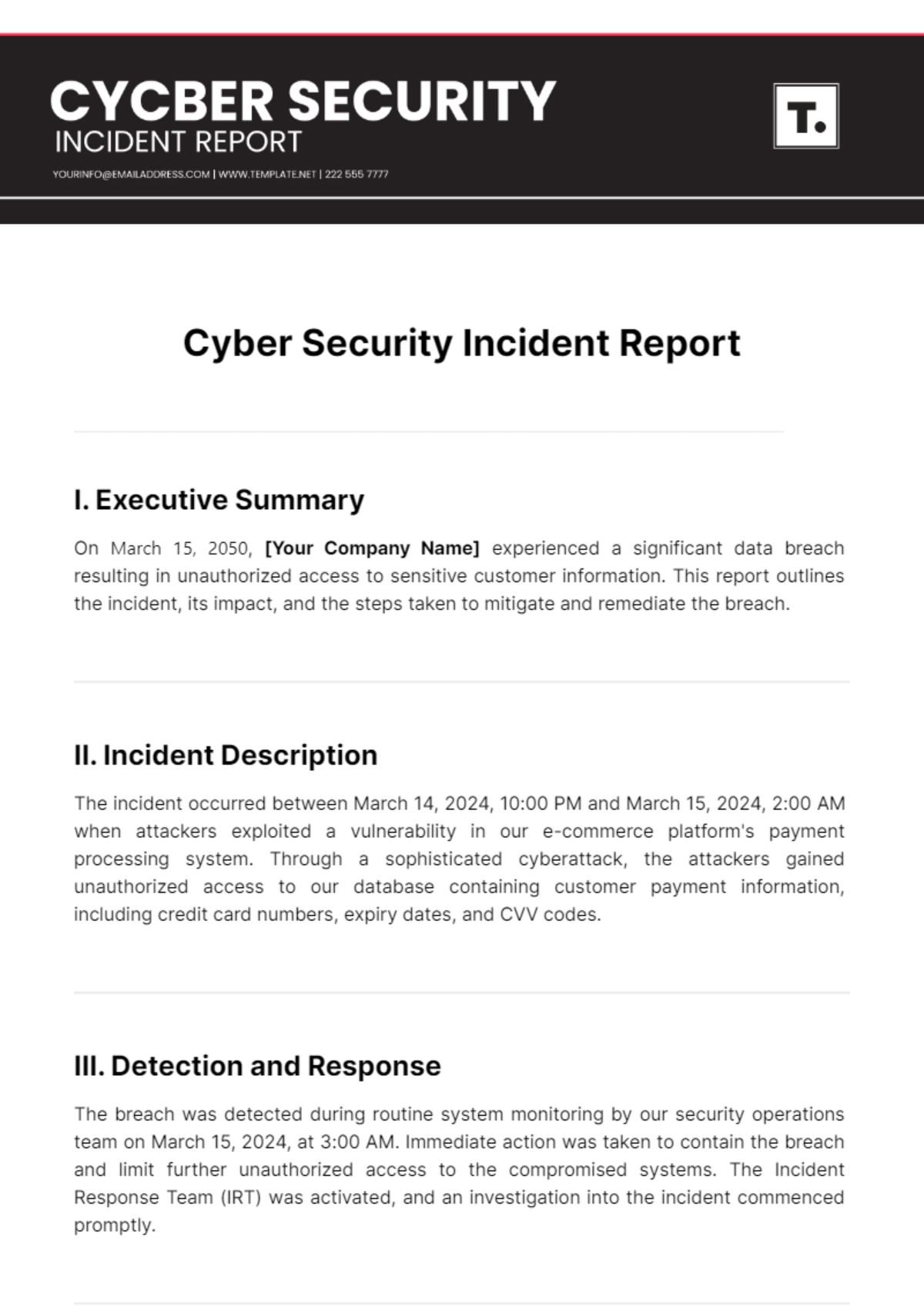
Cyber Security Incident Report
Source: Template.net
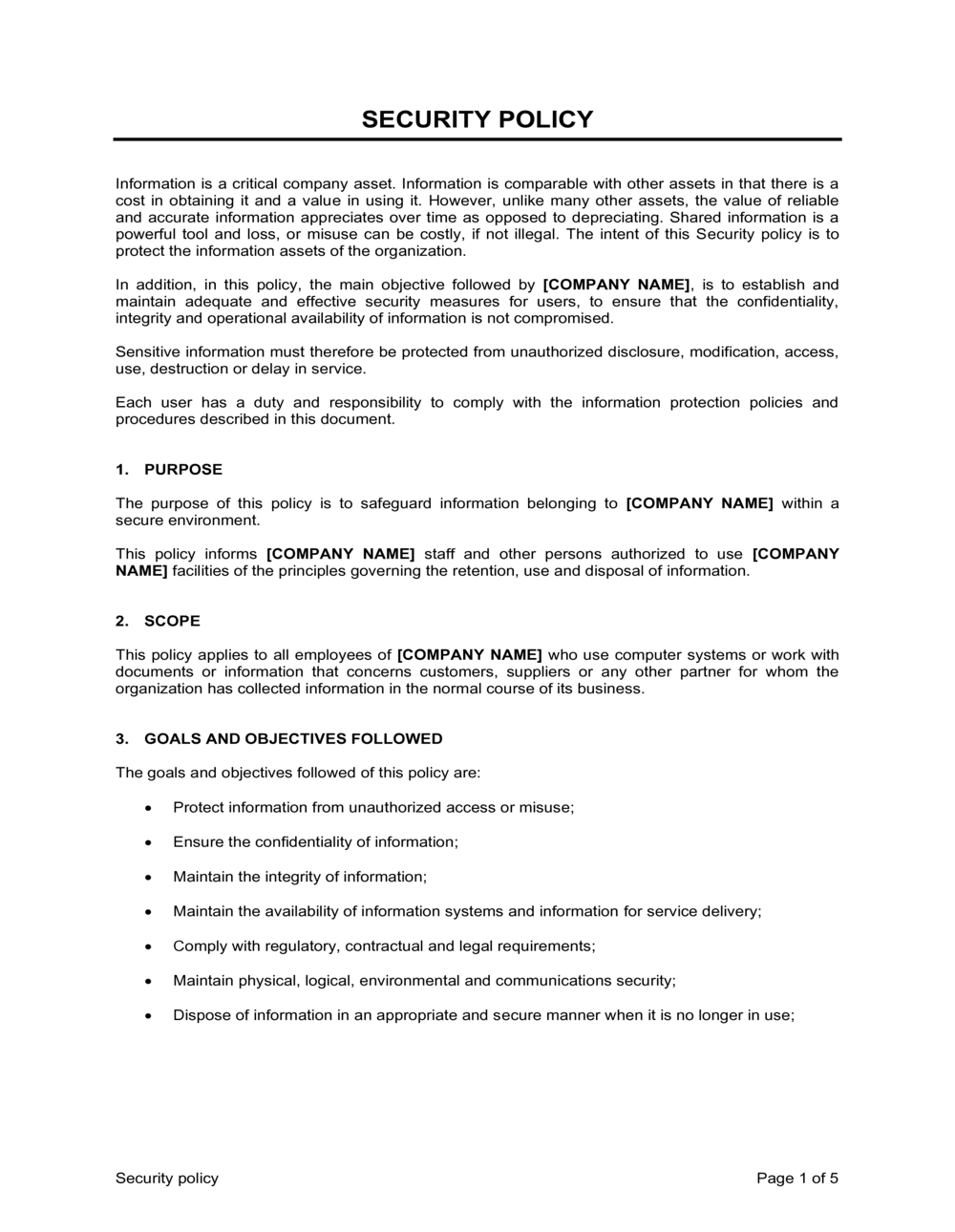
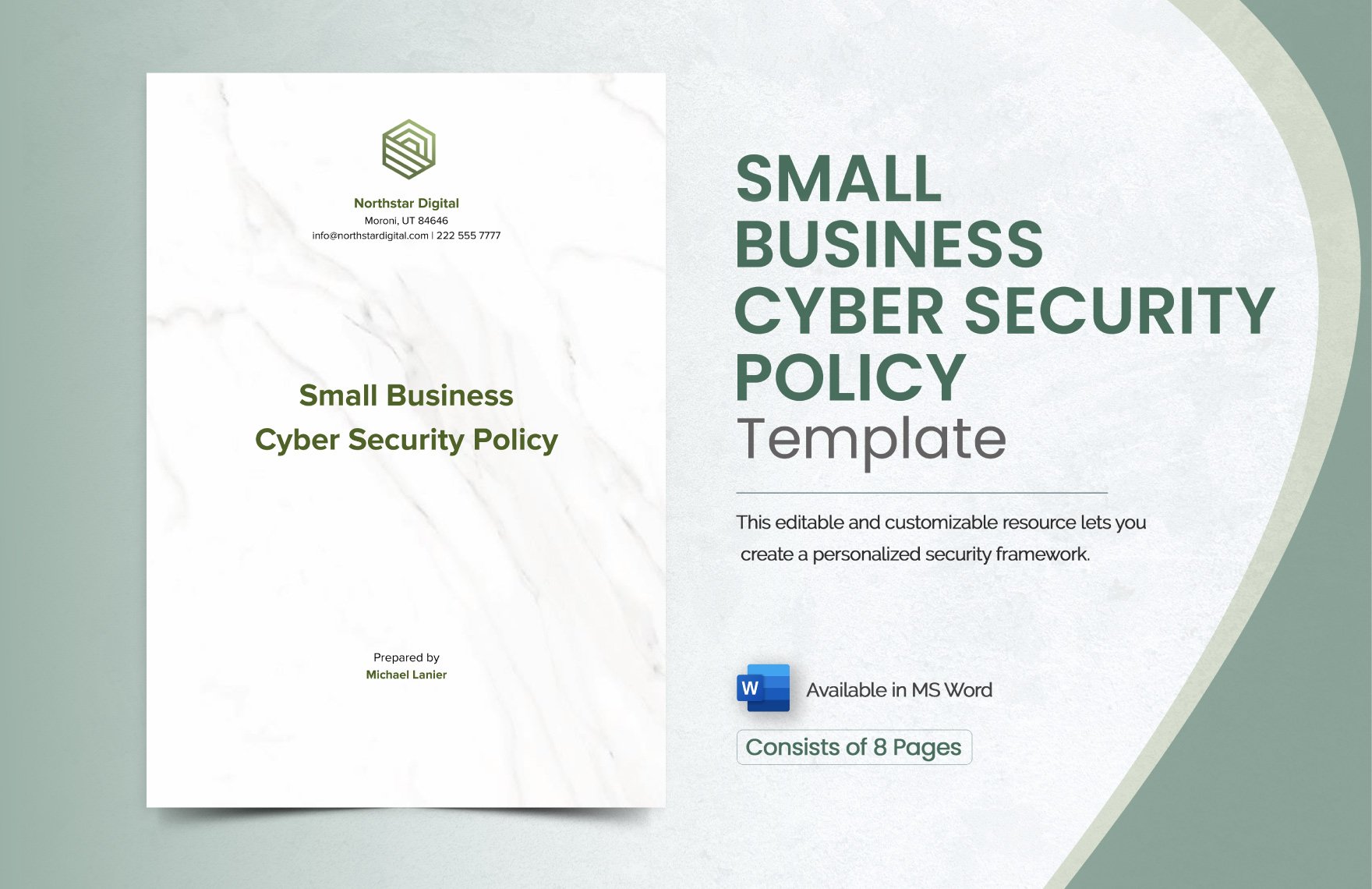
Small Business Cyber Security Policy Template
Source: Template.net
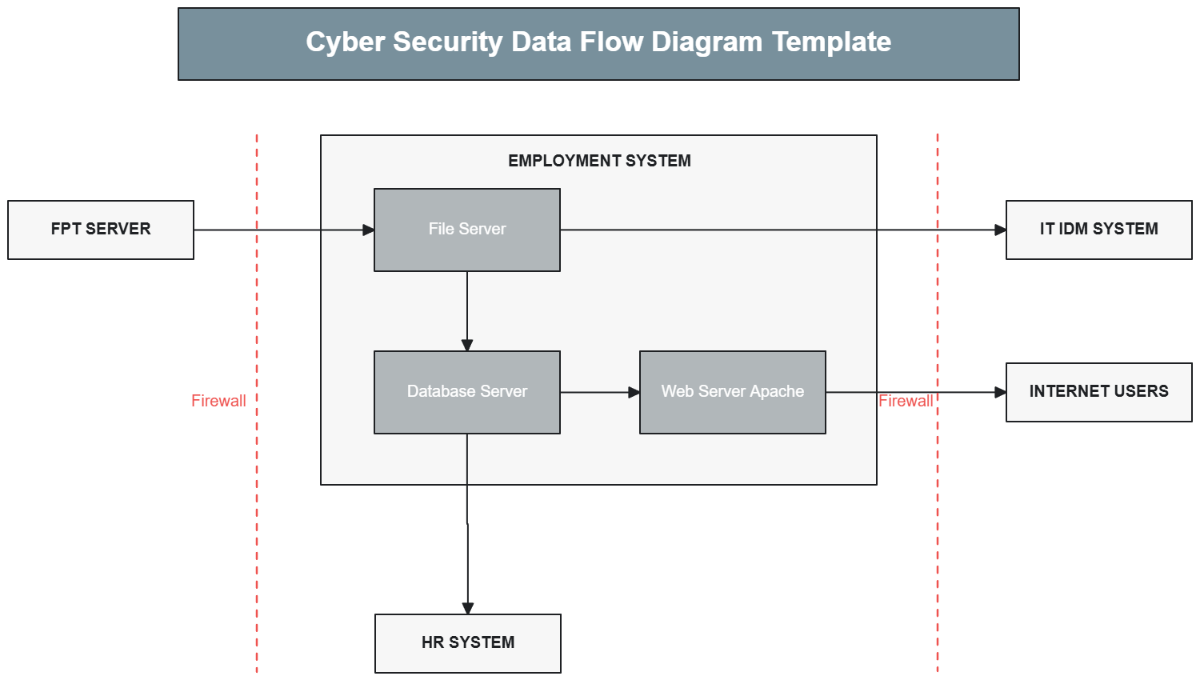
Cyber Security Data Flow Diagram Template
Source: Template.net
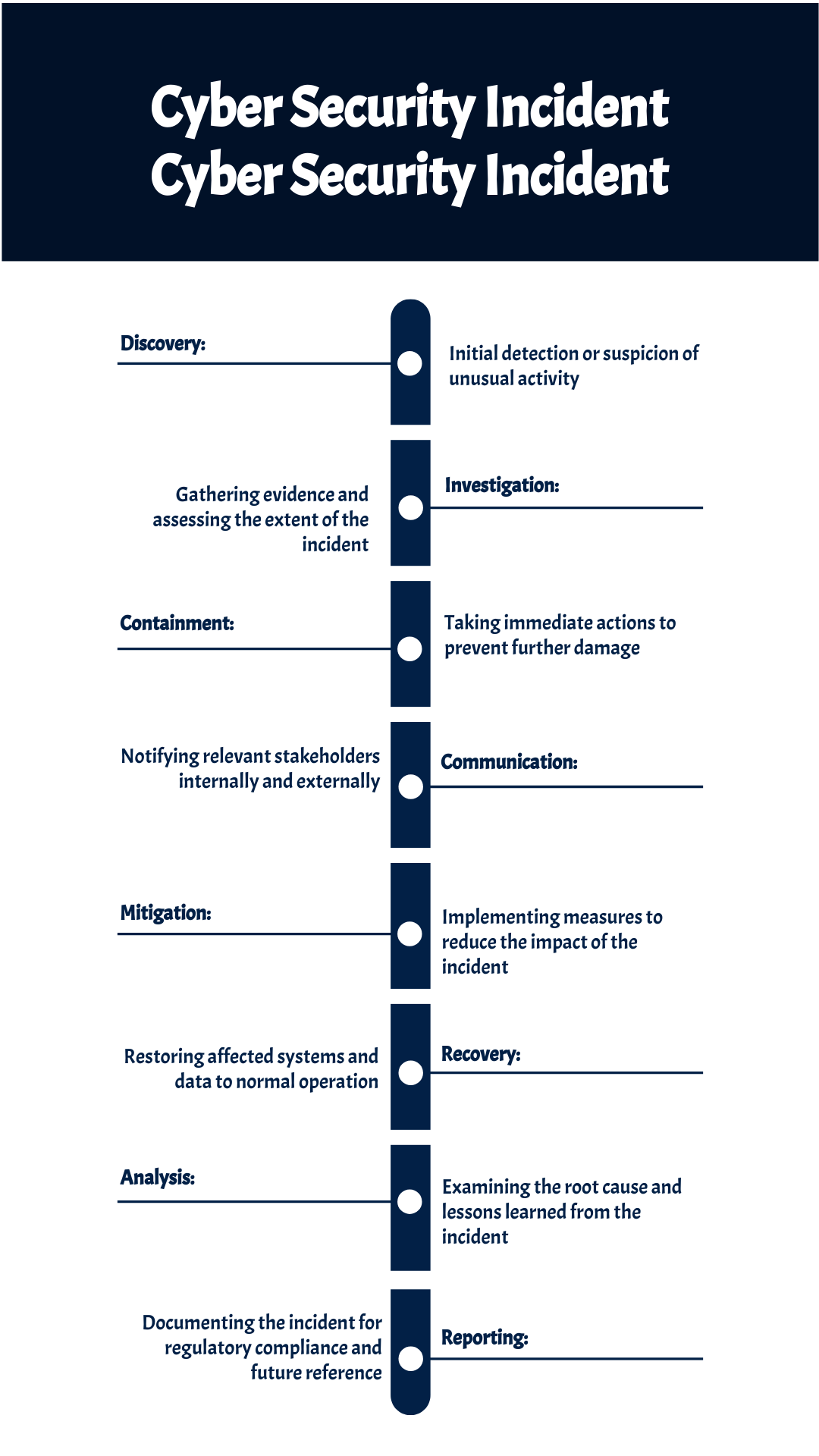
Cyber Security Incident Timeline
Source: Template.net
Security Investigation Report Format for New Practitioner
Source: SlideShare
