A level dental assistant Template is most useful when it does more than provide an attractive page layout. It should help a dental assistant present training, clinical capabilities, credentials, administrative experience, and professional development in a way that is easy for a hiring manager to understand. Because dental assisting responsibilities can vary by workplace and jurisdiction, the strongest template is flexible rather than assuming that every assistant performs the same procedures. The U.S. Bureau of Labor Statistics notes that dental assistants may support patient care, prepare treatment areas, sterilize instruments, maintain records, schedule appointments, assist with radiographs, and perform other duties depending on training and state rules.
The phrase can also describe a career-level document rather than one universal industry form. A beginner may need a structure that emphasizes education, externship experience, transferable skills, and supervised clinical exposure. A more experienced assistant may need stronger sections for chairside procedures, radiography, infection control, practice-management systems, leadership, and specialty experience. Resume guidance published in 2026 similarly separates entry-level, experienced, certified, registered, and specialty-focused dental assistant presentations.
This distinction matters because a template should reflect actual qualifications instead of implying a scope of practice that the candidate does not possess. A clean document can help a reader distinguish between completed education, current credentials, supervised experience, and skills that are still being developed. It can also make professional progression easier to see. The goal is not to make a candidate appear more advanced than they are; the goal is to make genuine qualifications easier to recognize.
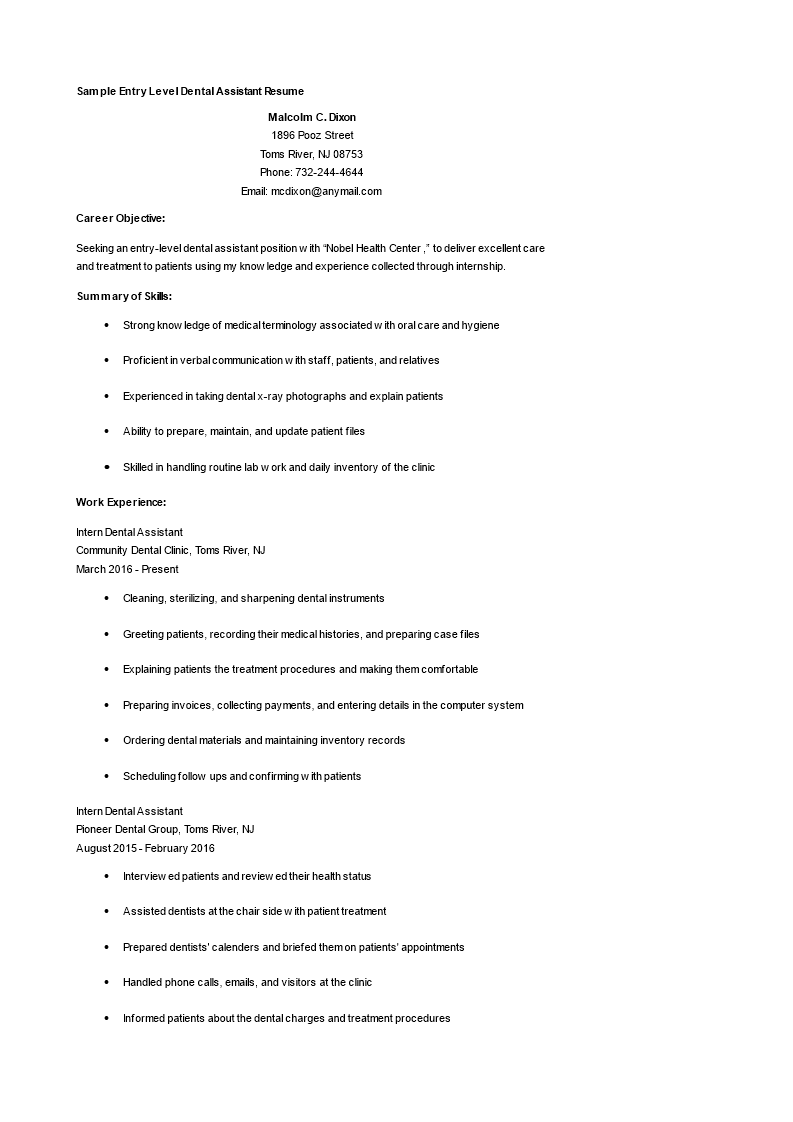
What a Dental Assistant Template Should Accomplish
A useful dental assistant template should establish a logical reading order. Contact information normally comes first, followed by a concise professional summary or objective, skills, experience, education, credentials, and other relevant information. The exact order can change according to experience. For a new graduate, education and supervised clinical training may deserve more emphasis than a short employment history. For an established assistant, professional experience and measurable responsibilities can take priority.
The document should also separate clinical and administrative abilities when that distinction improves clarity. Dental assistants can work across both areas, and the Bureau of Labor Statistics describes duties ranging from treatment-room preparation and instrument handling to recordkeeping and appointment scheduling. :contentReference[oaicite:2]{index=2} A template that gives each category a clear place helps the reader quickly identify where the candidate has practical experience.
Formatting should support accuracy rather than compete with it. A simple hierarchy, consistent headings, readable spacing, and restrained typography generally make professional documents easier to scan. Resume guidance from Indeed emphasizes sections such as a professional summary, clinical skills, additional skills, education, certifications, and previous experience for entry-level candidates. :contentReference[oaicite:3]{index=3}
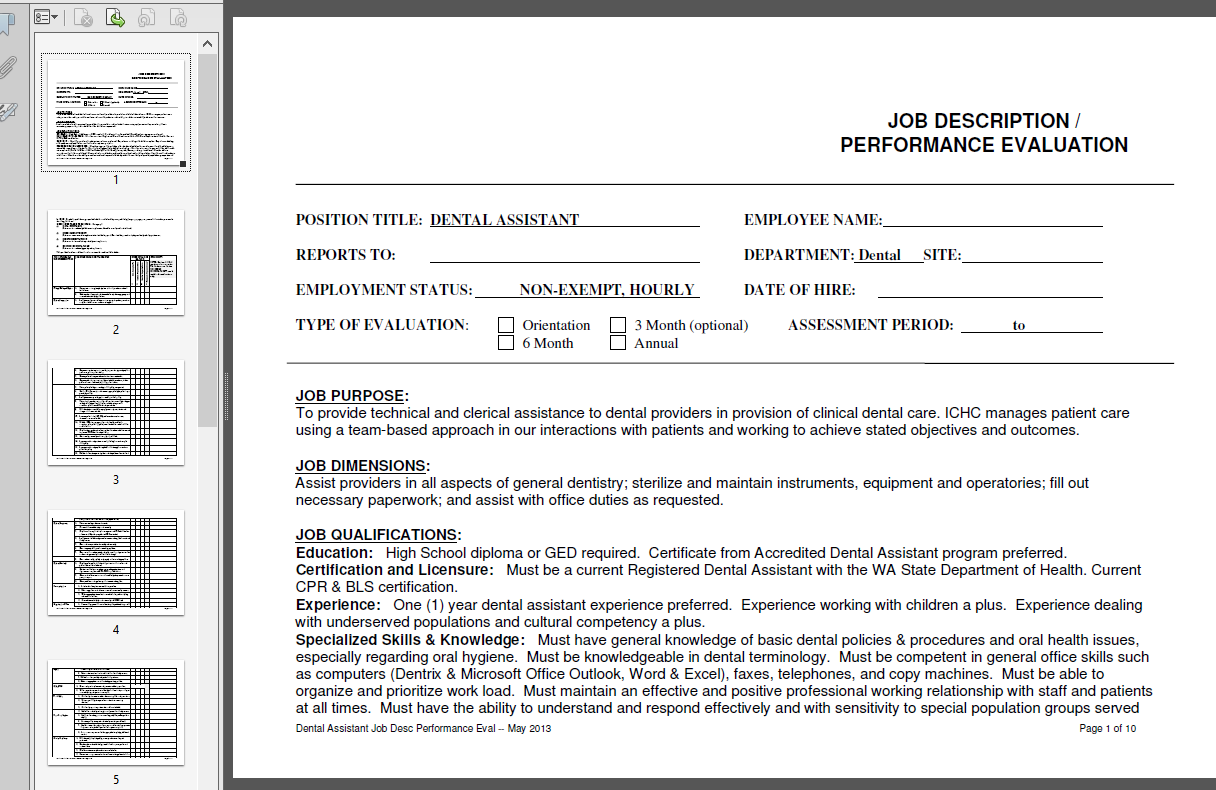
Choosing the Right Career Level
There is no single nationwide system that assigns every dental assistant to identical levels. Scope of practice, credentialing, radiography permissions, expanded functions, and registration requirements can vary by state and employer. The Bureau of Labor Statistics specifically advises that state rules determine what dental assistants may perform and whether particular credentials or education are required. :contentReference[oaicite:4]{index=4} Therefore, a template should describe the person’s actual training and authorization rather than relying on a generic label.
An entry-level dental assistant resume can be effective without a long employment history. Education, externship work, supervised procedures, infection-control training, patient communication, dental terminology, recordkeeping, and relevant certifications can all demonstrate preparation. A recent graduate should not compensate for limited experience by adding unsupported claims. Instead, the document can make clinical education and hands-on training highly visible.
At a more advanced level, the document should demonstrate progression. Stronger evidence may include experience with multiple procedure types, digital radiography where authorized, laboratory tasks, inventory coordination, scheduling, patient records, specialty dentistry, training newer assistants, or responsibility for operatory preparation. The important factor is evidence of increasing responsibility rather than an impressive-sounding title by itself.
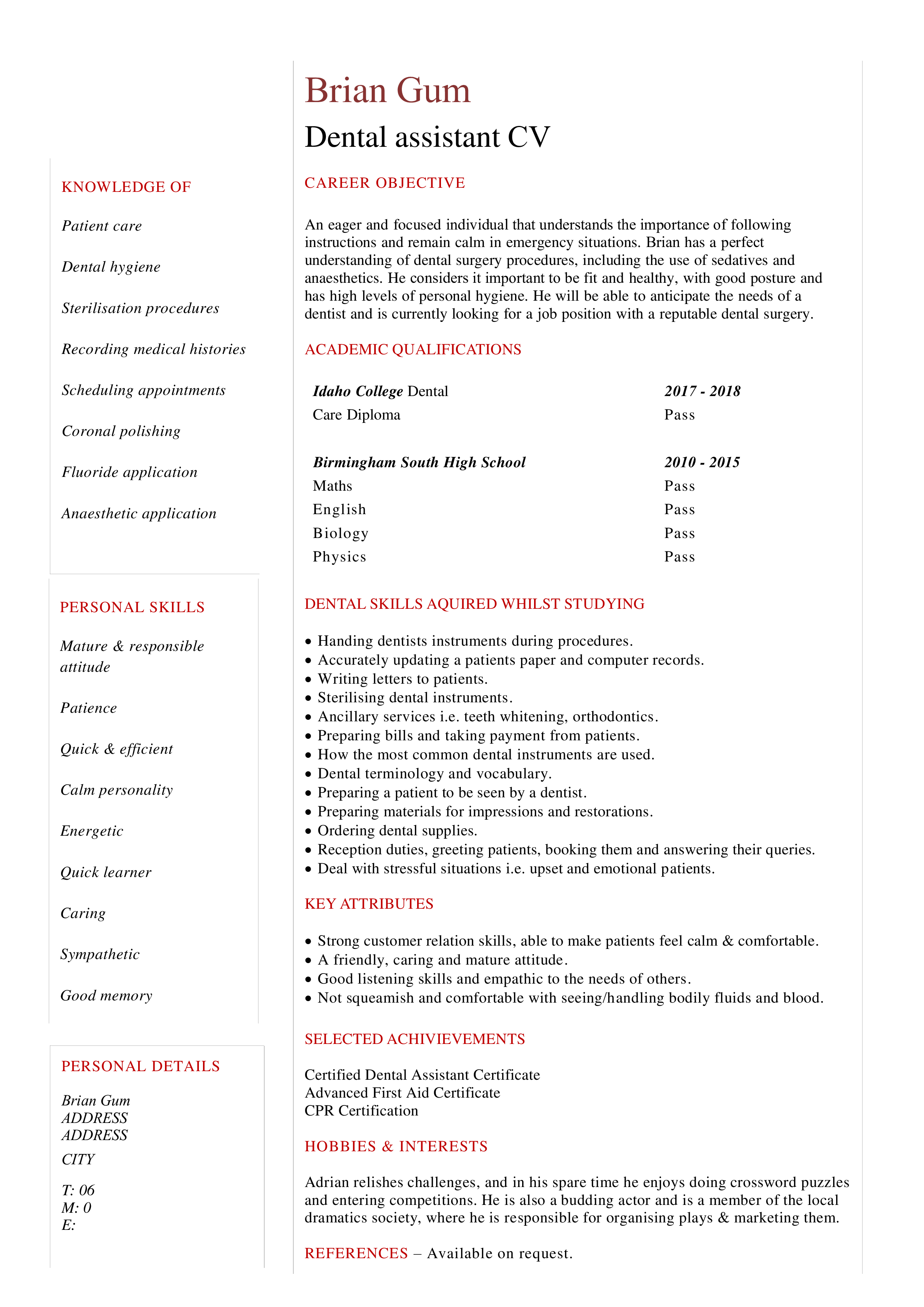
Core Sections to Include
A strong template usually begins with a professional heading containing the candidate’s name, location, telephone number, and professional email address. If a professional networking profile is included, it should be current and consistent with the resume. Avoid unnecessary personal information that does not help an employer evaluate professional suitability.
The summary should answer three questions quickly: who the candidate is, what dental-assisting background they have, and what strengths they bring to a practice. For a beginner, the summary might emphasize completion of dental assisting education and supervised clinical training. For an experienced assistant, it might emphasize years of chairside experience, specialty exposure, radiography credentials, infection-control expertise, or leadership responsibilities.
The skills section should contain genuine abilities that are relevant to the target position. Examples include chairside assisting, treatment-room preparation, instrument sterilization, dental terminology, patient communication, radiographic procedures when authorized, recordkeeping, scheduling, inventory control, and dental practice-management systems. Resume examples from Indeed and other career resources emphasize the value of combining clinical skills with patient-facing and administrative capabilities. :contentReference[oaicite:5]{index=5}
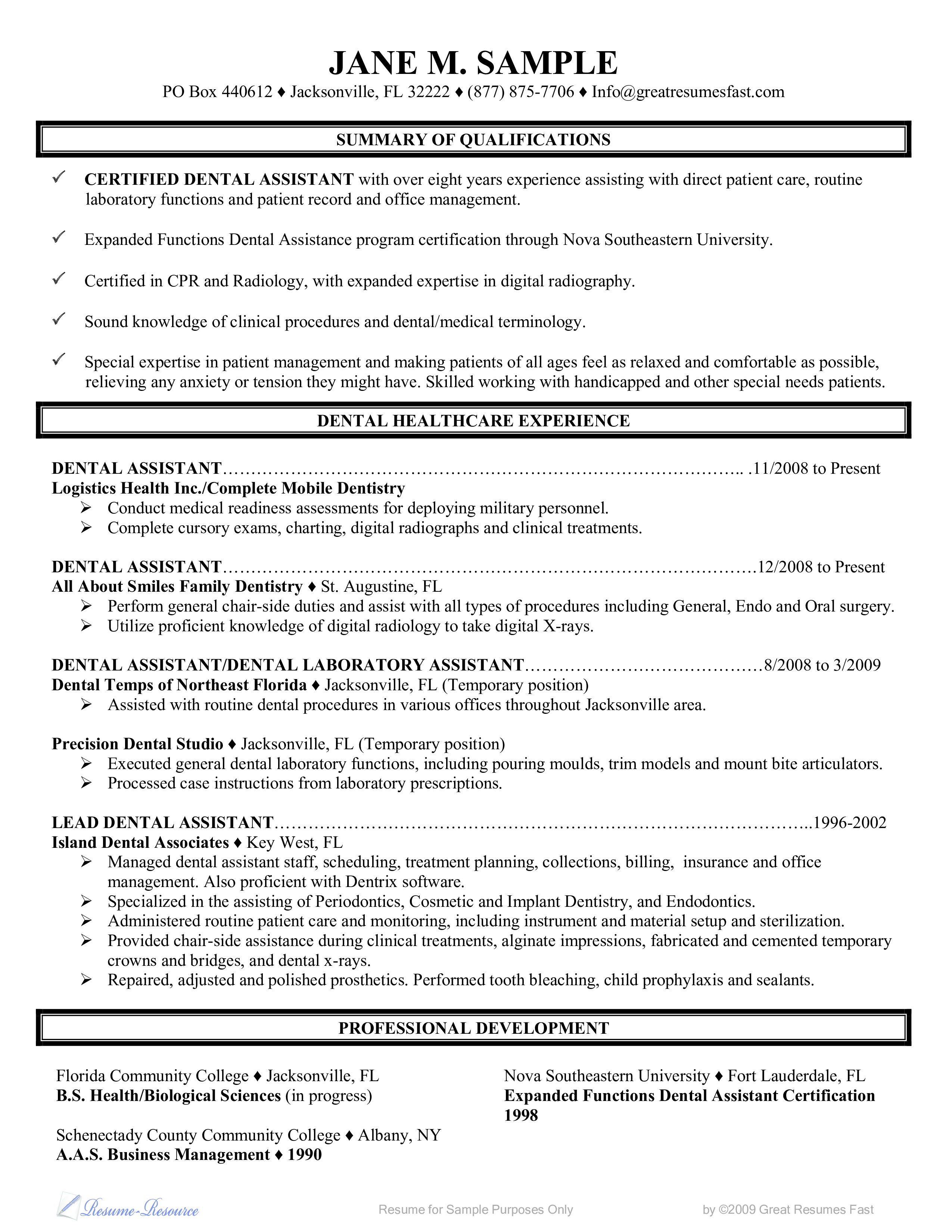
Professional Experience
Experience entries should focus on what the candidate actually did. Instead of writing only “worked with dentist,” a stronger entry can describe preparation of treatment rooms, chairside support, patient records, sterilization procedures, inventory duties, or other legitimate responsibilities. Specific wording makes the candidate’s contribution easier to evaluate.
Whenever accurate, responsibilities can be connected to outcomes without inventing statistics. For example, a candidate might describe maintaining organized instrument trays, supporting consistent room turnover, updating patient records accurately, or coordinating supply inventories. Numbers should only be included when the candidate can substantiate them.
Clinical procedures should be described carefully. Some tasks require particular training, supervision, registration, certification, or state authorization. The BLS explains that state rules affect duties such as radiography, coronal polishing, sealant placement, fluoride application, and other expanded functions. :contentReference[oaicite:6]{index=6} A resume should therefore identify credentials accurately rather than presenting every possible dental-assisting duty as universally permitted.
Education and Credentials
Education is particularly important for candidates with limited work history. List the dental assisting program, institution, completion date or expected completion date, and relevant supervised clinical experience. If an externship involved meaningful chairside duties, it can be described as a separate training experience rather than being hidden inside the education section.
Credentials should be listed exactly as issued. A candidate should distinguish between a completed credential, an examination that has been passed, and a credential that is currently being pursued. CPR or BLS training, radiography credentials, infection-control education, and other relevant qualifications can be included when current and applicable to the position.
Because requirements vary by jurisdiction, candidates should verify local rules before presenting a credential as mandatory or universal. The BLS advises candidates to consult the relevant state dental regulatory authority for specific licensing, registration, certification, and expanded-duty requirements. :contentReference[oaicite:7]{index=7}
How to Adapt the Template for a New Graduate
A new graduate should avoid making the document look empty simply because paid experience is limited. Education, clinical rotations, externships, supervised procedures, laboratory exposure, patient communication, and relevant coursework can provide substantial evidence of preparation. The document should make these experiences easy to locate.
A useful structure is a short professional objective, followed by clinical skills, education, supervised clinical experience, credentials, and additional professional strengths. If the candidate has worked in another healthcare or customer-service setting, selected transferable skills can be included when they are relevant to patient communication, organization, confidentiality, scheduling, or teamwork.
The candidate should also tailor the document to the position. If a job description emphasizes chairside assisting, the resume should make chairside preparation and procedural support prominent. If it emphasizes orthodontics, pediatric care, radiography, records, or sterilization, the candidate should highlight genuine experience in those areas. Career guidance for entry-level dental assistants similarly recommends emphasizing training, clinical skills, certifications, and previous relevant experience. :contentReference[oaicite:8]{index=8}
How to Adapt It for an Experienced Assistant
An experienced assistant should make professional progression visible. Instead of listing every routine responsibility from every position, prioritize responsibilities that demonstrate broader competence. Examples include supporting restorative procedures, coordinating clinical supplies, maintaining sterilization systems, managing records, assisting with specialty procedures, or mentoring newer team members when those duties are genuinely part of the role.
Leadership experience can be especially valuable when presented precisely. A lead assistant might coordinate room readiness, monitor supplies, help standardize procedures, assist with orientation, or serve as a communication link between clinical staff and administrative personnel. These details show responsibility without requiring exaggerated claims.
Experienced candidates should also remove outdated or irrelevant material when space becomes limited. The purpose of the template is to create a focused professional story. A concise description of recent, relevant experience is often more useful than a long list of routine tasks from many years ago.
Using a Dental Assistant Notes Template
A dental assistant notes template can help organize recurring documentation, provided that the format follows the requirements of the dental practice and applicable privacy rules. Notes should be factual, concise, timely, and relevant to the patient’s care. A template should never encourage copying identical language into every record when individual circumstances differ.
Useful note structures can include the date, procedure or visit context, relevant observations, materials or instruments prepared, instructions received from the supervising clinician, and other information that the practice requires. The exact content should be determined by professional policy and the role of the assistant rather than by a generic internet form.
Templates can also help with consistency during training. A structured format may allow a new assistant to learn which categories need attention, while an experienced assistant can use the same structure as a quality-control aid. The template should support professional judgment, not replace it.
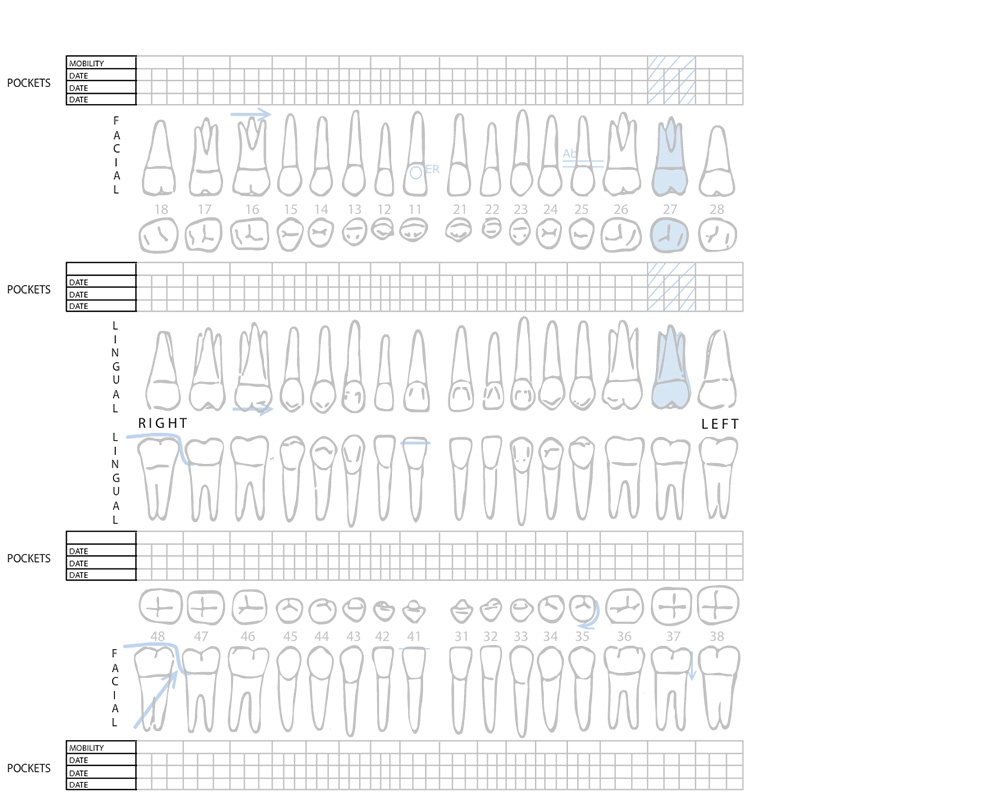
Matching a Resume to a Dental Assistant Job Description
A dental assistant job description template can be useful for understanding how responsibilities are commonly organized. Typical categories include patient preparation, chairside assistance, sterilization, records, radiography where authorized, inventory, scheduling, communication, and other office duties. Current occupational guidance confirms that dental assisting combines clinical and administrative responsibilities, although the precise scope varies. :contentReference[oaicite:9]{index=9}
When tailoring a resume, compare the employer’s stated requirements with the candidate’s actual background. If the position emphasizes digital radiography and the candidate has relevant training, that qualification should be easy to find. If the position emphasizes sterilization, the resume should explain the candidate’s legitimate infection-control experience rather than simply repeating the word “sterilization.”
Avoid copying a job description line for line. Hiring documents are stronger when they demonstrate how the candidate has performed similar responsibilities. A good template creates the structure; the candidate’s own experience provides the substance.
Resume Formatting for Word, PDF, and Presentation
A level dental assistant template can be created in several document formats, but the content should remain consistent when the document is converted. A Word version can be convenient for editing, while a PDF can preserve the intended visual layout when submitted to an employer. A presentation format can be useful for instructional or educational material, but it is usually not the most appropriate format for a conventional employment resume.
The document should be tested after conversion. Check page breaks, spacing, bullet alignment, section headings, dates, contact information, and credential names. A visually polished layout is not helpful if the conversion causes text to disappear or places important qualifications on a separate page.
For applicant-tracking systems, restrained formatting is generally safer than excessive graphics, text boxes, decorative icons, or complicated columns. Career resources commonly recommend readable structures that make skills, experience, education, and certifications easy to identify. :contentReference[oaicite:10]{index=10}
Common Mistakes to Avoid
One common mistake is treating every dental assistant position as identical. Duties vary according to the practice, specialty, training, supervision, and jurisdiction. A resume that claims every possible expanded function can create questions rather than confidence. Candidates should describe only duties and credentials they can substantiate.
Another mistake is using a template without adapting its content. Placeholder text, irrelevant skills, generic objectives, inconsistent dates, and outdated contact details can make an otherwise attractive document look unfinished. Every section should answer a real question an employer is likely to have about the candidate.
A third mistake is relying too heavily on design. A professional dental assistant resume does not need elaborate graphics to communicate value. Clear organization, accurate terminology, relevant skills, concise descriptions, and evidence of training are more important than decorative elements.
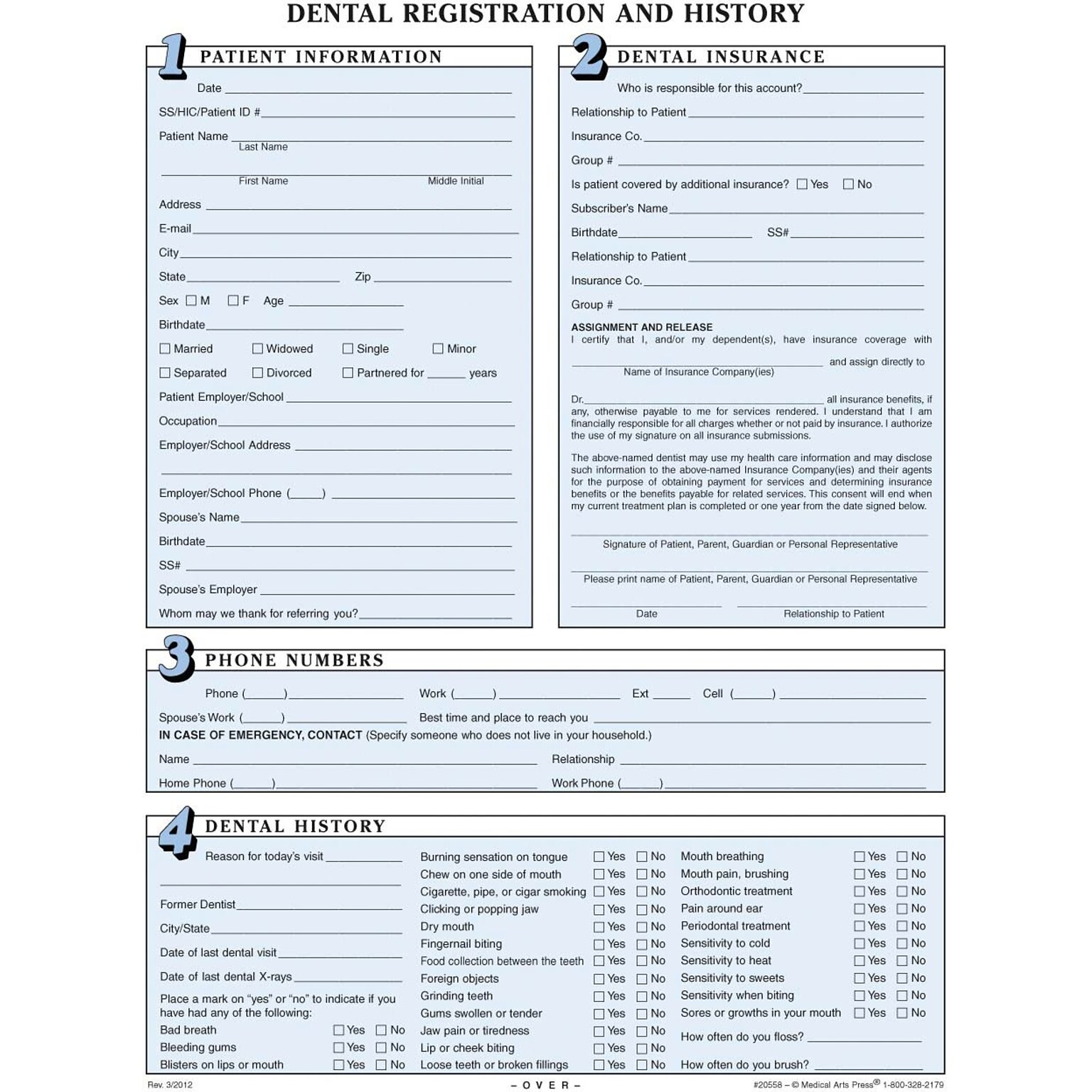
Practical Solution
Start by identifying the exact career stage represented by the candidate. If the person is entering the profession, build the document around education, supervised clinical training, externship experience, skills, and credentials. If the person already has substantial experience, move professional history higher and use the summary to communicate the candidate’s strongest areas of expertise.
Next, create a master version containing every legitimate qualification, then tailor a shorter version for each position. Keep a clear distinction between completed credentials and qualifications in progress. Match terminology from the employer’s description only when it accurately describes the candidate’s experience. This approach makes the document more relevant without encouraging unsupported claims.
Finally, perform a factual review before submitting the document. Confirm dates, credential names, procedure descriptions, software names, educational details, and contact information. Remove unsupported statistics and exaggerated statements. Read the document from the perspective of a practice manager who has only a few moments to determine whether the candidate’s experience matches the role. The best template is ultimately the one that makes genuine qualifications easy to verify.
Reference Examples
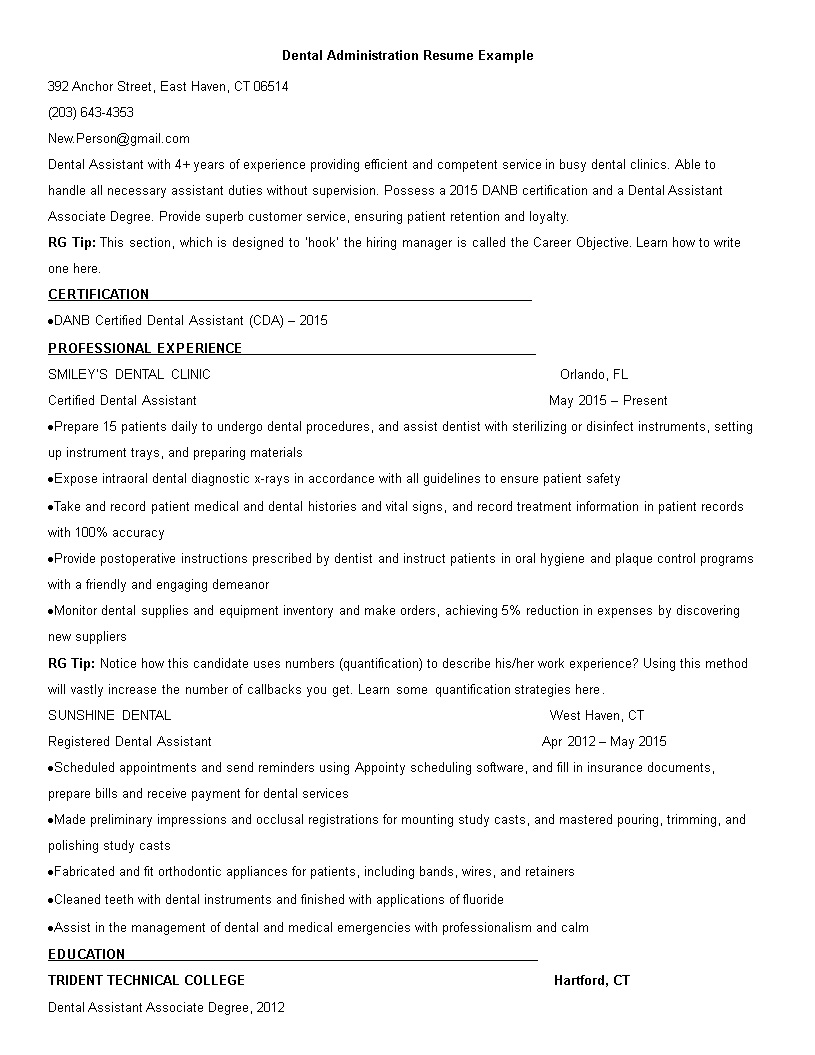
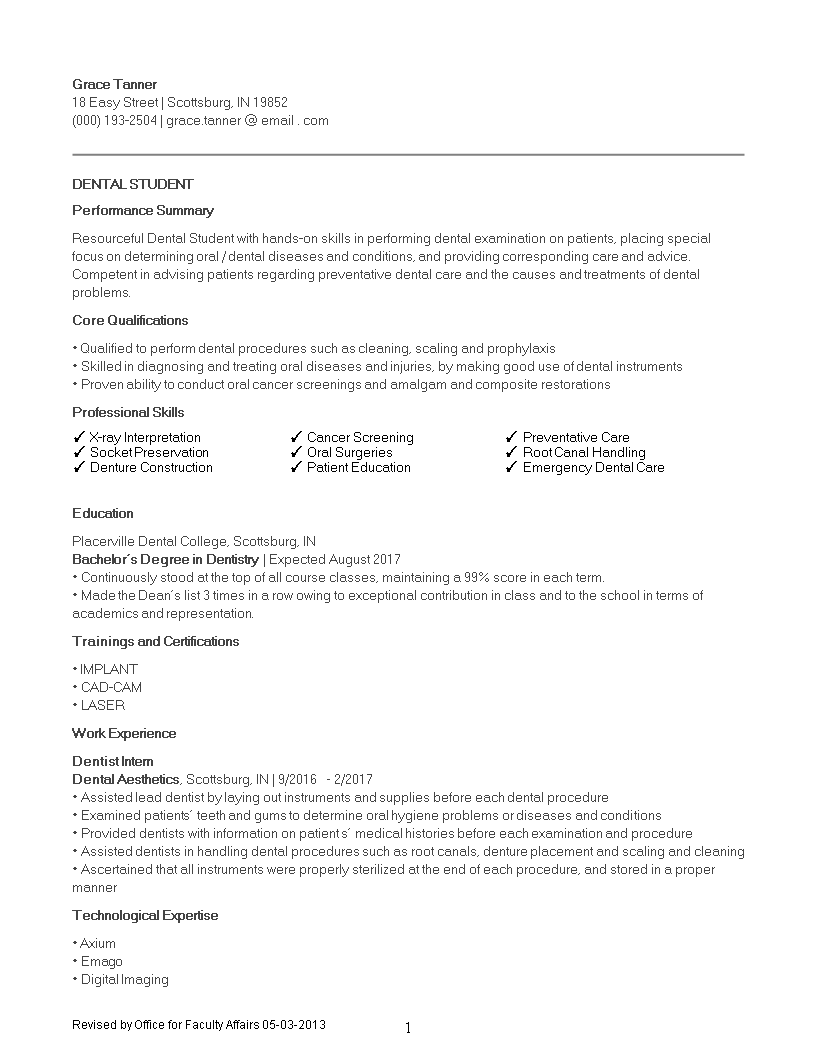
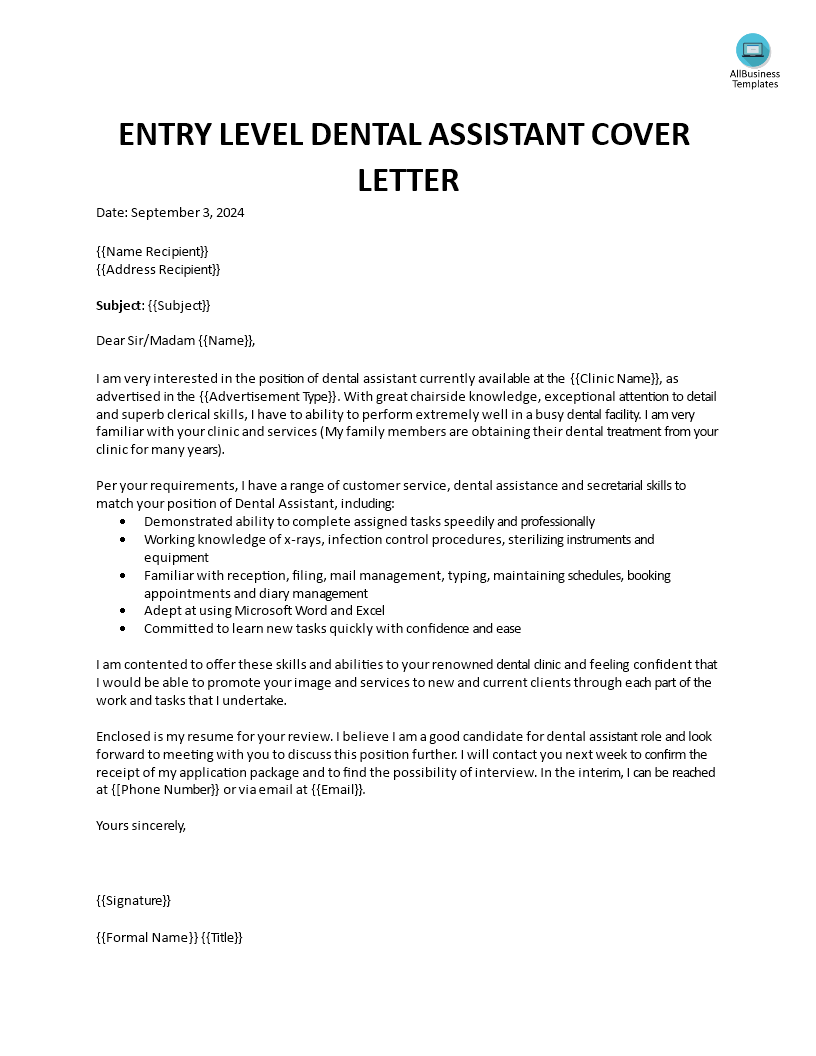
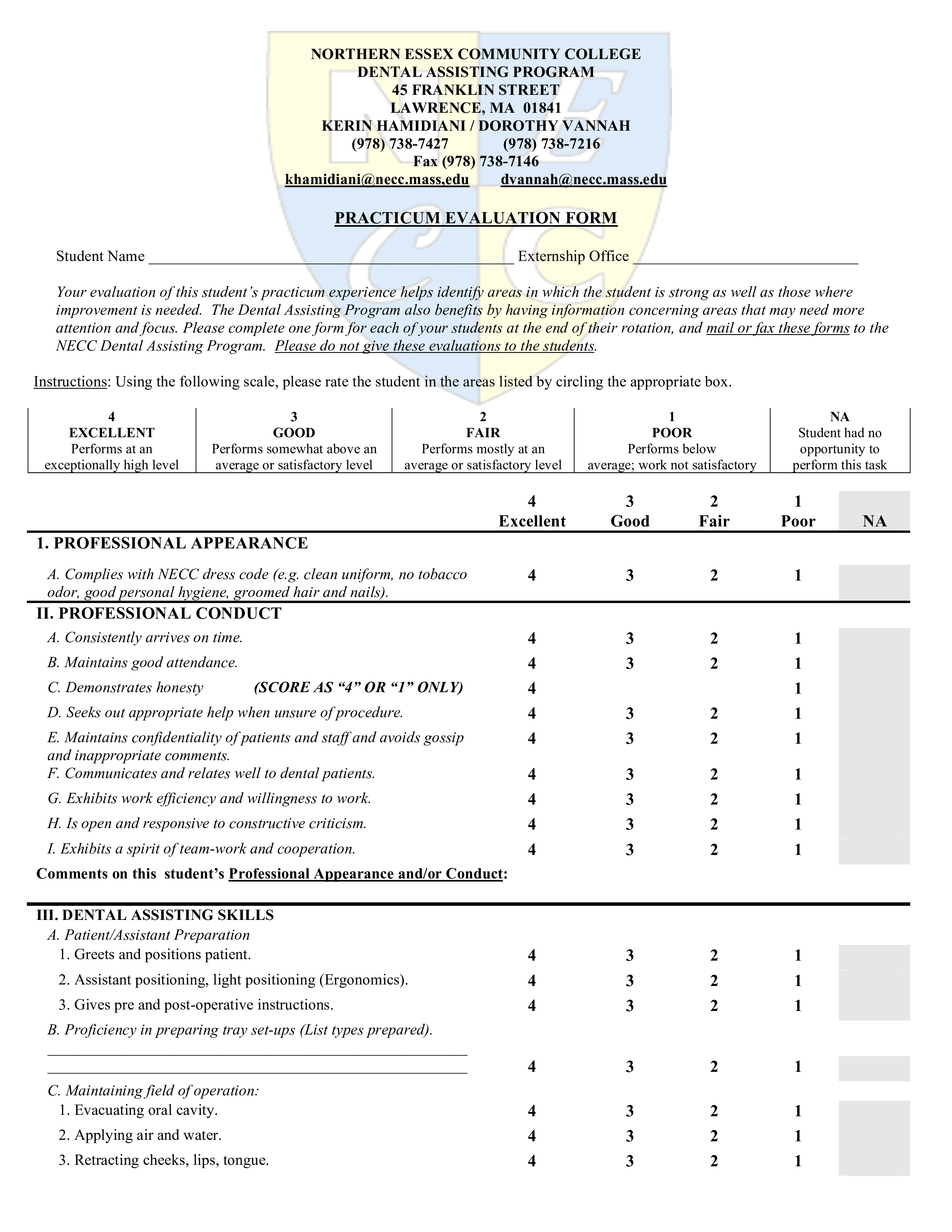
A level dental assistant Template can be evaluated visually by looking for clear hierarchy, practical section ordering, appropriate terminology, and enough space for genuine experience. The examples below illustrate several useful document structures, including entry-level resumes, experienced resumes, curriculum vitae formats, evaluation forms, and professional correspondence. They are visual references rather than universal standards. Requirements for credentials and permitted duties can vary by location, so the structure should always be adapted to the candidate’s real qualifications and the target position.
These references also show why the best template is not necessarily the most decorative one. A useful layout should make information easy to scan and should give the reader a quick understanding of clinical skills, education, credentials, experience, and professional strengths. Comparing different structures can help a candidate decide whether a chronological, skills-focused, student-oriented, or experience-oriented format better represents their current career stage.
Dental Assistant CV Example
Source: AllBusinessTemplates
Dental Student Curriculum Vitae
Source: AllBusinessTemplates
Certified Dental Assistant Resume Example
Source: AllBusinessTemplates
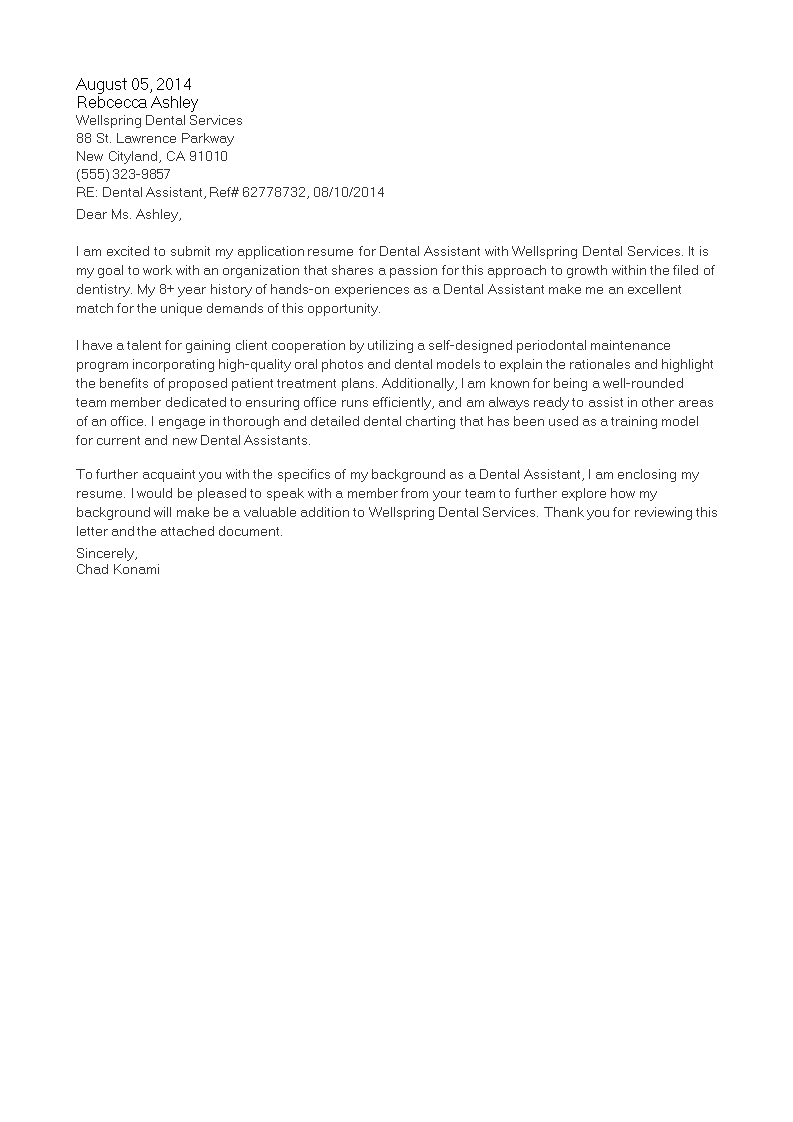
Dental Assistant Job Application Letter
Source: AllBusinessTemplates
Periapical Dental Radiograph
Source: Precisão Radiologia Odontológica Digital
