That distinction matters because a director of retail leasing typically oversees the full leasing cycle. Current industry job descriptions describe responsibilities ranging from generating prospective tenant interest and negotiating letters of intent to executing leases, coordinating tenant openings, preparing leasing reports, budgeting leasing costs, and working with legal and property teams. :contentReference[oaicite:0]{index=0}
Searchers may also use this topic to mean a job description, resume framework, leasing strategy worksheet, deal tracker, or a retail lease document. These are related but different resources. A useful system separates the role template from the transaction template, while allowing both to share the same terminology, approval checkpoints, financial assumptions, and reporting structure.
This guide explains how to design and use that system, including the information a director should track, how retail lease economics should be documented, how market research can support decisions, how different file formats can be used, and how to turn a basic template into a practical leasing workflow. It is written for landlords, developers, asset managers, leasing executives, brokers, and teams responsible for retail property performance.
Because commercial leases create contractual obligations, a template should be treated as an organizational starting point rather than a substitute for jurisdiction-specific legal review. A lease is a contract that establishes possession and use rights, rent, maintenance obligations, and termination conditions, while applicable landlord-tenant and contract law can vary by jurisdiction. :contentReference[oaicite:1]{index=1}
What Is a Director of Retail Leasing Template?
A director-level leasing template is a structured document or collection of documents used to standardize the work performed by a senior retail leasing professional. It can define the role itself, establish responsibilities, capture leasing objectives, track prospects, summarize negotiations, and document the status of each transaction.
The most effective approach is to think of the template as a control system. Instead of asking only, “What should the director do?”, it asks what information must be collected, what decisions must be made, who approves those decisions, and what evidence should exist after each stage.
A practical template can begin with a role profile containing the position title, reporting relationship, portfolio scope, strategic objectives, core responsibilities, decision rights, performance measures, required experience, and communication expectations. This mirrors the broad structure seen in professional retail leasing job descriptions, where strategy, negotiation, tenant relationships, reporting, and team leadership are combined. :contentReference[oaicite:2]{index=2}
The second layer is operational. It may include a pipeline tracker, prospect qualification form, lease abstract, letter-of-intent summary, approval sheet, renewal schedule, and transaction checklist. These components help convert the responsibilities of a director into repeatable actions.
The third layer is analytical. A director needs a consistent way to compare rent proposals, concessions, tenant improvement costs, leasing commissions, lease terms, renewal options, percentage rent, operating expenses, and other economic or non-economic terms. Commercial leasing references emphasize that both economic and non-economic provisions can materially affect property value and leasing outcomes. :contentReference[oaicite:3]{index=3}
Why the Template Should Be More Than a Job Description
A simple job description explains responsibilities, but it does not necessarily explain how the work gets done. For example, “negotiate leases” is too broad to function as an operational instruction. A better template identifies the negotiation stages, required inputs, approval thresholds, responsible parties, expected outputs, and follow-up requirements.
Retail leasing is also highly interconnected. A proposed tenant can affect merchandise mix, customer traffic, signage, parking, operating hours, construction requirements, neighboring tenants, and the financial performance of the center. For that reason, the director’s template should make cross-functional coordination visible rather than treating leasing as an isolated sales activity.
Industry role descriptions commonly connect leasing with asset management, property management, construction, legal, finance, acquisitions, and tenant coordination. One current director-level description specifically includes budgeting rental rates and leasing costs, working with internal teams through execution, and managing renewals, assignments, subleases, terminations, and expansions. :contentReference[oaicite:4]{index=4}
The template should therefore contain both strategic and administrative fields. Strategic fields might include tenant mix goals, target categories, occupancy priorities, competitive positioning, and market opportunities. Administrative fields might include lease expiration dates, option dates, document status, approvals, outstanding tenant requests, and opening milestones.
A well-designed template also creates institutional memory. If a director changes portfolios or a new leasing representative joins the team, the organization should not have to reconstruct every deal from scattered emails and spreadsheets. Consistent documentation allows another qualified professional to understand the reasoning, economics, commitments, and outstanding issues behind each transaction.
Core Components of a Director of Retail Leasing Template
The first component should identify the portfolio. Record the property or properties, location, asset type, total leasable area, available space, major vacancies, anchor tenants, target categories, and relevant strategic objectives. A multi-property portfolio may need one master template plus individual property sheets.
The second component should define the role. Include the reporting line, authority level, decision-making responsibilities, internal relationships, external relationships, and the scope of supervision. If the director manages leasing representatives, the template should distinguish individual production responsibilities from director-level portfolio accountability.
The third component should establish leasing objectives. These may include occupancy goals, leasing velocity, quality of tenant mix, rent objectives, renewal performance, pipeline development, and opening execution. Avoid using generic goals such as “increase occupancy” without defining what success means and how it will be measured.
The fourth component should define the pipeline. A useful pipeline can contain prospect name, category, location preference, size requirement, broker, source, qualification status, estimated opening date, target rent, current stage, next action, probability, and decision date. The same fields should be used consistently across properties so reports can be aggregated.
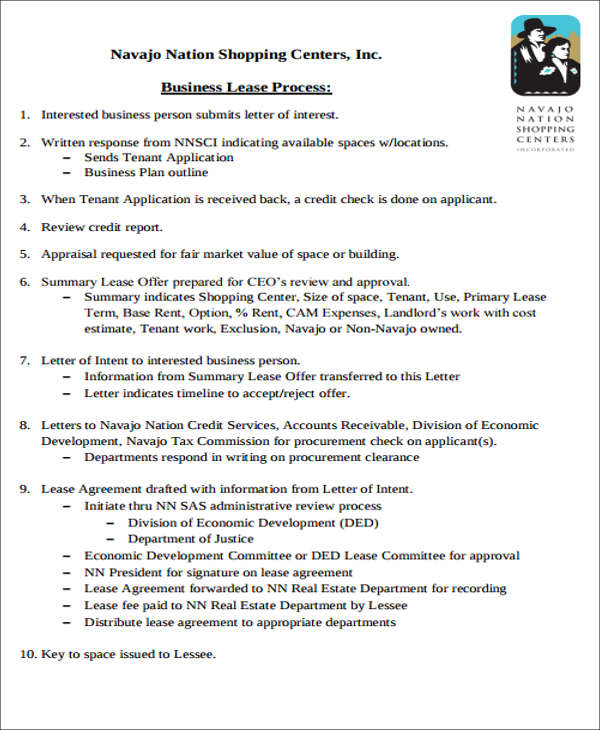
The fifth component should document the transaction. At minimum, the record should connect the prospect to the letter of intent, approved economics, lease draft, legal comments, execution date, construction requirements, tenant opening, and post-opening follow-up. This creates a clear bridge between business development and lease administration.
Role Profile and Accountability Fields
A professional role section can include “Position Purpose,” “Portfolio Responsibility,” “Key Accountabilities,” “Decision Rights,” “Internal Stakeholders,” “External Stakeholders,” “Performance Metrics,” “Required Experience,” and “Technical Skills.” This makes the document useful for recruiting, onboarding, performance management, and succession planning.
For example, a role purpose might state that the director is accountable for executing the leasing strategy for an assigned retail portfolio while balancing occupancy, tenant quality, financial objectives, market positioning, and operational requirements. The language should describe outcomes rather than merely listing activities.
Key accountabilities can be divided into business development, negotiations, portfolio strategy, tenant relations, team leadership, reporting, budgeting, and transaction execution. Current director-level postings commonly emphasize sourcing prospects, maintaining broker relationships, negotiating LOIs and leases, coordinating openings, and maintaining leasing reports. :contentReference[oaicite:5]{index=5}
Decision rights are especially important. A director may recommend commercial terms, but final approval could belong to an investment committee, asset manager, ownership group, or executive. The template should show where recommendation ends and formal authorization begins.
Performance metrics should also be carefully selected. Leasing velocity alone can encourage poor-quality deals. A balanced scorecard may combine executed area, achieved economics, renewal rate, qualified pipeline, execution speed, tenant opening performance, reporting accuracy, and adherence to approved budgets.

Building the Leasing Pipeline
The pipeline is one of the most valuable parts of a director-level template because it turns market activity into visible opportunities. Every prospect should have a defined stage. A simple sequence can be “identified,” “contacted,” “qualified,” “tour or presentation,” “proposal,” “LOI,” “lease negotiation,” “legal review,” “executed,” “construction,” and “open.”
Qualification should be more rigorous than simply recording a company name. The director should capture the tenant’s concept, operating history, financial capability, preferred markets, space requirement, use, co-tenancy needs, delivery requirements, signage expectations, opening schedule, and strategic fit with the property.
Tenant mix deserves special attention in retail. The goal is not simply to fill every empty unit. A tenant can affect neighboring businesses and the overall identity of a center. Commercial lease analysis notes that non-economic provisions such as use restrictions, signage, hours, and expansion rights can influence the underlying value of a retail property. :contentReference[oaicite:6]{index=6}
A pipeline should also record the reason a prospect was rejected or deferred. This prevents the team from repeatedly revisiting poor-fit opportunities and creates a useful record of market feedback. Rejection reasons might include insufficient credit, incompatible use, excessive build-out requirements, weak location fit, unrealistic economics, or timing.
Finally, every active prospect should have a next action and date. “Follow up” is not sufficient. A better entry is “Send revised LOI after tenant confirms delivery condition by Friday.” The specificity makes the pipeline actionable and makes weekly leasing meetings more productive.
How to Structure Lease Economics
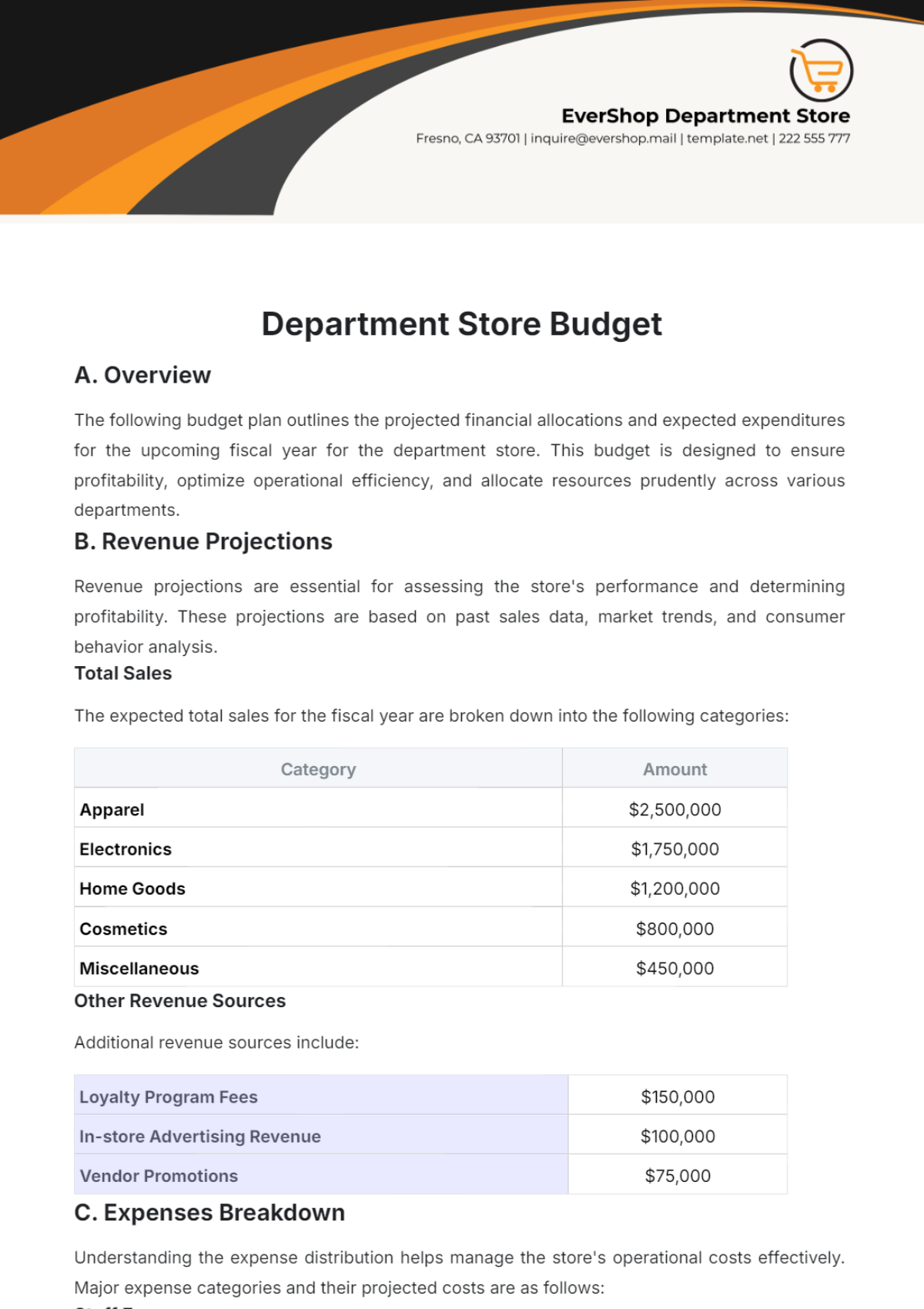
Retail lease economics often contain more than a single monthly rent figure. A useful template should separate base rent, scheduled escalations, percentage rent where applicable, tenant improvement contributions, free-rent periods, leasing commissions, operating expenses, taxes, insurance, utilities, and other charges.
Percentage rent is particularly relevant in retail because it can tie additional rent to tenant sales. Commercial leasing material identifies base rent, base-rent escalations, and percentage rent as major components of retail rent structures. :contentReference[oaicite:7]{index=7}
Operating expenses should be documented separately from base rent. Common area maintenance, property taxes, insurance, utilities, marketing, security, maintenance, and other charges may be allocated between landlord and tenant according to the lease. The exact allocation must come from the negotiated document rather than an assumed industry formula.
Tenant improvements should also be tracked as a separate economic item. A director’s approval worksheet can record the allowance, estimated construction cost, landlord work, tenant work, reimbursement process, opening condition, and responsibility for overruns. These details can materially affect the economics of a transaction even when headline rent appears attractive.
For decision-making, consider calculating effective economics rather than comparing quoted rent alone. A hypothetical example might compare two proposals where one offers higher face rent but more free rent and tenant improvement support, while another offers lower face rent but fewer concessions. The template should make those differences visible so decision-makers compare the total deal rather than one number.
Economic and Non-Economic Terms
Not every important lease term is expressed in dollars. Permitted use, exclusivity, radius restrictions, signage, operating covenants, hours, assignment rights, expansion rights, renewal options, co-tenancy provisions, delivery obligations, and restoration requirements can influence the long-term value of a retail deal.
Permitted use is particularly important because a property owner may have a carefully planned tenant mix. A lease that describes use too narrowly can constrain a successful retailer’s future evolution, while a lease that permits an excessively broad use can create conflicts with other tenants.
Exclusivity clauses can also affect future leasing decisions. If one tenant receives exclusive rights for a category, the director should record that restriction in a portfolio-level database rather than leaving it buried in an individual lease.
Assignment and subleasing provisions deserve similar treatment. A director should know which tenants have transfer rights, what consent standards apply, and whether an assignment could create financial, operational, or tenant-mix consequences.
Renewal options should be tracked from the original execution date. A template that records only the expiration date is incomplete because important decisions may occur months or years before expiration. Option notice windows, negotiation periods, and planned capital work should be visible on the same timeline.
Using Market Research in the Template
A director of retail leasing template becomes significantly more useful when it incorporates market research. The director needs enough market information to understand competing centers, rental positioning, tenant demand, demographics, traffic patterns, supply, vacancies, and changes in the local retail environment.
Research should be connected to decisions. Instead of collecting dozens of market statistics with no purpose, define the question first. For example: Is the current asking rent competitive? Is there sufficient demand for a particular category? Which competing centers are attracting the same prospects? What tenant types are expanding or contracting?
A market comparison sheet can record competing property, location, size, asking rent, estimated additional charges, occupancy observations, tenant categories, major anchors, recent leasing activity, and notable concessions when reliably available. Clearly separate verified information from estimates or broker commentary.
The director can then connect research to the property strategy. If competing centers are offering more flexible delivery conditions, the leasing strategy may need to address that weakness. If a property has a strong location advantage but limited available large-format space, the pipeline may prioritize smaller concepts that fit the available inventory.
Market research should be refreshed on a defined schedule. A static template quickly becomes misleading when rents, vacancies, tenant strategies, or development pipelines change. The research section should therefore include a date, source, confidence level, and next review date.
Reporting and Data Analysis
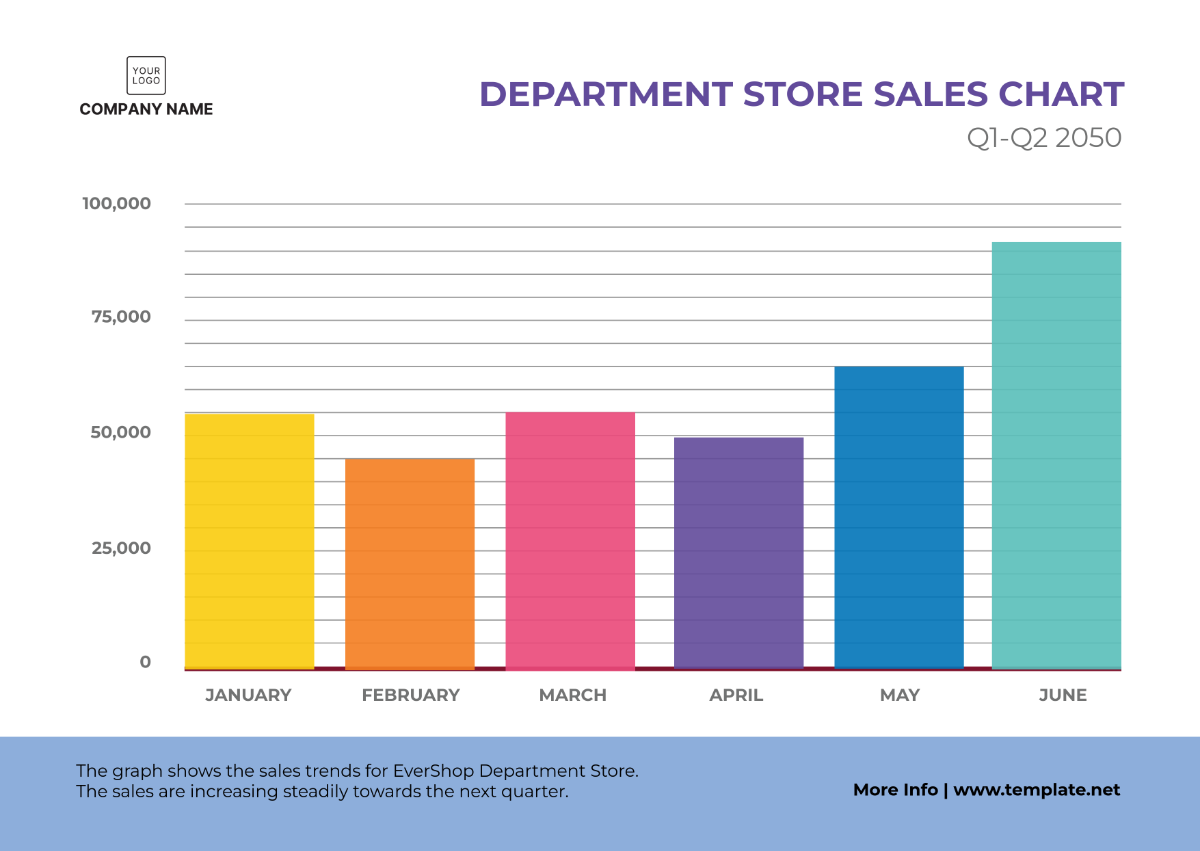
Senior leasing reports should answer management questions quickly. A good weekly or monthly report might show available space, executed deals, LOIs, active negotiations, prospects, renewals, expirations, leasing costs, projected occupancy, and major risks.
The report should distinguish between signed business and forecasted business. An executed lease is not equivalent to an early-stage prospect, and an LOI is not necessarily a completed transaction. Clear stage definitions reduce the risk of overstating pipeline strength.
Data should also be presented at multiple levels. A property manager may need unit-level details, while an executive may need portfolio-level trends. The same underlying data can support both if the template uses standardized fields.
Financial reporting should include assumptions. If projected rent depends on an estimated opening date, free-rent period, or tenant improvement schedule, those assumptions should be visible. Otherwise, a forecast may appear more certain than it really is.
For example, a hypothetical portfolio dashboard could show ten active prospects, three LOIs, two legal reviews, and one executed lease. Those numbers would be illustrative rather than evidence of any particular market, but they demonstrate why pipeline stages should be separated instead of combining every opportunity into one “leasing activity” number.

Weekly Leasing Meeting Format
A useful weekly meeting template can begin with portfolio changes since the previous meeting. Review new prospects, movement between stages, stalled transactions, new risks, upcoming expirations, and tenant issues requiring executive attention.
The second part can focus on deal decisions. Each deal should have a concise summary covering tenant, space, proposed use, term, rent, escalations, concessions, landlord work, tenant improvements, commissions, key legal issues, and requested approval.
The third part can focus on execution. Review leases awaiting signatures, construction dependencies, permits, tenant deliveries, opening dates, signage approvals, and outstanding landlord obligations. This prevents the leasing team from considering a transaction complete when operational work remains.
The fourth part can focus on market intelligence. Ask what brokers are saying, what competitors are doing, which tenant categories are becoming more active, and whether any prospect behavior suggests a change in strategy.
The final part should assign actions. Every action should have an owner and deadline. A meeting report that contains only discussion notes is less useful than a decision-and-action register that makes accountability explicit.
Lease Administration and Handoff
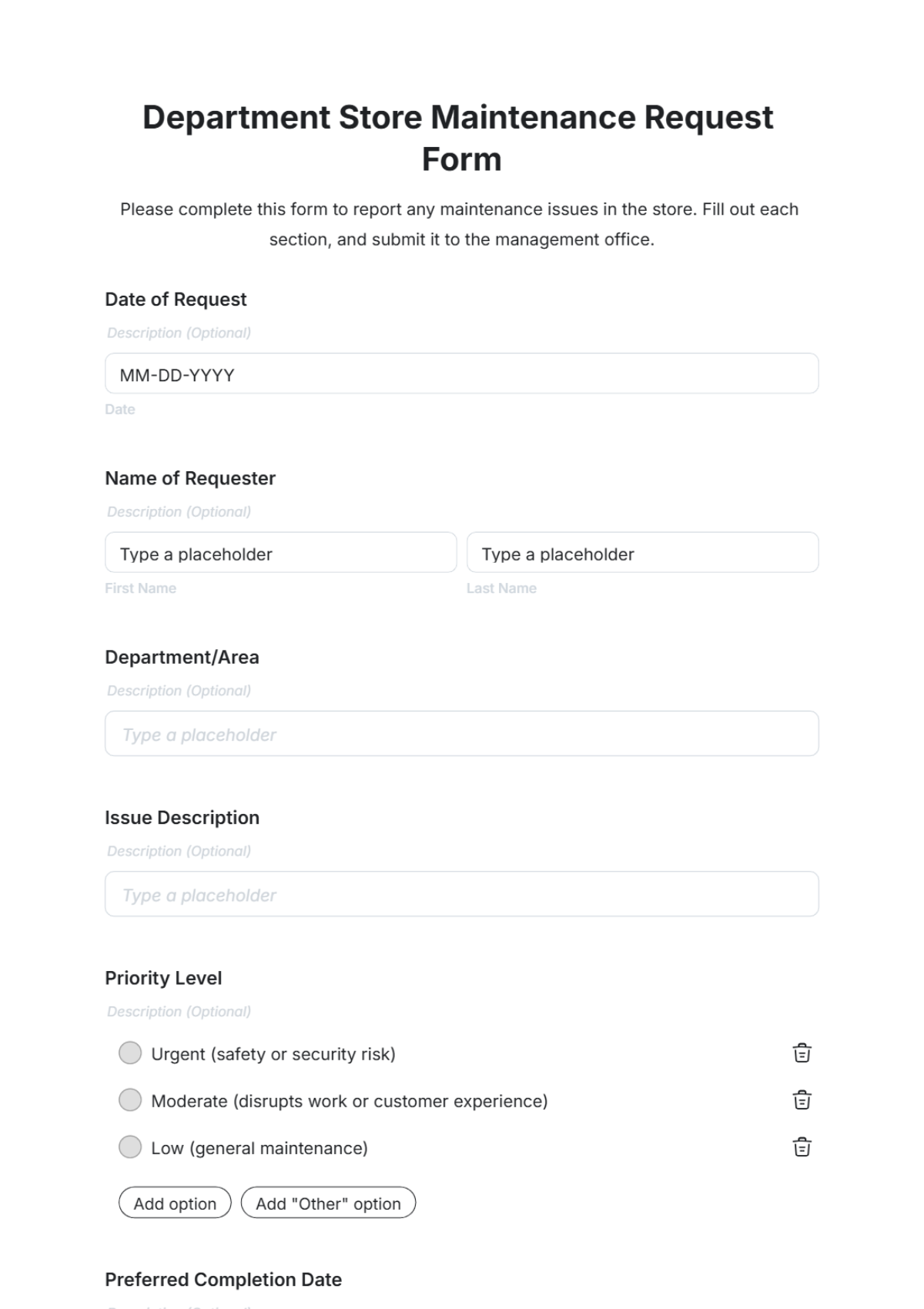
The director’s responsibility should not end when a lease is signed. A complete template includes a handoff from deal-making to lease administration, property management, construction, finance, and tenant coordination.
The handoff should identify the final commercial terms and compare them with the approved deal. Any changes made during legal negotiation should be documented. This protects against situations where a material term changes late in the process but the operating team continues working from an earlier version.
A lease abstract should capture dates and obligations in a standardized format. Useful fields include commencement date, expiration date, rent schedule, options, notice deadlines, permitted use, percentage rent requirements, operating obligations, assignment rights, exclusivity, insurance, maintenance responsibilities, and significant landlord obligations.
Construction coordination should be connected to the lease. If the landlord has agreed to deliver a certain condition or provide an allowance, the responsibility should appear in the project tracking system. Tenant opening dates should be treated as operational milestones rather than simply calendar entries.
The handoff should conclude with a confirmation that finance, property management, construction, and leasing all possess the same approved information. This reduces duplicate data entry and makes later lease administration more reliable.

Designing a Retail Lease Document Workflow
A retail store lease template should not be confused with a director’s internal role template. The former is a legal-document framework for leasing premises; the latter is an operational framework for managing leasing work.
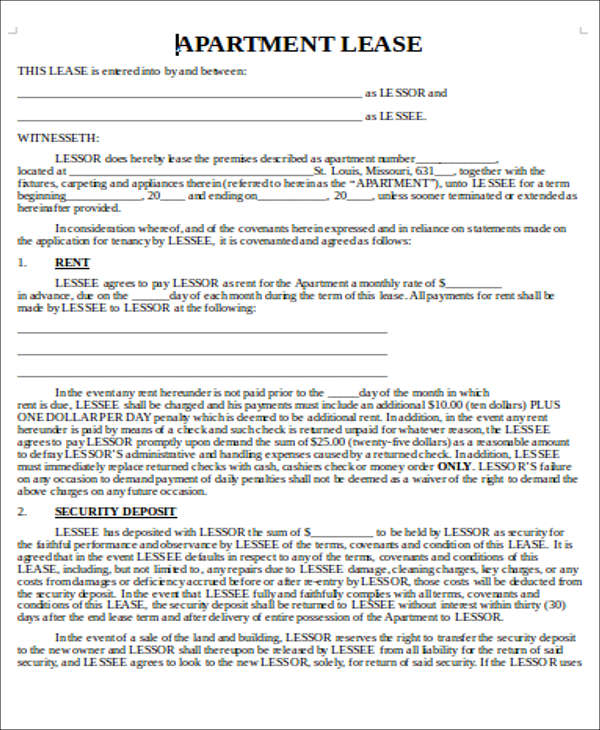
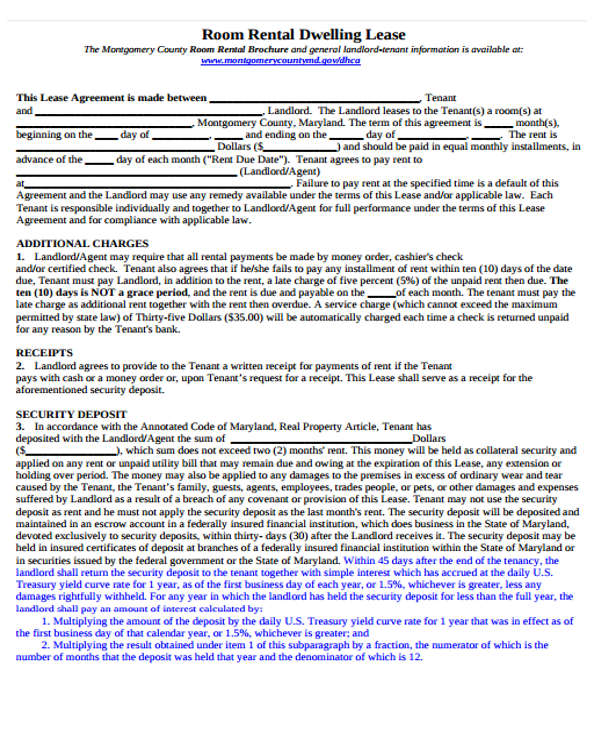
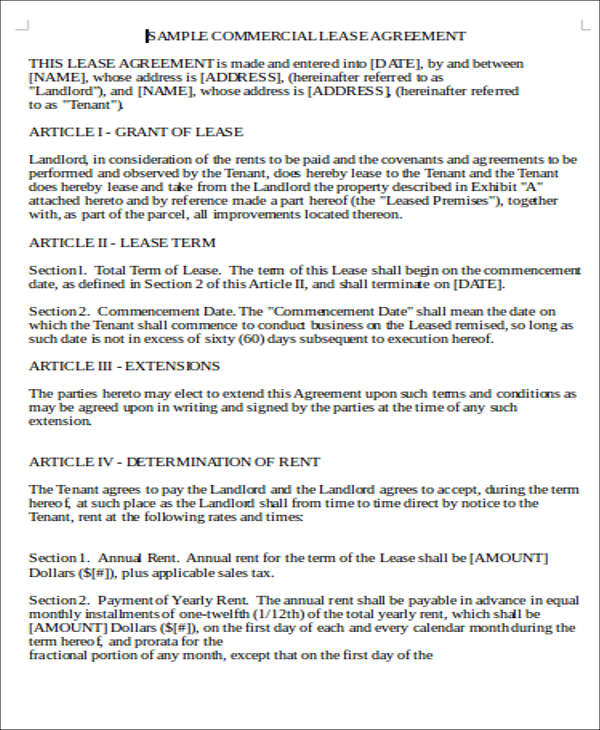
A retail lease document commonly identifies the parties, premises, term, rent, security arrangements, permitted use, maintenance responsibilities, insurance, assignment, default, termination, and other negotiated provisions. A real commercial lease can be substantially longer and more detailed than a simplified template.
A retail lease contract template can be useful as a drafting starting point, but it should be customized for the property, tenant, transaction structure, and applicable law. Generic templates should never be treated as proof that a clause is enforceable in a particular jurisdiction.
A commercial retail lease agreement template can be particularly useful when the transaction includes retail-specific considerations such as signage, percentage rent, common areas, operating requirements, tenant improvements, exclusivity, and co-tenancy. Retail lease resources identify these types of provisions as important differences from simpler commercial arrangements. :contentReference[oaicite:8]{index=8}
A retail lease agreement template should therefore be reviewed clause by clause. The goal is not to preserve every generic clause but to make sure the final agreement accurately reflects the commercial deal that was actually approved.

Choosing Between Word, PDF, Excel, and Google Docs
Different formats solve different problems. Word is usually appropriate for drafting narrative documents, role profiles, letters, lease summaries, and documents requiring extensive editing. It is especially useful when the team needs tracked changes, comments, structured headings, and formal document control.
PDF is better suited to controlled distribution and final-reference copies. Once a document is approved, a PDF can preserve its layout and reduce accidental editing. It should still be clear which version is the authoritative signed document and which version is merely a working reference.
Excel is particularly useful for numerical leasing analysis. A director can use a spreadsheet to compare proposals, calculate lease economics, track expirations, organize prospects, forecast leasing costs, and summarize portfolio activity. A spreadsheet should include protected formulas, clearly labeled assumptions, and consistent units.
Google Docs can support collaborative drafting and review when a team needs multiple people to comment on a working document. Google Sheets can similarly support shared pipeline management. Collaboration is valuable, but access permissions and version control should be considered carefully for confidential commercial information.
The strongest system often uses all of these formats together. For example, Word can contain the role profile, Excel can contain the leasing tracker, a controlled PDF can store an approved reference copy, and a collaborative document can support internal drafting before formal approval.
How to Create the Template Step by Step
Step 1: Define the purpose. Decide whether the document is primarily a job description, leasing strategy, transaction tracker, approval worksheet, lease abstract, or combined operating system. If multiple purposes are required, separate them into linked sections rather than making one enormous form.
Step 2: Identify the users. A director, leasing associate, asset manager, finance team, attorney, property manager, and executive may all need different information. Design the template so each user can find the fields relevant to their responsibilities without unnecessary clutter.
Step 3: Establish standard fields. Define property names, tenant names, unit identifiers, lease stages, dates, financial categories, approval statuses, and responsible parties. Standardization is more important than visual decoration.
Step 4: Define approval gates. Decide when a prospect becomes qualified, when a proposal requires approval, when an LOI can be issued, when lease terms require executive review, and when a final document can be executed. The template should make these gates obvious.
Step 5: Build calculations separately from narrative content. Financial calculations are easier to audit when they are kept in a spreadsheet or dedicated analysis section rather than hidden inside prose. Record the assumptions used to calculate the results.
Step 6: Test the template against a realistic transaction. Use a hypothetical retail tenant and work through the complete process. If the team cannot easily determine what happens next, which approval is required, or where a key obligation is recorded, revise the template.
Example of a Practical Deal Summary
Consider a hypothetical neighborhood retail center with a vacant 4,000-square-foot unit. A prospective specialty retailer proposes a five-year term. The director’s summary should identify the tenant, use, requested area, proposed commencement date, rent structure, escalations, tenant improvement request, free-rent request, signage needs, operating requirements, exclusivity request, and estimated opening date.
The next field should explain strategic fit. Does the tenant fill a category gap? Does it complement existing occupants? Could the proposed use conflict with an existing exclusive? Does the concept require unusual infrastructure? These questions help management understand why the deal matters beyond the financial headline.
The economic section can then compare the tenant’s proposal with the property’s target economics. For illustration, suppose the tenant requests lower initial rent but offers a longer commitment and stronger credit profile. The template should show both the concession and the potential benefit rather than labeling the proposal simply as “below asking.”
The risk section should identify unresolved issues. Examples could include permitting uncertainty, construction costs that exceed the preliminary allowance, an unusually broad use clause, or a requested termination right. Risks should be assigned owners and deadlines.
The approval section should conclude with a clear recommendation such as “approve,” “approve subject to conditions,” or “return for revision,” accompanied by the specific conditions that must be satisfied. This is much more useful than an unexplained approval checkbox.
California Considerations for a Retail Leasing Template
A search for a director of retail leasing template california should be approached carefully because a template should not imply that one generic document automatically satisfies every California commercial transaction.
California has extensive statutory material governing contracts and real property, and the exact legal requirements depend on the transaction and circumstances. California law also contains specific rules concerning written instruments affecting real property. For example, California Code of Civil Procedure section 1971 addresses written instruments for interests in real property, with an exception for leases of one year or less. :contentReference[oaicite:9]{index=9}
The practical lesson is that a California-oriented template should contain a clearly identified governing-law section and should be reviewed against the actual transaction. Do not assume that a residential lease form, a form designed for another state, or a generic online template is appropriate for a California retail property.
California commercial tenants and landlords may also encounter issues involving building accessibility, maintenance responsibilities, construction obligations, insurance, local permitting, and other property-specific matters. California Judicial Council material specifically advises commercial tenants to review the lease to determine responsibility for accessibility-related areas and to consult counsel when appropriate. :contentReference[oaicite:10]{index=10}
Accordingly, a California version of the internal leasing template should contain a jurisdiction field, local review checkpoint, property-specific compliance checklist, and legal-review status. These fields organize the process without pretending to replace legal advice.

Common Mistakes When Building the Template
The first mistake is making the template too generic. A document that says “manage leasing” or “negotiate favorable terms” provides little operational value. Each responsibility should connect to measurable outputs, decisions, or documentation.
The second mistake is focusing only on rent. Retail deals involve use, tenant mix, signage, operating requirements, improvements, maintenance, marketing, options, assignment rights, and other provisions. A financially attractive deal can still create strategic problems if important non-economic terms are ignored.
The third mistake is allowing multiple versions of the same data. If the rent schedule in one spreadsheet differs from the rent schedule in a lease abstract, the organization has a data-control problem. A clear source-of-truth policy should define which document controls and how changes are communicated.
The fourth mistake is treating an LOI as the end of negotiation. The lease document may contain extensive legal and operational detail that requires coordination. The template should track the transaction from commercial proposal through execution and opening.
The fifth mistake is measuring activity instead of results. Counting calls, tours, and proposals can be useful, but senior management generally needs to understand leasing economics, quality, timing, occupancy, risk, and portfolio impact. The template should support both activity metrics and outcome metrics.

Best Practices for Professional Use
Keep terminology consistent. If one team member calls a transaction “LOI pending” while another calls it “proposal,” reporting becomes unreliable. Create a short glossary of stages and apply it consistently.
Use required fields for information that affects decisions. Property, tenant, space, use, term, rent, approval status, next action, and key dates should not be optional in a deal tracker.
Keep sensitive information appropriately controlled. Commercial lease negotiations may involve confidential financial terms, tenant information, strategic plans, and legal communications. Access should be limited according to organizational policy.
Build review dates into the template. Market assumptions, target rents, operating budgets, and tenant strategies change. A template should indicate when a market analysis or portfolio strategy was last reviewed.
Finally, keep the visual design simple. Clear headings, consistent tables, readable labels, and restrained formatting are more useful than decorative graphics. The purpose of the document is to support accurate decisions and efficient execution.

Practical Solution: Build a Three-Layer Leasing Template System
The most practical solution is to create three connected layers rather than one oversized document. Layer one is the director role template. It defines purpose, authority, responsibilities, skills, goals, performance measures, reporting relationships, and expectations.
Layer two is the leasing pipeline and deal template. It tracks properties, spaces, prospects, tenant qualifications, proposals, LOIs, negotiations, approvals, lease execution, construction, and openings. This is the operational engine of the system.
Layer three is the lease administration and reporting template. It stores abstracts, critical dates, obligations, renewal options, financial terms, tenant improvement commitments, reporting metrics, and post-execution tasks. Together, the three layers create continuity from strategy through execution.
Start by copying the same property, tenant, and transaction identifiers across all three layers. That allows a manager to move from a portfolio dashboard to a specific transaction without searching multiple disconnected records.
Next, define the approval gates. For example, a prospect can move to “qualified” only after required information is complete; a proposal can move to “LOI” after economic review; an LOI can move to “lease drafting” after formal approval; and a lease can move to “executed” only after authorized signatures are complete.

Then create a standard weekly review. Review new opportunities, stalled deals, approvals, lease expirations, renewals, construction dependencies, tenant openings, and material risks. Keep the meeting focused on decisions and actions rather than reading every row of the spreadsheet.
For financial analysis, create a separate assumptions area. Record rent assumptions, escalation schedules, concessions, tenant improvement costs, commissions, operating expenses, and timing assumptions. Make it obvious which figures are approved and which are estimates.
For legal coordination, create a status field rather than storing legal advice inside the general leasing tracker. A status such as “legal review requested,” “comments received,” or “business terms unresolved” can show progress without exposing privileged communications to unnecessary users.
For tenant opening, create a separate milestone checklist connected to the executed lease. Include delivery condition, construction documents, permits, landlord work, tenant work, signage, utilities, inspections, opening date, and outstanding obligations as applicable to the transaction.
Finally, conduct a quarterly template review. Remove fields that no one uses, add fields that repeatedly cause confusion, improve definitions, and verify that reports still answer management’s questions. A template should evolve with the organization’s leasing process rather than becoming a permanent form that nobody trusts.
Reference Examples
The following visual references illustrate the kinds of professional documents and layouts that can support a director-level retail leasing workflow. They are examples for structure and visual reference, not statements that the pictured documents are universally suitable legal forms.
director of retail leasing template free
Source: Template.net
director of retail leasing template free download
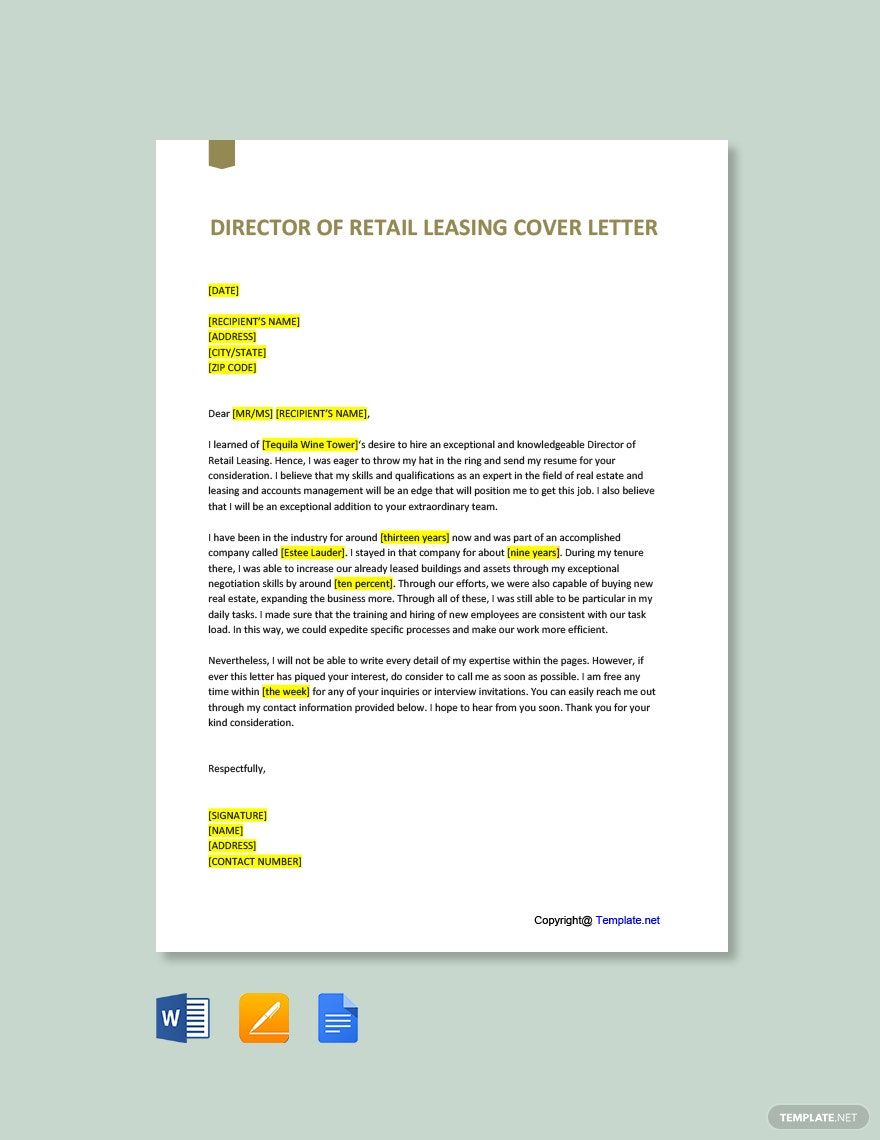
Source: Template.net
director of retail leasing template pdf
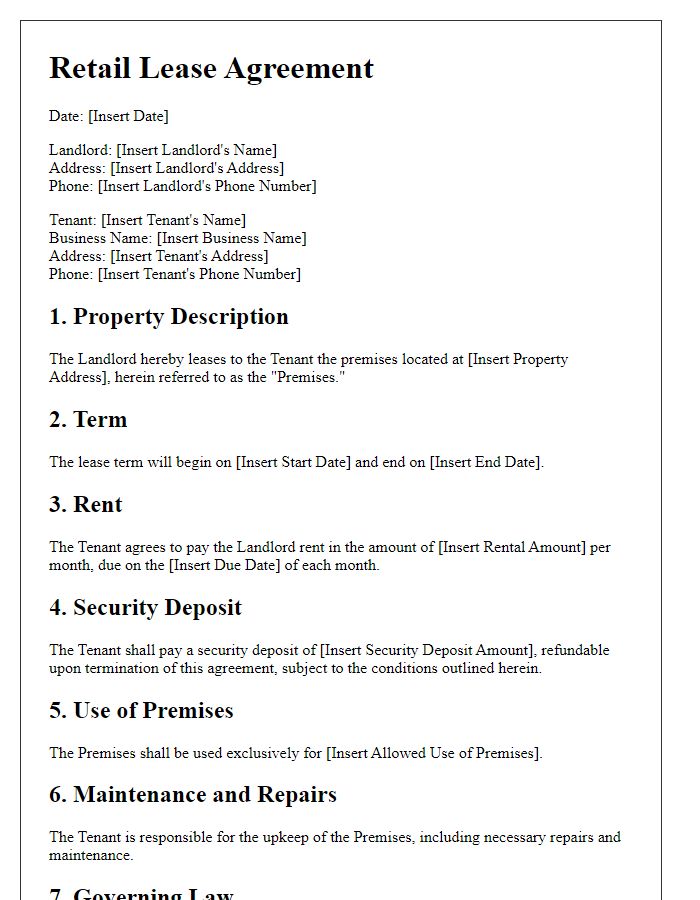
Source: Letterin
director of retail leasing template word
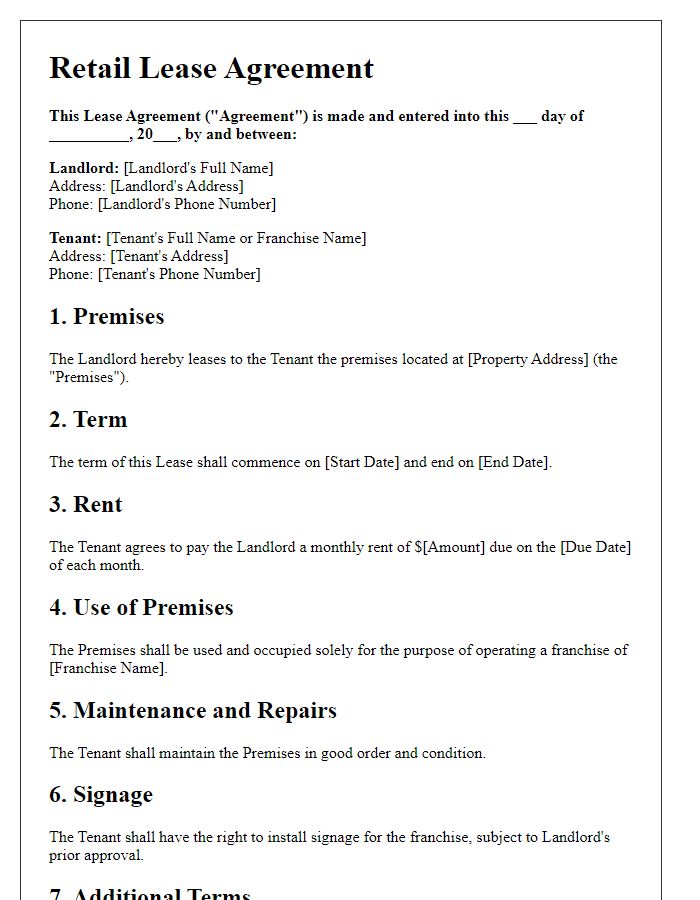
Source: Letterin
director of retail leasing template california
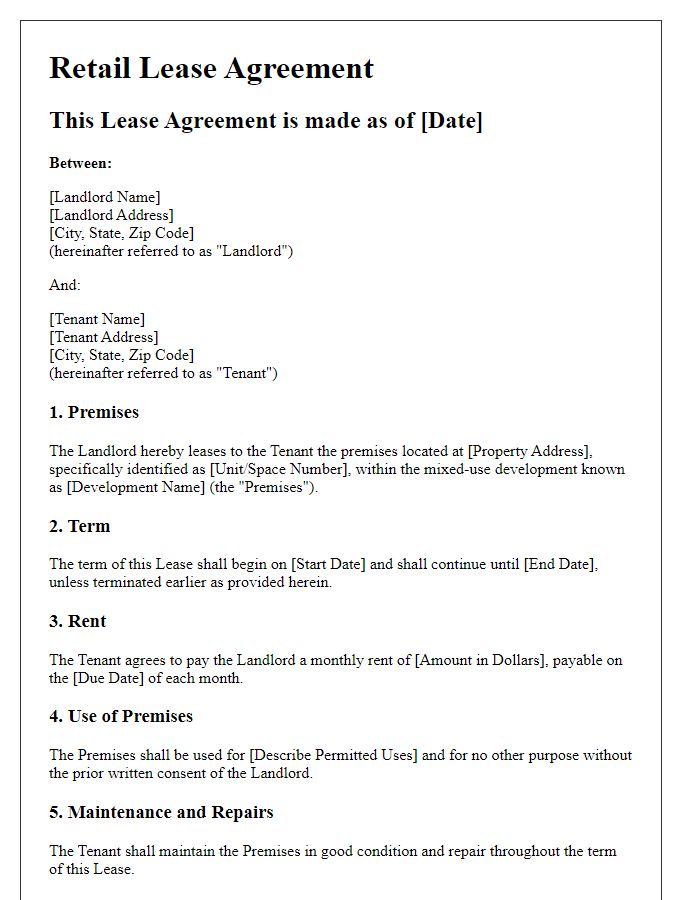
Source: Letterin
director of retail leasing template excel
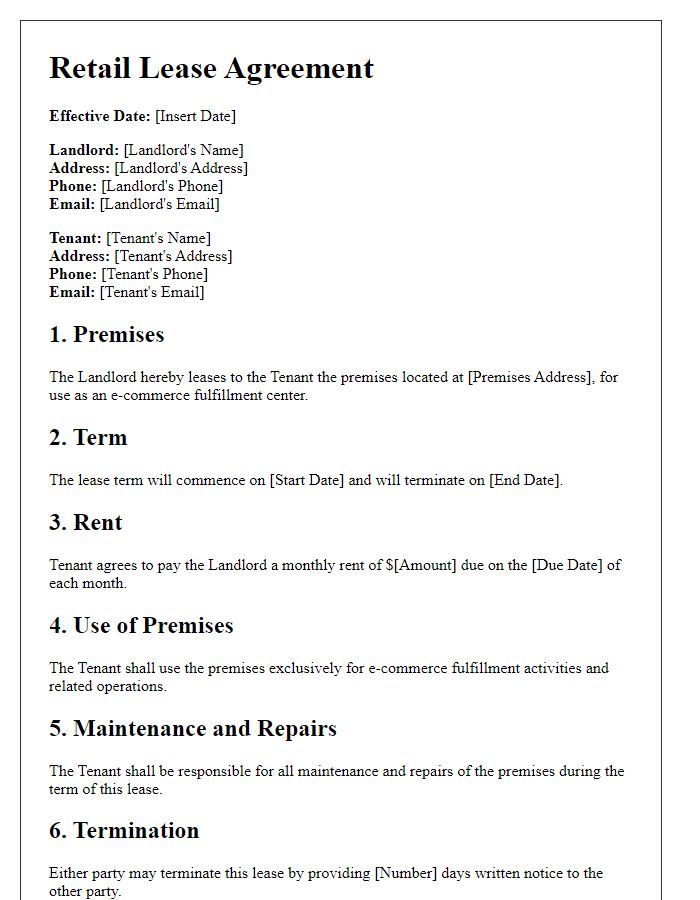
Source: Letterin
director of retail leasing template google docs
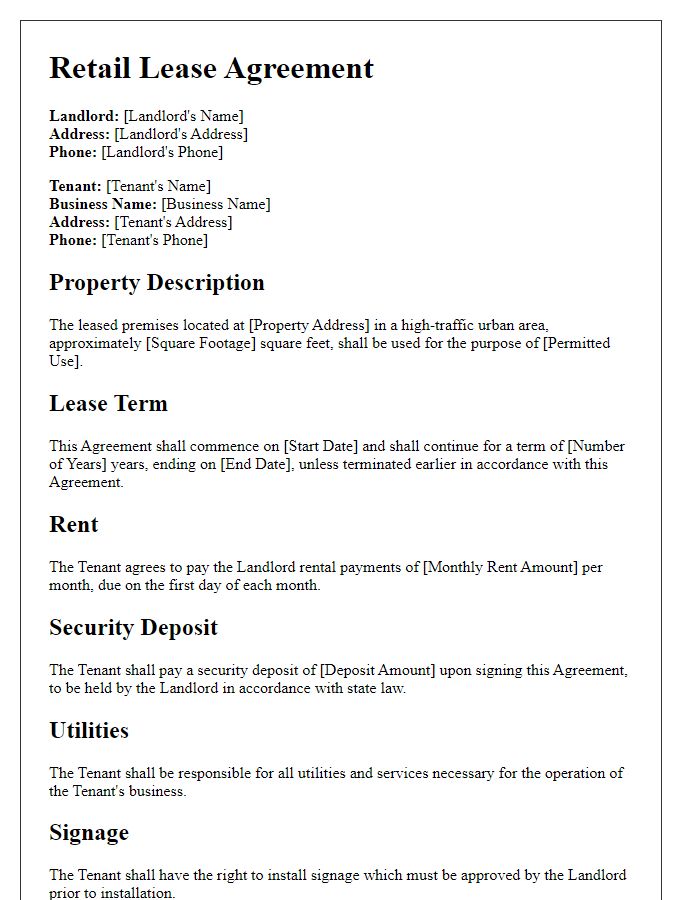
Source: Letterin
director of retail leasing template job description
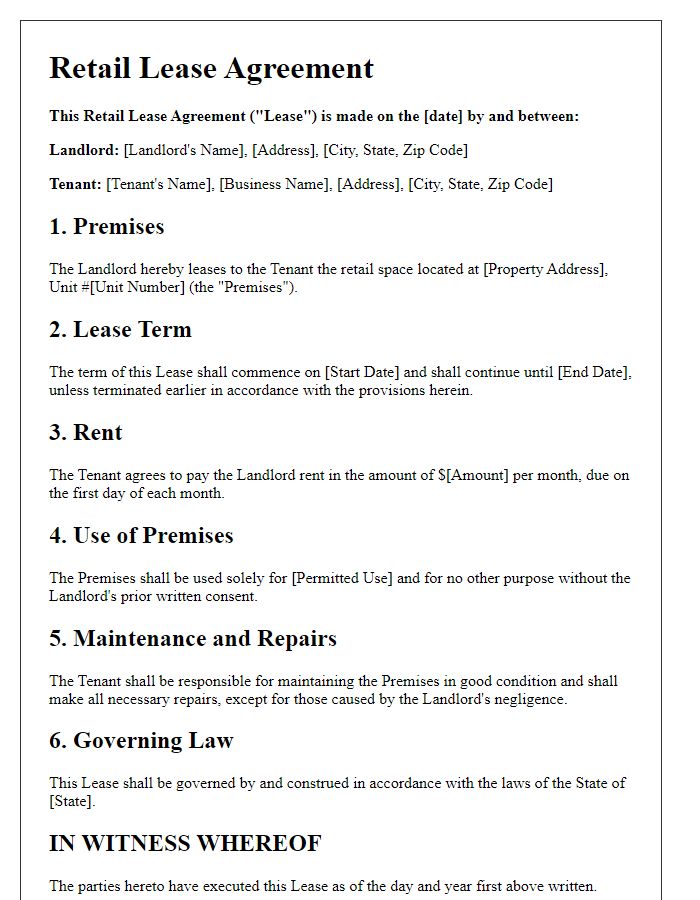
Source: Letterin
retail store lease template
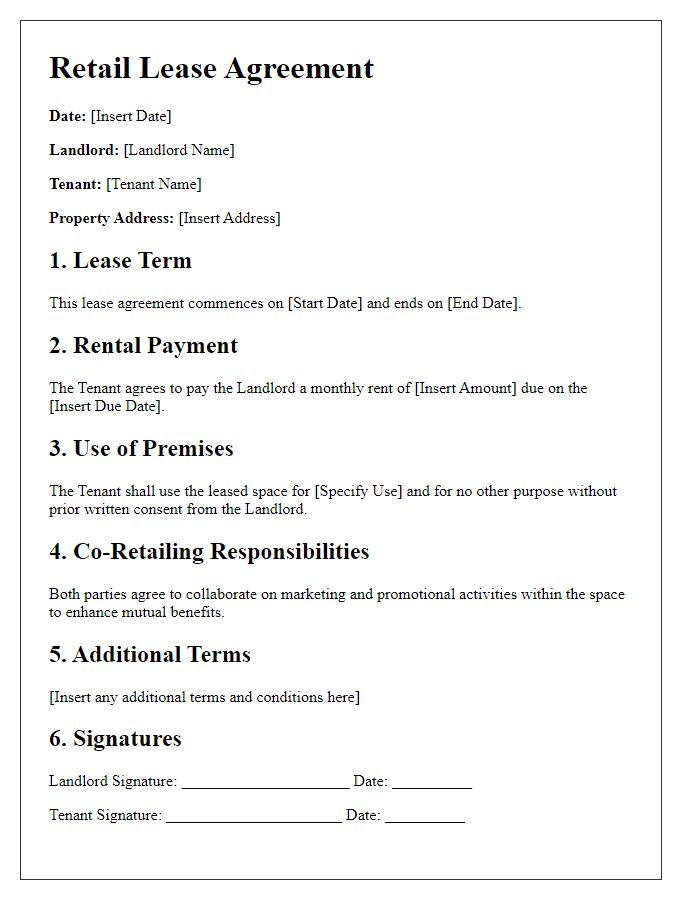
Source: Letterin
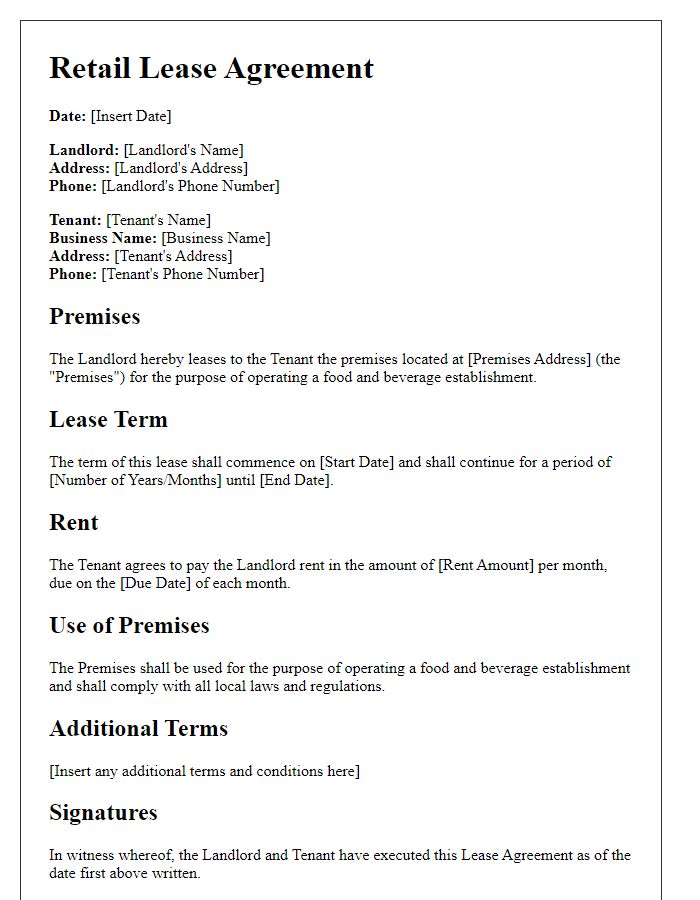
retail lease contract template
Source: Letterin
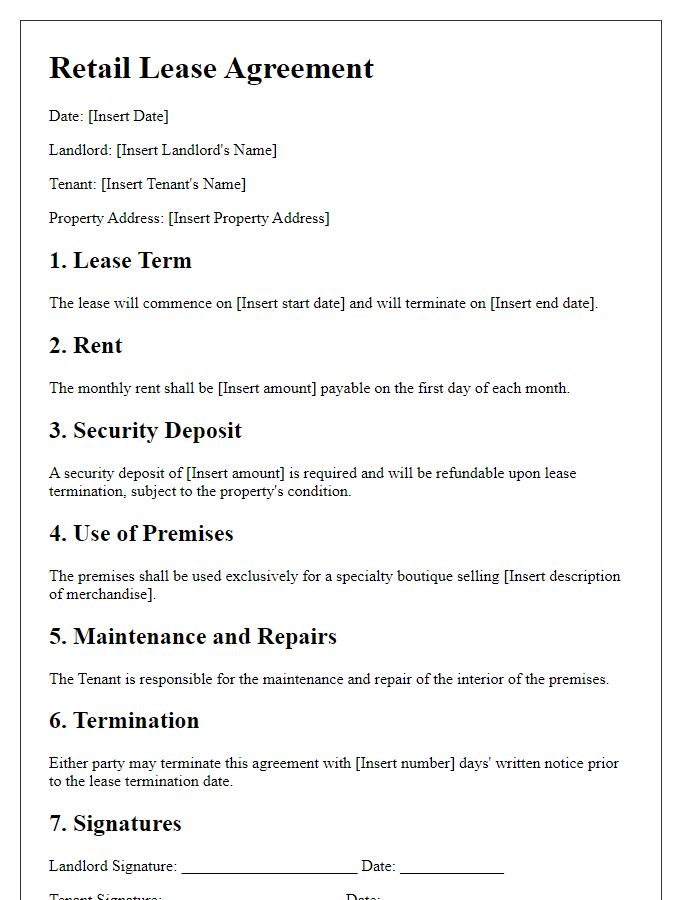
commercial retail lease agreement template
Source: Letterin
retail lease agreement template
Source: Template.net
Frequently Asked Questions
What should a director of retail leasing template contain?
At minimum, include role purpose, portfolio scope, responsibilities, authority, leasing objectives, prospect pipeline, transaction stages, approval checkpoints, financial analysis, critical dates, reporting metrics, and coordination requirements. A stronger system also includes lease abstracts, renewal tracking, tenant opening milestones, and performance reporting.
Is a director of retail leasing template the same as a job description?
No. A job description explains the position, while a director-level leasing template can also define workflows, decision gates, reporting requirements, transaction documentation, and performance measurement. A job description is one useful component of the broader system.
Can the same template be used for every retail property?
The core structure can be standardized, but property-specific fields should remain flexible. Shopping centers, urban storefronts, mixed-use developments, outlet properties, and specialty retail assets may have different tenant-mix objectives, operating requirements, and deal structures.
Should a retail lease template be reviewed by a lawyer?
Yes, especially before a template is used as an actual contract. A general template can help organize information, but enforceability, required notices, property rules, remedies, disclosures, construction obligations, and other terms can depend on jurisdiction and transaction details.
What is the best format for a leasing template?
There is no single best format. Word is useful for narrative documents, PDF for controlled final copies, Excel for financial analysis and tracking, and collaborative tools such as Google Docs or Sheets for shared working documents. A coordinated system is usually more effective than forcing every purpose into one file type.
How should leasing performance be measured?
Use a balanced set of measures. Possible categories include executed deals, leased area, leasing velocity, achieved economics, renewal performance, qualified pipeline, forecast accuracy, tenant opening performance, leasing costs, and strategic tenant-mix progress. Avoid relying on one metric such as occupancy alone.
What should be tracked after a lease is signed?
Track critical dates, rent schedules, options, tenant obligations, landlord obligations, tenant improvements, construction milestones, permits, signage, opening dates, reporting requirements, assignments, renewals, and other material commitments contained in the executed agreement.
Conclusion
A high-quality director of retail leasing Template should function as a practical operating system for retail leasing rather than a generic form. The strongest structure connects the director’s responsibilities with prospect management, market research, lease economics, negotiation, approval, documentation, construction coordination, tenant opening, renewals, and portfolio reporting. Separate role documents from legal lease documents, standardize the information that drives decisions, keep financial assumptions visible, and use Word, PDF, Excel, or collaborative formats according to the job each format performs best. Most importantly, treat every template as a controlled starting point that must be adapted to the property, transaction, organization, and applicable law; if you are building one now, would you prioritize a job-focused template, a leasing-operations template, or a combined director-level system?
