An employee apartment lease Template is a practical starting point for documenting employer-provided residential housing, especially when a company leases an apartment for an employee, assigns an employee to company-controlled housing, or combines housing with a relocation or temporary assignment. The document should do more than identify a property and monthly payment. It should explain who has the right to occupy the apartment, how long the arrangement lasts, who pays rent and utilities, who handles repairs, what happens when employment or the assignment ends, and which legal rules govern the tenancy.
The most useful approach is to treat the template as a structured framework rather than a substitute for state-specific legal review. A conventional residential lease and an employer-provided housing agreement can overlap, but they are not always identical. The relationship may involve a landlord, an employer, and an employee, or the employer may itself be the tenant under a separate property lease. That distinction can affect how the document should be drafted, particularly when housing is connected to employment.
People searching for an employee apartment lease template free often want a practical starting point that can be adapted without writing every clause from scratch. Searches such as employee apartment lease template pdf and employee apartment lease template word also reveal an important preference for documents that are easy to review, revise, store, and sign. The best template is therefore one that presents the essential terms clearly while leaving enough flexibility for the parties to address the actual property, payment structure, furnishings, occupancy rules, and applicable law.
What an employee apartment lease should accomplish
The central purpose of an employee housing lease is to establish a clear connection between the people involved and the residential premises. The document should identify the legal landlord or lessor, the employee or tenant, and, where relevant, the employer that arranged or provides the housing. If the employer is leasing the apartment from a separate property owner and then allowing an employee to occupy it, the documents should be coordinated rather than assuming that one agreement automatically replaces the other.
A strong agreement also separates the housing relationship from the employment relationship. Employment may be a condition for receiving the housing benefit, but the lease should still explain the residential terms in a precise way. For example, it can state whether the employee pays rent directly, whether the employer pays the landlord, whether utilities are included, and whether any amount is treated separately under payroll or compensation policies. The document should not rely on informal statements such as “housing is provided while employed” when a more specific provision is possible.
The lease should also make termination mechanics clear. An employee may leave the company, transfer to another location, take an extended assignment, or remain employed while no longer qualifying for the particular housing arrangement. Each situation can have different consequences. Instead of using a vague statement that employment termination automatically ends occupancy, the agreement should identify the relevant notice process, surrender requirements, payment obligations, and any rights that cannot legally be waived.
Who should be named in the agreement
Begin with accurate identifying information. The property owner or landlord should be identified by the legal name used for the tenancy, together with an address for formal notices. The employee should be identified as the person receiving occupancy rights. If a company is paying the rent or is itself the tenant under a master lease, that role should be stated rather than leaving the reader to infer it from the employee’s job title.
The employer’s role deserves particular attention because several arrangements are possible. In one example, a landlord leases an apartment directly to the employee while the employer reimburses the employee. In another, the employer leases the apartment and gives the employee permission to occupy it. A third arrangement may involve a corporate housing provider and a separate employee occupancy agreement. These structures can create different responsibilities, so the template should match the actual transaction.
Contact information should be practical rather than excessive. Include the address or other designated method for formal notices, a maintenance contact where appropriate, and a clear process for reporting urgent problems. If a property manager is responsible for repairs but a separate owner is the legal landlord, the document can identify both roles. Clear contact information reduces confusion when a repair, payment question, inspection, or termination notice arises.
Property description and occupancy terms
The property section should identify the apartment precisely enough that there is no uncertainty about what is being leased. Include the street address, unit number, and any designated parking, storage, garage, or other areas included with the tenancy. If the employee will receive access to shared facilities, describe those facilities in a way that makes their status understandable.
Occupancy provisions are particularly important in employer-provided housing. State who may live in the apartment and whether additional occupants require written consent. A company may have legitimate operational reasons for limiting occupancy, but those rules must still be consistent with applicable housing law and the underlying lease. Avoid drafting rules that are broader than necessary or that attempt to bypass legally protected tenant rights.
Furnished units require additional detail. A furniture and equipment inventory can identify beds, tables, appliances, electronics, kitchen equipment, keys, parking devices, and other property supplied with the apartment. The condition of significant items should be recorded at move-in. This gives both sides a practical reference when the employee leaves and helps distinguish ordinary wear from damage that may legitimately be charged under the governing agreement.
Lease term, renewal, and employment connection
The term should state the exact beginning and ending dates whenever a fixed-term lease is intended. If the arrangement is month-to-month, say so clearly and identify how termination works under the governing law and contract. A template should never rely on a blank phrase such as “until employment ends” without considering whether the residential tenancy has independent legal requirements.
Renewal provisions can be particularly useful for employees on projects or relocations. The agreement might provide for renewal by mutual written agreement, subject to the landlord’s approval and any required notice. For a short assignment, the parties may want a defined end date with a separate procedure for extending the occupancy. For a long-term relocation, a conventional fixed-term residential lease may make more sense.
The connection between employment and housing should be written carefully. If continued employment is a condition of eligibility for employer-provided housing, state that relationship while also explaining what happens to the residential occupancy when employment changes. The agreement should not assume that an employment event automatically eliminates every tenant protection or notice requirement. State and local law can determine whether an employee is a tenant, licensee, or another type of occupant in a particular arrangement.
Rent, deposits, utilities, and other charges
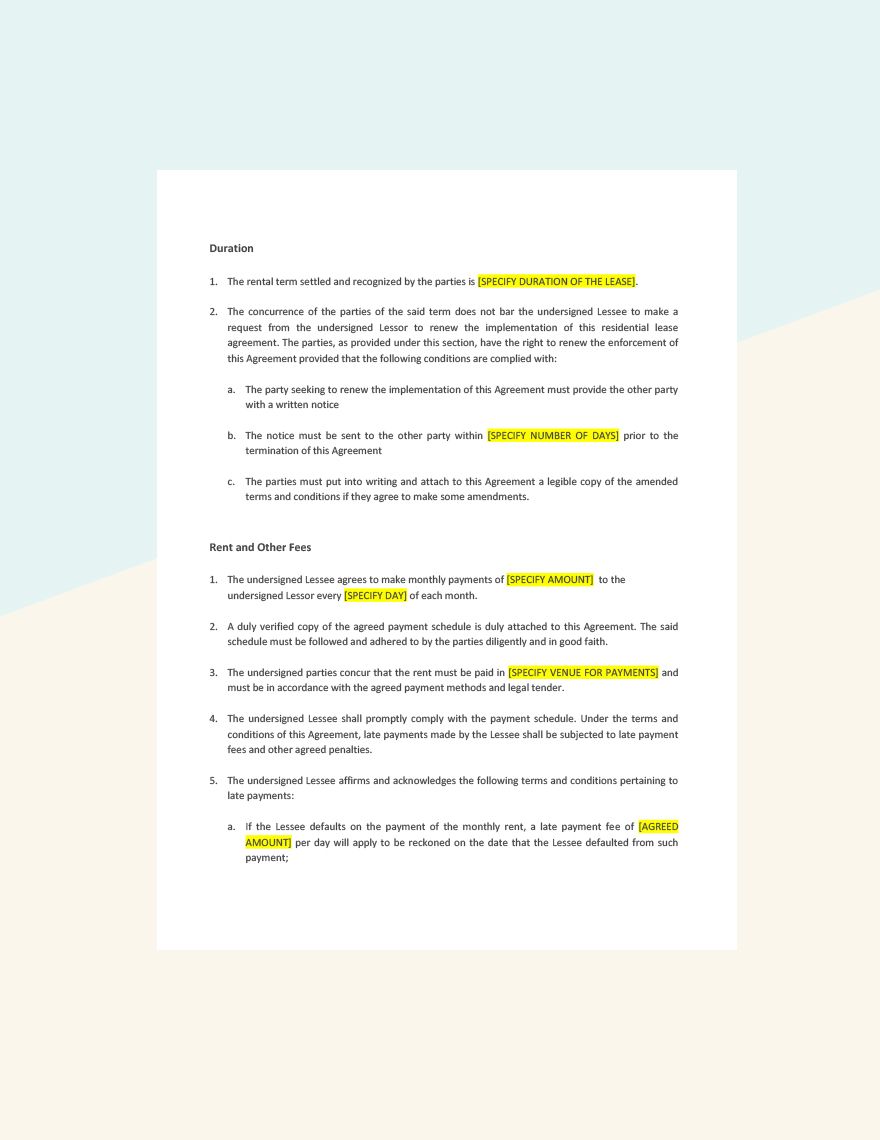
Payment terms should be specific enough to avoid later disagreement. State the monthly rent, due date, payment method, and any authorized late charges. If the employer pays the landlord directly, identify that arrangement. If the employee pays a portion while the employer pays the balance, the agreement should distinguish the employee’s contractual obligation from any separate employer benefit or reimbursement policy.
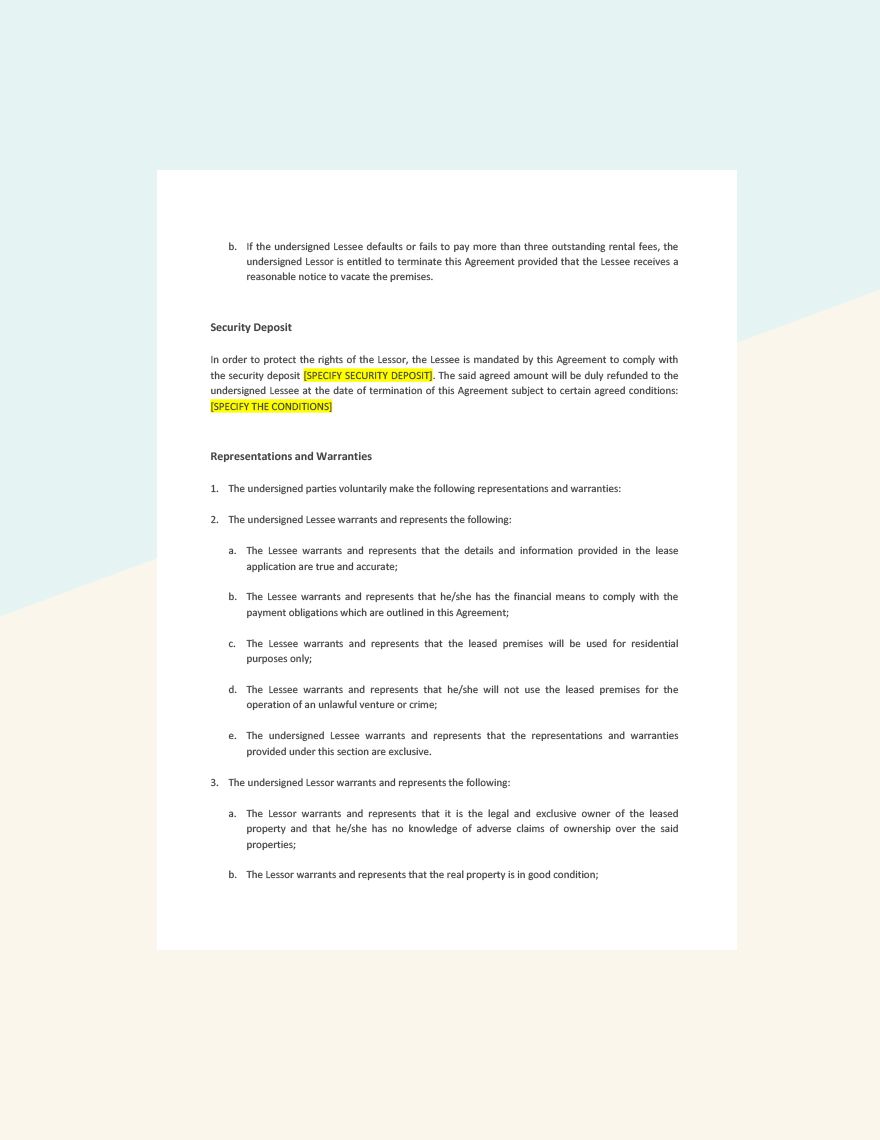
Security deposits require special care because state law can govern their amount, handling, permitted deductions, notices, and return. The template should identify the deposit amount and explain the general conditions under which deductions may be made, without attempting to override mandatory law. It is also useful to describe how the parties will document property condition, because a clear move-in record can make later deposit questions easier to resolve.
Utilities should be listed individually rather than hidden inside a general statement. Water, electricity, gas, internet, trash service, parking, and other recurring services can be allocated differently depending on the arrangement. Furnished corporate housing may include many services that a conventional apartment lease does not. The agreement should state whether each item is included, separately billed, subject to a usage limit, or the responsibility of the employee.
Maintenance, repairs, inspections, and property condition
A well-structured lease distinguishes routine housekeeping from repairs that belong to the landlord or property owner. The employee may be responsible for keeping the apartment reasonably clean and promptly reporting problems, while the landlord remains responsible for legally required repairs and habitability obligations. The employer may have an administrative role in coordinating service requests without becoming responsible for every property defect.
Inspection provisions should be practical and respectful of privacy. The agreement can explain when inspections may occur, how ordinary access will be arranged, and how emergencies are handled, subject to applicable law. Avoid broad language that appears to give unrestricted access to the residence. Residential tenants generally retain important possession and privacy rights, even when the employer is involved in the housing arrangement.
For furnished housing, condition documentation is one of the most valuable supporting records. A move-in checklist can identify visible damage, appliance condition, keys, furnishings, fixtures, and other significant items. At move-out, the same checklist can be reviewed again. Photographs may also help document condition, provided they are handled appropriately and do not intrude into personal privacy.
Rules for occupants, guests, pets, and property use
Employee housing often requires rules beyond those found in a basic residential lease. The agreement may address the number of approved occupants, guest policies, pets, smoking, alterations, parking, storage, noise, and prohibited uses. These provisions should be written as ordinary residential rules rather than as a collection of employment instructions.
Guest rules should be precise enough to distinguish a temporary visitor from a new occupant. If an employee wants a spouse, partner, dependent, or other household member to live at the apartment, the agreement should provide a clear process for approval where approval is legally permitted. The same principle applies to pets and assistance animals: ordinary pet restrictions should not be drafted in a way that conflicts with applicable disability accommodation requirements.
Property-use restrictions should focus on legitimate concerns such as unlawful activity, unauthorized commercial use, dangerous alterations, excessive damage, or violations of building rules. If the employee is housed near a worksite, the employer may have operational concerns about access or security, but those concerns should be separated from unnecessary restrictions on ordinary residential life.
Employment termination and move-out provisions
The end of employment is one of the most sensitive parts of an employee housing arrangement. A well-drafted agreement should explain whether the employee’s occupancy continues for a specified period, ends according to the lease’s ordinary termination rules, or is handled under a separate lawful procedure. The answer depends on the actual legal structure and the applicable jurisdiction.
Move-out requirements should cover the return of keys, parking passes, access cards, furniture, appliances, and other company or landlord property. The agreement can also state expectations for cleaning and removal of personal belongings. These requirements are more useful when they are objective. Instead of demanding that the apartment be returned “perfect,” describe the expected condition and distinguish ordinary wear from damage.
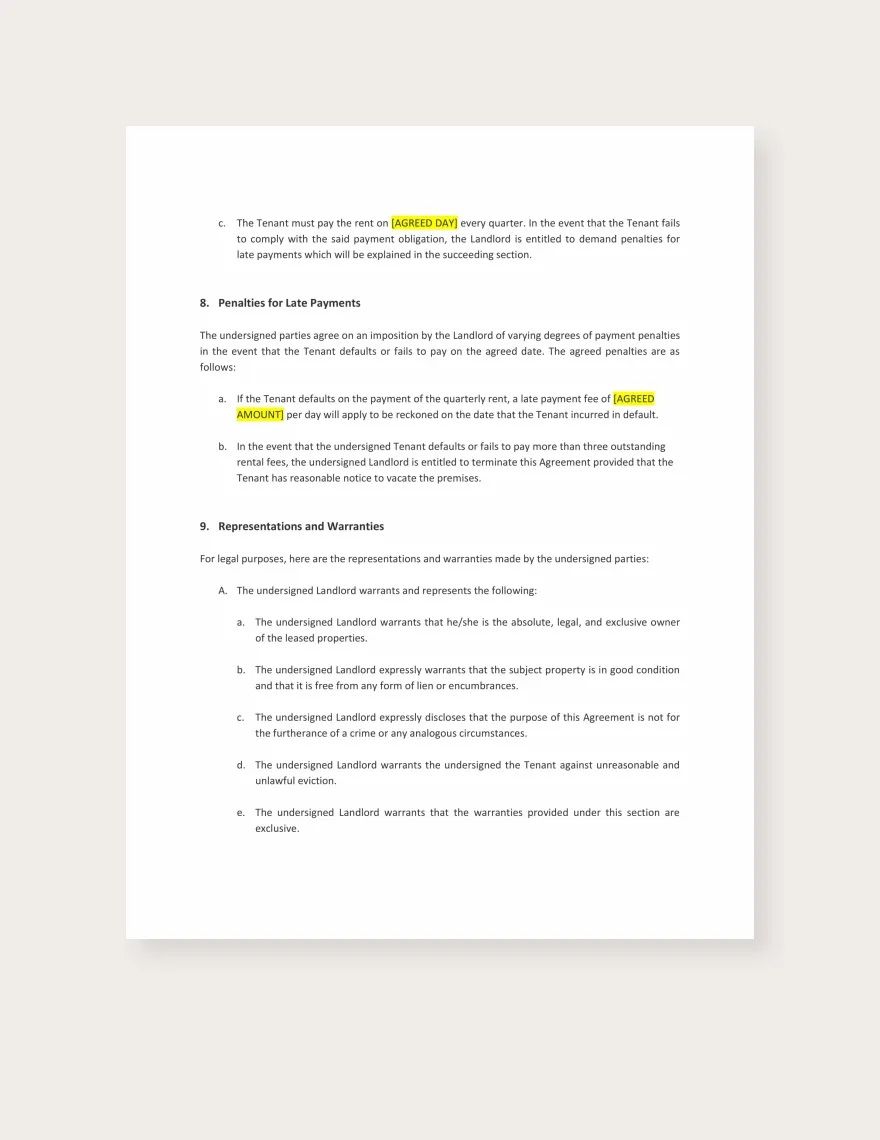
The parties should also address final financial reconciliation. This can include unpaid rent, authorized utility charges, damage claims, and security-deposit procedures. Where the employer has paid the landlord directly, the employee’s obligations may be different from those under a conventional tenant-paid lease. Keeping the payment structure clear from the beginning helps prevent disputes when occupancy ends.
State-specific considerations: California, Florida, Texas, and Massachusetts
A general template should not be treated as automatically valid for every state. A search for an employee apartment lease template california may involve two overlapping questions: ordinary residential landlord-tenant rules and, in certain circumstances, California’s separate employee-housing regulatory framework. California’s Department of Housing and Community Development explains that its Employee Housing Act applies to certain privately operated housing connected with work, including specified arrangements involving five or more employees. That means an employer should determine whether the housing falls within that specialized framework before relying solely on a conventional apartment lease.
For Florida, an employee apartment lease template florida should be reviewed against Florida’s residential landlord-tenant rules and the actual structure of the housing arrangement. The Florida Bar explains that residential tenancy rights can apply even when there is no written lease and that written agreements should be reviewed together with applicable law. A company should therefore avoid assuming that an employee housing document can contract around mandatory residential protections.
A Texas arrangement should be reviewed using the Texas Property Code and the facts of the tenancy. The Texas Attorney General describes the rental agreement as a major source of information about the landlord-tenant relationship, while the Texas Property Code defines a lease broadly as a written or oral agreement establishing terms for the use and occupancy of a dwelling. An employee apartment lease template texas should therefore identify the actual parties and property arrangement rather than relying on employment terminology alone.
For Massachusetts, an employee apartment lease template massachusetts should be reviewed against Massachusetts landlord-tenant requirements, including rules concerning lease terms, notices, deposits, property maintenance, and required information. Massachusetts guidance emphasizes that written leases should clearly state the rules governing the tenancy and that certain required information must appear in rental agreements. A company should therefore customize the document rather than assuming that a generic national form covers every state-specific obligation.
These state examples illustrate why an employee housing template should be viewed as a drafting framework. The same business may use different versions for employees in different states, even when the company’s housing policy is identical. The property, landlord, payment structure, employment relationship, furnishings, and termination procedure may also differ from one employee to another.
Choosing between PDF, Word, and other formats
Format matters because the people reviewing the agreement may have different needs. An employee apartment lease template pdf is useful when the document needs to preserve its appearance for review, signing, archiving, or transmission. A fixed-layout version can reduce accidental formatting changes, particularly after the final terms have been approved.
An employee apartment lease template word can be more convenient during drafting because clauses can be edited, reorganized, and customized for different properties. A company that maintains multiple housing arrangements may prefer a controlled master document with clearly identified fields. The important issue is not the software format itself but the document-control process used to prevent outdated versions from being signed.
Searchers also use phrases such as apartment lease template pdf, apartment lease template word, and apartment lease template free word when looking for a general residential starting point. Those resources can help illustrate common lease structures, but an employee housing agreement needs additional attention to the employment connection, company responsibilities, occupancy eligibility, and move-out procedure.
How to build the template section by section
Start with a document map before writing the individual clauses. A practical sequence is parties, premises, term, rent, deposits, utilities, furnishings, maintenance, occupancy, rules, insurance, entry, default, termination, move-out, notices, governing law, and signatures. This order follows the reader’s natural questions: who is involved, what is being provided, what does it cost, how may it be used, and how does the arrangement end?
Next, separate mandatory information from optional company policy. The property address and lease dates are transaction-specific. A pet policy or furnished inventory may be optional. A company may also have an internal housing policy, but that policy should not silently become part of the lease unless the parties intentionally incorporate it. When an external policy is incorporated, identify its title or version so there is a reliable record of what applied when the agreement was signed.
Finally, conduct a legal and operational review before signature. Legal review should focus on state and local housing requirements, while operational review should confirm payment responsibilities, maintenance contacts, inventory, access procedures, and employee eligibility. A template is most useful when the people administering it can understand every obligation without needing to reconstruct the agreement from emails or separate internal policies.
Common drafting mistakes to avoid
One common mistake is using the phrase “employee housing” without determining the actual legal relationship. A company may believe that calling the arrangement a housing benefit removes ordinary landlord-tenant rules, while the actual facts may point toward a residential tenancy. The safest drafting approach is to describe the transaction accurately and then obtain jurisdiction-specific advice when the classification is uncertain.
Another mistake is leaving financial terms incomplete. A lease that states a monthly rent but says nothing about utilities, deposits, parking, furnishings, or late charges can create uncertainty later. Each recurring or potentially significant cost should have an identified payer and a clear trigger. If a cost is governed by another policy, the lease should say so rather than leaving the employee to discover that policy after signing.
A third mistake is making employment termination language overly broad. An employer may need the employee to surrender company-provided housing after a job change, but the agreement should not assume that every termination situation can be handled immediately or without notice. A clause should work together with applicable residential law, the underlying landlord lease, and any contractual rights already granted to the occupant.
Using a general apartment rental lease template for employee housing
An apartment rental lease template can provide a useful foundation because conventional residential leases already address many recurring subjects: premises, term, rent, deposits, utilities, repairs, occupancy, rules, default, termination, and signatures. The employee-specific layer should then be added carefully rather than rewriting every residential provision from scratch.
The key is to identify what makes the housing arrangement different. If the employer pays the rent, that payment mechanism belongs in the agreement or a clearly incorporated document. If the employee must live in the apartment because of a work assignment, the relationship should be described accurately. If furniture belongs to the employer, the inventory should identify it. If the employee may remain in the unit after an employment transfer, the agreement should state the conditions rather than leaving the issue unresolved.
A general template should also be checked for clauses that may be unsuitable for the actual jurisdiction. A clause copied from one state may use different terminology or assumptions about deposits, entry, termination, notices, or repairs. Template language is useful for organization, but legal effectiveness depends on the actual transaction and governing law.
Practical Solution
The most practical way to use an employee apartment lease Template is to build a controlled master version with clearly marked fields and then create a property-specific copy for each tenancy. First, confirm the legal parties and decide whether the employer, employee, or another entity is the actual tenant. Second, identify the property, term, rent, deposit, utilities, furnishings, and occupancy rules. Third, review the termination structure against the employment relationship without assuming that employment status overrides residential law.
Next, create a supporting move-in record. List furnishings, appliances, keys, access devices, parking spaces, visible defects, and other significant property details. Give the employee a copy of the completed record and keep the corresponding company record with the executed lease. This process turns a generic contract into a documented housing file and gives both sides a common reference point when the employee eventually moves out.
Before signing, run a final checklist covering the parties, property address, dates, rent, deposit, utilities, repairs, entry, occupancy, guests, pets, insurance, prohibited uses, notices, termination, move-out condition, signatures, and governing law. For a multi-state employer, maintain separate review notes for each jurisdiction. The goal is not to create the longest possible document; it is to create a document that accurately describes the arrangement and does not leave important responsibilities implicit.

For someone searching for an employee apartment lease template free download, the practical answer is to evaluate the document before treating it as ready for signature. A sample can be useful for identifying clauses, but it should be adapted to the actual property and jurisdiction. The same principle applies to an employee apartment lease template pdf or employee apartment lease template word: format convenience is helpful, but accurate terms matter more than file type.
Likewise, an employee apartment lease template free word should not be selected solely because it is easy to edit. The important questions are whether it identifies the right parties, describes the apartment correctly, separates rent from employment benefits, explains utilities and repairs, handles furnishings, addresses occupancy, and provides a legally appropriate termination process. A professionally maintained template can make those checks easier because every recurring issue has a designated place in the document.

When a separate housing agreement may be better
Not every employer-provided residence should be documented through a conventional employee lease. A separate housing agreement or occupancy license may be more appropriate in some situations, particularly when the employee’s right to occupy a company-owned residence is closely connected to a specific role. The correct document depends on the actual legal relationship and should not be chosen simply because a particular form is common in another organization.
There may also be situations where two documents work better together. For example, an employer may have a master residential lease with a property owner and a separate employee occupancy agreement. The master lease establishes the company’s rights against the property owner, while the employee agreement explains the employee’s obligations and permitted use. The two documents should be reviewed together so that the employee is not promised rights the company does not possess.
Where the arrangement involves several employees sharing a residence, additional rules may be necessary. Shared bedrooms, common kitchens, cleaning responsibilities, visitor policies, transportation, safety requirements, and room assignments may need separate treatment. The agreement should remain focused on housing obligations and should not become a substitute for unrelated workplace policies.
How to evaluate a template before signing
Evaluate the template from the employee’s perspective first. Can the employee tell exactly what apartment is being provided, how much must be paid, what services are included, who handles repairs, who may live there, and how the occupancy ends? If the answers require reading several unrelated policies, the lease may need clearer drafting.
Then evaluate it from the employer’s perspective. Can the company document the housing cost, identify the responsible property contact, recover company-owned furnishings when appropriate, and coordinate a move-out without conflicting instructions? Does the agreement match the company’s actual payment and maintenance practices? If the document says one party is responsible for repairs but company staff routinely handle them, the mismatch should be resolved before signature.
Finally, evaluate it from the landlord’s perspective. If a third-party landlord owns the apartment, the landlord’s lease may restrict subletting, assignment, additional occupants, pets, alterations, or commercial use. An employee housing arrangement should be consistent with those restrictions. The employee agreement cannot safely promise permissions that the employer itself does not have under the underlying property lease.
Reference Examples
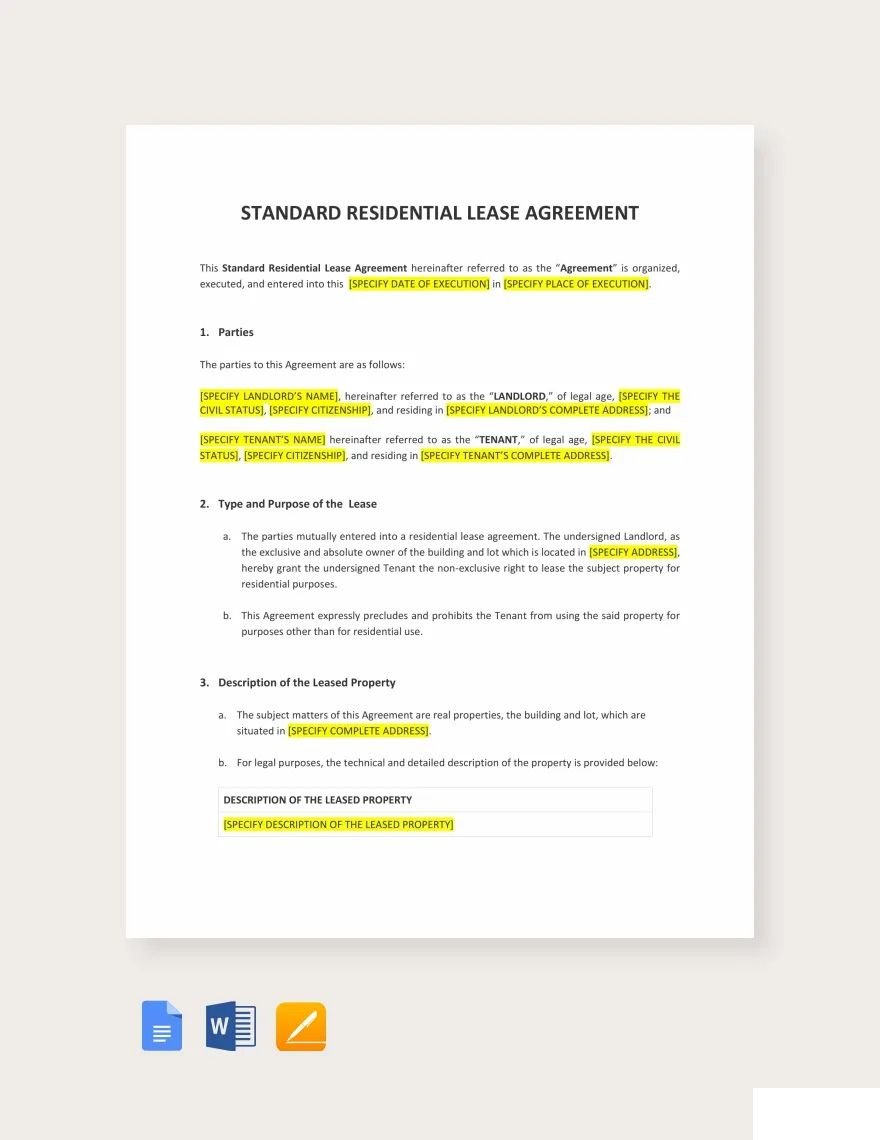
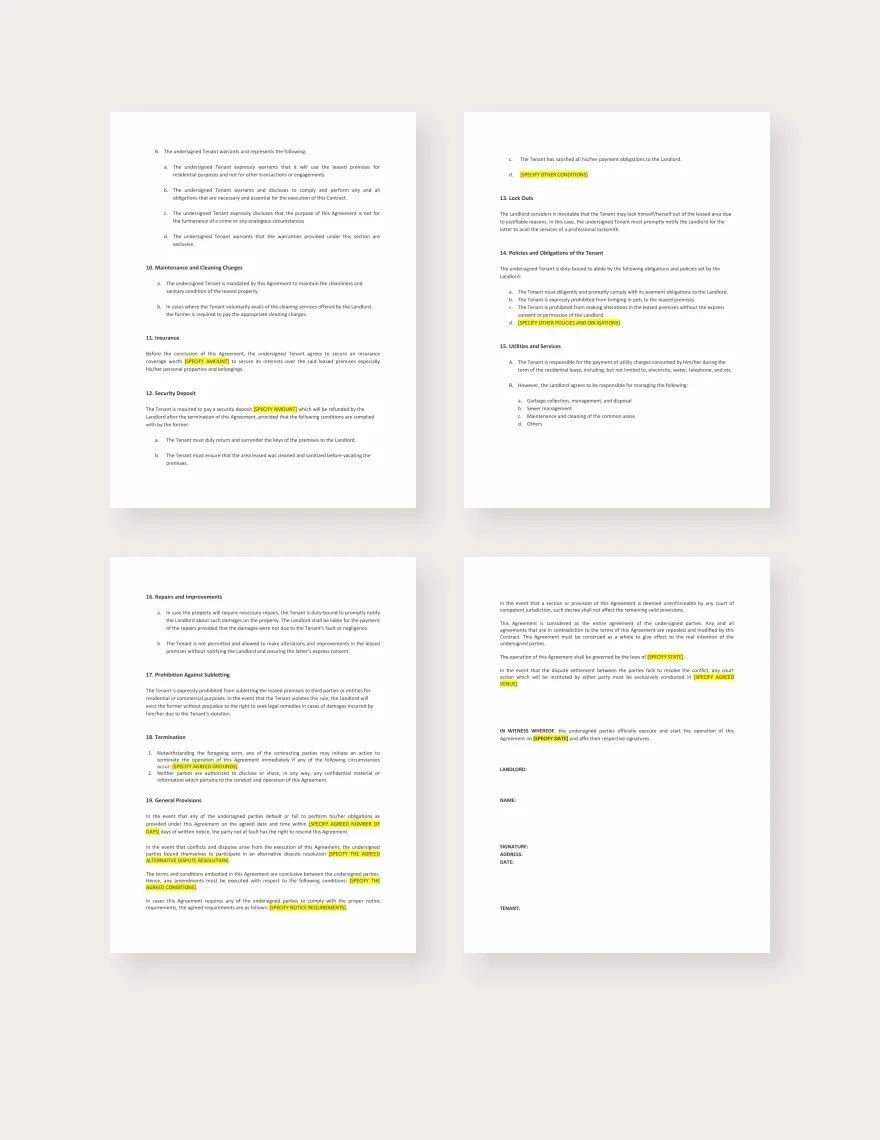
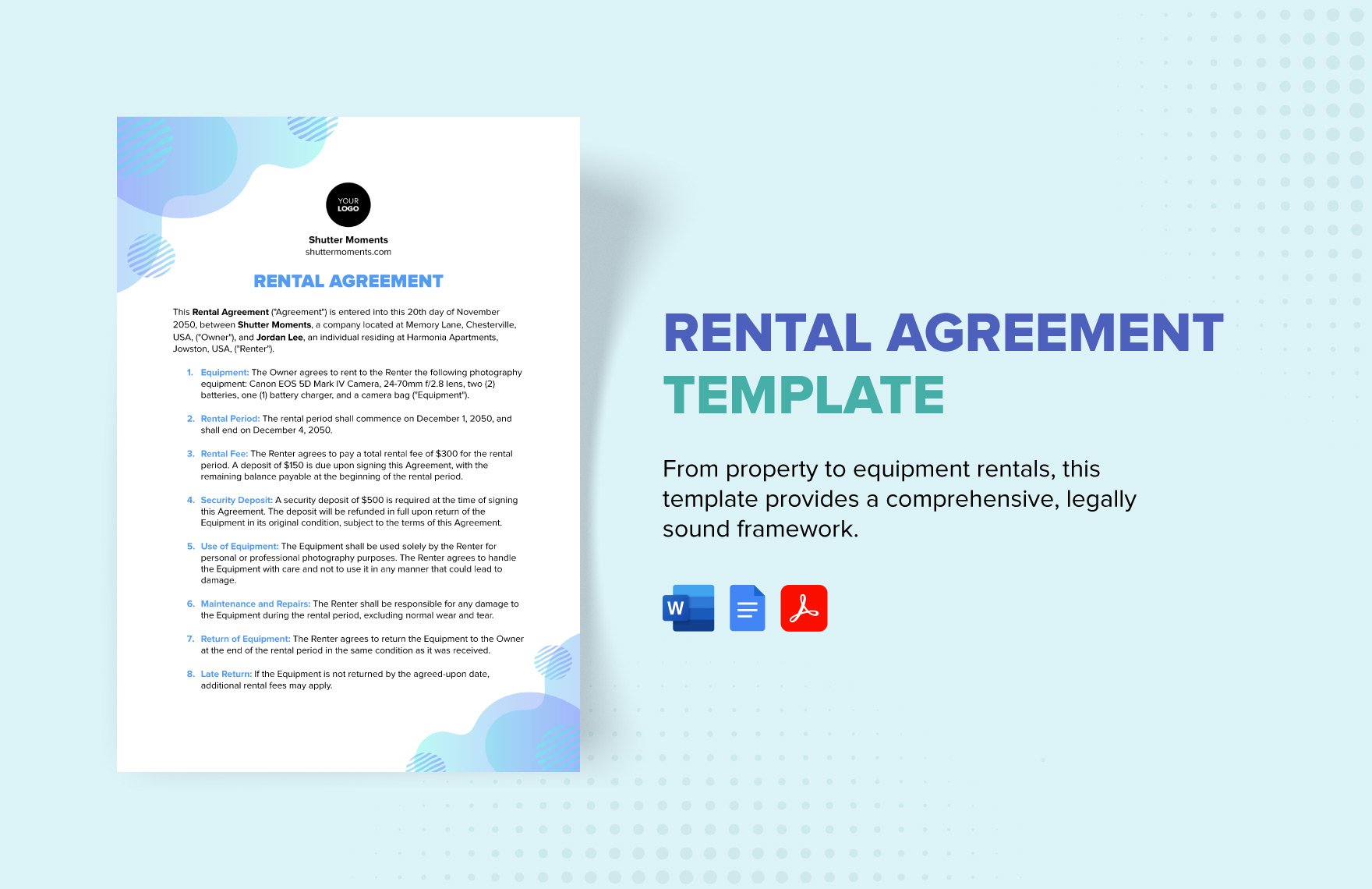
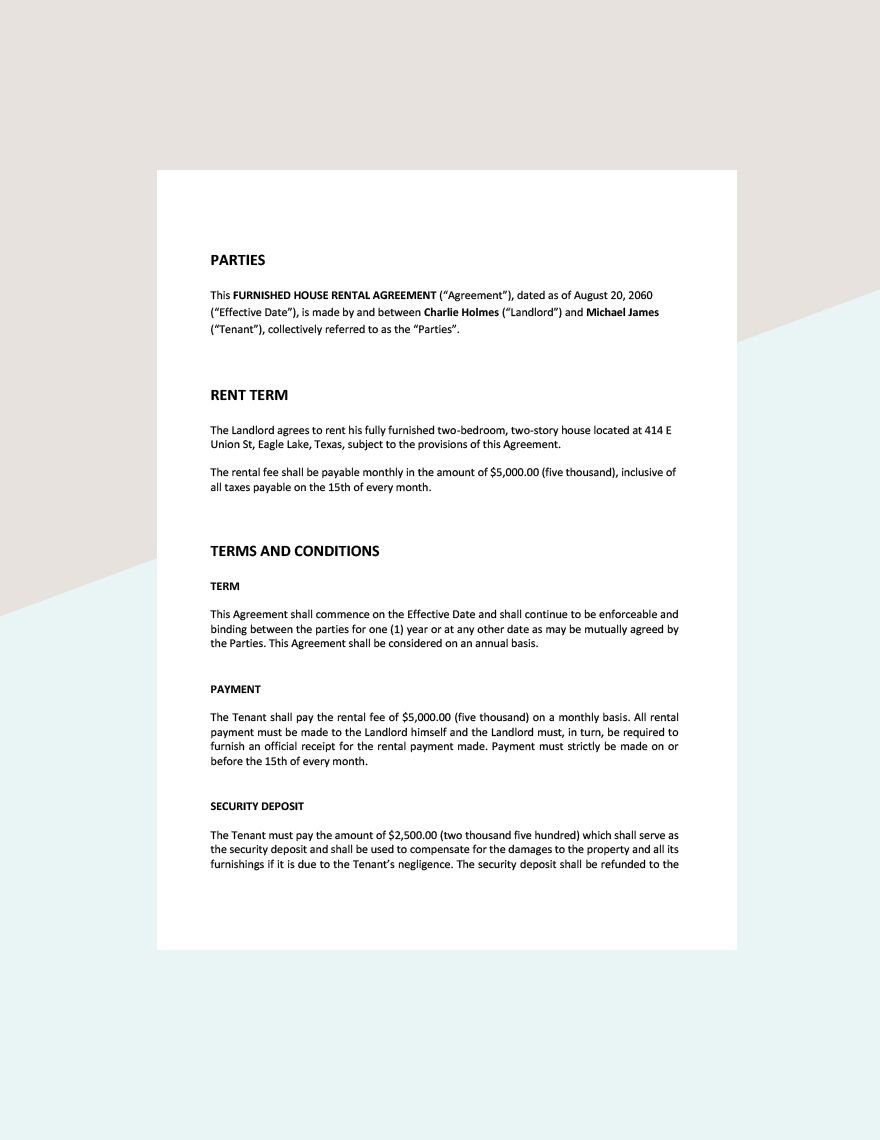
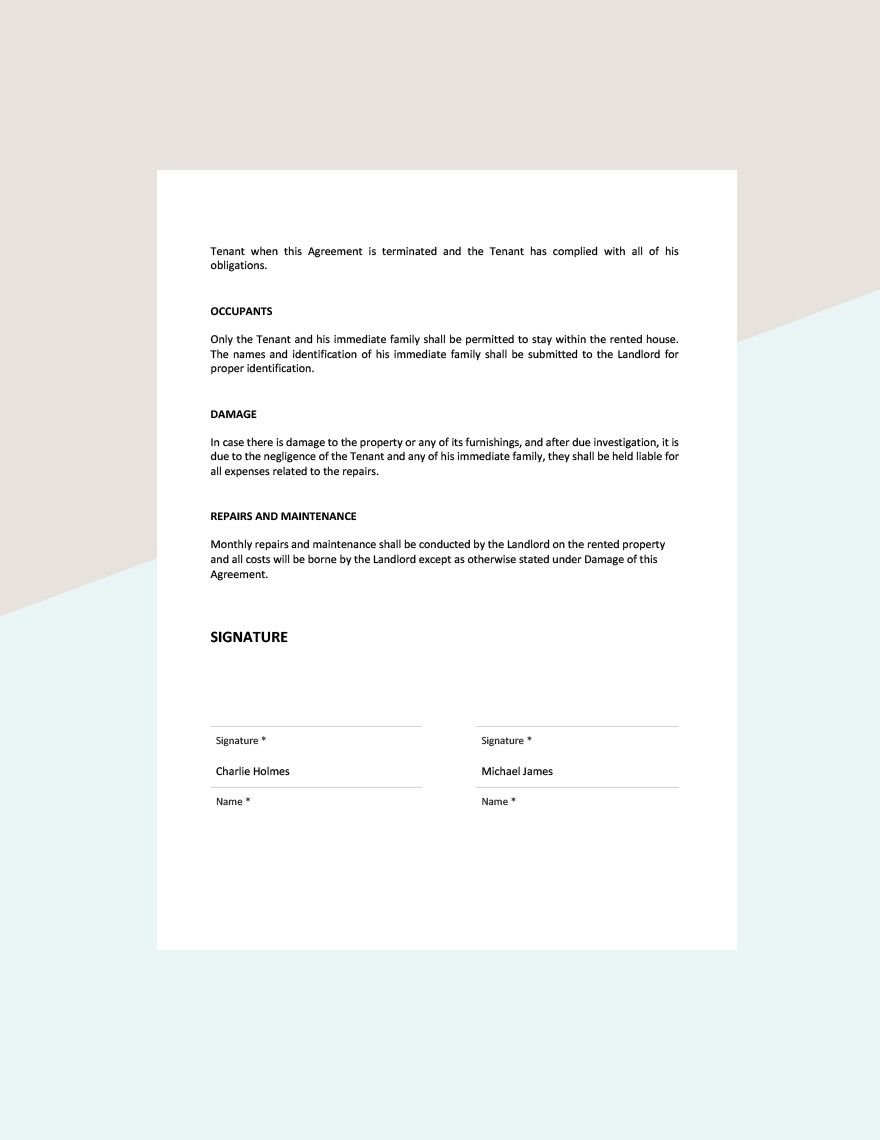
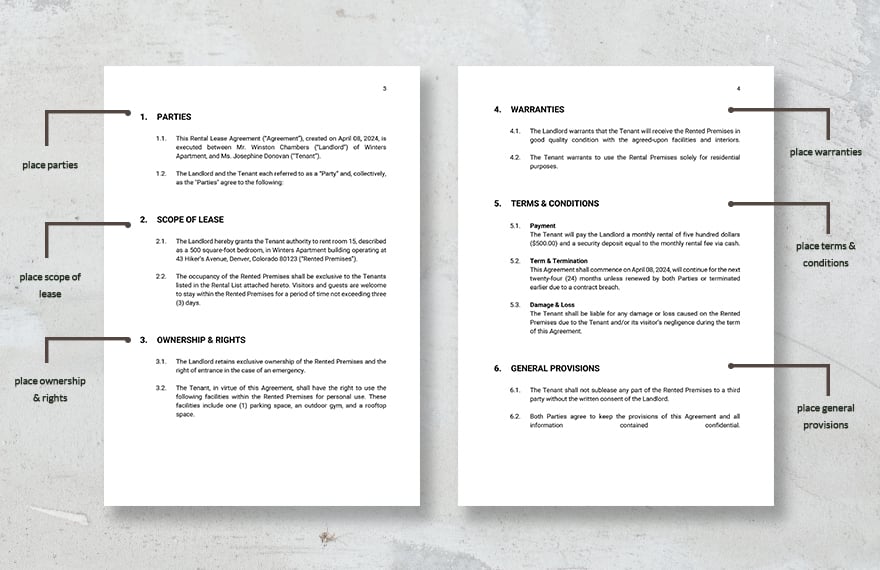
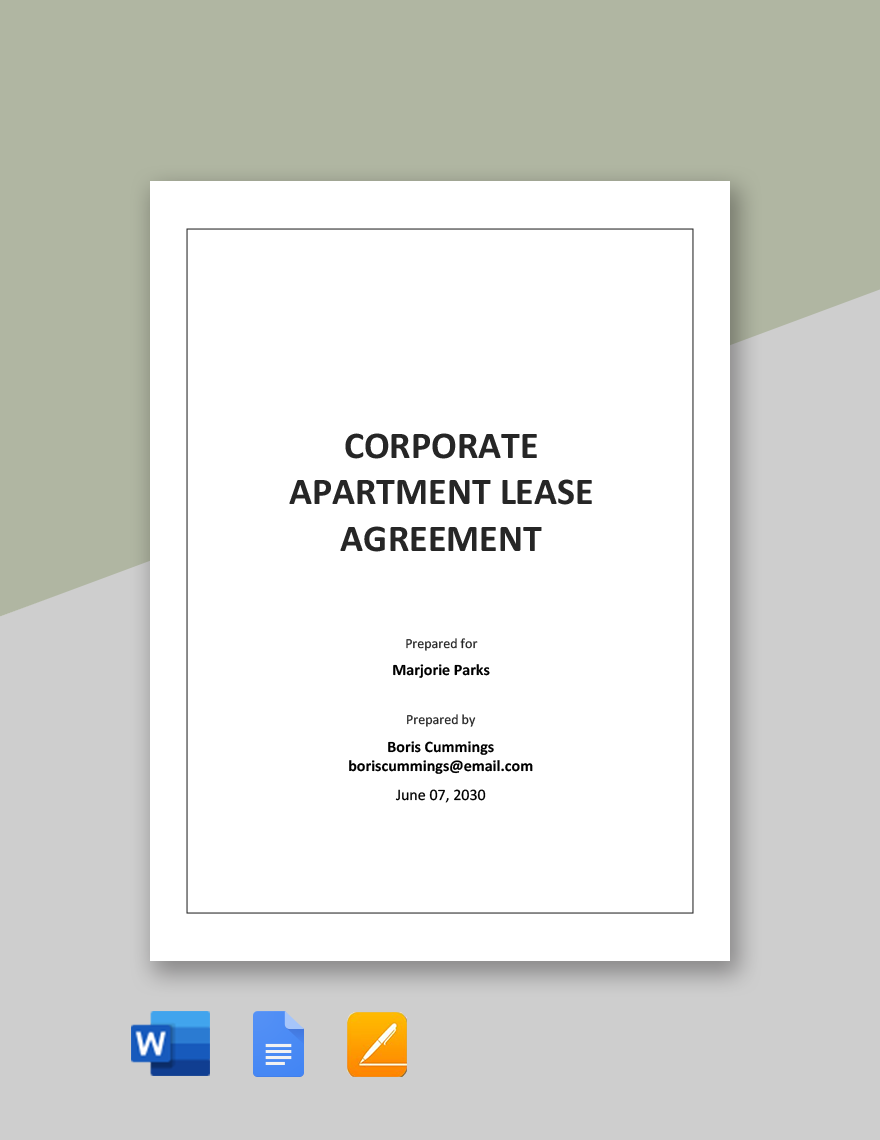
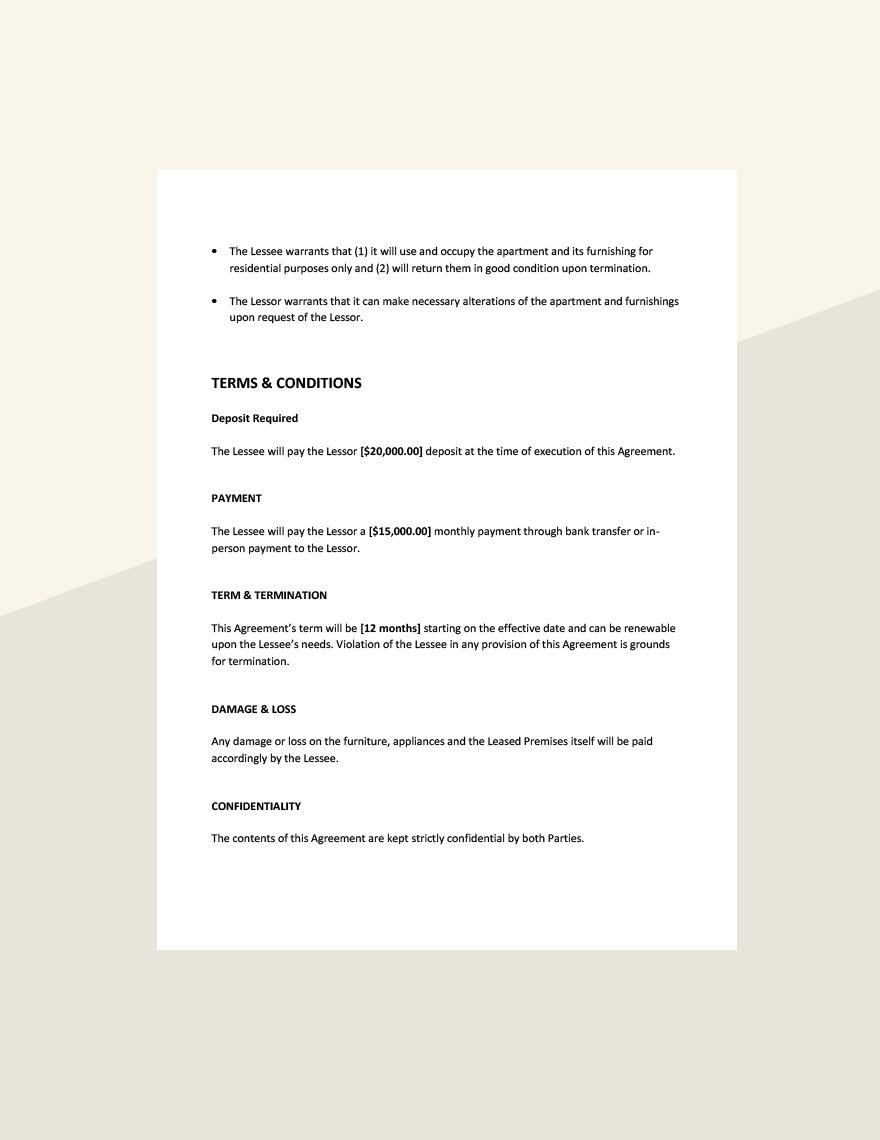
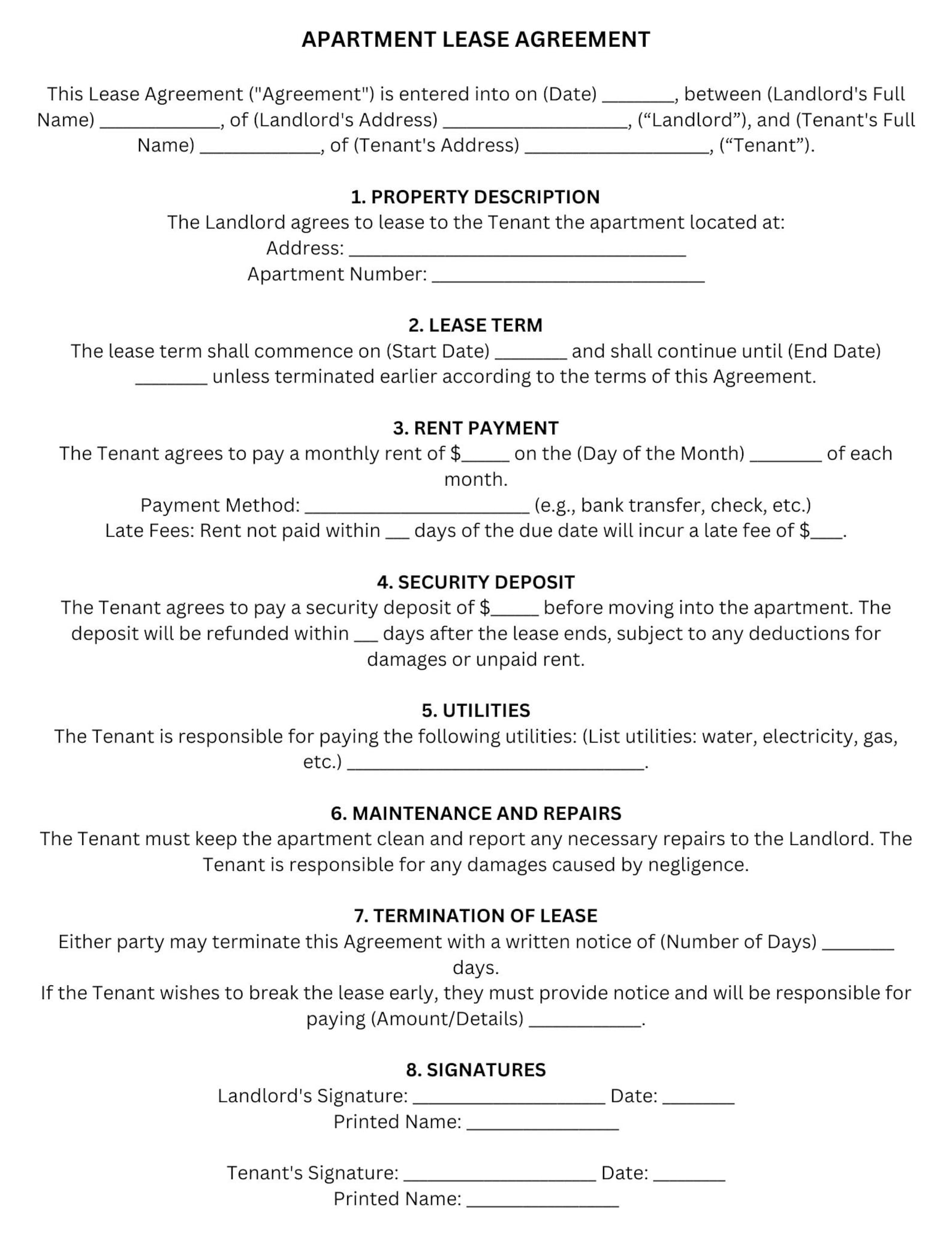
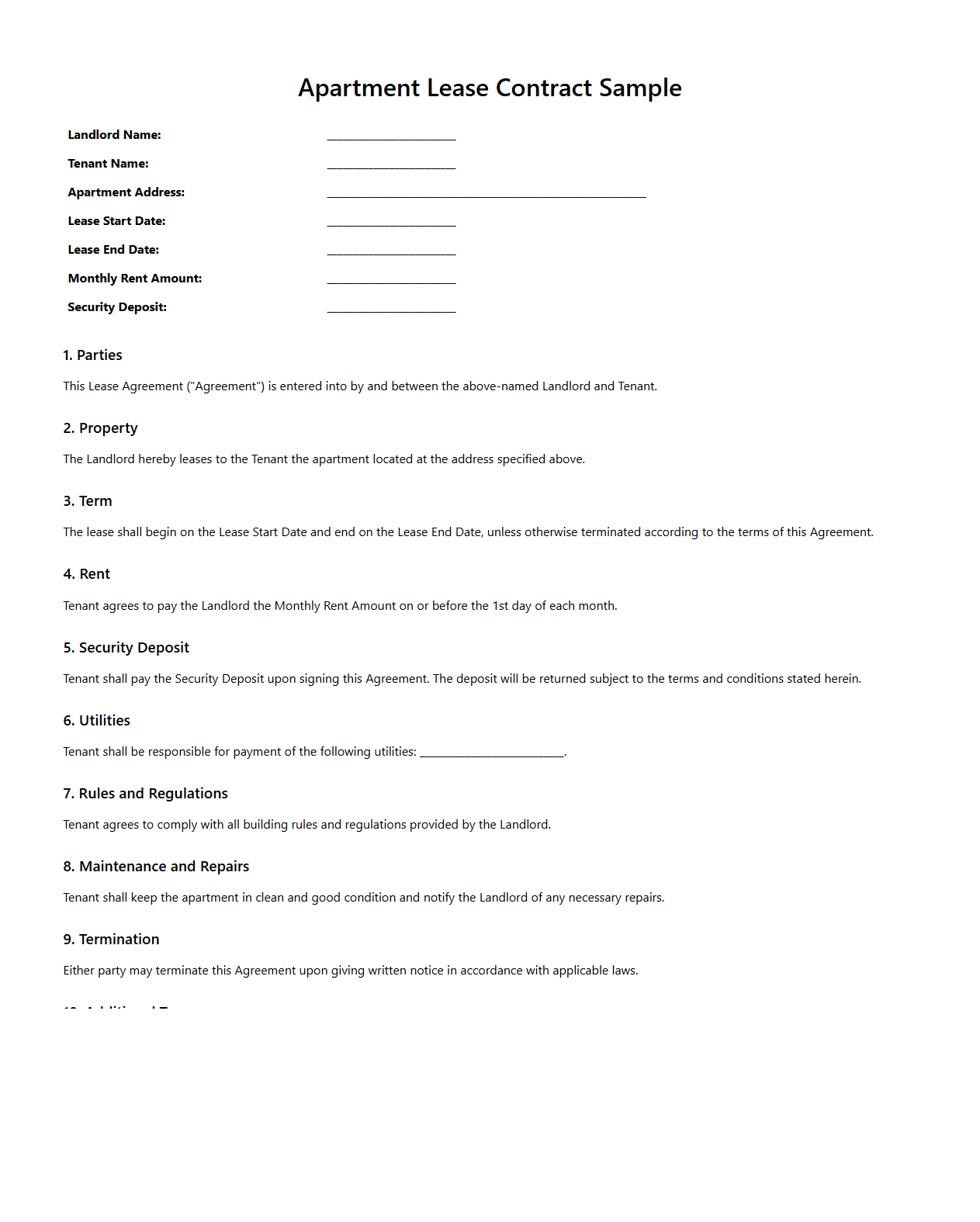
Reference examples help clarify what an employee apartment lease Template can look like when its sections are organized as a formal residential document. Useful examples typically show identifiable parties, a defined property, a lease period, payment provisions, security-deposit language, maintenance responsibilities, occupancy restrictions, and signature areas. For employee housing, the most useful visual references are those that make these components easy to distinguish rather than documents that rely on dense legal wording without clear section structure.
The following examples provide different visual approaches to residential lease drafting, including conventional apartment agreements, furnished housing forms, and structured lease layouts. They can help readers compare how information is grouped and recognize which sections may need special treatment when a residence is connected to employment. They are visual references rather than statements that any particular form is suitable for a specific state, employer, landlord, or employee arrangement.

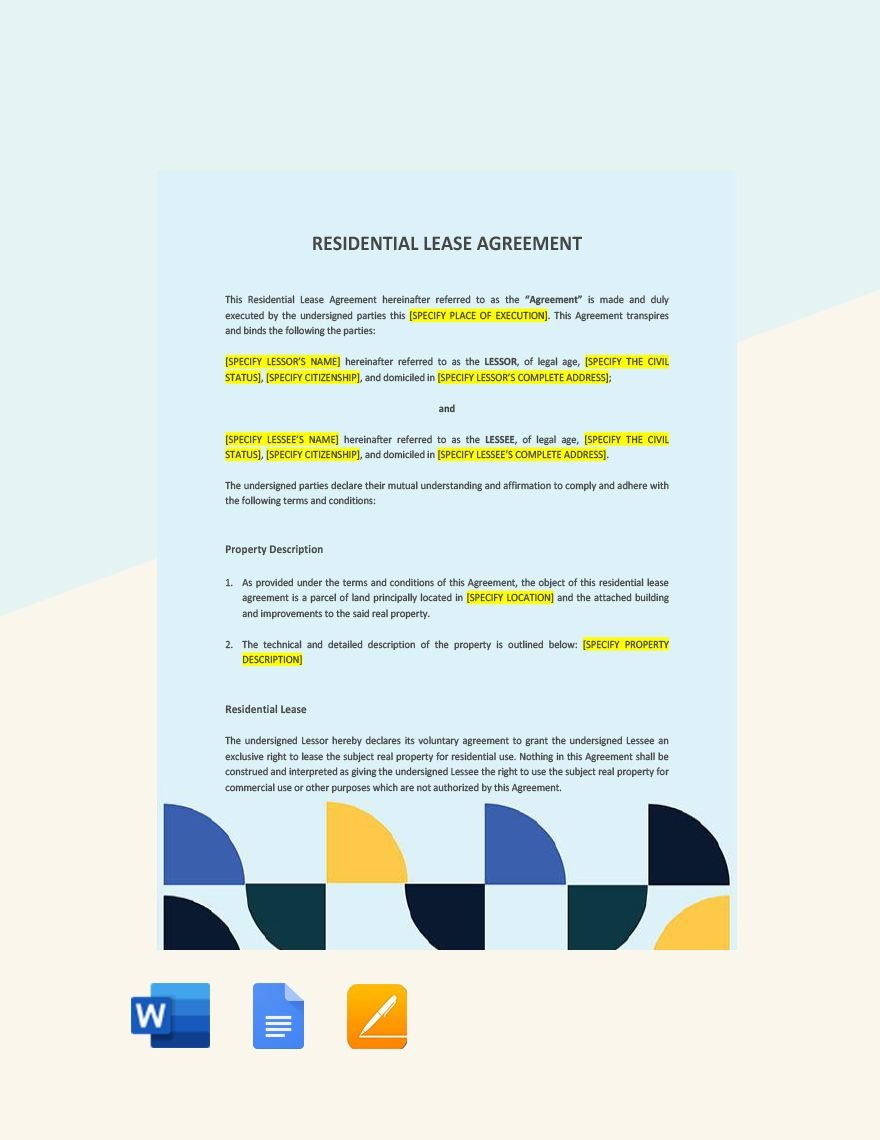
Residential Lease Agreement Template
Source: PDF Expert
Apartment Lease Agreement Template
Source: Etsy
Chicago Apartment Lease Agreement Template

Source: Scribd
Apartment Lease Contract Sample
Source: Documentof
Furnished House Rental Agreement Template
Source: Template.net
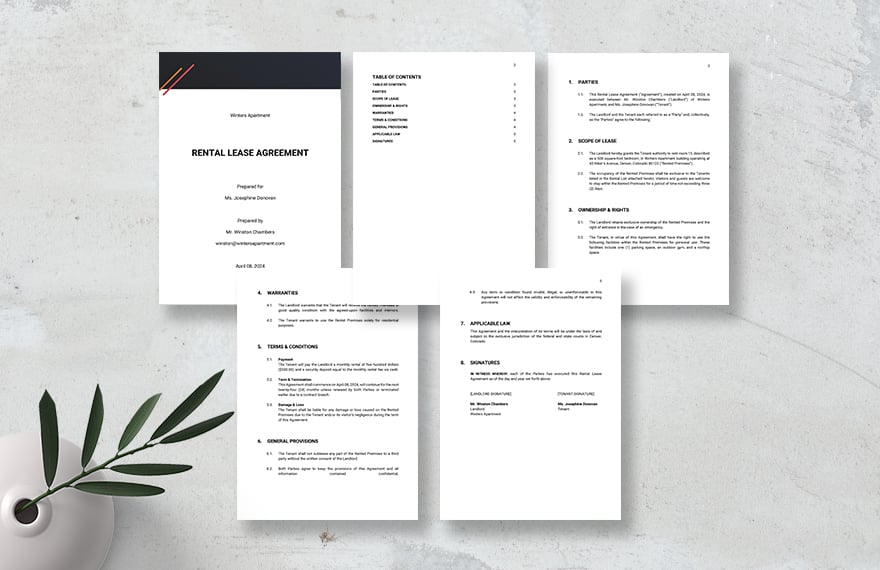
Blank Rental Lease Agreement Template
Source: Template.net
Rental Agreement Template
Source: Template.net
Tenant Rental Agreement Template
Source: Template.net
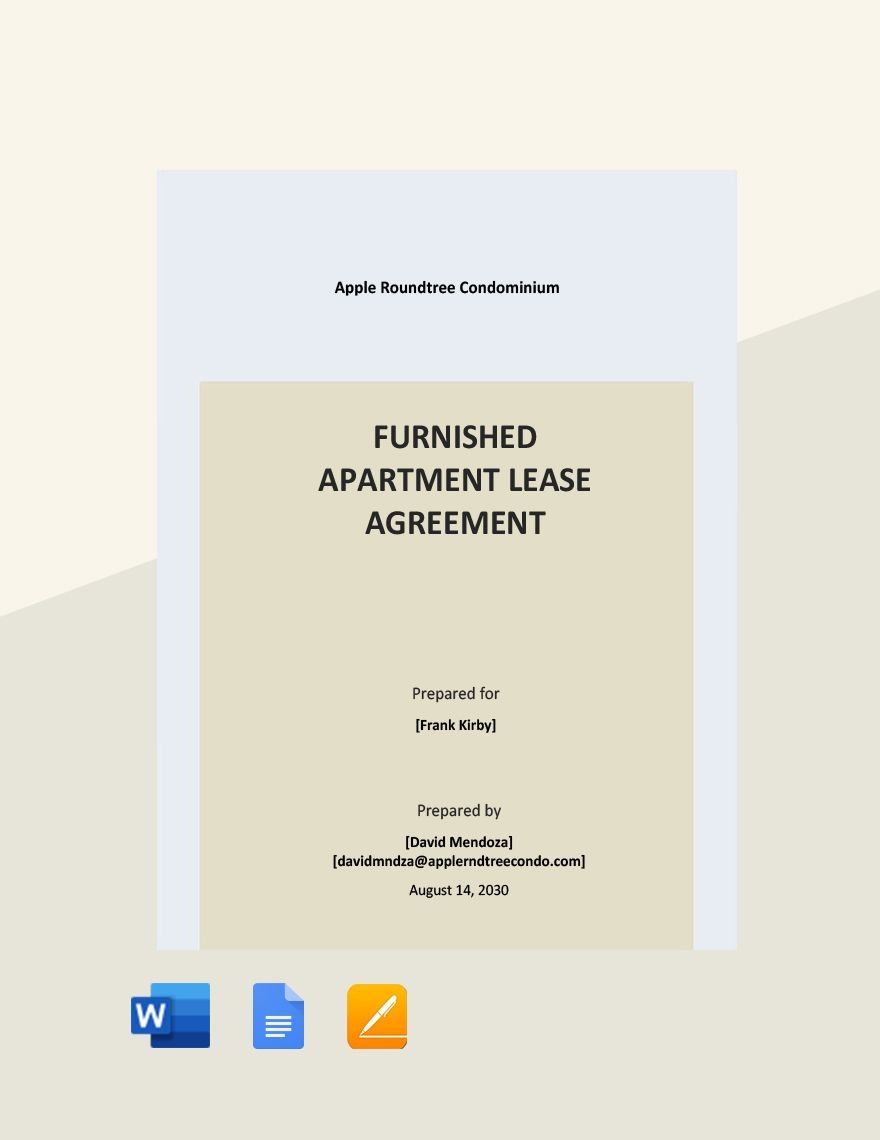
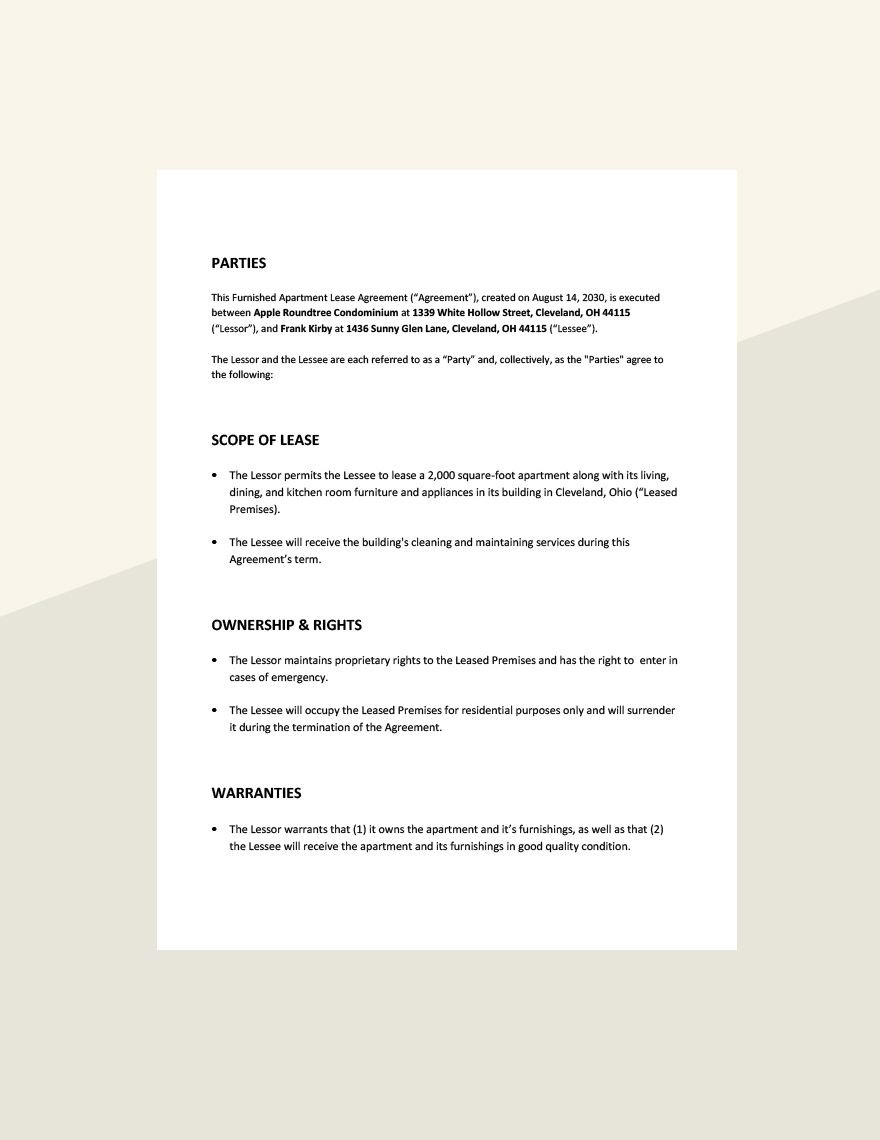
Furnished Apartment Lease Agreement Template
Source: Template.net
