A credit card debt settlement offer letter Template is a practical starting point for a borrower who wants to propose resolving an outstanding credit card balance for less than the amount currently claimed. The letter is not itself a guarantee that a creditor will accept the proposal. Its main purpose is to present accurate account information, explain the financial circumstances that make full repayment difficult, state a realistic settlement proposal, and establish the terms the borrower wants the creditor to consider.
A well-prepared letter should be concise, specific, and financially credible. It should identify the account, distinguish the balance from the proposed settlement amount, state whether the proposal involves one payment or installments, and ask for written confirmation before money is sent under an agreed settlement. Consumer guidance from the CFPB and FTC emphasizes confirming the debt, making a realistic proposal, and getting settlement terms in writing before paying.
The strongest letter is therefore not the one with the most aggressive language. It is the one that gives the creditor enough information to evaluate the proposal while avoiding unnecessary admissions, unsupported promises, or vague statements about what will happen to the account. A useful template should make the negotiation easier to understand, easier to document, and easier to follow through on.
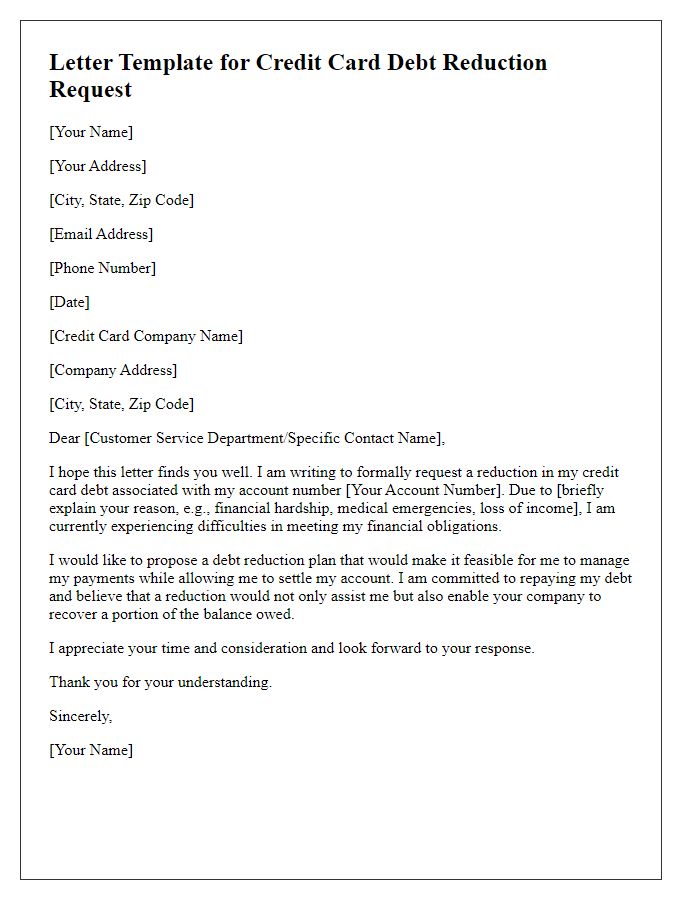
What a credit card debt settlement offer letter should accomplish
The central purpose of a settlement offer letter is to turn a difficult financial conversation into a clear written proposal. Instead of simply saying that the account is unaffordable, the borrower identifies the account and explains what amount can realistically be offered. The proposal can be framed around a lump-sum payment or, when appropriate, a defined series of payments.
The letter should also make the proposed exchange clear. For example, a borrower might state that the current balance is a specified amount and propose a particular settlement payment in exchange for written confirmation that the agreed amount will satisfy the account according to the settlement terms. The creditor may accept, reject, or counter the proposal. A letter should not imply that a settlement already exists when the creditor has not agreed to it.
Another important function is record keeping. The CFPB recommends documenting agreements and getting the creditor or collector’s promises in writing before making a payment. The FTC similarly advises consumers who settle debts to obtain written confirmation stating that the agreed payment settles the debt. This makes the written letter part of a larger documentation process rather than a substitute for an accepted settlement agreement.
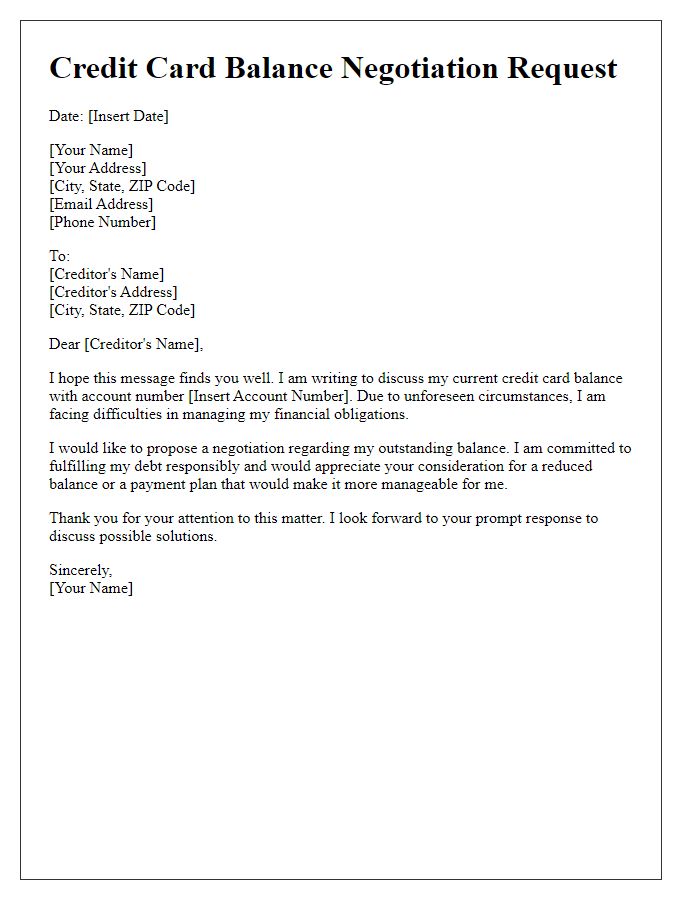
Readers looking for a credit card debt settlement offer letter template free should focus first on whether the structure is useful rather than whether the format costs anything. A simple one-page business letter can be sufficient when it contains the essential facts. The value comes from accuracy, clarity, and appropriate terms, not from decorative formatting.
A credit card debt settlement offer letter template word format can be convenient when the borrower needs to revise the proposed amount, payment date, account reference, or explanation of hardship. An editable document also makes it easier to keep a clean copy of the final version. However, the file format itself does not make the proposal legally binding. Acceptance and the creditor’s written terms remain important.
Likewise, a credit card debt settlement offer letter template pdf can be useful when the final version needs to be preserved as a fixed document. The important distinction is between the template used to prepare a proposal and the creditor’s actual written settlement agreement. A polished PDF should not be mistaken for proof that the creditor has accepted the offer.
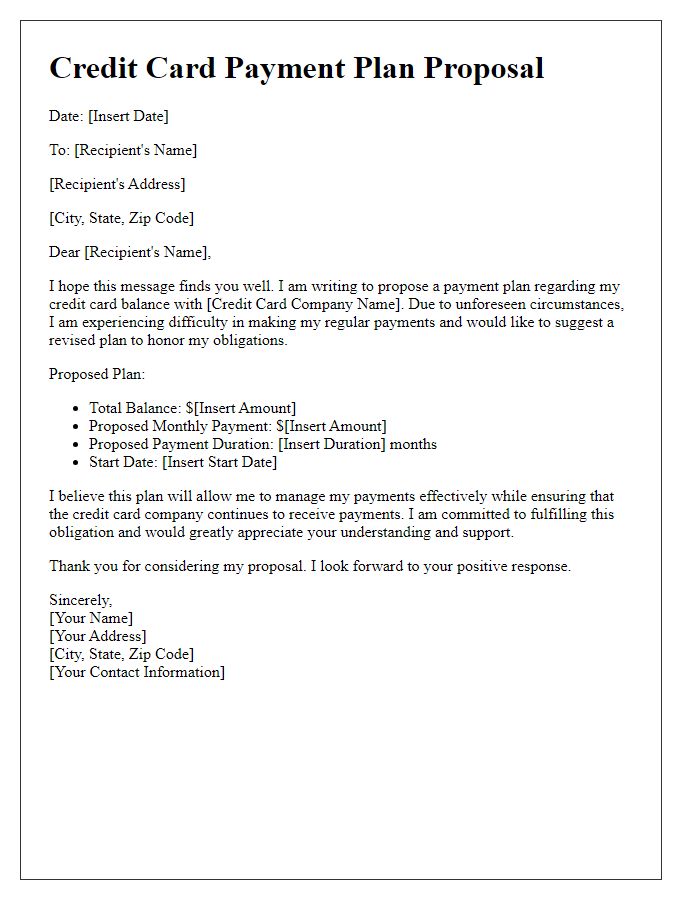
Information to collect before writing the letter
Begin with the latest account information available to you. Record the creditor or collector’s name, the account reference, the current balance shown in the records you have, and relevant dates. If the account has been transferred to a collector, make sure you know which entity is currently contacting you and whether the debt information has been validated.
For a collection account, confirming that the debt belongs to you is especially important. CFPB guidance says consumers should confirm the debt and can request additional information when they are unsure who they owe or how the amount was calculated. A settlement proposal should not be used as a substitute for resolving an identity, amount, or ownership dispute.
You should also calculate what you can actually afford. Review income, essential living costs, existing obligations, available savings, and the amount that can be committed without creating another financial crisis. The settlement figure should be realistic enough that you can honor it if accepted. Offering an amount that cannot be paid may weaken the negotiation and create another problem.
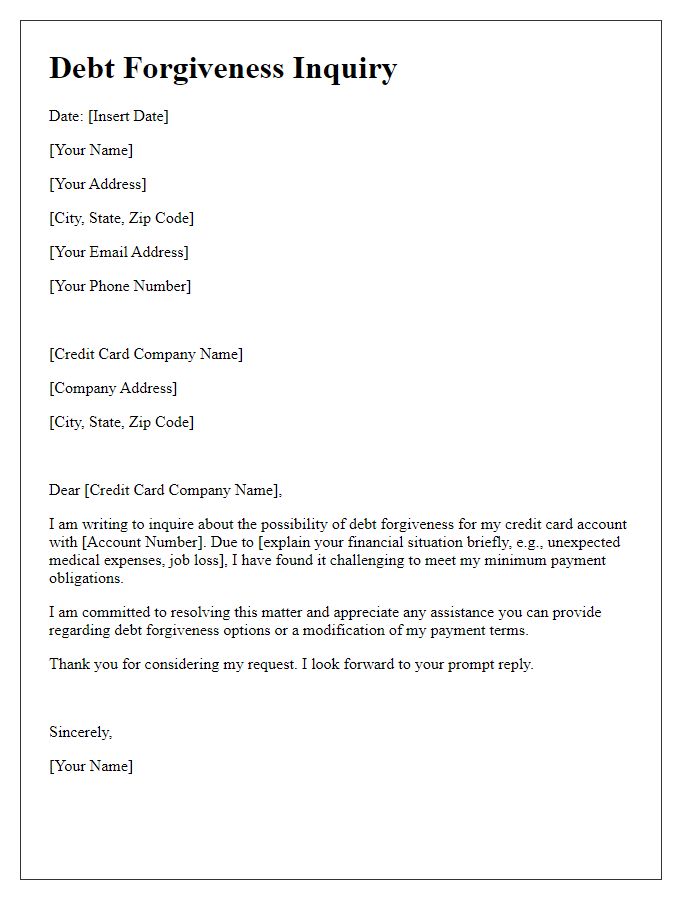
Keep supporting records organized separately from the main letter. Depending on the circumstances, these could include account statements, correspondence, evidence of income changes, or a basic budget. There is no universal requirement that every borrower attach extensive personal documentation, so include only information that is relevant and appropriate to the negotiation.
A credit card debt settlement offer letter template free download search may lead to many generic forms, but borrowers should not assume that every online template reflects the rules applicable to their situation. A template can provide structure, yet account ownership, collection status, local law, tax consequences, and court involvement can materially change what should be said or requested.
For people searching specifically for a credit card debt settlement offer letter template california, local circumstances deserve additional attention. California’s Department of Financial Protection and Innovation states that debt settlement services provided to California residents are subject to registration requirements effective February 15, 2025. That rule concerns providers of debt settlement services, not a general requirement that an individual borrower use a particular letter format.
The essential parts of the letter
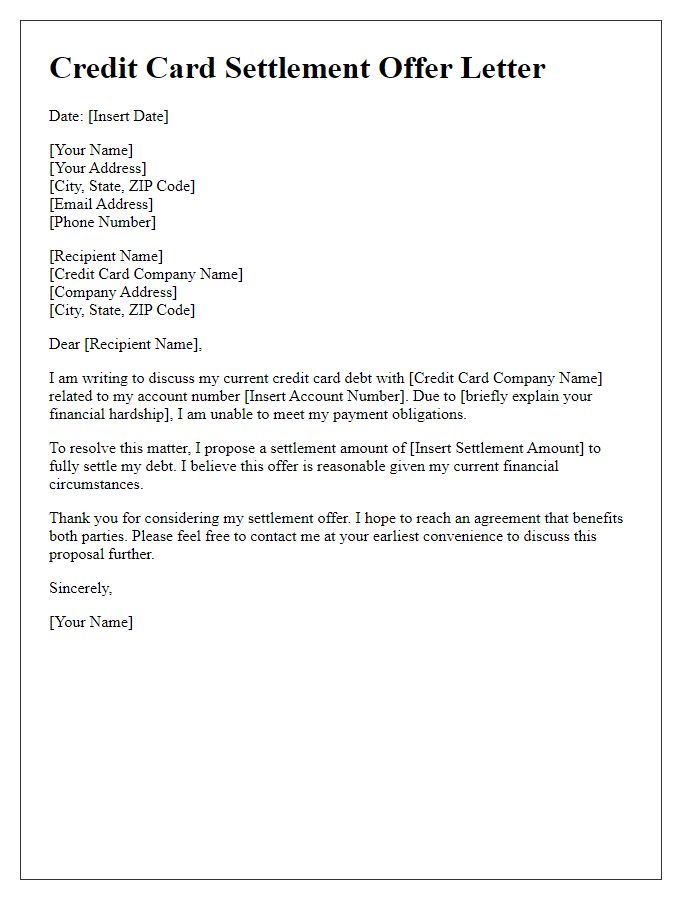
The opening should identify the sender and recipient clearly. Include the sender’s name and appropriate contact information, the date, the creditor or collector’s name, and the relevant mailing address when known. The subject line can identify the account without exposing unnecessary sensitive information. If the account number is included, consider using only the portion needed for identification when the communication method makes that preferable.
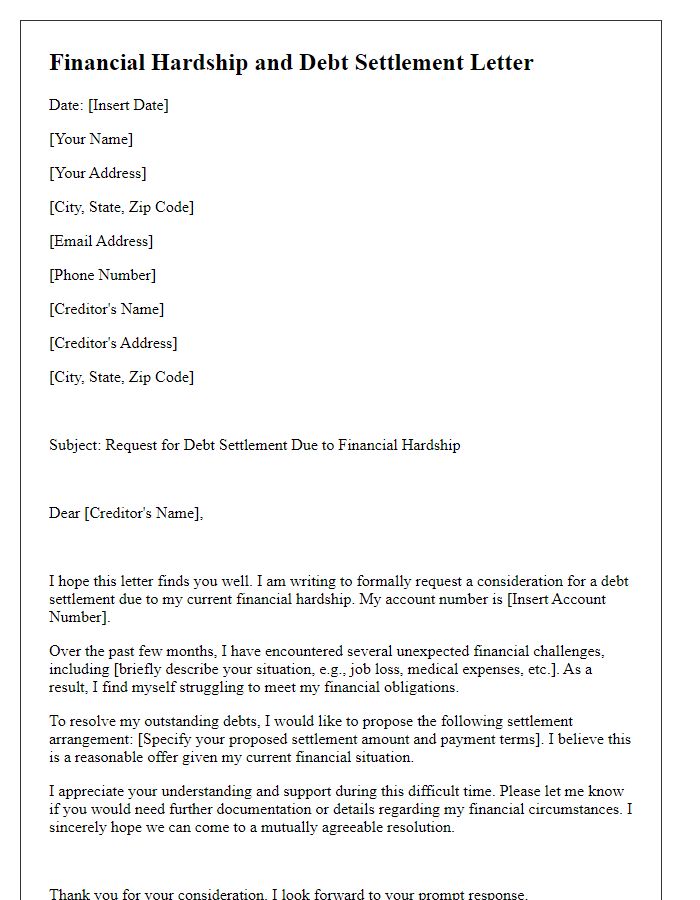
The first substantive paragraph should state why you are writing. Explain that you are seeking to resolve the outstanding credit card account and briefly describe the financial circumstances that prevent or make full repayment difficult. Good explanations are factual and restrained. A short statement about reduced income, major unexpected expenses, or another material change can be more persuasive than a long personal narrative.
The next section should state the proposal. Identify the amount you are offering and whether it is intended as a one-time payment or a defined installment arrangement. If a payment deadline is proposed, make sure it is a date you can realistically meet. Avoid presenting an arbitrary percentage as a guaranteed industry standard; creditors make decisions according to their own circumstances and policies.
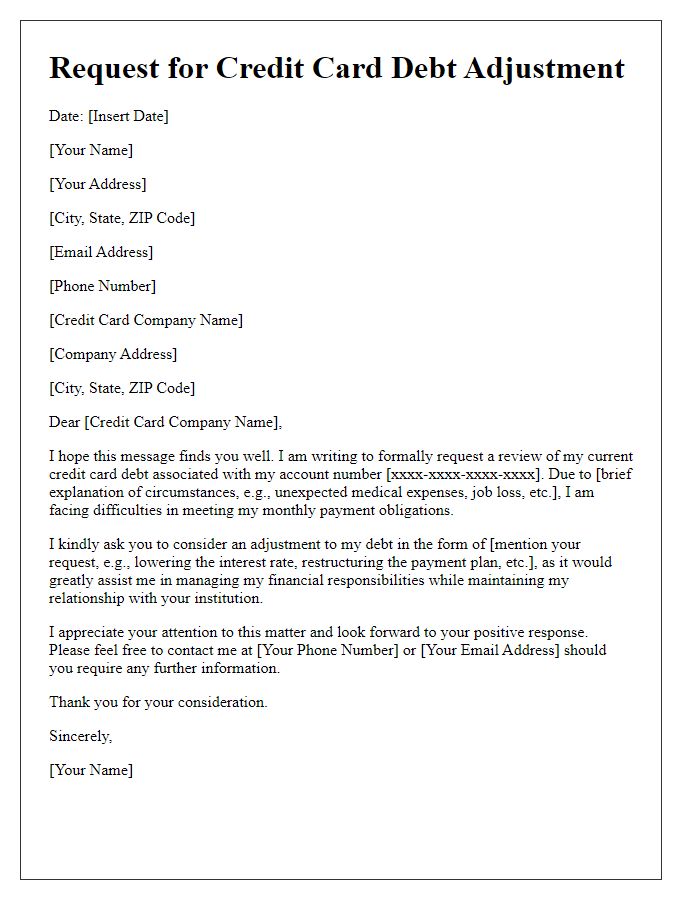
The letter should then explain the condition you want documented if the offer is accepted. A common objective is written confirmation identifying the settlement amount, payment deadline, account reference, and what the creditor will regard as satisfaction of the debt once the agreed payment is received. Do not assume that a statement such as “paid in full” will automatically appear on a credit report in the exact wording you prefer; ask the creditor what it will report and obtain its commitment in writing where possible.
The closing should remain professional. Thank the recipient for considering the proposal, provide a reliable way to respond, and sign and date the letter. Avoid threats, insults, exaggerated claims, or statements suggesting that the creditor has no right to collect when that has not been established.
A credit card debt settlement offer letter template word free search may be useful when someone wants an editable starting structure, but the final document should be customized rather than sent unchanged. Remove irrelevant fields, replace every placeholder, verify all amounts, and read the entire letter once more as though you were the creditor deciding whether the proposal is credible.
How to choose and state the settlement amount
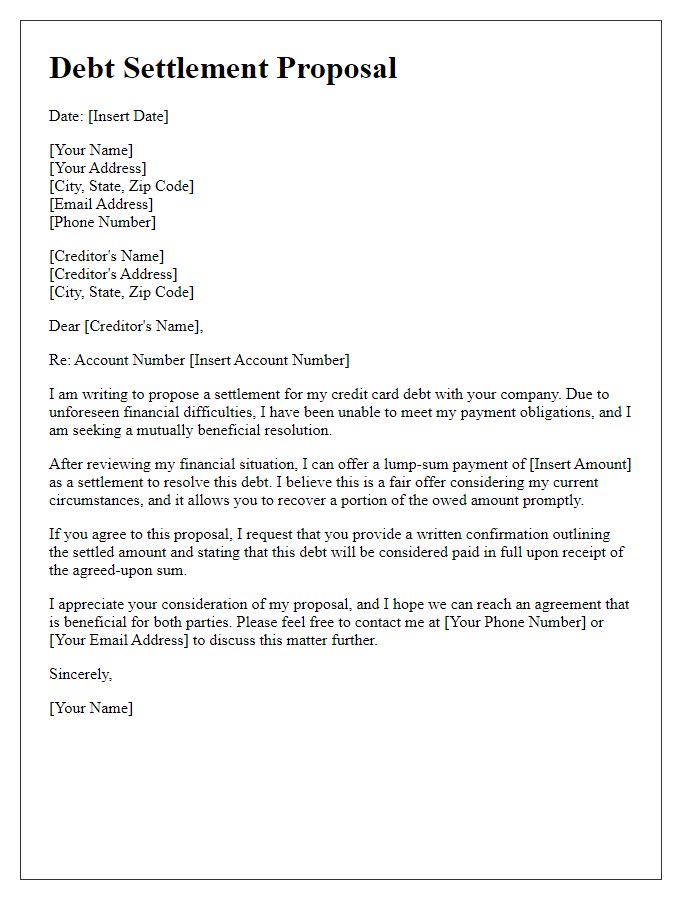
The settlement amount is the most commercially important part of the proposal. It should be based on what you can actually fund rather than on a number selected simply because it sounds like a large discount. If you have a specific amount available, explain that the proposed payment represents the amount you can reasonably commit while resolving the account.
Consider whether the proposal is a lump sum or installments. A lump-sum offer can be easier to understand because it gives the creditor a specific amount and payment date. An installment proposal can be more realistic when the borrower cannot access the full amount immediately. The letter should clearly distinguish the total proposed settlement from each installment so there is no ambiguity.
For example, a hypothetical borrower with a claimed balance of $8,000 might propose a $4,000 settlement payable by a specified date. Another borrower might propose four equal installments totaling $4,800. These figures are illustrations only, not recommended settlement percentages or predictions of what a creditor will accept. The appropriate figure depends on the borrower’s circumstances and the creditor’s willingness to negotiate.
Do not put money at risk merely because the creditor has verbally indicated that an offer may be acceptable. A settlement should be documented before payment whenever possible. CFPB guidance specifically recommends getting repayment or settlement arrangements and the collector’s promises in writing before making a payment.
It is also important to distinguish the settlement offer from debt management. A settlement generally involves negotiating a resolution for less than the claimed balance, whereas a payment arrangement may leave the principal balance substantially intact while changing the timing or amount of periodic payments. The appropriate request depends on what the borrower can afford and what the creditor is willing to provide.
The FTC warns that settling for less than the amount owed can have credit-reporting consequences and that forgiven debt can have tax implications in some circumstances. A settlement proposal should therefore be evaluated as part of the borrower’s broader financial plan rather than solely by comparing two dollar amounts.
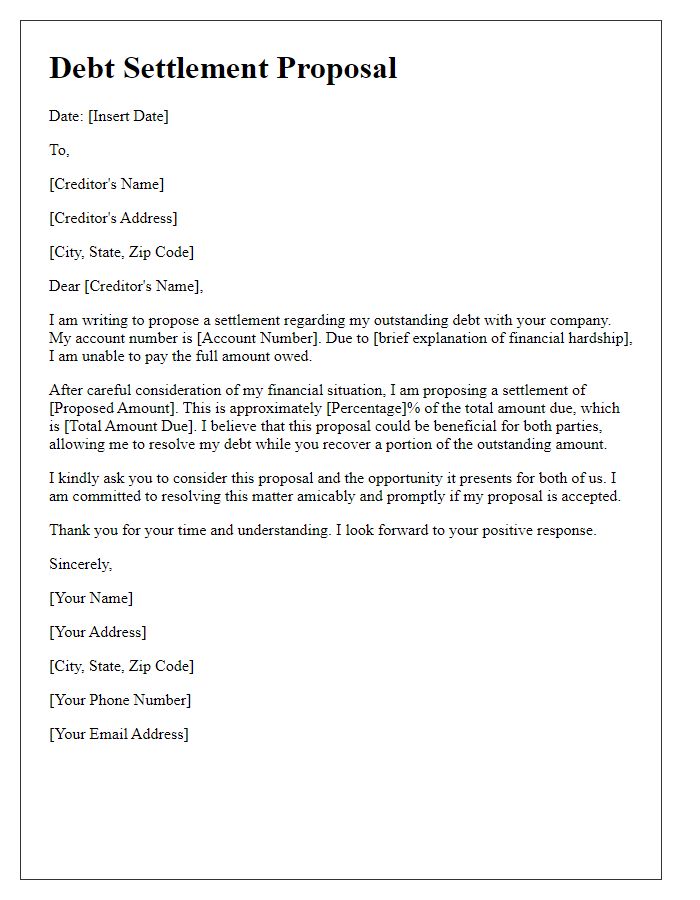
How to explain financial hardship without oversharing
A hardship explanation should answer a simple question: why is the proposed settlement necessary? The explanation can be brief, factual, and supported by records if the creditor requests them. Common circumstances can include a significant reduction in income, unemployment, unexpected expenses, or other financial events that materially changed the borrower’s ability to pay.
A useful explanation focuses on the financial effect rather than emotional detail. For instance, “A substantial reduction in household income has made the current payment obligation unsustainable” communicates the central issue without requiring several paragraphs about personal circumstances. If documentation is available, it can be mentioned without attaching sensitive information unnecessarily.
Do not exaggerate hardship or invent facts to make an offer appear more compelling. A creditor may request evidence, and inaccurate statements can damage credibility. The objective is to demonstrate that the proposed amount is a serious attempt to resolve the account within the borrower’s actual financial capacity.
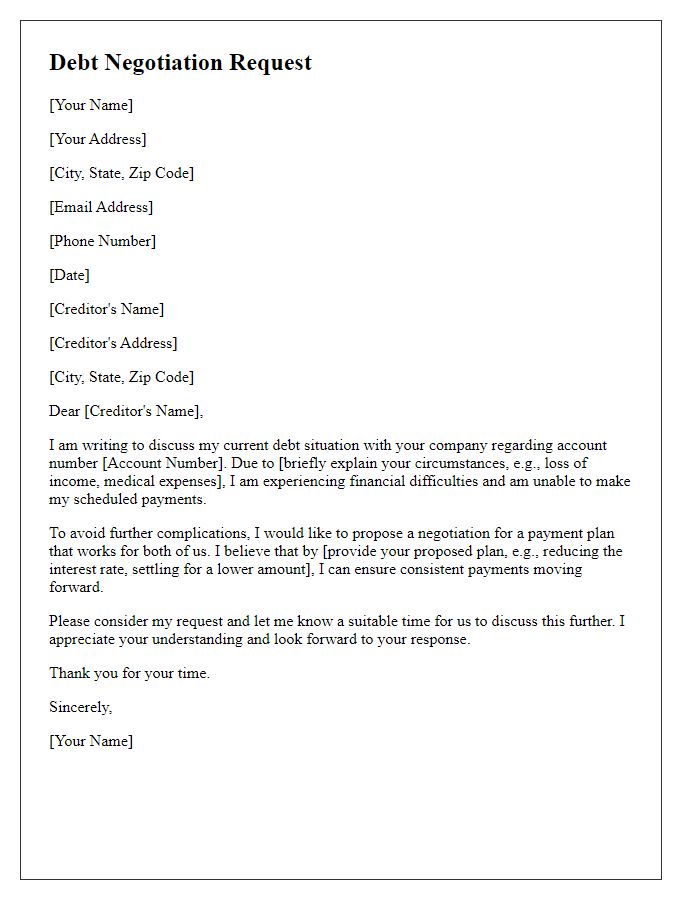
The same principle applies to a credit card debt settlement offer letter template reddit search. Community discussions can reveal how other borrowers describe their negotiations, but personal experiences are not necessarily reliable evidence of what a creditor will accept or what legal rights apply. Use anecdotal discussions as ideas for questions, not as substitutes for authoritative consumer guidance or individualized legal advice.
If the creditor has already filed a lawsuit, the situation changes materially. A settlement letter should not be treated as a replacement for responding to court deadlines or procedural requirements. California Courts, for example, explains that a negotiated settlement in a debt lawsuit should be confirmed in writing and that a case is not necessarily dismissed automatically merely because the parties settle.
Where litigation, a judgment, a disputed debt, or a potentially time-barred debt is involved, professional legal advice may be appropriate. The FTC notes that paying an old debt can have implications for collection rights and limitation periods in some jurisdictions, so borrowers should investigate applicable rules before making a payment on an unfamiliar or very old account.
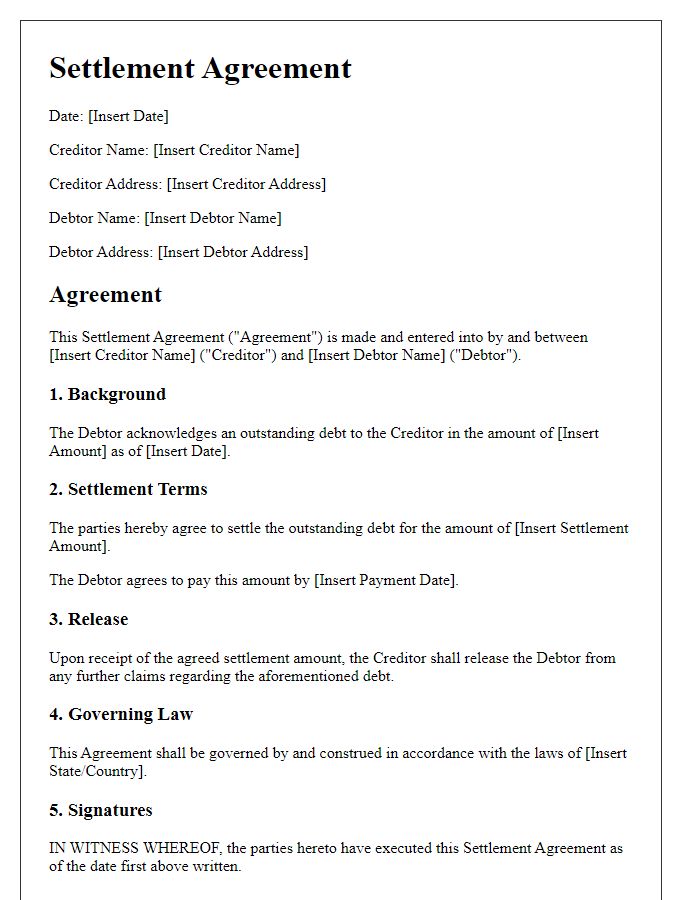
One-time settlement versus installment settlement
A one-time settlement is straightforward when the borrower has a specific amount available and the creditor agrees to accept it by a defined date. The proposal should identify the amount, payment method if known, deadline, and requested treatment of the remaining balance. The creditor’s written acceptance should be retained with the original offer and payment records.
An installment settlement can be useful when the borrower can make several manageable payments but cannot produce a lump sum. The letter should state the total settlement amount, number of payments, amount of each payment, payment dates, and what happens if a payment is late. The creditor may propose different terms, so the borrower should compare the revised agreement with the original proposal before agreeing.
Do not assume that missing one installment simply produces the same outcome as missing a normal credit card payment. Settlement agreements can contain specific default terms. Read the creditor’s written agreement carefully and keep a complete copy of every communication.
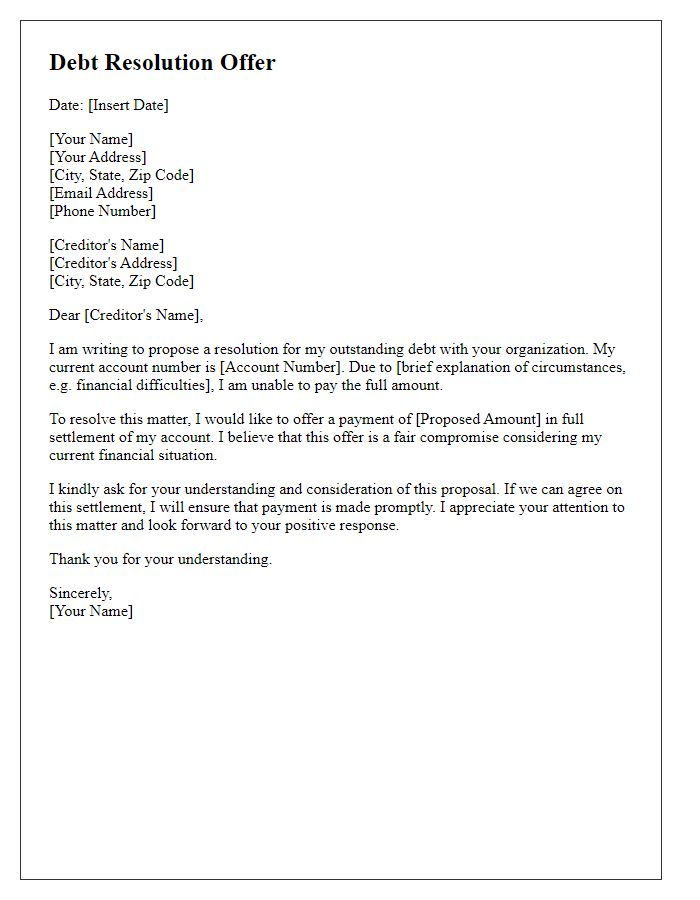
A structured arrangement may sometimes be preferable to a settlement request when the borrower can afford regular payments but not a large immediate payment. In Australia, ASIC’s Moneysmart guidance explains that people experiencing financial hardship can ask lenders to consider assistance such as altered repayments or payment plans, and lenders assess the circumstances to determine available options.
For readers searching for a credit card debt settlement offer letter template uk, the same drafting principles remain useful, but local consumer rules and creditor procedures should be checked separately. A United States-style settlement clause should not automatically be treated as appropriate under UK law. The letter should be adapted to the creditor, jurisdiction, and type of debt involved.
Similarly, a credit card debt settlement offer letter template australia should be viewed as a drafting framework rather than a statement of Australian legal requirements. Moneysmart recommends contacting the lender’s hardship team early and notes that possible assistance can include payment arrangements and other changes to repayment terms.
What to request in the creditor’s written response
When a creditor accepts the basic proposal, the next step should be a written statement of the agreed terms. Ideally, it should identify the account, the settlement amount, the payment deadline or schedule, and the conditions under which the creditor considers the obligation satisfied. If the account is being handled by a collector, confirm that the party accepting payment has authority to settle the account.
Ask how the account will be treated after payment. A creditor or collector may use specific terminology for a settled account, and reporting practices can vary. Do not insert a promise into your own letter and assume that the creditor has agreed to it. The creditor’s actual written response is what should be reviewed before payment.
If the creditor agrees only by telephone, ask for the terms in writing. CFPB guidance specifically says to record the agreement and obtain written confirmation of the settlement or repayment arrangement before making payment.
Keep the final agreement, payment confirmation, bank or payment records, account statements, and subsequent correspondence together. If the creditor later sends a collection notice that appears inconsistent with the settlement, having a complete chronological record can make it easier to explain what was agreed and what was paid.
A credit card debt settlement offer letter template free pdf can help preserve a consistent presentation, but a PDF created before the creditor accepts the offer is still only a proposal. The critical document is the accepted settlement agreement or other written confirmation that establishes the terms.
After payment, request and retain any confirmation the creditor provides. The FTC advises consumers to keep the signed settlement letter and records of payments made toward the settled debt.
Regional considerations and creditor differences
There is no universal settlement-letter format that every bank, card issuer, or collection agency must accept. Internal procedures differ, and a creditor may direct settlement communications to a particular department or representative. Before sending the letter, use the contact information supplied by the creditor or collector and retain evidence showing where and when the proposal was sent.
In the United States, federal consumer guidance distinguishes between negotiating directly with a creditor or collector and using a debt settlement company. CFPB warns that settlement companies can involve risks, including fees and potential harm associated with stopping payments while funds are accumulated. A borrower who can negotiate directly may therefore wish to understand that option before paying a third party.
The FTC also warns against companies that promise guaranteed reductions, guarantee that debts will disappear, or demand payment before providing qualifying debt-relief services. These warnings are particularly relevant when searching for templates because a legitimate letter template is very different from a promise that a particular settlement percentage is guaranteed.
For California residents, it is important to distinguish between writing your own settlement proposal and hiring a company to negotiate on your behalf. The California DFPI states that persons engaging in the business of providing debt settlement services to California residents must meet applicable registration requirements effective February 15, 2025.
For Australian borrowers, hardship assistance can be a significant alternative to a settlement proposal. Moneysmart says lenders must consider borrowers for financial hardship assistance and may offer arrangements such as altered repayments or payment plans. This means a borrower should consider whether a hardship request is more appropriate than immediately proposing a reduced balance.
For borrowers in the UK or elsewhere, the safest approach is to treat the template as a communication tool rather than a statement of local law. Jurisdiction, limitation rules, tax treatment, reporting practices, and creditor procedures can differ substantially.

Common mistakes that weaken settlement letters
One common mistake is making the letter too emotional or too long. A creditor needs enough information to understand the circumstances and evaluate the proposal, but excessive personal detail can obscure the actual request. Keep the explanation relevant and make the proposed settlement easy to locate.
Another mistake is failing to identify the account precisely. A settlement proposal that does not clearly identify the relevant account can create confusion, particularly when a creditor or collection agency handles many accounts. Verify every number, name, date, and amount before sending the letter.
A third mistake is paying based only on a verbal promise. The CFPB and FTC both emphasize the importance of written documentation. The letter should therefore be part of a documentation process in which the borrower receives and reviews the creditor’s written response before payment.
Another frequent problem is promising a payment date that depends on uncertain income. If the creditor accepts the proposal and the money is not available when promised, the borrower may lose an opportunity that took time to negotiate. A realistic date is generally more useful than an unnecessarily aggressive deadline.
Borrowers should also avoid copying clauses from an unrelated jurisdiction. A settlement letter found online may contain language about credit reporting, lawsuits, confidentiality, or governing law that is not suitable for the account in question. Those provisions should be reviewed carefully rather than copied merely because they appear professional.
Finally, do not assume that settling a debt automatically repairs a credit history. The FTC notes that negotiating a payment below the amount owed may affect credit reporting, and forgiven amounts may have tax consequences in some circumstances.
Practical Solution
Start by creating a one-page settlement proposal around five pieces of information: who you are, which account is being discussed, why full repayment is difficult, how much you can realistically offer, and what written confirmation you want if the offer is accepted. This structure keeps the letter focused while giving the creditor enough information to understand the request.
Next, calculate the proposed amount before writing the final version. Use a figure that can actually be funded by the proposed payment date. If the amount comes from savings, make sure using those savings will not prevent you from meeting essential living costs. If you cannot produce a lump sum, prepare an installment proposal with a total settlement amount and clearly stated payment dates instead.
Then send the proposal through an appropriate communication channel and retain a copy. If the creditor counters, compare the new terms line by line with your original proposal. If the creditor accepts, obtain written confirmation before paying whenever possible. The confirmation should make the account, settlement amount, payment terms, and satisfaction of the agreed debt sufficiently clear.
After payment, retain the agreement and proof of payment together. Monitor subsequent correspondence and account records for consistency with the settlement. If the account is being handled by a collection agency, keep the original creditor’s information and the collector’s information together so that the chain of communication remains understandable.
For someone searching for a credit card debt settlement offer letter template download, the practical answer is to select a simple structure that can be edited accurately and then save the final version in a durable format. Do not rely on a generic form to determine the correct settlement amount, legal language, or local requirements.
A credit card debt settlement offer letter template printable format can also be useful when a borrower wants to sign and mail a physical copy. Before mailing, check that the recipient address is the appropriate address for settlement or correspondence rather than assuming that every address printed on a credit card statement serves the same purpose.
If you are unsure whether settlement is preferable to a hardship arrangement, payment plan, credit counseling, consolidation, or another option, compare the long-term consequences rather than focusing only on the immediate reduction. CFPB recommends considering alternatives and notes that debt settlement can carry risks, including additional fees, collection activity, credit consequences, and potential tax implications.
The most useful workflow is therefore: verify the account, calculate affordability, draft a concise proposal, request specific written terms, review the creditor’s response, pay only according to an accepted agreement, and preserve the records afterward. That process is more important than the particular file format or visual design of the letter.
Using the template as a negotiation document
A settlement letter works best when it is treated as the beginning of a documented negotiation rather than the final agreement. The borrower makes a proposal, the creditor considers it, and the parties may exchange revised terms before reaching an arrangement. This distinction prevents a common misunderstanding: sending a letter does not force a creditor to accept the proposed amount.
The document can also help the borrower remain consistent during telephone conversations. If a collector calls after receiving the proposal, the borrower can refer to the account reference, proposed amount, and requested written confirmation. Keeping communications consistent reduces the chance that different representatives receive conflicting information about the proposal.
If the creditor rejects the first proposal, the borrower can decide whether to submit a revised offer, ask about a payment arrangement, or seek independent financial or legal advice. A rejection is not evidence that another amount will necessarily be accepted, so revised proposals should continue to reflect actual affordability rather than progressively larger promises.
If the creditor accepts a different arrangement, prepare a clean record of the final terms rather than relying on a collection of informal messages. A clear record should make it possible for someone reviewing the file later to understand the original debt, negotiated settlement, payment schedule, acceptance, and proof of payment.
This is also why a credit card debt settlement offer letter template should avoid overly complicated legal wording unless a qualified professional has prepared or reviewed it. Clear ordinary language is generally easier for both parties to interpret. If the matter involves litigation, disputed ownership, bankruptcy, a judgment, or other complex legal issues, individualized advice can be more appropriate than relying on a general template.
Used carefully, the letter becomes a disciplined way to communicate a realistic proposal, document the negotiation, and reduce ambiguity about what the borrower is asking the creditor to accept.
Reference Examples
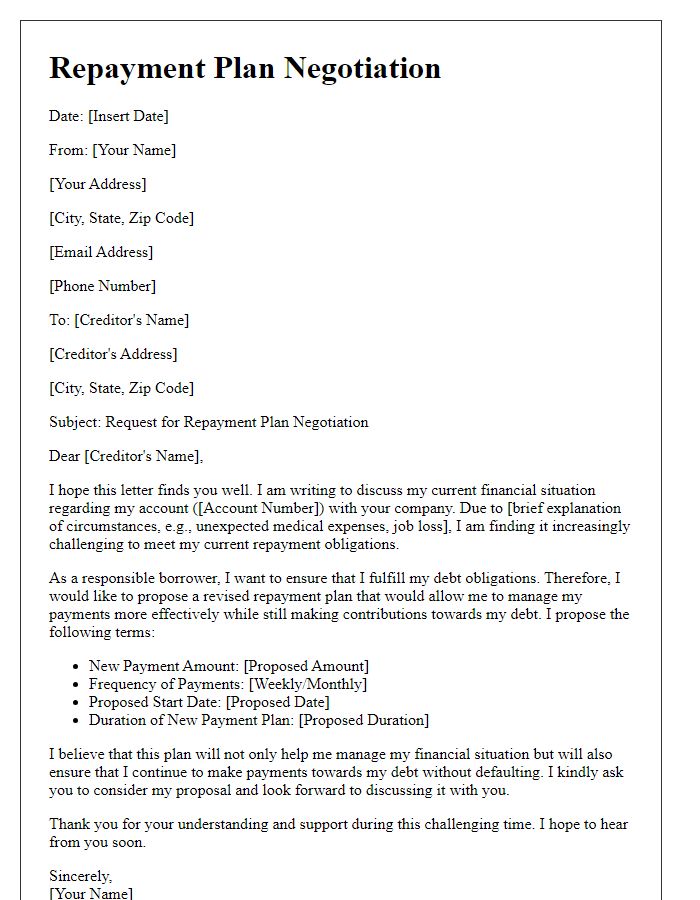
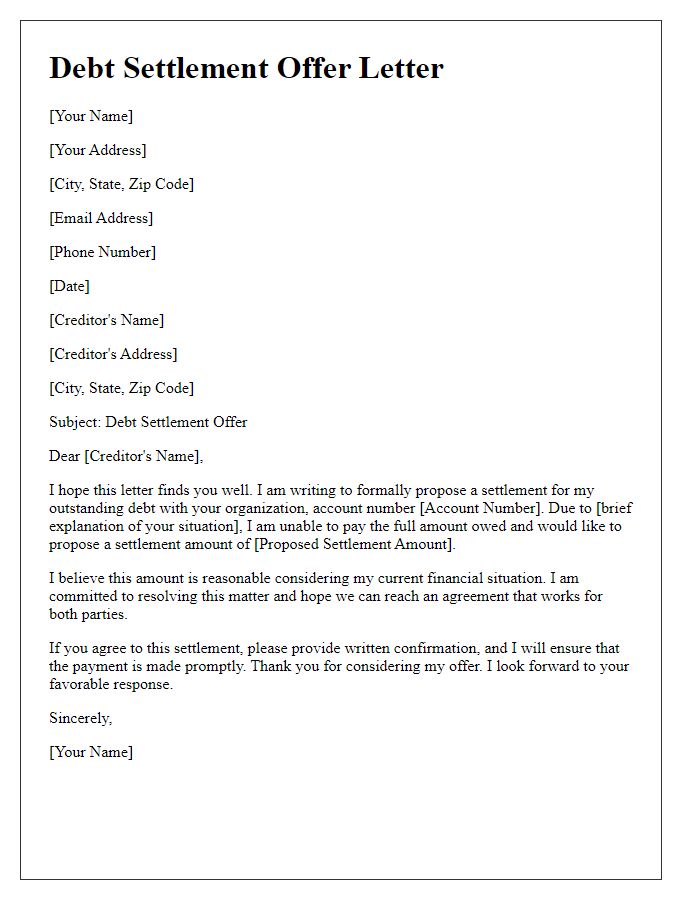
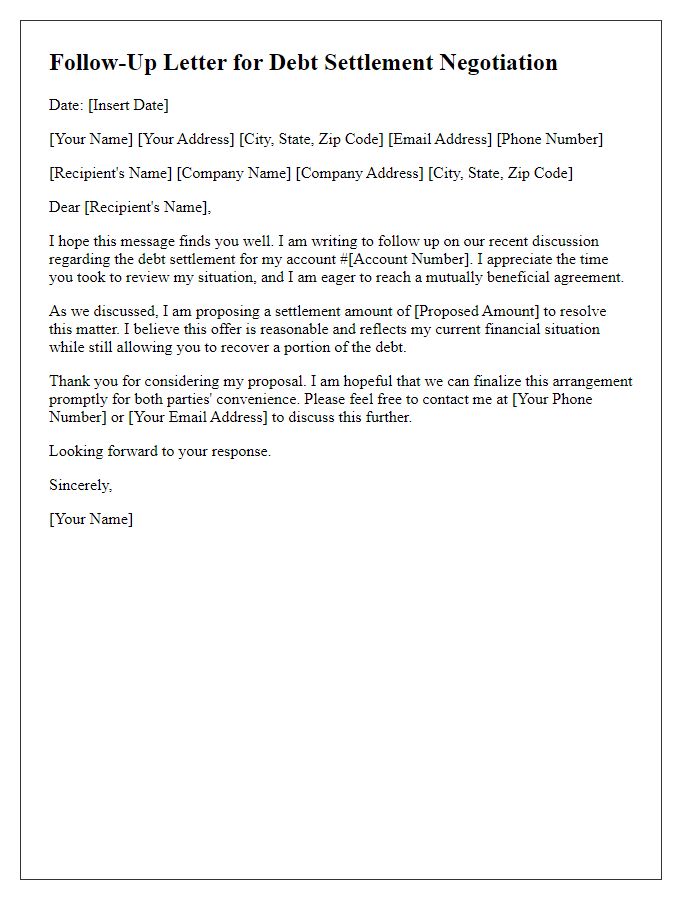
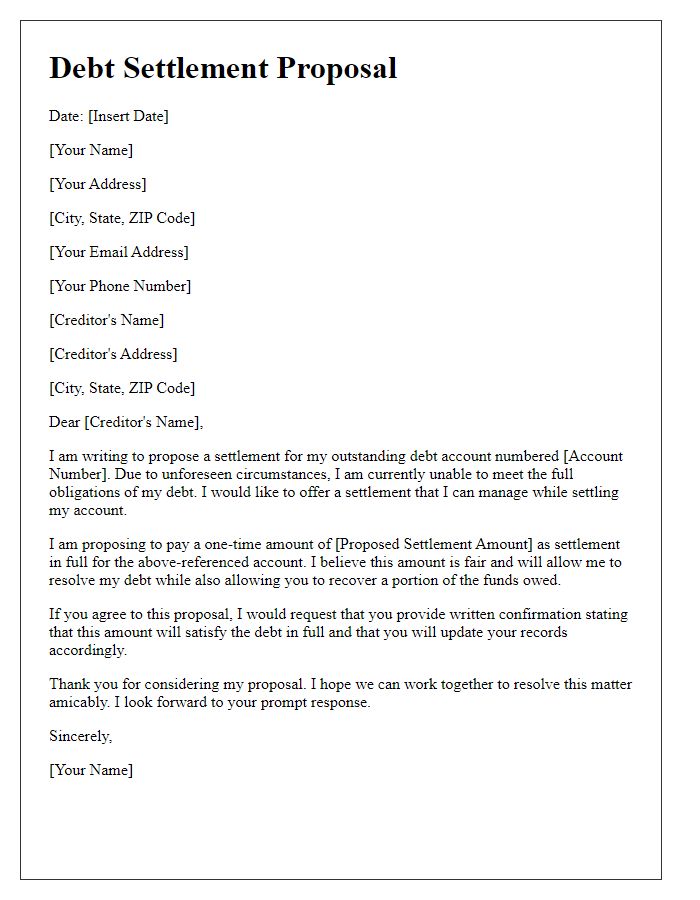
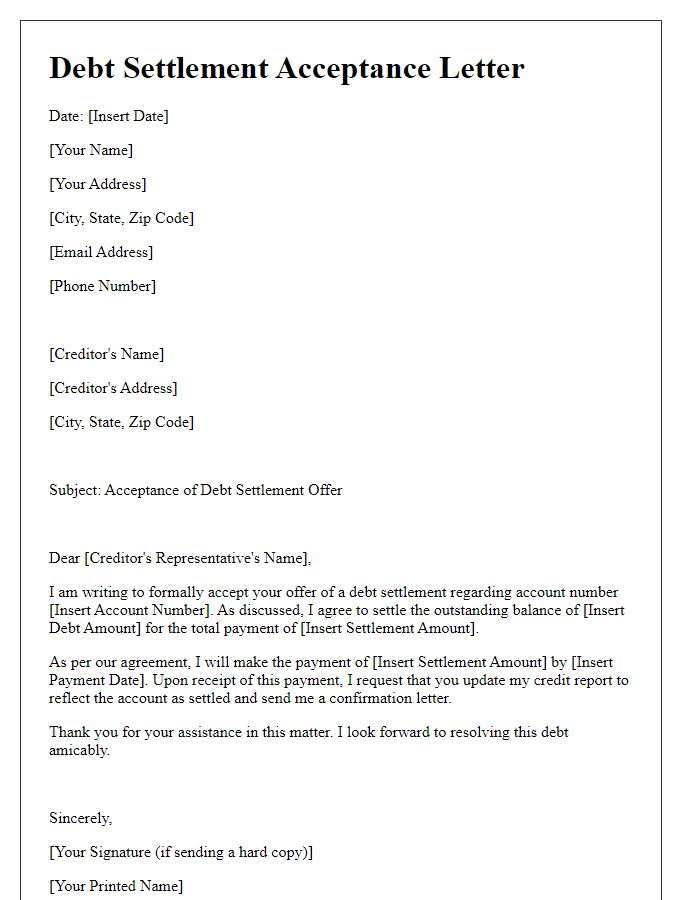
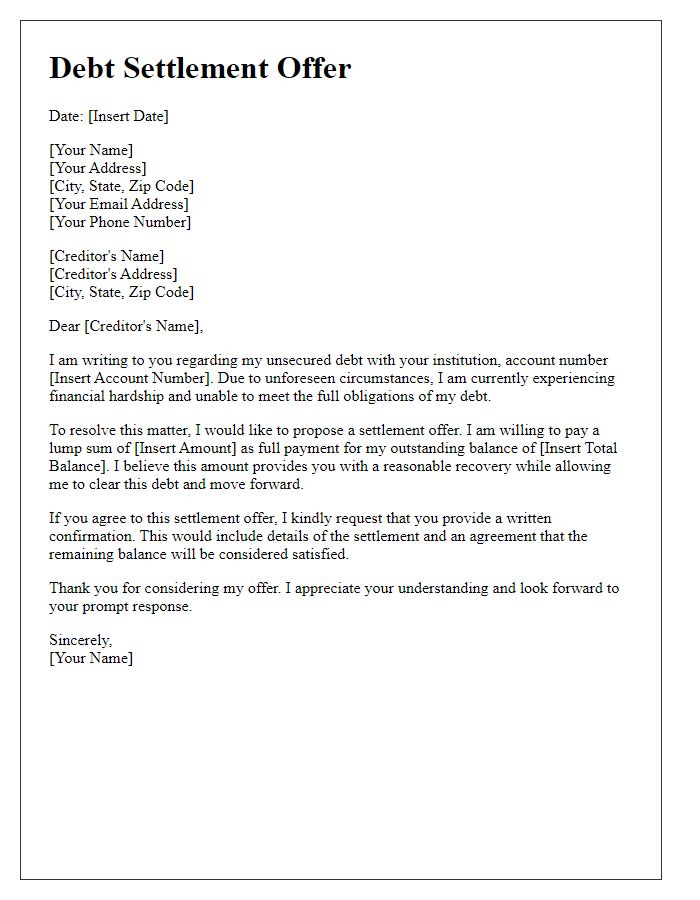
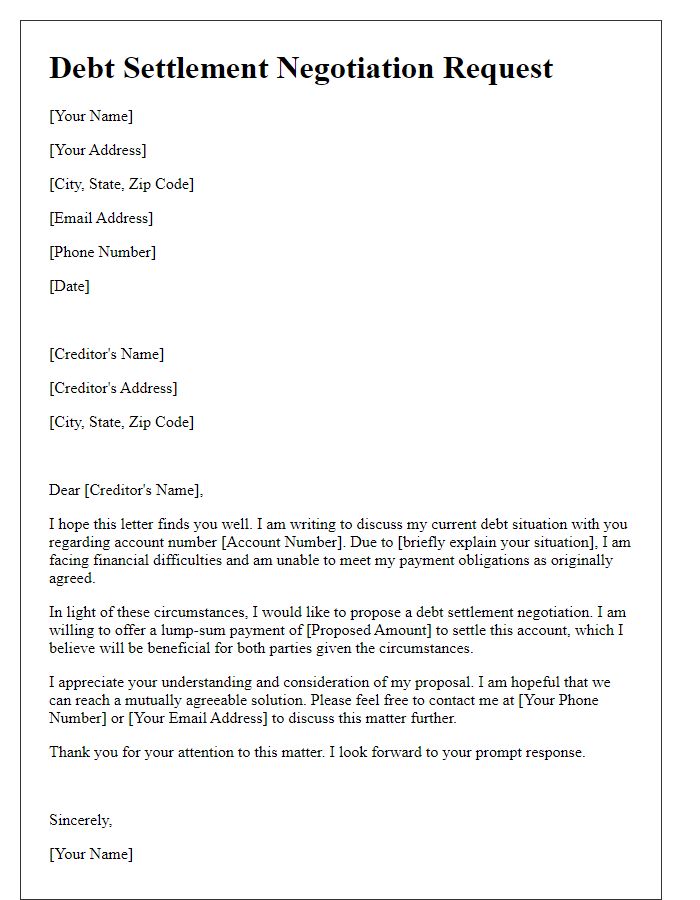
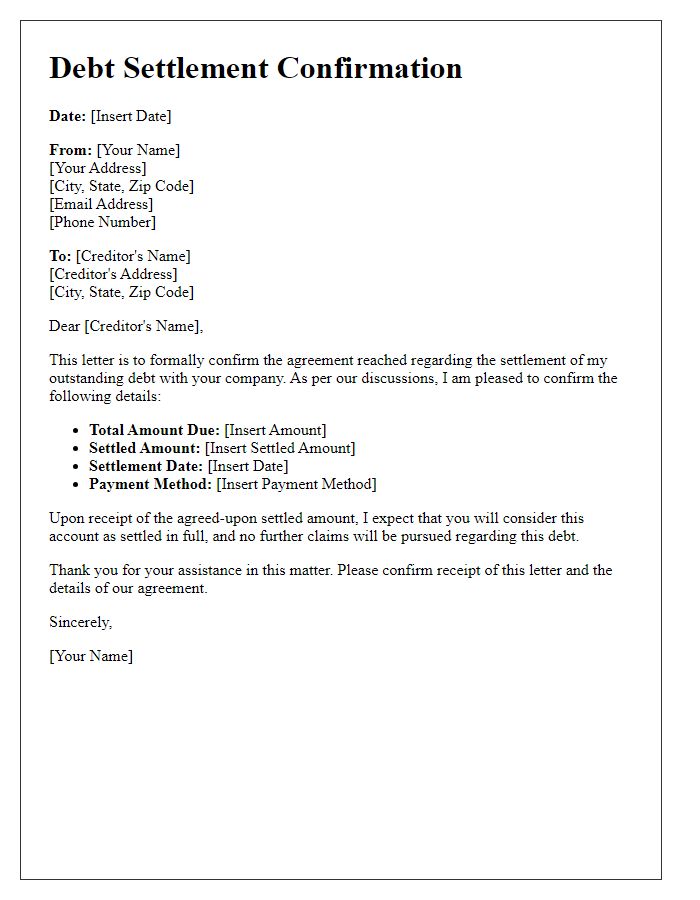
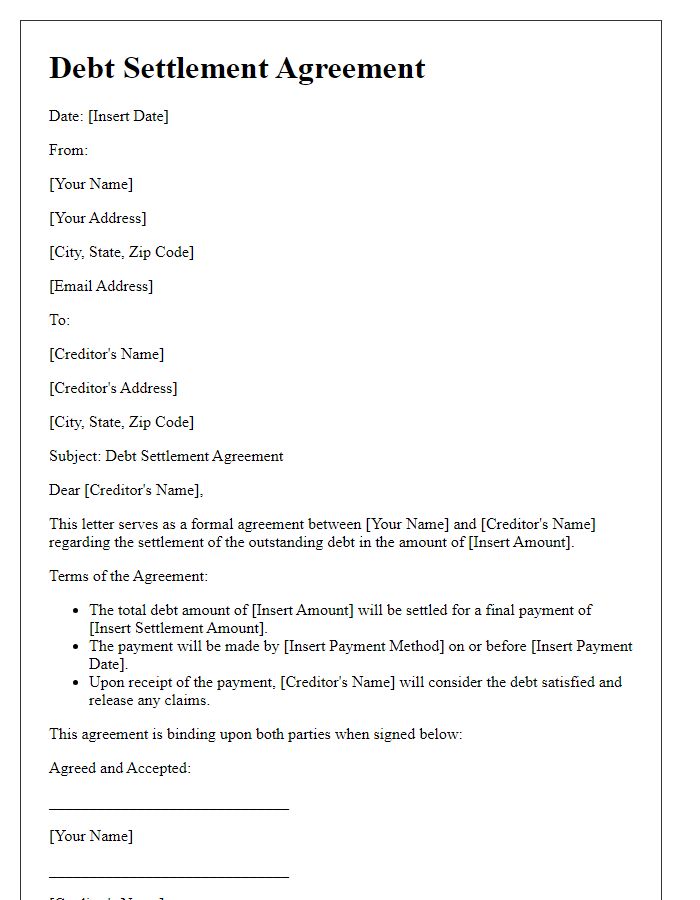
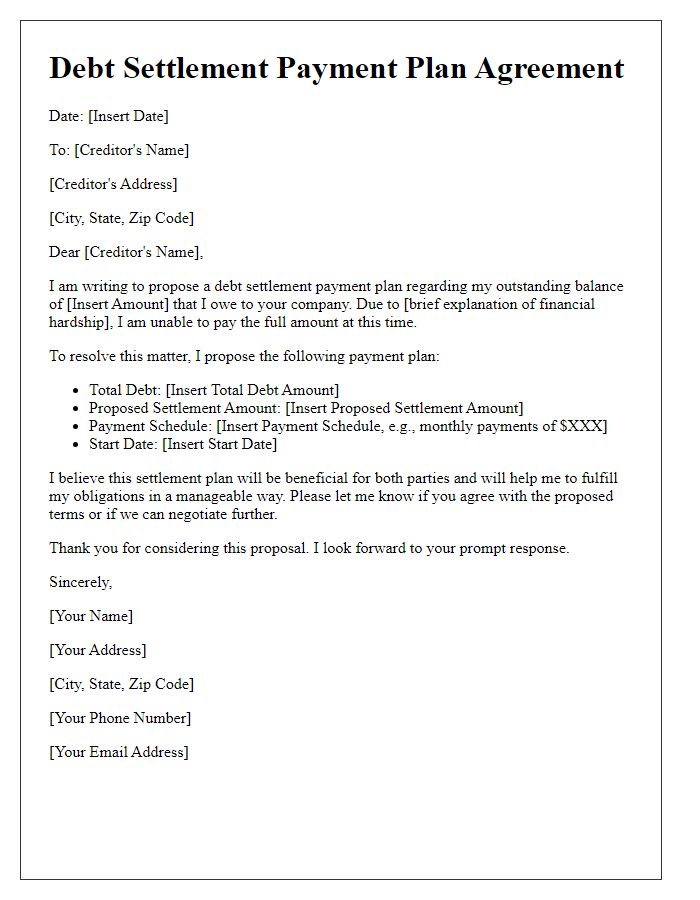
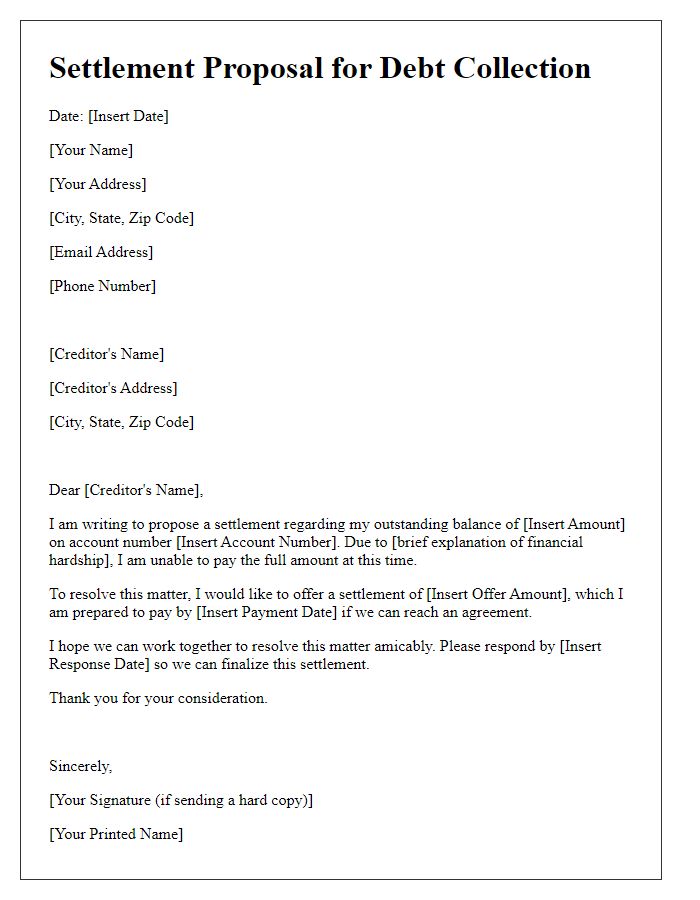
A credit card debt settlement offer letter Template is easiest to evaluate when readers can see how different versions organize the same core information. Useful examples typically show a recognizable business-letter structure, a clear account reference, an explanation of financial circumstances, a proposed settlement amount, and language requesting written confirmation. Some examples emphasize a lump-sum offer, while others focus on payment plans, confirmation, acceptance, or follow-up communication. These distinctions matter because the appropriate document depends on where the borrower is in the negotiation process.
The following visual references illustrate different settlement-letter structures and related negotiation documents. They can help readers compare the placement of account details, settlement terms, payment dates, hardship explanations, acceptance language, and follow-up requests. The examples should be treated as visual references rather than universal legal forms or promises about what any creditor will accept. A borrower should adapt the structure to the actual account, creditor, jurisdiction, financial circumstances, and written terms of any settlement that is ultimately accepted.
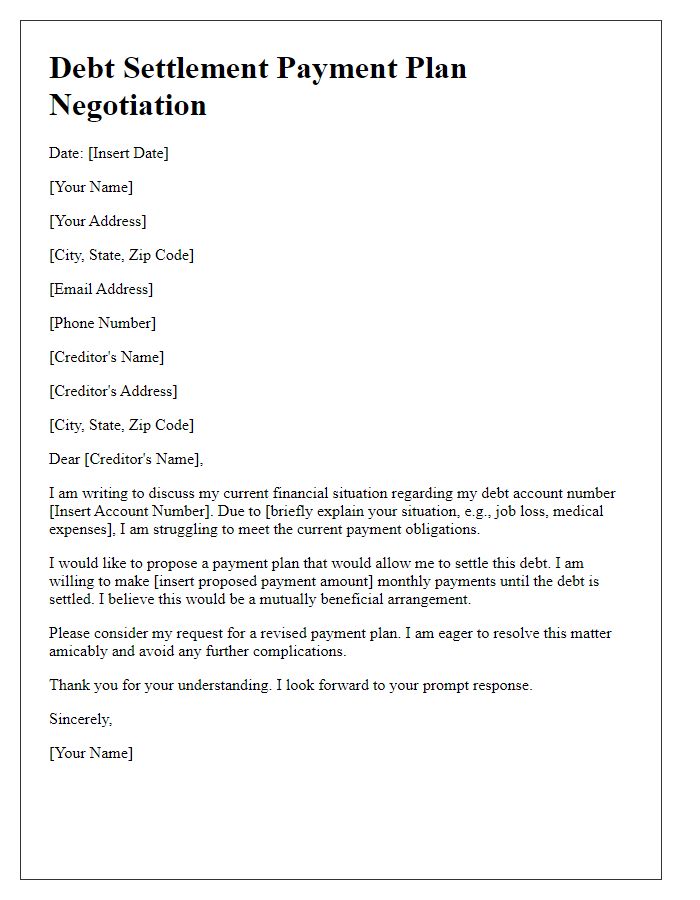
Debt Settlement Payment Plan Negotiation
Source: Letterin.net
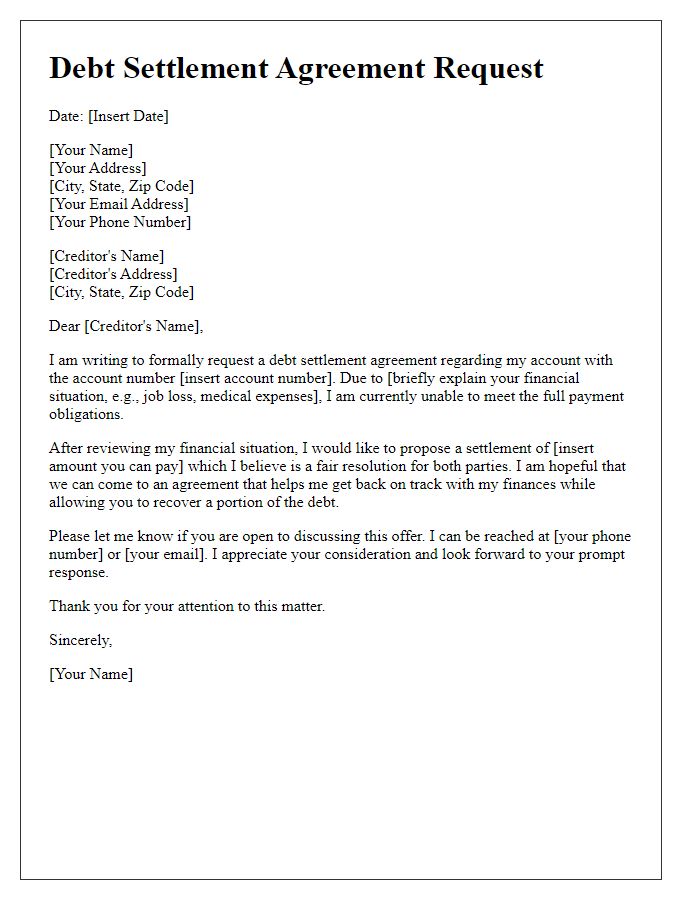
Debt Settlement Agreement Request
Source: Letterin.net
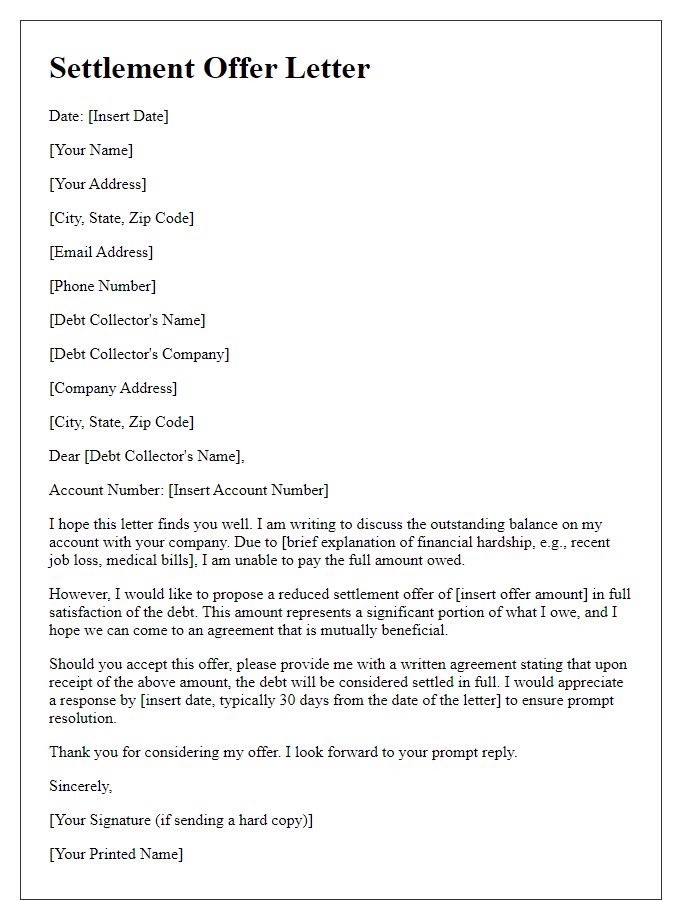
Settlement Offer Letter
Source: Letterin.net
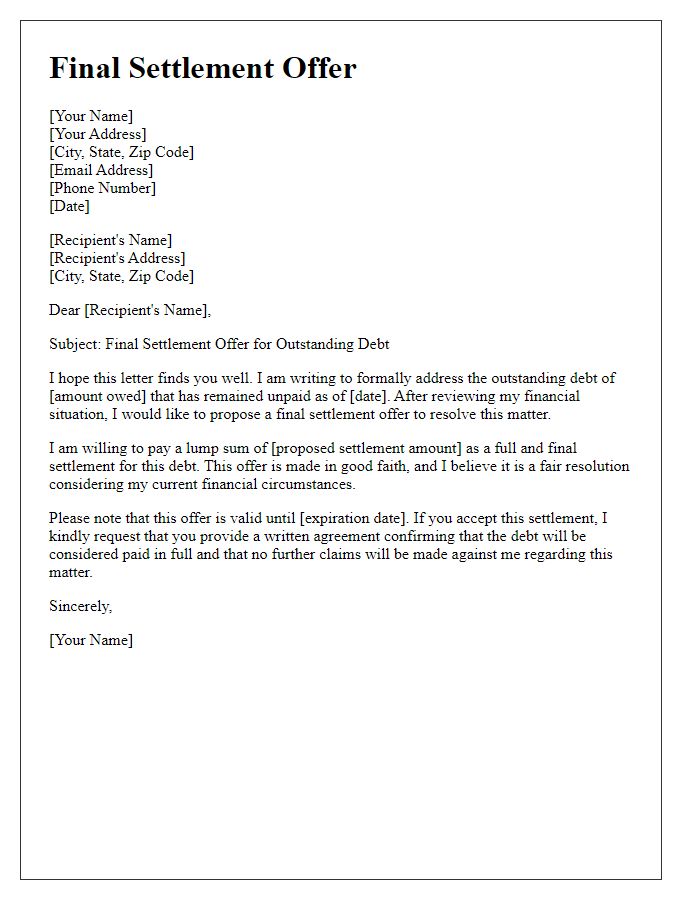
Final Settlement Offer
Source: Letterin.net
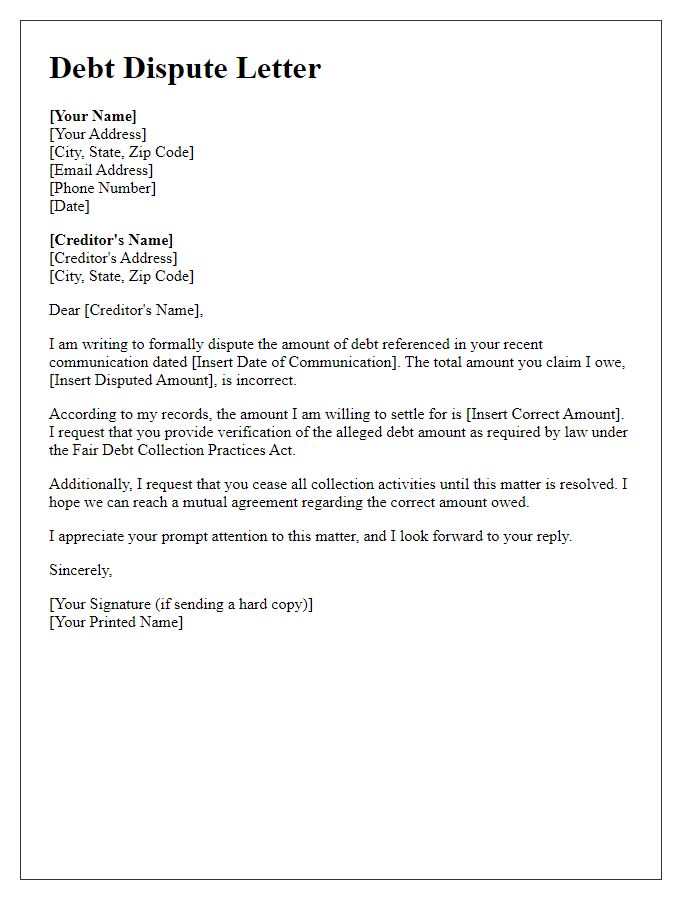
Debt Dispute Letter
Source: Letterin.net
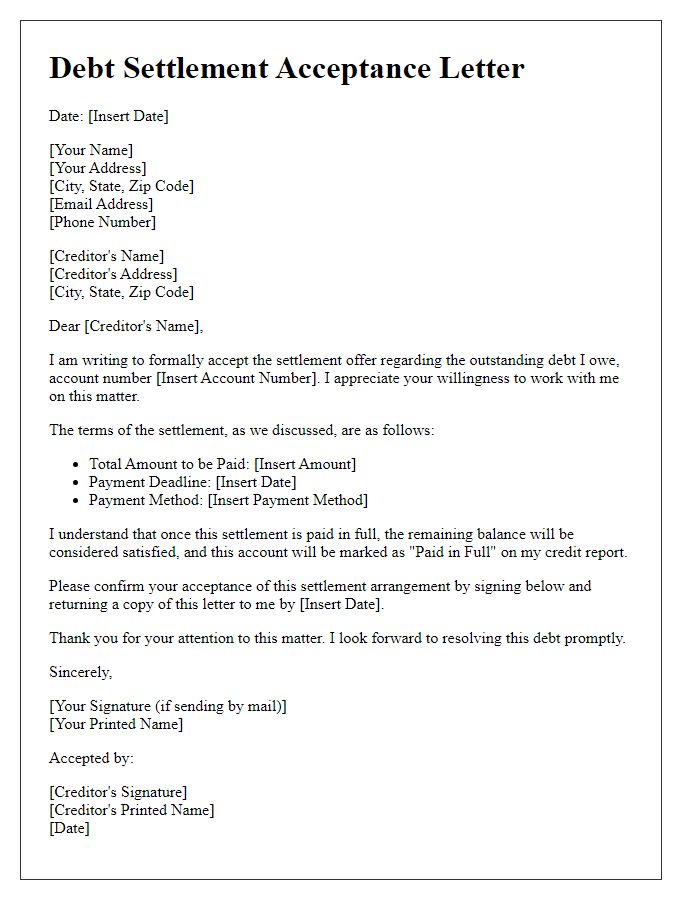
Debt Settlement Acceptance Letter
Source: Letterin.net
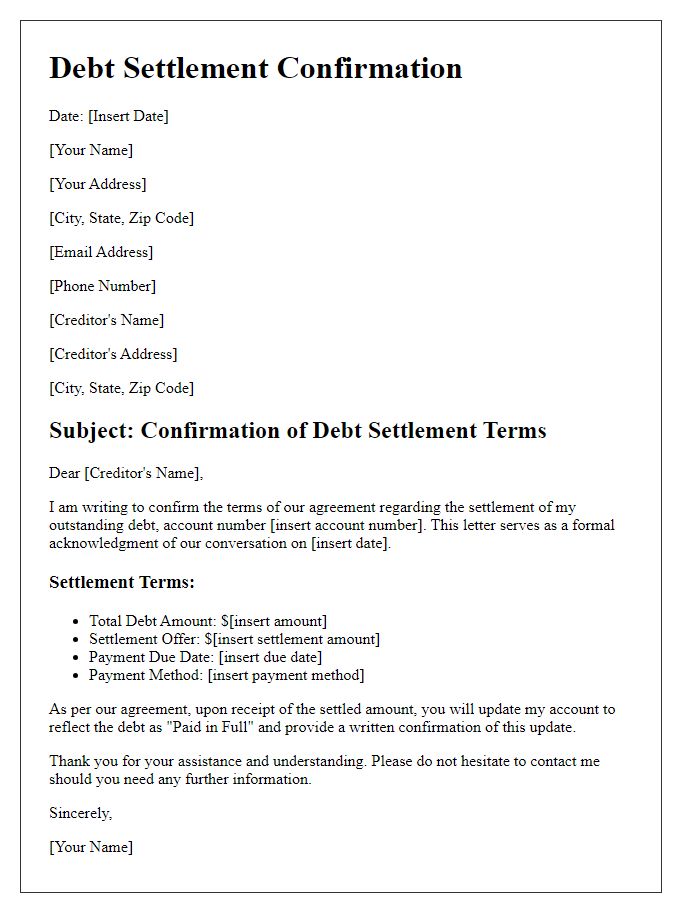
Debt Settlement Confirmation
Source: Letterin.net
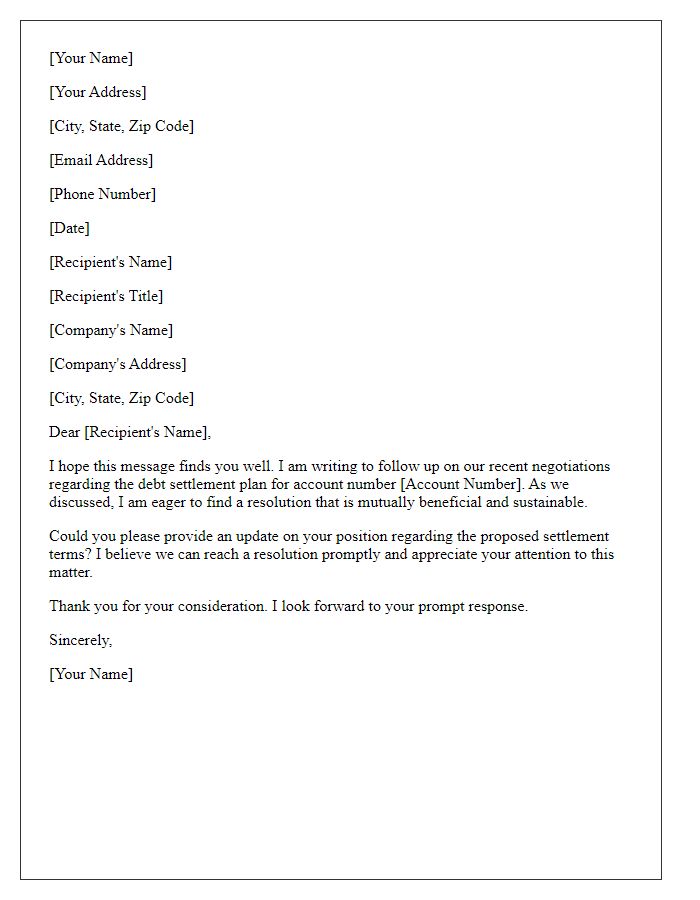
Follow-Up on Debt Settlement Negotiations
Source: Letterin.net
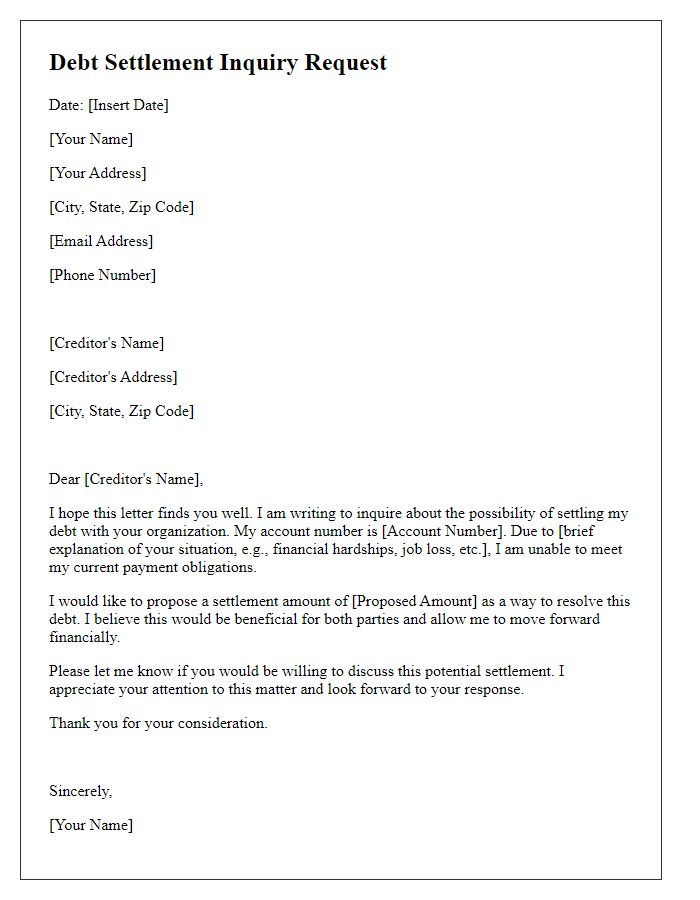
Debt Settlement Inquiry Request
Source: Letterin.net
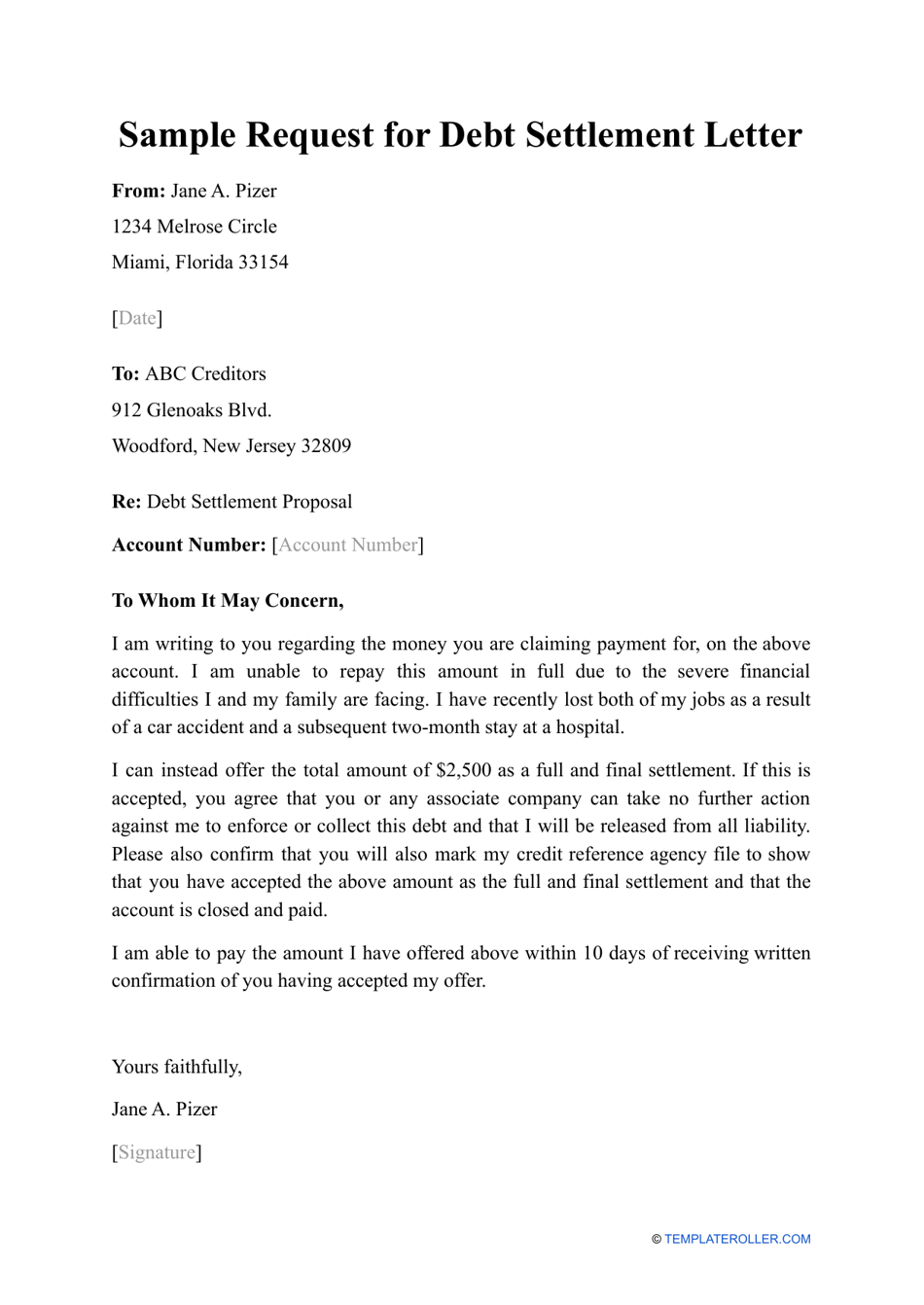
Sample Request for Debt Settlement Letter
Source: TemplateRoller
