A marketing meeting letter Template is a structured starting point for inviting clients, employees, partners, vendors, or internal marketing teams to an important discussion. The strongest version does more than announce a date. It explains why the meeting matters, identifies the participants, provides practical details, establishes expectations, and gives recipients enough context to prepare. For marketing teams, this is especially useful when a meeting involves campaign planning, performance reviews, product launches, brand strategy, client coordination, or event preparation.
Searchers looking for this type of template are usually trying to solve a practical communication problem: they need a professional letter that can be adapted quickly without overlooking important information. A good structure therefore combines formal business-letter conventions with the concise communication expected in modern marketing. The result should be easy to scan, appropriate for the recipient, and specific enough that the meeting has a clear purpose before anyone enters the room.
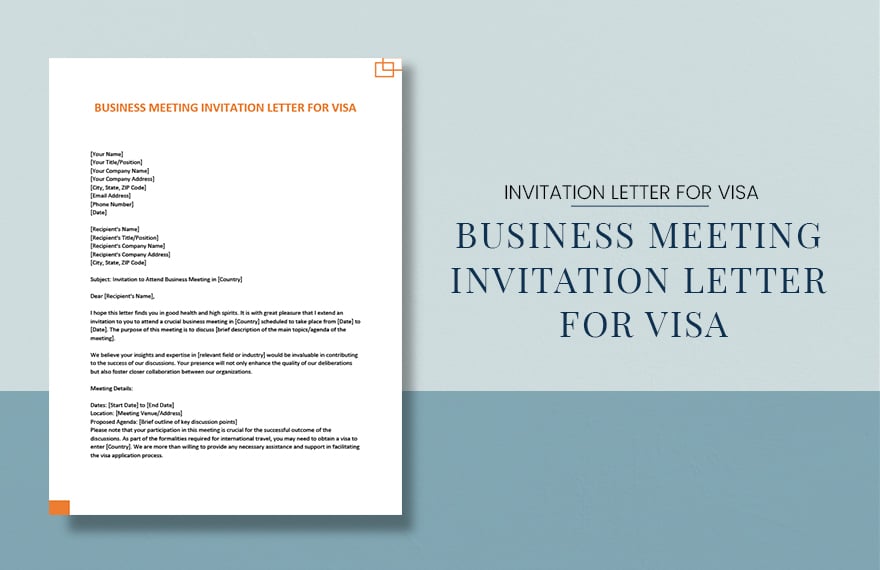
Current examples of business meeting invitations commonly emphasize the meeting purpose, date, time, venue, agenda, contact details, and attendance confirmation. These elements help reduce ambiguity and give recipients a reasonable opportunity to prepare.
What a Marketing Meeting Letter Should Accomplish
The primary job of a marketing meeting letter is to make the recipient understand the meeting before deciding how to respond. A vague invitation can create uncertainty about whether attendance is important, what will be discussed, or whether preparation is expected. A well-organized letter answers those questions in a logical sequence. It should establish the reason for the meeting first, then provide the logistical information needed to participate.
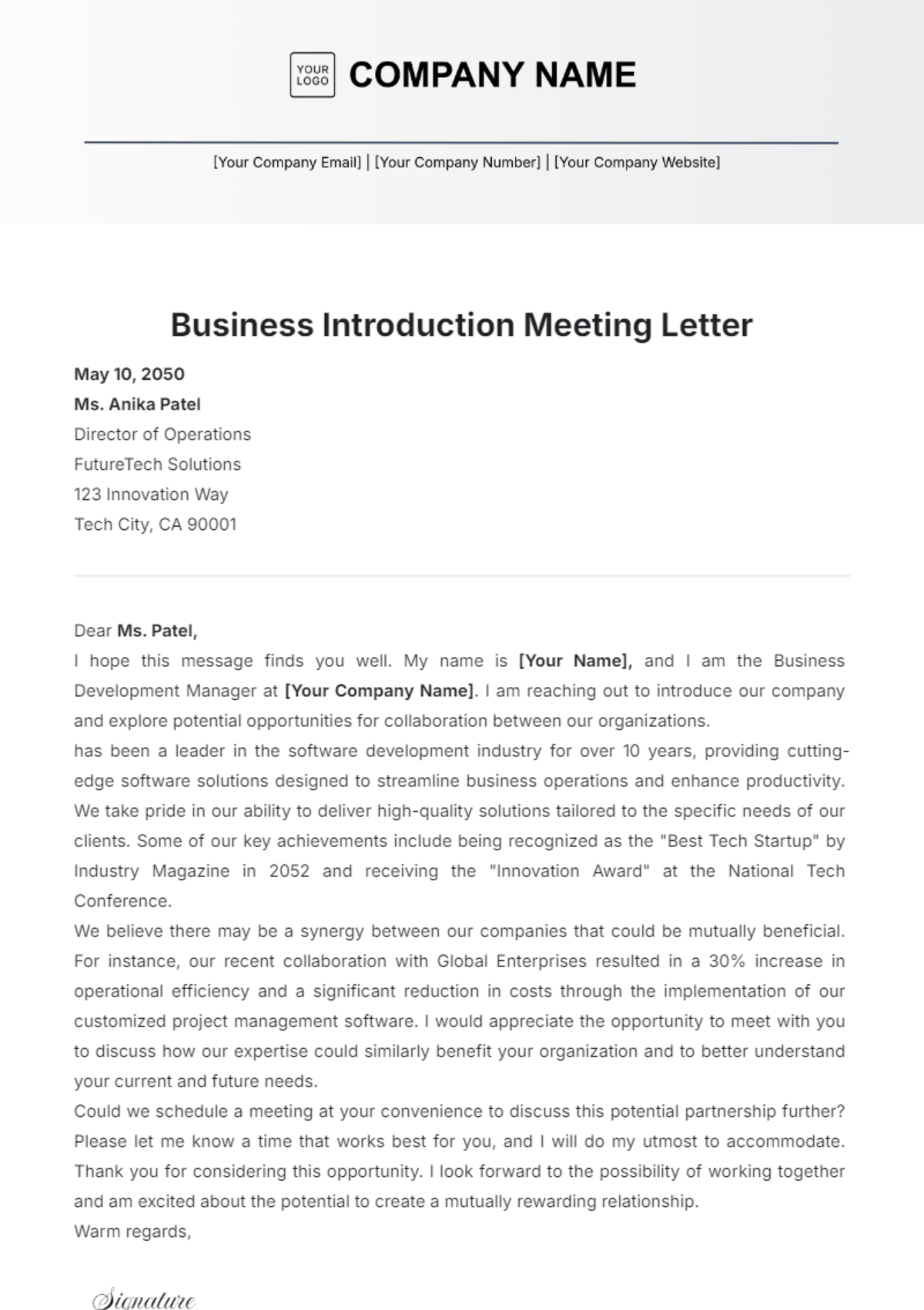
Marketing meetings often involve several moving parts, so the invitation should establish a shared frame of reference. For example, a campaign review may require participants to examine performance reports, discuss creative direction, evaluate audience feedback, and agree on the next phase. A client meeting may instead focus on deliverables, revisions, timelines, budget considerations, or future opportunities. The template should be flexible enough to support either situation while keeping the essential information visible.
The tone also matters. An internal invitation can be direct and collaborative, while an external letter should generally be more polished and considerate. A client should feel that the meeting has been organized around a meaningful business objective rather than simply being another calendar request. Employees should understand whether their presence is expected and what preparation is necessary. Partners should know what decisions or contributions may be required from them.
Essential Elements to Include
Sender and recipient information
Start with the identity of the organization or person sending the letter. A professional version can include the company name, address, sender name, role, email address, and telephone number. The recipient section should identify the intended person or group accurately. For a client, include the person’s name, position, and organization when those details are relevant.
Clear identification is particularly important when a marketing department works with multiple contacts at the same company. Addressing the correct decision-maker or project contact prevents the invitation from appearing generic. For an internal meeting, the recipient may be a department, project group, or named team rather than an individual. The wording should make the intended audience unmistakable.
A consistent header also improves record keeping. When the same organization uses a standardized marketing meeting letter Template for recurring meetings, recipients can quickly recognize the sender and understand the context. Consistent branding does not require elaborate graphics; a clean letterhead, company name, and reliable contact information are usually sufficient.
Subject and purpose
The subject should communicate the meeting topic without forcing the reader to interpret a vague phrase such as “Important Meeting.” A stronger subject might identify the campaign, project, quarter, event, or business issue involved. The opening paragraph can then explain why the recipient is being invited and what the discussion is intended to accomplish.
A useful purpose statement is specific enough to guide preparation but short enough to remain readable. For example, “The meeting will review the current launch campaign, identify outstanding creative decisions, and confirm the schedule for the next promotional phase” tells the reader considerably more than “We would like to discuss marketing plans.” The first version establishes scope and signals that decisions are expected.
Purpose also helps determine the appropriate recipient. If the discussion concerns campaign analytics, an analyst or marketing manager may need to attend. If the discussion concerns approvals, a decision-maker may be necessary. If the meeting concerns an event, representatives responsible for logistics, communications, or partnerships may be appropriate. The invitation should reflect the actual objective rather than inviting a large group by default.
Date, time, venue, and participation method
The meeting details should be easy to locate. Include the date, start time, expected end time, venue, and any relevant participation method. For a remote meeting, provide the meeting platform and access information through the organization’s normal communication channel. For a hybrid meeting, explain whether participants can join remotely and whether the same agenda applies to both groups.
Time zones deserve special attention when participants work across regions. A marketing agency may have a client in another country, while an internal company may have employees distributed across several offices. Writing the local time and time zone removes unnecessary uncertainty. If the meeting is in person, provide the building or room information clearly enough for an unfamiliar visitor to find it.
Including an expected duration is also useful. A recipient who sees “10:00 a.m. to 11:00 a.m.” can plan more effectively than someone who receives only a start time. The duration can also encourage the organizer to keep the agenda realistic. When the subject is complex, it is better to allocate adequate time than to create an invitation that promises a short session that cannot realistically cover the stated objectives.
Building an Effective Marketing Agenda
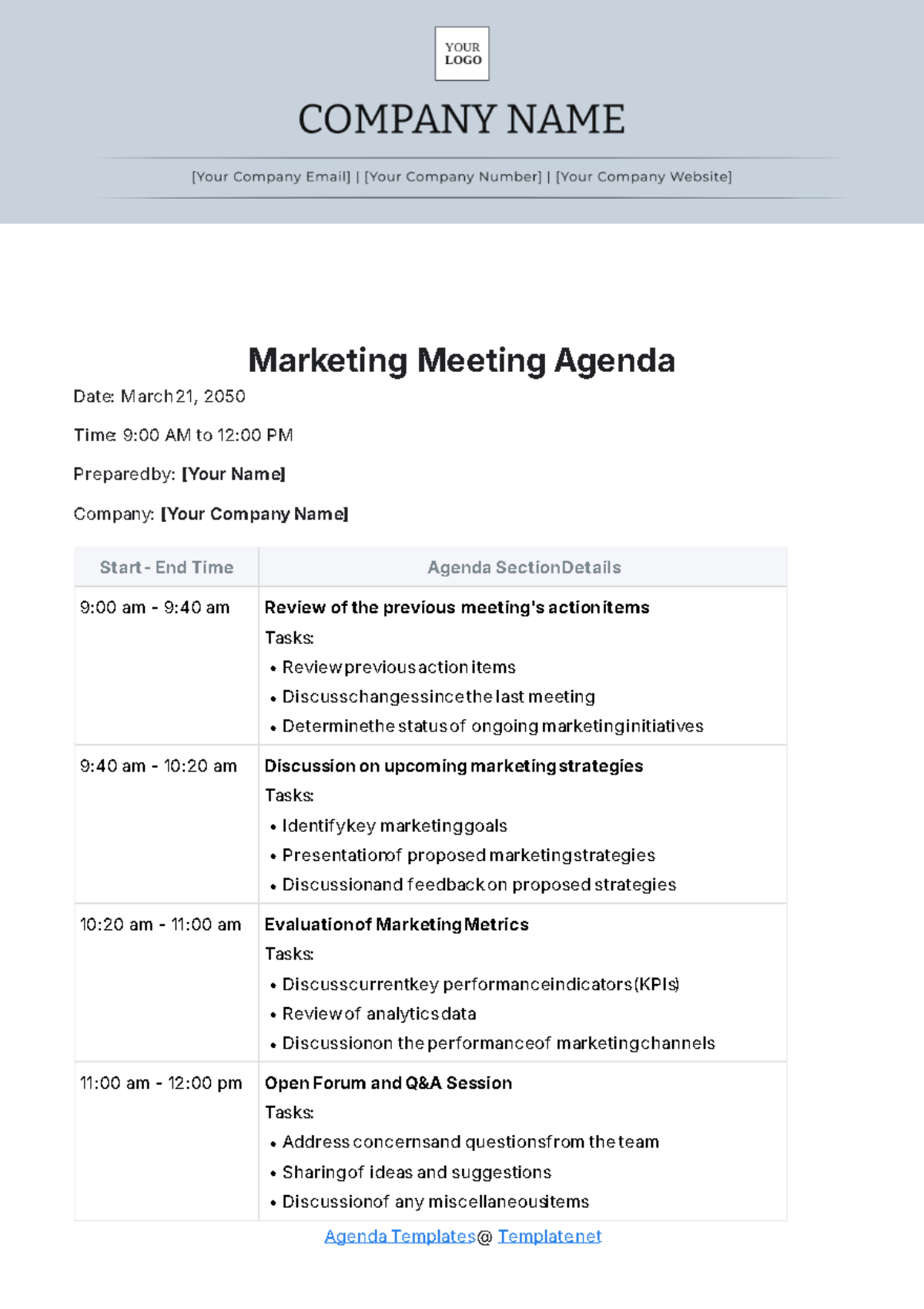
The agenda is one of the most valuable parts of a marketing meeting letter because it transforms the invitation from a scheduling notice into a preparation document. A useful agenda identifies the major discussion points in an order that makes sense. For example, a campaign review might begin with current results, move to issues requiring attention, continue with strategic options, and finish with decisions and next actions.
A marketing agenda should not become a long list of every possible subject. Too many items can make the meeting appear unfocused and can encourage participants to prepare for topics that may never be discussed. Instead, prioritize the questions that require shared understanding, discussion, approval, or a decision. Routine information that does not require discussion can often be distributed separately.
Time allocations can be useful for longer sessions. A simple structure might allocate the opening minutes to objectives, a larger block to campaign performance, another block to strategic decisions, and a final segment to responsibilities. This does not guarantee that the meeting will finish on time, but it gives the facilitator a practical framework for maintaining focus.
Adapting the Template for Different Audiences
For clients
A marketing meeting letter template for clients should emphasize relevance and mutual value. The client needs to know why the meeting is worth attending, what decisions or updates will be covered, and whether any material should be reviewed beforehand. Avoid internal jargon that the client may not recognize, particularly when the marketing team uses specialized terminology.
Client invitations should also show respect for the recipient’s schedule. Give enough notice when possible, provide a concise agenda, and make the requested response clear. If the proposed time is flexible, say so. If the meeting is tied to a fixed campaign milestone or event date, explain that context so the recipient understands why the timing matters.
A strong client letter also avoids making unsupported promises. If the purpose is to discuss potential campaign improvements, describe that as a discussion rather than implying a guaranteed outcome. This distinction keeps the invitation professional and ensures that the letter accurately represents what the meeting can accomplish.
For employees
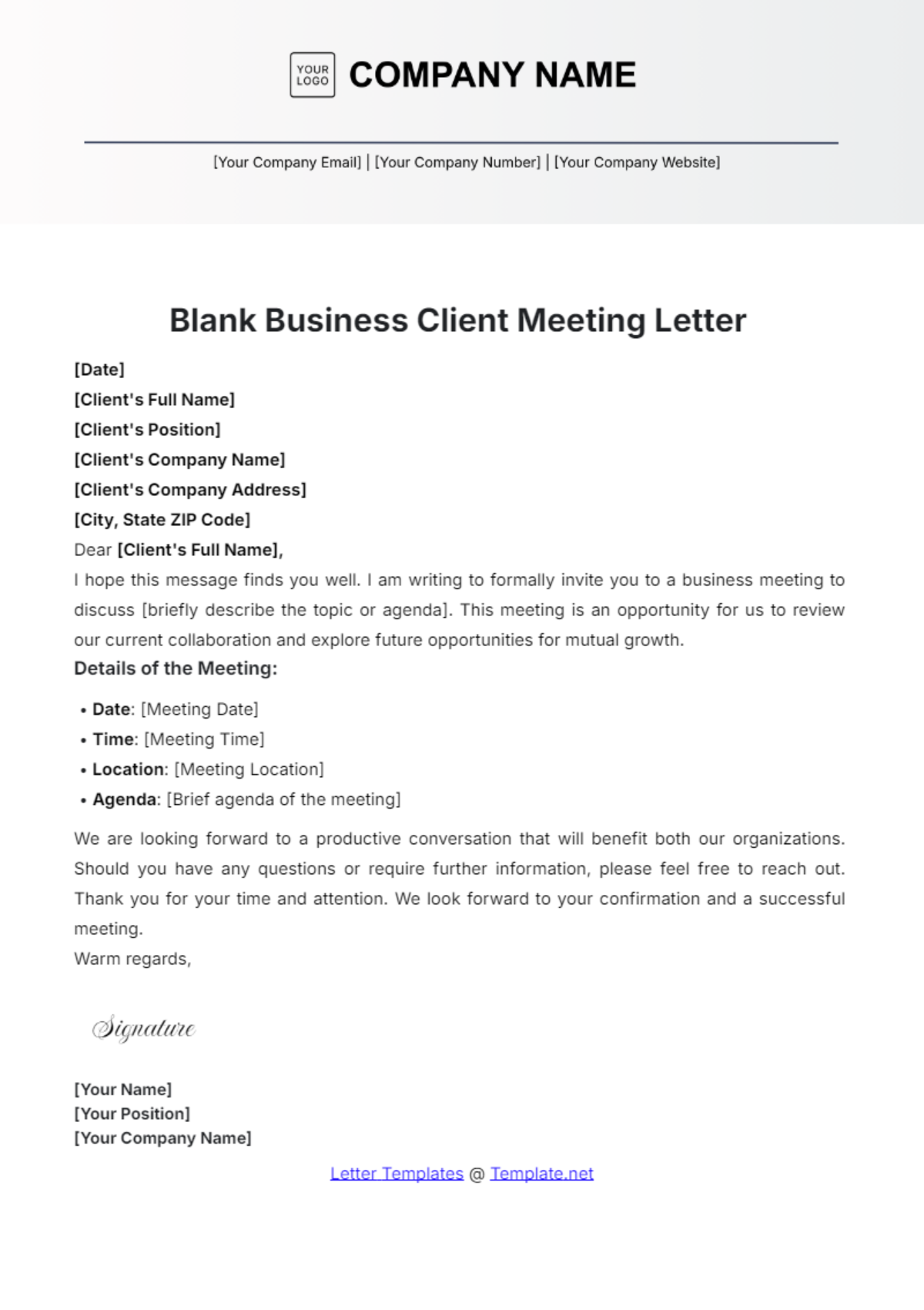
A marketing meeting letter template for employees can be more direct while still maintaining professional structure. Employees generally need to know the purpose, schedule, location, agenda, expected preparation, and whether attendance is required. If specific reports or campaign materials need review, identify them before the meeting.
Internal communication also benefits from clearly defined expectations. For example, the invitation might ask the campaign manager to prepare a performance update, the content lead to bring proposed creative concepts, and the analytics specialist to summarize recent findings. These instructions turn the meeting from a passive information session into a coordinated working discussion.
For recurring meetings, consistency becomes especially valuable. A standard format can make weekly or monthly invitations easier to scan while allowing the agenda to change from one session to the next. The template should therefore preserve a recognizable structure without making every meeting appear identical in purpose.
For partners and external organizations
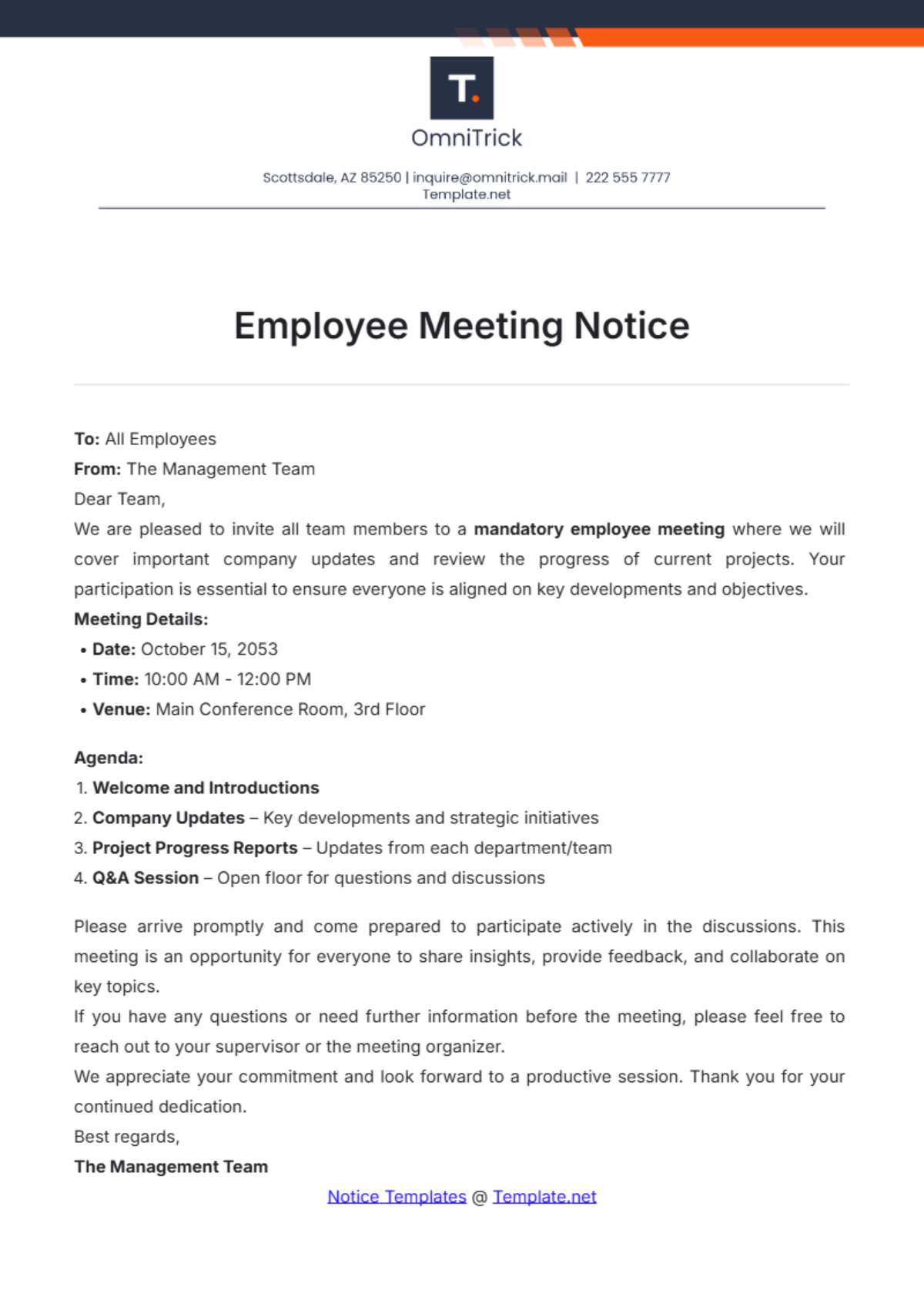
An external marketing meeting often requires more context than an internal meeting because participants may not share the same background information. A useful invitation can briefly explain the relationship, project, or opportunity that connects the organizations. It should then identify the intended discussion and what each party may need to contribute.
External meetings can cover partnership planning, campaign coordination, vendor relationships, sponsorships, distribution arrangements, or co-marketing opportunities. The letter should avoid excessive promotional language. Its purpose is to establish a productive conversation, not to turn the invitation itself into a sales pitch.
When several organizations are involved, identify the expected outcome carefully. A meeting may be intended to explore options rather than finalize an agreement. Stating this distinction prevents participants from arriving with incompatible expectations and helps the organizer design an agenda appropriate to the meeting’s actual stage.
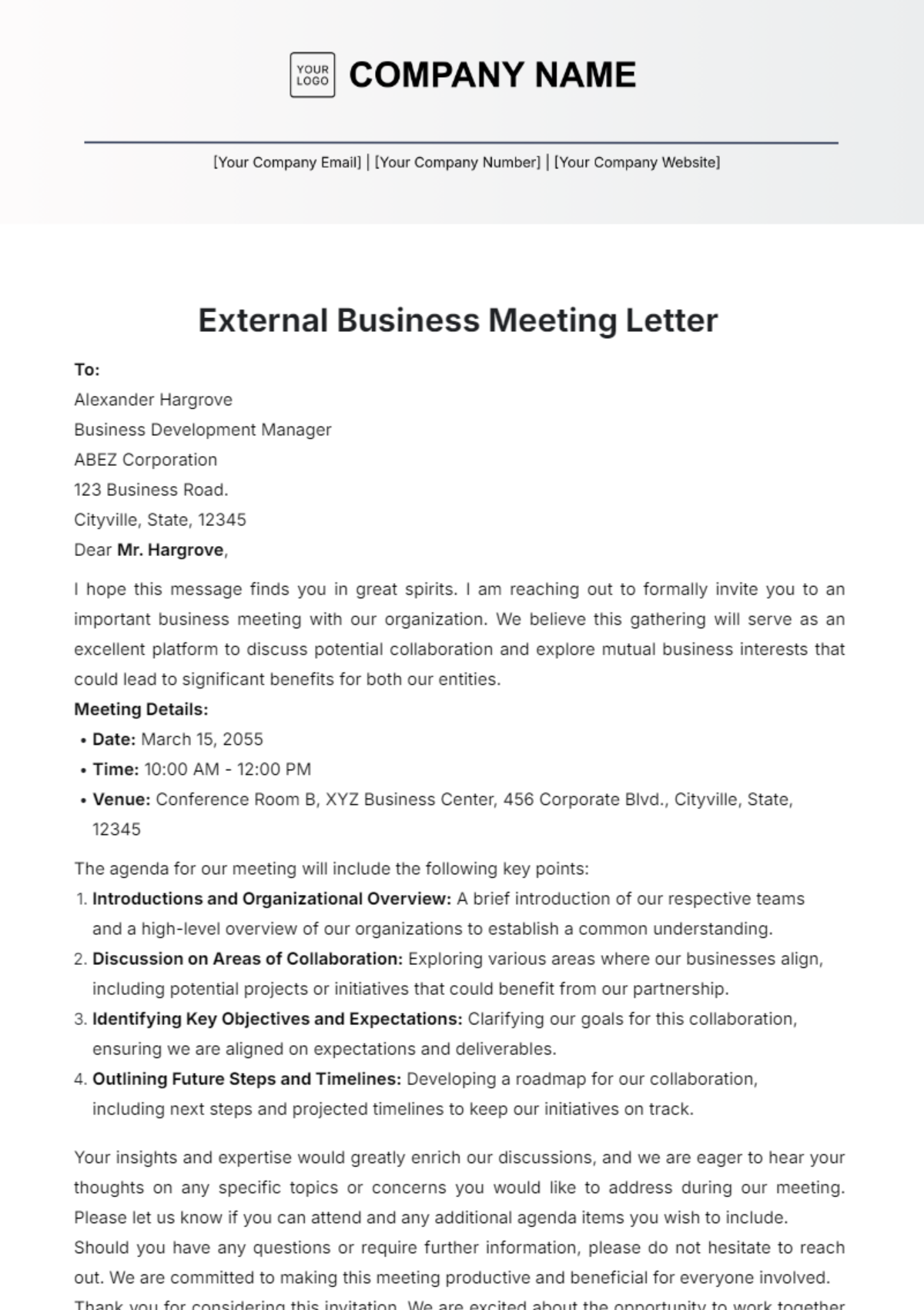
Choosing the Right Format
Different communication channels suit different meeting situations. A formal letter is useful when the invitation needs a professional document structure, especially for external stakeholders or meetings that form part of a larger business process. An email can be more efficient for routine scheduling, particularly when the recipient already communicates with the organizer electronically.
Searchers specifically looking for a marketing meeting letter template pdf may be thinking about a stable document that can be reviewed or printed consistently. A PDF-style layout is useful when the visual appearance should remain fixed across devices. By contrast, a marketing meeting letter template word may be preferable when the organizer expects to revise names, dates, agendas, or company details before sending.
There is no universal requirement that every marketing meeting use the same format. The best choice depends on the audience, level of formality, editing needs, and internal record-keeping process. A useful template should therefore be adaptable rather than forcing every meeting into an identical communication method.
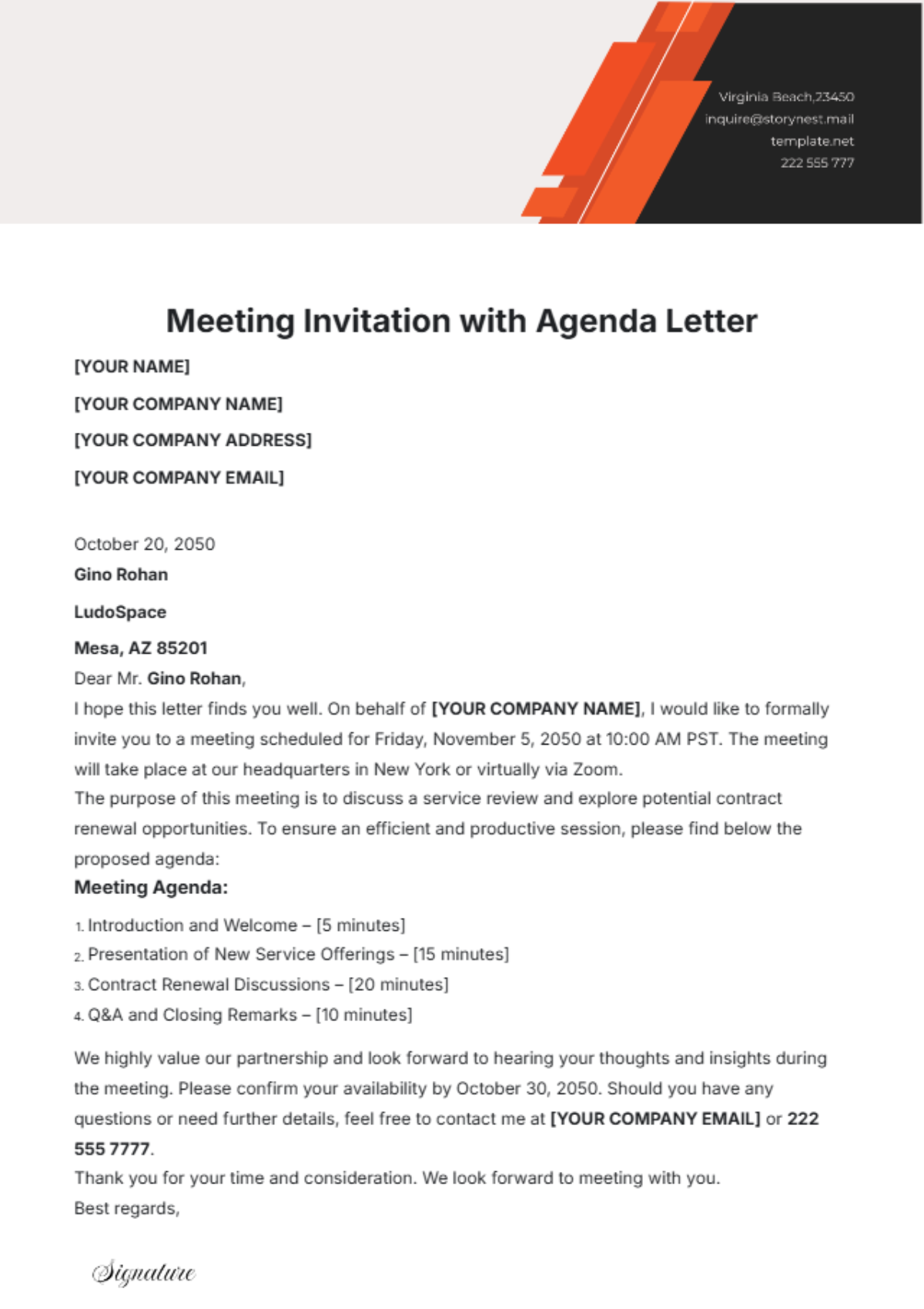
Letter, Email, and Short Meeting Messages
A letter for a meeting is generally more formal than a short scheduling message. It can be appropriate when the recipient is external, when the meeting has strategic importance, or when the organization wants a polished written record. The structure can remain concise while still including the essential details and expected response.
A sample communication letter for a meeting can be useful as a model for tone and organization, but the content should always be adapted to the actual situation. Copying generic language without changing the purpose, audience, agenda, or expectations can make the invitation sound impersonal. A better approach is to use the sample as a structural reference and rewrite the body around the real meeting.
An email template for meeting can follow almost the same logic but usually needs less formal address information. A clear subject line, short purpose statement, meeting details, agenda, preparation request, and response instruction are often enough. The email should make the most important information visible without requiring the recipient to read a long block of text.
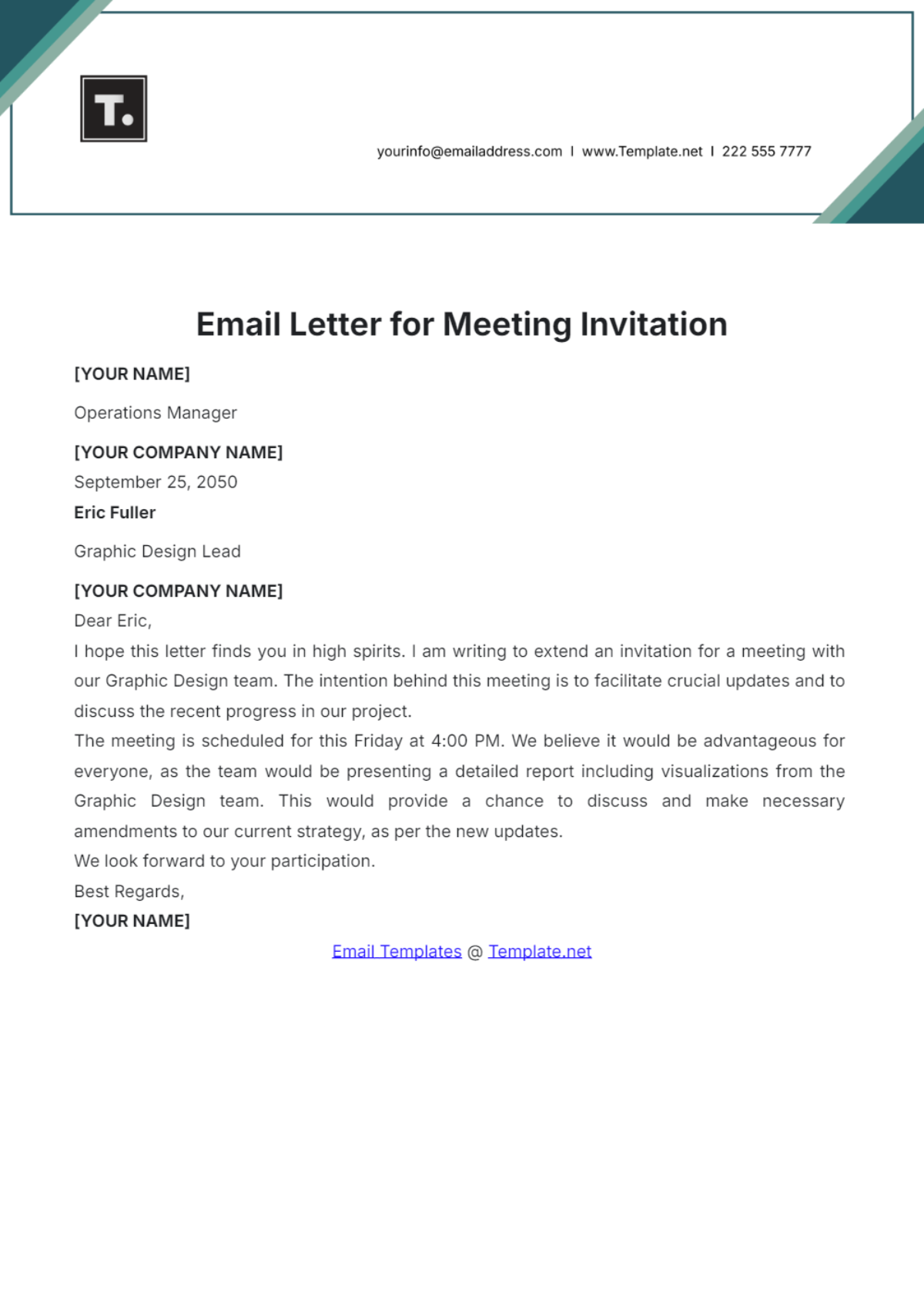
Writing a Clear Communication Letter
A communication letter for meeting should prioritize clarity over decorative language. The opening should tell the recipient why the message was sent. The next section should explain the meeting details and agenda. The closing should tell the recipient what action is expected, such as confirming attendance, suggesting an alternative time, or submitting an agenda item.
Use direct sentences and avoid unnecessary repetition. Instead of explaining the same purpose in several paragraphs, state it once and then provide the information needed to act on it. This approach is especially important for marketing professionals, who often communicate with busy executives, clients, agencies, and cross-functional teams.
Proofreading is essential because meeting invitations contain operational information. A single incorrect date, room number, contact address, or time can cause avoidable confusion. Check names, times, dates, agenda items, attachments, and participation instructions before the message is sent. If multiple people are responsible for the meeting, consider having another person verify the logistical details.
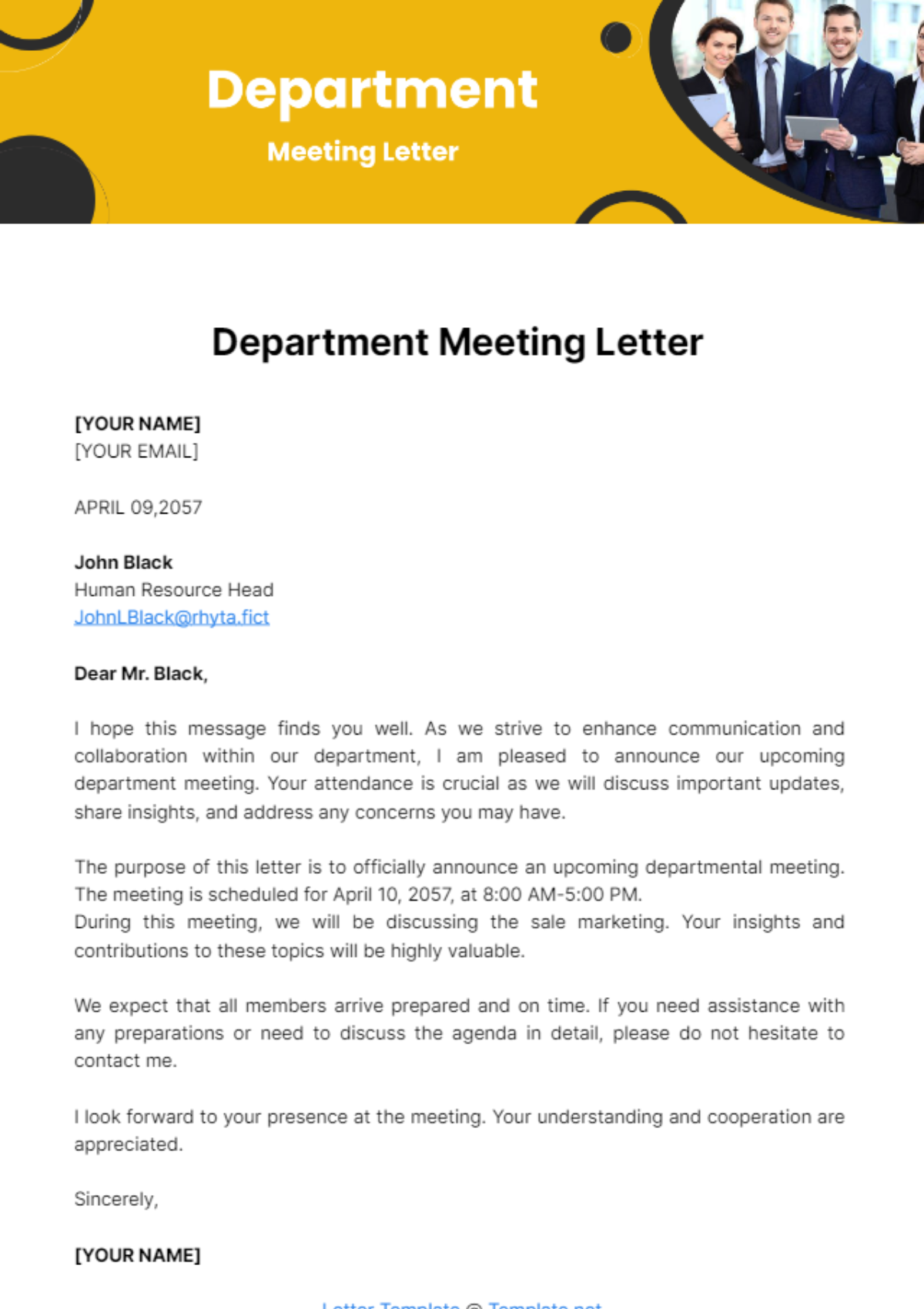
Using a Template Without Making the Letter Generic
A template is most useful when it provides structure rather than finished language that must be copied word for word. Keep recurring components such as the sender information, greeting, meeting-details block, agenda format, and closing. Rewrite the purpose and agenda for each meeting so the recipient immediately understands what is different about this particular discussion.
Branding should also be restrained. A company logo, brand color, and consistent typography can reinforce identity, but the meeting information should remain the dominant visual element. Decorative graphics should never make the date, time, location, or agenda difficult to find. A professional document is successful when the recipient can understand it quickly.
A template for a meeting can also be designed in modular sections. The organizer might maintain one version for client meetings, another for internal marketing reviews, and another for campaign or event planning. These are not necessarily separate documents in a complicated system; they can simply be variations of one reliable structure adapted to different audiences.
Marketing Meetings Connected to Events
A marketing letter template for event planning needs a slightly different emphasis because event-related meetings often involve deadlines, suppliers, promotion schedules, venue decisions, audience communications, and responsibilities across several teams. The invitation should make the event context clear and identify which decisions need to be made during the meeting.
For an event planning session, a useful agenda might cover promotional objectives, audience segments, communication channels, campaign milestones, creative approvals, logistics, and unresolved decisions. If an event date is fixed, the invitation should make the relationship between the meeting and that deadline clear. This helps participants prioritize preparation.
Event meetings can also benefit from assigning responsibility in advance. If one person owns venue coordination and another owns promotional content, the invitation can state what each person should bring to the discussion. This reduces the risk of spending valuable meeting time simply gathering basic information.
Preparing the Recipient Before the Meeting
The best invitations do not merely tell people when to arrive; they help them arrive prepared. If participants need to review campaign results, mention the relevant report. If a decision requires budget information, state that the budget will be discussed. If creative concepts will be reviewed, explain whether participants should prepare alternatives or feedback.
Preparation requests should be realistic. Asking every participant to prepare a large presentation can create unnecessary work. A better approach is to specify the minimum information required for the meeting to succeed. For example, a campaign owner may need to bring three key performance observations, while a creative lead may need to bring two proposed directions.
When preparation is important, include a clear deadline. This can be especially useful for client meetings, where the recipient may need time to gather information from their own organization. The request should explain why the material matters, not simply instruct the recipient to provide it.
RSVP and Follow-Up Instructions
Every invitation should make the expected response clear. If attendance needs to be confirmed, specify how the recipient should respond and, when appropriate, by what date. For a client meeting, a reply by email may be sufficient. For a larger internal meeting, a calendar response or established company process may be more practical.
When the meeting time is flexible, explain whether the organizer can accommodate alternatives. If the meeting is fixed because of a campaign milestone, avoid implying unlimited flexibility. A short sentence explaining the scheduling constraint can prevent unnecessary back-and-forth.
After the meeting, the same communication structure can support follow-up. Record decisions, responsibilities, deadlines, and unresolved questions. A meeting invitation establishes expectations before the discussion; effective follow-up confirms what happened afterward. Together, these documents create a clearer communication trail for marketing projects.
Common Mistakes to Avoid
One common mistake is writing an invitation that contains logistical details but no meaningful purpose. “Marketing meeting at 2 p.m.” tells the recipient when the meeting happens but not why it deserves attention. Another mistake is providing a broad purpose but no agenda, leaving participants uncertain about what will actually be discussed.
Another problem is excessive formality. Marketing teams often work collaboratively, so language that sounds like a legal notice can create unnecessary distance. Professional does not have to mean complicated. A respectful greeting, clear purpose, concise agenda, accurate logistics, and appropriate closing are generally more effective than elaborate wording.
Finally, avoid inviting people who have no meaningful role in the discussion. Large meetings can make decision-making slower when participants lack a clear reason to contribute. A focused invitation helps the organizer think about who truly needs to attend and what contribution is expected from each participant.
Practical Solution
The most practical approach is to build one core marketing meeting letter Template around seven sections: sender information, recipient information, subject, purpose, meeting details, agenda, and response instructions. Keep these sections in the same order for recurring meetings so recipients learn where to find information. Then create small variations for clients, employees, external partners, and event teams rather than creating an entirely different document each time.
Before sending the letter, run a short verification process. Confirm that the meeting purpose matches the agenda. Confirm that every invited person has a meaningful role. Check the date, start time, end time, venue or participation method, and contact information. Review any preparation request and make sure participants have enough time to complete it. Finally, read the invitation from the recipient’s perspective and ask whether anything remains unclear.
For routine marketing work, maintain a small set of approved structures rather than repeatedly starting from a blank page. One can emphasize client discussions, another can focus on internal campaign reviews, and another can support event planning. This approach preserves consistency while keeping each communication relevant. If the organization works internationally, add time-zone conventions to the standard structure. If the team regularly meets remotely, include a consistent location for participation details.
When deciding between formats, match the document to the communication need. A marketing meeting letter template free search may indicate that the reader wants a practical starting point without a complex procurement process, while a marketing meeting letter template free download search often indicates a desire for a ready-made document format. The important consideration is not the label but whether the resulting document is accurate, editable in the desired workflow, and suitable for the intended recipient.
For teams that need a printable record, the layout should remain clean when viewed or printed on a standard page. For electronic communication, the same content can be shortened while retaining the purpose, logistics, agenda, and response instructions. The strongest workflow is therefore not about choosing one universal format; it is about maintaining one reliable content structure and adapting its presentation to the situation.
A practical final check is to ask five questions: What is the meeting about? Why does this recipient need to attend? When and where will it happen? What should the recipient prepare? What response is expected? If the letter answers all five questions without forcing the reader to search through long paragraphs, the communication is likely doing its job effectively.
How to Make the Template More Professional
Professional presentation begins with hierarchy. The meeting subject should be prominent, while the date, time, venue, and agenda should be easy to scan. Paragraphs should remain short enough for comfortable reading, and lists should be used when several logistical items or agenda points need to be separated. This makes the document useful both as a letter and as a quick reference.
Language should be specific and neutral. Instead of saying that the meeting will be “very important,” explain what decision, review, or coordination will take place. Instead of saying that participants should “prepare accordingly,” identify the material or information they should bring. Specific language reduces interpretation and helps everyone arrive with similar expectations.
Professionalism also comes from consistency. Use the same company naming convention, date format, time format, contact information, and closing style across related invitations. Consistency becomes particularly valuable when a marketing department communicates with multiple clients or manages recurring campaign meetings throughout the year.
Using Meeting Notes to Improve Future Invitations
Meeting outcomes can reveal whether an invitation was sufficiently detailed. If participants repeatedly ask questions that should have been answered beforehand, the template may need improvement. If meetings frequently run over time, the agenda may be too ambitious. If decisions are delayed because the right people are absent, the recipient selection process may need revision.
Marketing teams can use this feedback to refine their recurring templates. For example, a client invitation might benefit from a dedicated section for decisions required from the client, while an internal campaign review might benefit from a short preparation checklist. These refinements make the template more useful over time without making the document longer for its own sake.
The same principle applies to follow-up. If action items are repeatedly unclear, the invitation can establish that every major agenda item should end with an owner and next step. This connects the pre-meeting communication to the post-meeting workflow and helps transform meetings into measurable progress.
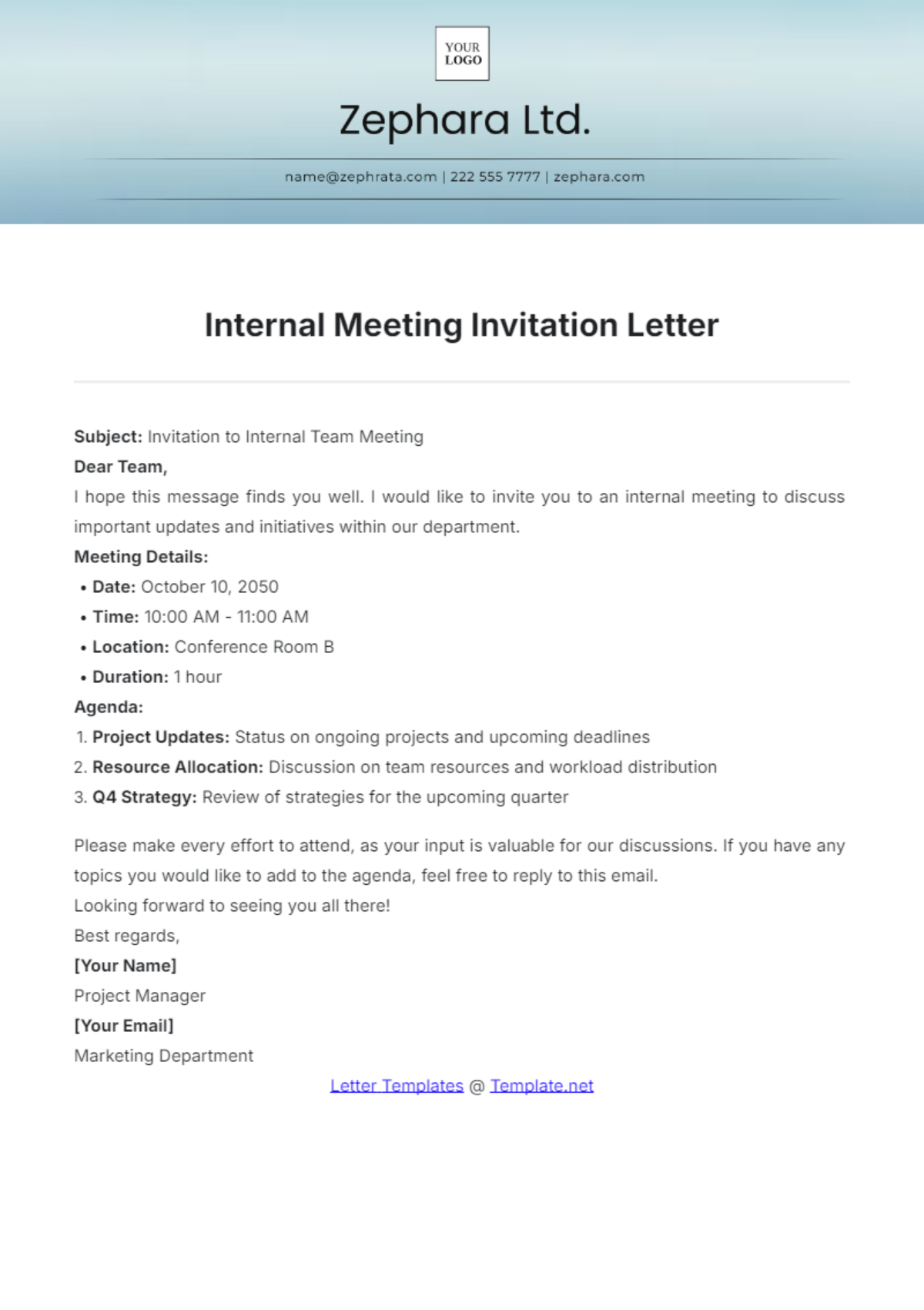
Reference Examples
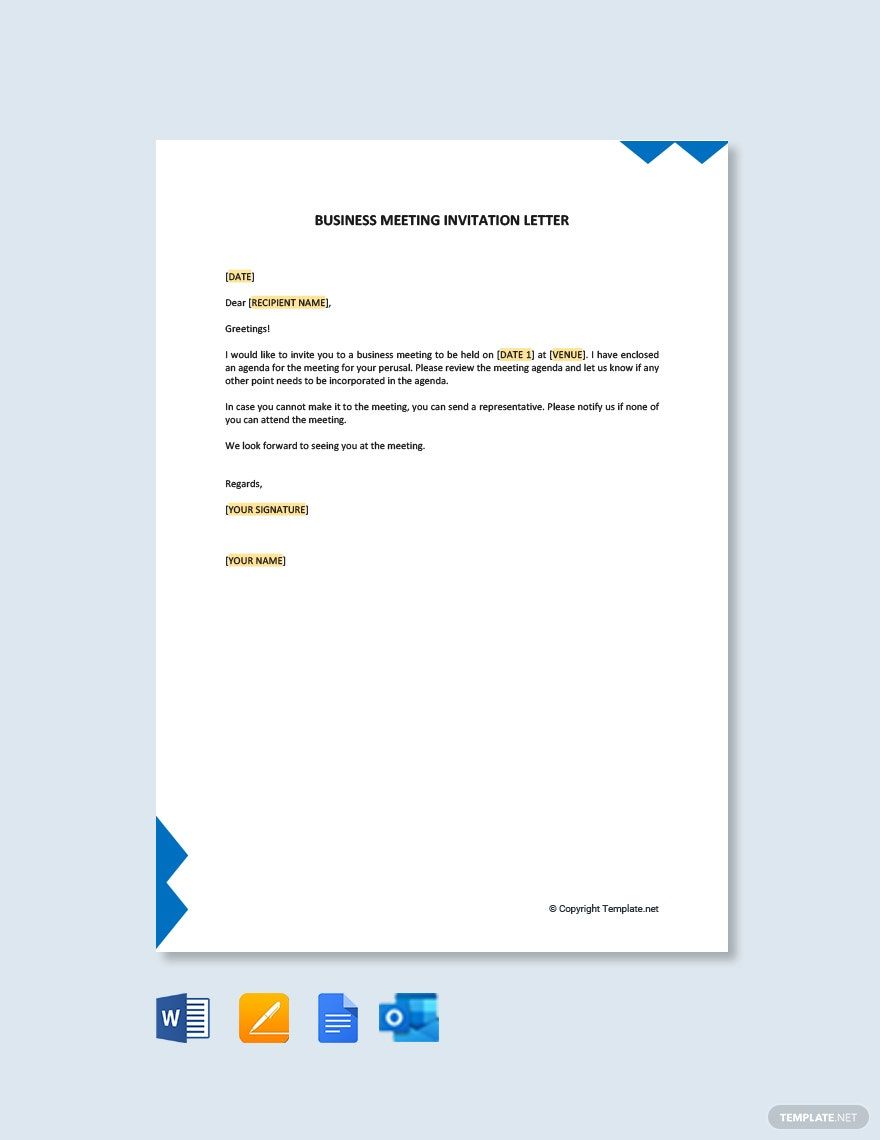
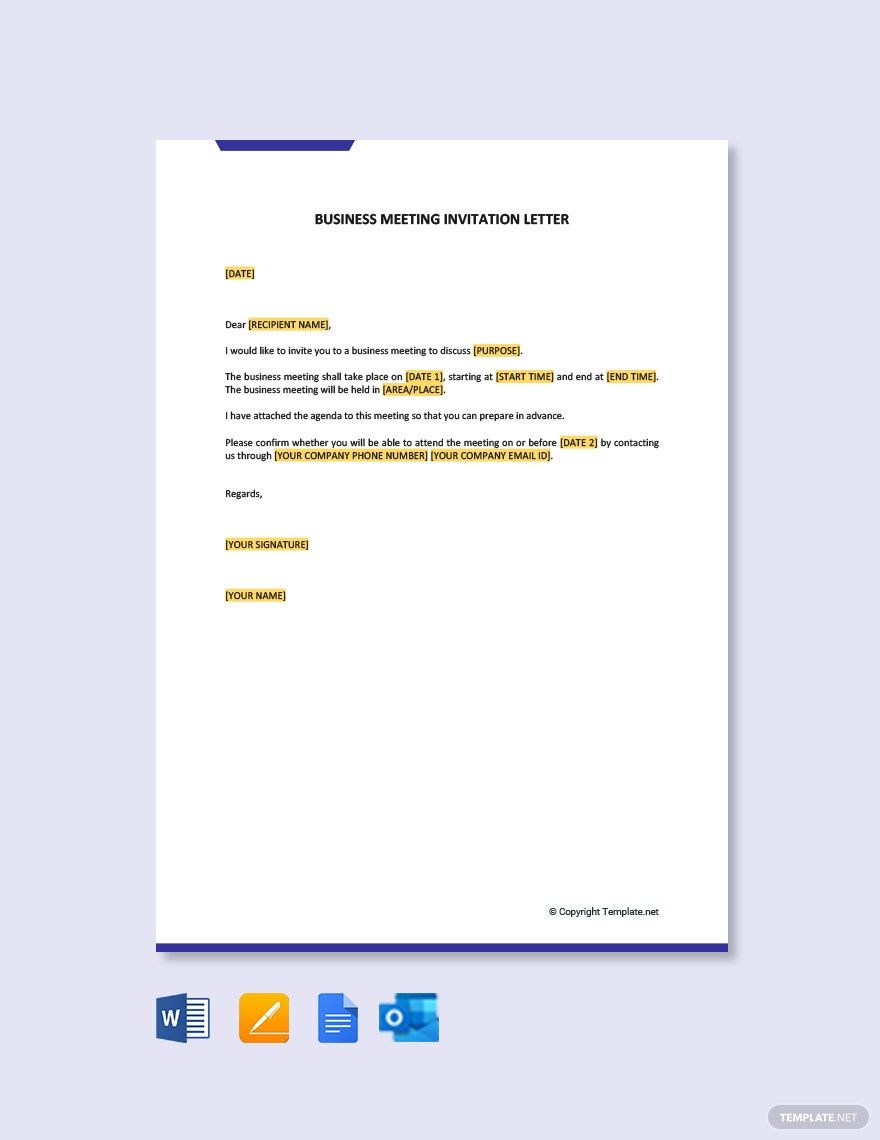
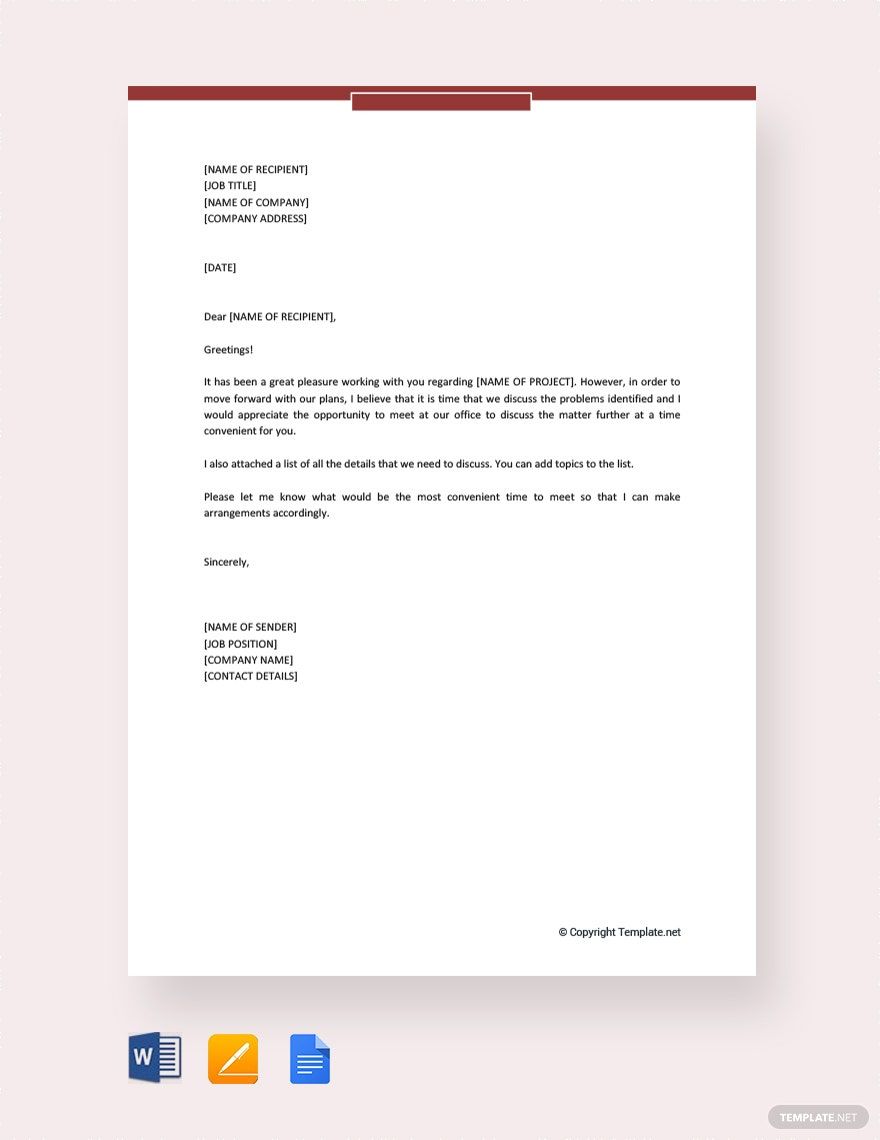
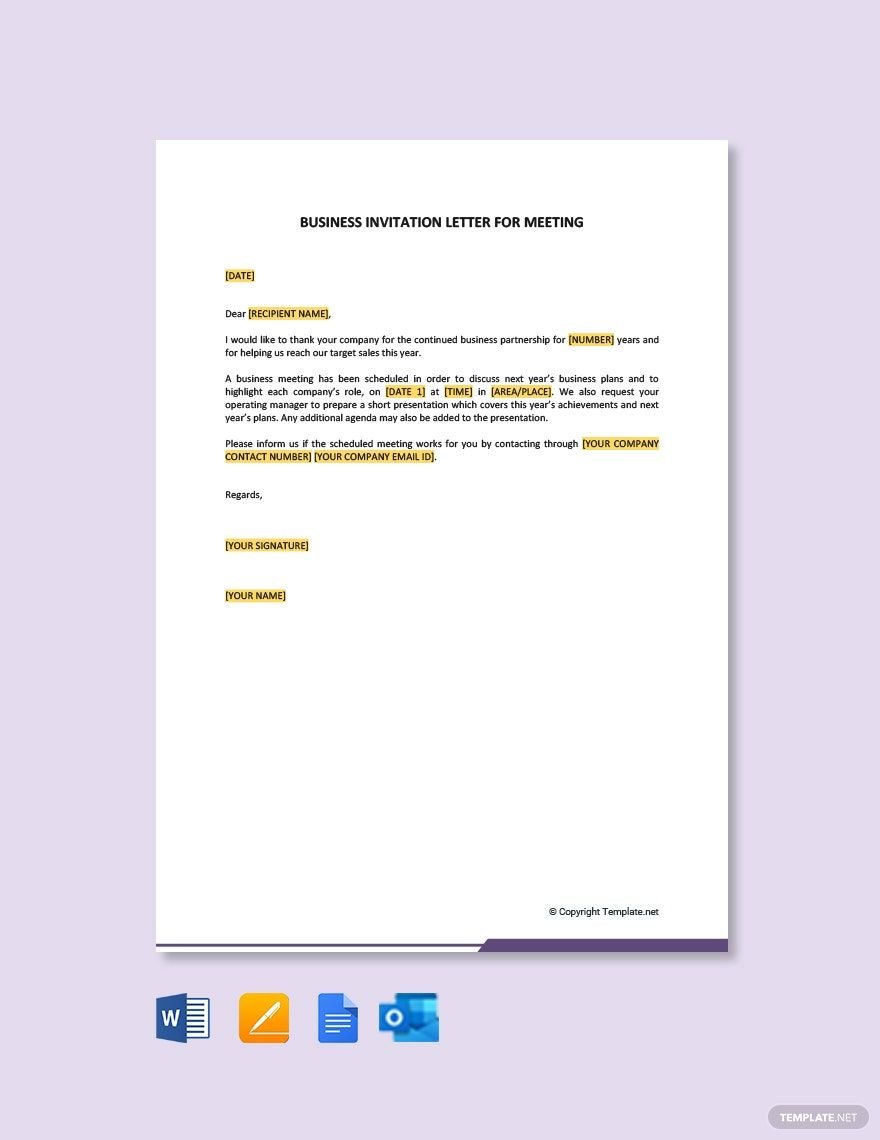
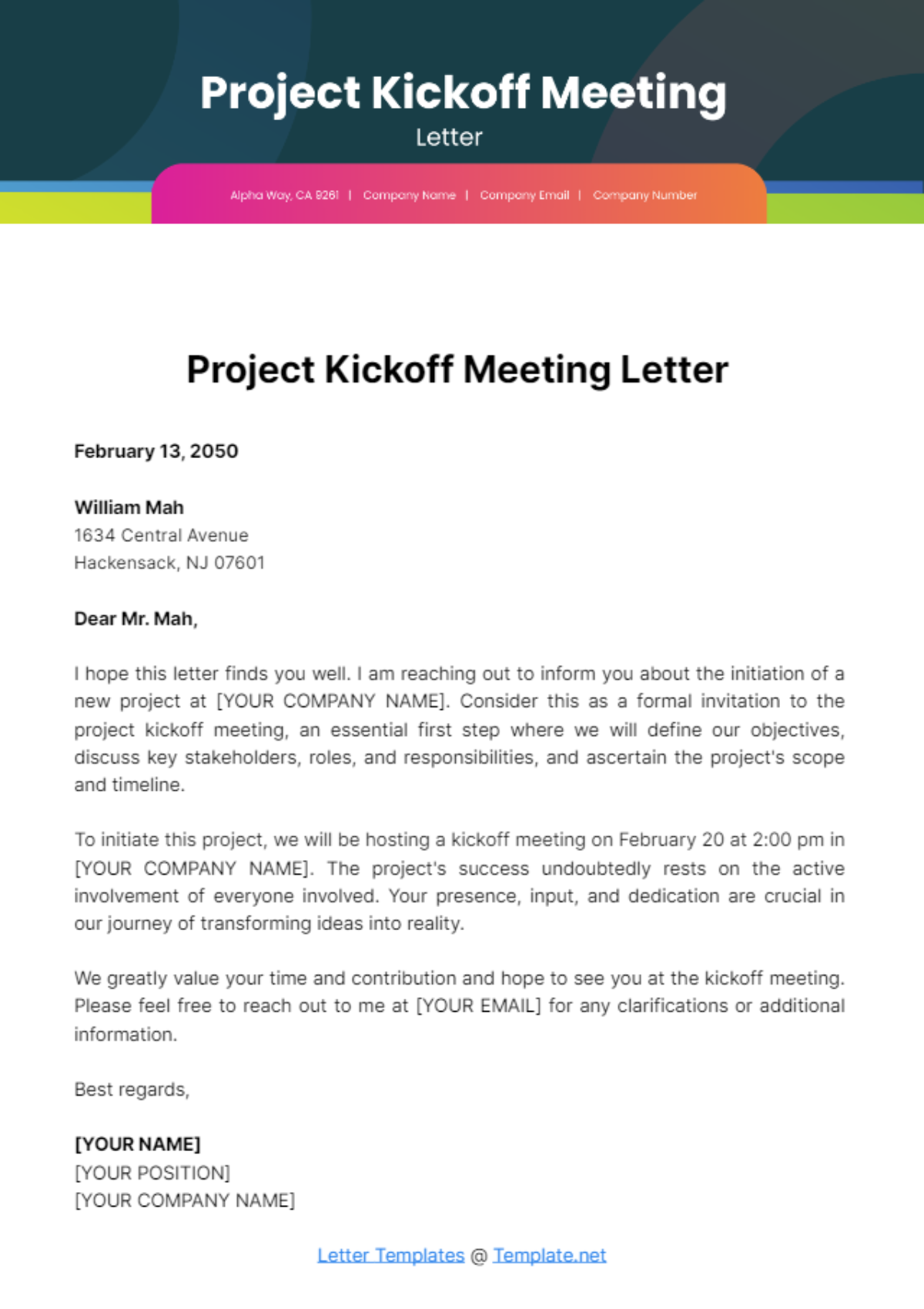
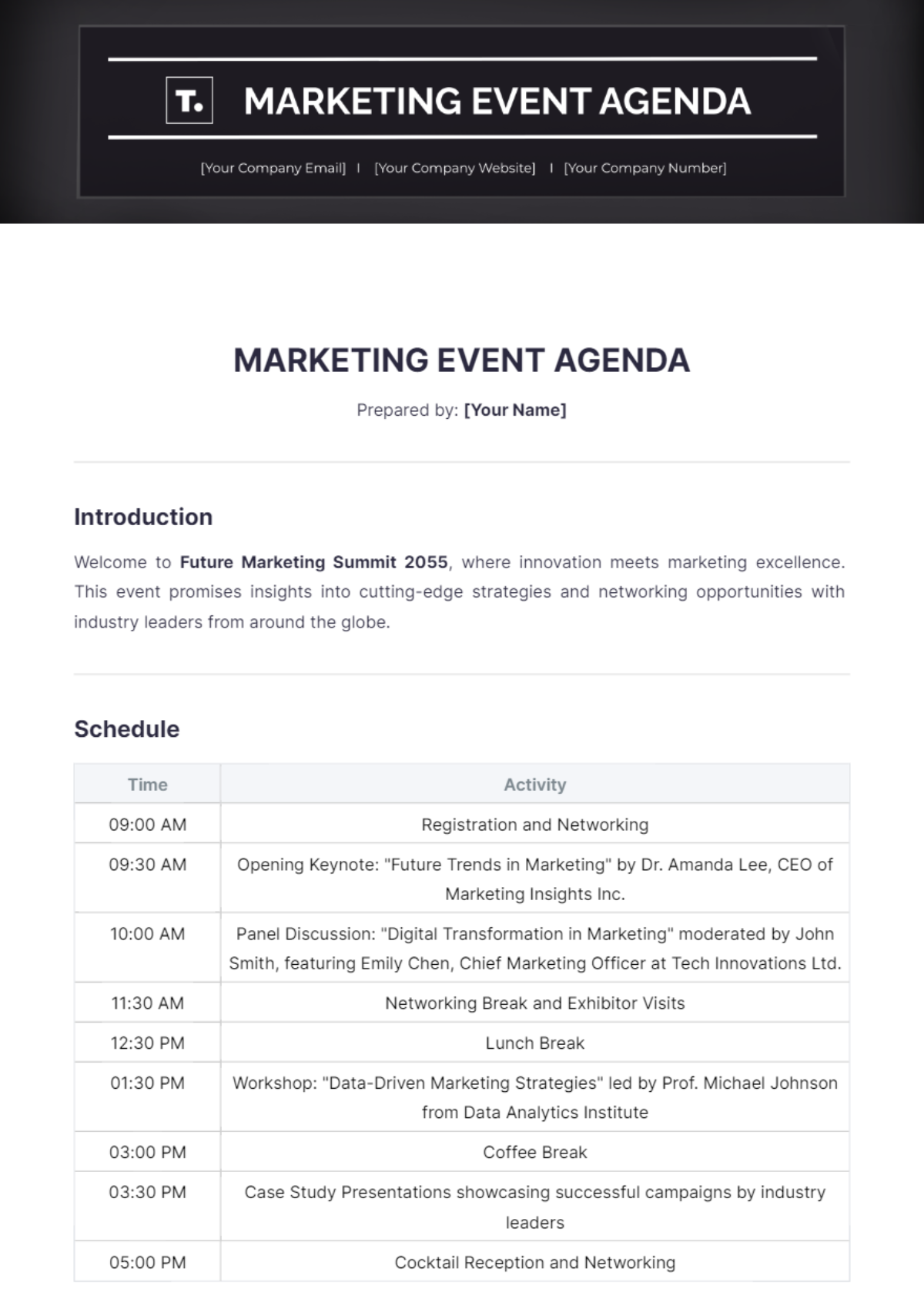
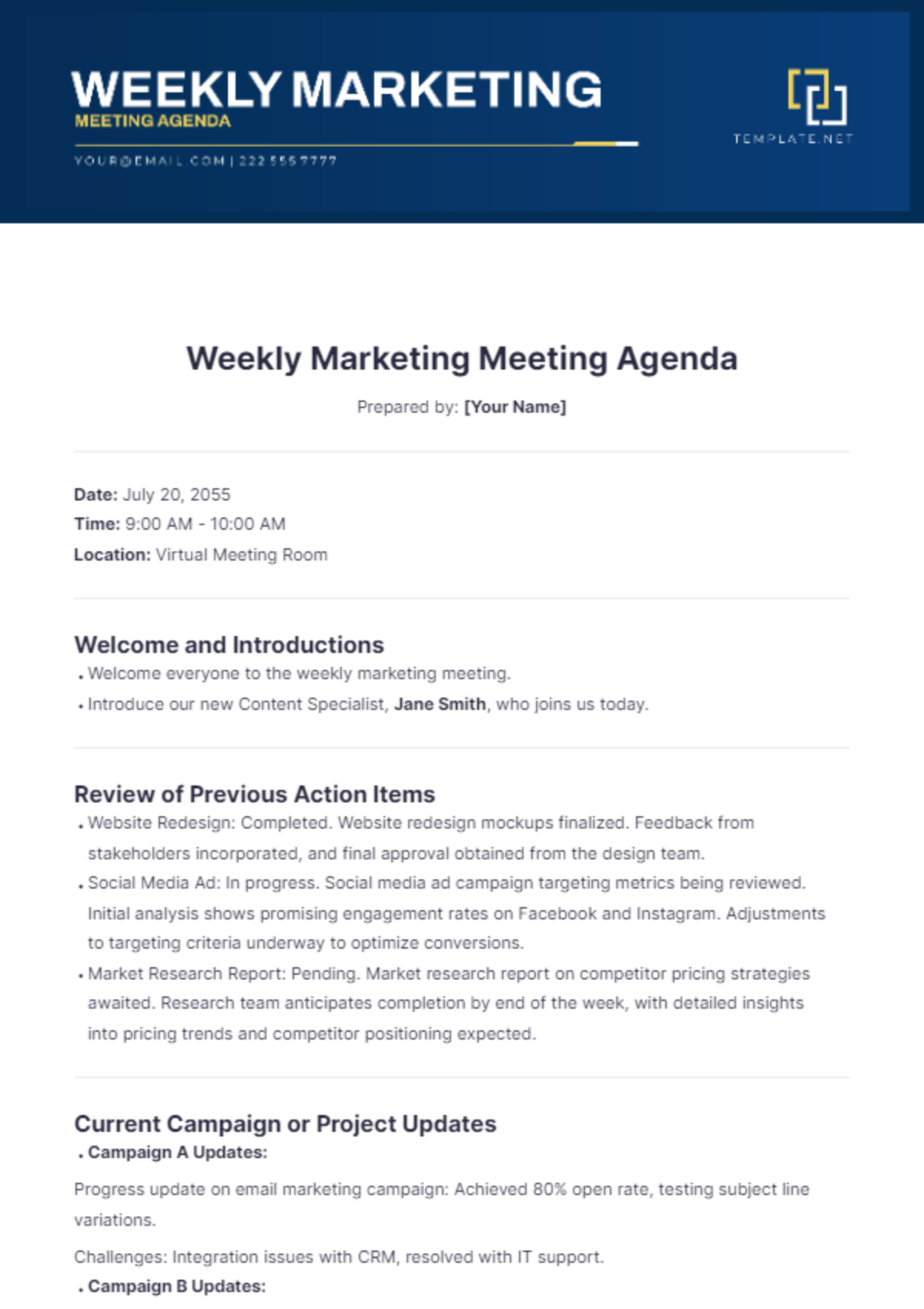
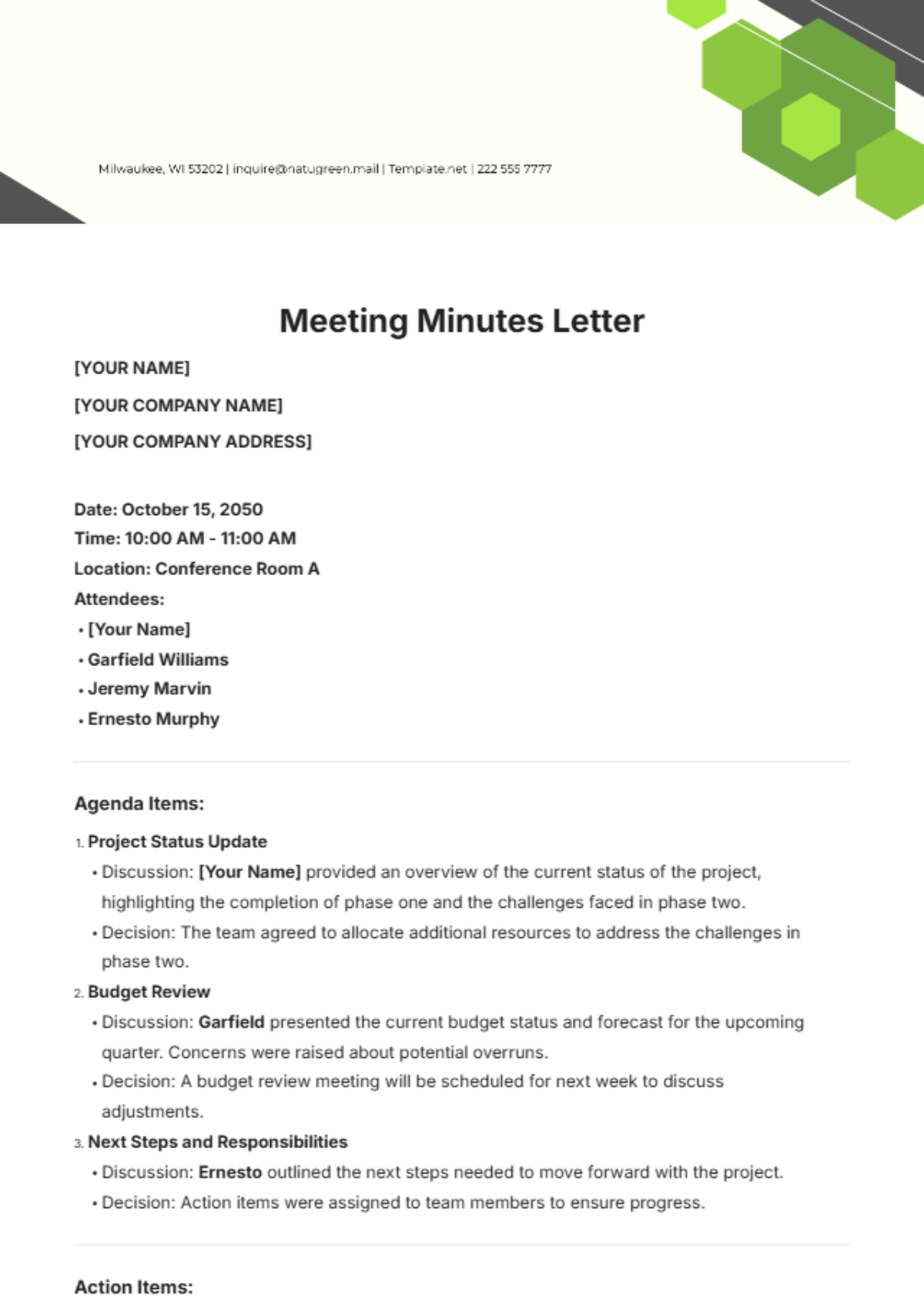
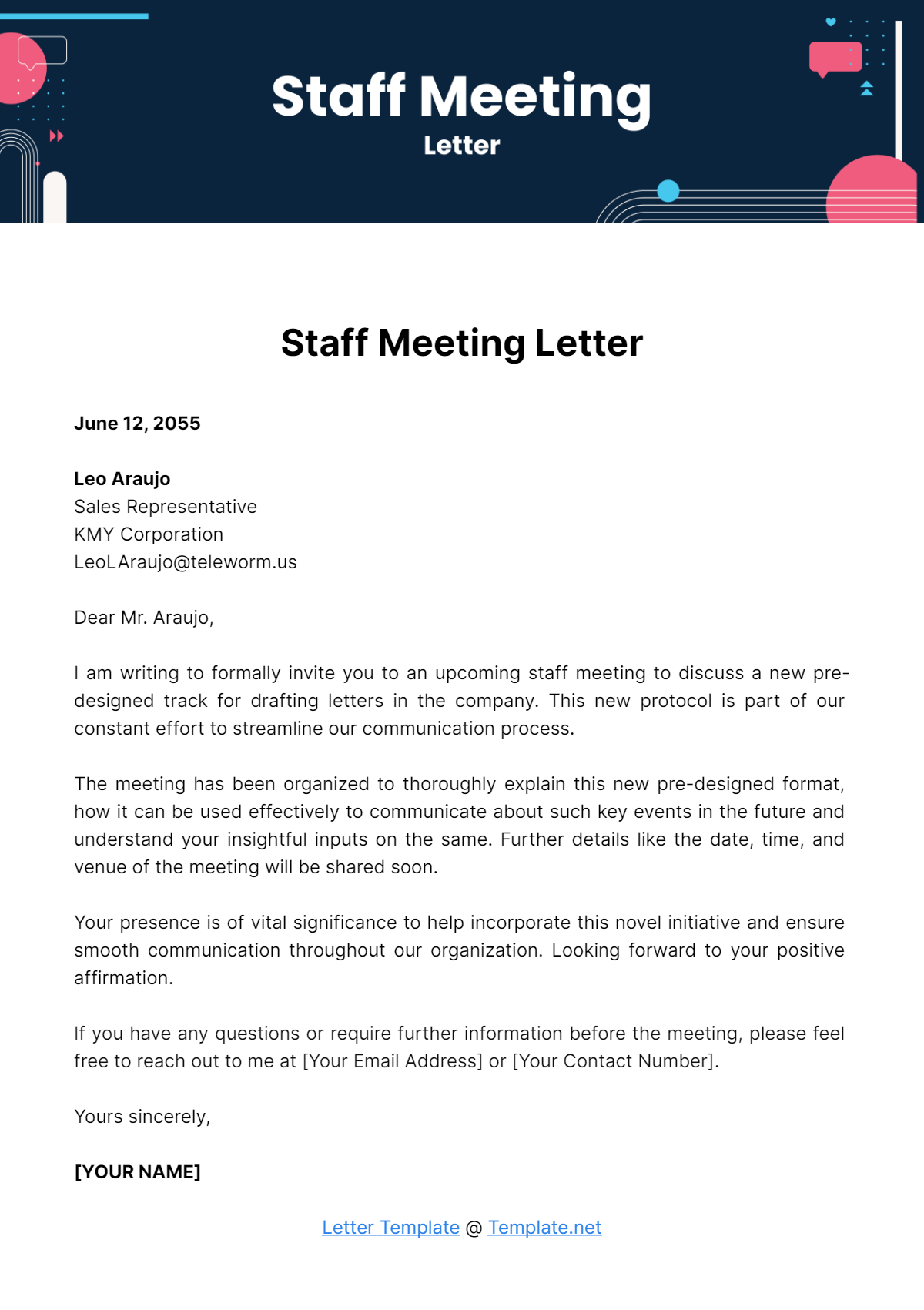
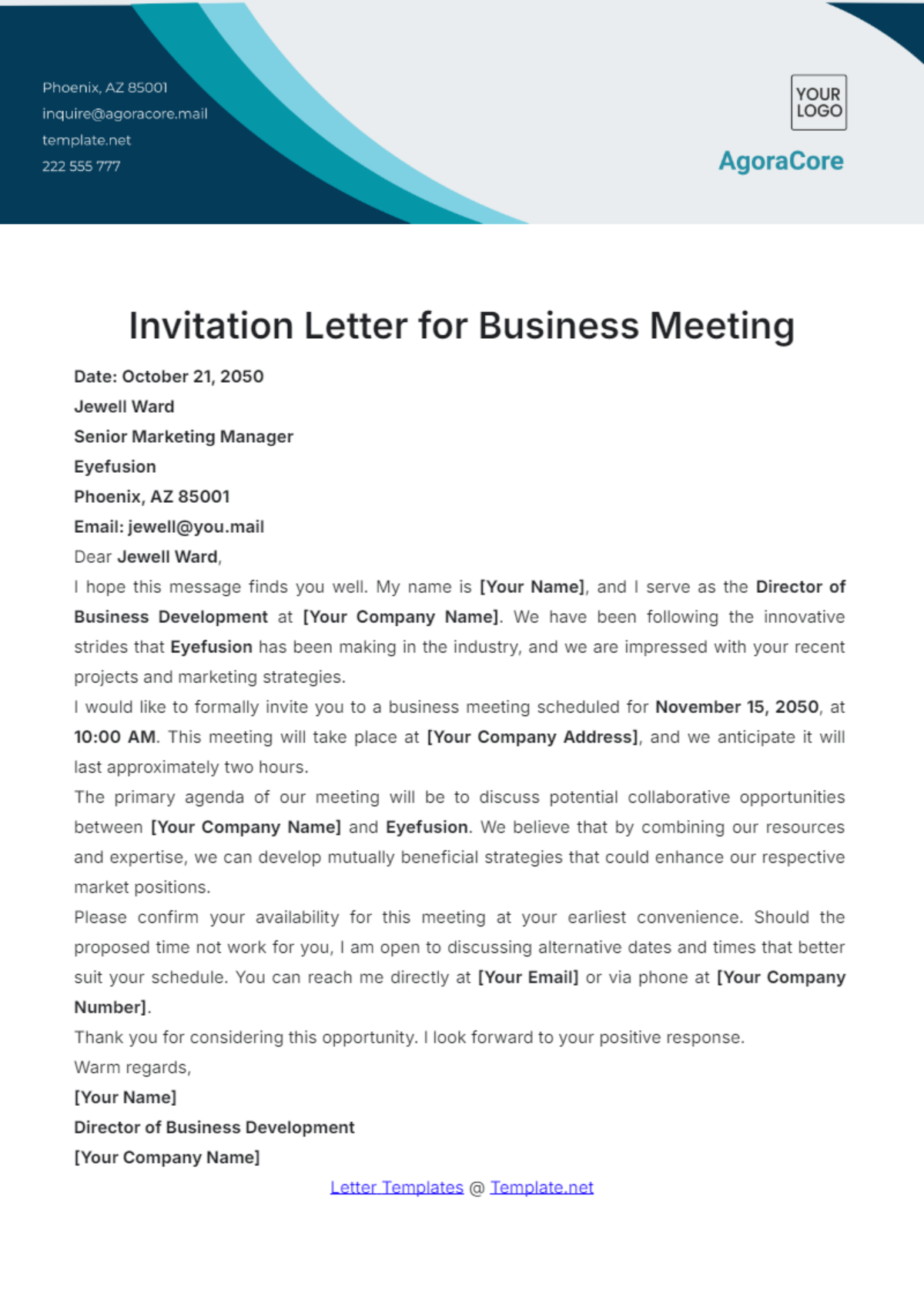
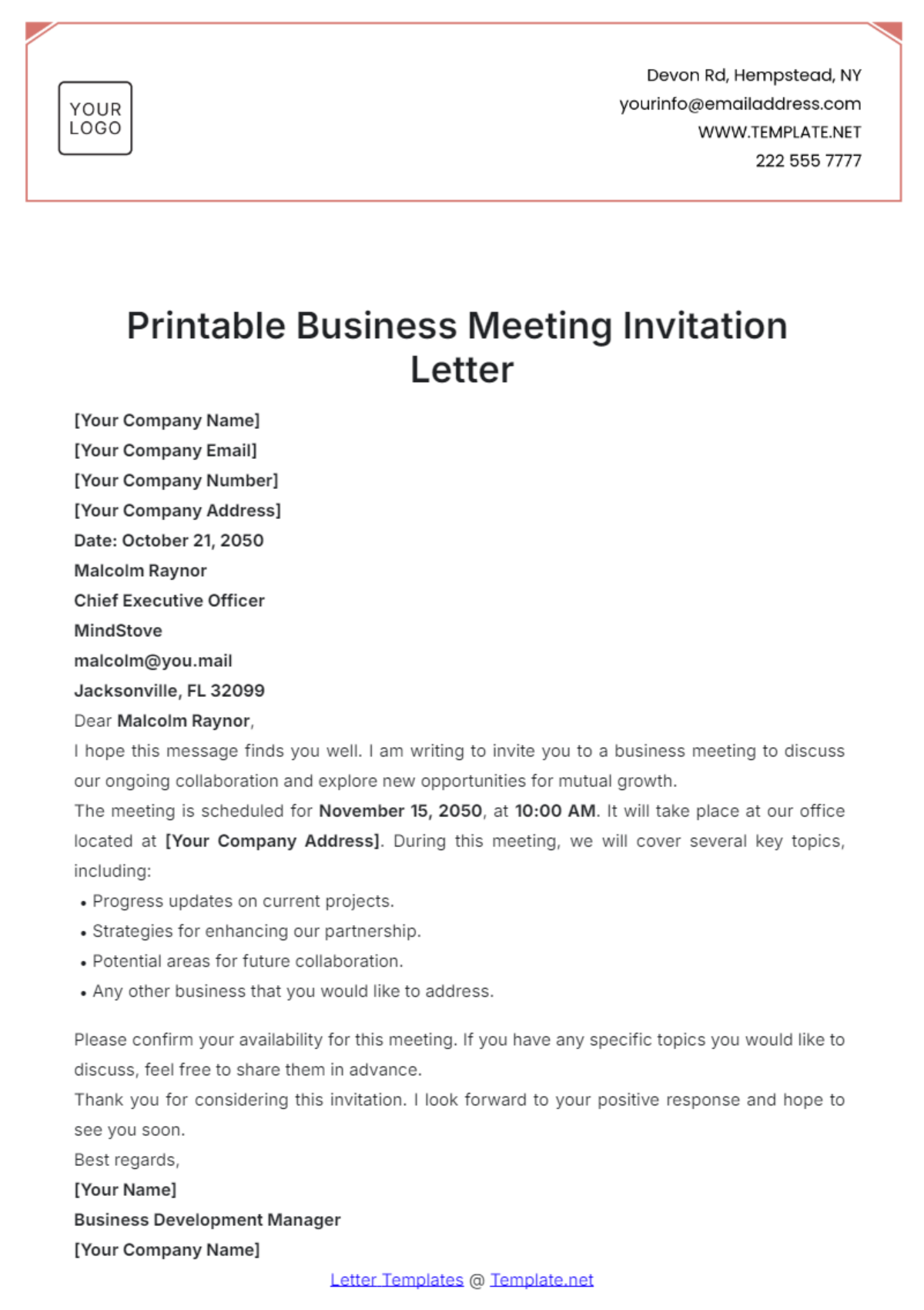
The following visual references show how a marketing meeting letter Template can vary in structure while retaining the same core purpose. Some examples emphasize formal business correspondence, while others use a simpler invitation layout with clearly separated meeting details and agenda sections. Looking at these variations is useful when deciding how much information belongs in the opening paragraph, how meeting logistics should be displayed, and how much visual branding is appropriate for the intended audience. The strongest reference is not necessarily the most decorative one; it is the layout that makes the purpose, participants, schedule, agenda, and expected response easiest to understand.
These examples can also help readers compare different approaches for internal meetings, client discussions, marketing planning, event coordination, and executive communication. Pay particular attention to hierarchy, spacing, section order, and the relationship between the meeting purpose and agenda. A useful visual reference should inspire structure rather than encourage literal copying. Adapt the wording, branding, dates, participants, and objectives to the actual meeting so the finished document remains accurate and genuinely useful.
Weekly Marketing Meeting Agenda
Source: Template.net
Marketing Event Agenda
Source: Template.net
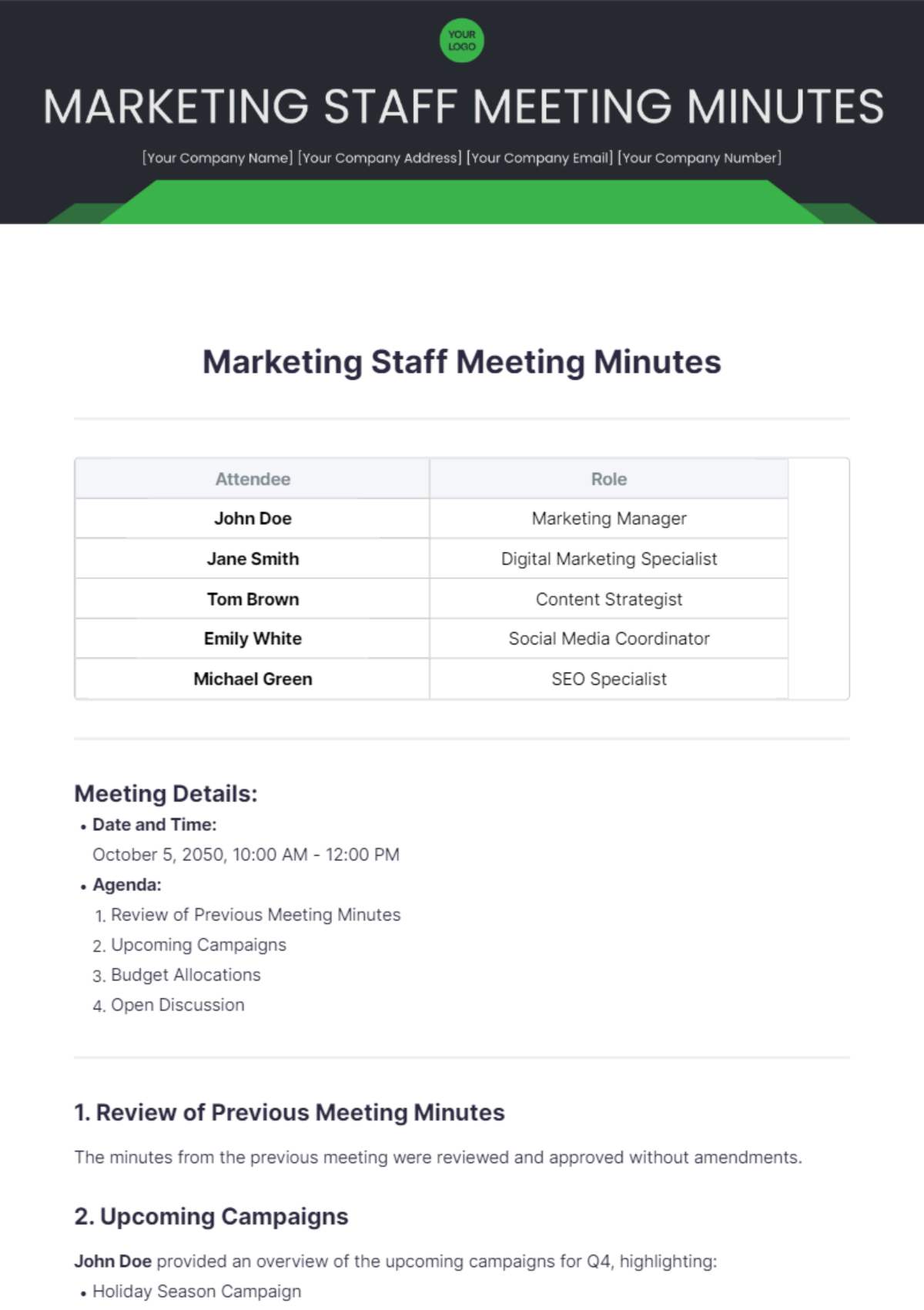
Marketing Staff Meeting Minutes
Source: Template.net
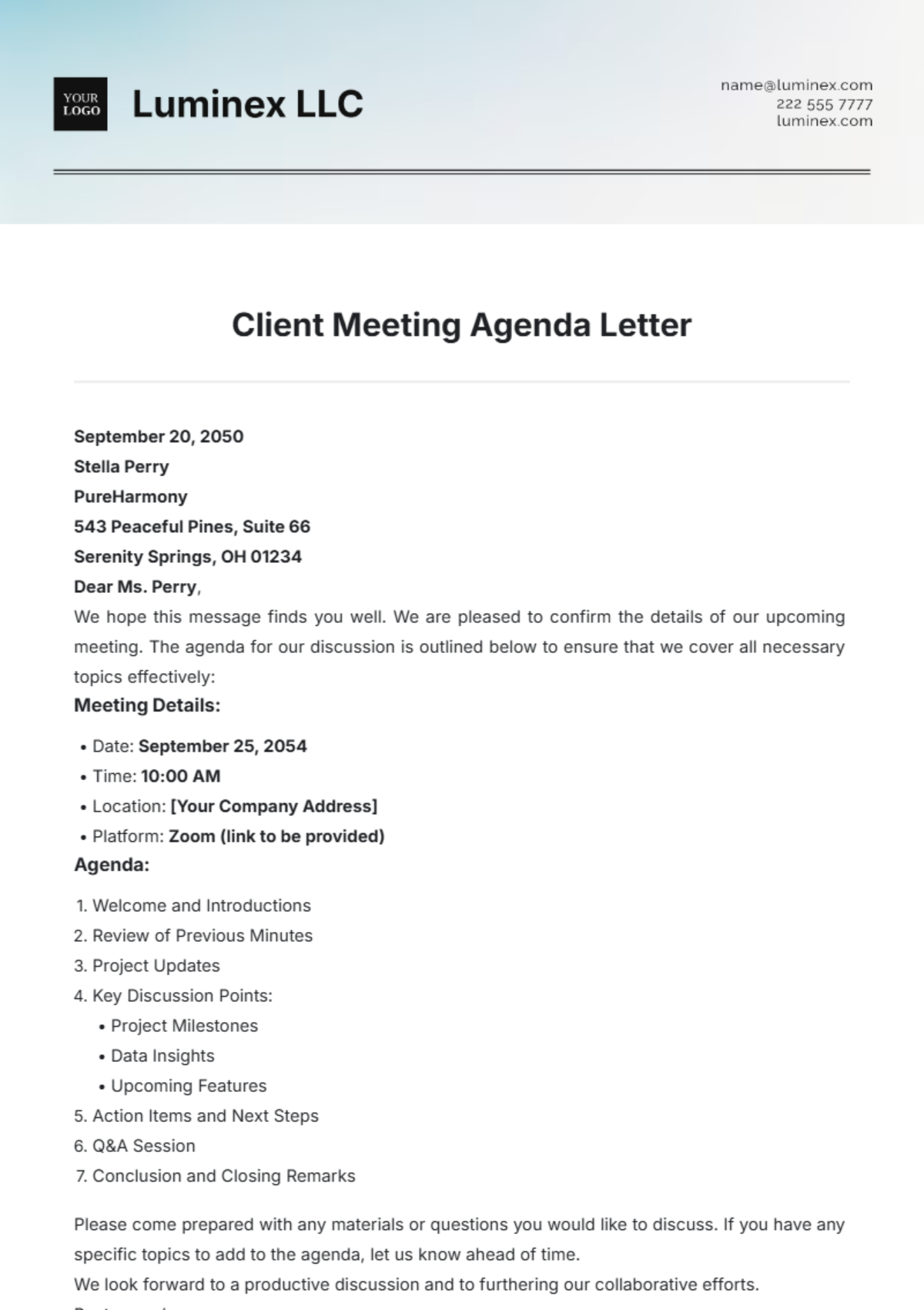
Client Meeting Agenda Letter
Source: Template.net
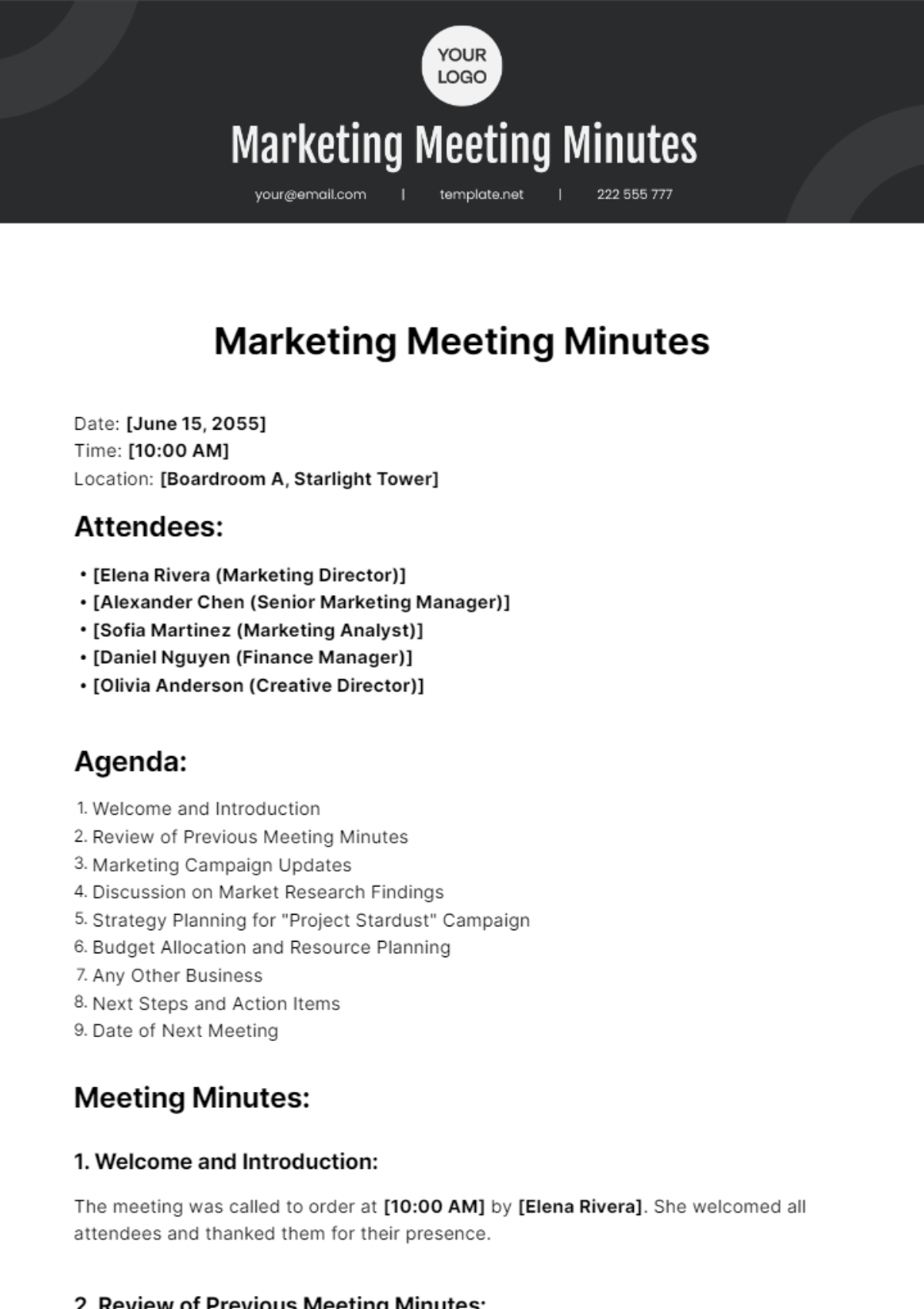
Marketing Meeting Minutes
Source: Template.net
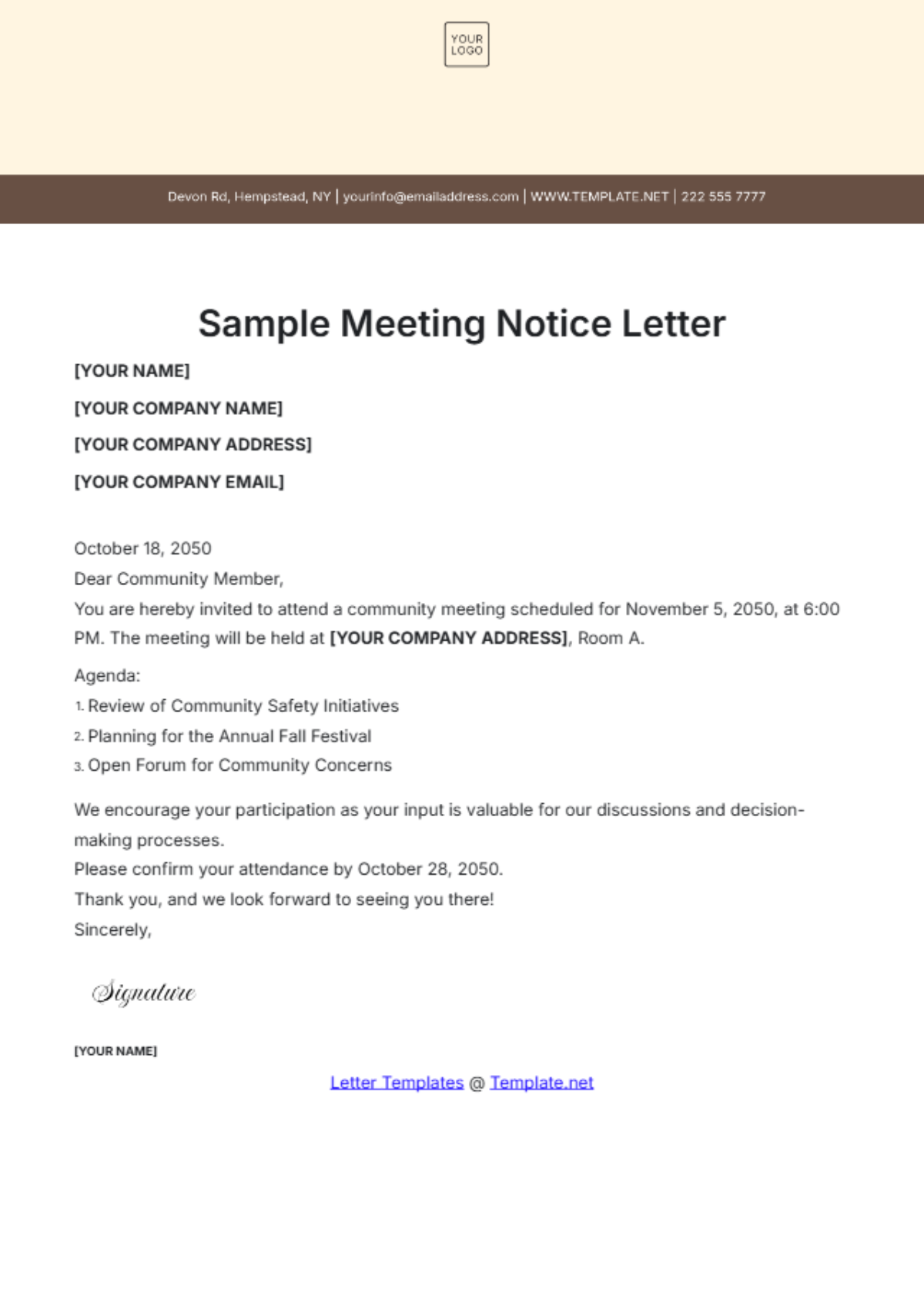
Sample Meeting Notice Letter
Source: Template.net
Meeting Minutes Letter
Source: Template.net

Project Meeting Invitation
Source: Template.net
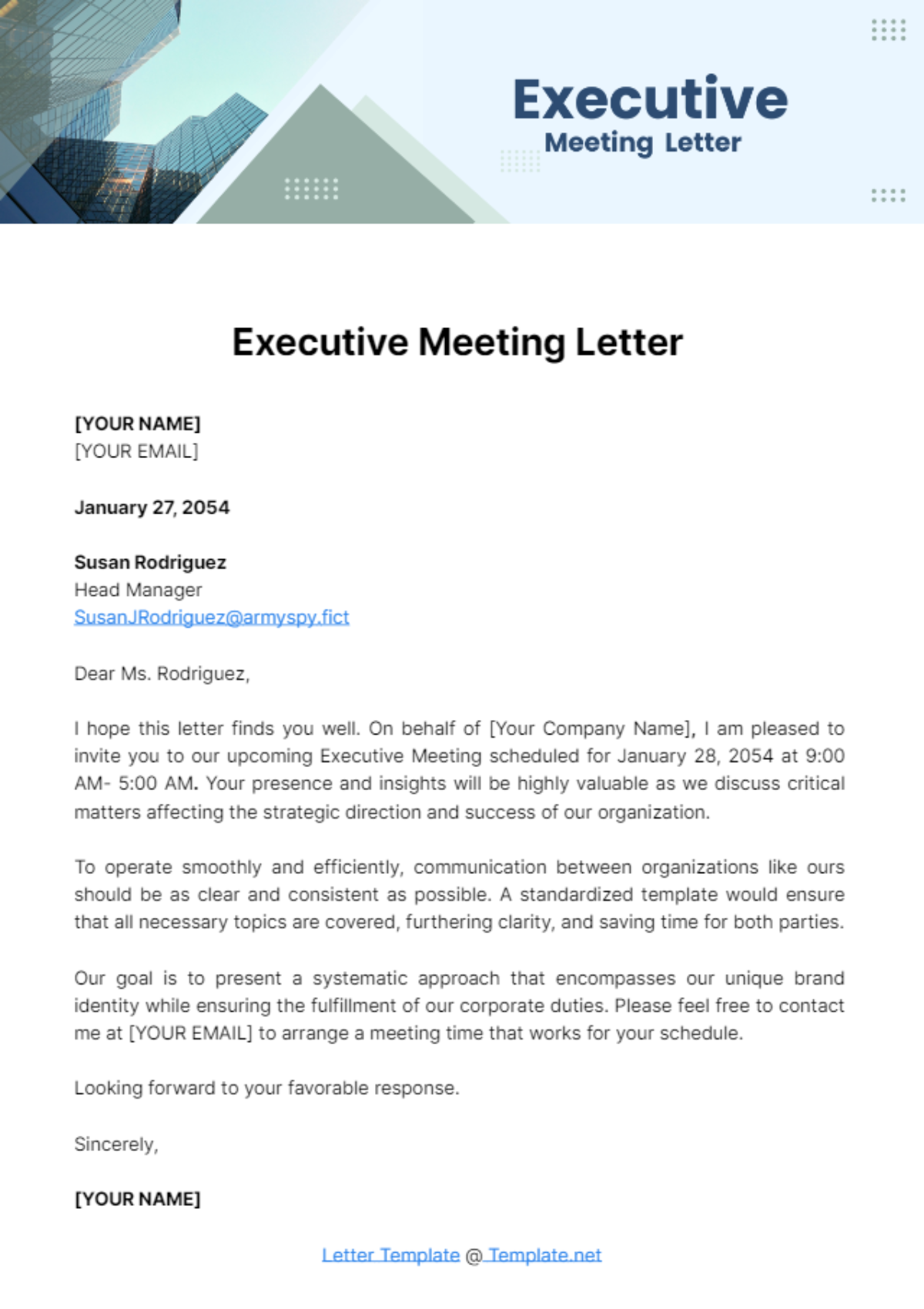
Executive Meeting Letter
Source: Template.net
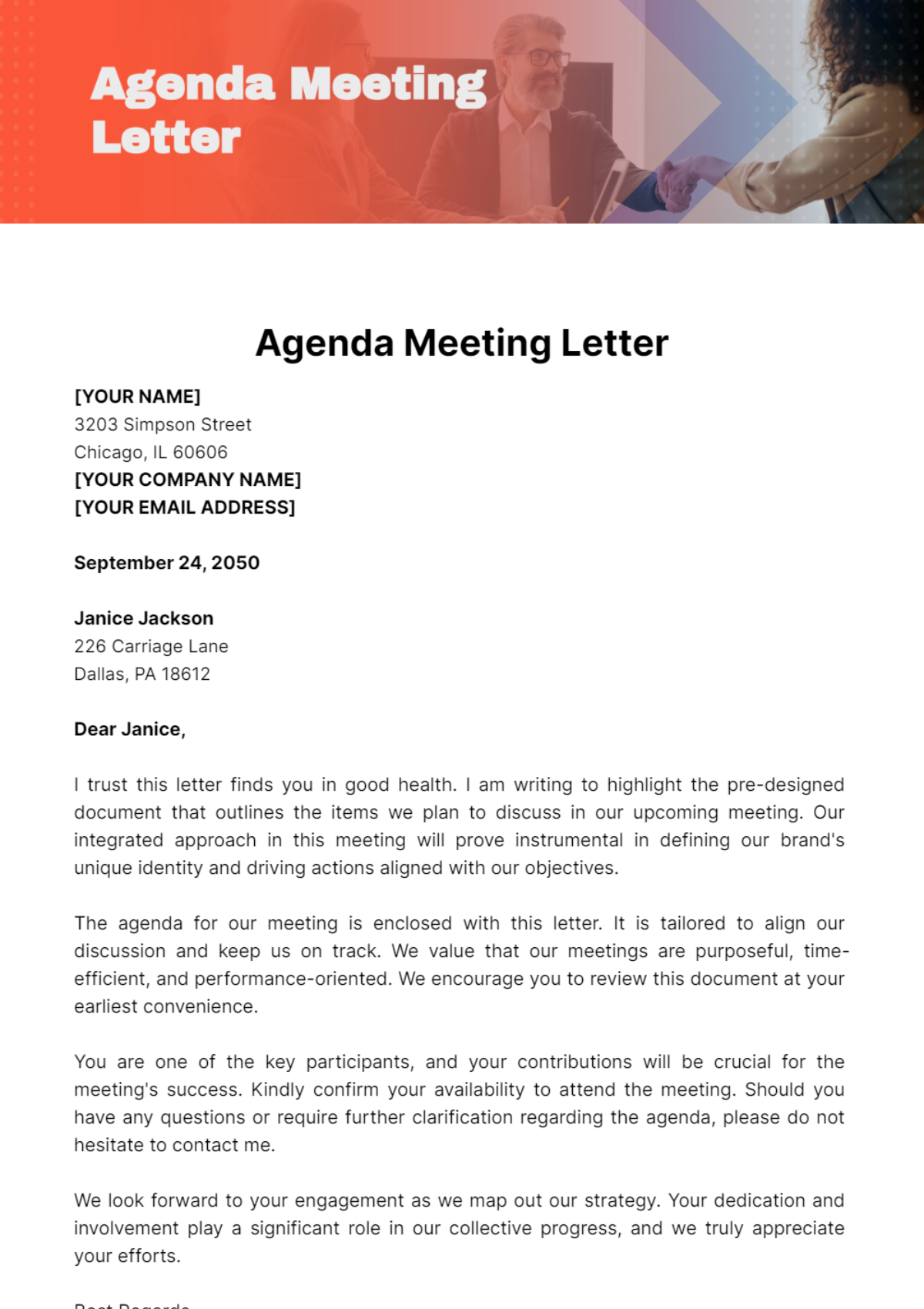
Agenda Meeting Letter
Source: Template.net
