A debt collection letter is a formal written request for payment of an outstanding balance. It can be used by a business, creditor, lender, professional adviser, or authorized collection agency when ordinary reminders have not resolved an overdue account. A well-structured letter should make the debt easy to identify, explain what is owed, state what action is requested, and give the recipient a practical way to respond.
The phrase debt collection letter Template is commonly used by people looking for a starting point that can be adapted to their circumstances. The important point is that a template should provide structure rather than replace judgment. Debt collection rules differ significantly between countries and sometimes between types of debt, so a letter that looks appropriate for one jurisdiction may not satisfy the requirements of another.
This article explains the essential components of a collection letter, shows how to adapt the wording for different situations, discusses UK, Australian, and US considerations, and provides practical examples of payment demands, dispute responses, verification requests, settlement proposals, and payment arrangements. The goal is a letter that is specific, professional, accurate, and proportionate rather than unnecessarily aggressive.
What a debt collection letter should accomplish
The primary purpose of a collection letter is to turn an unclear payment problem into a clearly documented communication. The recipient should be able to determine who is contacting them, which account is involved, how the amount was calculated, why the amount is due, what response is expected, and how to raise an error or dispute. Those details reduce avoidable back-and-forth and make the correspondence easier to understand.
A useful letter also creates a written record. Dates, account references, invoices, previous communications, payment history, and supporting documents can become important if the parties later disagree about the balance or the steps taken to resolve the account. The letter should therefore be factual rather than emotional. Statements should be limited to information that can be supported by contracts, invoices, account records, correspondence, or other appropriate evidence.
Another important objective is proportionality. A first reminder for a recently overdue invoice does not need the same tone as a final demand after repeated notices. Likewise, a creditor should not describe legal consequences as certain when legal proceedings have not actually been started. A strong collection letter is firm because it is precise, not because it uses intimidating language.
Core elements of a strong collection letter
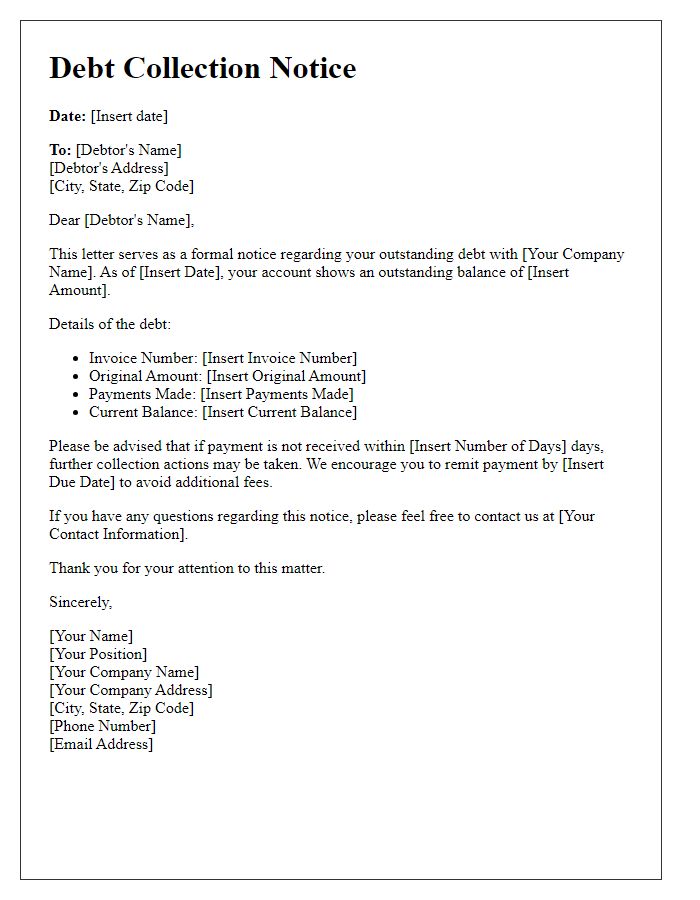
A practical letter debt collection template normally begins with the sender’s details, recipient’s details, date, account or invoice reference, and a concise subject line. These identification fields matter because a recipient may have multiple accounts or may need to verify that the communication is genuine. If a collection agency is involved, the relationship between the agency and the original creditor should be explained accurately.
The body should then identify the debt. State the original amount, relevant invoice or account number, due date, payments already received, credits, adjustments, interest or charges where legitimately applicable, and the resulting balance. Avoid presenting a single unexplained figure when the recipient could reasonably question how it was calculated. An itemized explanation is particularly useful when the account has been outstanding for a long time.
The final substantive part should explain what happens next. This might be a request for payment by a specified date, an invitation to contact the sender to discuss an arrangement, a request for supporting documents, or a notice of intended escalation where that step is legally and factually justified. The letter should also identify a reliable contact channel for questions and disputes.
- Sender name, business name, address, and relevant contact information.
- Recipient name and address or other identifying information appropriate to the circumstances.
- Date of the letter and a clear account, invoice, or reference number.
- Original creditor or supplier, where different from the sender.
- Description of the debt and the underlying transaction or agreement.
- Current balance and a clear explanation of material adjustments.
- Payment instructions or a method for proposing an arrangement.
- A reasonable response date where a deadline is appropriate.
- Instructions for raising an error or disputing the debt.
- Name and position of the person or organization responsible for correspondence.
How to structure the opening of the letter
The opening should immediately establish the reason for writing. A subject such as “Outstanding account balance — reference 10482” is generally more useful than a vague heading. The first paragraph can state that the account remains unpaid, identify the relevant invoice or agreement, and briefly explain the status of previous reminders.
Identification should be specific enough to prevent confusion but restrained enough to protect personal information. For an individual consumer, avoid putting unnecessary sensitive information into a letter. For a business account, include the company name, invoice number, purchase order where relevant, and the original due date. When several invoices make up one balance, provide a short list or attachment rather than forcing the reader to reconstruct the account history.
The opening should also avoid assumptions about why payment was missed. Saying that an account “remains outstanding” is factual. Saying that the recipient “refused to pay” may be inaccurate if the recipient has never received the invoice, has already paid it, or disputes the underlying transaction. Neutral wording keeps the correspondence professional and leaves room for legitimate explanations.
How to describe the amount owed
The amount claimed is usually the most important factual component of a collection letter. Start with the original principal or invoice value and then explain relevant payments, credits, interest, contractual charges, or other adjustments. If a fee is included, the sender should be able to identify the contractual or legal basis for that charge rather than simply adding an unexplained amount.
Consider using a simple narrative such as: “Invoice 1847 for services supplied on 10 June was originally £2,400. A payment of £900 was received on 3 July, leaving £1,500 outstanding.” This is clearer than simply stating that “£1,500 is overdue.” Where several invoices are involved, a separate account statement can provide the detailed reconciliation while the letter summarizes the overall balance.
Accuracy becomes even more important when the debt has been assigned or transferred. The recipient may reasonably want to know the original creditor, the current claimant, and the basis on which the current sender is entitled to seek payment. If ownership or authority is disputed, the correspondence should address that issue rather than treating it as irrelevant.
Choosing the right tone
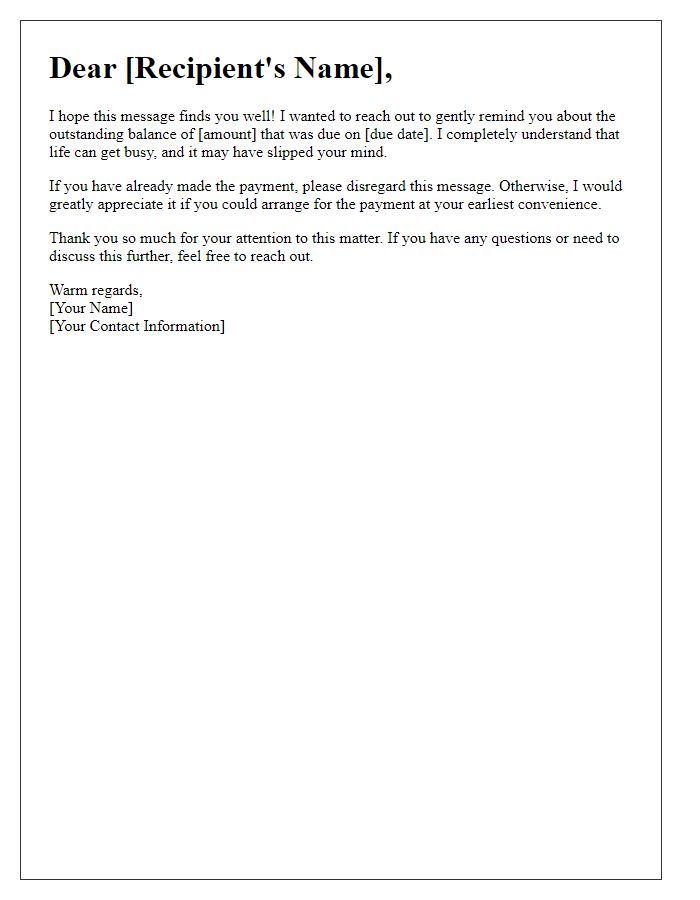
A collection letter should be firm without being hostile. A polite reminder can say that payment is requested by a stated date and that the recipient should contact the sender if the account has already been settled. A later-stage demand can be more direct, but it should still distinguish between an intended future step and an action that has already occurred.
Threatening language can weaken a letter when it is exaggerated or unsupported. Avoid statements suggesting that someone will definitely lose property, be arrested, have wages taken, or face immediate court action unless the statement is legally accurate and genuinely applicable. Different jurisdictions place different limits on debt collection conduct, and a generic template should never be treated as universal legal wording.
The best tone is usually factual, respectful, and specific. It recognizes that errors happen and gives the recipient a clear route to explain an issue. That approach can also make voluntary resolution more likely because the recipient can see exactly what is being requested without having to interpret emotional or ambiguous language.
Creating a payment deadline
A deadline gives the letter a practical purpose. It should be expressed as a specific date or a clearly defined period when the applicable rules permit that approach. Avoid vague phrases such as “pay immediately” when a precise response date would be clearer. The appropriate period can depend on the type of communication, contractual terms, jurisdiction, and any applicable pre-action or regulatory requirements.
The deadline should also be realistic. If the recipient needs to review records, raise a dispute, or propose a repayment arrangement, a deadline that is unnecessarily short may create additional correspondence rather than resolve the account. A collection process should allow enough time for the recipient to understand the claim and respond through the stated channel.
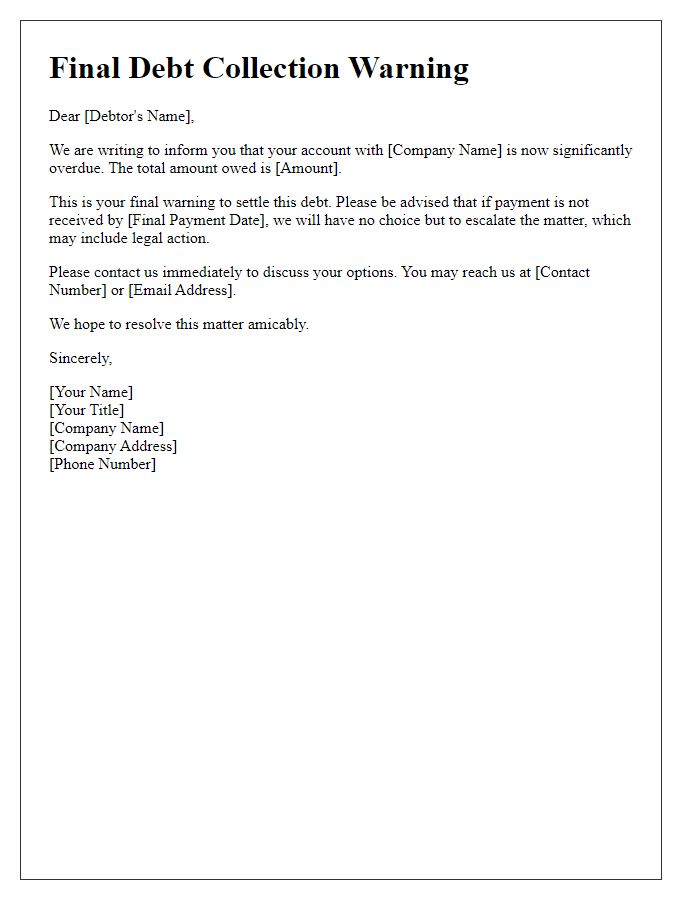
Where legal proceedings are genuinely contemplated, do not simply copy a generic “final warning” paragraph into the letter. Confirm which pre-action procedure applies and whether the required information, forms, statements, or response periods have been satisfied. In England and Wales, for example, the Civil Procedure Rules include a specific Pre-Action Protocol for Debt Claims, so a generic collection letter should not automatically be treated as a compliant Letter of Claim.
UK considerations for a debt collection letter
People searching for a debt collection letter template uk should first identify whether the situation involves a consumer, a business, regulated credit, an ordinary commercial debt, or contemplated court proceedings. These distinctions matter because different rules can apply. In England and Wales, the Pre-Action Protocol for Debt Claims establishes a formal process for certain claims by businesses or organizations against individuals, including information that should accompany a Letter of Claim and a response period.
The Justice UK material states that the Debt Claims protocol includes a Letter of Claim process and provides a 30-day period before court proceedings may be started if the debtor does not respond, subject to other applicable obligations. That does not mean every collection letter must automatically provide the same wording or that the protocol applies to every debt. The exact scope and circumstances should be checked before legal escalation.
For regulated consumer credit matters, the Financial Conduct Authority’s Consumer Credit sourcebook also contains requirements concerning customers in or approaching arrears or default. Current FCA guidance emphasizes fair treatment, forbearance, due consideration, and clear information about a customer’s financial position and options. A template intended for UK use should therefore be adapted to the particular regulatory setting rather than copied without review.
Australian considerations
A search for a debt collection letter template australia should be approached with the same caution. Australian debt collection is affected by consumer protection law, credit regulation, privacy principles, and rules governing collection conduct. The Australian Competition and Consumer Commission and Australian Securities and Investments Commission jointly publish guidance for creditors, collectors, and debtors.
The ACCC and ASIC debt collection guideline is designed to explain how Commonwealth consumer protection laws apply to collection activity and includes guidance for both collectors and people dealing with debt collectors. The appropriate wording of a letter can therefore depend on whether the sender is the original creditor, an external collector, a financial service provider, or another party.
An Australian collection letter should make the debt identifiable, communicate the requested action clearly, and avoid misleading or coercive statements. If the recipient disputes the amount, identity of the debtor, authority to collect, or underlying transaction, the correspondence should provide an appropriate path for that issue to be investigated rather than treating disagreement as proof of non-cooperation.
US considerations and validation information
In the United States, a collection letter may have additional significance because federal debt collection rules can require specific validation information from covered debt collectors. The Consumer Financial Protection Bureau explains that validation information generally includes the creditor’s name, the amount of the debt, an itemization of relevant amounts, information about disputing the debt, and a deadline connected with the federal dispute process.
For covered debts, the federal rule generally gives a consumer 30 days after receiving the required validation information to dispute the debt in writing. If a timely written dispute is made, the collector must follow the applicable procedures before continuing collection of the disputed amount. State laws may provide additional protections, so a general template should not be presented as a universal legal form.
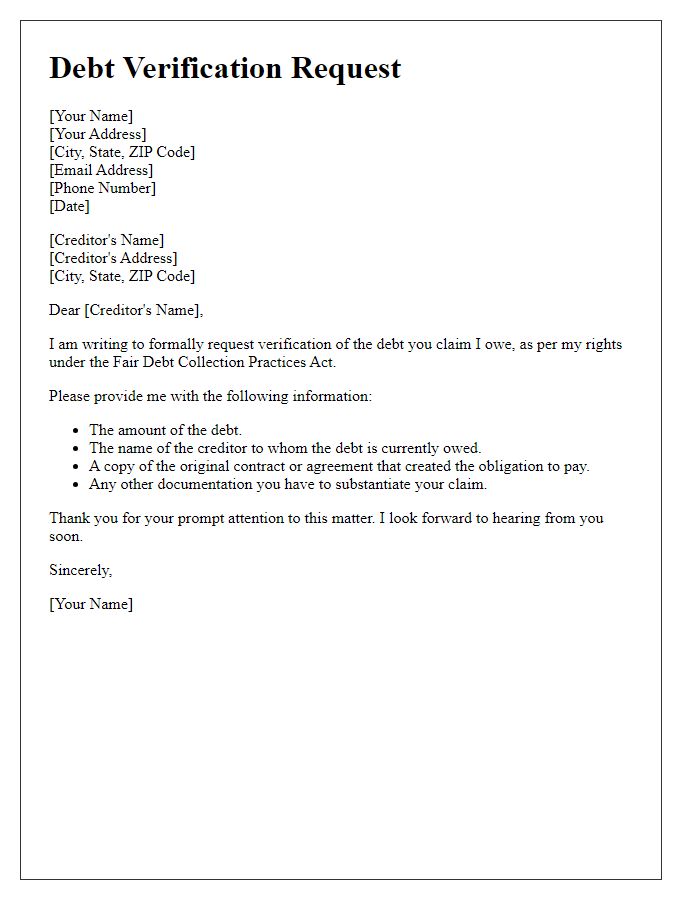
This distinction is important when creating a debt collection response letter template. A response to a collection notice is not necessarily the same document as the collector’s initial validation notice. The recipient might dispute the entire debt, dispute only the amount, request additional information, report that the debt has already been paid, or ask for a different communication method. The letter should clearly state which issue is being raised.
Writing a dispute or verification response
A person who does not recognize a debt should not casually admit that the balance is correct merely to begin a conversation. A written response can state that the debt is disputed and request information needed to evaluate the claim. Depending on the jurisdiction and circumstances, useful information may include the original creditor, account reference, transaction history, agreement, payments, credits, and evidence establishing the sender’s authority to collect.
The response should distinguish between “I do not owe this debt” and “I need more information before I can determine whether this debt is accurate.” Those statements communicate different positions. If only part of the amount is disputed, identify the disputed portion and explain why. If the account has already been paid, provide the payment date and supporting record where available.
Keep copies of the original collection notice, the response, attachments, delivery evidence, and later communications. A chronological record can make it much easier to demonstrate what was disputed, what information was requested, and whether the sender or recipient responded. This is useful whether the matter is ultimately resolved through payment, correction, negotiation, or formal proceedings.
Payment plans and negotiated arrangements
Not every collection problem requires an immediate demand for the entire balance. Where the recipient accepts the debt but cannot pay it in one amount, the parties may discuss an installment arrangement if appropriate. A written payment plan should specify the total balance, installment amount, payment frequency, first payment date, subsequent due dates, accepted payment method, and what happens if a payment is missed.
Do not describe a proposed arrangement as an agreed agreement until both sides have actually accepted it. A proposal might say, “I propose six monthly payments of £250 beginning on 1 October.” A confirmed arrangement can instead state that the parties have agreed to those terms. The distinction is important because correspondence should accurately reflect the status of negotiations.
If a settlement is being proposed for less than the claimed balance, the letter should state exactly what amount is being offered and what the parties intend to happen after that amount is paid. The wording should not imply that a reduced amount completely resolves the debt unless the creditor has actually agreed to that condition. Settlement terms should be recorded carefully because misunderstandings at this stage can create a second dispute.
Using Word and PDF formats effectively
A debt collection letter template word format is useful when the sender expects to edit fields, adjust the wording, insert a company header, or maintain a reusable internal document. An editable document should nevertheless be checked before every use. Old account numbers, dates, recipient names, balances, bank details, and previous-deadline language are common sources of avoidable mistakes.
A debt collection letter template pdf is more useful when the document needs to preserve its layout for recordkeeping or transmission. Before sending a PDF, check that the final amount, date, recipient, reference number, and attachments are correct. If a document is generated from a Word source, inspect the final rendered pages rather than assuming the conversion preserved every field correctly.
Searches for a debt collection letter template word pdf often reflect the practical desire to have both an editable master and a fixed final version. A sensible workflow is to keep one controlled master document, make a case-specific copy, verify every variable field, review the legal wording applicable to the matter, and then create the final record. The objective is consistency without allowing an old template to become a substitute for current review.
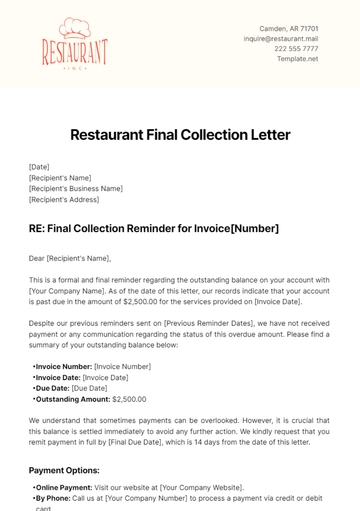
What makes a useful template reusable
A reusable template should separate stable structure from variable case information. Stable elements might include the sender’s business identity, correspondence style, contact details, and standard instructions for raising questions. Variable fields should include the recipient, account reference, debt amount, dates, transaction description, previous communications, response deadline, and any case-specific documents.
It is also helpful to maintain different versions for different stages of collection. A first reminder, second notice, final demand, payment arrangement, dispute response, and legal pre-action communication serve different purposes. Combining all of them into one oversized letter can make the document confusing and increase the chance that inappropriate wording will be retained.
A template should also include an internal review checklist. Before sending, confirm the identity of the debtor, the authority of the sender, the calculation of the balance, the basis for any additional charges, the deadline, the proposed next step, the dispute route, and the accuracy of all contact information. This small review can prevent significant problems.
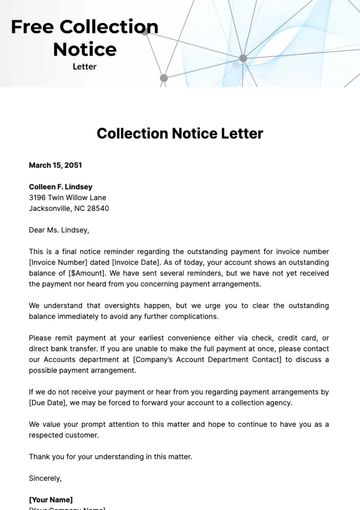
Common mistakes to avoid
One common mistake is sending a letter with an unexplained balance. A recipient who cannot understand where the amount came from may dispute the claim even when the underlying debt is legitimate. Another is using an old deadline or previous account information from a copied document. Templates save time only when the final document is checked carefully.
A second mistake is confusing a commercial demand with a formal legal notice. A simple payment request may not satisfy a jurisdiction’s requirements for commencing proceedings. If the letter is intended to be a formal pre-action communication, verify the applicable procedure rather than assuming that a heading such as “Letter Before Action” automatically creates legal compliance.
A third mistake is using unnecessarily threatening language. Collection correspondence should not exaggerate consequences, misrepresent the sender’s authority, or imply that a legal outcome is certain. A precise statement of the action that may be considered, together with a clear opportunity to resolve or dispute the account, is usually more defensible and more useful.
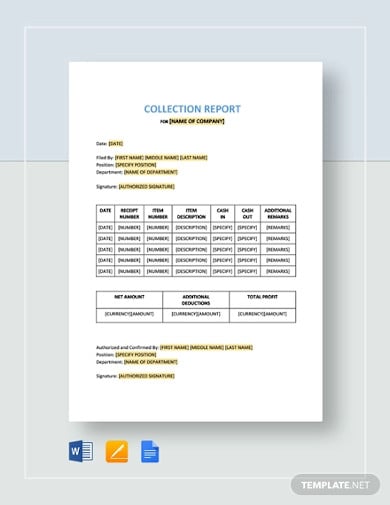
Building a collection workflow around the letter
The letter should be one part of a controlled collection workflow rather than an isolated document. Start with the account record, verify the balance, confirm the responsible party, review the underlying agreement, and identify previous communications. Then select the appropriate letter stage. The communication should reflect what has actually happened rather than what a generic sequence assumes has happened.
After sending the letter, record the date, delivery method, response deadline, and any supporting documents. If the recipient replies, update the account record with the substance of the response. A payment, dispute, promise to pay, request for documents, or settlement proposal should each lead to a different next step rather than automatically triggering another demand.
For larger organizations, a collection tracking record can help maintain consistency across accounts. Useful fields include account reference, original balance, current balance, invoice dates, last communication, communication type, response deadline, dispute status, payment status, and next action. This administrative structure supports the letter-writing process without replacing the need for case-specific judgment.
Practical Solution
The most practical way to use a debt collection template is to treat it as a controlled drafting framework. First, verify the debt itself. Confirm the contract or transaction, original amount, due date, payments, credits, interest or charges, and current balance. Second, verify the parties. Make sure the recipient is correctly identified and that the sender has the authority to seek payment. Third, choose the communication stage: reminder, formal demand, payment arrangement, dispute response, verification request, or jurisdiction-specific pre-action letter.
Next, customize only the fields that genuinely relate to the account. Replace every placeholder, remove irrelevant paragraphs, and make sure the deadline is appropriate. If the recipient has disputed the debt, do not send a routine payment demand that ignores the dispute. If payment has already been made, reconcile the account before sending anything further. If a settlement is being negotiated, label the communication as a proposal until it has actually been accepted.
Finally, perform a quality-control review before the letter leaves the organization. Check the recipient, address, account reference, balance, dates, payment instructions, attachments, contact information, and statements about possible future action. Save the final version with the supporting account record. This workflow makes a template useful without allowing the template itself to determine facts or legal conclusions.
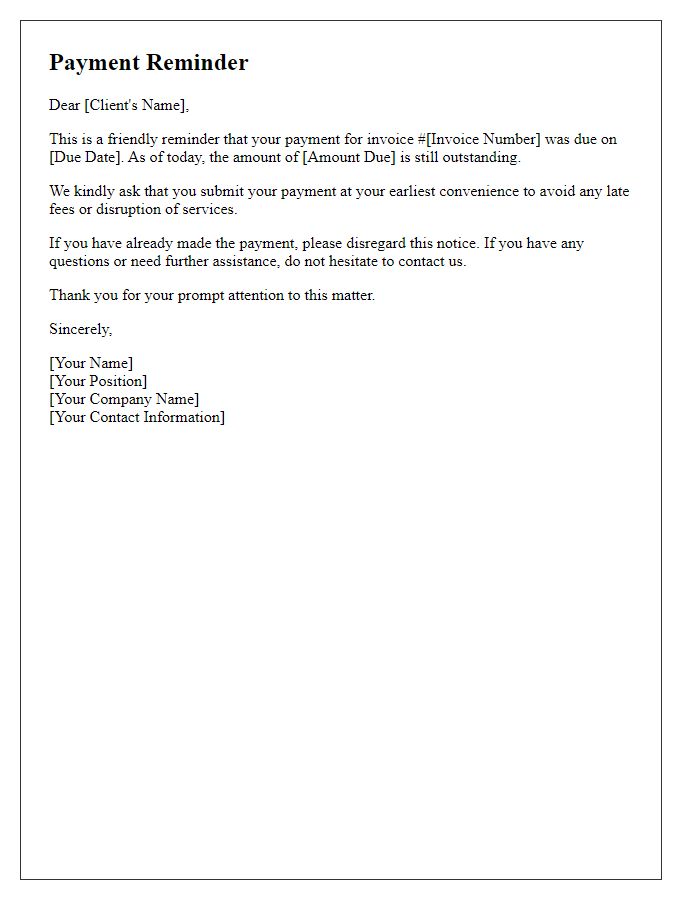
Example wording for a straightforward collection request
A simple commercial example might begin: “Our records show that invoice 1847, dated 10 June, remains outstanding in the amount of £1,500. The original invoice was due on 10 July, and our records show payments totaling £900 against the original £2,400 balance.” This example is hypothetical and illustrates the level of specificity that makes a demand easier to verify.
The next paragraph could say: “Please arrange payment of the outstanding balance by 25 September. If payment has already been made, or if you believe the balance is incorrect, please contact us using the details below and provide the relevant payment or account information so that we can review the matter.” This wording leaves room for a genuine administrative error without weakening the payment request.
The closing can identify the contact person, preferred communication method, account reference, and relevant payment instructions. If escalation is contemplated, the wording should describe only the action that may actually be considered and should be reviewed against the law governing the debt. A hypothetical example should never be presented as a mandatory legal formula.
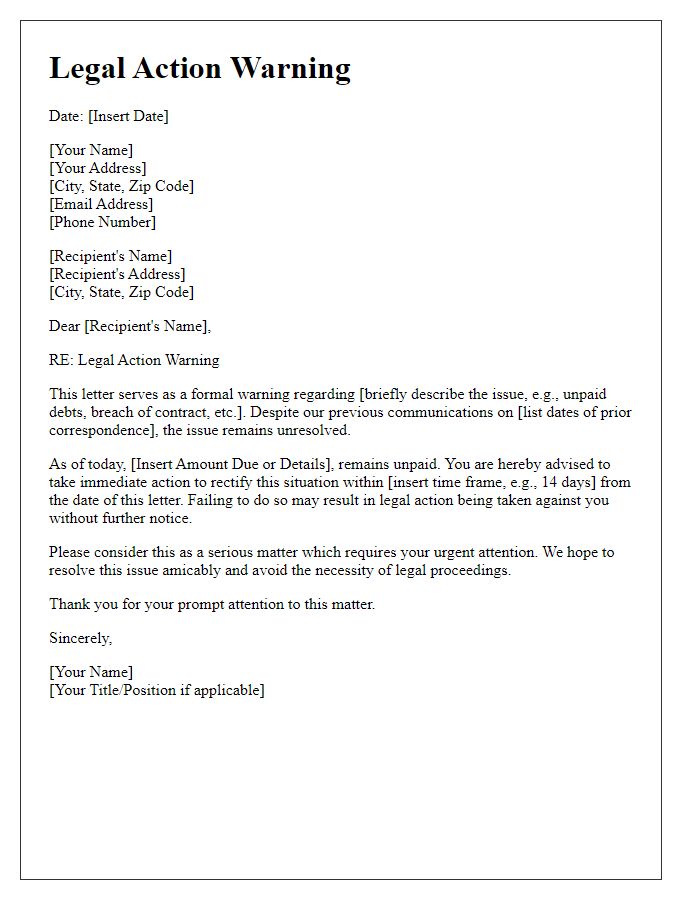
When the recipient disputes the debt
A collection process should have a clear route for disputed accounts. A dispute might concern identity, amount, ownership, payment history, contractual terms, service quality, duplicate billing, unauthorized transactions, or another factual issue. The response process should record exactly what is disputed and what evidence is needed to resolve the issue.
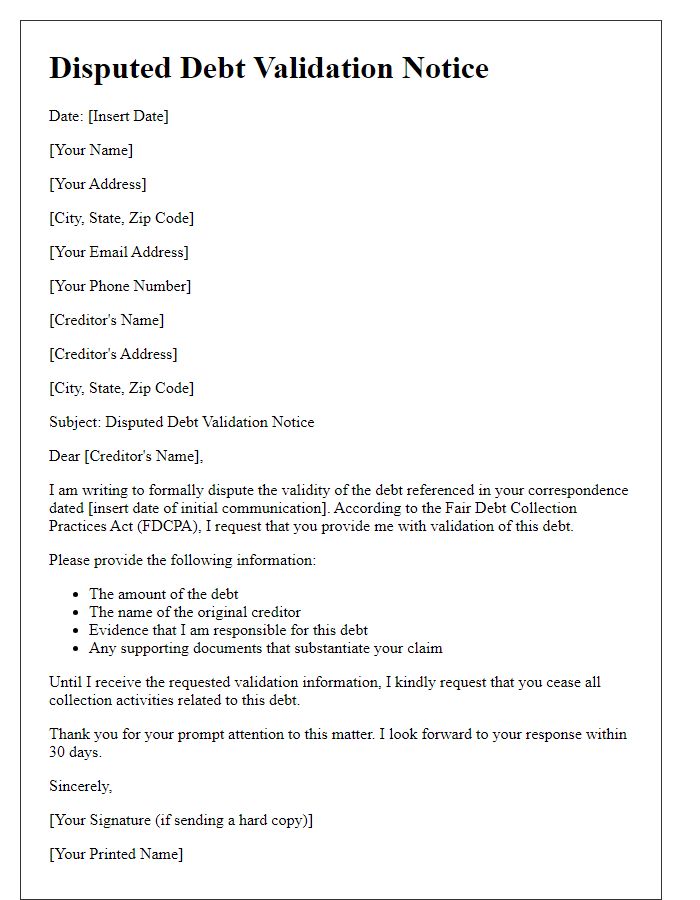
For US consumers covered by the federal debt collection rule, the Consumer Financial Protection Bureau explains that a written dispute within the applicable 30-day period can trigger requirements for the collector to provide verification before continuing collection of the disputed debt. That federal rule should not be assumed to govern every debt or every country.
In the UK and Australia, the appropriate process depends on the nature of the debt and the applicable legal and regulatory framework. A generic international template should therefore use neutral language such as “If you dispute this debt, please explain the basis of your dispute and identify the information you require” unless a jurisdiction-specific procedure requires something more precise.
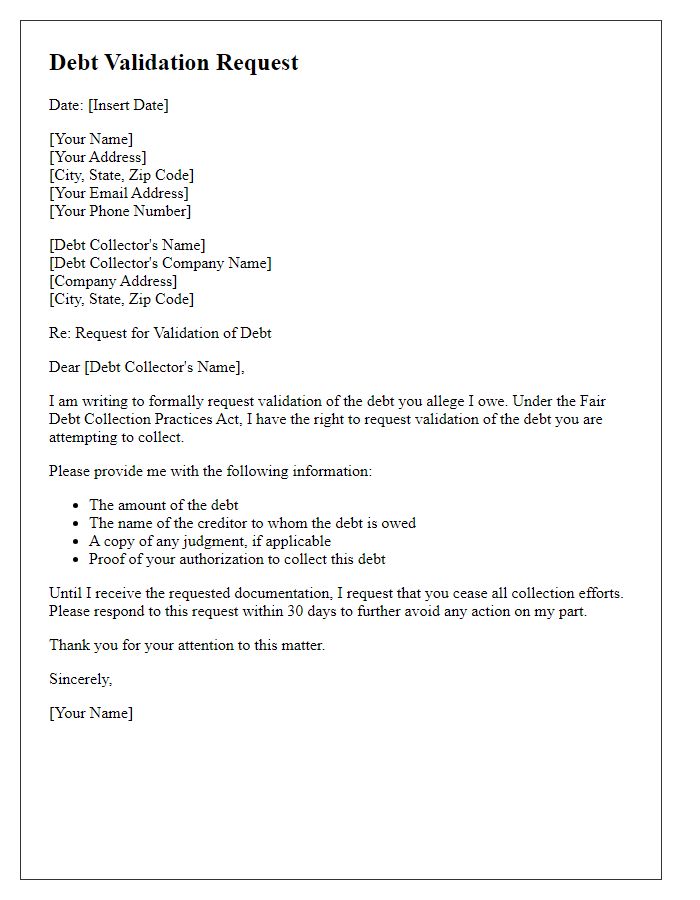
How to keep the final document professional
Professional presentation does not require elaborate design. A clean letterhead, readable typography, consistent spacing, clear subject line, and logical paragraphs are usually enough. Important figures can be emphasized with restrained formatting, but excessive color, oversized headings, or decorative graphics can make a serious financial communication look less credible.
The final document should also be easy to archive. Use a consistent reference number and filename internally, retain the sent version, and keep evidence of the delivery method when appropriate. If attachments are referenced, verify that the recipient actually receives the documents that the letter says are enclosed.
Most importantly, make the document readable to someone who has never seen the account record. A good collection letter should not require the recipient to search through multiple old emails merely to understand what is being claimed. The essential facts should appear in the communication itself, with supporting records supplied where appropriate.
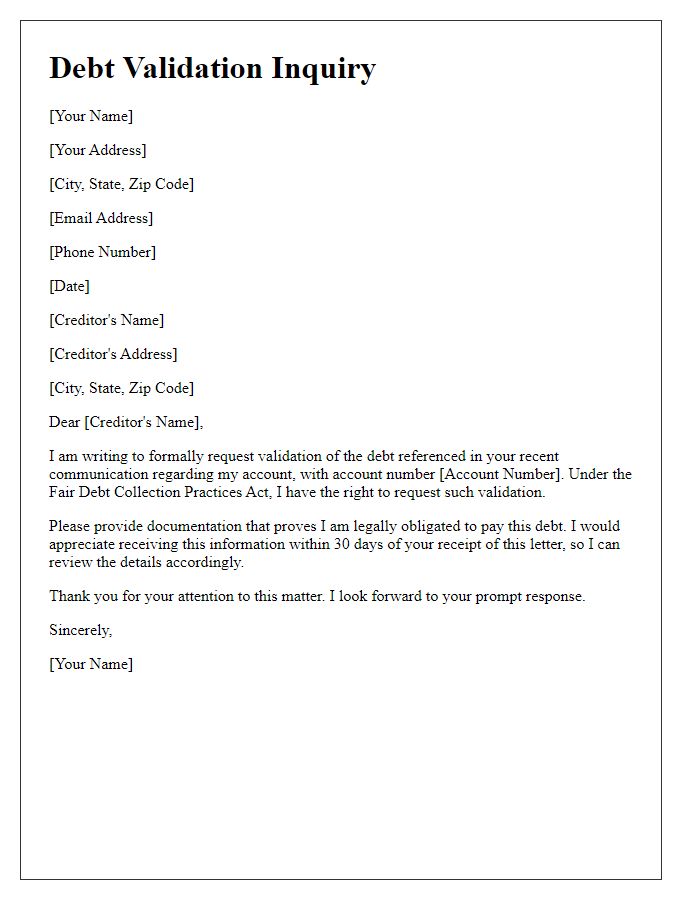
Using a response template appropriately
A debt collection response letter template can help a recipient organize a dispute or request for information. The response should identify the original collection notice, state the recipient’s position clearly, and request only information relevant to evaluating the claim. If the recipient accepts some part of the debt but disputes another part, the letter should say so explicitly.
Where supporting records exist, attach copies rather than sending irreplaceable originals. A payment confirmation, invoice, contract excerpt, account statement, or previous correspondence may help demonstrate why the amount is disputed. Keep the original documents in the recipient’s records.
The same principle applies to creditors. If a recipient asks for information that can reasonably establish the account history, provide an accurate response rather than repeating the original demand. A dispute that is resolved with evidence is usually more efficient than a dispute that is answered with increasingly forceful language.
Final checks before sending
Before sending any debt collection letter, compare every factual statement against the underlying account record. Check the recipient’s name and address, account number, original creditor, dates, principal balance, payments, credits, charges, interest, and proposed deadline. If a second person or company is mentioned, verify that their role is accurately described.
Then review the legal context. Ask whether the letter is an ordinary reminder, a regulated consumer communication, a response to a dispute, a formal pre-action notice, or another type of document. The wording and procedure can change depending on that classification. Current official guidance from Justice UK, the FCA, ASIC, ACCC, and the US Consumer Financial Protection Bureau can be useful starting points for the relevant jurisdiction.
Finally, check the tone and practical instructions. The recipient should know what is being requested, how to respond, where to direct a dispute, and what records relate to the account. If those questions can be answered from the letter itself, the document is much more likely to serve its intended purpose.
Reference Examples
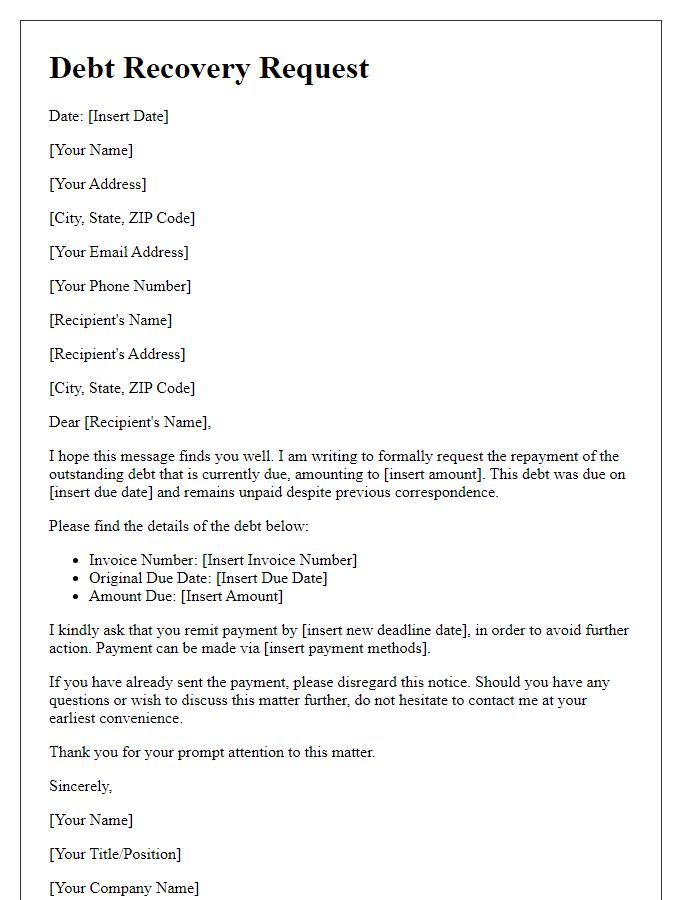
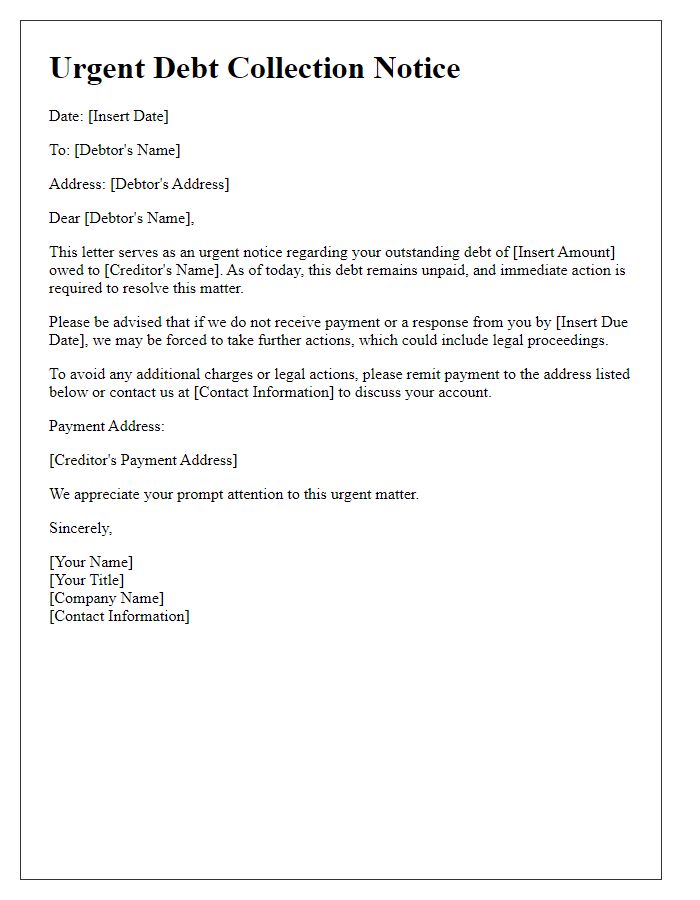
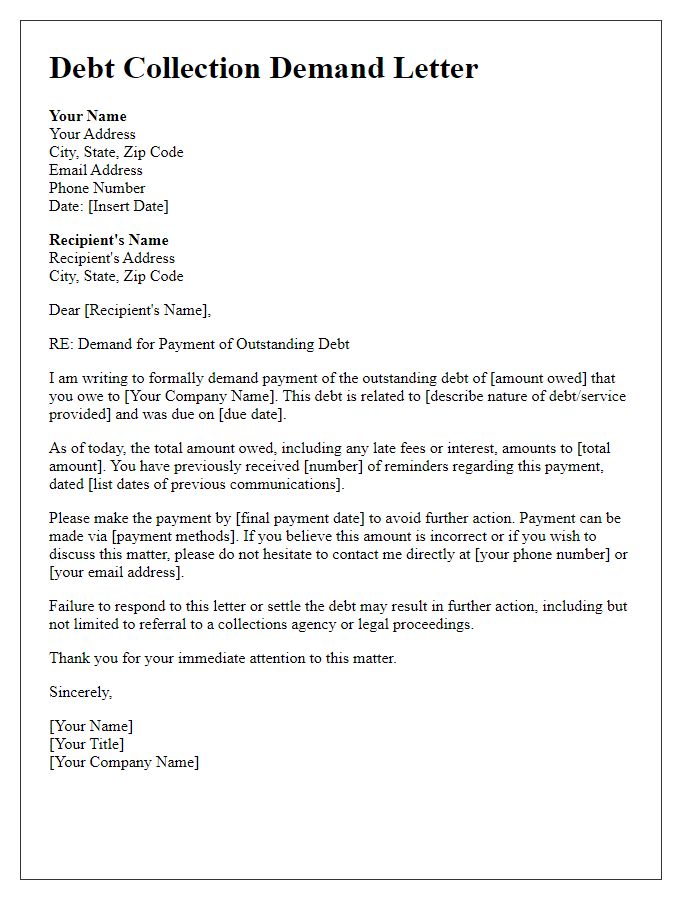
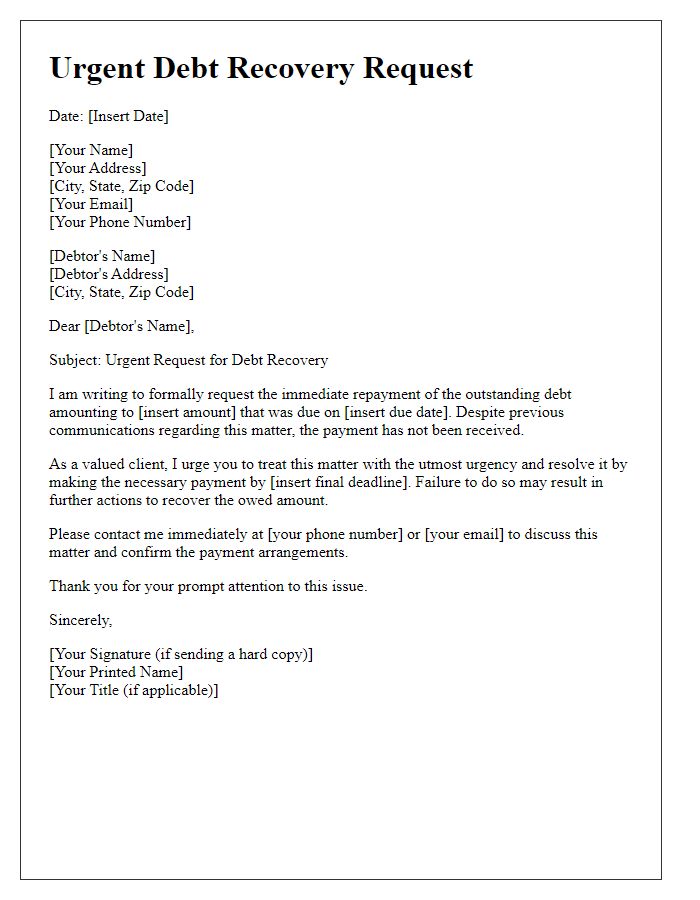
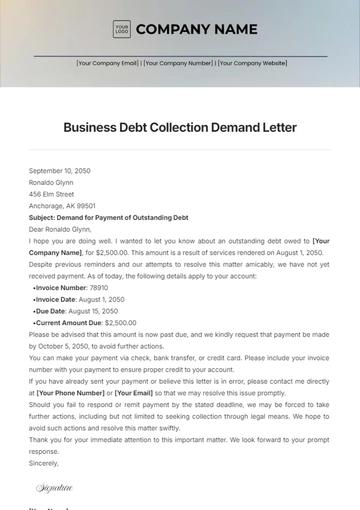
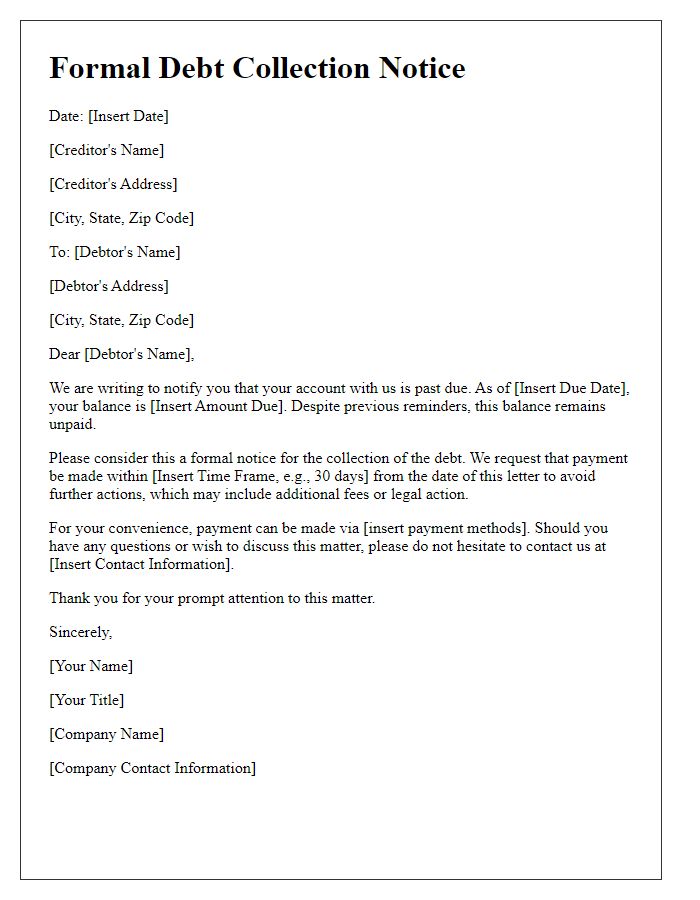
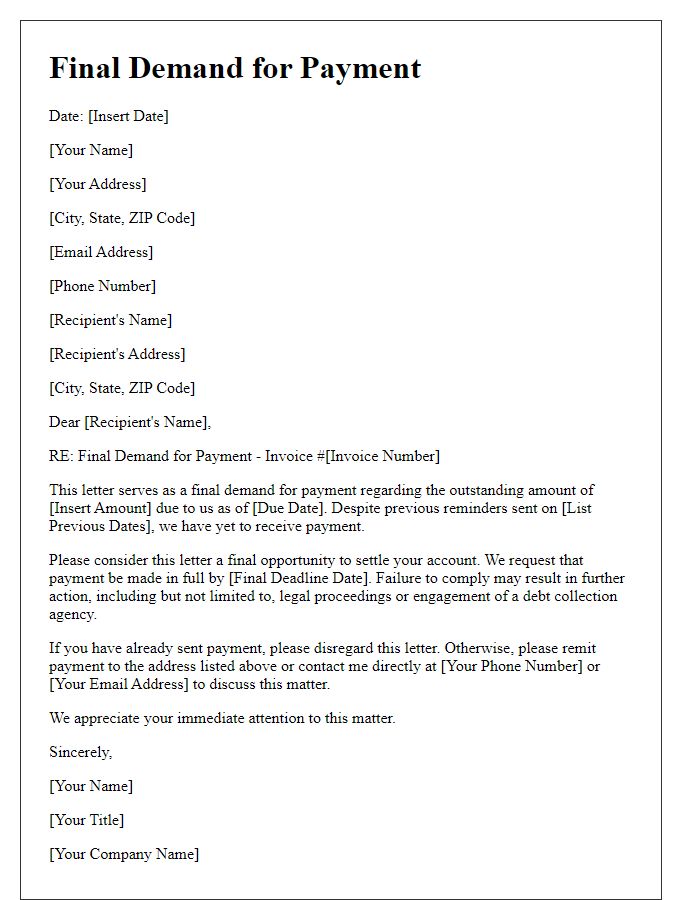
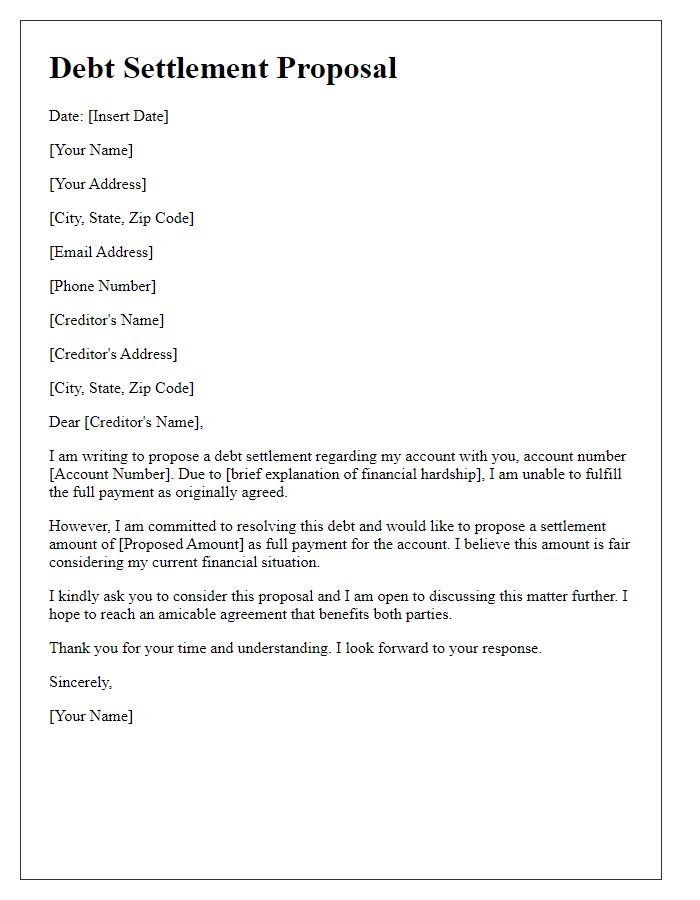
Reference examples are particularly useful when working with a debt collection letter Template because the visual structure of a letter often determines how easily the recipient can identify the sender, account, balance, deadline, and requested action. A good example shows how these elements can be arranged without unnecessary complexity. Some examples emphasize a formal demand, while others focus on verification, payment arrangements, or settlement terms. These are visual references rather than universal legal forms, and the wording shown in an example should always be checked against the circumstances and jurisdiction before being reused.
The following references show different ways a debt collection letter Template can be organized around common collection situations. Comparing them can help a writer recognize useful distinctions between an initial notice, a payment proposal, a settlement communication, and a confirmation of an agreed arrangement. The examples also demonstrate why clear headings, account references, dates, amounts, and concise requests are valuable. They should be treated as illustrative documents rather than evidence that any particular wording is legally required in every jurisdiction or type of debt.
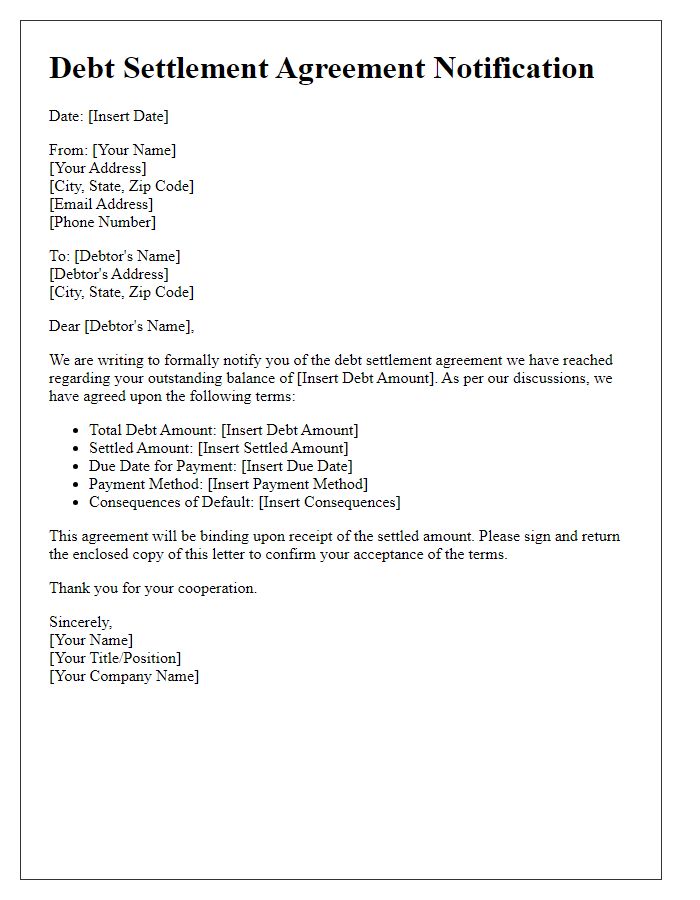
Debt Settlement Agreement Notification
Source: Letterin.net
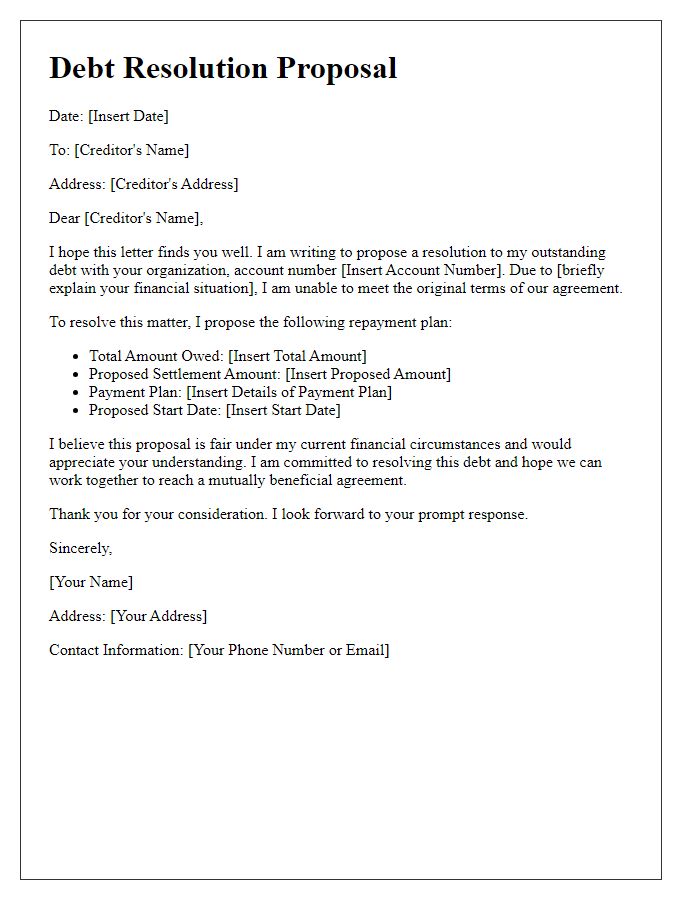
Debt Resolution Proposal
Source: Letterin.net
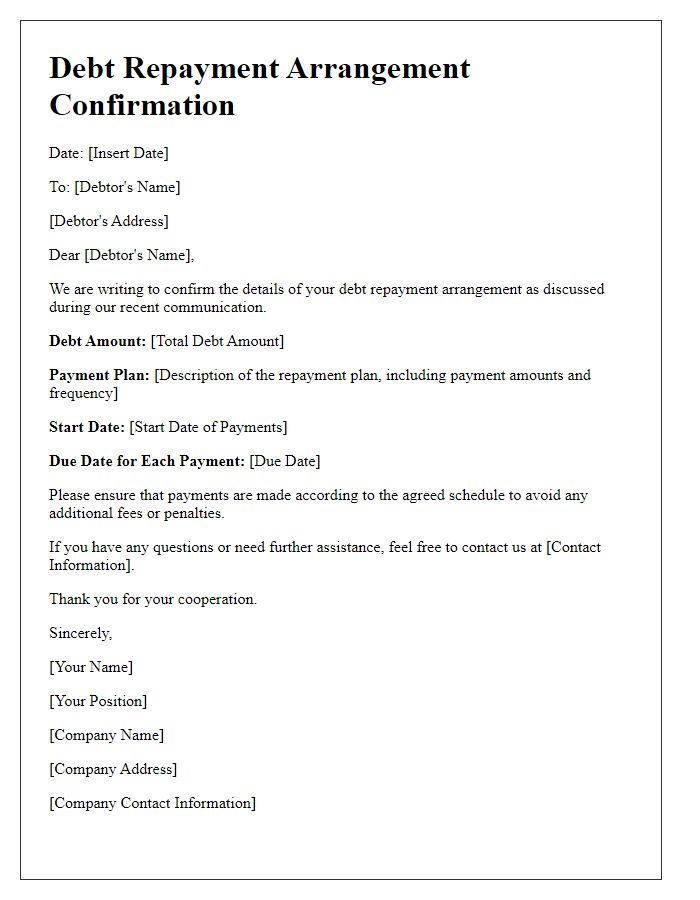
Debt Repayment Arrangement Confirmation
Source: Letterin.net
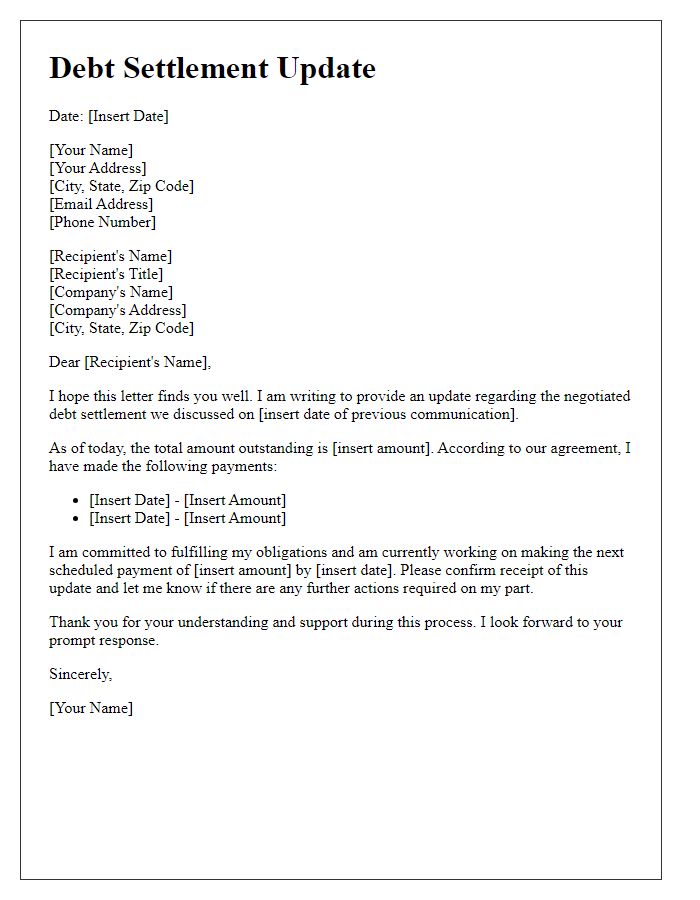
Debt Settlement Update
Source: Letterin.net
Final Demand for Payment
Source: Letterin.net
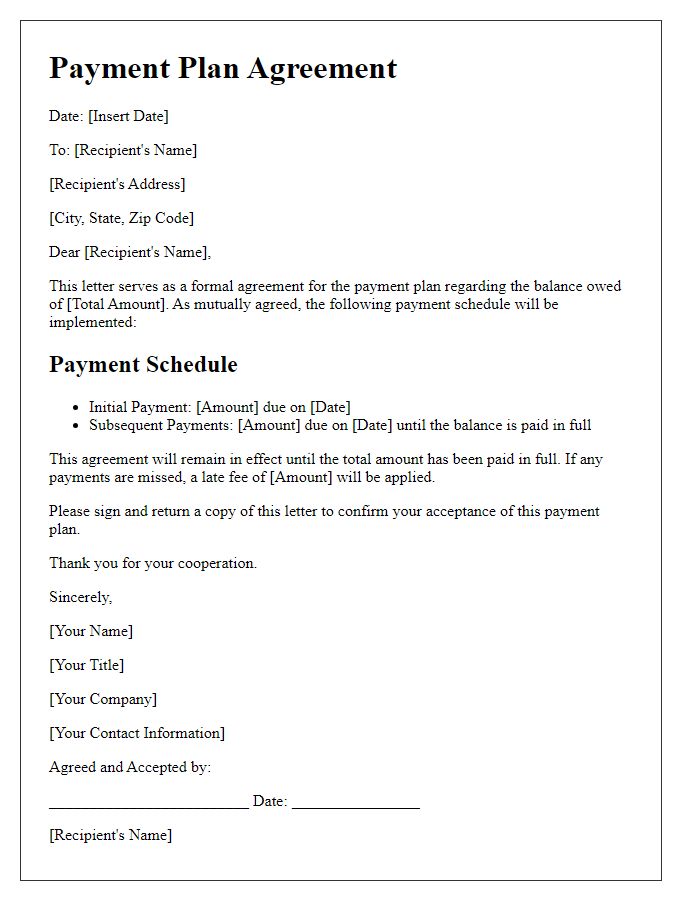
Payment Plan Agreement
Source: Letterin.net
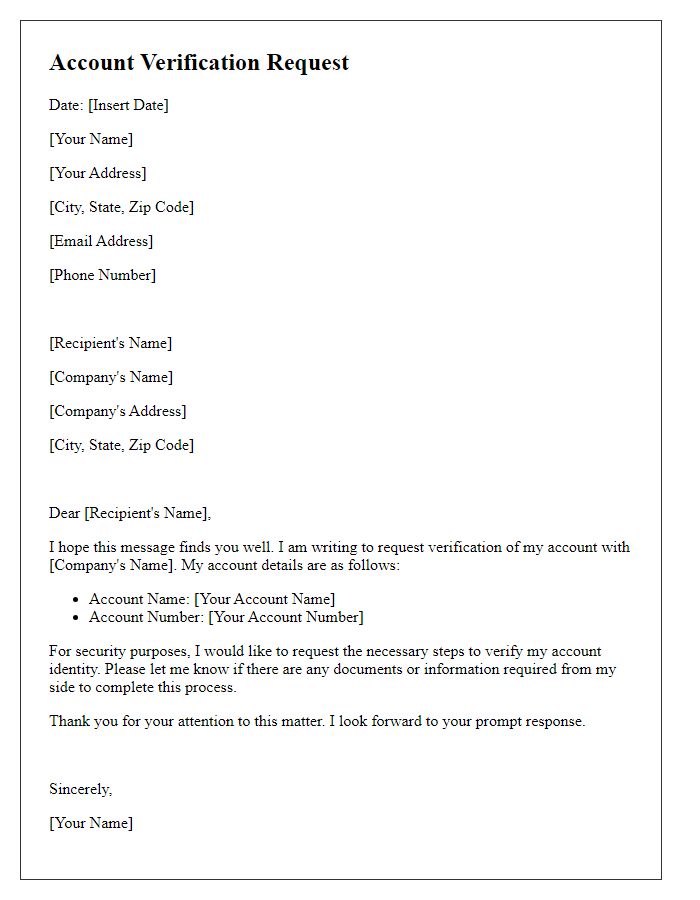
Account Verification Request
Source: Letterin.net
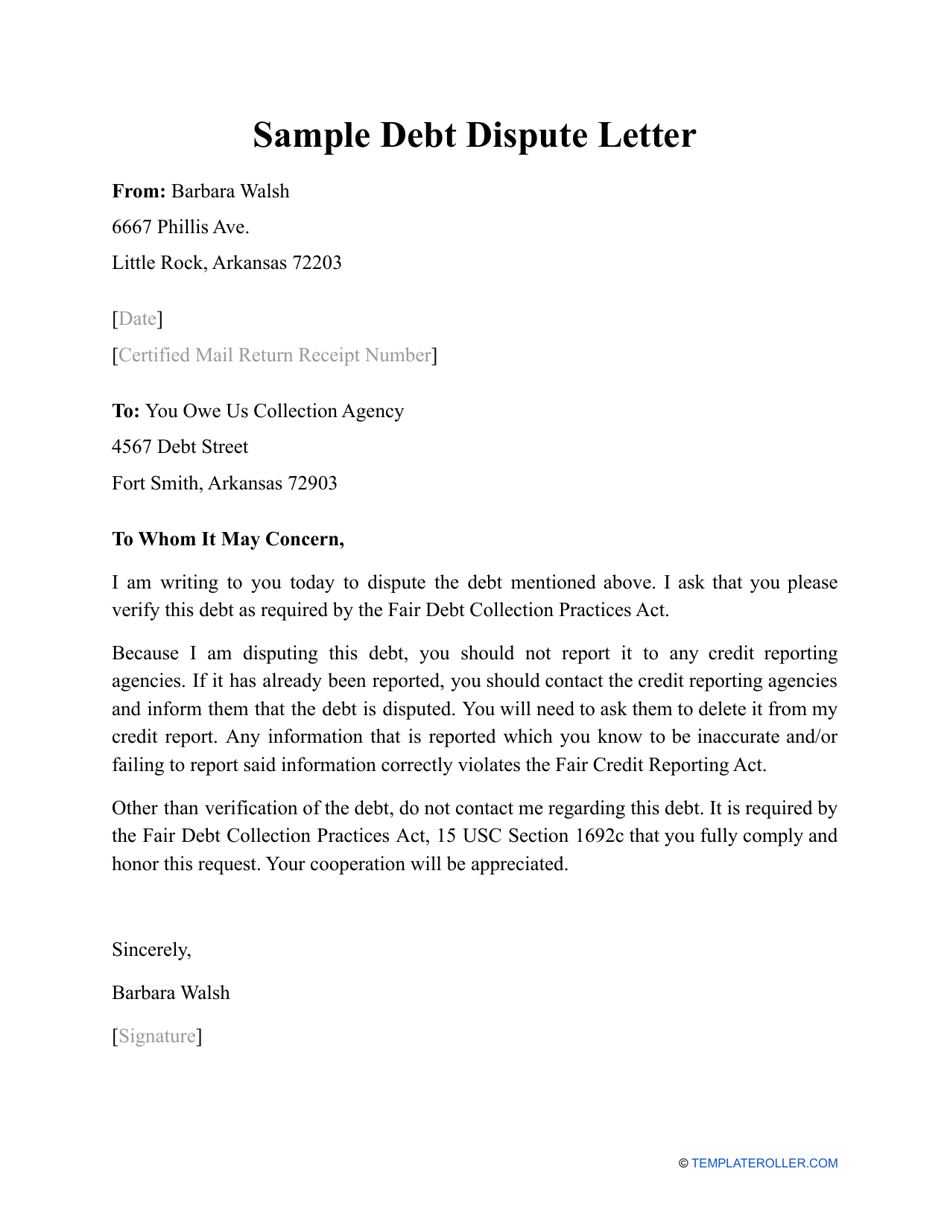
Sample Debt Dispute Letter
Source: TemplateRoller
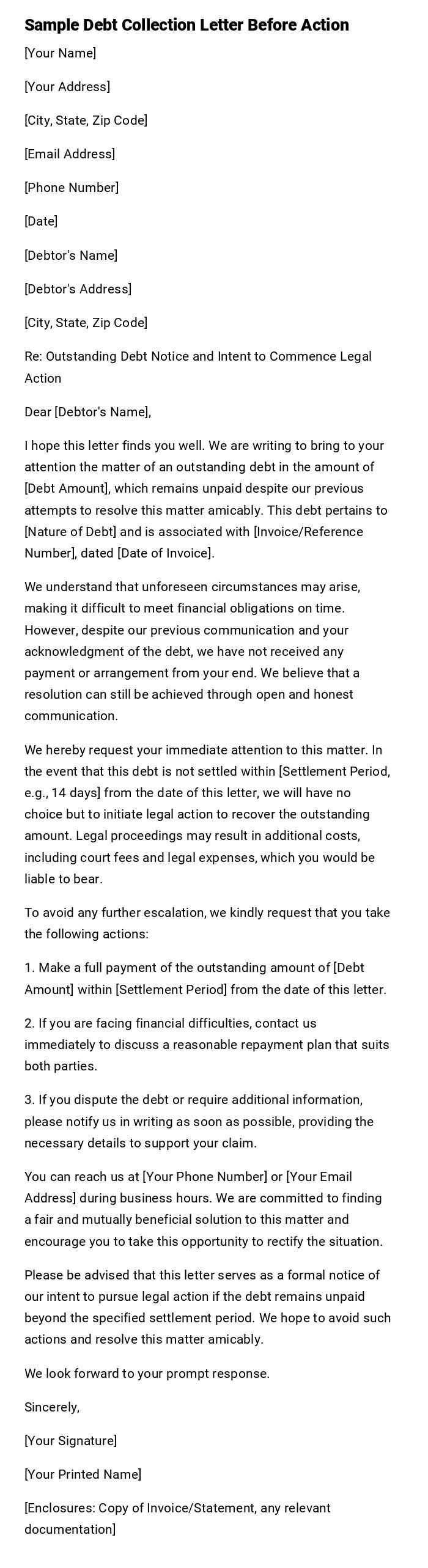
Sample Debt Collection Letter Before Action
Source: Letters and Templates
img src=”[https://www.wordtemplatesonline.net/wp-content/uploads/2022/05/Overdue-Invoice-Letter-05-22-15.jpg](https://www.wordtemplatesonline.net/wp-content/uploads/2022/05/Overdue-Invoice-Letter-05-22-15.jpg)” alt=”Overdue invoice letter showing an outstanding debt and request for payment” loading=”lazy”> Overdue Invoice Letter
Source: Word Templates Online
